Street Art Around the World — Culture Guide
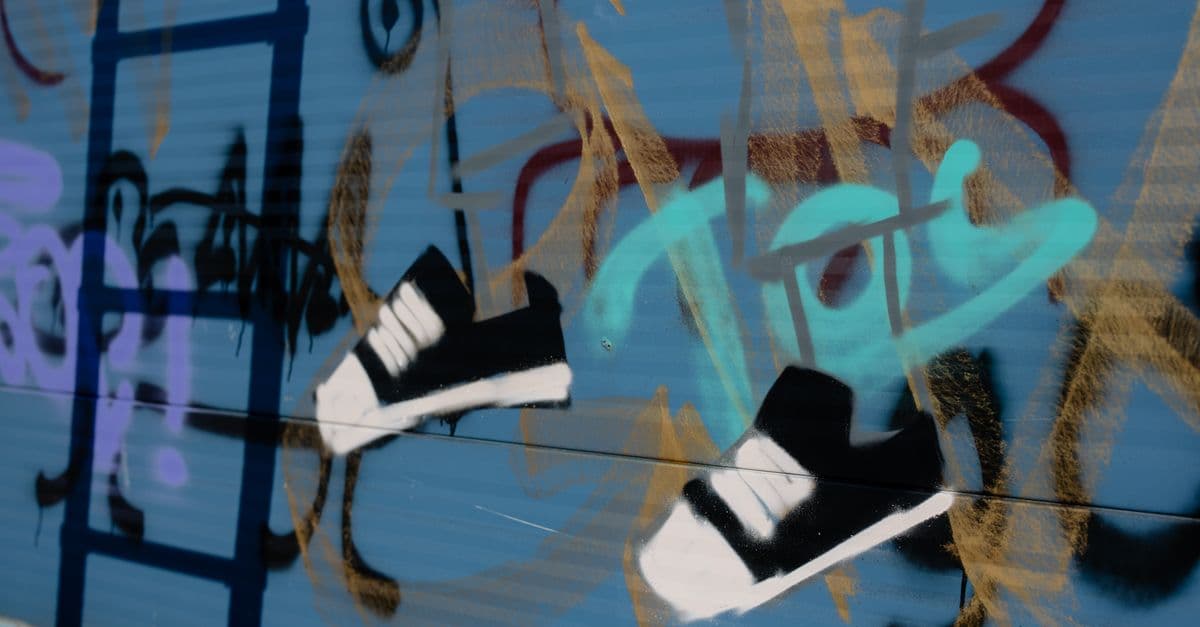
Photo: cottonbro studio / Pexels
In 2018, a framed Banksy print called Girl with Balloon sold at Sotheby's for £1.04 million. Seconds after the gavel fell, a shredder hidden in the frame began destroying the canvas. The piece — renamed Love is in the Bin — was later resold in 2021 for £18.6 million (Sotheby's). A stencil that began as illegal graffiti on a London wall had become one of the most valuable artworks of its decade. That arc, from vandalism charge to museum wall label, is the story of street art in miniature, and it's why the same painted wall can be a crime scene in one city and a tourist attraction two blocks over.
This guide traces how street art got from subway cars to Sotheby's, who the artists are that made it a global movement, where you can actually go see it, and why the debate over whether it's art or vandalism still hasn't been settled by anyone — including the artists themselves.
From Subway Tags to a Global Movement
Modern street art has traceable origins, not a single inventor. In late-1960s Philadelphia, a teenager known as Cornbread started writing his name across the city, reportedly including on an elephant at the Philadelphia Zoo, in a bid to get a girl's attention. Around the same time, a wave of Philadelphia writers began tagging buses and walls, laying the groundwork for what would become a citywide practice before it ever reached New York.
The movement's tipping point came in New York. In the early 1970s, TAKI 183 — a Greek-American teenager working as a foot messenger, whose tag combined his nickname with his street address on 183rd Street in Washington Heights — began writing his name across Manhattan wherever his job took him. On July 21, 1971, The New York Times ran a piece titled "'Taki 183' Spawns Pen Pals," profiling him and noting the wave of copycat writers his fame had triggered, among them Joe 136, Barbara 62, and Eel 159 (New York Times archive; Wikipedia). It's widely credited as the article that pulled graffiti writing out of the neighborhood and into the public imagination as a citywide phenomenon.
From there, the New York City subway system became the movement's defining canvas. Whole train cars, floor to ceiling, turned into moving murals that carried a writer's name through every borough in a single day, a distribution system no gallery could match. Styles diversified quickly: tags (a quick signature), throw-ups (fast, bubble-style two-color outlines), blockbusters (huge, simple block letters meant to be legible from a distance), and wildstyle (interlocking, arrow-heavy letterforms so dense they're deliberately hard to read except to other writers). By the early 1980s, graffiti writers were showing in downtown galleries, and Jean-Michel Basquiat had crossed over from tagging as SAMO to fine-art stardom, auctioning work in the same rooms as established painters.
Meanwhile, a parallel but distinct lineage was forming in Europe. In Paris in 1981, the artist Blek le Rat began stenciling rats across the city, a technique chosen partly because a stencil could be cut once and reused fast, reducing the time spent exposed on a wall. That stencil-based approach, image over letterform, would go on to directly shape the visual language Banksy adopted more than a decade later; Banksy has himself acknowledged the influence.
The Movement Splits: Graffiti, Street Art, and Muralism
By the 2000s, what had once been one underground scene had fragmented into overlapping but distinct disciplines, each with its own values and its own critics of the others.
| Discipline | Core method | Legal status | Rooted in |
|---|---|---|---|
| Graffiti | Letter-based tags, throw-ups, wildstyle | Usually illegal, unpermitted | 1970s NYC subway culture |
| Street art | Stencils, paste-ups, stickers, wheatpaste | Mixed — often illegal but tolerated | 1980s European stencil scene |
| Muralism | Large-scale figurative or abstract painting | Usually legal, commissioned | Civic and corporate mural programs |
| Public art | Sculpture, installation, institutional commissions | Legal, permitted, often government-funded | City arts councils and museums |
Table: How the four related disciplines split by method, legality, and origin.
The line between them is contested constantly, and the disagreement isn't cosmetic — it's about legitimacy. A wildstyle writer, who risks arrest and trains for years to make letters that are almost unreadable to outsiders, may dismiss a commissioned Banksy-style stencil as "not real graffiti" because it was never illegal or anonymous in the same way. A muralist working a legally permitted wall might, in turn, see both letter-based graffiti and stencil street art as too ephemeral or vandalistic to be taken seriously by city arts boards. None of the three groups is wrong by their own definition, which is precisely why the argument has never resolved.
What's the difference between graffiti and street art?
Graffiti is letter-based, historically illegal, and rooted in 1970s New York subway culture, where a writer's name (their "tag") is the artwork itself. Street art is image-based, uses techniques like stencils, wheatpaste posters, and stickers, and more often carries a political or narrative message rather than a signature.
The Artists Who Built the Global Movement
A handful of individuals turned street art from a local subculture into an internationally recognized art form, each taking a different route into the mainstream.
- Banksy — Anonymous British artist active since the late 1990s, working primarily in stencil. Known for Girl with Balloon, Devolved Parliament (sold for roughly $12.2 million at Sotheby's in 2019, not the earlier $25 million figure sometimes cited — see Sotheby's lot record), and dozens of pieces across Bristol, London, Bethlehem, and Gaza. His identity remains officially unconfirmed despite years of investigative reporting.
- JR — French photographer and street artist who wheatpastes massive black-and-white portraits onto buildings, favelas, trains, and, in 2017, a 20-meter (65 ft) portrait of a Mexican toddler positioned to peer over the US-Mexico border fence.
- Shepard Fairey — Began the Andre the Giant "Obey" sticker campaign in 1989 while a student at the Rhode Island School of Design, later designing the widely reproduced 2008 Obama "Hope" poster, which became one of the most recognized pieces of American political art of the century.
- Os Gêmeos — Brazilian identical twin brothers (Otavio and Gustavo Pandolfo) whose bright yellow figures, rooted in São Paulo's pixação and hip-hop scenes, now appear on walls from Brazil to Boston.
- Vhils (Alexandre Farto) — Portuguese artist who creates portraits by carving directly into wall plaster and brick using chisels, drills, and controlled acid or explosive charges, revealing the layers beneath rather than adding paint on top.
- Invader — Anonymous Parisian artist who has installed thousands of 8-bit, Space Invaders-style tile mosaics across more than 80 cities worldwide since 1998, cataloging each piece with GPS coordinates in his own "invasion" app.
- KAWS (Brian Donnelly) — Crossed from subway and bus-shelter graffiti and vinyl toy design into major museum recognition, including a Brooklyn Museum retrospective and record-breaking auction results for his paintings.
Where to See Street Art Around the World
Street art tourism is now a recognized subcategory of urban travel, with several cities actively building their reputations around it.
| City | Key location | Style / character | Notable artists |
|---|---|---|---|
| New York | Bushwick Collective, Brooklyn | Annual mural festival on private warehouses | Rotating international lineup |
| Miami | Wynwood Walls (est. 2009) | Curated outdoor museum on former warehouses | Shepard Fairey, Kenny Scharf |
| Melbourne | Hosier Lane | Dense, constantly repainted laneway | Rotating local and international |
| Berlin | East Side Gallery, Friedrichshain | 1.3 km surviving Berlin Wall segment | 100+ international muralists (1990 original) |
| Buenos Aires | Palermo, Coghlan | Mostly legal, city-tolerated large-scale murals | Martin Ron, Jaz |
| Lisbon | Bairro Alto, LX Factory | Vhils' home base; carved-wall technique | Vhils, Bordalo II |
| Bogotá | La Candelaria | Politically charged, post-2011 legalization wave | Toxicómano, Stinkfish |
| Bristol | Stokes Croft | Banksy's origin city | Banksy, Inkie |
| São Paulo | Vila Madalena (Beco do Batman) | Massive, saturated tropical color palettes | Os Gêmeos, Eduardo Kobra |
| Granada, Spain | Realejo district | Photorealistic portrait murals | El Niño de las Pinturas |
Table: Ten cities where street art has become a defined part of the local cultural economy.
How did Berlin's East Side Gallery become a street art landmark?
After the Berlin Wall fell in November 1989, artists were given permission in 1990 to paint directly onto a 1.3-kilometer (0.8 mi) surviving segment on the eastern side, turning a former death strip into what became one of the largest open-air galleries in the world. Sections have since been restored multiple times after weathering and vandalism.
Festivals That Turned Street Art Into a Global Tour
Annual festivals converted what used to be scattered, artist-by-artist travel into an organized international circuit, with sponsors, permits, and press coverage attached.
- POW! WOW! Hawaii — Running since 2010 in Honolulu's Kaka'ako neighborhood, credited with helping transform a formerly industrial district into a mural destination.
- Mural Festival Montréal — Since 2013, closes Boulevard Saint-Laurent to traffic and repaints dozens of building facades each June.
- Nuart Stavanger — Running in Norway since 2001, with a specific curatorial focus on stencil work and politically engaged street art rather than decorative murals.
- Wynwood Walls, Miami — Launched in 2009 by developer Tony Goldman on former warehouse property his company owned; Goldman died in 2012, and the project has continued under his family's Goldman Properties (Wynwood Walls official history).
- Upfest Bristol — Grew into one of Europe's largest street art festivals before pausing operations in 2021.
How did the Wynwood Walls in Miami start?
Real estate developer Tony Goldman launched Wynwood Walls in 2009, commissioning international muralists to paint the exteriors of six warehouses his company owned in Miami's then-struggling Wynwood district. It followed and built on an earlier, less centralized effort called Primary Flight, which had begun placing artist murals throughout the neighborhood in 2007 (Fast Company). Wynwood Walls became the template that dozens of other cities later copied for curated, permitted outdoor mural parks.
Art or Vandalism? The Debate Street Art Never Settled
Street art is one of the only art movements that exists simultaneously as two legally opposite things: criminal damage in one jurisdiction, celebrated commissioned art two streets over, sometimes on the same artist's work in the same week. A wall that would raise a property's asking price if a recognized artist painted it with the owner's blessing would get that same artist arrested for the same paint job done without consent.
The uncomfortable part of that equation is what happens after the paint dries. Street art is now a documented driver of neighborhood change. Research from Warwick Business School analyzing geotagged Flickr photos of London neighborhoods found that areas with a higher proportion of street-art photography saw larger relative gains in house prices than comparable areas without it (Warwick Business School). A separate 2017 UK property industry survey found buyers reported being willing to pay a premium, in some cases estimated as high as 5 to 30 percent, for a property that included an authenticated Banksy piece on its exterior. Miami's Wynwood district illustrates the pattern at scale: a neighborhood of vacant warehouses and low rents in 2009 became one of Miami's most expensive commercial and residential corridors within roughly a decade of Wynwood Walls opening. The artists and the curators arrive first; the rent increases follow; the original working-class residents and small businesses are frequently priced out by the time the neighborhood is famous.
Cities have responded to that tension in structurally different ways, which is itself a useful lens for understanding how differently governments think about art versus property rights.
- New York City treats unsanctioned graffiti as vandalism subject to removal, historically through dedicated anti-graffiti units, while simultaneously running permitted mural programs elsewhere in the same boroughs.
- Los Angeles revised its citywide Mural Ordinance in 2013 to create a legal permitting pathway for murals after years of an effective moratorium, directly responding to years of legal ambiguity that had pushed muralists underground.
- Buenos Aires has, in practice, decriminalized most exterior painting done with a property owner's consent, which is a large part of why Argentina's capital has become one of South America's most visited street-art cities.
- Berlin oscillates between aggressive graffiti-removal campaigns in commercial districts and formally protected zones like the East Side Gallery, reflecting an unresolved tension between the city's cultivated "alternative" reputation and pressure from property owners.
Does street art cause gentrification?
Multiple studies have found a correlation between concentrated, high-profile street art and rising property values in the surrounding blocks, including the London Flickr-based study cited above and case studies of neighborhoods like Miami's Wynwood and Istanbul's Mural District. Researchers generally describe street art as one contributing factor among several, including nearby transit, zoning changes, and developer investment, rather than a sole cause, but urban planners increasingly track it as an early indicator of neighborhood change.
The NFT and Crypto Crossover
Between roughly 2020 and 2022, street art and digital art briefly converged. Digital artist Beeple's collage Everydays: The First 5000 Days sold for $69.3 million at Christie's in March 2021, a sale that borrowed heavily from the irreverent, anti-institutional posture street art had spent decades cultivating: an outsider medium suddenly commanding blue-chip prices at a legacy auction house (Christie's). Several established street artists, including figures adjacent to the Banksy-adjacent stencil scene, released NFT versions of physical pieces during the same window, sometimes to controversy when the digital and physical rights weren't clearly separated. The broader crypto market downturn in 2022 sharply reduced NFT trading volumes, but the crossover left a lasting practice: it's now routine for street and mural artists to release a documented digital certificate or companion NFT alongside a physical wall piece, largely as a provenance and authentication tool rather than as a primary revenue source.
What People Get Wrong About Street Art
A few misconceptions come up constantly, and they're worth correcting directly because they shape how people read the work itself.
The first is assuming graffiti and street art are the same practice with different names. They share a subcultural ancestor, but a wildstyle graffiti writer optimizing for peer recognition among other writers and a stencil artist optimizing for a wide public audience are pursuing different goals with different audiences, which is exactly why the two scenes still argue about who counts as "legitimate."
The second is assuming illegality equals lack of skill or planning. A large unsanctioned piece, particularly one placed somewhere as visible or dangerous as a rooftop, a train yard, or a highway overpass, typically requires as much technical planning, from paint volume to lighting to escape routes, as a legally permitted mural, just compressed into a window of minutes instead of days.
The third is assuming museum acquisition or auction prices settle the "is it art" debate. Many working graffiti writers explicitly reject that framing: for them, the point was never institutional validation, and a six-figure auction result for a formerly illegal stencil can read less as vindication and more as evidence that the institutions co-opted a practice they once prosecuted.
Who is Banksy?
Banksy is the pseudonym of an anonymous British street artist who has been active since the late 1990s, working primarily in stencil. Despite years of investigative journalism proposing specific candidates, the artist's identity has never been officially confirmed by Banksy or verified by independent reporting to a consensus standard.
Is street art legal?
Legality depends entirely on consent from the property owner and, in many cities, a permit from local authorities. Painting with permission is legal; painting the same image on the same wall without consent is criminal damage, typically prosecuted as vandalism, in most jurisdictions worldwide.
What's the most expensive street artwork ever sold?
Banksy's self-shredded Love is in the Bin, the reworked version of Girl with Balloon, sold for £18.6 million at Sotheby's in October 2021, making it the artist's highest recorded auction result to date (Sotheby's).
Why do some cities allow street art while others prosecute it aggressively?
The split usually comes down to whether a city's government or a property owner has granted explicit consent and, separately, whether local officials view street art primarily as a tourism and property-value asset or as a public order and vandalism problem. The same piece of technical skill can be treated as either, depending entirely on that consent question rather than the artwork itself.
Can street art be removed once it's painted?
Yes. Most exterior wall paint, including spray paint, can be chemically stripped, sandblasted, or painted over by property owners or city crews, which is why unsanctioned pieces are frequently temporary regardless of the artist's intent. Some artists, including Banksy, have designed pieces specifically anticipating that impermanence.
How do street artists avoid being caught?
Common practices include working at night or during low-visibility hours, using stencils or pre-cut templates to reduce time spent at the wall, working in small trusted crews who can act as lookouts, and, for internationally known artists like Banksy, maintaining strict operational anonymity around scheduling and location to prevent advance identification.
What's the relationship between graffiti and hip-hop culture?
Graffiti is widely counted, alongside DJing, MCing, and breakdancing, as one of hip-hop's four foundational elements, having developed in parallel in 1970s New York City. Many early graffiti writers moved in the same social and geographic circles as early hip-hop DJs and dancers, and the two scenes have remained culturally linked since.
The Takeaway
Street art's real significance has less to do with auction records than with access: it's one of the only major art forms most people encounter without ever deciding to. You don't buy a ticket or walk into a museum, it meets you on the way to work, on the side of a warehouse or a highway underpass, made by someone who accepted real legal risk to put it there. The tension that runs through this entire history, illegal versus legal, vandal versus artist, neighborhood revitalization versus displacement, isn't a bug in the movement. It's the exact friction that has kept street art culturally alive and constantly renegotiated for more than 50 years, in a way that fully institutionalized art forms rarely are.
For more on art movements and how visual culture shapes cities, see our pieces on why maximalism is replacing minimalism in design, why blue pigments were historically the most expensive color to make, and how the camera obscura shaped centuries of realistic art.
Sources
- Lewisohn, C. (2008). Street Art: The Graffiti Revolution. Tate Publishing.
- Banksy. (2005). Wall and Piece. Century.
- Sotheby's, "How Banksy's Love is in the Bin Was Created"
- Sotheby's, Devolved Parliament lot record, 2019 Contemporary Art Evening Auction
- The New York Times, "'Taki 183' Spawns Pen Pals," July 21, 1971
- Wikipedia, "TAKI 183"
- Wynwood Walls, official project history
- Fast Company, "Creative Destinations: Miami's Wynwood Area Transforms Into Open-Air Gallery"
- Fast Company, "How Street Art Raises Neighborhood Housing Prices" (Warwick Business School study)
- Christie's, "Beeple: The First 5000 Days"
- City of Los Angeles, Mural Ordinance (revised 2013)
- Schacter, R. (2013). The World Atlas of Street Art and Graffiti. Yale University Press.
Follow new articles
Add SciHub101 to your feed reader to see new science and technology stories.
About the Author
SciHub101 is an independent science and technology publication founded and edited by Buğra Sözeri, a software engineer and app developer based in Türkiye. AI tools assist with drafting and research. Source documentation in the existing archive is uneven, and articles are being reviewed and corrected. The Editorial Team byline identifies editorial responsibility; it does not certify specialist or independent human review. Where we compare products, anything built by our own team is labelled as such — see the editorial guidelines and About page for how corrections and disclosures work.
Related Articles
The Return of Maximalism — Why More Is More
Maximalism is back. After two decades of minimalist beige, why are designers, Gen Z, and TikTok embracing pattern, color, and clutter again?
Why Abstract Art Sells for Millions: Economics, Psychology, and the Drivers of Value
In May 2013, a Kazimir Malevich painting sold at Sotheby's for $60.8 million. The painting, a simple composition of geometric forms, appears to many viewers as something a moderately talented person could produce in an afternoon. Yet it sold for more than a Rembrandt or a Vermeer. This apparent absurdity points to something fundamental about how art value is determined: it is not primarily about visual beauty, technical skill, or aesthetic pleasure. Instead, art value is driven by scarcity, provenance, institutional validation, market psychology, and the cultural meaning attached to ownership. Understanding these mechanisms explains not only why abstract art commands extraordinary prices but also how art markets function as status systems and economic instruments.
Street Art and Banksy: A History of Graffiti, Explained
From Pompeii's walls to New York's subway cars to Banksy's stencils, street art has always been the voice of people without a gallery. Here is what the history and the research actually show.
How to Use Canva AI: Design Like a Pro for Free (2026 Guide)
How to use Canva AI on the free plan: what each tool does, how the monthly AI allowance works, prompt tips, design checks, and the copyright limits.