Why Oil Paint Dries Slowly
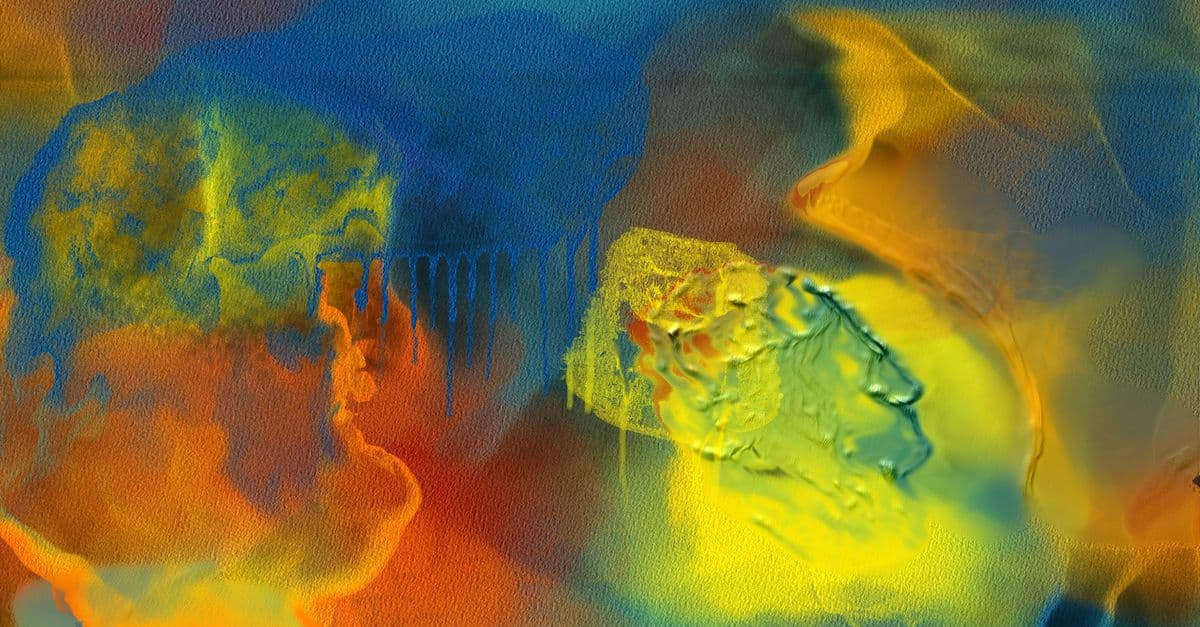
Photo: Steve A Johnson / Pexels
A thumbprint pressed into a thick daub of oil paint will still show a week later. A heavily built-up passage can stay soft under its surface for months. That is not a defect in the material — it is the direct result of the chemistry that made oil paint the dominant medium of Western painting for nearly six centuries. Oil paint does not dry the way water-based paint or nail polish dries, by a solvent simply evaporating into the air. It hardens through a slow chemical reaction with atmospheric oxygen called oxidative polymerization — a process in which individual oil molecules link together into one continuous solid network — and that single mechanical fact explains almost everything unusual about how oil paint behaves, from why old masters could blend soft shadows to why conservators still wait a year before touching a "finished" canvas.
Curing is not evaporating: the chemistry underneath the paint
Linseed oil, walnut oil, and poppy seed oil — the classic binders used to suspend pigment in oil paint — belong to a category chemists call "drying oils." The name is a bit misleading, because nothing evaporates. These oils are triglycerides, meaning each molecule is built from a glycerol backbone with three long fatty-acid chains attached, and a high proportion of those fatty-acid chains are polyunsaturated: they carry multiple carbon-carbon double bonds along their length. Linseed oil in particular is rich in linolenic acid, a fatty acid with three double bonds per chain, which is why it cures faster and more thoroughly than walnut or poppy oil, both lower in polyunsaturated content (Natural Pigments, Drying Oils in Oil Painting).
When a thin film of this oil is exposed to atmospheric oxygen, those double bonds become chemically reactive. Oxygen molecules attack the double bonds and generate free radicals — unstable, highly reactive molecular fragments — which then react with neighboring fatty-acid chains on adjacent triglyceride molecules. Each of those reactions forms a new covalent bond stitching two chains together. Because a triglyceride molecule has three fatty-acid arms and each arm can carry several reactive double bonds, the reaction does not just join pairs of molecules end to end. It builds outward in three dimensions, and research using time-resolved infrared spectroscopy has confirmed that the oxidation and cross-linking proceed together as the film ages, with cross-link density building unevenly as the oil's more reactive sites react first (ACS Applied Polymer Materials, Oxidation and Cross-Linking in the Curing of Air-Drying Artists' Oil Paints).
The result, chemically, is a shift from a liquid to what is technically a polymer network — the same broad category of material as an epoxy resin or a cured rubber, just built from vegetable-oil starting material instead of petrochemical feedstock. This is what chemists call three-dimensional free-radical polymerization: individual small molecules crosslinking into one connected, insoluble solid. Once enough of these connections have formed, the oil crosses what polymer chemists call the gel point, the moment a scattered population of separate molecules becomes a single infinite network, and the film stops behaving like a liquid at all, even microscopically (ACS Applied Polymer Materials, Oxidation and Cross-Linking).
Contrast that with how water-based paint dries. In acrylic paint, watercolor, or gouache, the pigment is suspended in a water carrier (plus, for acrylic, a polymer emulsion). Drying there just means the water physically leaves the film through evaporation, and the remaining solid particles pack together as the liquid around them disappears. Nothing new is chemically built. No new bond forms between one pigment particle and its neighbor. That is a physical process, fast and reversible in principle. Oxidative polymerization in oil paint is a chemical process, slow and permanent, and the two should not be described with the same word even though English calls both of them "drying."
Why the reaction is inherently, structurally slow
Two separate physical bottlenecks make oxidative polymerization slow no matter how much oxygen is available in the surrounding air. The first is diffusion: oxygen molecules have to physically travel from the surrounding air into the paint film before they can react with anything. At the surface of a wet paint layer, oxygen access is essentially unlimited, so cross-linking starts immediately and proceeds quickly there. But as the surface layer cross-links, it becomes denser and less permeable, and oxygen has to work harder to diffuse through that increasingly solid skin to reach the still-liquid paint underneath. The reaction becomes self-limiting: the very process of curing throttles the oxygen supply that drives further curing.
The second bottleneck is simply how much reactive material there is to consume. Every double bond that reacts and forms a cross-link is no longer available to react again. Early in the process, reactive double bonds are abundant and the reaction proceeds relatively fast. As more of them get consumed, the remaining unreacted double bonds are increasingly isolated within an already-rigid network, harder for oxygen or a nearby radical to reach, and the reaction rate drops off even though it never fully stops. Researchers studying linseed oil autoxidation kinetics describe this mathematically as a reaction whose rate depends on both oxygen diffusion and the shrinking pool of reactive sites, which is why simple single-step kinetic models fail to describe it and why real cure times vary so much with film thickness, temperature, and pigment type (ScienceDirect, Review of the kinetics and simulations of linseed oil autoxidation).
Thickness makes both bottlenecks worse simultaneously. A thin paint layer, a fraction of a millimeter, has a short diffusion path for oxygen to travel and cures relatively evenly through its depth in weeks. A thick, heavily loaded impasto stroke, the kind associated with painters like Vincent van Gogh, might be several millimeters deep at its ridges. Oxygen reaching the interior of that ridge has to diffuse through an already-curing outer skin, so the surface can feel firm within days while the core stays soft and mechanically vulnerable for a year or more. This is a large part of why old masters, working centuries before anyone understood the underlying chemistry, developed a painting method built almost entirely around thin, sequential layers.
Does temperature or light speed up drying?
Yes, measurably. Heat accelerates the free-radical reactions that drive cross-linking, and ultraviolet light provides extra energy that helps initiate the same radical chemistry, which is why historical painters set finished panels in sunlight to firm up faster and why some modern conservators use controlled UV exposure to help stabilize new paint layers. Neither trick changes the underlying chemical mechanism; both simply push the same oxidation reaction forward faster.
Driers and siccatives: catalyzing the same reaction, not replacing it
Painters and paint manufacturers have never simply waited out oxidative polymerization at its natural pace. Historical written sources describe the use of metal-based compounds called driers, or siccatives, added to oil paints and varnishes to accelerate curing, with documented use going back to at least the 14th century. Zinc sulphate (called white vitriol) appears in period sources from that era as a drying additive, and lead oxide, alum, and other metal compounds were also used through the 14th to 18th centuries to shorten the wait before a painting could be varnished or handled (ResearchGate, Historical siccatives for oil paint and varnishes).
By the 19th century, specific commercial drier formulations were widely used in European studios. Siccatif de Courtrai, one of the best documented, was made by heating linseed oil in the presence of litharge, a form of lead monoxide, together with a manganese salt (Natural Pigments, The Role of Driers in Oil Painting). These metals work as catalysts: they don't get consumed by the reaction the way the oil's own fatty acids do, but they help generate and propagate the free radicals that drive cross-linking, meaningfully cutting the time before a paint film becomes touch-dry. Cobalt and manganese compounds remain the most common metallic driers in oil paint today, and manganese in particular has been documented as an unusually efficient primary drier even at low concentrations (ResearchGate, Historical siccatives). By around 1885, manufacturers had also developed oil-soluble driers known as terebines, lead and manganese soaps of linseed fatty acids or resin, refining the practice into something closer to a controllable industrial process (Natural Pigments, The Role of Driers in Oil Painting).
It's worth being precise about what driers actually change. They do not switch oil paint to a different drying mechanism, the way adding water would. They accelerate the rate at which the same oxidation and cross-linking reactions proceed, largely by helping generate free radicals faster at the film's surface. That's also why driers mainly speed up surface drying rather than eliminating the underlying, slower interior-curing problem: a paint film treated with driers can feel dry to the touch faster while its deeper layers still take a comparably long time to fully cross-link, because that part of the process is still gated by oxygen diffusion, not by radical generation.
The tradeoff artists actually built a technique around
Slow curing sounds like a pure inconvenience, but it is also the foundation of one of oil painting's most valued capabilities: an extended working window during which colors on the canvas remain workable and can be blended into one another directly, wet paint mixing with wet paint. This technique, often called wet-on-wet blending or alla prima when a painting is completed in a single sustained session, produces the soft, continuous gradations seen in Renaissance and Baroque portraiture, most famously in the smoky, almost boundary-less transitions of Leonardo da Vinci's sfumato technique. None of that is achievable with a medium that sets in minutes.
Acrylic paint makes the contrast obvious. Acrylic dries through the same physical mechanism as watercolor, fast evaporation of a water carrier plus coalescence of a polymer emulsion, typically becoming unworkable within minutes on the palette and within an hour on the canvas. Acrylic painters compensate with techniques built around that constraint: working in distinct, deliberate strokes, using retarding mediums to artificially slow the water's evaporation, or layering thin glazes that dry fast enough to build up quickly. Neither medium is objectively better; they simply reward opposite working methods, because they dry by opposite mechanisms.
A useful analogy for the two different drying processes is the difference between a puddle drying on pavement and concrete curing after it's poured. A puddle just needs its water to evaporate, a physical change with no new material formed, similar to how acrylic dries. Concrete, by contrast, feels solid enough to walk on within a day, but engineers know the underlying chemical reaction, called hydration, in which cement compounds react with water to form new interlocking mineral crystals, keeps strengthening the material for weeks or months beneath a surface that already looks and feels finished. Oil paint's cure follows the concrete pattern far more closely than the puddle pattern: an early surface change that looks complete, sitting on top of a slower structural process that isn't.
The old masters' preference for thin, sequential paint layers, each allowed to cure before the next was applied, was itself a direct response to this same slow-curing chemistry, and the technique connects to how fresco painters solved an entirely different but related problem: true fresco uses a completely different chemical process, carbonation of lime plaster rather than oxidation of oil, to bond pigment permanently into a wall within hours rather than months.
What slow curing means for how a painting behaves for centuries afterward
Because oxidative polymerization keeps tightening the paint's molecular network long after a painting looks finished, the paint film is not a fixed material the day it leaves the easel. It continues changing, becoming progressively stiffer and more cross-linked, for years, sometimes decades, after the surface first feels dry. That ongoing chemical change has direct physical consequences that show up much later in a painting's life. A paint layer that starts out with some flexibility can tolerate minor movement in the canvas or panel beneath it. A paint layer that has fully cross-linked over a century becomes comparatively brittle and far less able to flex with a support that keeps responding to humidity and temperature. That mismatch between an increasingly rigid paint layer and a support that never stops moving is the direct cause of craquelure, the fine web of cracks visible on the surface of most old oil paintings, a process explored in detail in why old paintings crack over time.
Conservators also treat the slow-curing timeline as a practical constraint on their own work. Adding varnish to an oil painting is standard practice, both to saturate colors and to provide a protective, removable layer, but varnishing too early traps a still-curing paint film under a barrier that can interfere with continued oxygen access and can itself yellow and crack differently against paint that hasn't finished cross-linking. That is a large part of why institutional practice favors waiting roughly a year after a painting is completed before it is varnished, giving the fastest and most structurally significant phase of cross-linking time to finish before adding another material layer on top. The broader challenge of intervening in a painting that keeps chemically changing on its own timeline, long after it appears finished, is central to why restoring art is scientifically hard: conservators are never working on a static object.
Comparing how the major painting media actually dry
The word "dry" hides real differences in mechanism, timescale, and reversibility across the paint media artists commonly use. The table below lays out those differences directly, because the underlying chemistry is what determines how each medium can be handled, blended, layered, and eventually conserved.
| Medium | Drying mechanism | Typical touch-dry time | Full cure time | Why it takes that long |
|---|---|---|---|---|
| Oil paint | Oxidative polymerization (oxygen cross-links fatty-acid chains) | 1–7 days | Months to about a year for the bulk of cross-linking, with slow change continuing for years | Reaction is limited by oxygen diffusion into the film and by the shrinking supply of reactive double bonds |
| Acrylic paint | Water evaporation plus polymer emulsion coalescence | 10–30 minutes | Hours to a few days | Physical process; no new chemical bonds need to form between pigment particles |
| Watercolor / gouache | Water evaporation | Minutes | Minutes to an hour | Pigment is simply left behind, physically packed, as water leaves the paper |
| Egg tempera | Water evaporation plus slow oxidation and cross-linking of egg-yolk lipids and proteins | Minutes to hours | Weeks to months for full hardening | Fast initial water loss followed by a slower secondary chemical hardening of the egg binder |
| True fresco | Carbonation (calcium hydroxide reacts with atmospheric carbon dioxide to form calcium carbonate) | Hours, tied to the plaster's working window | Effectively immediate once carbonation completes within the wet-plaster window | Pigment becomes locked into a mineral crystal structure rather than curing as an organic film |
Every medium that "dries fast" does so by a physical process, evaporation, while every medium known for durability and slow blending relies on a chemical reaction that keeps building structure well past the point where the surface looks finished.
What people get wrong about oil paint "drying"
The most common misconception is treating "dry to the touch" and "fully cured" as the same milestone. They are not. A painting can be safely handled, framed, and displayed within days to weeks of completion, well before the oxidative cross-linking that determines its long-term physical stability has run its course. Conservators specifically distinguish these stages because decisions made too early, aggressive cleaning, premature varnishing, rolling a canvas for transport, can stress a paint film that is still chemically immature and mechanically weaker than it will eventually become.
A second common error is assuming oil paint eventually "finishes" drying the way a puddle eventually finishes evaporating, reaching some stable endpoint after which nothing more happens. Research tracking long-term chemical changes in oil paint films indicates that oxidation and cross-linking continue at a diminishing but nonzero rate for a very long time, and that oil paint films also undergo other slow secondary changes over decades, including some breakdown of the polymer network alongside continued cross-linking elsewhere in the film, a genuinely complex long-term chemical picture rather than a simple one-way hardening process (ResearchGate, Long-Term Chemical and Physical Processes in Oil Paint Films).
A third misconception is thinking driers are a shortcut that eliminates the slow-cure problem altogether. As described above, driers speed up the surface-level radical chemistry but do not remove the fundamental oxygen-diffusion bottleneck that governs how a thick paint layer cures through its depth. A drier-heavy paint film can feel deceptively dry at the surface while its interior is still substantially uncured, which historically caused practical problems when painters varnished or handled works too soon after using aggressive commercial siccatives.
Finally, people sometimes assume "oil paint" is one uniform material with one uniform drying speed. In practice, the specific oil used, linseed, walnut, or poppy seed, meaningfully changes cure speed because each has a different proportion of the polyunsaturated fatty acids that actually drive cross-linking. Linseed oil's high linolenic acid content makes it the fastest-curing of the three, which is why it remains the default binder in most commercial oil paint despite walnut and poppy oils being valued by some painters for yellowing less over time (Natural Pigments, Drying Oils in Oil Painting).
The takeaway
Oil paint's famously slow dry time is not a side effect of the medium, it is the direct, mechanical consequence of curing through oxidative polymerization rather than through evaporation: oxygen has to diffuse into the film and react with a limited, shrinking supply of double bonds in the oil, a self-limiting process that inherently slows as it progresses. That same slow chemistry is what gave painters a working window measured in hours to days for wet-on-wet blending, what historically justified adding metal driers to speed the reaction along, and what still governs how conservators handle, varnish, and stabilize oil paintings centuries after they were finished. Understanding the mechanism turns "oil paint dries slowly" from a vague fact into something predictive: thick layers cure unevenly, driers help the surface but not the interior, and a "finished" painting is still, chemically, a work in progress for years.
Read next:
- Why fresco painting is so durable
- Why old paintings crack over time
- Why restoring art is scientifically hard
FAQ
Q: Why does oil paint dry so much slower than acrylic paint?
Acrylic paint dries through water evaporation and polymer-emulsion coalescence, a physical process that finishes in minutes to hours. Oil paint cures through oxidative polymerization, a chemical reaction between the oil's fatty acids and atmospheric oxygen that forms new molecular bonds, a process that can take months to progress meaningfully through a thick paint layer.
Q: Does oil paint ever finish drying, or does it keep changing forever?
The fastest and most structurally important cross-linking happens over the first weeks to about a year, but research on long-term oil paint films shows the polymer network keeps slowly changing, both continued cross-linking and some breakdown, for years afterward. That is one reason conservators avoid varnishing an oil painting until at least about a year after completion.
Q: Why do old masters paint in thin layers instead of thick ones?
Oxygen has to diffuse into the paint film from the surface for cross-linking to happen, so thick layers cure unevenly, developing a firmer skin on top while staying soft underneath for much longer. Thin, sequential layers, each cured before the next was applied, cure more completely and predictably, which is why this became the standard method for centuries.
Q: What are "driers" in oil paint, and do they change the chemistry?
Driers, or siccatives, are metal compounds, historically lead, manganese, and zinc salts and now mainly cobalt and manganese, added to oil paints and varnishes to catalyze the same oxidation and cross-linking reaction rather than replace it with a different drying mechanism. Documented use of metal driers goes back to at least the 14th century, well before the underlying chemistry was understood.
Q: Does the type of oil used, linseed, walnut, or poppy seed, affect drying speed?
Yes. Linseed oil has the highest proportion of polyunsaturated linolenic acid among the common painting oils, which drives faster and more complete cross-linking, so it cures fastest. Walnut and poppy seed oils cure more slowly because they contain less of these reactive fatty acids, though some painters prefer them for other properties, including yellowing less over time.
Follow new articles
Add SciHub101 to your feed reader to see new science and technology stories.
About the Author
SciHub101 is an independent science and technology publication founded and edited by Buğra Sözeri, a software engineer and app developer based in Türkiye. AI tools assist with drafting and research. Source documentation in the existing archive is uneven, and articles are being reviewed and corrected. The Editorial Team byline identifies editorial responsibility; it does not certify specialist or independent human review. Where we compare products, anything built by our own team is labelled as such — see the editorial guidelines and About page for how corrections and disclosures work.
Related Articles
How to Use Canva AI: Design Like a Pro for Free (2026 Guide)
How to use Canva AI on the free plan: what each tool does, how the monthly AI allowance works, prompt tips, design checks, and the copyright limits.