Countries With the Best Education Systems (2025)
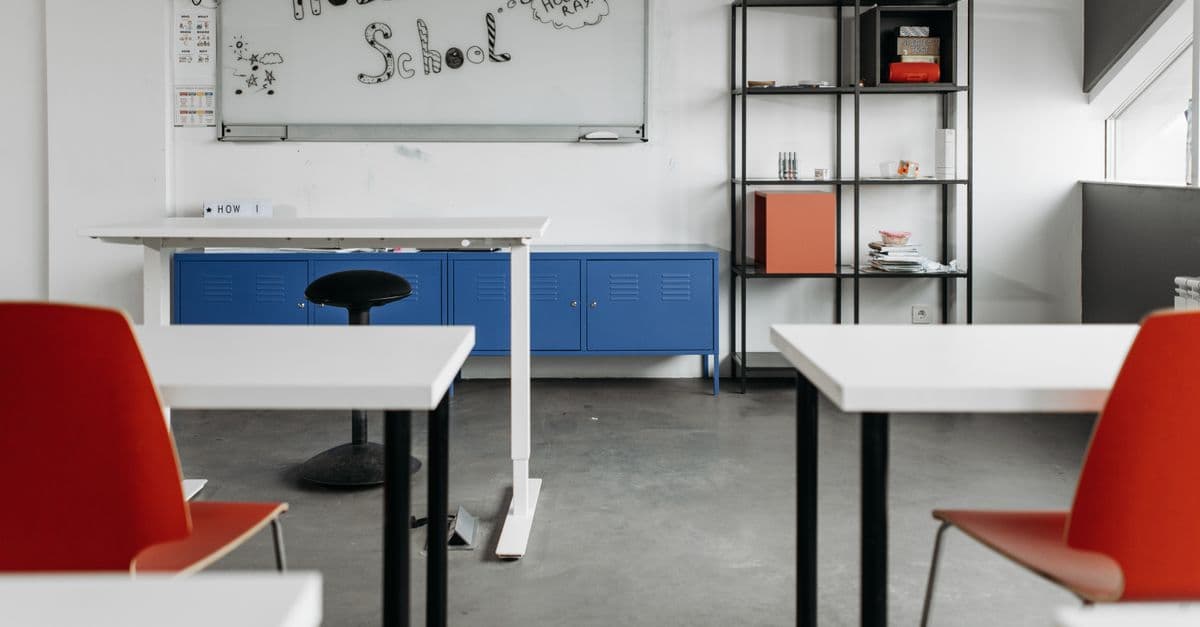
Photo: Pavel Danilyuk / Pexels
Singapore's 15-year-olds scored 575 points in the PISA 2022 mathematics assessment — the highest of any country — and led in science and reading too. That's a clean sweep of every academic domain tested in the world's most rigorous international education study. But Singapore's model runs on high-stakes examinations, streaming by academic ability, and private tutoring spending of approximately $1.4 billion annually. Across the world, Finland achieves nearly equivalent outcomes on long-term skills measures with no standardized testing before university entrance, no streaming before age 16, and one of the shortest school days in the OECD. Both systems work. Understanding why is more valuable than simply ranking them.
How This Ranking Is Built
Education system quality is genuinely multidimensional. No single metric captures everything that matters. This ranking draws on four data sources in combination:
PISA 2022 (Programme for International Student Assessment): The OECD's triennial assessment of 15-year-olds in mathematics, reading, and science. The 2022 cycle, released December 2023, assessed approximately 690,000 students across 81 countries. It tests applied skills — problem-solving using mathematical, scientific, and reading competencies — not curriculum recall. The OECD averages in 2022 were 472 in mathematics, 476 in reading, and 485 in science.
PIRLS and TIMSS: The Progress in International Reading Literacy Study (PIRLS, Grade 4) and Trends in International Mathematics and Science Study (TIMSS, Grades 4 and 8) measure primary and lower secondary performance and are run by the IEA (International Association for the Evaluation of Educational Achievement). They provide a different perspective from PISA's 15-year-old focus.
UNESCO adult literacy rates: Adult literacy (age 15+) captures long-run educational system legacy, including populations educated before recent reforms. Wealthy OECD nations cluster near 99%; developing countries show greater variation.
Tertiary enrollment rates: The proportion of the relevant age group enrolled in higher education, from UNESCO Institute for Statistics and OECD Education at a Glance 2024.
Source: OECD PISA 2022 Results Volume I — oecd.org/en/publications/pisa-2022-results-volume-i
The composite ranking weights PISA scores most heavily (50%), with equity (socioeconomic impact on results), teacher quality indicators, and tertiary outcomes providing the remainder. A country that achieves high average PISA scores with large gaps between rich and poor students (USA) ranks lower than one achieving similar averages with smaller gaps (Estonia).
Top 20 Education Systems (Composite Ranking, 2025)
| Rank | Country | PISA Math | PISA Reading | PISA Science | Literacy Rate | Tertiary Enrollment |
|---|---|---|---|---|---|---|
| 1 | Singapore | 575 | 543 | 561 | 97.5% | 92% |
| 2 | Japan | 536 | 516 | 547 | 99.0% | 91% |
| 3 | South Korea | 527 | 515 | 528 | 99.0% | 94% |
| 4 | Estonia | 510 | 511 | 526 | 99.8% | 93% |
| 5 | Taiwan | 547 | 515 | 537 | 98.5% | 90% |
| 6 | Hong Kong | 540 | 530 | 520 | 97.9% | 82% |
| 7 | Canada | 497 | 507 | 515 | 99.0% | 97% |
| 8 | Finland | 484 | 490 | 511 | 99.0% | 95% |
| 9 | Switzerland | 508 | 483 | 503 | 99.0% | 84% |
| 10 | Poland | 489 | 489 | 499 | 99.8% | 88% |
| 11 | UK | 489 | 494 | 500 | 99.0% | 91% |
| 12 | Netherlands | 493 | 459 | 488 | 99.0% | 87% |
| 13 | Australia | 487 | 498 | 507 | 99.0% | 94% |
| 14 | Denmark | 489 | 489 | 494 | 99.0% | 90% |
| 15 | Sweden | 482 | 487 | 494 | 99.0% | 94% |
| 16 | Germany | 475 | 480 | 492 | 99.0% | 72% |
| 17 | Belgium | 489 | 479 | 491 | 99.0% | 83% |
| 18 | New Zealand | 479 | 494 | 501 | 99.0% | 89% |
| 19 | Norway | 468 | 477 | 481 | 99.0% | 85% |
| 20 | France | 474 | 474 | 487 | 99.0% | 81% |
Sources: OECD PISA 2022 Results; UNESCO Institute for Statistics; OECD Education at a Glance 2024.
Source: OECD, Education at a Glance 2024 — oecd.org/education/education-at-a-glance
Where this data comes from
This ranking integrates PISA 2022 results released by the OECD in December 2023, which assessed approximately 690,000 students across 81 countries in mathematics, reading, and science. Adult literacy rates come from UNESCO Institute for Statistics and the OECD; tertiary enrollment figures are from UNESCO's Institute for Statistics and OECD Education at a Glance 2024. The composite ranking weights PISA performance at 50%, equity measures (performance gaps between socioeconomic groups) at 25%, and tertiary outcomes at 25%. PISA measures applied problem-solving competencies in 15-year-olds rather than curriculum content recall; countries are assessed in their language of instruction by standardized assessment panels to ensure comparability. Data reflects 2022 assessment cycles; some comparative PISA trends draw on 2018 and 2015 cycles to show multiyear evolution.
Historical Context: How International Education Benchmarking Developed
International education comparisons did not exist before the 1960s. Before the IEA launched the First International Mathematics Study (FIMS) in 1964, countries had no systematic way to assess whether their education systems were performing well or badly relative to peers. The results were often surprising and unwelcome.
The United States' poor showing in early IEA studies was politically significant: the Cold War context made educational performance a national security issue. Sputnik (1957) had already generated the National Defense Education Act; evidence that American students underperformed European and Asian peers in mathematics added urgency to reform debates. This pattern of international comparison generating domestic reform pressure has repeated regularly: Germany's "PISA shock" following the 2000 results (where Germany ranked well below European peers it had assumed it outperformed) triggered a comprehensive reform of German schooling; Japan's slight PISA decline in the early 2000s generated domestic panic and policy revision.
PISA's launch in 2000 by the OECD transformed the landscape. Unlike the IEA studies, PISA tested applied competencies rather than curriculum content — measuring what students could do with knowledge, not merely what they had memorized. This shift favored education systems that emphasized conceptual understanding and problem-solving over those that emphasized rote learning, and generated significantly different rankings than the earlier curriculum-based assessments.
The 2022 PISA cycle produced a globally significant finding: mathematics scores declined by a record 15 points across OECD countries between 2018 and 2022, with reading falling 10 points. The 2020–2021 school closures during the COVID-19 pandemic are the primary explanatory factor — the equivalent of approximately 6 months of lost learning, with effects concentrated among lower-income students who had less access to effective remote learning environments.
Source: OECD, PISA 2022 Results Volume I and Volume II: Learning During and After COVID-19 — oecd.org
What separates high-performing systems from peers
The most consistently high-performing education systems—Singapore, Japan, Estonia, South Korea—share a recognizable cluster of features that extend beyond any single policy. First, all select teachers from the top academic talent pool and invest heavily in teacher training; Singapore's National Institute of Education admits only top-third candidates, Finland admits 10% of applicants, and Japan and South Korea maintain teaching as culturally prestigious. Second, all maintain high expectations for all students rather than early tracking; Estonia and Canada achieve top-quartile PISA scores with comprehensive, untracked systems into upper secondary school, while early-tracked systems like Germany show larger inequality gaps. Third, all emphasize conceptual understanding over memorization—Singapore's concrete-pictorial-abstract progression, Japan's lesson study model, and Estonia's outcome-based curriculum all prioritize deep learning over procedure. Fourth, all have curriculum coherence—vertically aligned progressions that build systematically year to year rather than repeating or skipping topics unpredictably. The systems diverge significantly in pressure levels and assessment philosophy—Singapore uses high-stakes tracking, Finland uses minimal standardized testing—but converge on these structural factors. The implication is that multiple pedagogical approaches can produce high achievement (pressure-based or non-pressure-based), but all require investing upstream in teacher quality, maintaining high expectations universally, and building coherent curricula.
Why These Rankings Matter: Education as Economic Infrastructure
Education systems are, in economic terms, the infrastructure that produces human capital — the skills, knowledge, and productive capacity of a population. Unlike physical infrastructure (roads, ports, power grids), human capital takes 12–18 years to produce and cannot be imported at short notice. Countries that neglect their education systems for a generation face a 20-year lag before corrections show up in workforce quality.
The economic returns to education are among the most reliably documented in economics. The Mincer wage equation — estimating returns to each additional year of schooling — consistently finds 8–10% wage premium per additional year of education. At the national level, a 1-point increase in PISA scores is associated with approximately 2% higher long-run GDP per capita, according to Hanushek and Woessmann's extensive cross-country research.
But the relationship is not just GDP. Education affects health outcomes (more educated individuals make better health decisions and have better health literacy), political participation (education correlates with voting, civic engagement, and democratic stability), and social mobility (education is the primary mechanism through which children from low-income families can achieve higher-income outcomes than their parents).
The equity dimension is particularly significant. An education system that produces excellent outcomes on average but with large gaps between rich and poor students creates human capital waste and social stratification. Finland's extraordinary attention to equity — minimizing performance gaps between schools, between socioeconomic groups, and between regions — is not separate from its educational success; it is a central component of it.
Singapore: The Architecture of High Performance
Singapore's consistent domination of PISA — top or near-top in every subject in every cycle since joining in 2009 — reflects an education system that was consciously designed for performance from the moment of national independence in 1965.
The country's founding anxiety was existential: Singapore had no natural resources, a small population, and neighbors vastly larger than itself. The only path to prosperity was human capital. Education was consequently treated as a national strategic priority, not merely a social service — and resourced accordingly.
Teacher selection and training. Singapore's National Institute of Education (NIE) is the sole pathway into teaching. It accepts only candidates from the top third of each academic cohort. Entry to teacher training is competitive; teaching is among the most socially prestigious professions in Singapore. Starting teacher salaries are comparable to starting engineer salaries. The NIE provides continuous professional development; teachers spend approximately 100 hours per year in formal professional learning.
The Singapore math curriculum. Singapore's Primary Mathematics curriculum, developed in the 1980s and revised repeatedly since, emphasizes a concrete-pictorial-abstract (CPA) progression: students first manipulate physical objects, then work with pictorial representations, then move to abstract symbols. The curriculum covers fewer topics more deeply than comparable curricula elsewhere, emphasizing mastery before moving forward. "Singapore math" has been adopted by schools in the USA, UK, Australia, and dozens of other countries after research confirmed superior outcomes.
Assessment and tracking. Singapore's Primary School Leaving Examination (PSLE) at age 12 places students in differentiated secondary school tracks — a system of high-stakes streaming that has been progressively reformed since 2020, replacing hard track assignments with subject-based banding. The reform acknowledged that early streaming was locking some students out of academic pathways before their potential was clear, but the underlying high-expectations, high-accountability framework remains.
Private tutoring. Singapore's academic culture generates enormous private tutoring spending — estimated at approximately $1.4 billion annually for a population of 6 million, concentrated among primary and secondary school students. "Tuition centers" (tutoring businesses) are a significant industry. This represents both a mark of the system's success in creating demand for academic achievement and a concern about equity — families that can afford extensive tutoring compound their children's advantages.
The mental health corollary of Singapore's academic pressure is taken seriously by policymakers. Youth mental health surveys show elevated anxiety among Singaporean students compared to lower-pressure systems. The government has introduced mindfulness programs, reduced examination frequency, and expanded social-emotional learning, while maintaining overall academic standards. The tension between high performance and student wellbeing is not resolved; it is being managed.
Source: Ministry of Education Singapore, Education Statistics Digest 2024 — moe.gov.sg
Estonia: Europe's Quiet Education Miracle
Estonia's position as Europe's top PISA performer — above Germany, France, the UK, Sweden, and Finland in mathematics and science in 2022 — is routinely described as a miracle, but it is more accurately described as the result of specific policy choices that happen to align with what research shows works.
A country of 1.3 million people, independent from the Soviet Union only since 1991, Estonia had to build its education system largely from scratch in the 1990s — an educational blank-slate opportunity that larger, more established systems did not have. The rebuilt system incorporated several features that were then at the research frontier:
Teacher autonomy. Estonian teachers have substantial curricular freedom within a national framework. The national curriculum specifies learning outcomes and core content but leaves pedagogical methods largely to teacher discretion. This trust relationship between policy and practice differs from systems where teachers implement centrally-mandated methods.
Digital integration. Estonia was among the first countries to provide all students with internet access and computer science education from primary school. The "Tiger Leap" program in the late 1990s brought computers and connectivity to every Estonian school. Digital literacy is a core component of Estonian schooling in ways that are now standard but were pioneering when introduced.
Equity as explicit goal. Estonia's PISA scores are distinguished not only by their height but by their uniformity. The gap between Estonia's highest- and lowest-performing students is among the world's smallest. The gap between schools in wealthy and poor communities is smaller than in almost any comparable country. This equity reflects deliberate policy: teacher allocation policies prevent the concentration of the best teachers in already-advantaged schools; per-student funding is weighted toward students with greater needs.
Cultural reverence for education. Estonia's small national literature — at risk during Soviet occupation — has made education a symbol of cultural survival. The national singing festival (laulupidu), the national library, and the emphasis on Estonian-language education in the Soviet resistance era created a cultural context in which learning is understood as part of national identity, not merely economic strategy.
Estonia's PISA scores have been consistent across multiple cycles, suggesting they reflect genuine system quality rather than gaming or sampling effects. Among European nations, only Estonia and Netherlands maintain top-15 global rankings across all three PISA domains simultaneously.
Finland: Less as More
Finland's PISA journey is the most instructive narrative in international education — not because Finland is currently the best system, but because of what it demonstrates about the relationship between pressure, measurement, and actual learning.
Finland topped European PISA rankings in 2000, 2003, and 2006 — a performance that generated what became known internationally as "Finland envy." Education ministers from across the world visited Helsinki to observe a system that produced top performance without standardized tests, without grouping students by ability, without formal homework in early grades, and with some of the shortest school hours in the OECD.
Finnish primary students start formal school at age 7 — two years later than many peer countries. Early education is play-based, with developmental rather than academic goals. Homework is minimal through the lower secondary years. Standardized national tests exist only for the matriculation examination at age 18 or 19. Teachers design their own assessments.
The explanation is teacher quality. Finnish teacher education is highly selective — approximately 10% of applicants to primary teacher training programs are accepted, making it more competitive than law or medicine in some years. All teachers hold a master's degree (5-year program). Teachers are trusted professionals with genuine curricular autonomy and high social status. Finnish education spending per student is approximately average for the OECD — Finland does not outspend its way to good results; it out-selects its teaching workforce.
Finland's PISA mathematics score fell from its 2006 peak to 484 in 2022 — a 27-point decline that has generated significant domestic debate. The decline has been attributed to increased social inequality (Finland's historically homogeneous society has become more diverse), reduced student motivation (surveyed Finnish students show lower educational aspirations than Asian peers), and possible curriculum complacency. The Finnish government has introduced a new national core curriculum and increased mathematics hours in response.
What Finland retains is its equity record — the gap between Finland's highest- and lowest-performing students remains among the world's smallest, and the impact of socioeconomic background on PISA scores is lower in Finland than in almost any other country. A Finnish child from the poorest family quintile has a significantly higher probability of achieving high academic outcomes than an equivalent child in Germany, France, or the United States.
Source: Finnish National Agency for Education, Finnish Education in a Nutshell 2024 — oph.fi
East Asia: Japan and South Korea
Japan and South Korea share an educational culture built on expectations of high achievement, strong family investment in children's learning, and examination-oriented secondary systems — but they implement this culture through different mechanisms and with different tradeoffs.
Japan (PISA 2022: 536 math, 516 reading, 547 science) structures education around deep conceptual learning, collaborative problem-solving, and character development alongside academic achievement. Japanese elementary students clean their own classrooms, serve each other school lunch, and participate in school governance — practices that reflect a philosophy of education as moral and social development, not merely academic preparation.
Japanese mathematics instruction is particularly well-developed. "Lesson study" (jugyou kenkyuu) — a practice where teachers collaboratively design, teach, observe, and revise individual lessons in detail — has been adopted in the UK, USA, and elsewhere as a model of teacher professional learning. Japanese math lessons typically involve a small number of problems worked on deeply by the whole class, with explicit discussion of different solution approaches, rather than the large number of practice problems that characterizes many Western math curricula.
Japan's educational challenge is student mental health. Japan has extremely high academic expectations, significant private tutoring (juku attendance affects approximately 40% of primary and secondary students), and high-stakes university entrance examinations that determine access to elite institutions. Youth mental health issues, including academic-related anxiety, are acknowledged as significant concerns in Japanese education policy.
South Korea (PISA 2022: 527 math, 515 reading, 528 science) takes academic pressure further. "Education fever" (gyoyuk yeol) is a cultural phenomenon acknowledged across Korean society. Private tutoring institutes (hagwons) operate until 10 pm by government regulation — earlier the cutoff was midnight before public health concerns prompted restriction. Korean families spend approximately $20 billion annually on private tutoring — a figure representing approximately 1% of Korean GDP dedicated solely to out-of-school academic supplementation.
The suneung (university entrance examination), taken in November of senior year, is the central organizing event of a Korean student's academic life. Its results determine access to SKY universities (Seoul National, Korea, Yonsei) — the institutions whose graduates disproportionately fill government, corporate leadership, and professional positions. The examination's centrality creates rational incentives for the educational arms race of hagwon attendance that the government has repeatedly attempted — and failed — to reduce.
South Korea's 0.72 fertility rate is at least partly a consequence of its education system. Young Koreans who have experienced 12–15 years of extreme academic pressure, who know the cost of private tutoring, and who are uncertain about their own economic security are making rational decisions not to impose the same system on children they might have.
Source: OECD, PISA 2022 Results Volume II: Learning During and After COVID-19.
Poland: Reform as a Case Study
Poland's education transformation is one of the most studied reform stories in contemporary education policy because it demonstrates that large-scale improvement is possible within a decade, in a middle-income country, without massive spending increases.
Poland's PISA score in mathematics was below the OECD average in 2000. By 2022 it had reached 489 — above Germany, France, Sweden, and the UK. The improvement happened against a backdrop of multiple structural reforms implemented in the early 2000s: the extension of comprehensive (untracked) education from age 10 to 16; new teacher training standards; revised curricula emphasizing problem-solving and critical thinking; and a national testing system that provided schools with performance data they hadn't previously had.
The equity outcome of Poland's reforms is particularly notable. Poland maintained low performance inequality between schools even as it raised average scores — demonstrating that reforms aimed at improving average outcomes can simultaneously reduce the gap between advantaged and disadvantaged students.
Poland's reform also illustrates the political fragility of educational gains. Post-2015 government changes partially reversed some structural reforms — eliminating the gymnasium (lower secondary school) tier that reformers had credited with equity gains. Whether Poland's PISA performance sustains in coming cycles will test the durability of gains from structural reform in the face of political change.
Source: Jakubowski et al. (2016), "The Polish Education Miracle Revisited," IZA Institute of Labor Economics.
Germany: The PISA Shock and Its Aftermath
Germany's 2000 PISA results were nationally traumatic. Germany — which had viewed itself as having one of the world's finest education systems — ranked significantly below the OECD average in reading and around average in mathematics. The results triggered a national debate about German education that generated significant reform.
The "PISA shock" prompted investment in early childhood education (Germany's public preschool provision had been limited), extension of full-day schooling (German schools traditionally ended at noon, leaving afternoons to family or private tutoring), improved support for students with immigrant backgrounds (Germany's large Turkish-origin and immigrant population was disproportionately failing in a highly tracked system), and reform of teacher training.
Germany's 2022 PISA score (475 in mathematics, below OECD average) reflects that reform progress has been partial. Germany's school system remains highly tracked — students are separated into gymnasium (academic), realschule (technical), and hauptschule (basic vocational) tracks based on primary school assessments at age 10. Research consistently shows that early tracking increases inequality (track assignments correlate strongly with family socioeconomic status) without corresponding benefits for average performance. Germany is gradually reducing the rigidity of the tracking system but institutional change is slow.
Germany's tertiary education system remains strong — German universities produce approximately 350,000 graduates annually, the bachelor's degree is tuition-free, and the Fachhochschule (university of applied sciences) system provides practically-oriented higher education for technical and professional fields. Germany's vocational education system (Ausbildung, the dual system of workplace training and classroom instruction) is widely regarded as the world's best model for post-secondary technical qualification.
The USA: High Spending, Mediocre Outcomes
The United States spends more per student than any other OECD country — approximately $17,000 per year for primary and secondary students combined, compared to an OECD average of approximately $11,000. Its PISA scores in mathematics rank approximately 28th among OECD countries. The gap between spending and outcomes is one of the most analyzed puzzles in education policy.
The structural explanation is inequality. The US funds schools primarily through local property taxes — meaning that schools in wealthy suburbs receive far more resources per student than schools in poor urban or rural districts. This funding structure is almost unique among OECD countries (most fund education through central or state governments to equalize resources). The result is that US school quality varies enormously by zip code — producing both some of the world's most well-resourced private and suburban public schools and some of its most chronically under-resourced schools.
Teacher compensation and status are secondary factors. US teacher salaries, adjusted for education level and hours worked, are below median OECD levels in many states. Teaching has lower social prestige in the US than in Finland, Singapore, Japan, or South Korea. The predictable result is that the most talented college graduates are less likely to choose teaching relative to other career options, compared to those countries.
The US performs better at the tertiary level. US universities — particularly research universities — dominate global rankings. The QS World University Rankings 2024 places eight US institutions in the global top 20. US graduate education and research output are globally preeminent. The K-12 problem is therefore particularly stark in context: the US produces some of the world's best universities while operating some of the most unequal primary and secondary systems in the OECD.
Source: NCES (National Center for Education Statistics), US Results on PISA 2022 — nces.ed.gov/surveys/pisa
What the Research Says Works: Cross-Country Evidence
Cross-country education research has accumulated enough evidence to identify the factors that consistently distinguish high-performing systems from low-performing ones.
Teacher quality is the single most important within-school determinant of student outcomes. The impact of having a highly effective teacher versus a low-effectiveness teacher on a student's annual learning is equivalent to approximately 1 additional year of schooling — a massive effect. Systems that attract high-ability graduates to teaching (Singapore, Finland), train them rigorously, and provide high-quality professional development consistently outperform systems that do not.
Instructional coherence — consistent, cumulative learning progression across grades that builds on prior knowledge systematically — distinguishes high-performing curricula from fragmented or repetitive ones. Singapore's and Japan's curricula are known for coherence; the decentralized US curriculum (controlled by 50 states and thousands of districts) is known for incoherence and repetition.
High expectations for all students as a default — rather than tracking some students into lower-expectation pathways early — is associated with better equity outcomes and equivalent or better average outcomes. Finland, Estonia, and Canada maintain high expectations without early tracking; Germany and the UK maintain tracking and produce larger inequality gaps.
Time on learning matters for mathematics particularly. Students in Singapore, Japan, and South Korea spend more total instructional hours in mathematics across their school careers than European counterparts. The effect is cumulative — small annual differences become large gaps over 12 years.
Family and cultural factors are real and significant but less amenable to policy intervention. East Asian educational culture — in which academic achievement is a core family investment and strong student effort is a cultural norm — is a genuine contributor to high PISA scores. Dismissing this as mere "pressure" misses the agency it also implies: students who believe effort produces results work harder, which produces results.
Source: Hanushek & Woessmann (2015), "The Knowledge Capital of Nations: Education and the Economics of Growth," MIT Press.
Trends Shaping Education in 2025 and Beyond
AI in education is the most significant development in the sector since the internet. Large language model tutoring systems — capable of providing personalized, immediate feedback on student work — are being deployed in schools globally. The potential to provide every student with a patient, knowledgeable, personalized tutor is real. The risks include: outsourcing student thinking to AI (undermining the formation of genuine cognitive skills), inequitable access (if AI tutoring is a premium product that advantaged families access first), and teaching to the measurable (optimizing for what AI can assess rather than developing broader competencies).
Post-COVID learning recovery is still ongoing in most countries. The PISA 2022 results quantified the damage — a 15-point average drop in mathematics across OECD countries. Countries that invested most heavily in structured tutoring programs, extended school years, and targeted support for disadvantaged students (Netherlands, Singapore, some Australian states) showed the fastest recovery. Countries that simply resumed normal instruction largely retained the COVID learning gap through the cohort.
Teacher shortages are emerging as a structural constraint in multiple high-income countries. Australia, the UK, the USA, and Germany are all reporting significant shortfalls in qualified mathematics, science, and special education teachers. The shortfalls reflect years of below-market compensation, relative decline in teaching's social status, and the COVID-period burnout of experienced teachers who left the profession early. Reversing teacher shortages requires making teaching a more attractive career — through compensation, conditions, and status improvements that take years to produce pipeline effects.
Multilingual education is a growing policy challenge. Germany, Sweden, Netherlands, and France are dealing with significant populations of school-age children who are not native speakers of the language of instruction. The evidence on best practice — immersive instruction in the language of education versus maintained bilingual programs — is genuinely mixed and context-dependent.
Source: OECD, "Education at a Glance 2024" and "PISA 2022 Volume II: Learning During and After COVID-19."
Frequently Asked Questions
Q: What is PISA and how reliable is it? A: PISA (Programme for International Student Assessment) is run by the OECD and tests approximately 690,000 fifteen-year-old students across 81 countries and economies every three years in mathematics, reading, and science. It is designed to measure applied competencies rather than curriculum knowledge. The assessment is methodologically rigorous — random sampling, translated versions validated across languages, detailed data quality checks. Criticisms of PISA include: it tests a narrow range of educational outcomes (not creativity, collaboration, or civic knowledge); it may disadvantage systems that prioritize non-cognitive development; and countries' incentives to participate and perform well may create subtle selection effects. Despite these limitations, PISA is the most credible cross-national education comparison available.
Q: Why does the USA rank low given its education spending? A: The USA spends approximately $17,000 per student per year — the highest in the OECD — but scores around 28th in PISA mathematics. The gap between spending and outcomes reflects primarily the inequitable distribution of resources (locally-funded schools concentrate resources in wealthy areas), lower teacher prestige and compensation relative to peer countries, and decentralized curriculum standards that produce inconsistency across states and districts. US elite universities and graduate programs are globally excellent — the K-12 underperformance coexists with tertiary-level excellence in a system of very high within-country variance.
Q: What is Singapore math and why are schools globally adopting it? A: Singapore's primary mathematics curriculum emphasizes a concrete-pictorial-abstract (CPA) progression — students first work with physical objects, then pictorial representations, then abstract symbols. It covers fewer topics more deeply, emphasizing mastery and conceptual understanding before moving to new material. Problem-solving and reasoning are central rather than procedural fluency. Multiple countries — including the UK, USA, and Australia — have adopted Singapore math in some or all schools after comparative research showed superior student outcomes.
Q: Is high-pressure East Asian education worth it? A: The academic outcomes are unambiguously high. The wellbeing costs are real and measurable — higher rates of academic anxiety, elevated youth mental health concerns in Japan, South Korea, and Singapore, and low fertility rates that are partly attributed to the perceived cost of raising children in high-pressure educational cultures. Whether the tradeoff is worth it is a values question that societies, not researchers, must answer. What the evidence shows is that high pressure is not the only route to high performance — Estonia achieves outcomes close to South Korea's without comparable pressure. Finland demonstrates that low-pressure systems can achieve very high equity outcomes. The claim that extreme examination pressure is necessary for high performance is not supported by the full international evidence base.
Q: How does Finland maintain good results without standardized testing? A: Finland's teacher education is so selective and rigorous — training the top 10% of academic graduates in a five-year program — that teacher quality becomes the quality assurance mechanism. Rather than monitoring outcomes through standardized tests, Finland monitors inputs through teacher selection and training. The lack of standardized testing removes incentives to teach to the test and allows teachers to respond to individual student needs. Finland does use formative assessment regularly — continuous feedback within classrooms — but this is teacher-designed rather than standardized. National evaluation happens through sampling, not universal testing, reducing the high-stakes pressure that standardized testing creates.
Q: What can developing countries learn from top education systems? A: The most transferable lessons are: invest in teacher quality and status first (high-status, well-paid, rigorously trained teachers are the common factor across every high-performing system); maintain high expectations for all students rather than tracking students into low-expectation pathways early; build curriculum coherence across grade levels; and address equity as a central educational goal rather than an afterthought. What does not transfer easily is the cultural context — East Asian educational culture took generations to develop and is not replicable through policy alone. But the institutional factors are policy-amenable, and Poland's rapid improvement from average to top quartile demonstrates that large-scale change is achievable within a decade.
Sources
- OECD, PISA 2022 Results Volume I — oecd.org/en/publications/pisa-2022-results-volume-i
- OECD, Education at a Glance 2024 — oecd.org/education/education-at-a-glance
- UNESCO Institute for Statistics — uis.unesco.org
- Finnish National Agency for Education — oph.fi
- Ministry of Education Singapore — moe.gov.sg
- Hanushek & Woessmann (2015), "The Knowledge Capital of Nations," MIT Press
- Jakubowski et al. (2016), "The Polish Education Miracle Revisited," IZA Discussion Paper
The Takeaway
The best education systems in 2025 share a small number of non-negotiable features: high teacher quality built through rigorous selection and training, genuine cultural and institutional alignment on the value of learning, and sufficient equity that outcomes are not determined by the zip code or family income of the student. Singapore and Estonia demonstrate that high performance is achievable through opposite approaches to pressure and structure — what they share is teacher quality and systemic coherence, not examination culture. The countries losing ground — Germany, France, and several other wealthy nations with declining PISA scores — are not failing because they spend too little but because they have not invested sufficiently in teacher quality, curriculum coherence, or equity. Money alone does not buy educational outcomes; the evidence on that is by now unambiguous.
Related Reading
Follow new articles
Add SciHub101 to your feed reader to see new science and technology stories.
About the Author
SciHub101 is an independent science and technology publication founded and edited by Buğra Sözeri, a software engineer and app developer based in Türkiye. AI tools assist with drafting and research. Source documentation in the existing archive is uneven, and articles are being reviewed and corrected. The Editorial Team byline identifies editorial responsibility; it does not certify specialist or independent human review. Where we compare products, anything built by our own team is labelled as such — see the editorial guidelines and About page for how corrections and disclosures work.
Related Articles
Countries That Still Use the Death Penalty (2025 Ranked)
China executes more people than the rest of the world combined — an estimated 1,000+ per year. Iran executed 972+ people in 2024. The US carried out 24 executions. 55 countries retain the death penalty; 112 have abolished it. Saudi Arabia executed 345+ people in 2024 — its highest total in decades.
Countries Most Affected by Human Trafficking (2025 Ranked)
India, China, and North Korea have the largest populations in modern slavery. The ILO estimates 50 million people are in forced labour or forced marriage globally. Thailand and Mexico are major transit and destination countries. The Gulf's kafala sponsorship system has enabled widespread labour exploitation.

Active Recall and Quiz-Based Learning: The Science Behind the Most Powerful Study Method
Decades of cognitive psychology research reveals that the most effective study method is not reading or highlighting. It is active recall: testing yourself on what you have learned, spacing those tests over time, and using retrieval difficulty as the signal for what to study next. The research, pioneered by Roediger and Karpicke, shows that retrieval practice produces substantially larger long-term learning gains than equivalent study time spent on relearning. This article explains the science and shows how to apply it to any subject.

The Best Science Podcasts of 2026: Ranked by a Nerd
Science podcasts have matured from amateur bedroom productions to professionally produced programs with fact-checkers, scientific advisors, and international distribution. This guide ranks 12 of the best science podcasts across five domains — cosmology and physics, biology and medicine, technology and AI, history and culture, and storytelling — based on audio quality, scientific accuracy, pacing, and accessibility to non-experts. Whether you are driving, exercising, or cooking, these programs offer genuinely useful science education without the oversimplification that plagues popular science.

Universities Leading AI Research: Global Rankings for 2026
MIT, Stanford, and Carnegie Mellon dominate US AI research rankings. Tsinghua University now publishes more AI research than any US institution by volume. The field's geography has shifted fundamentally in a decade — and the compute gap between academic and industry frontier research is wider than it has ever been.
Countries Spending the Most on Education: Data Ranked
Kiribati tops World Bank data on government education spending at 16.4% of GDP, yet that share equals only a few hundred dollars per resident. This ranking explains why share of GDP misleads and how spending relates to PISA results.