The Libet Experiment: Did Your Brain Decide Before You Did?

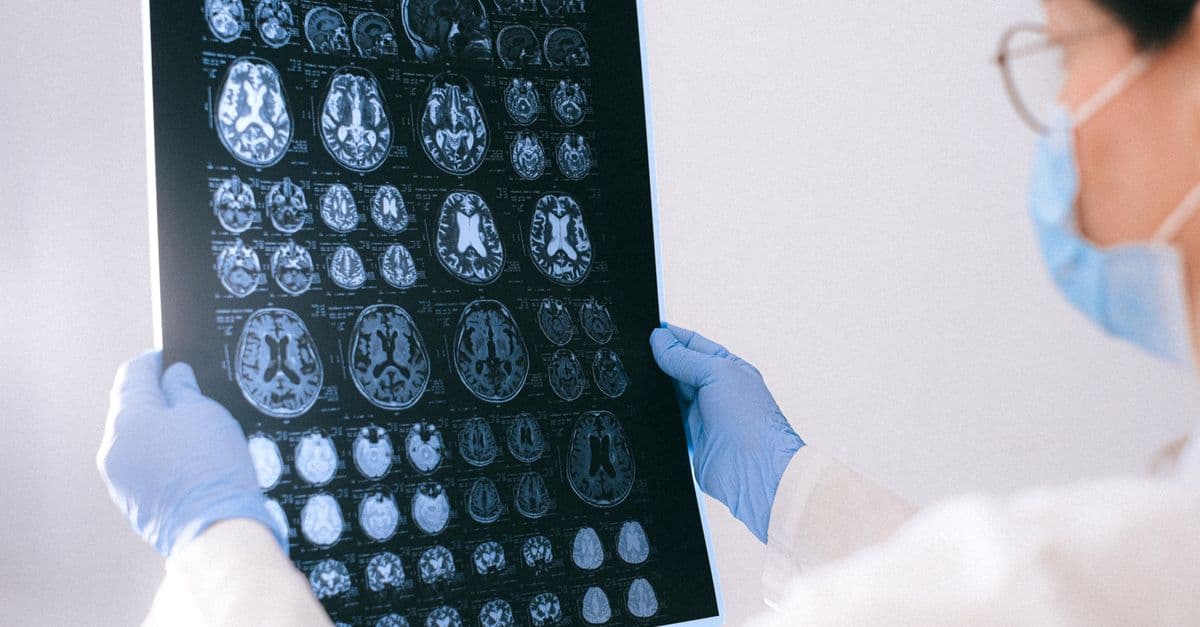
Photo: Engin Akyurt / Pexels
In 1983, a neurophysiologist at the University of California San Francisco asked volunteers to flex their wrist whenever they felt like it, while watching a clock and noting the moment they first felt the urge to move. The EEG data that came back was philosophically explosive: the brain's electrical buildup to the movement — what researchers call the readiness potential — began on average 550 milliseconds before the movement itself, but the volunteers reported their conscious intention to move only about 200 milliseconds before it. The unconscious brain, it appeared, was initiating movement roughly 350 milliseconds before the person "decided" to move. This experiment has been cited ever since as evidence against free will, misread by popular culture, refined by neuroscientists, and partially dismantled by a 2012 reinterpretation that changes what the readiness potential actually means.
What Libet Was Investigating
Benjamin Libet spent his career at UCSF investigating the neural basis of conscious experience — specifically, the timing relationship between brain events and the subjective experiences that accompany them. His earlier work had established that sensory stimuli to the skin required about 500 milliseconds of cortical processing before producing conscious sensation, even though subjects reported the sensation as occurring at the time of the stimulus. The brain, in other words, was doing extensive unconscious processing before delivering anything to awareness.
Source: Benjamin Libet — Wikipedia
The 1983 experiment extended this temporal investigation to voluntary action. The question: when does a person decide to move, and how does that timing relate to the neural processes that produce the movement?
This question had been made experimentally tractable by earlier work on the readiness potential (RP), a slow, negative-going electrical wave recorded by EEG electrodes over the supplementary motor area and motor cortex that precedes voluntary movements. German neurophysiologists Hans Helmut Kornhuber and Lüder Deecke had first described the RP in 1965, noting that it began as much as a second or more before the actual movement.
Definition — readiness potential (Bereitschaftspotential): A slow, negative EEG potential that builds up over the motor and premotor cortex in the hundreds of milliseconds preceding a voluntary, self-initiated movement. It was first described by Kornhuber and Deecke in 1965 and is measured using scalp electrodes.
Libet's innovation was to add the subjective timing component. Previous work had established the RP's existence but had not asked participants to report when they first became aware of their intention to move. Libet designed a method to capture that subjective timing: a circular clock with a rapidly revolving dot, and a simple instruction to note the clock position when the urge to move first arose.
The Setup: EEG, a Clock Dot, and a Wrist Flex
Participants sat comfortably in a chair, viewing a specially designed clock face. The clock had a single dot revolving at a constant speed, completing a full rotation every 2.56 seconds — fast enough to allow relatively precise timing of events.
Source: Volition and the Brain — Revisiting a Classic Experimental Study — PMC
The instruction was deliberately open: flex your fingers or wrist whenever you feel the urge, spontaneously, without planning ahead of time. Don't preplan the movement — just let it happen when you feel like it. After the movement, report where the dot had been when you first noticed the urge to move. This clock position was then converted into a time value, giving Libet a measure of what he called W-time — the time of the conscious wish or intention to move.
Simultaneously, EEG electrodes recorded brain activity, and an electromyograph (EMG) on the wrist recorded the exact moment the muscles contracted, triggering the beginning of the movement.
Source: Benjamin Libet Do We Have Free Will? — University of Colorado
Each participant completed multiple trials. The data from many trials were averaged together — a standard EEG practice, since the RP is a small signal that requires averaging across trials to distinguish it from background noise. The movement onset (the EMG trigger) was used as the reference point for alignment.
| Measurement | Method | Timing Relative to Movement |
|---|---|---|
| Readiness potential onset | EEG averaging | ~550 ms before movement (range: 1200–225 ms) |
| Subjective W-time (urge to move) | Clock dot report | ~200 ms before movement |
| Gap between RP onset and W-time | Calculation | ~350 ms |
| Veto window | RP minus W minus safety margin | Up to ~150–200 ms after W |
Source: A Meta-Analysis of Libet-Style Experiments — ScienceDirect
The Results: The Brain Moves First
Across participants and trials, the readiness potential began on average approximately 550 milliseconds before the actual wrist movement. In some trials it began up to 1,200 milliseconds before movement. The subjective experience of willing the movement — the W-time — was reported approximately 200 milliseconds before movement onset.
Source: An intellectual history of the "Libet experiment" — Paris Institute for Advanced Study
The arithmetic is the source of everything that followed: RP onset at roughly -550 ms, W-time at roughly -200 ms. The brain's preparatory activity preceded the conscious intention by roughly 350 milliseconds. The standard interpretation: by the time you experience the urge to move, your brain has already been building toward that movement for more than a third of a second.
This finding appeared to have direct implications for the philosophy of free will. If conscious intention follows the brain's preparatory activity rather than initiating it, what role does conscious will actually play? The intuitive understanding of voluntary action — I decide to move, my decision causes the neural process, my muscles then respond — appears to be inverted. The brain process begins before the decision.
Source: Free Will and the Brain: Are We Really in Control? — Medium/Sharath Kumar
Libet himself did not conclude that free will was an illusion. He noted that there was a window — roughly 150 to 200 milliseconds between the conscious urge and the actual movement — during which the participant could potentially cancel the action. He called this capacity "free won't": not the freedom to initiate action, which the data suggested was initiated unconsciously, but the freedom to veto an action that the unconscious brain had already begun preparing.
The Controversy: Philosophical Overreach and Methodological Gaps
The popular interpretation of Libet's experiment — that it disproves free will — ran well ahead of what the data actually showed, and Libet himself argued against it.
Source: Free Won't: It May Be All That We Have — Psychology Today
Several methodological problems were identified promptly by critics. The most fundamental: the W-time measurement requires participants to retrospectively match a remembered clock position to an internal state that may be poorly defined at the time of occurrence. The "urge to move" is not a precisely delineated event — it emerges gradually, and the moment it crosses some threshold of noticeability is subject to substantial individual variation and introspective noise.
Philosopher Daniel Dennett was among the most prominent critics. He argued that the EEG data and the W-time data are not comparable in the way Libet assumed: the EEG is objective, but the W-time is a retrospective report of a subjective state, and the two need not be measuring the same thing at the same point in time. The brain might be doing something that will eventually manifest as a conscious urge, but that does not mean the conscious urge has been replaced or preempted.
A second criticism concerned the nature of the experimental task. Participants were asked to perform a spontaneous, meaningless wrist flex — an action with no consequences, no goals, no stakes. The neural processes governing such a task may be fundamentally different from those governing real voluntary decisions with meaning, alternatives, and consequences. Libet's paradigm, critics argued, tested one very narrow and unusual type of action and then extrapolated to all voluntary behavior.
Source: A Meta-Analysis of Libet-Style Experiments — ScienceDirect
The "free won't" hypothesis attracted both support and skepticism. Libet's own experiments showed that when participants were instructed to abort a movement they had begun preparing, the RP flattened out just before the EMG — consistent with the idea that a late-stage veto process was suppressing the incipient movement. This finding suggested that conscious will might operate not at the initiation stage but at the inhibition stage: not "go" but "no-go."
Replication and the Schurger Revolution
The first major empirical challenge to the standard Libet interpretation came not from philosophy but from neuroscience. In 2012, Aaron Schurger, Jacobo Sitt, and Stanislas Dehaene published a paper in the Proceedings of the National Academy of Sciences proposing a radically different explanation for the readiness potential.
Source: Schurger — The Stochastic Accumulator Model — josegudemd.com
Their model: the RP is not a preparatory signal that begins building when the brain "decides" to move. Instead, it reflects ongoing, random fluctuations in neural activity — the constant, stochastic background noise of a brain that is always on, always generating spontaneous fluctuations. When the task is to flex your wrist whenever you feel like it, what you are actually waiting for is a moment when this neural noise crosses an action threshold. Because you only move when the noise crosses the threshold, and because you always average the EEG trials aligned to movement onset, the average will always show a rising signal before movement — not because the brain is deliberately preparing, but because you have selected the trials where the noise happened to be rising toward threshold.
Think of it like this: imagine standing at a window watching people walk by and recording the noise level in the street for 10 seconds before each person crosses the intersection. The average might look like noise was rising before they crossed — but only because you selected the crossings, and crossings happen more often when there is a gap in traffic, which might correlate with noise patterns. The selection criterion builds structure into the average.
Source: Confusions regarding stochastic fluctuations and accumulators in spontaneous movements — bioRxiv
Schurger's reinterpretation has important implications: if the RP is neural noise rather than deliberate preparation, then the gap between RP onset and W-time does not mean the brain "decided" before the person did. The conscious urge might still be temporally close to the actual commitment to act, with the RP reflecting the stochastic environment in which that commitment arises.
The Schurger model has been influential but not universally accepted. Subsequent work has both supported and challenged its predictions, and the debate about what exactly the RP reflects — noise, preparation, or some combination — remains active in the field.
The Veto Window: Schultze-Kraft and the Point of No Return
A parallel line of research examined the flip side of Libet's "free won't" hypothesis: not whether people can veto actions, but how late they can do so and what neural state corresponds to the point of no return.
In 2016, Matthias Schultze-Kraft and colleagues published research in PNAS identifying the neural point of no return in vetoing self-initiated movements. They combined EEG monitoring with a real-time paradigm in which a stop signal could appear at variable times after RP onset, and participants were instructed to abort the movement if they saw the signal.
Source: Using a Veto paradigm to investigate decision models in Libet-style experiments — ResearchGate
The finding: participants could successfully veto an incipient movement up to a certain point in the RP trajectory, but once the neural signal crossed a threshold approximately 200 milliseconds before the movement, successful cancellation became unreliable. The point of no return was identifiable from the EEG in real time with some predictive accuracy.
This finding supported Libet's original intuition that a veto window exists, while also providing a more mechanistic account of its limits. Importantly, it suggested that the veto capacity — whatever consciousness contributes to motor control — is temporally constrained and operates within a specific neural state space, not freely at any moment before movement.
Where It Stands Today: What the Experiment Actually Tells Us
After four decades of research spawned by Libet's 1983 experiment, the picture is considerably more nuanced than the popular framing suggested.
Source: Free Will and Neuroscience: From Explaining Freedom Away to New Ways of Operationalizing — PMC
What the experiment and its descendants have established with confidence:
- There is measurable, slow-building neural activity (the RP) that precedes spontaneous voluntary movements by hundreds of milliseconds.
- People's subjective reports of when they first felt the urge to move come later than the earliest detectable RP onset.
- People can, within limits, veto an incipient movement even after its neural preparation has begun.
What remains genuinely contested:
- Whether the RP reflects deliberate preparation (the original interpretation) or stochastic neural noise that happens to coincide with movement onset (Schurger's model).
- Whether the W-time measure is a reliable indicator of conscious intention or a retrospective confabulation.
- Whether findings from a meaningless wrist-flex task generalize to meaningful, consequential voluntary decisions.
Source: Readiness Potential and Neuronal Determinism: New Insights — PMC
What the experiment definitely does not establish is that free will is illusory in any philosophically decisive sense. Free will — as philosophers have argued about it for millennia — concerns whether actions flow from one's reasons, values, and deliberation, not whether they are initiated by conscious versus unconscious neural mechanisms. The Libet experiment addresses mechanism; it does not resolve questions about agency, responsibility, or the nature of rational action.
The experiment is now best understood as a landmark in the scientific study of volition — the first precise attempt to place the timing of conscious intention within the neural sequence leading to movement. That it raised more questions than it answered is not a failure. It is what good experiments do.
FAQs
Q: What exactly is the readiness potential? A: The readiness potential (also called the Bereitschaftspotential) is a slow, negative electrical potential that builds up over the motor and premotor cortex in the hundreds of milliseconds before a voluntary, self-initiated movement. It is recorded using EEG electrodes on the scalp and was first described by German researchers Kornhuber and Deecke in 1965.
Q: How did Libet measure conscious intention? A: Participants watched a clock face with a single dot revolving rapidly. After making a spontaneous wrist movement, they reported where the dot had been on the clock face when they first became aware of the urge or desire to move. That clock position was converted into a time value relative to movement onset, called W-time.
Q: What does the Schurger 2012 reinterpretation say? A: Aaron Schurger and colleagues proposed that the readiness potential does not reflect deliberate unconscious preparation for movement. Instead, it reflects random neural fluctuations (noise) that accumulate until they cross an action threshold. Because we only move when the noise crosses the threshold, averaging EEG trials aligned to movement produces an apparent rising signal — but this is an artifact of trial selection, not a decision signal.
Q: What is "free won't"? A: Libet's term for the capacity to cancel or veto an action that the unconscious brain has already begun preparing. Libet found that participants could successfully abort incipient movements, and he proposed that while conscious will may not initiate actions, it retains the power to prevent them. This capacity to stop rather than start is what he called free won't.
Q: Does the Libet experiment prove free will doesn't exist? A: No. Even if we accept the original interpretation — that unconscious brain activity precedes conscious intention — this does not resolve the philosophical question of free will, which concerns whether actions are caused by one's own reasons, values, and deliberation. Many philosophers argue the experiment simply shows that voluntary action involves unconscious processing, which was never in dispute.
Q: Has the Libet experiment been replicated? A: The basic finding — that the readiness potential precedes reported W-time — has been replicated in many studies and confirmed in a meta-analysis. What has not replicated cleanly is the interpretation of what that temporal gap means, particularly in light of Schurger's stochastic accumulator model and ongoing debates about the reliability of W-time measurement.
The Takeaway
The Libet experiment is one of the most philosophically loaded pieces of empirical research ever conducted. It measured something real — a reliable gap between the earliest detectable neural preparation for movement and the moment people reported feeling the urge to move — and it did so with enough rigor to spawn four decades of follow-on research. What it did not do is settle the question of free will. The Schurger reinterpretation has substantially changed how researchers understand the readiness potential itself, suggesting it may reflect neural noise rather than deliberate preparation. The veto window work has provided evidence that conscious processes can intervene in the neural cascade leading to movement. What we are left with is a finer-grained picture of the neural machinery of voluntary action — more complicated than either "free will is an illusion" or "consciousness is fully in charge," and considerably more honest than either bumper-sticker version.
Read next:
Weekly digest
Stay ahead of the curve
Get the best science, AI, and tech stories delivered to your inbox every week. No spam — unsubscribe any time.
About the Author
SciHub101 is an independent science and technology publication founded and edited by Buğra Sözeri, a software engineer and app developer based in Türkiye. Articles are drafted against peer-reviewed literature and primary sources, fact-checked, and edited by a human before publication. Where we compare products, anything built by our own team is labelled as such — see the editorial guidelines and About page for how corrections and disclosures work.
Related Articles

The LIGO Gravitational Wave Detection: GW150914 Explained
On September 14, 2015, LIGO detected a ripple in spacetime from two merging black holes a billion light-years away. Here is how the instrument works and what it measured.

The Joule Paddle Wheel Experiment: Proving Heat Is a Form of Energy
James Joule used falling weights and spinning paddles to prove that mechanical work and heat are the same thing — establishing the first law of thermodynamics and the SI unit that bears his name.

Why Do We Experience Déjà Vu? The Science of the Already-Seen
Déjà vu—the uncanny sense of having already experienced a present moment—occurs in roughly 60% of people at least once in their lifetime. The phenomenon is not a supernatural gift or sign of precognition, but rather a temporary glitch in the brain's memory and perception systems. Leading theories propose that déjà vu arises from a mismatch between memory familiarity and recollection: the brain perceives current sensory input as familiar but cannot retrieve the source or details. This can occur through multiple mechanisms, including delayed signal transmission between perceptual and memory regions, retrieval of similar (but different) memories, or the hippocampus signaling familiarity without context. The phenomenon declines with age, occurs more frequently in people who travel and experience novel environments, and in rare cases can signal temporal lobe epilepsy. Understanding déjà vu reveals how memory familiarity and conscious recollection are distinct neural processes that can become dissociated.
What Is Consciousness? Science's Hardest Question
Why does subjective experience exist at all? Explore the hard problem of consciousness, leading scientific theories, and what they tell us about minds and.

How Pain Works in the Brain: It's Not What You Think
Pain is not a signal your body sends to your brain. It is a decision your brain makes — and that distinction has transformed medicine.

Why Humans Dream: What the Science of Sleep Actually Reveals
Dreams are not random brain noise or Freudian wish-fulfillment. Neuroscience points to a far more functional and surprising explanation.