The Stern-Gerlach Experiment: Discovering Quantum Spin
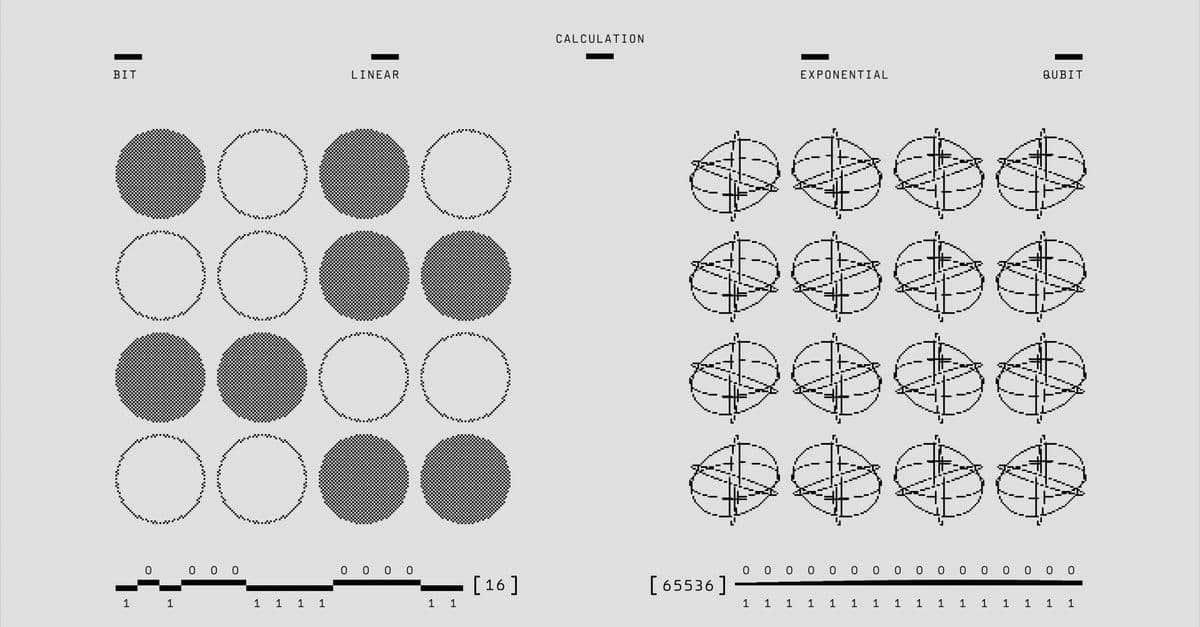
Photo: Google DeepMind / Pexels
Otto Stern and Walther Gerlach fired a beam of silver atoms through an inhomogeneous magnetic field in Frankfurt in 1922 and watched the beam split cleanly into two distinct lines on a glass plate. The result was supposed to test an old quantum theory about space quantization. Instead, it accidentally measured something that did not yet have a name — the intrinsic spin of the electron. Three years before physicists invented the concept of spin, Stern and Gerlach had already measured it.
The Problem That Made the Experiment Necessary
In 1913, Niels Bohr proposed that electrons orbit the nucleus only in specific allowed energy levels — a radical departure from classical physics, which allowed orbits of any energy. This model explained hydrogen's spectral lines with striking accuracy, and it carried an implicit claim: angular momentum in atoms comes in discrete, integer-unit packages.
Bohr's contemporary Arnold Sommerfeld extended this idea into three dimensions in 1916. In a magnetic field, he argued, not only is the magnitude of an electron's angular momentum quantized, but so is its orientation relative to the field direction. Only specific angles between the angular momentum vector and the field are permitted. This is space quantization — the claim that the direction of atomic angular momentum cannot take arbitrary values but is restricted to a finite, discrete set.
Space quantization — the quantum mechanical rule that the component of an angular momentum vector along any given axis can only take specific discrete values, rather than any orientation continuously.
The problem in 1921 was that space quantization was a theoretical postulate with no direct experimental test. You could not watch an electron orbit a nucleus and measure the angle of its momentum vector. The classical physics community largely dismissed the idea as mathematical fiction. What Stern recognized was that if space quantization were real, a beam of atoms with quantized angular momentum orientations would behave differently from a beam of classically spinning atoms when passed through a magnetic field designed to sort them by the component of their magnetic moment along one axis.
Source: Stanford Encyclopedia of Philosophy — "Experiment in Physics: The Stern-Gerlach Experiment" (plato.stanford.edu/entries/physics-experiment/app5.html)
Why Magnetic Fields Sort Angular Momentum
An atom with a magnetic moment behaves like a tiny bar magnet when placed in a magnetic field. In a uniform field, the atom precesses — its magnetic moment vector rotates around the field direction, like a spinning top wobbling around the vertical — but it does not accelerate. To push the atom in a direction, you need the field to vary in space: an inhomogeneous field, one that is stronger on one side than the other.
The force on a magnetic dipole in an inhomogeneous field is proportional to the gradient of the field and to the component of the magnetic moment along the field direction. Think of it like this: a perfectly aligned magnet placed in a field that grows stronger toward the north pole gets pulled northward. A magnet aligned antiparallel gets pulled southward. A magnet oriented sideways — perpendicular to the field — experiences no net force. The deflection direction and amount depend entirely on that one component of orientation.
Magnetic moment — a vector quantity describing the strength and orientation of a magnetic source. For an atom, it arises from the orbital motion and intrinsic spin of its electrons.
Classical physics predicts that if you heat atoms to a high temperature and let them stream out of a furnace, their magnetic moments will point in all possible random directions. In a field gradient, each atom gets deflected by an amount proportional to its particular orientation — producing a continuous smear on a detector screen, spread from the maximum deflection (fully aligned with the gradient) through zero deflection (perpendicular) down to the maximum deflection in the opposite direction (fully antialigned).
The Bohr-Sommerfeld space quantization prediction was different. If only certain orientations are allowed, only certain deflection amounts are possible. Instead of a continuous smear, you would see discrete spots on the screen — one spot for each allowed orientation.
Source: Physics World — "How the Stern–Gerlach experiment made physicists believe in quantum mechanics" (physicsworld.com/a/how-the-stern-gerlach-experiment-made-physicists-believe-in-quantum-mechanics/)
The Apparatus: Building a Filter for Angular Momentum
Stern conceived the experiment in 1921 and secured laboratory space at the University of Frankfurt to run it with Gerlach. The setup had four key components.
The silver source. Silver was chosen deliberately. At the time, Stern reasoned that silver atoms in their ground state have a single outer electron in an s-orbital — one with zero orbital angular momentum but a net magnetic moment coming from the unpaired electron. This would keep the physics clean: only one electron contributing to the beam deflection, no complicated multi-electron effects to disentangle. The silver was heated in an electric furnace to around 1000°C to produce vapor, which streamed out through a small hole.
The collimation system. Two narrow slits shaped the vapor stream into a thin, flat beam — like cutting a flashlight beam down to a sheet of light. Without collimation, the atoms would spread in all directions and produce no usable pattern.
The magnet. Stern calculated that a magnetic field gradient of roughly 10,000 Gauss per centimeter (10⁴ G/cm) would produce deflections large enough to resolve as separate spots on a detector plate, given the thermal velocities of the silver atoms. The magnet was machined so that one pole face was flat and the other was wedge-shaped — a sharp edge running along the beam axis. This asymmetry concentrated the field at the sharp edge, creating a strong gradient along the vertical direction while the beam traveled horizontally.
The detector. A cold glass plate placed at the end of the apparatus caught the silver atoms. Silver atoms condensed on the glass and, over the course of the experiment, built up a visible deposit. The shape of that deposit — smeared band or discrete spots — would answer the question.
| Component | Specification |
|---|---|
| Silver furnace temperature | ~1000°C |
| Beam collimation | Two narrow slits |
| Magnetic field gradient | ~10⁴ Gauss/cm |
| Field region length | ~3.5 cm |
| Expected atom velocity | ~570 m/s (thermal) |
| Detector | Cold glass plate |
The entire apparatus had to operate under high vacuum to prevent silver atoms from colliding with air molecules and scattering before they reached the detector. Maintaining that vacuum in 1921, with the technology available at the University of Frankfurt, was itself a non-trivial engineering challenge.
Source: Physics Today — "Stern and Gerlach: How a Bad Cigar Helped Reorient Atomic Physics" (physicstoday.aip.org/features/stern-and-gerlach-how-a-bad-cigar-helped-reorient-atomic-physics)
The Experiment and Its Result
The first runs in January and February 1922 were frustrating. The silver deposits were faint, nearly invisible. On February 8, 1922, Gerlach and Stern were examining a glass plate after a run, unable to make out any pattern. According to the account often told — and confirmed by Gerlach himself in a 1969 letter — Gerlach handed the plate to Stern, who breathed on it. His breath, humid from a cheap cigar he was smoking, contained traces of hydrogen sulfide. The sulfide reacted with the silver deposit, darkening it enough to see clearly.
Two lines appeared. Not one, not a smear — two distinct, separated bands.
This was decisive on several levels simultaneously. A classical continuous distribution was ruled out immediately: the deposit was not a smear. But the result was also inconsistent with the Bohr-Sommerfeld prediction in the way the experimenters had expected it. Bohr's model of the hydrogen atom, extended to silver, predicted that the angular momentum quantum number for the outer electron should be an integer value, which would produce an odd number of discrete spots. For l = 1 (the orbital angular momentum quantum number Stern expected), the model predicted three spots corresponding to magnetic quantum numbers m = -1, 0, +1.
Two spots implied a half-integer quantum number. The magnetic quantum number m for a half-integer angular momentum J = 1/2 takes only two values: +1/2 and -1/2. Two orientations, two spots.
At the time, Stern and Gerlach interpreted their result as confirmation of the old quantum theory of space quantization — they thought they had verified Bohr and Sommerfeld. The idea of an electron having intrinsic half-integer spin was not published until 1925, when George Uhlenbeck and Samuel Goudsmit proposed it to explain anomalous features in atomic spectra. It was only in retrospect that the community recognized what Stern and Gerlach had actually seen in 1922: not the orbital angular momentum they thought they were measuring, but the intrinsic spin of the single unpaired electron in silver's ground state.
Source: Friedrich, B. & Herschbach, D. (1998). "Stern and Gerlach: How a Bad Cigar Helped Reorient Atomic Physics." Physics Today, 56(12), 53. AIP Publishing.
Source: Israel Journal of Chemistry (2023) — "A Century Ago the Stern–Gerlach Experiment Ruled Unequivocally in Favor of Quantum Mechanics" (onlinelibrary.wiley.com/doi/full/10.1002/ijch.202300047)
What the Two Lines Actually Meant
When Uhlenbeck and Goudsmit proposed electron spin in 1925, they were trying to explain the anomalous Zeeman effect — the observation that spectral lines in a magnetic field sometimes split into more components than the orbital angular momentum model predicted. Their proposal: the electron has an intrinsic angular momentum, independent of its orbital motion, equal to ℏ/2 (one half of the reduced Planck constant). This intrinsic angular momentum is called spin.
Spin — an intrinsic form of angular momentum possessed by elementary particles, with no classical analogue. For an electron, spin is always ℏ/2 regardless of the electron's state of motion.
For a spin-1/2 particle in a magnetic field, the spin component along the field axis can be either +ℏ/2 (spin-up) or -ℏ/2 (spin-down). Two values, two orientations, two spots on the detector. Stern and Gerlach's 1922 apparatus had been built to detect orbital angular momentum (which for the outer electron of silver's ground state is actually zero, a detail not fully clear in 1921), and instead it detected spin.
The silver atom has an electron configuration ending in [Kr] 4d¹⁰ 5s¹. The outermost electron is in a 5s orbital, which has zero orbital angular momentum (l = 0). The magnetic moment of the entire silver atom comes entirely from the spin of that one unpaired 5s electron. This is why the beam split into exactly two components: spin-up and spin-down.
If Stern had used an atom with a non-zero orbital angular momentum contribution, the pattern would have been more complex. Silver's particular electron configuration — though Stern chose it for different reasons — made the result as clean as possible.
A Timeline of the Experiment and Its Aftermath
| Year | Event |
|---|---|
| 1913 | Bohr proposes quantized electron orbits in hydrogen |
| 1916 | Sommerfeld extends Bohr model to predict space quantization |
| 1921 | Stern conceives the experiment; work begins in Frankfurt |
| Feb 8, 1922 | Gerlach observes two discrete bands on the detector plate |
| Dec 1922 | Stern and Gerlach publish results in Zeitschrift für Physik |
| 1925 | Uhlenbeck and Goudsmit propose electron spin to explain anomalous Zeeman effect |
| 1927 | Phipps and Taylor repeat the experiment with hydrogen atoms, confirming spin-1/2 |
| 1932 | Stern begins Nobel-nominated precision measurements of proton magnetic moment |
| 1943 | Stern awarded Nobel Prize in Physics (Gerlach was not, due to his wartime role in Germany) |
| 1945 | Rabi recognized that sequential Stern-Gerlach apparatuses can measure nuclear magnetic moments |
| 1952 | Felix Bloch and Edward Purcell share Nobel Prize for NMR — directly built on Stern-Gerlach principles |
Source: Wiley Online Library — Israel Journal of Chemistry (2023), Bretislav Friedrich and Dudley Herschbach, "A Century Ago the Stern–Gerlach Experiment Ruled Unequivocally in Favor of Quantum Mechanics"
Why Classical Physics Had No Defense
The classical response to space quantization was essentially "why would it?" Classical physics has no mechanism to force an angular momentum vector to align in discrete ways. A spinning top can be set at any angle. A planet orbiting the sun can orbit in any plane. An electron orbiting a nucleus should, classically, be able to do the same. If you perturb a classically orbiting electron, its orbital plane shifts to a new angle smoothly, continuously.
The Stern-Gerlach result had no classical explanation. Two spots — and only two spots — meant that silver's magnetic moment had exactly two possible projections onto the applied field axis. Not three, not a continuum, not a distribution clustered near two values — two discrete, precise spots. The atoms arrived at the detector as if each one had been sorted into one of two bins before entering the magnet, and no amount of classical averaging or distribution over random orientations would produce that.
Some physicists attempted to argue that the classical magnetic moment of the silver atom might precess so rapidly in the field that it effectively quantized its own orientation. This argument does not hold: the mathematics of classical precession produces a continuous distribution of deflections, not discrete ones, regardless of precession rate.
The Stern-Gerlach result was, at the time, accepted as the first direct experimental proof of space quantization. In the modern understanding, it is specifically proof that electron spin is quantized — that the component of spin along any chosen axis takes only discrete values separated by integer multiples of ℏ.
Source: Chemistry LibreTexts — "22.1: Stern-Gerlach Experiment" (chem.libretexts.org/Bookshelves/Physical_and_Theoretical_Chemistry_Textbook_Maps/The_Live_Textbook_of_Physical_Chemistry_(Peverati)/22:_Spin/22.01:_Stern-Gerlach_Experiment)
The Measurement of the Magnetic Moment
Beyond simply observing two spots, Gerlach used the apparatus to measure the deflection of the silver beam quantitatively. From the known field gradient, the beam velocity distribution (estimated from the furnace temperature), and the measured deflection, the magnetic moment of the silver atom could be computed.
Gerlach's measurement gave a value of approximately one Bohr magneton (the Bohr magneton, μ_B = eℏ/2m_e ≈ 9.274 × 10⁻²⁴ J/T, is the natural unit of magnetic moment for an electron). This measurement was accurate to about 10%, given the systematic uncertainties in the experiment.
The modern value for the magnetic moment of a free electron is 1.001159652 Bohr magnetons — slightly more than one, due to quantum electrodynamic corrections discovered in the 1940s and 1950s. Gerlach's 10% accuracy is, in retrospect, a very respectable result for 1922 given the crude knowledge of the beam velocity distribution.
This measurement was itself a milestone: it was the first direct measurement of an atomic magnetic moment, and it confirmed the scale predicted by Bohr's model. Later, Stern would spend much of the 1930s using refined versions of the apparatus to measure the proton's magnetic moment, finding a value about 2.79 times larger than the naive model predicted — an early hint that the proton has internal structure, later explained by quarks.
Source: Britannica — "Stern-Gerlach experiment" (britannica.com/science/Stern-Gerlach-experiment)
What People Get Wrong About This Experiment
The most common misunderstanding is the direction of causation: people often believe Stern and Gerlach designed their experiment to detect spin. They did not. Spin had not been proposed in 1921. They designed the experiment to detect orbital space quantization in the Bohr-Sommerfeld model. The result was immediately seen as a confirmation of that model, and it was only when the concept of intrinsic spin emerged in 1925 that the physics community understood the 1922 data differently.
A second common confusion concerns which quantum numbers were being measured. Silver's outer electron has l = 0, meaning zero orbital angular momentum. The Bohr-Sommerfeld model, which Stern was testing, predicted that an s-electron (l = 0) would have no magnetic moment and produce no deflection at all. The two-spot result should, strictly, have been a null result by the model's own prediction. It was not a null result because the electron has spin, which the model did not include. The experiment confirmed a prediction the theorists had not made for a reason the experimenters did not understand, using a mechanism that did not exist in any contemporary theory.
A third misconception is that the Stern-Gerlach experiment is equivalent to the double-slit experiment in demonstrating wave-particle duality. It does not demonstrate wave-particle duality. It demonstrates the discreteness of angular momentum — a different quantum mechanical phenomenon. The beam of silver atoms does not interfere with itself. Each atom is deflected according to its spin state, like a sorted packet, not like a wave spreading through both slits.
Source: arXiv — "The Stern-Gerlach Experiment and the Electron Spin" (ar5iv.labs.arxiv.org/html/1805.09412)
Its Legacy in Modern Physics and Technology
The Stern-Gerlach experiment is the ancestor of an enormous family of modern techniques. Nuclear magnetic resonance (NMR), the technology behind MRI scanners, exploits the same principle: nuclear spins align in discrete orientations in a magnetic field, and radiofrequency pulses can flip them between states. Reading the relaxation frequencies allows you to image tissue. Every MRI scan taken today is a consequence of the physics that Stern and Gerlach stumbled onto in 1922.
Molecular beam magnetic resonance, developed by Isidor Rabi in the 1930s and 1940s, used chains of Stern-Gerlach-type magnets to measure nuclear magnetic moments with precision. Rabi's work led directly to the atomic clock — the device that defines the second and calibrates GPS satellites. The cesium-133 clock standard is built around measuring the hyperfine transition of cesium atoms, which involves the coupling of electron spin to nuclear spin — the same degrees of freedom the Stern-Gerlach apparatus made measurable.
In quantum computing, the spin of an electron or a nucleus is the natural two-state system — the qubit. Spin-up is 0; spin-down is 1. The Stern-Gerlach result established that this two-state system is real and physically manipulable. Researchers routinely use magnetic field gradients to initialize and read out qubit states in ways that are conceptually identical to what Stern and Gerlach did with a furnace and a cold glass plate.
Source: Bohrium Science Encyclopedia — "Electron Spin and the Stern-Gerlach Experiment" (scipedia.bohrium.com/en/sciencepedia/feynman/quantum_chemistry_undergraduate-electron_spin_and_the_Stern-Gerlach_experiment)
For the broader context of how quantum mechanics was built up from experiments like this one, see the Bohr-Einstein debates. For how Stern-Gerlach-style spin manipulation became the foundation of quantum computation, see our article on quantum computing.
FAQs
Q: Why did Stern and Gerlach use silver atoms specifically?
A: Stern chose silver because its ground state has a single unpaired outer electron, giving the atom a net magnetic moment with minimum complexity. He also expected (incorrectly, as it turned out) that the outer electron's orbital angular momentum would produce a detectable splitting. In practice, silver's outer electron is in an s-orbital with zero orbital angular momentum, so the splitting came from spin alone — a fact that was not understood until 1925.
Q: Why did the beam split into two spots instead of three?
A: The Bohr-Sommerfeld model predicted that an electron with orbital angular momentum quantum number l = 1 would produce three spots (m = -1, 0, +1). The beam split into two spots because the silver atom's outer electron is a spin-1/2 particle with intrinsic spin quantum number s = 1/2. A spin-1/2 particle has only two allowed projections along any axis: +1/2 and -1/2. Two projections, two spots.
Q: Did Stern and Gerlach know they were measuring spin?
A: No. The concept of electron spin was not proposed until 1925 by Uhlenbeck and Goudsmit. Stern and Gerlach interpreted their result as evidence for the Bohr-Sommerfeld theory of space quantization of orbital angular momentum. The correct interpretation of their 1922 data was only possible retroactively, once spin had been proposed and its predictions worked out.
Q: Why did Stern win the Nobel Prize but not Gerlach?
A: Stern was awarded the Nobel Prize in Physics in 1943, explicitly for his development of the molecular beam method and his measurement of the proton's magnetic moment. The Nobel Committee did not include Gerlach, partly because of his leadership role in Germany's wartime uranium project. The omission remains controversial among historians of physics.
Q: What is the difference between space quantization and spin?
A: Space quantization refers to the general quantum mechanical rule that the component of any angular momentum along a chosen axis takes only discrete values separated by ℏ. Spin is a specific type of angular momentum — an intrinsic property of elementary particles, not arising from any orbital motion. The Stern-Gerlach experiment demonstrates space quantization by showing that silver's magnetic moment has only discrete orientations. The angular momentum responsible for those orientations turns out to be electron spin, not orbital angular momentum.
Q: Can a Stern-Gerlach apparatus be used with particles other than silver atoms?
A: Yes, and the technique has been applied to a wide range of atoms and molecules. Hydrogen atoms were used in 1927 by Phipps and Taylor to confirm spin-1/2. Atoms with higher-spin electrons or non-zero orbital angular momentum produce more than two spots. Protons and neutrons have spin-1/2 and produce two-spot patterns. The apparatus design scales to any neutral particle with a magnetic moment.
The Takeaway
Stern and Gerlach set out to test whether atomic angular momentum is spatially quantized, and they got their answer: it is. What they did not anticipate is that the particular angular momentum they measured was one that did not exist in any theory available to them — the intrinsic spin of the electron. The experiment demonstrated two things simultaneously: that quantum mechanics was right to postulate discrete angular momentum states, and that atoms contained a degree of freedom physicists had not yet imagined. Three years later, when spin was named and described, Stern and Gerlach's glass plate already carried the evidence. The two dark lines on that cold detector were not just a confirmation of a model — they were the first direct measurement of a quantum property that underpins NMR, MRI, atomic clocks, and the logic of every qubit in every quantum computer built today.
Read next:
Weekly digest
Stay ahead of the curve
Get the best science, AI, and tech stories delivered to your inbox every week. No spam — unsubscribe any time.
About the Author
SciHub101 is an independent science and technology publication founded and edited by Buğra Sözeri, a software engineer and app developer based in Türkiye. Articles are drafted against peer-reviewed literature and primary sources, fact-checked, and edited by a human before publication. Where we compare products, anything built by our own team is labelled as such — see the editorial guidelines and About page for how corrections and disclosures work.
Related Articles
The Thomson Cathode Ray Experiment: How J.J. Thomson Found the Electron
In 1897, J.J. Thomson proved cathode rays are particles 1,800 times lighter than hydrogen. Learn how his cathode ray tube experiment discovered the electron.

The Milgram Small World Experiment: Six Degrees of Separation
In 1967, Stanley Milgram sent letters across America to test how many handshakes connect any two strangers. The answer — about six — reshaped how we map human society.
Schrödinger's Cat: The Thought Experiment Physicists Misuse Most
Schrödinger's cat was designed in 1935 to mock quantum mechanics, not celebrate it. Here's what Schrödinger actually argued and what modern physics says now.

The Bohr-Einstein Debates: The Thought Experiments That Shaped Quantum Physics
Einstein spent years designing thought experiments to break quantum mechanics. Bohr defeated every one. The Bohr-Einstein debates, from Solvay 1927 to the EPR paradox.

The Davisson-Germer Experiment: Electrons Proven to Be Waves
In 1927, Davisson and Germer fired electrons at a nickel crystal and found a diffraction pattern — direct proof of wave-particle duality. Here is how the experiment worked and what it confirmed.
The Double-Slit Experiment: How Light Proved the Universe Is Weird
The double-slit experiment shows that particles behave like waves until you watch them. Thomas Young ran it in 1801 with light. Feynman called it the heart of quantum mechanics.