Why Confirmation Bias Is Hard To Notice

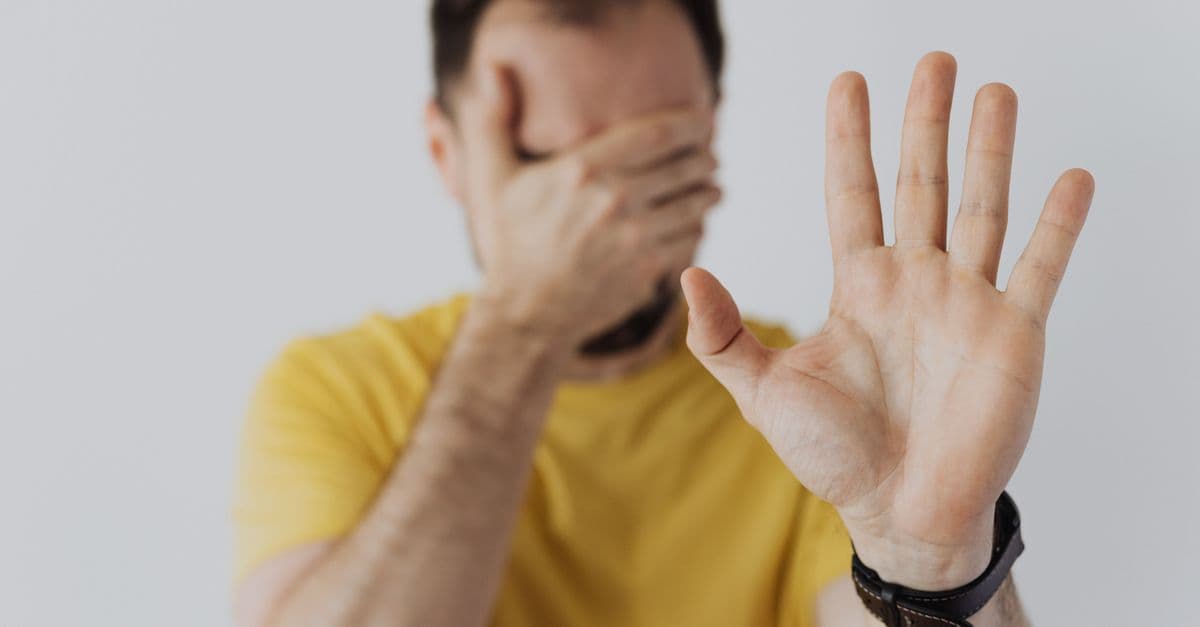
Photo: Timur Weber / Pexels
Confirmation bias is the tendency to seek, favor, and remember information that supports what a person already believes, while giving disproportionate scrutiny to information that contradicts it. People rarely experience it as bias. They experience it as noticing good evidence and dismissing bad evidence, both of which feel like ordinary, careful judgment in the moment. That is exactly what makes the bias durable: it does not register as an error being made, because confirming information is processed more fluently by the brain than contradicting information is, and fluency itself gets mistaken for truth.
This piece walks through the two experiments that first proved the bias exists, the mechanism (cognitive fluency and motivated reasoning) that keeps it invisible from the inside, what happens when it meets real-world information environments like social media, and what actually works as a countermeasure. Along the way, the goal is not just to describe confirmation bias but to explain why willpower alone consistently fails to fix it.
The experiment that named the effect
Psychologist Peter Wason first documented what would become known as confirmation bias in a 1960 study using a task now called the 2-4-6 problem. Participants were shown a sequence of three numbers, 2, 4, 6, and told the sequence followed a hidden rule. Their job was to discover the rule by proposing their own three-number sequences and receiving feedback on whether each one fit.
The actual rule was simply "any ascending sequence of numbers." But most participants formed an early, narrower hypothesis, often something like "even numbers increasing by two," and then tested only sequences that would confirm that specific guess rather than sequences designed to rule it out. A participant confident in "increasing even numbers" might test 8, 10, 12 or 20, 22, 24, both of which return "yes, fits the rule," and both of which leave the narrower, incorrect hypothesis fully intact.
Because participants rarely tried sequences that could falsify their hypothesis, such as 1, 2, 3 or 3, 10, 100, most took a long time to discover the true, much simpler rule, and a substantial number never questioned their initial narrower hypothesis at all, despite receiving repeated positive feedback that was also consistent with the broader, correct rule (Wason, 1960). Wason's central insight was that people gravitate naturally toward seeking confirming evidence rather than disconfirming evidence, even when a single well-chosen disconfirming test would have been more informative than a dozen confirming ones.
The Wason selection task made it visible with cards
Wason followed up in 1968 with a second, even more widely replicated demonstration called the Wason selection task. Four cards sit on a table, showing 3, 8, red, and brown. Each card has a number on one side and a color on the other. Participants are asked which cards they must turn over to test the rule "if a card shows an even number on one side, the other side is red."
The logically correct answer is to flip the 8 (checking whether its reverse is red, which could disprove the rule) and the brown card (checking whether its reverse is an even number, which could also disprove the rule). Most participants instead flip the 8 and the red card, both of which can only confirm the rule and can never disconfirm it. Typical accuracy on abstract versions of this task runs in the range of ten to twenty percent, and the dominant error pattern across decades of replication is the same one Wason identified in 1960: people default to confirmation-seeking tests over falsification-seeking ones, even when the logic of the task rewards falsification.
Why confirming information feels effortless and disconfirming information feels costly
Cognitive fluency — the subjective ease with which the brain processes a piece of information — sits at the center of why confirmation bias hides so well. Information that matches an existing belief slots easily into an already-organized mental framework. It requires little additional cognitive work to accept, and that ease of processing gets mistaken for a signal of the information's truth or quality, rather than recognized as simply reflecting how well it matched a prior expectation.
Contradicting information works differently. The mind has to either restructure part of an existing belief framework or actively generate counterarguments to dismiss the new information, and both of those operations demand more cognitive effort than passive acceptance does. This asymmetry, easy processing for confirmation and effortful processing for disconfirmation, means confirming evidence gets accepted quickly with little scrutiny, while disconfirming evidence gets held to a much higher standard of proof, even though a genuinely rigorous thinker would apply the identical standard to both.
Think of it like a lock and key versus a locked door with no key at all. A belief that already matches incoming information is a key sliding smoothly into a lock it was shaped for; almost no resistance is felt, so no resistance gets registered as suspicious. A belief that contradicts incoming information is a locked door; the mind has to either find a way to pick it (generate counterarguments) or decide the door was never worth opening (dismiss the source), and both of those take visible, effortful work that gets misinterpreted as diligence rather than defensiveness.
Why does confirmation bias feel like ordinary careful thinking rather than a bias?
Because the effort involved in scrutinizing disconfirming evidence closely genuinely resembles careful, critical thinking from the inside, even though it is being applied selectively. A person who scrutinizes an uncomfortable finding intensely while accepting a comfortable finding with almost no scrutiny experiences both processes as "being appropriately critical." The asymmetry between the two efforts stays invisible without deliberate, structured self-checking, because there is no internal alarm that fires when scrutiny is applied unevenly.
Motivated reasoning operates below conscious awareness
Confirmation bias is closely related to, and often produced by, a broader mechanism psychologists call motivated reasoning: the tendency to process information in a way that serves a desired conclusion, while still feeling like an honest, unbiased evaluation is taking place. Social psychologist Ziva Kunda's foundational 1990 review described this as "directional" reasoning, in which people do not simply believe whatever they want, but instead apply real reasoning processes, evidence retrieval, argument construction, standards of proof, in a direction skewed toward the conclusion they are motivated to reach (Kunda, 1990).
The key detail is that this skew happens largely outside conscious awareness. A person motivated to believe a claim does not consciously decide "I will lower my standards for this evidence." Instead, the motivated conclusion changes which memories get retrieved as relevant, which counterarguments come to mind, and how much scrutiny feels warranted, all before the person experiences any sense of having made a choice. The Westen fMRI study described above captured a physical trace of exactly this process: when partisans evaluated contradictions involving a preferred candidate, regions tied to emotional processing lit up and regions tied to cold deliberate reasoning quieted down, without participants reporting any subjective sense that they were reasoning any differently than usual.
This is precisely why confirmation bias survives contact with intelligent, well-educated people. Raw intelligence helps a person construct more sophisticated justifications for a motivated conclusion; it does little to stop the motivated conclusion from forming in the first place. Multiple studies on "myside bias" have found that measures of cognitive ability predict how well someone can argue for a position, but predict only weakly, if at all, whether that person recognizes bias in their own reasoning about a topic they care about.
How search behavior compounds the bias
Beyond how evidence gets evaluated once it is encountered, confirmation bias also shapes what evidence people go looking for in the first place. This is called selective exposure, and research on it has found that people disproportionately choose to read, watch, or engage with sources likely to confirm their existing beliefs rather than challenge them. The pattern has become especially well documented in the context of online information environments.
A large-scale 2015 study published in Science by Eytan Bakshy, Solomon Messing, and Lada Adamic examined how 10.1 million U.S. Facebook users interacted with socially shared news and directly measured exposure to "cross-cutting" content, meaning news from sources aligned with an opposing political ideology. The study found that individuals' own choices about what to click limited exposure to cross-cutting content more than the platform's ranking algorithm did: people encountered roughly fifteen percent less cross-cutting content in their feeds because of algorithmic ranking, but clicked through to about seventy percent less of that content once it was shown to them (Bakshy, Messing, and Adamic, 2015). In other words, the platform narrowed the menu somewhat, but users' own selective-exposure choices narrowed it far more.
That finding matters because it complicates a popular narrative. It is tempting to treat "the algorithm" as the entire explanation for online echo chambers, and platform ranking clearly plays a measurable role. But the Bakshy study's own numbers show individual selective exposure, the same underlying tendency Wason documented with number sequences in 1960, doing more of the narrowing than the algorithm does. The bias was already there before the feed was ever built; the feed mostly gives it more efficient raw material to work with.
Does confirmation bias explain political echo chambers on social media?
Partly. Research distinguishes three components of confirmation bias: biased search (seeking confirming sources), biased interpretation (reading ambiguous evidence as supportive), and biased memory (recalling confirming instances more easily than disconfirming ones). Echo chambers on social media are best understood as an outcome where selective exposure, one component of the broader bias, is amplified by recommendation systems that were built to maximize engagement rather than balance.
Why this matters beyond the lab
Confirmation bias is difficult to overcome through willpower alone precisely because it does not register subjectively as bias while it is happening. It registers as a reasonable evaluation of evidence quality. A person resolving to "be more objective" is applying that resolution using the same cognitive machinery that produced the bias in the first place, which is a bit like asking a scale to check whether it is calibrated correctly by weighing itself.
Structured countermeasures used in fields like scientific peer review and legal argumentation work better precisely because they do not rely on subjective self-monitoring. Peer review works, in part, by having someone other than the original researcher, someone with no motivated stake in the paper's conclusion, hunt for its weakest points. Adversarial legal argument works by assigning one side the explicit job of building the strongest possible case against a claim, regardless of what that advocate personally believes. Both structures externalize the disconfirming search that an individual mind, left to its own motivated devices, tends to skip.
A related, individually usable version of the same idea is the "consider the opposite" technique studied in decision-making research: deliberately writing out the single strongest argument against a conclusion before accepting it, rather than defaulting to the first plausible counterargument that comes to mind and then quietly dismissing it. This connects to a broader pattern of overconfident self-assessment covered in how attention blindness hides obvious things, where people similarly overestimate how completely and objectively they have processed the information available to them. It also shares a root cause with how the anchoring effect changes decisions: both biases involve a first impression, an anchor number or an initial hypothesis, that quietly sets the terms for every judgment that follows it, even when the person doing the judging believes they are starting fresh each time.
What people get wrong about confirmation bias
The most common misconception is treating confirmation bias as a character flaw limited to people who are closed-minded, uninformed, or intellectually lazy. The Wason experiments were run on ordinary participants working on abstract number and logic puzzles with no emotional stakes at all, and the bias still showed up reliably. That detail matters: confirmation bias is not primarily a product of stubbornness or ignorance. It is a default property of how human reasoning processes information, one that gets amplified, not created, by emotional investment in a conclusion.
A second common mistake is assuming that simply being aware of confirmation bias provides meaningful protection against it. Awareness helps people recognize the bias in other people's reasoning far more reliably than in their own, a related asymmetry sometimes called the "bias blind spot." Knowing the term "confirmation bias" does not function like a vaccine; it functions more like knowing that mirages exist without being able to tell, in the moment, whether the water on the highway ahead is real. The knowledge is available, but it does not automatically activate when it is needed most, which is exactly the emotionally loaded moment when motivated reasoning has the most influence.
A third mistake is assuming confirmation bias only distorts big, contested topics like politics or health claims. It shows up just as reliably in mundane, low-stakes contexts, exactly the numeric rule in Wason's 1960 experiment being one clear example. The bias is not switched on by controversy. Controversy and emotional investment simply turn its intensity up, the way Westen's 2006 fMRI results showed happening to partisans evaluating claims about a preferred political candidate.
The takeaway
Confirmation bias stays hidden because confirming and disconfirming evidence get processed with genuinely different cognitive effort, not because people are being deliberately dishonest with themselves. Evidence that matches an existing belief slides in with little scrutiny and feels self-evidently true, while evidence that contradicts a belief triggers active, effortful resistance that feels, from the inside, exactly like careful, critical thinking. Wason proved this with number sequences and playing cards more than sixty years ago, Bakshy and colleagues showed the same underlying pattern doing most of the work behind modern social media echo chambers, and neither intelligence nor good intentions reliably shuts it off. What actually helps is structure: assigning someone, or some process, the explicit job of hunting for the strongest disconfirming evidence, rather than trusting any single mind to find it on its own.
Read next:
- How attention blindness hides obvious things
- How the anchoring effect changes decisions
- Why the brain notices patterns everywhere
FAQ
Q: What is confirmation bias?
It's the tendency to seek out, favor, and remember information that confirms existing beliefs, while giving disproportionately more scrutiny to information that contradicts those beliefs, often without consciously recognizing the asymmetry. Researchers break it into three components: biased search, biased interpretation, and biased memory recall.
Q: What experiment first demonstrated confirmation bias?
Psychologist Peter Wason's 1960 study, the 2-4-6 task, found that participants trying to discover a numerical rule tended to test only sequences that would confirm their initial guess, rarely attempting sequences designed to disprove it. He followed up in 1968 with the Wason selection task, a four-card logic problem that showed the same pattern using formal conditional reasoning.
Q: Why does confirming evidence feel more convincing than disconfirming evidence?
Confirming evidence matches existing mental frameworks and gets processed with less cognitive effort, a quality called cognitive fluency, which people often mistake for a sign of truth. Disconfirming evidence requires more effortful processing, restructuring a belief or generating counterarguments, and gets held to a much higher standard of proof as a result.
Q: Does confirmation bias get worse with emotionally charged topics?
Yes. A 2006 fMRI study by Drew Westen and colleagues found that when evaluating contradictions involving a preferred political candidate, participants showed increased emotional-reasoning brain activity and reduced deliberate-reasoning engagement compared to neutral topics.
Q: Is confirmation bias the same thing as an echo chamber?
No. Confirmation bias is the underlying cognitive tendency; an echo chamber is one real-world outcome of it. A 2015 Science study of 10.1 million Facebook users found that individual selective-exposure choices narrowed exposure to opposing viewpoints more than the platform's ranking algorithm did, showing the bias, not just the technology, driving the effect.
Q: Does being smart or well-educated protect against confirmation bias?
Not reliably. Studies on "myside bias" have found that higher measures of reasoning ability predict how skillfully someone can argue for a position, but do not reliably predict whether that person can spot bias in their own reasoning on a topic they care about.
Q: Can confirmation bias be reduced through willpower alone?
Not reliably. Because the bias doesn't feel like bias while it's happening, simply resolving to think more objectively is often insufficient, since that resolution is carried out by the same reasoning process the bias is distorting. Structured countermeasures, like deliberately seeking out the strongest disconfirming evidence or assigning that search to someone without a stake in the conclusion, tend to be more effective.
Q: Does the "consider the opposite" technique actually work as a debiasing tool?
The evidence is genuinely mixed, and being honest about that matters more than repeating the technique as a guaranteed fix. Some experiments on ideologically charged judgments have found that instructing people to actively generate reasons the opposite conclusion might be true produces a measurably larger correction than simply asking them to "be fair and unbiased," which suggests the technique does something that a general appeal to objectivity does not. But a pre-registered study testing "consider the opposite" alongside other cognitive debiasing strategies found little evidence that it reduced selective exposure, the tendency to seek out confirming sources in the first place, relative to a control group, and none of the debiasing strategies tested significantly reduced biased assimilation, the tendency to interpret ambiguous evidence as supportive, either. Researchers reviewing the broader debiasing literature have concluded that the field's existing toolkit is less reliable than popular writing on the subject often implies, and that many positive results still need independent replication before they can be trusted as consistently effective.
That inconsistency does not mean the technique is worthless, but it does mean it works better as one input into a structured process, writing out the strongest opposing argument before finalizing a judgment, rather than as a one-time mental trick a person can apply once and consider themselves debiased. The peer-review and adversarial-argument structures described above remain the more consistently effective route precisely because they do not depend on a single person successfully generating their own best counterargument in the moment.
Follow new articles
Add SciHub101 to your feed reader to see new science and technology stories.
About the Author
SciHub101 is an independent science and technology publication founded and edited by Buğra Sözeri, a software engineer and app developer based in Türkiye. AI tools assist with drafting and research. Source documentation in the existing archive is uneven, and articles are being reviewed and corrected. The Editorial Team byline identifies editorial responsibility; it does not certify specialist or independent human review. Where we compare products, anything built by our own team is labelled as such — see the editorial guidelines and About page for how corrections and disclosures work.
Related Articles


Motivated Reasoning: Why Facts Do Not Change Minds
Motivated reasoning explains why smart people reject strong evidence: the brain protects identity first and accuracy second. Here is the research behind it.