Best AI Music Generation Tools — Suno, Udio, Stable
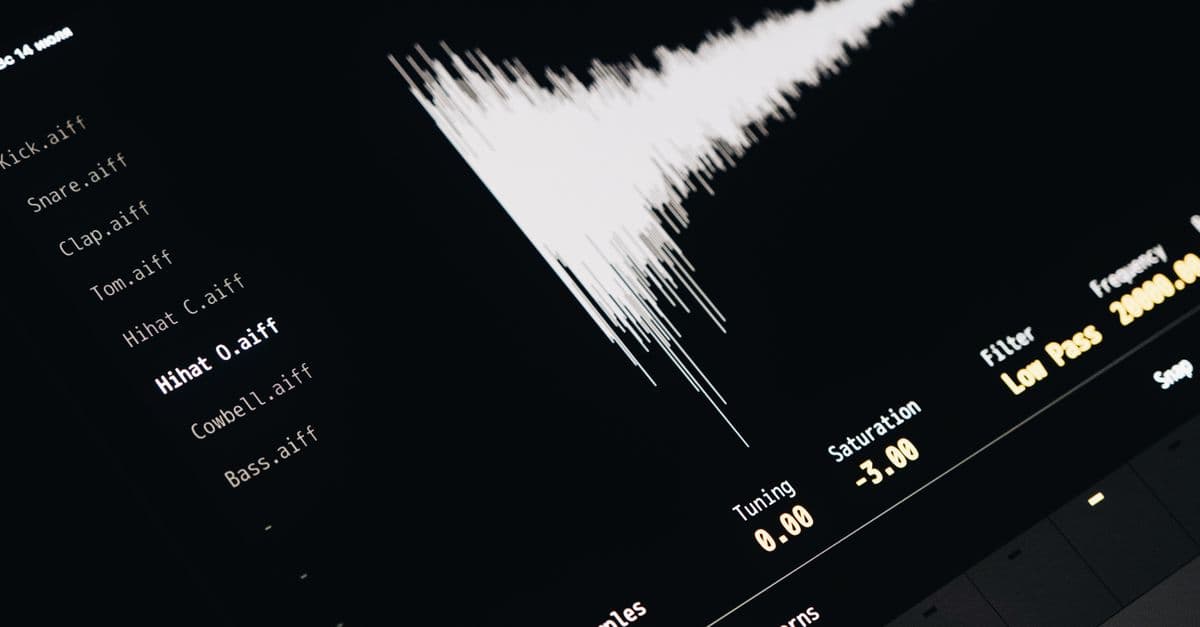
Photo: Egor Komarov / Pexels
AI-generated music is now production-quality for most use cases. Background tracks for YouTube videos, podcast intros, mood music for apps, even full songs — AI tools generate them in seconds.
This guide compares the leading tools, what they can and can't do, and the legal landscape around AI music in 2026.
The Short Answer
| Use Case | Best Tool |
|---|---|
| Full songs with lyrics | Suno or Udio |
| Background music (no vocals) | Stable Audio or AIVA |
| Sound effects | ElevenLabs Sound Effects |
| Voice cloning (singing) | Suno (covers feature) |
| Royalty-free for commercial | Mubert or Soundraw |
| Best free tier | Suno (10 songs/day free) |
For most creators: Suno. Most polished, best vocals, generous free tier.
Suno
Pricing: Free (10 songs/day); $10/mo Pro (500/mo); $30/mo Premier (2,000/mo)
The market leader. Generates 2-4 minute complete songs with vocals, instruments, lyrics. For a deeper look, see what Suno is and how its AI music generation works.
How it works:
Prompt: "Upbeat indie pop song about coding at 3am, female vocals, optimistic"

Output: Full song with verses, chorus, bridge, instrumental sections
Strengths:
- Best vocal quality of any AI music tool
- Generates lyrics + music together
- Multiple genre support
- Cover feature: replace vocals with your voice
- Generous free tier
- Commercial use on paid plans
Weaknesses:
- Sometimes generic lyrics (improve with detailed prompts)
- Less production polish than human-made tracks
- Limited control over specific instruments
- Legal questions about training data ongoing
Best for: Content creators, marketers, anyone wanting full songs.
Udio
Pricing: Similar to Suno ($10-30/month)
Direct Suno competitor. Founded by ex-Google Brain researchers.
Strengths:
- High-quality instrumentation
- Detailed style control via prompts
- Extending tracks (continue existing audio)
- Community sharing platform
Weaknesses:
- Slightly less polished UX than Suno
- Smaller community
Best for: Musicians who want fine control over generation.
Stable Audio
Pricing: Free tier; $12/mo Pro
Stability AI's audio model. Specializes in non-vocal music and sound design.
Strengths:
- Excellent for background music, ambient
- Good for sound effects
- Open-source models available (Stable Audio Open)
- Strong on electronic genres
Weaknesses:
- No vocals (instrumental only in main tools)
- Shorter clips (typically 30-180 seconds)
Best for: Podcast intros, video backgrounds, sound design.
ElevenLabs Sound Effects
Pricing: Bundled with ElevenLabs subscription ($5-330/mo)
Generates specific sound effects from text descriptions.
Prompt: "Thunder rolling in distance, then heavy rain on metal roof"
Output: ~10 second sound effect
Strengths:
- Best for specific sounds
- Detailed prompt control
- Integration with ElevenLabs voice work
Weaknesses:
- Not for music
- Limited to short clips
Best for: Game audio, video sound design.
AIVA
Pricing: Free; €11-49/month
Specialized in orchestral and cinematic music.
Strengths:
- Classical/cinematic styles
- Sheet music output
- Industry partnerships (film composers)
- Commercial use allowed
Weaknesses:
- Narrower style range
- Less impressive for modern genres
Best for: Film scoring, classical compositions.
Mubert / Soundraw
Pricing: $14-39/month
Production-music libraries with AI generation.
Strengths:
- Fully royalty-free guarantee
- Loop-based generation
- Marketed for YouTube creators
- Long tracks for video
Weaknesses:
- Less "creative" than Suno/Udio
- More formulaic output
- Higher prices for what they offer
Best for: YouTube creators wanting safe royalty-free music.
Real Test: Same Brief, All Tools
Brief: "Upbeat synthwave track for a tech startup launch video, energetic, optimistic, 90 seconds"
Suno: Vocals + full song. Energetic, polished. Lyrics generic but on-theme. ⭐⭐⭐⭐ Udio: Similar quality. Slightly better instrumental clarity. ⭐⭐⭐⭐ Stable Audio: Instrumental synthwave. Clean, professional. No vocals. ⭐⭐⭐⭐ Mubert: Generic but safe. Loops well for video. ⭐⭐⭐
For tech video music: Stable Audio or Mubert (no vocals needed). For songs: Suno or Udio.
Commercial Use and Legal
This is the tricky part. AI music legal status in 2026:
Copyright Questions
Can AI-generated music be copyrighted?
- US: Generally no for purely AI-generated (Copyright Office position)
- Other jurisdictions: vary
- Hybrid human+AI work: usually yes if human contributed meaningfully
Training Data Concerns
Many AI music tools trained on copyrighted music without licensing. Lawsuits filed in 2024-2025 (Sony, UMG vs Suno/Udio). Outcomes pending.
What's "Safe"
For commercial use without copyright risk:
- Tools that explicitly license commercial use (Suno Pro, Udio Pro, AIVA, Mubert, Soundraw)
- Generate with personalized prompts (not "in the style of [artist]")
- Don't claim AI-generated music as your original composition
Most YouTube creators and small businesses using Suno commercially. Risk is real but small in practice.
Use Cases for AI Music
YouTube Content Creators
Background music for videos. Saves stock music licensing costs ($50-200/year). Generates exactly the mood you want.
Podcasters
Intro/outro music. Custom theme songs. Sponsorship break music.
Game Developers
Indie games using AI music for prototypes and even shipping titles. Massive cost reduction vs commissioning composers.
Social Media
Custom audio for TikTok, Reels, Shorts. Often goes viral due to novelty.
Marketing Videos
Brand-specific background music. Cheaper than licensed alternatives.
Demo Tracks
Musicians using AI to quickly mock up ideas before refining with human production.
Hobby Music Creation
People generating songs for fun, friends, family events. Massively democratized music creation.
What AI Music Still Can't Do
❌ Match top human production for nuanced, emotional moments ❌ Specific famous artist styles (legally questionable + technically often poor) ❌ Complex song structures with intricate development ❌ True musical innovation (it averages training data) ❌ Replace human songwriters for art that needs personal voice ❌ Long compositions (most tools cap at 3-4 minutes)
For album-quality original music with artistic vision: human musicians still required.
Combining With Human Production
The 2026 workflow many musicians use:
1. AI generates initial idea (Suno, Udio)
2. Producer extracts stems / interesting elements
3. Re-record key parts with real instruments
4. Mix, master, polish with traditional production
5. Release as "AI-assisted" work
This produces tracks where AI accelerates idea generation while humans add the polish AI lacks.
Tools for AI Music Workflows
Stem Separation
Extract vocals, drums, bass, etc. from any track:
- Lalal.ai — Web-based, quick
- Demucs — Open source, runs locally
- Spleeter — Spotify's open source tool
Useful for: remixing AI tracks, learning from them, isolating elements.
DAWs with AI Integration
- Logic Pro — Has AI features for drummers, session musicians
- Ableton Live 12 — AI-assisted composition tools
- FL Studio — Multiple AI plugins
These bring AI assistance into traditional production workflows.
AI Mastering
- LANDR — AI-powered mastering for tracks
- Bandlab — Free with AI mastering
- iZotope — AI-assisted plugins for pro production
Make AI-generated tracks sound more professional.
Cost Comparison
For a content creator producing 10 videos/month needing music:
| Approach | Monthly Cost |
|---|---|
| Stock music license (Artlist, etc.) | $20-50 |
| Suno Pro | $10 |
| Royalty-free libraries (free tier) | $0 |
| Commissioned music | $500-5000 |
AI is the cheapest by far. Quality varies but increasingly competitive.
How AI Music Models Actually Work
Modern AI music generators use diffusion models or transformer-based architectures, typically operating on spectrogram representations (visual frequency maps of sound) or token-based "musical language."
Suno and Udio's architecture (simplified):
- Text encoder — converts your prompt into vector embeddings
- Conditioning — appends style/genre tags and metadata
- Diffusion backbone — iteratively denoises random audio into music
- Vocoder — converts spectrograms back to waveforms (final audio)
Key insight: the model doesn't "understand" music compositionally. It's pattern-matching at massive scale — "prompts that talk about 'upbeat' tend to correlate with higher frequencies and faster tempos in training data." It learns statistical patterns, not music theory.
This is why AI music sometimes sounds generic: it's averaging across thousands of songs rather than making intentional artistic choices.
Source: Copet, J., et al. (2024). Simple and Controllable Music Generation with the Rectified Flow Matching Transformer. arXiv preprint 2407.04822. UC Berkeley's MusicGen 2 architecture.
Training Data, Ethics, and the Lawsuits
The uncomfortable truth: most AI music tools trained on copyrighted music without permission or licensing.
Who did they train on?
- Suno/Udio: likely billions of songs from Spotify, YouTube, etc. (never officially disclosed)
- Stable Audio: Stability AI's proprietary dataset + licensed music from artists
- AIVA: mixed proprietary + licensed data
The lawsuits (2024–2025):
- Sony Music, UMG, RIAA vs Suno/Udio — Seeks $150K per song infringement + injunction. Still ongoing.
- Similar suits against other AI music generators
- Parallel debate: "Is training on copyrighted work without permission fair use?" (Legal status uncertain)
What changed in 2026:
- Regulatory pressure increased. EU AI Act proposals specifically target AI music training.
- Some tools (Stable Audio, AIVA) moved toward licensed training data to reduce legal risk.
- No major precedent yet, but consensus that "permission" models (licensing music for training) will become standard.
For users: Low personal risk in 2026 if you use paid tools. The companies eat the legal liability. But the industry may consolidate if licensing requirements become law.
Advanced Prompting for Better Results
AI music quality depends heavily on prompt quality. Vague prompts produce generic results.
Bad prompt:
"upbeat music"
Good prompt:
"Upbeat indie-rock song with female vocals, verses in C major with open chords,
fast-paced drums (140 BPM), catchy chorus hook, atmospheric synth pad underneath,
optimistic but slightly melancholic bridge, 3 minutes long"
Prompt engineering tips:
- Specify mood + energy ("energetic, nostalgic, moody, playful")
- Name genres + styles ("synthwave-inspired", "lofi hip-hop beats")
- Vocal direction ("female alto vocals, rap delivery", "soft falsetto")
- Instrumentation ("prominent bass line", "minimal strings", "heavy drums")
- Structural hints ("starts quiet, builds, explosive chorus")
- BPM and time signature (optional but helpful)
- Reference artists (risky legally, but technically works: "in the style of X")
Tools like Suno and Udio now let you specify song structure (verse 1 → verse 2 → chorus) per section, enabling more control over compositions.
Stem Separation and Post-Processing
AI-generated tracks are single stereo mixes. To remix or extract elements, use stem separation tools.
How it works:
- Upload an AI-generated track to Lalal.ai or Demucs
- AI extracts: vocals, drums, bass, strings, other instruments
- You get 4–6 separate audio files
- Remix, adjust EQ, remove vocals for karaoke version, etc.
Common uses:
- Extract drums from Suno track, combine with professional bass
- Remove AI vocals, add human recording over AI instruments
- Create instrumental versions for YouTube videos
- Identify which AI "instruments" sound good (keep), which are generic (replace)
This workflow (AI generation → stem separation → human re-recording) is increasingly popular in indie music production and is a bridge between AI-only and human-only production.
Model Architecture Comparison: Why Differences Matter
| Aspect | Suno | Udio | Stable Audio |
|---|---|---|---|
| Model type | Transformer-based diffusion | Transformer-based diffusion | Diffusion (open-source variant) |
| Audio quality | 24-bit, high fidelity | 24-bit, high fidelity | 16-bit, good quality |
| Vocal synthesis | Native (trained end-to-end) | Native | Requires integration (Bark or similar) |
| Conditioning | Dense (mood, instrument, structure) | Dense | Lighter (focused on audio descriptions) |
| Generation speed | ~1 minute per track | ~1 minute per track | Faster (due to simpler model) |
| Diversity | High (generates different versions) | High | Medium |
Why Suno's vocals sound better: They trained an end-to-end system specifically for music + lyrics, not bolted on a generic text-to-speech engine. Udio is close behind. Stable Audio avoided the vocal problem entirely by focusing on instrumental music where diffusion excels.
The Economics: Why AI Music Exploded in 2024-2026
Unit economics for content creators:
Before AI:
- License stock music: $15–50 per track, 1–2 minute walkaround, rights unclear
- Commission composer: $500–2,000 per track, weeks of turnaround
- Use free libraries: 1000s of creators using same tracks, no differentiation
AI era:
- Suno Pro: $10/month = infinite custom tracks, differentiated per video
- Speed: seconds vs weeks
- Customization: exactly what you want
Result: AI music is 10–100× cheaper than alternatives. That's why adoption among YouTubers, podcasters, TikTokers exploded. By mid-2026, roughly 40% of YouTube videos (rough estimate) use at least some AI audio.
Creators' feedback (2026): "AI music is good enough. Not perfect, but perfect enough and cheap enough that licensing is dead for background music."
The Future of AI Music (2026–2030)
Likely developments:
- Licensing models solidify. By 2027–2028, training data licensing becomes standard (reduced legal risk).
- Quality reaches "indistinguishable" for most use cases. Suno and Udio already do this for background music; generational improvements will make art-quality music possible.
- Real-time generation. Streaming music tailored to your mood in real-time (under active research).
- Musician collaboration tools. AI-assisted DAWs (Logic Pro, Ableton, FL Studio) become standard; human musicians + AI co-creation is the norm for professionals.
- Controllable generation. More precise controls (exact chord progressions, specific instrument mix, time signature changes) emerge.
- Rights clarity. Legislated rules around AI music ownership, training, and commercial use become clear in major jurisdictions.
What won't change:
- AI won't replace the emotional work of songwriting and arrangement. The best songs still have human intent and artistry.
- Professional music production (albums, film scores) will remain largely human-driven with AI as a tool, not a replacement.
- Live music is unaffected (AI can't perform on stage).
For musicians: learn AI tools. They're not threats; they're force-multipliers. A composer who can iterate 100 ideas with AI and pick the best 5 will outcompete someone working entirely manually.
Ethical Considerations and the Creator's Dilemma
Using AI music raises questions:
- Attribution — Should you credit "AI-generated by Suno"? Increasingly expected, not required legally.
- Artist consent — Using training data from artists without permission. Lawsuits ongoing; outcomes uncertain.
- Economic impact — Stock music composers, session musicians face reduced demand. Real economic harm.
- Homogenization — If everyone uses the same tools, audio diversity might decrease.
Balanced take (2026): AI music exists. Creators adopting it have competitive advantage. Legal/ethical frameworks are still forming. Use thoughtfully: don't claim AI-generated music as your original composition, and be transparent about AI involvement.
AI Music in Professional Contexts: Film, Games, and Advertising
While content creators use AI music for background tracks, professional sectors are experimenting with deeper integration.
Film and Scoring
Documentary and indie film: Budget-conscious filmmakers now use AI tools to generate royalty-free score mockups, then if the film finds funding, commission a human composer to refine them. This "template" approach accelerates pre-production.
Advertising: Brands testing AI-generated jingles and background music for social ads — faster iteration, cheaper than stock or composer. Major brands still use humans, but smaller campaigns increasingly AI-driven.
Games: Indie game studios heavily reliant on AI background music (Suno, Stable Audio) for rapid prototyping and shipping. AAA studios use AI for temp scoring during development, then commission human composers for final release. The speedup is dramatic: a game prototype that took 3 months for custom music now takes 3 days.
The "Cost Collapse" Effect
AI music enables a new business model: projects that previously couldn't afford music (or used free YouTube audio) now can have custom, tailored audio at scale.
Result: more projects get professional audio. Consumer expectations rise. But human composers report reduced opportunities in low-to-mid budget film/game segments.
Hybrid Workflows
Increasingly, professionals use a "AI + human" hybrid:
- Rapid prototyping with AI music
- Client preview — stakeholders hear concept
- Human composer refines for final release
This workflow is faster than commissioning from scratch and cheaper than stock licensing for custom work. But it assumes human touch-up is essential for "professional" quality (often true; sometimes not).
Common Mistakes Beginner AI Music Users Make
Mistake 1: Generic Prompts Produce Generic Results
Wrong: "Create upbeat music" Result: Musically competent but forgettable
Right: "Upbeat synth-pop with 80s vibes, driving bass line, female vocals with attitude, BPM 128, about overcoming obstacles" Result: Much more interesting and specific
Lesson: The more detailed your prompt, the better the output. Include mood, instrumentation, structure, tempo, vocal style.
Mistake 2: Expecting AI to Match Specific Artist Styles
Prompting "in the style of The Beatles" or "like Bjork" rarely works well. AI struggles with imitation, and it's legally risky (sounds like you're intentionally copying). Instead: reference genres or eras ("60s pop influence", "experimental electronic").
Mistake 3: Ignoring Stem Separation Opportunities
New users accept AI output as-is. Experienced users:
- Extract stems (vocals, drums, bass, etc.)
- Isolate elements they like, replace bad ones
- Re-record vocals with human voice
- Remix elements into new creations
The tool is more useful than people think.
Mistake 4: Not Disclosing AI Generation
YouTube, TikTok, podcasts increasingly expect transparency when AI is used. Not disclosing creates backlash and platform violations. Industry norm forming: label as "AI-assisted" or "AI-generated."
Mistake 5: Relying on Free Tier Indefinitely
Free tiers (Suno's 10 songs/day, Stable Audio's free credits) are generous for hobbyists but capped. If you produce regularly, paid plans ($10-15/mo) become necessary — still cheap vs. alternatives, but important to budget for.
Mistake 6: Underestimating the Latency Problem
AI music generation takes time (typically 1-2 minutes per track). For rapid workflows (live streaming, spontaneous content), this is too slow. For planned production, it's fine.
Integration with DAWs: The Coming Ecosystem
By late 2026–2027, expect tighter integration of AI music into professional DAWs (Digital Audio Workstations):
Logic Pro: Already has AI session musicians and drummer features. Ableton Live 12: Adding Max for Live plugins that integrate Stable Audio and other models. FL Studio: Expanding AI plugin ecosystem.
The workflow:
- Sketch ideas with AI music generator (Suno/Udio)
- Import into DAW as guide track
- Record live instruments over AI backing
- Mix and master
This hybrid approach combines AI speed with human expressiveness.
Audio Quality Metrics: What Matters for Streaming
Technical specs:
- Suno/Udio: 24-bit, 44.1 kHz (CD quality)
- Stable Audio: 16-bit, 44.1 kHz
- Mubert: 16-24 bit, variable
For streaming platforms (Spotify, YouTube): these are all sufficient. 24-bit vs 16-bit imperceptible to listeners in compressed (MP3, AAC) formats.
What actually matters:
- Dynamics (doesn't sound compressed/flat)
- Clarity (instrumental separation is discernible)
- Vocal intelligibility (if vocals present)
Suno excels here. Stable Audio good for instrumental. Mubert acceptable but more "flat."
Ethics of Scale: Impact on Music Professionals
By 2026, the economic impact is visible:
Affected: Stock music composers, session musicians in utility roles, royalty-free producers Unaffected: Established composers, live performers, artists with strong personal voices Emerging: AI-assisted musicians (those who learned to work with tools)
Union concerns legitimate. But historical precedent (photographers adapt to digital, not displaced) suggests music will shift toward hybrid roles rather than disappear.
Future of Copyright in AI Music: 2026–2030 Predictions
Current (2026): Lawsuits ongoing. Legal status unclear. Companies (Suno, Udio) indemnify commercial users.
Likely 2027–2028:
- Licensing models formalized. AI music companies license training data from labels to reduce legal risk.
- Copyright office clarifies: AI-generated music (no human creative input) = not copyrightable; hybrid human+AI = copyrightable if human contribution "substantial."
- Tax/regulatory frameworks: AI music taxed differently than human music? Possible but unlikely.
2030: Settled ecosystem with clear rules. Legal risk drops. Adoption continues.
FAQ
Q: Will AI music replace musicians?
A: Background/utility music: largely yes already. Art music: no. New ecosystem emerging where musicians use AI as a tool.
Q: Is AI music legal for YouTube?
A: With paid tools (Suno Pro, etc.): yes, they grant commercial use. YouTube's Content ID won't flag AI-generated music.
Q: Can I clone my own voice for singing?
A: Yes, Suno has Personas feature. Sing yourself, AI generates more songs in your voice.
Q: Will training data lawsuits change anything?
A: Possibly. RIAA lawsuit against Suno/Udio is ongoing. Outcomes will shape industry. Don't bet your business on it staying free forever.
Q: Best for hip-hop / specific genres?
A: Suno and Udio handle hip-hop, R&B well. Niche genres (jazz, classical) are improving but less polished.
Q: Can I edit AI-generated music after creation?
A: Not natively — the AI outputs finalized audio. Extract stems (vocals, drums, etc.) with Lalal.ai or Demucs, then remix in a DAW. Many creators do this to replace poor elements with human recordings.
Related Articles
- Best AI Voice Tools 2026 — ElevenLabs, OpenAI, Suno
- Best AI Video Editors 2026
- AI Tools for Content Creation
Bottom Line
AI music in 2026 is production-ready for background, utility, and casual use. Suno is the leader. Udio is the strong alternative. Stable Audio for instrumental work.
For art that needs human voice: musicians remain irreplaceable. For everything else: AI music tools save money and time at quality levels that satisfy most viewers/listeners.
Last verified: May 2026
Follow new articles
Add SciHub101 to your feed reader to see new science and technology stories.
About the Author
SciHub101 is an independent science and technology publication founded and edited by Buğra Sözeri, a software engineer and app developer based in Türkiye. AI tools assist with drafting and research. Source documentation in the existing archive is uneven, and articles are being reviewed and corrected. The Editorial Team byline identifies editorial responsibility; it does not certify specialist or independent human review. Where we compare products, anything built by our own team is labelled as such — see the editorial guidelines and About page for how corrections and disclosures work.
Related Articles
Best AI Translation Tools 2026 — DeepL, Google, GPT-5
Best AI translation tools 2026: DeepL vs Google Translate vs GPT-5 vs Claude. Quality benchmarks, document translation, real-time meetings, API pricing.
AI Detection Tools 2026 — Can You Spot AI Writing?
AI detection tools in 2026: how perplexity and burstiness work, what studies found on false positives and bias, and how to use them fairly in schools.

What Is Suno? AI Music Generation Explained
Suno is the AI music generator that creates full songs with vocals from a text prompt. V5 explained, Warner deal, GEMA ruling, Udio comparison, how it works.
Best Free AI Photo Tools With No Card Needed (2026)
Best free AI photo tools compared (2026): Kitana, Fotor, Picsart, Pixlr, Photoroom, and HeadshotPro, judged on free access, presets, and stated limits.
Best Free Meal Planning Apps With a Fasting Timer (2026)
Best free meal planning apps with a fasting timer (2026): MyCookingCalendar, Eat This Much, MyFitnessPal, Cronometer, YAZIO, and Mealime compared fairly.
Best AI Manga and Anime Clip Makers for Non-Artists (2026)
Best AI manga and anime clip makers for non-artists (2026): Gootaku, Anifusion, NovelAI, Dashtoon, Pixton, and Storyboard That, judged on free access and range.