What Is Suno? AI Music Generation Explained

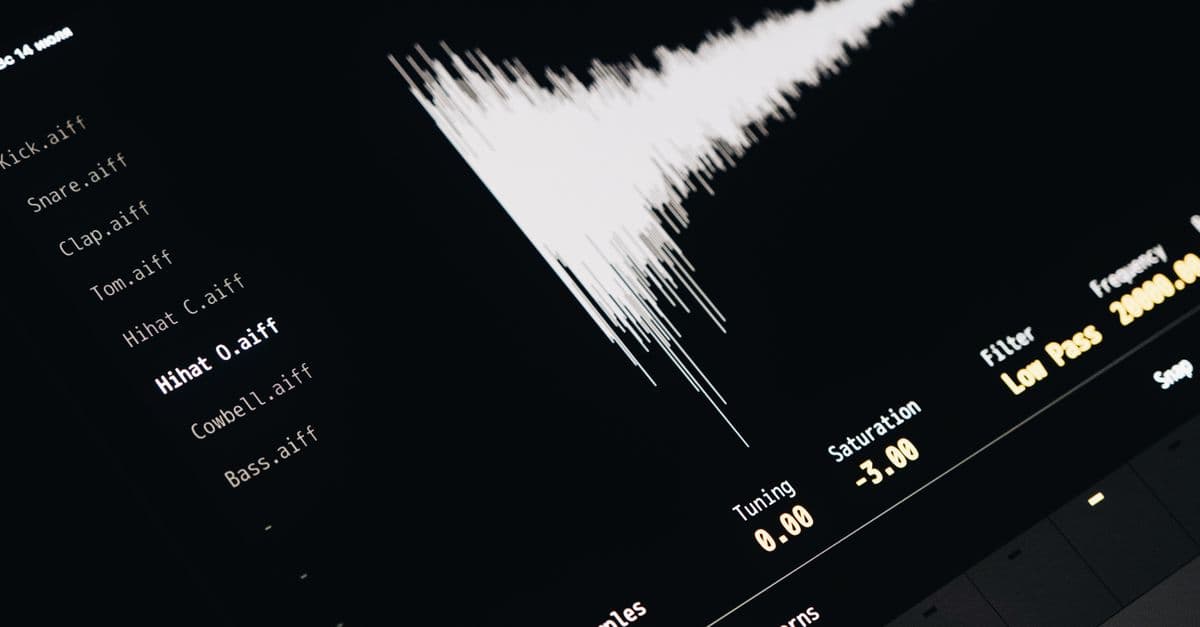
Photo: Tara Winstead / Pexels
Suno is an AI music generation service that produces complete songs, vocals, lyrics, instruments, and arrangement, from a short text prompt. Type "lo-fi hip hop about Monday mornings," wait roughly a minute, and you get a two- to four-minute finished track with sung lyrics in the style you asked for. It sparked a wave of amateur songwriting, a coordinated lawsuit from the three major record labels, and by mid-2026 a set of licensing deals that are reshaping how the whole industry treats AI-generated audio.
Suno was founded in 2022 in Cambridge, Massachusetts, by four former audio and machine-learning specialists, several of whom had worked together at the speech-recognition company Kensho. Its main competitor, Udio, launched in 2023 out of a team that included former Google DeepMind researchers. Together, the two products turned "type a prompt, get a song" from a research curiosity into a mainstream habit. In this piece we'll walk through how the underlying technology works, what actually changed between the major versions, why the recording industry sued, what has since been settled (and what hasn't), and how to think about using AI-generated music yourself.
What makes Suno different from earlier AI music tools
Before Suno, "AI music" software mostly meant instrumental loop generators or MIDI composition assistants: tools like AIVA or Amper Music could sketch a film score, but none of them could sing. Suno was the first widely available system that could generate vocals with intelligible lyrics in a chosen genre, alongside full instrumentation, from a single text prompt.
That's the specific technical leap that mattered. Generating a plausible drum-and-bass loop is a solved problem going back years. Generating a voice that holds a melody, breathes in the right places, and pronounces English lyrics clearly, while staying in tune with a full mix underneath it, is a much harder audio-modeling problem. Suno's V3 release in March 2024 was the moment that leap became reliable enough for casual, mainstream users rather than just AI researchers testing a demo.
The result was fast: within weeks of V3's release, "AI song" posts were circulating widely on TikTok and Reddit, and Suno's own reported user base crossed 12 million registered accounts by mid-2024, according to a company statement cited by TechCrunch. That kind of adoption curve, going from niche developer tool to a household name for teenagers making joke songs about their dog, is what pulled the major labels' legal attention almost immediately.
How AI music generators actually work
Under the hood, Suno and Udio combine several distinct machine-learning systems that were each developed for other purposes and then bolted together for music. It helps to walk through them in the order a prompt actually moves through the pipeline.
Step one: the lyrics. A language model, functionally similar in structure to the large language models behind chat assistants, takes your prompt ("a breakup song, sad but danceable, female vocalist") and drafts lyrics: verses, a chorus, a bridge, formatted with section tags. This is the same next-token-prediction idea behind a text LLM, just applied to a smaller, more structured kind of text.
Step two: turning audio into tokens. Raw audio is enormous data, a three-minute song at CD quality is roughly 30 million individual number samples. No model can predict that directly at reasonable speed. So Suno and Udio use a neural audio codec (a compressor built from a neural network rather than a hand-designed algorithm, in the lineage of Meta's Encodec and Google's SoundStream) to squash the waveform down into a much shorter sequence of discrete "audio tokens," conceptually similar to how a word gets represented as a token in a text model.
Step three: predicting the song. A transformer model, the same core architecture that powers GPT-style text generation, is trained to predict the next audio token given the ones that came before, conditioned on the lyrics and a style description ("acoustic folk," "90s boom-bap," "orchestral cinematic"). This is the actual creative engine: it has learned statistical patterns of what tends to follow what in millions of hours of music, the same way a text LLM learned what words tend to follow what in text.
Step four: reconstructing sound. A vocoder (a model that turns compressed audio tokens back into a full waveform you can actually hear) takes the predicted token sequence and reconstructs a high-fidelity audio file. Some pipeline components, particularly for keeping long instrumental passages coherent over a full three-minute arc, borrow techniques from diffusion models, the same class of iterative-denoising models used in AI image generators like Stable Diffusion.
Why is generating a singing voice harder than generating an instrumental?
A singing voice has to satisfy pitch, rhythm, and intelligible pronunciation simultaneously while staying musically in tune with everything else in the mix. Instrumental generation only has to satisfy the first two. That extra constraint, getting words to land clearly on a melody, is why vocal AI music trailed instrumental AI music by years.
Does Suno "remix" existing songs, or generate something new each time?
Suno generates a new audio file for each prompt rather than splicing together existing recordings, so no single output is literally a copy-paste of another song. The legal dispute is about a different question: whether the training process that taught the model what music sounds like required copying copyrighted recordings without permission, a question the German GEMA ruling and the ongoing U.S. cases address directly (see below).
The version timeline: what actually changed each release
Not every version bump was hype. Some were genuinely load-bearing changes to what the tool could do.
| Version | Released | What changed |
|---|---|---|
| Suno V1 | Late 2022 | Internal and early-access only, instrumental-leaning |
| V2 | September 2023 | First public release, short clips |
| V3 | March 2024 | Full songs up to about 2 minutes, intelligible vocals became reliable, partner integration with Microsoft Copilot |
| V3.5 | May 2024 | Up to 4 minutes, better song-structure coherence |
| V4 | September 2024 | Cleaner vocal mixing, better instrument separation, lyric editing tools |
| V4.5 | Late 2025 | Stem separation (isolating vocals, drums, bass as separate tracks), longer outputs |
| V5 | September 23, 2025 | Suno's own description is its "most advanced model yet": stronger prompt adherence, finer creative controls (tempo, key, mood, timbre, vocal-performance cues), tighter musical structure across longer songs, multi-stem exports, and lossless downloads on paid tiers, according to Suno's release notes and coverage from CometAPI |
Table 1. Suno version history and the substantive change each release shipped.
Table caption: version numbers alone don't tell you much about a generative-AI product; this table lists what specifically changed at each release, based on Suno's own release notes and independent tech coverage.
One detail worth flagging: V5 is not available on Suno's free tier. Bluelightning TV's coverage of the V5 launch described it as effectively "pro-grade AI music goes paid-only," a shift from earlier versions where free users got at least a taste of the newest model, according to Blue Lightning.
Suno vs. Udio vs. the rest of the field
Suno is not the only company doing this, and by mid-2026 the two market leaders had taken genuinely different strategic paths that matter more than which one "sounds better."
| Tool | Founded | Vocals | Typical output length | 2026 status |
|---|---|---|---|---|
| Suno | 2022 | Yes | Up to ~4+ min in V5 | Settled with Warner Music Group; still litigating against Sony and UMG |
| Udio | 2023 | Yes | ~2:10 min, extendable | Settled and licensed with UMG (Oct. 2025); building an authorized-training-only platform for 2026 |
| Stable Audio 2.0 | 2024 | Limited | ~3 min | From Stability AI, licensed-training focused |
| AIVA | 2016 | No, instrumental | Variable | Symphonic and film-score focus |
| Soundraw | 2020 | No | Looping | Royalty-free licensing for content creators |
| Beatoven | 2020 | No | Variable | Background and mood-scoring music |
| Boomy | 2018 | Limited | Variable | Earlier mover, simpler workflow |
| Mubert | 2016 | No | Continuous streaming-style | API-first, ambient and background use |
Table 2. Text-to-music tools compared by vocal capability and 2026 legal posture.
Table caption: legal status now separates the field almost as much as audio quality does; two tools with the strongest vocal generation (Suno, Udio) took opposite paths on the copyright fight.
Where the two market leaders differ in output character: Suno tends to produce songs that sound more "produced," radio-ready mixes with confident, front-of-mix vocals. Udio is more often described by reviewers as "musical" in a different sense: stronger harmonic and instrumental detail, a tighter genre range, but a texture that feels closer to a well-arranged demo than a finished single. Neither is objectively better; the difference is closer to comparing two studio engineers with different taste, not two calculators with different accuracy.
Think of the broader landscape like the early years of stock photography. Getty and Shutterstock both index enormous photo libraries, but they built very different licensing relationships with photographers, and that difference in supply-chain legitimacy ended up mattering more to commercial buyers than which library had marginally sharper images. Suno and Udio are in that same moment now: the underlying audio quality is converging, but which one has a clean chain of rights to its training data is becoming the deciding factor for anyone who wants to publish commercially without legal exposure.
The music industry lawsuits, and what's actually been resolved
In June 2024, the Recording Industry Association of America (RIAA), representing Universal Music Group, Sony Music, and Warner Records, filed coordinated federal lawsuits against both Suno and Udio, alleging the companies trained their models on copyrighted recordings "at almost unimaginable scale" and seeking statutory damages of up to $150,000 per infringed work. Suno's defense, laid out in its August 2024 court filing, was that training an AI model on copyrighted recordings qualifies as fair use under U.S. copyright law, the same legal argument being tested in parallel lawsuits over text and image models like Stable Diffusion.
That single lawsuit has since split into three very different outcomes, and treating "the Suno lawsuit" as one ongoing case is now inaccurate.
Warner settled with Suno. In late 2025, Warner Music Group and Suno announced what both companies called a first-of-its-kind partnership: Warner dropped its litigation, and the two companies agreed Suno will launch new, licensed AI models in 2026 built to replace its current, disputed-training-data models, according to Music Business Worldwide and Warner's own press release. Under the new terms, Warner artists can opt in to have AI experiences built around their names, likenesses, voices, and compositions, and Suno separately acquired the concert-listings platform Songkick from Warner as part of the same broader agreement. Practically, this also means real product changes are coming: Suno's current models are being deprecated in 2026, free-tier songs will no longer be downloadable (playable and shareable only), and paid tiers will get monthly download caps rather than unlimited exports, per Digital Music News.
UMG settled with Udio, not Suno. On October 29, 2025, Universal Music Group settled its copyright claims against Udio and simultaneously signed a licensing deal to build a new, authorized subscription platform, launching in 2026, trained only on approved and licensed music, according to UMG's own announcement. The new Udio platform will use filtering and audio-fingerprinting technology to prevent unauthorized reproduction of UMG's catalog, and UMG artists and songwriters will be compensated when their material appears in the approved training pool. This is meaningfully different from a simple lawsuit settlement: UMG is functionally becoming a technology partner and content supplier rather than a plaintiff on the sidelines.
Sony has settled with neither company. As of mid-2026, Sony Music's fair-use cases against both Suno (in Massachusetts) and Udio (in the Southern District of New York) remain active and unresolved, with a pivotal ruling expected in summer 2026, per reporting summarized by Tech Times. Adding another layer of tension: the American Federation of Musicians has itself sued Warner and Universal, alleging the two labels' settlement money from Suno and Udio should have been shared with performing musicians under existing union agreements, rather than kept entirely by the labels, according to the Hollywood Reporter.
Germany delivered the first real courtroom loss. On July 31, 2026, a Munich court ruled that Suno infringed copyright by training on and reproducing songs from the catalog of GEMA, Germany's music-rights collecting society, ordering Suno to disclose revenue figures and pay damages to be calculated later, according to Variety and Music Business Worldwide. This is the first major European ruling against an AI music company, and it establishes, at least under German and EU law, that AI companies need an explicit, opt-in publishing license to train on protected songs, not an implied fair-use permission. Suno has said it disagrees with the ruling and is evaluating an appeal.
So by mid-2026, the honest summary is: one major label (Warner) has fully settled and pivoted to partnership with Suno; a second major label (UMG) has settled and partnered, but with Udio specifically, not Suno; the third (Sony) is still litigating against both companies in the U.S., with a ruling expected soon; and a European court has already ruled against Suno on the merits. That's not a single "AI music lawsuit," it's four separate, partially resolved fronts.
Broader cultural moment: how we got here
Suno and Udio didn't appear in a vacuum. A short timeline of the events that shaped the public conversation around AI-generated music:
- April 2023 — the viral track "Heart on My Sleeve," which used AI-cloned vocals mimicking Drake and The Weeknd without their involvement, went viral on streaming platforms before being pulled, and is widely credited with kicking off mainstream public debate about AI voice cloning specifically, as distinct from AI music generation more broadly.
- 2024 — Spotify and other streaming platforms saw a rapid rise in fully AI-generated tracks; Spotify has since said AI-attributed uploads account for a small but growing share of new content on the platform, prompting new labeling and fraud-detection policies.
- June 2024 — the RIAA's coordinated lawsuits against Suno and Udio, described above, mark the moment the fight moved from public controversy to formal litigation.
- 2025 — the labels' complaints were amended to add further allegations; one amendment alleged over 61,000 additional songs were used in training without permission, according to reporting summarized by AI Vortex. Separately, reports emerged alleging Suno had engaged in "stream-ripping" (downloading audio directly from YouTube to build training data), a claim covered just before the V5 launch by Music Business Worldwide.
- October–December 2025 — the UMG-Udio and Warner-Suno settlements, described above, mark the shift from pure litigation to a mixed litigation-and-licensing landscape.
- July 2026 — the Munich GEMA ruling becomes the first courtroom loss on the merits for an AI music company anywhere in the world.
Can AI-generated music be detected?
Detection remains an unsolved, adversarial problem. Suno has reportedly used Google's SynthID audio watermarking system to mark its outputs, but researchers and journalists have shown that simple re-encoding or format conversion can strip or degrade watermarks, so watermark-based detection is not currently reliable enough to serve as definitive proof either way.
Is it legal to publish a Suno or Udio song on Spotify?
Technically yes for now: Suno's paid tiers grant a commercial-use license for output, and Spotify permits AI-assisted uploads with disclosure. But the underlying training-data litigation is unresolved for two of three major labels, so any high-revenue AI track carries real, if currently low-probability, long-tail legal risk until the Sony cases and any further appeals conclude.
What people get wrong about AI music generation
"It's just remixing existing songs." This is the most common misunderstanding, and it conflates two separate things: how the model was trained and how it generates. Generation is a fresh statistical prediction of audio tokens, not a copy-paste splice of existing recordings, which is why individual Suno songs generally don't sound identical to any specific existing track. The legal dispute is entirely about the training step: whether ingesting copyrighted recordings to teach the model statistical patterns required a license the companies never obtained. Early Suno outputs from 2023 and 2024 did occasionally reproduce recognizable melodic fragments or vocal timbres close enough to specific artists to raise memorization concerns, which is part of why the labels' case has real technical teeth rather than being purely theoretical.
"The lawsuits mean AI music is basically illegal now." The 2025-2026 settlements show the opposite trend: two of the three major labels chose to become licensing partners rather than continuing to litigate to a final judgment. That's a strong signal the labels see more long-term value in getting paid for licensed AI training than in trying to shut the technology down entirely, similar to how the record industry eventually built licensing deals with streaming services after initially suing file-sharing platforms into bankruptcy in the early 2000s.
"Suno V5 and the Warner-licensed models are the same thing." They're not, and the distinction matters for anyone relying on current pricing or feature information. V5, released September 2025, still runs on Suno's original, disputed training data. The new, fully licensed models promised under the Warner deal are scheduled to launch in 2026 as a replacement, with the current model line being deprecated, per Suno's own December 2025 communications to users. If you're evaluating Suno for commercial use going into late 2026, check which model generation you're actually using, since the risk profile is different.
"AI music generators only make novelty songs." The novelty-song use case (birthday songs, meme tracks) is real and visible on social media, but it undersells the tool. Independent musicians, podcast producers needing quick background scoring, and game developers needing placeholder or even final audio have adopted Suno and Udio as production tools, not just toys, precisely because the stem-separation features added in V4.5 and V5 let them extract individual instrument tracks and mix them into a larger project rather than using the raw generated song as-is.
Pricing (as of mid-2026, before the 2026 licensed-model transition)
- Free — roughly 50 credits per day (about 10 songs), non-commercial use only, no V5 access.
- Pro, around $10/month — thousands of monthly credits, commercial-use license, faster generation queue, access to the current top-tier model.
- Premier, around $30/month — the largest monthly credit allowance, priority generation queue, full stem-download access.
Expect these tiers to change materially once the Warner-licensed model line replaces the current one in 2026, including the previously announced shift toward download caps on paid tiers and the removal of free-tier downloads entirely.
FAQs
Q: What is Suno AI? A: Suno is an AI service that generates complete songs, including lyrics, vocals, and instrumentation, from a text prompt. It was founded in 2022 in Cambridge, Massachusetts, and its latest model as of mid-2026 is V5, released in September 2025.
Q: Is Suno legal to use? A: Generating songs with Suno itself is not illegal, and paid plans include a commercial-use license for the output. However, Suno lost a landmark copyright case to the German rights society GEMA in July 2026 and is still litigating with Sony Music in the U.S. as of mid-2026, so the underlying training-data legality remains partly unresolved.
Q: Suno vs. Udio, which is better? A: Suno tends to produce more "radio-ready," confidently mixed vocals, while Udio is often described as having stronger harmonic and instrumental detail with a tighter style range. As of 2026 they also differ legally: Udio settled with and is now licensed by Universal Music Group, while Suno settled only with Warner and remains in litigation with Sony and UMG.
Q: How long can Suno songs be? A: V5, released in September 2025, supports extended generations with tighter musical structure across longer songs than earlier versions, building on V3.5 and V4's roughly four-minute cap.
Q: Does Suno train on copyrighted music? A: Suno has not fully disclosed its training data. Its August 2024 court filing defended training on copyrighted material as fair use, and a Munich court ruled against that defense in July 2026, finding Suno infringed the copyrights of songs in GEMA's German catalog. U.S. litigation with Sony Music over the same underlying question remains active.
Q: Can I publish Suno songs on Spotify? A: Yes technically, Suno's paid plans grant a commercial license and Spotify allows AI-assisted uploads with disclosure. But unresolved litigation with Sony Music, plus the July 2026 German ruling against Suno, means high-revenue AI tracks carry real long-tail legal risk until the remaining cases resolve.
Q: What happened with the RIAA lawsuit against Suno and Udio? A: The June 2024 coordinated lawsuit has split into different outcomes per label: Warner settled and partnered with Suno in late 2025; Universal Music Group settled and partnered with Udio (not Suno) in October 2025; and Sony Music's cases against both companies remain active, with a pivotal U.S. ruling expected in summer 2026.
Q: What's different about Suno V5 compared to earlier versions? A: V5, released September 23, 2025, added stronger prompt adherence, finer creative controls over tempo, key, mood, and vocal-performance cues, tighter structure over longer songs, multi-stem exports, and lossless downloads on paid tiers. It is not available on the free tier.
Q: Will the Suno-Warner deal change how Suno works for everyday users? A: Yes. Under the deal, Suno's current models are being deprecated in 2026 in favor of new, fully licensed models. Announced product changes include removing downloads from the free tier, adding monthly download caps on paid tiers, and letting Warner artists opt in to having their names, voices, and compositions used in AI-generated content.
Q: Can AI-generated music be detected reliably? A: Not consistently. Suno has reportedly used Google's SynthID audio watermarking on its outputs, but re-encoding or format conversion can strip or weaken the watermark, so watermark-based detection is not currently a reliable standalone method for identifying AI-generated tracks.
The takeaway
Suno's technology (a language model for lyrics, an audio codec, a transformer, and a vocoder chained together) is genuinely novel engineering, but the story that matters most in 2026 isn't the architecture, it's the licensing fight it triggered. Two of the three major labels have already decided that partnering and getting paid beats fighting to a final judgment, while the third label and a German court have shown the opposite path, real liability, is also live. Anyone using Suno or Udio commercially in 2026 should treat the specific model generation and licensing status as fast-moving facts to check, not settled background.
Read next:
Follow new articles
Add SciHub101 to your feed reader to see new science and technology stories.
About the Author
SciHub101 is an independent science and technology publication founded and edited by Buğra Sözeri, a software engineer and app developer based in Türkiye. AI tools assist with drafting and research. Source documentation in the existing archive is uneven, and articles are being reviewed and corrected. The Editorial Team byline identifies editorial responsibility; it does not certify specialist or independent human review. Where we compare products, anything built by our own team is labelled as such — see the editorial guidelines and About page for how corrections and disclosures work.
Related Articles

What Is Anthropic? AI Safety Company
Anthropic is the AI safety company behind Claude, founded in 2021 by ex-OpenAI researchers. Governance, funding, research, models, and criticism explained.

What Is Stable Diffusion? Open AI Image Gen
Stable Diffusion is an open-weights text-to-image model released in August 2022. See how latent diffusion works, how versions differ, and what lawsuits say.
Best AI Music Generation Tools — Suno, Udio, Stable
Best AI music generation tools 2026: Suno vs Udio vs Stable Audio. Generate songs from text prompts. Quality, pricing, commercial use rights compared.


What Is Generative AI and How Is It Changing Industries?
Generative AI is the class of machine learning systems that produce new content — text, images, audio, video, code, or molecular structures — rather than classifying or predicting from existing data. It is not a single technology but a family of model architectures sharing one property: trained on enough examples, they can synthesize plausible new outputs in the same domain. Understanding what separates generative from conventional AI explains both why the technology spread so quickly and where its real limits lie.

What Is Runway ML? AI Video Tool Pioneer
Runway ML is the AI video startup that co-created Stable Diffusion. Gen-4 generates 20+ second clips with professional editing tools. How it compares to Sora and Google Veo.