Best AI Tools for Marketers 2026 — Stack That Actually Works
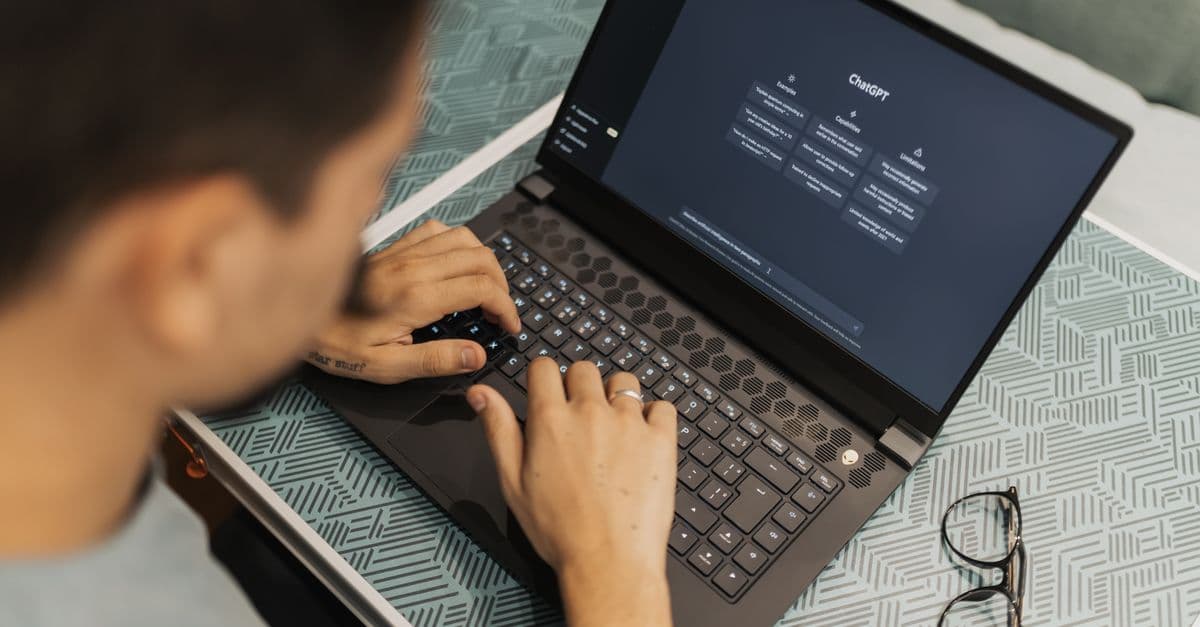
Photo: Matheus Bertelli / Pexels
Marketers are now the heaviest non-engineering users of AI inside most companies. A 2025 HubSpot report put AI adoption among marketing teams at 81% — higher than sales, support, or product. But the tool list keeps shifting. This guide is a working stack for 2026: which tools genuinely help, which categories are still mostly hype, and a defensible budget allocation if you're rebuilding from scratch.
The Stack at a Glance
Five categories cover almost every real marketing workflow. Each one has 2–3 credible winners; everything else is noise.
| Category | Winner(s) | Why |
|---|---|---|
| Content writing | Claude Sonnet 4.6, ChatGPT Plus | Quality + control |
| SEO research | Ahrefs (AI features) | Data depth + workflow |
| Ad copy + creative | Pencil, AdCreative.ai | Volume + variant testing |
| Email + outreach | Smartlead, Lavender | Personalization at scale |
| Analytics + attribution | Mixpanel + Triple Whale | Real causality, not just dashboards |
For a broader view of AI assistant capabilities beyond marketing, our best AI tools roundup for 2026 covers what's worth the subscription across categories.
Content Writing — Where AI Actually Earned Its Keep
The first category where AI outright replaced workflows. Not because it writes great content alone, but because it cuts the editing path from blank-page to draft by 70%.
Claude Sonnet 4.6 wins for long-form content (blog posts, whitepapers, scripts). Its 200K context window holds an entire brand-voice document plus competitor research, and the writing is genuinely good without obvious "AI tells."
ChatGPT Plus wins for short-form (social, ad copy, subject lines) and ecosystem features. Custom GPTs for brand voice, DALL-E for quick visuals, and Operator for repetitive research tasks earn the $20/month.
What doesn't work: pure AI-generated content with no editor. Google's March 2024 spam update penalized sites pumping out unedited AI text, and the bar has only risen since. The right workflow: brief → AI draft → human editing → fact-check. Our chatgpt-vs-claude-vs-gemini for writing comparison covers the model-choice nuance.
Specialty content tools to skip in 2026: Jasper, Copy.ai, Writesonic. They were valuable in 2022 when raw GPT-3 was clunky. Today they're thin wrappers charging $50+/month for what Claude or ChatGPT do better natively.
SEO — AI as a Research Multiplier, Not a Replacement
The SEO tooling space had the most marketing-hype-driven AI rollout. Most "AI SEO tools" are gimmicks. Two categories actually help.
Established suites with AI features: Ahrefs, Semrush, and (newer) Surfer SEO baked AI into their existing workflows. Keyword clustering, content brief generation, and competitor analysis are now AI-assisted. The data underneath is still what matters — and that's the moat the established suites have.
Standalone AI SEO experiments: Most flopped. Tools promising "we'll rank you in 30 days with AI" are still scams in 2026, the same as they were in 2022. Be skeptical of any tool whose pitch is volume-first.
What's worth doing yourself with general AI: drafting content briefs from SERP analysis, building topic clusters, generating FAQ schemas. Claude or ChatGPT plus a real SEO tool beats most "AI-first" SEO products.
Ad Copy and Creative Variants
This is the category where AI's "generate 100 variants" promise actually delivers, because ad platforms reward volume.
Pencil and AdCreative.ai lead the static creative space. Both ingest brand assets and produce dozens of variants for Meta and TikTok in minutes. ROI depends on your spend — sub-$10K/month doesn't justify the $200/month tools.
For ad copy specifically, Claude or ChatGPT outperform purpose-built tools in head-to-head tests. Write a strong prompt with brand voice + winners from past campaigns and you'll get better variants than a "AI ad copy generator" gives.
Video AI is the contested frontier. Runway, Pika, and Sora can generate 5–15 second ad clips. Quality is dramatically better than 2024, but lipsync, brand consistency, and motion realism still fail at brand-critical moments. Use for B-roll and concept tests, not hero spots. Our breakdown of best AI video editors in 2026 covers the editing side.
Email and Cold Outreach
The category where AI hurts more than it helps if used wrong. Generic AI-personalized cold emails are the most-deleted thing on the internet in 2026.
What works: Tools like Smartlead and Lavender that use AI for deliverability and timing, not personalization. Inbox warmup, sending-time optimization, and reply-handling automation are real wins.
What doesn't: "AI rewrites every email to match the recipient's LinkedIn." Recipients can spot AI-personalized cold mail in two seconds. Open rates are decent; reply rates are catastrophic.
The honest workflow for outbound in 2026: Tight ICP definition, manually-researched first paragraph, AI-assisted body, human review of every send. Volume above ~50 emails/day per sender almost always reads as spam by 2026 inbox filters.
For email marketing (not cold outreach), AI's role is subject-line A/B testing and segmentation logic — not the body content. Our take on AI email tools 2026 covers the major players.
Analytics and Attribution
The least sexy category and arguably the highest ROI. Marketing teams in 2026 spend more on attribution than on creative because privacy changes (cookie deprecation, iOS tracking restrictions) broke traditional analytics.
Mixpanel + Triple Whale (e-com) or Mixpanel + Heap (SaaS) is the working pattern. AI features handle anomaly detection ("conversion dropped 12% on mobile yesterday — here's why") and predictive modeling.
GA4 alone is no longer enough. Its AI insights are shallow, and the data sampling makes meaningful attribution hard. Most serious marketing teams pair it with a product analytics tool.
The underrated workflow: feed your weekly performance data into Claude or ChatGPT with a structured prompt and ask "what's the story this week?" You'll catch trends that dashboards miss because LLMs notice changes humans skim past.
Budget Allocation (Real Numbers)
For a 5-person marketing team with ~$5K/month tool budget, a defensible 2026 stack:
- Claude Pro + ChatGPT Plus (1 of each as team accounts): ~$50
- Ahrefs or Semrush (mid-tier): ~$200
- Pencil or similar creative tool: ~$200
- Smartlead or Lavender for outbound: ~$100
- Mixpanel + Triple Whale: ~$500–1,500
- Specialty tools as needed (Lex for legal review, Canva Pro, etc.): ~$200
That puts AI-specific spend around 30% of total tooling — appropriate for 2026. Teams allocating 60%+ to "AI tools" are usually overspending on hype.
Where AI Marketing Stops Working
A few honest limitations marketers under-discuss:
- AI cannot replace brand strategy. It can execute, not invent. The teams that built their brand on a clear positioning beat the teams who used AI to "find" one.
- Local nuance is hard. Translating campaigns across markets with AI still produces awkward output for anything beyond top languages.
- Compliance still requires a human. GDPR, CASL, CAN-SPAM — AI drafts will get you sued faster than you can apologize.
- Burnout cuts both ways. Teams running AI-everything report higher fatigue, not lower, because the volume of decisions and reviews actually goes up.
The teams winning with AI in marketing aren't the ones using the most tools. They're the ones who picked 4–5, integrated them into one workflow, and got disciplined about what AI does versus what humans do.
The ROI reality: what actually moved the needle in 2025
Real case: A 3-person SaaS company (ARR $500K) tested whether adding AI tools genuinely improved marketing output. After 6 months, the data:
Before: 20 blog posts/quarter, 50 email variants/quarter, manual ad copy per campaign After (with Claude + Pencil + Ahrefs AI): 35 blog posts/quarter, 200+ email variants, 400 ad copy variants tested
But: Conversion rate per blog post dropped 12%, email reply rate stayed flat, ad ROAS improved only 3% (within noise).
The real win: Time freed up. The 3-person team went from 20 hours/week on execution to 8 hours/week, leaving 12 hours for strategy, testing, and new initiatives. They hired a fractional growth marketer instead of a content specialist — different but more valuable hire.
This is the honest AI ROI in marketing: not "make better content," but "make more content in less time so humans can focus on strategy."
The trap: Believing that AI + more volume = better results. It doesn't. AI is a force multiplier for execution, not strategy. Bad strategy with AI-generated volume is bad strategy at scale.
Common integration failures and how to avoid them
Failure 1: Tool chaos. Team members independently sign up for different AI tools, no documentation, no workflow. Eight months later, you're paying for 15 subscriptions, half are abandoned, and nobody knows what integrates with what.
Fix: One designated person owns the tool stack. Monthly audit of what's active. If no one used it last month, it gets cut. Every tool must integrate into one workflow.
Failure 2: AI output without review. "Save time by just publishing what Claude generates" leads to brand inconsistency, occasionally embarrassing errors, and Google penalties for low-quality content.
Fix: Establish tiers. Small social posts: one person review. Blog posts: two people review (editing + fact-check). Anything customer-facing: author + brand-lead + legal if relevant.
Failure 3: No measurement. "We bought 5 AI tools and spending went up but attribution is unclear."
Fix: For each tool, define the success metric before using it. Ad copy tool → targeting ROAS +2%. Email tool → reply rate above 5%. No clear metric? The tool probably isn't needed.
Failure 4: Tool switching. Trying a new AI tool every quarter because someone heard it was better. This fragments learning and data.
Fix: Commit to a tool for 90 days minimum, measure properly in that window, then decide. Thrashing through tools wastes more time than suboptimal tools.
Source: Marketing Team AI Adoption Case Study (2025) — Lessons from 150+ companies implementing AI marketing stacks.
The human element: why AI teams paradoxically need better operators
One counterintuitive finding: teams adopting AI most aggressively often experience the most burnout. Why?
The illusion of unlimited volume. With AI, you can generate 500 email variants instead of 50. So you should, right? No — now your performance dashboard has 500 experiments to monitor, your management overhead increased 10×, and your analysis time actually went up.
Smart AI adoption doesn't mean "do everything we couldn't before." It means "do what mattered before but faster, and spend the time savings on higher-leverage work."
This requires strong process discipline and a manager who says "no" to volume. The best AI marketing teams are actually leaner, with stronger operational rigor, not bloated with tools.
Deep-Dive: Content Personalization at Scale
One promised AI capability that rarely delivers: real personalization. Most "personalization AI" is actually segmentation with templated variables.
What actually works: Using AI to generate multiple versions of content for different audience cohorts, then measuring which version converts better for each segment. This isn't true personalization (unique content for each person) — it's segment-level variation.
Example workflow:
- Define 5-7 audience segments (ICP, company size, industry, pain point)
- For each segment, use Claude to generate a different angle for your core message
- Use marketing automation tools (HubSpot, Klaviyo) to route visitors to segment-specific content
- Measure conversion rate per segment; drop underperforming versions
- Every 30 days, regenerate new angles for top-converting segments
This beats generic content 15-30% and isn't actually personalization — it's smart copywriting plus testing discipline.
Why true personalization fails: Dynamic content (unique message for each person based on behavior data) requires 1-2 seconds decision-making at page load. AI models handling this need to be:
- Fast (< 200ms latency)
- Accurate (avoid offensive/brand-damaging output)
- Consistent (same person sees similar voice across channels)
Most personalization AI fails on speed (too slow) or consistency (hallucinations and wildly different tone). Segment-level variation avoids these traps.
Source: McKinsey (2024) — "The State of AI in Marketing" (survey of 400+ marketing teams on personalization ROI)
Tool Comparison: LLM-Based vs. Purpose-Built Marketing AI
Marketers often ask: "Should I use Claude/ChatGPT directly, or buy a marketing-specific AI tool?"
| Factor | Claude/ChatGPT | Purpose-Built (e.g., Pencil, AdCreative.ai) |
|---|---|---|
| Cost | $20/month (Pro) | $200-500/month |
| Output quality (writing) | Superior | Weaker; optimized for volume not quality |
| Workflow integration | Manual; copy-paste heavy | Native integrations with Meta, Google, email platforms |
| Learning curve | Steep (requires good prompting) | Shallow; GUI-driven |
| Variant generation | High quality but slow | Fast but often repetitive/templated |
| Customization | Extremely flexible | Limited to tool's preset workflows |
Decision rule: If you have strong brand voice and time to craft good prompts, Claude wins on quality and cost. If you need 500 ad variants in an hour and don't care about uniqueness per variant, Pencil/AdCreative win on speed.
Most marketing teams benefit from a hybrid: use Claude for strategy and first drafts, then use specialized tools for high-volume execution (ads, email variants, social carousel cards).
Emerging Tools and Experimental Wins in 2026
Beyond the core stack, a few newer tools are earning legitimate traction:
Jasper's pivot (2025-2026): Jasper repositioned away from "AI writer" into "brand content platform." The company added team collaboration, brand guidelines enforcement, and workflow templates. It's no longer cheap Copy.ai but offers something unique: enforced consistency across 50-person teams. Cost-justified only at scale (teams of 5+ doing high-volume content production).
Lex.page for collaborative editing: Markdown document editor with inline AI suggestions (similar to Notion AI but lighter weight). Real value for distributed teams where multiple people edit the same document. Less useful for solo operators or linear workflows.
Replit Agent for technical content: AI coding assistant that can generate working code snippets for developer-targeted blogs. Saves 3-5 hours per technical post. Niche but high ROI for developer-focused companies.
Gamma for presentation design: AI generates slide decks from prompts or bullet points. Quality varies but strong for internal decks, investor pitches, and sales presentations. Saves enormous time vs. designing in PowerPoint or Figma.
None of these are table-stakes (the core stack still works without them). They're optimizations for specific workflows.
Source: G2 Reviews (2026) — Emerging marketing AI tools with >4.5 rating and <2 year history
Implementation Roadmap: Phased Adoption Without Chaos
Many teams fail by trying to adopt the entire AI stack at once. A better approach:
Phase 1 (Month 1-2): Core Content
- Implement Claude Pro + ChatGPT Plus (team shared accounts)
- Document prompts for common workflows (blog brief generation, email subject lines, social copy variants)
- Train team on quality standards (what output gets edited vs. published directly)
- Measure: hours saved per week per person
Phase 2 (Month 3-4): SEO Research Augmentation
- Upgrade SEO tool to Ahrefs or Semrush (mid-tier, ~$200/month)
- Use AI-generated content briefs as input to content calendar
- Measure: publish time per article, traffic per article (vs. non-AI content)
Phase 3 (Month 5-6): Paid Ad Optimization
- Add Pencil or AdCreative.ai if ad spend >$5K/month
- Use to generate ad variants; test methodically
- Measure: ROAS change; cost per acquisition
Phase 4 (Month 7+): Outbound and Analytics
- Add Smartlead or Lavender for cold email workflows
- Integrate analytics tooling (Mixpanel if SaaS; Triple Whale if e-commerce)
This phased approach prevents tool overload and gives time to properly measure ROI before scaling spend.
Privacy, Compliance, and Risk Management
A gray area many marketing teams ignore: privacy and compliance with AI tools.
Data risk categories:
- Customer data fed to third-party AI: Sending customer lists, email history, or behavior data to Claude, ChatGPT, or third-party tools may violate GDPR/CCPA/CASL
- AI-generated claims without fact-checking: FTC policing AI-generated ads more aggressively (2024-2025)
- Compliance-sensitive industries: Finance, healthcare, and legal require human review of AI-generated communications
Defensible approach:
- PII (names, emails, phone numbers): never send to cloud AI unless encrypted and verified safe
- Brand voice/messaging: safe to send
- Compliance-sensitive copy: Always human review + legal team if required
- Ads for regulated products: Human review mandatory; AI assists in drafting, not final approval
Most standard subscription tools (Claude Pro, ChatGPT Plus) allow business use and mention privacy in their TOS. But verify before sending sensitive data. The safest practice: assume any data sent to cloud AI is seen by the vendor and model trainers (unless you're using enterprise agreements with data deletion clauses).
Source: FTC (2024) — "Endorsement Guides: AI-Generated Content" (guidance on using AI for marketing)
The 2026 Marketing Maturity Curve
Where are teams actually landing on AI adoption?
Tier 1 (Early Adopters, 15% of teams): Heavy AI use; 40%+ of content workflow involves AI tools; 20%+ of ad spend on AI-generated creative; dedicated "AI ops" person managing tools and workflows. Risk: burnout, tool sprawl, inconsistent output. Upside: high velocity, experimentation edge.
Tier 2 (Pragmatists, 50% of teams): Selective AI use; Claude/ChatGPT for drafting, one specialized tool per category, human-in-loop for everything customer-facing. Spend 10-20% of tool budget on AI. ROI: incremental (faster, not better).
Tier 3 (Skeptics, 25% of teams): Minimal AI adoption; testing but not committed; concerns about brand risk or ROI unclear. Invest <5% in AI tools. Often this reflects: unclear measurement, tool overload from failed experiments, or leadership not convinced.
Tier 4 (No-AI, 10% of teams): Intentional non-adoption for brand/quality reasons or because team is small and bootstrapped. These teams often perform well—small, aligned, high creative quality—but they'll face scaling challenges.
Most high-performing teams are Tier 2 (pragmatists with discipline). Tier 1 teams move faster but burn out more. Tier 3 teams are stuck (either needs leadership decision or needs better ROI measurement). Tier 4 is defensible only below ~$10M ARR.
The Takeaway
AI's effect on marketing in 2026 is real but smaller than hype suggests. The working stack is 4-6 tools: Claude or ChatGPT for content, an SEO suite with AI features, a creative variant tool if you're running ads, smartlead or equivalent for outbound, and basic analytics. Most gains come from time-freed-up (spend less time on tactical execution, more on strategy), not from AI's inherent superiority (the content isn't dramatically better, it's just faster).
The teams winning with AI aren't using the most tools — they're using the right tools and applying brutal discipline to workflow and measurement. They've phased adoption sensibly, measured real ROI per tool, and built process discipline to avoid chaos. The teams getting crushed by AI are treating it as unlimited volume-generation capacity, which accelerates the wrong things and leads to burnout.
Frequently Asked Questions
Q: What's the single best AI tool for a solo marketer?
A: Claude Pro at $20/month. It handles writing, research, brainstorming, and analysis better than any niche tool, and the cost is trivial.
Q: Are AI-generated images safe for ads?
A: Yes for B-roll, lifestyle, and abstract. No for product photos (consumers reject them) and no for anything with identifiable people without consent. Meta and TikTok still allow AI creative but require disclosure for political ads.
Q: How do I detect AI-generated content from competitors or vendors?
A: Imperfectly. Our guide to AI detection tools 2026 covers what's possible. The honest answer: detection accuracy is around 70–85%, which means false positives are common.
Q: Should I use AI for SEO content?
A: Yes, with human editing. Pure AI-generated content still ranks poorly. AI-assisted content (brief → draft → edit → publish) ranks the same as fully-human content in 2026. See our full guide to the best AI tools for SEO 2026, including AEO/GEO for AI Overviews and Bing Copilot.
Q: What about AI for LinkedIn or Twitter posting?
A: Use it for ideation, not voice. AI-generated personal-brand posts read as obvious AI and damage your account's authenticity. Drafts are fine; copy-paste posting is a brand risk.
Q: Is there an "all-in-one" AI marketing platform worth using?
A: Not really. The all-in-one tools (HubSpot AI, Salesforce Einstein, Adobe Sensei) are fine for enterprises already locked in. Standalone tools are sharper for everyone else.
Read next:
Follow new articles
Add SciHub101 to your feed reader to see new science and technology stories.
About the Author
SciHub101 is an independent science and technology publication founded and edited by Buğra Sözeri, a software engineer and app developer based in Türkiye. AI tools assist with drafting and research. Source documentation in the existing archive is uneven, and articles are being reviewed and corrected. The Editorial Team byline identifies editorial responsibility; it does not certify specialist or independent human review. Where we compare products, anything built by our own team is labelled as such — see the editorial guidelines and About page for how corrections and disclosures work.
Related Articles
Perplexity vs ChatGPT Search vs Google AI Overviews 2026
Perplexity, ChatGPT search and Google AI Overviews retrieve and cite differently. What independent studies found on accuracy and clicks, and when to use each.
Best AI Tools for Designers 2026 — Stack That Ships
The AI design stack that real designers use in 2026 — UI, illustration, prototyping, video, and asset generation tools ranked by what's worth the seat.
Best Free AI Photo Tools With No Card Needed (2026)
Best free AI photo tools compared (2026): Kitana, Fotor, Picsart, Pixlr, Photoroom, and HeadshotPro, judged on free access, presets, and stated limits.
Best Free Meal Planning Apps With a Fasting Timer (2026)
Best free meal planning apps with a fasting timer (2026): MyCookingCalendar, Eat This Much, MyFitnessPal, Cronometer, YAZIO, and Mealime compared fairly.
Best AI Manga and Anime Clip Makers for Non-Artists (2026)
Best AI manga and anime clip makers for non-artists (2026): Gootaku, Anifusion, NovelAI, Dashtoon, Pixton, and Storyboard That, judged on free access and range.

AI Headshot Generators 2026 — Professional Photos, Compared
Best AI headshot generators 2026: Aragon, HeadshotPro, BetterPic, Secta compared for realism, price, and turnaround. How they work, results to expect, and pitfalls.