What Was OpenAI Operator? Agent Browser Explained
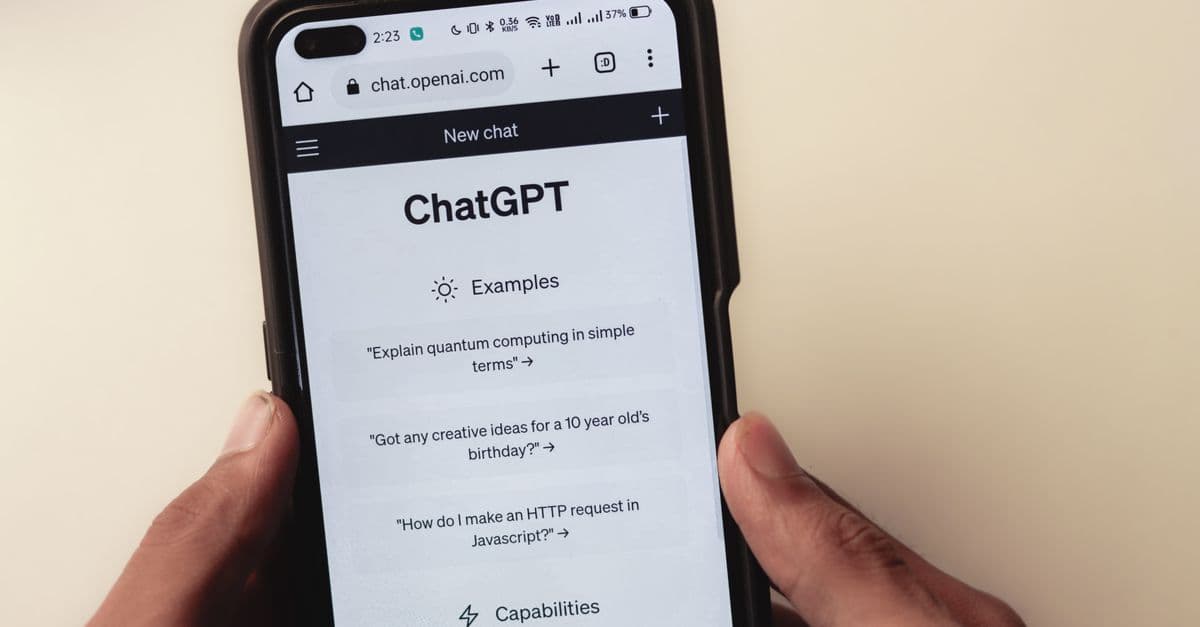
Photo: Sanket Mishra / Pexels
On January 23, 2025, OpenAI launched Operator, a research preview of an AI that didn't just answer questions but actually used websites on a person's behalf (OpenAI, "Introducing Operator"). It booked restaurant tables, filled out forms, and shopped across tabs by looking at screenshots and clicking, the same way a person does. Operator ran for a little over seven months. OpenAI folded its underlying technology into a broader feature called ChatGPT agent on July 17, 2025, and shut down the standalone Operator product on August 31, 2025. This article explains how Operator worked, why it was retired so quickly, and what actually replaced it inside ChatGPT today.
What Operator was and why it mattered
Operator was OpenAI's first consumer product built specifically to act inside a web browser rather than just talk about one. Instead of returning a paragraph of instructions for how to book a flight, it opened a virtual browser, navigated to the airline's site, filled in the dates, and clicked through checkout, pausing for a human to confirm the payment.
That distinction (advice versus action) is the entire premise of the "AI agent" category that exploded across the industry in 2025 and 2026. A chatbot predicts the next token in a conversation. An agent perceives a changing environment, decides on a step, executes it, and observes the result before deciding on the next step. Operator was one of the first mainstream products to put that loop in front of ordinary consumers rather than developers.
It's worth being precise about what "shut down" means here, because the underlying technology didn't disappear. OpenAI's pattern with Operator mirrors what it later did with a separate feature called Deep Research: launch a narrow standalone tool, learn from real usage, then merge the capability into the main ChatGPT product so users don't have to remember which specialized tool to open for which task. Operator the website is gone. The model and the click-and-type loop it pioneered live on inside ChatGPT's agent mode.
How Operator actually worked
Operator was powered by a model OpenAI calls CUA, short for Computer-Using Agent (OpenAI, "Computer-Using Agent"). CUA is a vision-and-action model built on top of GPT-4o's image understanding, combined with reinforcement learning that specifically rewards successful multi-step browser tasks. Three things had to work together for Operator to function at all.
Perception. The model doesn't see a webpage's underlying code (its HTML or accessibility tree). It sees a screenshot, exactly like a human does. That was a deliberate design choice: reading raw HTML is brittle because sites constantly change their markup, but a screenshot of a "Submit" button looks roughly the same across redesigns.
Reasoning. Between each action, CUA runs a short chain of reasoning to decide what to do next given the current screenshot and the overall goal. This is what lets it recover from an unexpected pop-up or a page that didn't load the way it expected, rather than failing the whole task.
Action. The model emits a small, fixed vocabulary of actions: click at a coordinate, type text, scroll, press a key combination, or wait. Nothing fancier than what a mouse and keyboard can do. That constraint is also the point: any website that works for a human works for CUA, with no site-specific integration needed.
The control loop ran, in order: a user typed a goal in plain English, CUA screenshotted the virtual browser, picked a single next action, executed it, screenshotted again, and repeated until the task was done or it hit a wall. On sensitive steps, like submitting a payment, logging in, or sending an email, the model paused and asked the human to confirm before continuing (OpenAI, "Introducing Operator").
Why did Operator run in a cloud browser instead of your local Chrome?
Operator's browser was a sandboxed instance in OpenAI's cloud, not the Chrome installed on the user's laptop. This let OpenAI isolate the agent's actions from a person's real accounts, cookies, and files, and let users watch a live video feed of the agent working in a side panel while retaining the ability to grab the mouse at any moment.
Access and pricing while it existed
Operator launched exclusively for ChatGPT Pro subscribers, OpenAI's top-tier plan priced at $200 per month, and was limited to users in the United States at launch (OpenAI, "Introducing Operator"). That combination (a $200 gate plus a geographic restriction) made Operator far more of a preview for power users and developers than a mass-market product. It never expanded to the $20 Plus tier before it was retired; instead, OpenAI skipped straight to building a successor that launched on Plus from day one.
| Detail | Operator (2025) | ChatGPT agent (current) |
|---|---|---|
| Launch date | January 23, 2025 | July 17, 2025 |
| Status | Retired August 31, 2025 | Active |
| Lowest tier with access | Pro ($200/month) | Plus ($20/month) |
| Monthly usage | Not publicly capped | 40 messages/month on Plus, 400 on Pro |
| Region at launch | United States only | Rolled out worldwide within a week |
| Interface | Separate site, operator.chatgpt.com | Built into chatgpt.com composer |
Table: How Operator compared to the ChatGPT agent feature that replaced it.
Why OpenAI retired Operator after seven months
The official framing from OpenAI was consolidation, not failure. In the ChatGPT agent announcement, OpenAI described the new feature as combining the web-browsing and clicking skills of Operator with the multi-step research depth of Deep Research (a separate tool that could spend many minutes reading dozens of sources to write a long report) into one unified agent mode available directly inside the main ChatGPT product (OpenAI, "Introducing ChatGPT agent").
Three practical problems with the original Operator setup pushed OpenAI toward merging it into ChatGPT rather than continuing to develop it as a separate product.
Fragmentation confused users. By mid-2025 ChatGPT had accumulated multiple semi-overlapping capabilities, ordinary chat, Deep Research, Operator, and Canvas, each living behind its own toggle or separate URL. A user who wanted an agent to both research a topic and act on the findings (for example, "find the three cheapest flights and book the best one") had to manually stitch together two different tools that didn't talk to each other.
The $200 gate limited real-world testing. Operator's usage data came almost entirely from ChatGPT Pro subscribers, a small and unusually technical slice of OpenAI's user base. Moving the capability to the $20 Plus tier immediately multiplied the population generating real usage data, which matters enormously for a system that's trained and tuned against how people actually use it.
One underlying model, one integration point. CUA and the reasoning model behind Deep Research were converging in capability anyway. Rather than maintain two separate agent products with two separate interfaces, OpenAI shipped one agent mode that can browse, click, run code, and read files inside a single virtual computer, then routes the task to whichever sub-skill (research versus action) the request needs.
What replaced Operator: ChatGPT agent mode
ChatGPT agent is selected from a dropdown in the ChatGPT composer rather than opened as a separate site. Once active, it spins up its own virtual computer, the same underlying idea as Operator's cloud browser, but the interface now also gives the model a terminal and a file system, not just a browser tab (OpenAI Help Center, "ChatGPT agent").
Concretely, ChatGPT agent can browse the web and click through pages exactly as Operator did, and it can additionally write and run code, read and edit spreadsheets or PDFs a user uploads, and combine web research with document editing in a single task. Ask it to "find the specs for the top five mirrorless cameras under $2,000, then build a comparison spreadsheet," and it will search, extract the numbers, and hand back a downloadable file rather than a wall of text.
Access rolled out fast and wide compared with Operator's cautious US-only, Pro-only launch. ChatGPT agent became available to Pro users on July 18, 2025, and to all Plus and Team users worldwide by July 24, 2025, according to OpenAI's release notes (OpenAI Help Center, "ChatGPT agent release notes"). Usage is metered by monthly message allotments: 40 agent messages per month for Plus and Team subscribers, and 400 for Pro subscribers, with the option to buy additional credits once the quota runs out.
Can developers still use the technology behind Operator directly?
Yes. OpenAI exposed the CUA model to developers through a computer-use-preview endpoint in its API, separate from the consumer ChatGPT agent feature. Developers can build their own browser- or desktop-controlling agents on top of the same perceive-reason-act loop that powered Operator, without going through the ChatGPT interface at all.
How well these agents actually perform
Every browser-and-desktop agent released in this window has been measured against a small set of standardized benchmarks, which makes comparison possible even as products get renamed and folded into other products.
OSWorld tests full-desktop tasks: installing software, editing files, using multiple applications together. It's the hardest of the three because it isn't limited to a browser tab. Human testers complete about 72% of OSWorld tasks; CUA, the model behind Operator, scored 38.1% at launch (Ars Technica coverage cited OpenAI's own CUA benchmark disclosures).
WebArena tests realistic web tasks on live-feeling shopping, forum, and coding sites. CUA scored 58.1% here, ahead of prior systems but still well short of the roughly 78% human baseline reported by the benchmark's authors (Zhou et al., "WebArena," ICLR 2024).
WebVoyager tests simpler, single-goal web navigation tasks like "find the price of X on this retailer's site." CUA scored 87% here, close to the human baseline and effectively treated by researchers as close to solved for this narrow benchmark.
| Benchmark | What it measures | Human baseline | CUA (Operator, 2025) |
|---|---|---|---|
| OSWorld | Full desktop, multi-app tasks | ~72% | 38.1% |
| WebArena | Realistic multi-step web tasks | ~78% | 58.1% |
| WebVoyager | Simple single-goal web navigation | ~88% | 87% |
Table: CUA's published benchmark scores at Operator's January 2025 launch, sourced from OpenAI's own technical disclosures.
The pattern across all three benchmarks is consistent: the simpler and more scripted the task, the closer these agents get to human performance. The gap widens sharply as soon as a task requires juggling more than one application, recovering from an unexpected error, or working with software the model hasn't effectively memorized from training data. That gap is exactly why OpenAI, Google, and Anthropic have all continued shipping updated agent models well past their first releases rather than declaring the problem solved.
Where browser agents like Operator succeeded, and where they failed
Even in its short life, Operator's failure modes were consistent enough that they shaped how every competing product got designed afterward.
What worked reliably. Operator was strongest on high-traffic consumer sites it had clearly seen many examples of during training: OpenTable-style reservation flows, Amazon and eBay product searches, DoorDash-style food ordering, and straightforward multi-step forms. Tasks with a small, well-defined goal and a handful of steps, "find the cheapest flight on this route" or "summarize the top five reviews of this product," were the sweet spot.
What broke it consistently.
- CAPTCHAs and bot-detection challenges. Any "prove you're human" gate stopped Operator cold, it would pause and hand control back to the user rather than attempt to bypass the check.
- Logins. By design, Operator asked users to log into sensitive accounts manually inside the live browser view rather than storing or entering credentials itself, a deliberate security tradeoff that also slowed down otherwise-automatable tasks.
- Unusual site layouts. Infinite-scroll feeds, complex modal dialogs, and single-page apps with non-standard navigation confused the model far more often than conventional multi-page sites.
- Speed. A five-step booking flow could take one to three minutes, since each step required a fresh screenshot and reasoning pass, an order of magnitude slower than a person who already knows the site.
- Confirmation fatigue. The safety pauses on sensitive actions were the correct design choice, but they meant Operator was never truly "hands-off" for anything involving money or personal data, which limited how much real automation users actually got from it day to day.
How Operator's approach compares to the rest of the field
Operator wasn't operating in a vacuum. Every major lab building consumer-facing AI shipped some version of a browser- or desktop-controlling agent within about eighteen months of each other, and most of the earliest standalone versions have since been retired, renamed, or folded into a flagship chat product, the same arc Operator went through.
| Product | Maker | Status (mid-2026) | Surface | Entry price |
|---|---|---|---|---|
| Operator | OpenAI | Retired Aug 31, 2025; merged into ChatGPT agent | Cloud browser | N/A (discontinued) |
| ChatGPT agent | OpenAI | Active | Cloud browser, terminal, files | $20/month (Plus) |
| Computer Use | Anthropic | Active, now offered as managed agent sessions | Full desktop via API | Pay-per-use API, plus $0.08/session-hour for managed runtime |
| Project Mariner | Retired May 4, 2026; folded into Gemini Agent | Local Chrome | N/A (discontinued) | |
| Gemini Agent | Active | Chrome (Auto Browse), Gemini app | Included with Google AI Pro/Ultra plans | |
| Devin | Cognition | Active | Coding workstation | $20/month (down from an original $500/month) |
Table: Consumer and developer browser/desktop agents, current status as of mid-2026. Anthropic pricing per Claude platform docs; Devin pricing per Cognition's public pricing page coverage, VentureBeat.
Two things stand out in that table. First, the standalone-agent-then-merge pattern repeated itself almost exactly at Google: Project Mariner launched as a separate experimental product for its highest-paying subscribers, then was retired in May 2026 with its capabilities absorbed into the general-purpose Gemini app and a Chrome feature called Auto Browse. Second, pricing across the category has fallen sharply since these products first launched. Devin dropped from $500 per month at launch to a $20 entry tier. ChatGPT's agent capability moved from a $200-only gate to a $20 tier. That's a strong signal the underlying compute costs of running these agents came down fast enough for labs to push the feature toward mainstream subscription tiers rather than keep it as an enterprise-priced add-on.
See our Computer Use deep-dive for the developer-facing side of this same technology, and AI agents explained for the broader architecture (planning, memory, and tool use) that all of these products share.
What people get wrong about agent browsers
"Operator is still around, just renamed." Not quite. The operator.chatgpt.com site and Operator brand are gone; what happened is closer to two products (Operator and Deep Research) being combined into one broader agent mode inside the main ChatGPT app, with the underlying CUA model surviving as one ingredient in a larger system.
"These agents are basically autonomous, set-and-forget tools." In practice, every production browser agent from OpenAI, Google, and Anthropic pauses for human confirmation on sensitive actions, payments, account logins, sending messages, by design. None of the major labs ship a version that will spend real money or send real communications without a checkpoint, because the reliability gap shown in benchmarks like OSWorld (38% success on complex, multi-app tasks even for a strong model) is still too wide to trust without a human in the loop.
"A browser agent is just a fancier version of a Chrome extension macro." Macros replay a fixed, pre-recorded sequence of clicks and break the moment a site's layout changes even slightly. Agents like CUA re-plan from the current screenshot at every step, so they can recover from an unexpected pop-up, a slightly redesigned button, or a page that loaded slower than usual, at the cost of being much slower and more compute-intensive per task than a macro.
"If Operator failed, browser agents are a dead end." The opposite reading fits the evidence better. OpenAI didn't shut down the underlying capability, it broadened access to it (from a $200 gate to $20) and merged it with a more capable product within seven months. Google followed a similar path with Project Mariner roughly a year later. Retiring the standalone brand while keeping and expanding the technology is a sign the category is maturing, not failing.
FAQ
Q: Is OpenAI Operator still available? A: No. Operator shut down on August 31, 2025, after OpenAI merged its capabilities into ChatGPT agent mode on July 17, 2025. The operator.chatgpt.com site no longer exists as a separate product.
Q: What replaced Operator? A: ChatGPT agent, a feature selectable from the composer dropdown inside chatgpt.com. It combines Operator's web-browsing and clicking abilities with Deep Research's multi-step research skills and adds a terminal and file access, all in one virtual computer.
Q: Do I need ChatGPT Pro to use an agent now? A: No. ChatGPT agent is available starting on the $20-per-month Plus plan, with 40 agent messages per month. Pro subscribers at $200 per month get 400 agent messages per month. Operator, by contrast, required the $200 Pro tier exclusively.
Q: Could Operator log into my accounts automatically? A: No, by design. Operator paused and asked the user to log in manually inside its live browser view. OpenAI deliberately avoided storing or auto-entering passwords for security reasons, and ChatGPT agent follows the same approach.
Q: How good was Operator compared to a human doing the same task? A: It varied enormously by task complexity. On simple single-goal web navigation (the WebVoyager benchmark), CUA, the model behind Operator, scored 87% versus a roughly 88% human baseline, nearly matching people. On full multi-app desktop tasks (OSWorld), it scored 38.1% versus a 72% human baseline, far behind.
Q: Is there still a way for developers to build with the technology behind Operator?
A: Yes. OpenAI's CUA model is available through a computer-use-preview API endpoint, separate from the consumer ChatGPT agent feature, so developers can build their own browser- or desktop-controlling products on the same underlying model.
Q: Did any other company retire a similar product the way OpenAI retired Operator? A: Yes. Google shut down Project Mariner, its own experimental browser agent, on May 4, 2026, folding its capabilities into the general Gemini app and a Chrome feature called Auto Browse, echoing the same launch-then-merge pattern OpenAI used with Operator.
Q: Is it safe to let an AI agent make purchases on my behalf? A: Every major production agent, ChatGPT agent, Anthropic's Computer Use, and Google's Gemini Agent, pauses for explicit human confirmation before completing a payment. Treat these tools like a junior assistant with a company card: useful for research and preparation, but keep a human checkpoint on anything involving real money.
Q: Why did CUA perform so much better on WebVoyager than on OSWorld? A: WebVoyager tasks are narrow, single-goal, and confined to a browser tab, closer to what these models saw heavily during training. OSWorld requires juggling multiple desktop applications, installing software, and recovering from more varied failure states, a much harder and less-trained-for problem that remains the frontier for this category of agent.
The takeaway
Operator wasn't a failed product, it was a seven-month field test that answered a specific question: can an AI reliably click and type its way through real websites the way a person does. The answer was "well enough on simple tasks, not yet on complex ones," and OpenAI acted on that finding fast, broadening access from a $200 gate to $20 and merging the capability into ChatGPT agent within seven months of launch. The bigger story isn't Operator's retirement; it's that the underlying perceive-reason-act loop it pioneered is now standard equipment across every major AI lab's flagship product, priced for anyone with a $20 subscription rather than gated behind an enterprise-grade plan.
Read next:
Follow new articles
Add SciHub101 to your feed reader to see new science and technology stories.
About the Author
SciHub101 is an independent science and technology publication founded and edited by Buğra Sözeri, a software engineer and app developer based in Türkiye. AI tools assist with drafting and research. Source documentation in the existing archive is uneven, and articles are being reviewed and corrected. The Editorial Team byline identifies editorial responsibility; it does not certify specialist or independent human review. Where we compare products, anything built by our own team is labelled as such — see the editorial guidelines and About page for how corrections and disclosures work.
Related Articles

LLM Evaluation Explained — Measuring AI Quality
LLM evals systematically measure AI output quality. Learn benchmarks, LLM-as-judge, RAGAS, and the 2026 toolchain — Promptfoo, Braintrust, LangSmith.

LLMs vs SLMs — Small Language Models Explained
Small Language Models (SLMs) run locally on phones and laptops, cost pennies to operate, and now beat much larger models on real tasks.

What Is Computer Use? Anthropic's AI Feature
Anthropic's Computer Use lets Claude control a real desktop via screenshots and mouse/keyboard. How it works, examples, limits, and how it compares.

Deep Research AI Explained — Beyond Chat
Deep Research AI agents autonomously read papers, search the web, and write cited reports in minutes. Here's how they work and which to use.
AI Observability Explained: Monitoring Models and Agents in Production
AI observability combines telemetry, evaluation, drift detection and incident response so teams can understand what models and agents do after deployment.

Prompt Injection Explained: Why AI Systems Can Obey the Wrong Instructions
Prompt injection is a trust-boundary problem in AI applications. Learn how direct and indirect injections work conceptually, why tools and retrieval increase risk, and which defensive controls make systems safer.