State of AI Adoption 2026 — What People Actually Use

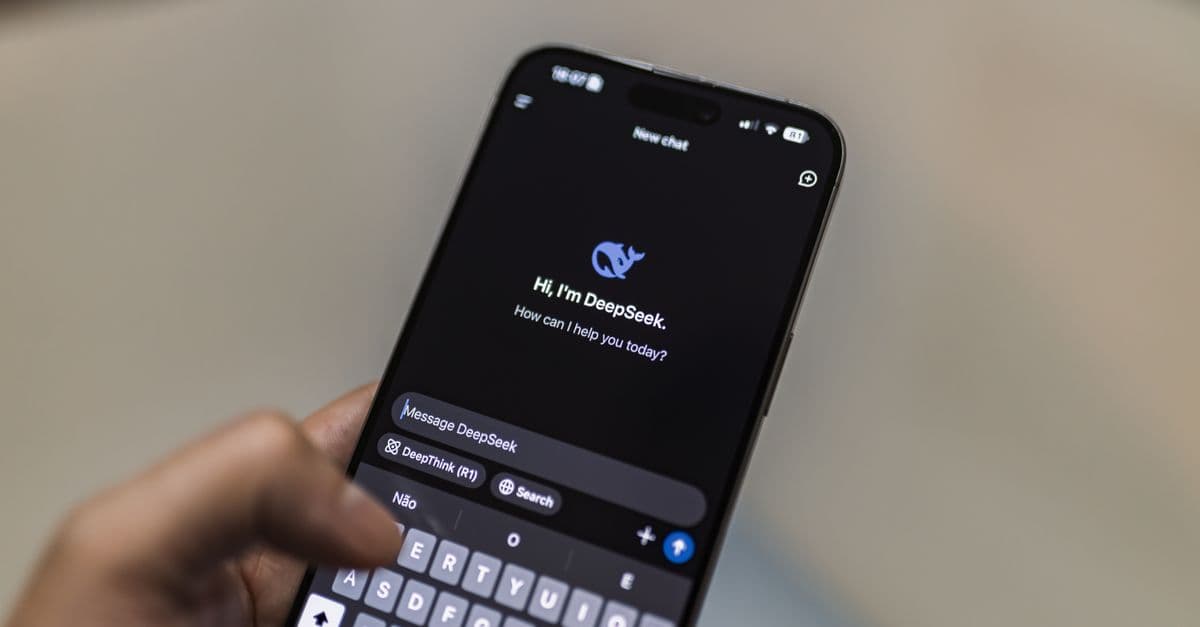
Photo: Google DeepMind / Pexels
"How many people use AI?" has at least five defensible answers, and they range from about one in five businesses to more than one billion monthly users. The numbers differ because they measure different things: people who have ever tried a chatbot, people who open an app monthly, firms that use AI in any function, developers who use it daily. This article puts the main 2026 sources side by side, states what each one measured, and separates what the evidence supports from what vendor announcements imply.
How to read adoption numbers
Adoption statistics fail in predictable ways, so it helps to know the failure modes before reading any figure.
The denominator changes. "Half of Americans" and "one billion users" are not claims about the same population. One counts a random sample of U.S. adults; the other counts accounts or devices worldwide.
The time window changes. Weekly active users, monthly active users, and "ever used" are different thresholds. A person who tried a chatbot once last year appears in "ever used" and in no weekly count.
The definition of "use" changes. A business that has one employee using a meeting summarizer and a business that has rebuilt its support operations around agents both answer "yes" to "do you use AI?" It is like asking whether a household "uses electricity": the answer is yes for both a single lamp and a factory.
Who reports matters. Companies announce milestones when numbers are favorable. Surveys by governments and universities are slower and less flattering, but they use the same question each time, which makes trends meaningful.
This study is a synthesis, not new primary research. It draws only on sources that state their method: the Pew Research Center, the U.S. Census Bureau, an NBER working paper on ChatGPT usage, McKinsey, Stack Overflow, and company announcements as reported by the press. Where a figure comes from a company or a secondary report, the text says so.
The consumer picture: who uses which chatbot
The cleanest recent consumer data is Pew Research Center's 2026 survey of U.S. adults, fielded February 17 to 23, 2026. It asked which chatbots people ever use.
| Chatbot | All U.S. adults | Ages 18-29 | 30-49 | 50-64 | 65+ |
|---|---|---|---|---|---|
| ChatGPT | 44% | 61% | 55% | 37% | 19% |
| Gemini | 24% | 30% | 34% | 20% | 11% |
| Copilot | 17% | 17% | 22% | 19% | 10% |
| Meta AI | 14% | 14% | 17% | 13% | 10% |
| Grok | 8% | 9% | 10% | 7% | 3% |
| Claude | 6% | 10% | 9% | 4% | 1% |
| Character.ai | 3% | 7% | 3% | 1% | 1% |
Pew notes that not every difference between figures is statistically significant. Three patterns stand out.
First, ChatGPT leads by a wide margin among U.S. adults, and it leads in every age group. Second, age is the strongest divider: ChatGPT use ranges from 61% of adults under 30 to 19% of those 65 and older. Third, Claude's consumer reach is small in this sample, at 6%, though its share among adults aged 18 to 29 is 10%. That matters for a claim that circulates widely, that one assistant is "taking over" from another. In a random sample of the public, the long tail of tools is long.
Pew's 2025 survey, fielded February 24 to March 2, 2025, found that 34% of U.S. adults had ever used ChatGPT, roughly double the share in summer 2023. The 2026 table above reports 44% who say they ever use it, so the direction is steady growth, though the two surveys should be compared with care because the question may not be worded identically.
What the company counts say
Company-reported figures are larger and less comparable.
- Gemini. Google said the Gemini app passed one billion monthly active users, as announced by Sundar Pichai on August 11, 2026. That count covers the Gemini app only; AI Mode in Search is counted separately. The trend as reported: about 400 million in May 2025, 650 million in October 2025, 750 million in February 2026, and 900 million in June 2026.
- ChatGPT. OpenAI's last officially confirmed figure was about 900 million weekly active users in February 2026. On July 31, 2026, it said it had "passed one billion active users," but that statement did not specify weekly or monthly and covered several OpenAI interfaces, per Trending Topics' reading of the announcements.
Those two billion-user claims look like a tie. They are not directly comparable: one is monthly and app-specific, the other is unspecified and multi-product. A weekly user is a more engaged person than a monthly one, because someone who opens an app once a month cannot appear in a weekly count unless they open it that week.
For comparison across assistants on features rather than users, see ChatGPT vs Claude vs Gemini and our list of ChatGPT alternatives.
What people actually do with chatbots
The best evidence on tasks comes from a September 2025 NBER working paper, How People Use ChatGPT. The authors used a privacy-preserving pipeline to classify a representative sample of conversations from the consumer product, covering November 2022 through July 2025. Their findings cut against the image of AI as mainly a work tool or a coding tool.
- Adoption: the consumer product had been adopted by around 10% of the world's adult population by July 2025.
- Work versus personal: non-work messages grew from 53% to more than 70% of all usage. Work use also grew, but personal use grew faster.
- Top topics: "Practical Guidance," "Seeking Information," and "Writing" are the three most common, together accounting for nearly 80% of conversations. Writing dominates work-related use.
- Coding: computer programming made up a relatively small share of ChatGPT use.
- Who: early adopters were mostly male, but the gender gap narrowed substantially, and growth rates were higher in lower-income countries.
The authors conclude that the value is mainly decision support, especially in knowledge-intensive jobs. In plain terms: most people use a chatbot like a very patient reference librarian who also drafts and edits, not like a robot employee.
One caution. This is a study of a single product, ChatGPT, so it does not describe tools built mainly for developers or for research.
The workplace picture: what firms report
Census: about one in five U.S. businesses
The U.S. Census Bureau tracks business adoption in its Business Trends and Outlook Survey. According to its May 2026 analysis:
- Between December 2025 and May 2026, about 17% to 20% of U.S. businesses reported using AI, and 20% to 23% expected to within six months.
- Firm size matters. About 37% of firms with 250 or more employees and 32% of firms with 100 to 249 employees reported use; fewer than 20% of firms with four or fewer employees did.
- Sector matters. Information (39.7%) and Finance and Insurance (33.9%) were well above the national rate of 19.8%. Retail Trade was lower, at about 14% current use.
- The question changed. In November 2025 the Bureau reworded the question to ask whether firms use AI "in any business function," rather than only in producing goods or services. A rise across that boundary is partly a definitional change, not pure adoption growth.
This is the number to keep in mind when a headline says "AI is everywhere." On the broadest definition, roughly four in five U.S. businesses still say they do not use it. The pattern, with large firms and information-heavy sectors ahead, is what you would expect from a technology whose main inputs are text, data, and software.
McKinsey: wide use, narrow scaling
McKinsey's State of AI in 2025 report, a survey of company respondents, reports a very different level of adoption, because it asks respondents at organizations about regular use in at least one function rather than counting every business.
| Finding | Figure |
|---|---|
| Organizations using AI regularly in at least one function | 88% (up from 78% a year earlier) |
| Organizations that have begun scaling AI programs | About one-third |
| Respondents whose organizations are at least experimenting with AI agents | 62% |
| Respondents attributing any level of EBIT impact to AI | 39% (most of them say under 5% of EBIT) |
Read together with Census, the story is consistent: use is broad among engaged large firms, but moving from pilot to scaled operations is rarer, and sizable profit impact is rarer still. Most respondents were still experimenting or piloting. Adoption, in other words, is a wide, shallow pool with a narrow deep end.
A useful analogy is a gym. Signing up is common, attending occasionally is less common, and the people whose results change are those who train on a program for months. A company licensing a chatbot for every employee has joined the gym; redesigning a workflow around it is training.
For a task-level view of what helps and what is marketing, see AI tools for productivity in 2026.
Developers: heavy use, low trust
Developers are the most-surveyed occupation, and Stack Overflow's 2025 Developer Survey shows the gap between use and trust clearly.
| Measure | Result |
|---|---|
| Using or planning to use AI tools | 84% (up from 76% the year before) |
| Using AI tools daily | 47.1% of all respondents; about 51% of professional developers |
| Favorable view of AI tools | About 60% (down from over 70% in 2023 and 2024) |
| Trust the accuracy of AI output | 33% |
| Distrust the accuracy of AI output | 46% |
| Highly trust the output | About 3% |
| Cite AI answers that are "almost right, but not quite" | 66% |
| Say debugging AI-generated code takes more time | 45.2% |
Usage rose while favorability fell. That is unusual for a technology, and it suggests developers adopted AI because it is useful and widely required, not because they believe it. The finding that 66% hit "almost right, but not quite" answers describes the core failure mode: output that looks finished and contains a subtle error is more expensive to catch than output that is obviously wrong. For why models produce such errors, see why AI hallucinates facts.
Agents are early
The same survey asked about AI agents, tools that take multi-step actions rather than answering one prompt. Among respondents, 14.1% use agents daily, 9% weekly, and 7.8% monthly or less often, while 37.9% neither use them nor plan to. Among those who use them, about 70% say agents reduced the time they spend on tasks. Concerns remain high: 87% worry about accuracy and 81% about security and privacy.
That makes agents a minority practice among developers, concentrated in the people most comfortable with automation, even as vendors describe them as mainstream. Our explainers on AI agents and what agents can and cannot do cover the mechanics and limits, and vibe coding explained looks at the most visible agent-assisted workflow.
Why use can rise while trust falls
The Stack Overflow pattern, with rising use and falling favorability, has several plausible explanations, and the survey itself cannot separate them. This section is interpretation, not finding.
One explanation is novelty wearing off. Early users tend to be enthusiasts, and as a tool spreads to the average developer, the average opinion moves toward the realistic middle. A second is experience: people who use a tool daily meet its failures daily. The survey's figures fit this, since 66% report answers that are "almost right, but not quite" and 45.2% say debugging AI-generated code is more time-consuming. A third is obligation. When an employer buys licenses or a code editor enables an assistant by default, use climbs without a matching rise in belief.
None of these is a verdict on whether the tools are good. Pilots and passengers have the same relationship with autopilot: heavy use, active mistrust, and a habit of checking the instruments. In software, the equivalent habit is code review and testing, which is why surveys that ask about trust are often more informative than surveys that ask only about use. For practical context on where AI help has held up for beginners, see best AI code assistants for beginners.
Reconciling the numbers
The sources above look contradictory until you line up what each one measured.
| Source | Population | Measure | Headline |
|---|---|---|---|
| Pew (Feb 2026) | U.S. adults | Ever use ChatGPT | 44% |
| Census (Dec 2025 to May 2026) | U.S. businesses | Use AI in any function | 17% to 20% |
| McKinsey (2025) | Survey respondents at organizations | Regular use in at least one function | 88% |
| Stack Overflow (2025) | Developers who took the survey | Use or plan to use | 84% |
| Google (Aug 2026) | Gemini app users worldwide | Monthly active users | Over 1 billion |
Each row is true and none can be added to another. The gaps follow a simple logic. A self-selected group of developers is the most enthusiastic population, an engaged group of large firms is next, the general public is next, and the population of all businesses, including millions of very small ones, is lowest. Whoever chooses the sample largely chooses the answer.
What the data does not show
A fair synthesis also lists what these sources cannot support.
- Productivity. None of the above measures output. Surveys report use, and developers' trust and satisfaction, but a high usage rate does not prove time saved. Popular claims such as "20-40% productivity gains for engineers" rest on mixed evidence and depend on the task and the team, so they are not repeated here as established figures.
- Job loss. Adoption surveys say nothing direct about employment effects. The future of work is a separate question, with its own evidence.
- Market share among professionals. No source reviewed here gives a clean, representative split of professionals by tool. Pew covers the general public; Stack Overflow reports tool use mainly among its agent users. Claims that one assistant is "winning" among writers or analysts typically rest on unrepresentative samples such as social media discussion.
- Local models. Running models on your own hardware is a real and growing practice, but there is no reliable public count of users. Download counts and installations are not the same as people. See open source AI models you can run locally and the hidden cost of running a local LLM for what the practice involves.
- Revenue by product. Subscription revenue splits circulate widely, but most companies do not disclose them. See AI chatbot pricing in 2026 for what the plans actually cost.
Where hype and evidence diverge
Four common claims, tested against the sources above.
"Everyone uses AI." In consumer terms, close to half of U.S. adults use ChatGPT, but 56% do not. In business terms, about four in five firms report no AI use. "Everyone" is true of some segments, such as people under 30 and large information-sector firms, and false of others.
"Enterprises are transforming." McKinsey's own respondents say most are still experimenting or piloting, and only 39% attribute any EBIT impact to AI, with most of those putting it under 5% of EBIT. Transformation exists, but it is the leading edge, not the median.
"Developers love it." They use it, heavily, and trust it little. Favorability falling from above 70% to about 60% while usage rose is a sign of a tool people rely on and argue with.
"Agents are standard." Among developers, the group most likely to adopt them, 14.1% use agents daily and 37.9% have no plans to. That is a growing minority.
A checklist for reading the next adoption headline
Because new figures arrive every few weeks, a short checklist is more durable than any single number.
- Find the population. Is it adults, firms, developers, or app accounts? Is it one country or worldwide?
- Find the threshold. "Ever used," "monthly," "weekly," and "daily" differ by large factors. A statement that says only "active users" without a period is incomplete.
- Find the product boundary. The July 2026 OpenAI statement covered several interfaces, and Google's Gemini figure excluded AI Mode in Search. Whether a number includes related products changes its meaning.
- Check for definition changes. Census changed its question wording in November 2025, and survey questions about chatbot use can shift between years. Trends across a wording change should be read with care.
- Look at who answered. A survey run by a developer community reaches developers; a random-sample phone or web panel reaches the public. The first will always show higher adoption.
- Ask what is missing. Usage tells you nothing about outcomes. If a headline implies savings, jobs, or revenue, look for a source that measured those directly.
A last point on timing. These sources describe February 2026 (Pew), December 2025 to May 2026 (Census), 2025 (McKinsey and Stack Overflow), and mid-2026 (company counts). A summer 2026 company number set beside a 2025 survey compares different moments in a fast-moving market, so the age of each source should be read as part of the result.
What to watch next
Three indicators will tell you more than any user-count announcement.
- Repeat questions from the same surveyors. Pew's year-over-year series and Census's Business Trends and Outlook Survey ask the same thing over time. Changes in those series are the most reliable signal, provided you check for wording changes, as with Census in November 2025.
- Share of firms that report AI changing operations, not just using it. The Census Bureau's AI supplement, begun in November 2025, measures use across 15 business functions. It can show whether the one-in-five figure is shallow or deep.
- Gaps between use and trust. If daily use rises while trust stays low, as in the Stack Overflow data, the bottleneck is reliability, not awareness. The most useful improvements are then verification tools rather than more access.
For a broader grounding in how the underlying systems work, start with the Complete AI Guide 2026, and for tool comparisons on coding specifically, see Claude vs GPT-5 vs Gemini for coding.
Frequently Asked Questions
Q: How many people use ChatGPT? A: Pew found 44% of U.S. adults use ChatGPT in a survey fielded in February 2026. Globally, OpenAI's last officially confirmed figure was about 900 million weekly active users in February 2026, and in July 2026 it said it had passed one billion active users without specifying the metric.
Q: What share of businesses use AI? A: The U.S. Census Bureau reported that about 17% to 20% of U.S. businesses used AI between December 2025 and May 2026. About 37% of firms with 250 or more employees reported use, versus under 20% of firms with four or fewer employees.
Q: What do people mainly use ChatGPT for? A: An NBER study found that "Practical Guidance," "Seeking Information," and "Writing" account for nearly 80% of conversations. Non-work use rose from 53% to more than 70% of messages, and programming was a relatively small share.
Q: Do developers trust AI tools? A: Mostly not. In Stack Overflow's 2025 survey, 84% used or planned to use AI tools, but 46% distrusted the accuracy of the output and 33% trusted it. Only about 3% said they highly trust it.
Q: Are AI agents widely used? A: Not yet. In the same survey, 14.1% of respondents used agents daily and 37.9% had no plans to adopt them. McKinsey found 62% of respondent organizations were at least experimenting with agents.
Q: Why do AI user numbers from different sources disagree? A: They measure different things: ever used versus weekly versus monthly, a random sample versus app accounts, and one product versus several. A monthly active user count will always exceed a weekly one for the same product.
Q: Is AI adoption growing? A: Series that use the same question each year say yes. Pew found 34% of U.S. adults had used ChatGPT in early 2025, roughly double the 2023 share, and 44% say they use it in 2026, and McKinsey's share of organizations using AI in at least one function rose from 78% to 88%.
The takeaway
The most accurate one-line summary of AI adoption in 2026 is that it is wide, uneven, and shallower than the announcements suggest. Close to half of U.S. adults have used ChatGPT, about one in five businesses uses AI in some function, most large organizations are still piloting, and developers rely on tools they do not fully trust. The numbers get larger as the sample gets friendlier, so the useful question about any adoption claim is who was counted, over what period, and what counted as use.
Last verified: October 2026
Sources
- Pew Research Center, Americans and AI 2026: chatbot use by age (survey fielded February 17 to 23, 2026)
- U.S. Census Bureau, AI use among businesses (May 26, 2026)
- NBER Working Paper 34255, How People Use ChatGPT (September 2025)
- Stack Overflow, 2025 Developer Survey: AI
- McKinsey, The state of AI in 2025: Agents, innovation, and transformation
- Trending Topics, Gemini and ChatGPT both hit 1 billion users (August 2026)
Follow new articles
Add SciHub101 to your feed reader to see new science and technology stories.
About the Author
SciHub101 is an independent science and technology publication founded and edited by Buğra Sözeri, a software engineer and app developer based in Türkiye. AI tools assist with drafting and research. Source documentation in the existing archive is uneven, and articles are being reviewed and corrected. The Editorial Team byline identifies editorial responsibility; it does not certify specialist or independent human review. Where we compare products, anything built by our own team is labelled as such — see the editorial guidelines and About page for how corrections and disclosures work.
Related Articles

Complete AI Guide 2026: How Modern AI Really Works
How modern AI works: machine learning, how LLMs are trained, agents and tool use, generative models, evaluation, limits and safety, with a deep dive per topic.
ChatGPT vs Claude vs Gemini — 2026 Comparison
ChatGPT, Claude and Gemini compared on documented facts as of October 2026: context windows, modalities, tools, platforms, data policies and writing workflows.

Universities Leading AI Research: Global Rankings for 2026
MIT, Stanford, and Carnegie Mellon dominate US AI research rankings. Tsinghua University now publishes more AI research than any US institution by volume. The field's geography has shifted fundamentally in a decade — and the compute gap between academic and industry frontier research is wider than it has ever been.

What If AI Replaced All Scientists?
AI is already co-authoring research papers and designing experiments. What happens when it no longer needs the humans?

Countries Leading AI Research and Development in 2026
The US and China dominate global AI R&D, but Europe and Asia-Pacific are closing the gap fast.

AI Model Distillation Explained
Model distillation trains a smaller model to imitate a larger model's outputs, often reducing cost and latency while preserving much of the behavior.