The Future of Work: How AI Will Change Jobs by 2030

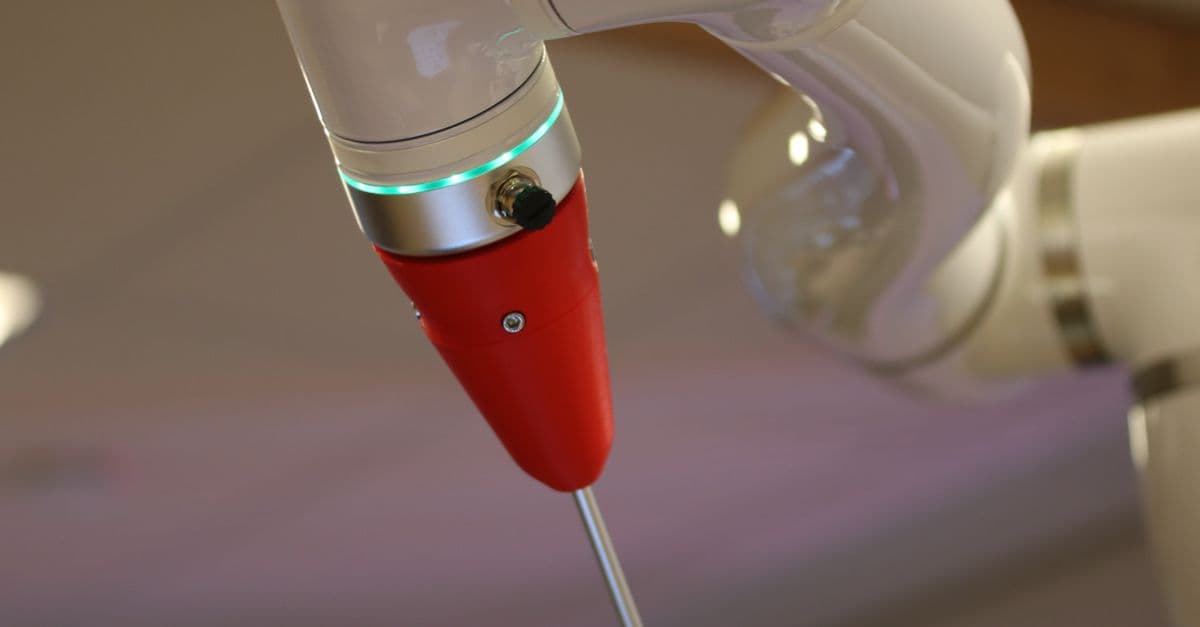
Photo: Pavel Danilyuk / Pexels
Every major wave of automation in the past 200 years has destroyed job categories and created new ones, always with the same confident predictions that this time the displacement would be permanent and total. The evidence from electrification, computing, and the internet is that mass unemployment did not follow. AI presents genuinely new challenges — it automates cognitive work, not just physical — but the historical pattern and current data provide a more nuanced picture than either the techno-utopian or doomsday forecasts.
What the Evidence Actually Says: Current Forecasts
The most reliable forecasts come from organizations that have committed their methodology to public scrutiny. They do not agree on magnitude, but they align on direction.
The McKinsey Global Institute estimated in 2025 that AI and robotics could technically automate up to 57% of US work hours, with approximately 30% of hours actually automated by 2030 given typical adoption speeds. This is not 30% of jobs eliminated — it is 30% of the tasks within all jobs, which is a different and more nuanced claim.
The World Economic Forum's Future of Jobs Report 2025 projected that 170 million new jobs would be created globally and 92 million displaced by 2030, yielding a net positive of 78 million jobs. The report found that the churn — the 22% of formal employment affected — would produce significant skills mismatch, with new jobs concentrated in technology, green energy, and care sectors while displaced jobs clustered in clerical, data-processing, and some manufacturing roles.
A 2025 academic study published on arxiv ("Future of Work with AI Agents: Auditing Automation and Augmentation Potential across the U.S. Workforce") analyzed 923 occupational categories in the US Bureau of Labor Statistics database and found that 40% of working hours across the US workforce show high augmentation potential — meaning AI assists the worker and raises their output — while a smaller share showed high substitution risk.
Source: McKinsey Global Institute (2025), "Agents, Robots, and Us: Skill Partnerships in the Age of AI" — documents the 30% US work hour automation estimate and the $2.9 trillion economic value potential from human-AI collaboration.
Source: World Economic Forum (2025), "Four Futures for Jobs in the New Economy: AI and Talent in 2030" — the 170M/92M job creation/displacement figures and sector analysis.
The Historical Analogy: What Past Automation Actually Did
Every generation of economists has predicted technological unemployment. None of the feared catastrophes materialized. Understanding why is essential context for AI forecasts.
The mechanization of agriculture (1900–1960) reduced the share of the US workforce in farming from 41% to 8%. This did not produce 33 percentage points of unemployment — the workers moved into manufacturing, services, and new occupations that did not exist in 1900. Automotive assembly line workers, telephone operators, and electrical engineers were not job titles that existed when the tractors arrived.
The introduction of ATMs (1970s–2000s) is the most cited example of complementarity over substitution. The number of bank tellers in the US increased substantially after ATM deployment. ATMs automated cash dispensing, which reduced the cost of operating a bank branch, which led banks to open more branches, which required more tellers — who shifted from cash handling to relationship work. The automation of the most routine task in the job eliminated the reason the job was endangered.
Computing and the internet (1980–2010) eliminated typists, film processors, travel agents, and entire categories of back-office work. It created software engineers, data analysts, SEO specialists, social media managers, UX designers, and cloud architects. Net US employment grew in every decade of this transition.
The structural pattern is: automation displaces tasks (the specific things done within a job), which compresses some roles while eliminating others and creating new roles requiring new skills. The mismatch between who is displaced and who fills new roles produces real hardship — and historical transitions typically took a generation to complete, not a quarter.
Source: Bessen, J. (2015), "Toil and Technology," Finance and Development (IMF) — documents the ATM-bank teller complementarity and the historical pattern of automation-employment relationships.
Which Tasks Are at Risk: The Automation Gradient
Not all tasks face equal automation risk. The degree of risk follows a consistent pattern based on task properties.
High automation risk — tasks that:
- Have clearly specified inputs and verifiable outputs (data entry, transcription, document sorting)
- Follow explicit rules that can be stated completely (tax calculation, loan eligibility screening)
- Require retrieval and summarization of documented knowledge (standard customer service responses, first-draft report generation)
- Involve routine physical manipulation in structured environments (warehouse picking, vehicle driving on mapped routes)
Lower automation risk — tasks that:
- Require physical presence or dexterity in unstructured environments (plumbing, elderly care, surgery)
- Depend on real-time social and emotional judgment (negotiation, crisis counseling, classroom management)
- Involve novel problem-solving where the problem has not been previously encountered (system failure diagnosis in novel configurations, scientific hypothesis generation)
- Carry legal or fiduciary accountability that cannot be delegated to a machine (judicial decisions, medical prescriptions, contract signing)
A 2025 McKinsey framework identifies the skills most likely to retain premium value through 2030: interpersonal conflict resolution, physical dexterity in unstructured environments, system-level creative design, and judgment under genuine uncertainty — tasks characterized by social and emotional intelligence and non-routine physical or cognitive challenge.
| Task type | Automation risk by 2030 | Example occupations |
|---|---|---|
| Routine data processing | High | Data entry clerks, some bookkeeping |
| Standard knowledge retrieval | High–medium | Tier-1 customer service, basic paralegal research |
| Code generation (routine) | Medium | Junior developers (role evolves, not disappears) |
| Complex knowledge work | Medium–low | Senior engineers, lawyers, doctors (tasks shift) |
| Creative direction and judgment | Low | Art direction, strategic consulting |
| Physical care and presence | Low | Nursing assistants, construction trades |
| Novel research and design | Low | Scientists, architects, product designers |
Source: McKinsey Global Institute (2023), "Generative AI and the Future of Work in America" — the occupational analysis underlying task-level automation estimates.
Augmentation vs. Substitution: The More Useful Frame
The binary of "AI takes this job" versus "AI doesn't take this job" is less useful than the question: "Does AI augment this worker or substitute for them?"
Augmentation — AI raises the productivity of the human worker, allowing them to produce more in the same time or at higher quality. A radiologist using an AI screening tool reviews more scans per shift with fewer errors. A software engineer using GitHub Copilot writes more features per sprint. A financial analyst using an LLM summarizes more earnings reports per day. The job exists; the output per person increases.
Substitution — AI performs the task without requiring a human worker in the loop. Automated email classification requires no human; AI-generated boilerplate legal text requires no paralegal for first draft. The role shrinks or disappears.
Most occupations contain both augmentable and substitutable tasks. A lawyer's contract review is highly substitutable (AI can do first-pass clause analysis); a lawyer's client relationship management and courtroom judgment are much less so. The likely outcome is not "lawyers disappear" but "fewer lawyers needed per unit of legal output, with individual lawyers handling more complex work."
The economic evidence for augmentation creating wage premiums is emerging. Studies of GitHub Copilot adoption found productivity gains of 55% on well-defined tasks. A 2024 study by Noy and Zhang (MIT) found that professionals given access to GPT-4 for writing tasks produced output rated significantly higher in quality by blind reviewers, with the gains concentrated in lower-skilled workers — suggesting AI narrows skill gaps rather than widening them.
Source: Noy, S. and Zhang, W. (2023), "Experimental Evidence on the Productivity Effects of Generative AI," MIT Economics — documents quality and productivity effects of LLM access in knowledge work tasks.
New Job Categories the Transition Is Creating
History predicts new job categories, and the current transition is already generating them. Some are direct AI-adjacent roles; others are downstream consequences of new economic activities AI enables.
Prompt engineers and AI product managers emerged as formal roles in 2023–2024. As of 2025, large enterprises employ dedicated teams responsible for prompt design, AI pipeline management, and model evaluation. These roles combine domain expertise with understanding of AI system behavior.
AI safety and red-team specialists test models for harmful outputs, jailbreaks, and misuse vectors. Major AI labs employ hundreds of these specialists; regulatory requirements under the EU AI Act are creating demand in non-AI companies that deploy high-impact AI systems.
AI trainers and data annotators — the human labor underlying RLHF and supervised fine-tuning — constitute a large and growing global workforce. Scale AI, Surge AI, and Appen collectively employ tens of thousands of annotators for tasks requiring human judgment.
AI integration consultants help organizations move from "we have an API key" to functional AI deployment with appropriate evaluation, risk controls, and workflow integration. McKinsey's 2025 survey found only 1% of companies report mature AI deployment despite 71% claiming adoption, which is a gap that professional services fills.
Roles that are growing specifically because AI exists: AI ethicists, AI auditors (verifying model compliance with regulations), synthetic media forensics specialists (detecting AI-generated content), and AI legal specialists (navigating IP and liability questions that existing law does not clearly address).
Source: McKinsey Global Survey (2025), "The State of AI in Early 2026" — the 1% mature deployment figure and adoption-implementation gap.
The Skills That Hold Value Through 2030
The evidence converges on a cluster of skills that remain economically valuable regardless of AI capability levels through 2030.
Systems thinking — understanding how components of a complex system interact, identifying failure modes, and designing interventions. AI can analyze existing systems but struggles with novel system design at the architectural level.
Interpersonal judgment — reading social situations, managing conflict, building trust, motivating people. These tasks have high context-dependence and emotional stakes that current AI cannot reliably handle without a human in the loop.
Technical supervision of AI systems — knowing when an AI output is wrong, when a model is hallucinating, when a pipeline is producing subtly degraded results. This requires domain expertise combined with understanding of AI failure modes.
Communication that requires accountability — client relationships, medical consultations, legal advice, teaching. The economic and legal value of these interactions depends partly on a human being responsible for the output, not just on the quality of the information delivered.
Physical dexterity in variable environments — the hands and body remain competitive with machines in settings where the physical environment changes unpredictably: plumbing, electrical work, elderly care, construction finishing.
A practical framing: skills that will be most valuable are those that supervise, guide, evaluate, and take responsibility for AI outputs — not those that compete with AI in producing routine outputs.
What the Transition Will Actually Feel Like
The macro-level projections (170 million new jobs) obscure the personal-level reality: job transition is disruptive, retraining takes time and money, and the new jobs do not appear in the same location or sector as the displaced ones.
Historical automation transitions took 20–30 years for labor markets to fully absorb. The AI transition is faster — model capability is advancing much more quickly than the pace of electrification — which compresses the window for adaptation. The WEF report identified the shortage of human capital and skills as a more significant bottleneck to beneficial AI adoption than technology limitations.
The distributional effects matter as much as the aggregate ones. Early evidence from GitHub Copilot studies suggests AI raises productivity most for lower-skilled workers in a domain, narrowing the gap between junior and senior practitioners. If this pattern holds broadly, it reduces wage premiums for routine knowledge work while potentially increasing returns to high-level judgment and creativity.
The projection that all AI-impacted jobs will improve uniformly is not supported by evidence. For workers in highly substitutable roles — certain clerical, data-processing, and customer service functions — AI will reduce demand for those specific roles. The honest preparation is: identify which tasks in your current role are substitutable, develop the skills that augment rather than compete with AI outputs, and treat AI tools as a productivity multiplier rather than an adversary.
Source: World Economic Forum (2025), "Future of Jobs Report 2025" — the most comprehensive survey of employer intentions on AI, automation, and workforce transformation for the 2025–2030 period.
What History Tells Us — and Where the Analogy Breaks
The historical record of automation and employment is unambiguous at the aggregate level: no previous wave of labor-displacing technology produced permanent net unemployment. The industrial revolution, electrification, the mechanization of agriculture, and the computerization of office work each eliminated tens of millions of jobs defined by the technology they replaced, and each time total employment grew. Economists have documented this pattern with enough consistency that "this time is different" claims carry a high burden of proof. The question is whether AI meets that burden.
The Luddite movement (1811–1816) is the canonical case of workers mobilizing against automation. English textile workers — skilled hand-loom weavers and frame knitters whose craft took years to master — physically destroyed the power looms and stocking frames that threatened their livelihoods. They were not wrong about the immediate economic threat: the machines did eliminate their specific jobs, and real wage declines in textile manufacturing in the following decades were severe for those who could not transition. They were wrong about the aggregate outcome: textile production expanded dramatically, employment in allied industries grew, and the overall economy grew much faster than it would have without the technology. The lesson economists draw from the Luddites is not that their fears were irrational — the workers who lost skilled craft work experienced genuine hardship — but that the aggregate employment effect of automation has consistently been positive across a long enough time horizon. The hardship was real; it was also unequally distributed and poorly compensated by contemporary policy.
The electrification of manufacturing (1880–1930) provides a closer analogy to cognitive automation than the textile case. Electrification did not just replace steam power with electric motors — it restructured factory layouts, enabled new production techniques, and shifted the skill premium away from steam-engine operators toward electricians, process engineers, and technical managers. Workers who ran steam-driven equipment faced displacement; workers who understood electrical systems saw their wages rise. The transition took roughly 40 years for the full productivity gains to materialize — not because the technology was slow, but because reorganizing production processes around electricity required new management practices, new building designs, and new worker training that took decades to diffuse. Economic historian Paul David documented this "productivity paradox" in a 1990 paper, noting that electrification's measurable productivity impact lagged its widespread adoption by two to three decades.
Source: David, P.A. (1990), "The Dynamo and the Computer: An Historical Perspective on the Modern Productivity Paradox," American Economic Review, Vol. 80 — the foundational paper on productivity diffusion lags in general-purpose technology adoption, widely cited in AI economic analysis.
Why "this time may be different" is a credible argument — not a certainty, but a genuine departure from historical pattern. Previous waves of automation displaced manual and routine work: the tasks could be mechanized because they involved physical manipulation, information retrieval from structured data, or rule-following that could be encoded in explicit software. The cognitive architecture of professional work was assumed to be safe — analysis, writing, reasoning, coding, and design were thought to require human intelligence that machines could not replicate. AI, and large language models in particular, automates exactly those tasks. A legal researcher's first-pass case review, a radiologist's initial scan screening, a financial analyst's earnings report summary, a software developer's boilerplate code — these were the high-skill, high-wage tasks that were supposed to be automation-proof. They are now in scope.
The speed of diffusion is the other structural difference. Electrification took 40 years to produce measurable productivity effects; steam power took a generation to spread from textile mills to the broader economy. AI capabilities are advancing on a scale of months, and deployment costs (API access rather than capital equipment) are orders of magnitude lower. A technology that a mid-size company can deploy in weeks rather than years gives labor markets less time to adjust. The workers displaced by the first wave of AI adoption in any sector will find that the next sector is adjusting simultaneously rather than sequentially — there is no geographic or temporal buffer of "safer" industries to move into while displaced workers retrain.
The policy levers that shaped past transitions are instructive for understanding what can moderate the disruption. The GI Bill (1944) in the United States and post-war European education expansions provided retraining and higher education access at scale for workers transitioning from wartime production. Germany's Kurzarbeit (short-time work) scheme, which subsidizes reduced hours rather than layoffs during economic disruptions, has demonstrably slowed unemployment spikes during automation transitions. Denmark's "flexicurity" model combines easy employer ability to hire and fire with generous retraining support and high unemployment replacement rates, producing one of the lowest long-run unemployment rates in the OECD despite rapid structural change.
What these policies share is a recognition that aggregate net job creation does not automatically compensate the workers who are individually displaced. Displaced automotive workers in Michigan do not automatically become software engineers in Austin. The mismatch is geographic, demographic, and temporal — and without active policy intervention, the workers who lose the most tend to be those with the least access to retraining resources. The countries that have managed automation transitions best are those that invested in continuous adult education systems, maintained income replacement during skill transitions, and built labor market institutions that spread automation's productivity gains broadly rather than capturing them entirely in capital returns.
The honest read of the historical evidence for AI is: the aggregate employment forecast is likely positive, as it has been for every previous automation wave; the distributional effects will be severe for specific groups of workers; the speed of the transition is faster than historical precedent; and the policy response required is larger and faster than what most governments have yet committed to. History does not guarantee a good outcome — it shows that good outcomes are possible when investment in human capital matches investment in technology.
Source: OECD (2023), "Employment Outlook 2023: Artificial Intelligence and the Labour Market" — cross-country analysis of automation exposure, skill transition data, and policy effectiveness across OECD member countries, including flexicurity and Kurzarbeit comparisons.
What This Means
The evidence-based picture of AI and work by 2030 is neither mass unemployment nor frictionless productivity paradise. The most likely outcome is significant occupational churn — millions of roles changing in task composition, not disappearing entirely — with net job creation at the aggregate level but concentrated disruption in specific roles, regions, and demographic groups. The skills most at risk are routine cognitive tasks; the skills most resilient are judgment, interpersonal work, novel problem-solving, and technical supervision of AI systems. The workers who treat AI as a tool to augment their output will do measurably better than those who either compete with it directly or refuse to engage with it. That is not a prediction — it is already observable in productivity studies as of 2025.
Frequently Asked Questions
Q: Will AI cause mass unemployment by 2030?
A: The current evidence does not support mass unemployment by 2030. The WEF's 2025 projection shows 170 million jobs created and 92 million displaced — a net positive globally. McKinsey estimates 30% of US work hours could be automated by 2030, but this means task automation within jobs, not job elimination. Historical automation waves produced occupational churn, not permanent net unemployment.
Q: Which jobs are safest from AI automation through 2030?
A: Roles with high physical dexterity requirements in variable environments (trades, care work), high interpersonal accountability (teaching, counseling, negotiation), novel problem-solving in unstructured settings (scientific research, custom design), and roles where legal or fiduciary responsibility must rest with a human (judges, licensed doctors, attorneys).
Q: What skills should I develop to remain employable as AI improves?
A: Systems thinking, interpersonal judgment, technical evaluation of AI outputs, communication under accountability, and domain expertise that allows you to identify when AI outputs are subtly wrong. The common thread is human judgment layered on top of AI capability, not competition with AI on routine tasks.
Q: Is AI-related job creation happening now, or is it a future promise?
A: Both. Roles like prompt engineer, AI product manager, AI safety specialist, and AI integration consultant are filling in large numbers now. The broader wave of AI-enabled new occupations — the 2025 equivalent of "web developer" in 1996 — is still forming and cannot be fully named yet.
Q: How does the AI transition compare to previous automation waves?
A: AI automates cognitive work more directly than previous waves, which primarily automated physical and repetitive tasks. This is qualitatively different because professional and knowledge work is now in scope. However, the historical pattern — task automation within roles, labor market adjustment over time, net positive employment at aggregate level — has held for every previous wave and most economists expect it to hold again.
Q: What should organizations do to prepare for AI-driven workforce changes?
A: McKinsey's 2025 research identifies workforce redesign as the primary bottleneck to beneficial AI adoption. Practical steps include: identifying which workflows contain high proportions of substitutable tasks, investing in AI fluency training for existing employees before seeking to replace them, and redesigning job descriptions around the judgment and accountability tasks that remain human-centric.
Read next:
Follow new articles
Add SciHub101 to your feed reader to see new science and technology stories.
About the Author
SciHub101 is an independent science and technology publication founded and edited by Buğra Sözeri, a software engineer and app developer based in Türkiye. AI tools assist with drafting and research. Source documentation in the existing archive is uneven, and articles are being reviewed and corrected. The Editorial Team byline identifies editorial responsibility; it does not certify specialist or independent human review. Where we compare products, anything built by our own team is labelled as such — see the editorial guidelines and About page for how corrections and disclosures work.
Related Articles

What Is Generative AI and How Is It Changing Industries?
Generative AI is the class of machine learning systems that produce new content — text, images, audio, video, code, or molecular structures — rather than classifying or predicting from existing data. It is not a single technology but a family of model architectures sharing one property: trained on enough examples, they can synthesize plausible new outputs in the same domain. Understanding what separates generative from conventional AI explains both why the technology spread so quickly and where its real limits lie.

How to Write AI Prompts That Actually Work
The quality of an AI model's output is determined largely by the quality of the input it receives. A prompt is not a search query — it is the only communication channel between the user and the model. Every word specifies or leaves ambiguous something about the desired output. This guide covers the principles behind effective prompting, the techniques with the most research evidence behind them, and the common mistakes that produce frustrating, generic results.

Will AI Take My Job? An Honest Answer
Everyone is asking the same question. The honest answer is more nuanced than the headlines suggest — some jobs are genuinely at risk, others are safer than you think, and the data tells a more complex story.

How to Use AI to Automate Your Daily Tasks: Email, Scheduling, Summarizing, and Drafting
AI can summarize long documents, draft templated emails, reschedule calendar meetings, and extract data from unstructured text in seconds. However, AI automation is not truly automatic—it requires careful prompting, output review, and integration via APIs or third-party apps. This guide explains what task automation with AI actually entails, which tools work for common workflows, what remains overhyped, and how to avoid delegating judgment to AI.
Countries with the Most Robots in Manufacturing (Robot Density Ranked)
South Korea has 1,012 industrial robots per 10,000 manufacturing workers — the highest robot density ever recorded for a major economy. That is more than six times the global average of 162, and more than double Germany's figure. The IFR World Robotics 2024 report shows a world where automation in factories is accelerating faster than at any point in industrial history.

What If Robots Did All Human Work?
Every delivery, every surgery, every harvest, every line of code — done by machines. What do 8 billion humans do on a Tuesday morning?