Synthetic Data Explained: Why AI Models Train on Artificial Data

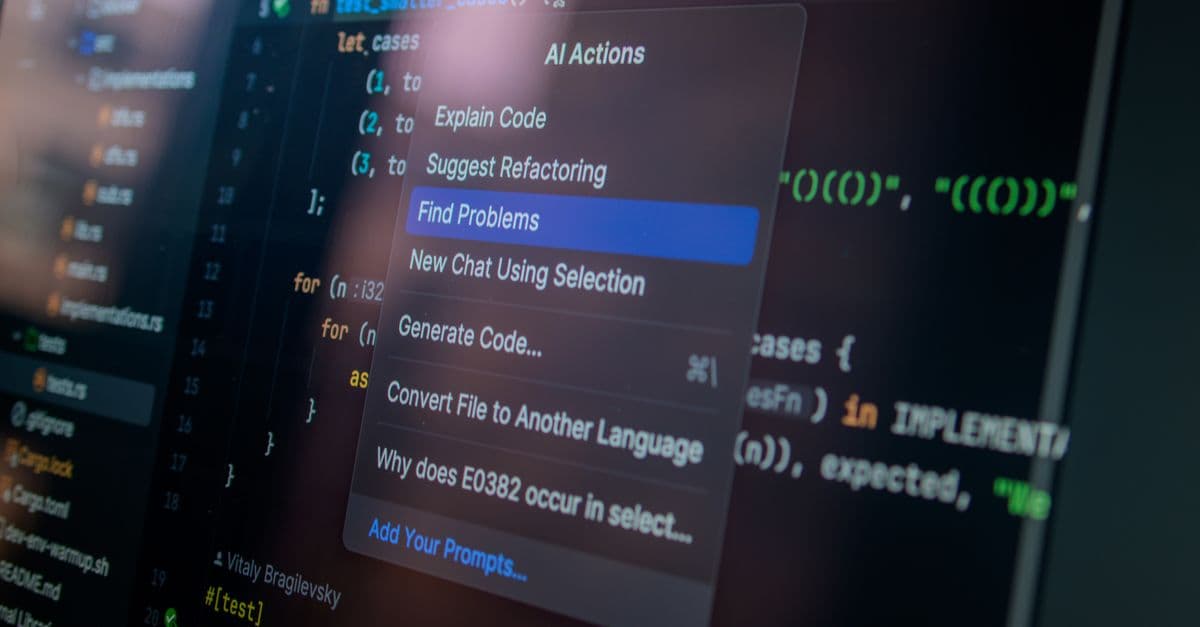
Photo: cottonbro studio / Pexels
Most people assume an AI model learns from data scraped off the real world: photos people took, sentences people wrote, sensor readings a real car collected while driving. Increasingly, that assumption is wrong. A growing share of the examples that shape today's models were never observed at all. They were manufactured by another algorithm, a simulator, or a rules engine designed to produce something that looks and behaves like real data without ever having happened. Gartner has projected that by 2026, roughly 75% of the data used in AI projects will be synthetically generated, up from less than 5% in 2023 (TechMonitor/Gartner). This piece explains what synthetic data actually is, how it is made, where it genuinely improves models, and where it quietly breaks them.
What synthetic data actually is
Synthetic data is information generated by a computer process rather than recorded from a real event, person, or sensor. It is built to preserve the statistical patterns of real data closely enough that a model trained on it behaves as though it had learned from the genuine article. A synthetic medical record might have a plausible age, diagnosis, and lab value, but it does not correspond to an actual patient. A synthetic street scene might show a pedestrian stepping into traffic in the rain, generated inside a simulator rather than filmed on an actual road.
There are three broad flavors, and mixing them up is the single most common source of confusion in how people talk about this topic.
- Simulation-based synthetic data comes from a physics or rules engine: a driving simulator, a warehouse robot environment, a financial market model. The data is "correct" by construction because it follows known physical or logical rules.
- Model-generated synthetic data comes from another AI system, usually a large language model or an image/video generator, producing new text, images, or code that mimics the distribution of real examples.
- Statistically resampled synthetic data comes from perturbing or recombining real records (adding controlled noise, swapping attributes, generating new rows from a learned distribution) so the output no longer maps to a single real individual, which is the backbone of privacy-preserving synthetic datasets in finance and healthcare.
These three categories solve different problems, and the fact-check-worthy claims in this article stay specific to which one is doing the work.
Why teams reach for synthetic data in the first place
Three practical pressures push engineering teams toward artificial data, and none of them is about novelty for its own sake.
Real data has run short for the biggest models. The publicly available, high-quality text on the internet is finite, and frontier labs have been approaching that ceiling for several years. Generating new training examples, rather than scraping more of the same limited pool, has become one of the few remaining levers for continued improvement.
Privacy law makes real records expensive or illegal to move around. Under HIPAA in the United States and GDPR in the European Union, healthcare and financial datasets carrying real identifiers cannot be freely shared, and GDPR in particular requires explicit consent for data use with breach notification within 72 hours (Censinet, GDPR vs. HIPAA). A synthetic patient cohort that preserves the statistical relationships of a real one but corresponds to no actual person can often be shared, published, or handed to a vendor in ways the original data cannot.
Rare events are, by definition, rare in the real world. A self-driving car needs to know what to do when a child chases a ball into the street in heavy rain at dusk, but that combination of conditions might appear once in millions of real driven miles. A simulator can generate that scenario on demand, as many times as needed, with the outcome labeled precisely.
How synthetic data gets made
How does a language model generate synthetic training data for another language model?
A larger or more capable model ("the teacher") is prompted to produce example question-answer pairs, reasoning chains, or documents on a target topic, and the outputs are filtered for quality before becoming training data for a second, often smaller, model ("the student"). This teacher-student pattern underlies much of the current wave of language model synthetic data.
Microsoft's Phi model family is the clearest public case study of this approach. Phi-1 was trained on 6 billion tokens of curated web text plus 1 billion tokens of synthetic "textbooks and exercises" generated by GPT-3.5, using only 8 A100 GPUs over four days (Microsoft Research, "Textbooks Are All You Need"). Phi-1.5, a 1.3-billion-parameter model, was trained predominantly on 30 billion tokens of synthetic textbook-style data and matched common-sense reasoning benchmarks against models five to ten times its size (Microsoft Research). By Phi-4, Microsoft was using synthetic data generated through multi-agent, self-revision workflows specifically to push STEM reasoning and math performance closer to much larger frontier models. The underlying claim Microsoft's researchers made was not that synthetic data is a shortcut but that curation discipline, generating didactically structured, diverse examples rather than just more raw volume, is what made the small models competitive.
Think of it the way a tutor prepares practice problems for a student rather than handing them a stack of random overheard conversations. The overheard conversations (raw web text) contain useful signal buried in noise. The tutor's practice problems (synthetic textbooks) are denser in exactly the skill being taught, because someone, or something, designed them for that purpose.
How do self-driving car companies use synthetic data?
Companies like Waymo run physics-based simulators that generate driving scenarios, camera footage, and lidar point clouds for situations too rare or too dangerous to safely encounter on public roads, then train and validate perception and planning models on that simulated data before deploying to real vehicles.
By 2019, Waymo had already logged over 10 billion simulated autonomous miles, dwarfing the millions of real-world miles its physical fleet had driven at the time (TechCrunch). More recently, Waymo introduced a "World Model" built on Google DeepMind's Genie 3 that generates synthetic driving scenarios, including extreme weather and rare objects, producing both camera video and lidar data simultaneously so the simulated training carries the same multimodal depth as a real drive (Technology.org). Traditional simulation can only replay conditions engineers already thought to script; the newer generative approach lets a team describe an unusual scenario in language and have the simulator build it.
How is synthetic data generated for robotics?
Robotics teams use platforms like NVIDIA's Isaac Sim, built on the Omniverse 3D simulation platform, to generate labeled training images and interaction data by placing a virtual robot in a photorealistic virtual environment and programmatically randomizing lighting, textures, object positions, and camera angles.
This technique, sometimes called domain randomization, deliberately varies the simulated environment far more than a real warehouse or factory floor would vary, on the theory that a model trained across a wide synthetic range generalizes better to the narrower range it will actually encounter. NVIDIA's Omniverse Replicator framework is used by companies including Boston Dynamics, Figure AI, and Amazon's device manufacturing teams to bootstrap perception models for robots before they ever touch a physical part (NVIDIA blog).
How does synthetic data work for mathematical reasoning?
DeepMind's AlphaGeometry system was trained largely from scratch on a synthetic dataset of 100 million unique geometric proofs generated by a symbolic engine, rather than on human-written geometry solutions, because there simply were not enough labeled human proofs to teach the skill directly. Roughly 9 million of those synthetic proofs, about 9% of the total, required an auxiliary construction step, and fine-tuning specifically on that harder subset was what pushed the model's performance on olympiad-level geometry problems close to human gold-medalist level (DataCamp). This case matters because it shows synthetic data working best not as a stand-in for missing web text, but as a purpose-built curriculum for a narrow, verifiable skill where a symbolic engine can guarantee every generated example is actually correct.
The failure mode nobody markets: model collapse
Here is the analogy that makes this concrete. Imagine a photocopier making a copy of a copy of a copy. Each generation looks a little more washed out, a little less detailed, until eventually the image is a gray blur that has lost the original's fine structure. Model collapse is the machine learning version of that photocopier: when a generative model trains repeatedly on data produced by earlier versions of itself, with no fresh real-world data reintroduced, statistical detail erodes generation after generation.
The 2024 Nature paper by Ilia Shumailov and colleagues formalized this. The researchers describe two collapse phases. In "early collapse," the model begins losing information about the tails of the original data distribution, meaning it starts forgetting the unusual, low-frequency cases first. In "late collapse," the model's outputs converge toward a much narrower, more repetitive distribution that no longer resembles the richness of the original data at all (Nature, 2024). The mathematical illustration in the paper is stark: a simple Gaussian model, recursively retrained only on samples generated by its own prior generation, has its variance provably converge toward zero, collapsing into a single repeated output.
This finding matters practically because the open web that future models will scrape is increasingly full of AI-generated text, meaning some of the "fresh" data future models see was itself synthetic, whether anyone intended it or not. Follow-up work has nuanced the original alarm somewhat. A 2024 analysis argued the original paper's most severe collapse scenarios depended on training exclusively on synthetic data with zero fresh real-world data mixed in, a stricter condition than most real training pipelines actually use (arXiv, "A Note on Shumailov et al."), and later empirical work studying model behavior across different real-synthetic mixing ratios found that collapse severity depends heavily on how much real data stays in the mix and at what scale (arXiv, 2025). The practical takeaway that has survived the debate: synthetic data is a supplement, not a replacement, for real-world grounding, and teams that skip that rule pay for it in degraded model diversity.
Where synthetic data protects privacy without breaking the science
Healthcare and finance are the two industries where synthetic data solves a problem no amount of engineering cleverness with real data can solve: legal access.
A synthetic patient dataset is generated by a model, often a generative adversarial network (GAN), trained on real patient records, but the individual synthetic rows do not correspond to any actual person. Researchers have argued this is meaningfully different from traditional anonymization, because synthetic records blend statistical characteristics across many individuals rather than stripping identifiers from one individual's real record, which makes re-identification substantially harder (arXiv, "Synthetic Data in Healthcare"). That distinction is why hospitals and pharmaceutical companies increasingly use synthetic cohorts to let outside researchers, vendors, or even other departments run analyses without triggering the consent and data-sharing barriers that GDPR and HIPAA impose on real patient data (arXiv, 2023).
It is not a magic loophole, though. Researchers studying privacy metrics for synthetic data have pointed out that if a generative model overfits to its training set, it can reproduce near-identical copies of real records, which would still carry re-identification risk despite being labeled "synthetic" (arXiv, "Consensus Privacy Metrics"). Some legal scholars have gone further, arguing that a synthetic-data generator trained on real personal data could itself be considered to process personal data under GDPR, meaning the generation pipeline, not just the output, needs to meet compliance standards. The practical rule teams follow is to audit synthetic datasets for near-duplicate matches against the real training set before calling them privacy-safe, not just to trust the label.
Where synthetic data quietly amplifies bias instead of fixing it
Synthetic data is sometimes pitched as a bias-correction tool: if a real dataset under-represents a group, generate more synthetic examples of that group to balance it. This works when the generator faithfully captures the real relationships within the underrepresented group and simply produces more examples of them. It fails when the generator has learned a distorted picture of that group in the first place, because then generating more synthetic data does not correct the distortion, it multiplies it.
Researchers studying downstream fairness in synthetic healthcare data found that models trained on synthetic patient cohorts could preserve, and in some cases amplify, the demographic imbalances present in the original real dataset used to train the generator, even when the synthetic dataset appeared statistically balanced on the surface (arXiv, "Downstream Fairness Caveats"). The mechanism is straightforward once you see it: a generative model trained mostly on majority-group examples learns majority-group patterns most confidently, and when it is asked to invent more minority-group examples, it tends to produce examples that look more like the majority group with superficial labels swapped, rather than examples that capture the minority group's real, distinct patterns.
This is the same underlying dynamic that causes AI hallucination in language models, where a system trained to always produce a fluent answer will confidently generate a wrong one rather than express uncertainty (see Why AI Hallucinates Facts). A synthetic data generator has the same incentive structure: it is built to produce plausible-looking output, not to flag "I don't have enough real examples of this subgroup to generate this confidently."
Real data vs. synthetic data: a side-by-side comparison
| Dimension | Real-world data | Synthetic data |
|---|---|---|
| Source | Observed events, sensors, human-generated content | Simulators, generative models, or statistical resampling |
| Availability of rare cases | Scarce by definition; a car crash near-miss may occur once per million miles | Generated on demand, as many times as needed |
| Privacy exposure | Direct exposure risk; subject to GDPR/HIPAA consent rules | Lower exposure if generator avoids overfitting; still requires auditing |
| Ground-truth guarantee | Reflects reality exactly, including its noise and errors | Correct only if the simulator's rules or generator's training data are correct |
| Cost to scale | High; requires collection, labeling, storage, legal review | Lower marginal cost once the generator or simulator exists |
| Risk of collapse | Not applicable | Real risk if a model trains repeatedly on its own outputs with no real data mixed in |
| Best proven use case | Any task requiring exact grounding in observed reality | Rare-event coverage, privacy-restricted domains, verifiable symbolic domains like geometry or code |
Table: How real-world and synthetic data compare across the dimensions that matter most for AI training decisions.
What people get wrong about synthetic data
"Synthetic data means the model is training on fake information, so it must be less accurate." This conflates two different things: whether data is synthetic, and whether it is correct. A synthetic geometry proof generated by a symbolic engine is exactly as mathematically valid as a human-written one, because the engine's rules guarantee correctness. A synthetic photo of a warehouse shelf generated by a 3D renderer is exactly as useful for training an object-detection model as a photograph, provided the renderer's physics and lighting are accurate. The failure mode is not "synthetic," it is "generated by a process that has drifted from ground truth," which can happen to both synthetic and real data (a broken sensor produces bad real data too).
"More synthetic data always makes a model better." This is the claim the Nature model collapse research directly contradicts. Volume without a real-data anchor degrades a model over successive generations. The Phi model results show the opposite dynamic working: it was curation and structure, not raw quantity, that made small amounts of synthetic data outperform larger amounts of unfiltered web text.
"Synthetic data automatically solves privacy." As the fairness and re-identification research shows, a generator that overfits or that learns a biased picture of the real data can leak or distort in ways that undercut the privacy promise. Synthetic labeling does not substitute for actually auditing what the generator learned.
"Synthetic data is a shortcut companies use because real data is inconvenient." In the cases with the strongest evidence behind them, self-driving cars, robotics, and formal mathematics, synthetic data is not a workaround for laziness. It is often the only way to safely or feasibly cover the scenario space a model needs to learn, because the real-world equivalent (a child running into traffic, a robot arm colliding with a person, millions of hand-labeled geometry proofs) is either too dangerous, too rare, or too expensive to collect at scale.
The takeaway
Synthetic data is not one technique but three related ones, simulation, model-generated text or images, and statistically resampled records, and each solves a different, real problem: covering rare events no fleet of real sensors could observe often enough, sharing patient-like data without exposing real patients, and teaching a narrow, verifiable skill like geometry proofs. It fails in a specific, well-documented way, model collapse, when a model repeatedly trains on its own uncorrected output with no fresh real-world signal mixed back in. The organizations getting real value from synthetic data, Microsoft with Phi, Waymo, NVIDIA's robotics partners, DeepMind with AlphaGeometry, all treat it as a supplement engineered with real discipline, not a free substitute for the real world.
Frequently Asked Questions
Q: What is synthetic data in AI training? A: Synthetic data is information generated by an algorithm, simulator, or statistical model rather than recorded from a real event or person. It is designed to preserve the statistical patterns of real data closely enough that a model trained on it behaves as though it learned from genuine observations.
Q: Why is synthetic data becoming more common in AI? A: Three pressures drive it: the pool of high-quality real-world text and data is finite and frontier labs are approaching that limit, privacy laws like GDPR and HIPAA restrict moving real patient or financial records, and rare but important events (a pedestrian stepping into traffic, a rare disease presentation) are too infrequent in real datasets to teach a model reliably.
Q: What is model collapse and why does it matter? A: Model collapse is what happens when a generative model is repeatedly trained on data produced by earlier versions of itself, with no fresh real-world data reintroduced. A 2024 Nature study showed this causes the model to progressively lose rare, low-frequency information first, then converge toward a narrow, repetitive output distribution, mathematically similar to a photocopier losing detail with each successive copy.
Q: Can synthetic data fully replace real-world training data? A: The evidence so far says no. Every well-documented success case, Microsoft's Phi models, Waymo's simulation training, NVIDIA's robotics pipelines, and DeepMind's AlphaGeometry, uses synthetic data as a supplement alongside real-world grounding or verifiably correct generation rules, not as a total substitute. Training exclusively on synthetic data with zero real-data anchoring is the specific condition under which model collapse is most severe.
Q: Does synthetic data protect patient or user privacy? A: It can, but not automatically. A synthetic patient record generated from real data does not correspond to any actual person, which sidesteps some GDPR and HIPAA consent barriers. However, if the generator overfits to its training set, it can reproduce near-identical copies of real records, and researchers have shown synthetic datasets can still carry re-identification risk unless audited for that overfitting.
Q: Can synthetic data introduce or worsen bias in AI models? A: Yes. Research on synthetic healthcare data found that generators trained mostly on majority-group examples tend to produce synthetic minority-group examples that look more like the majority group with labels swapped, rather than examples that capture the minority group's real patterns, which can preserve or amplify the original dataset's imbalance even when the synthetic set looks statistically balanced on the surface.
Q: How do self-driving car companies use synthetic data? A: Waymo, for example, runs physics-based simulators to generate driving scenarios that are too rare or dangerous to safely encounter on public roads, such as a pedestrian stepping into traffic in heavy rain. By 2019 the company had logged over 10 billion simulated autonomous miles, and it has since added a generative "World Model" that produces synthetic camera and lidar data for scenarios described in plain language.
Q: How is synthetic data used to train robots? A: Robotics teams use platforms like NVIDIA's Isaac Sim to place a virtual robot in a photorealistic simulated environment and programmatically randomize lighting, textures, and object positions, a technique called domain randomization, generating labeled training images at a scale and variety that would be impractical to film in a real facility.
Q: What is the difference between synthetic data and anonymized real data? A: Anonymized data starts as a real individual's record with identifying details removed or masked, but the underlying record still traces back to one real person and can sometimes be re-identified by cross-referencing other data. Synthetic data is generated fresh by a model trained on real records, blending statistical characteristics across many individuals rather than corresponding to any single real person, which researchers argue makes re-identification structurally harder, though not impossible if the generator overfits.
Q: Is synthetic data used for training large language models like GPT or Llama? A: Yes. Microsoft's Phi models were trained substantially on synthetic "textbook-style" data generated by larger models: Phi-1.5 used roughly 30 billion tokens of synthetic text and matched benchmark performance of models five to ten times its size. Meta has also released a synthetic-data generation toolkit for fine-tuning Llama models, and Llama 3.1 405B is explicitly positioned as a generator for producing synthetic fine-tuning datasets for smaller models.
Read next:
Sources
- Shumailov, I., et al. "AI models collapse when trained on recursively generated data." Nature, 2024. https://www.nature.com/articles/s41586-024-07566-y
- Gartner synthetic data market projections, via TechMonitor. https://www.techmonitor.ai/ai-and-automation/ai-synthetic-data-edge-computing-gartner/
- Microsoft Research. "Textbooks Are All You Need." https://www.microsoft.com/en-us/research/publication/textbooks-are-all-you-need/
- Microsoft Research. "Phi-2: The surprising power of small language models." https://www.microsoft.com/en-us/research/blog/phi-2-the-surprising-power-of-small-language-models/
- TechCrunch. "Waymo has now driven 10 billion autonomous miles in simulation." https://techcrunch.com/2019/07/10/waymo-has-now-driven-10-billion-autonomous-miles-in-simulation/
- Technology.org. "Waymo's World Model Trains Self-Driving Cars on Scenarios That Don't Exist Yet." https://www.technology.org/2026/02/09/waymos-world-model-trains-self-driving-cars-on-scenarios-that-dont-exist-yet/
- NVIDIA. "Into the Omniverse: How OpenUSD-Based Simulation and Synthetic Data Generation Advance Robot Learning." https://blogs.nvidia.com/blog/openusd-sdg-advance-robot-learning/
- DataCamp. "What is DeepMind AlphaGeometry?" https://www.datacamp.com/blog/what-is-deepmind-alphageometry
- Censinet. "GDPR vs. HIPAA: Key Differences for Healthcare." https://censinet.com/perspectives/gdpr-vs-hipaa-key-differences-for-healthcare
- arXiv 2304.03243, "Synthetic Data in Healthcare." https://arxiv.org/pdf/2304.03243
- arXiv 2305.05247, "Leveraging Generative AI Models for Synthetic Data Generation in Healthcare." https://arxiv.org/pdf/2305.05247
- arXiv 2503.04980, "A Consensus Privacy Metrics Framework for Synthetic Data." https://arxiv.org/pdf/2503.04980
- arXiv 2203.04462, "Downstream Fairness Caveats with Synthetic Healthcare Data." https://arxiv.org/pdf/2203.04462
- arXiv 2410.12954, "A Note on Shumailov et al. (2024)." https://arxiv.org/html/2410.12954v2
- arXiv 2510.05133, "Characterizing Model Behavior Under Synthetic Data Training." https://arxiv.org/pdf/2510.05133
Follow new articles
Add SciHub101 to your feed reader to see new science and technology stories.
About the Author
SciHub101 is an independent science and technology publication founded and edited by Buğra Sözeri, a software engineer and app developer based in Türkiye. AI tools assist with drafting and research. Source documentation in the existing archive is uneven, and articles are being reviewed and corrected. The Editorial Team byline identifies editorial responsibility; it does not certify specialist or independent human review. Where we compare products, anything built by our own team is labelled as such — see the editorial guidelines and About page for how corrections and disclosures work.
Related Articles
What Is Agentic AI? Workflows, Tools, and Real Limits
Agentic AI is the next buzzword, but the useful concept is simple: models that plan, call tools, check results, and repeat toward a goal.

Open Source AI vs Proprietary AI: The Real Tradeoffs
Open source AI vs proprietary AI compared: what licenses allow, how far the capability gap has narrowed, and when self-hosting actually beats a paid API.


AI Model Distillation Explained
Model distillation trains a smaller model to imitate a larger model's outputs, often reducing cost and latency while preserving much of the behavior.
AI Data Provenance Explained: Tracing Training and Retrieval Evidence
AI data provenance records where data came from, how it changed, which permissions apply and how it was used. See what it proves, and what it cannot.
AI Observability Explained: Monitoring Models and Agents in Production
AI observability combines telemetry, evaluation, drift detection and incident response so teams can understand what models and agents do after deployment.