What Is Lovable? AI Full-Stack App Builder
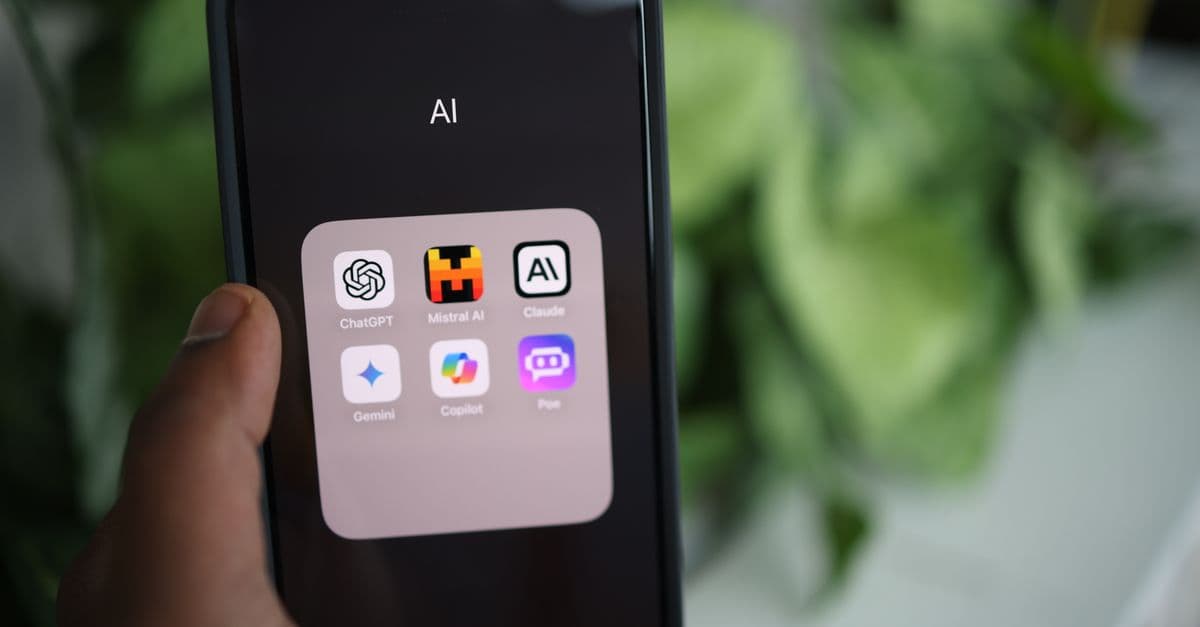
Photo: Solen Feyissa / Pexels
Lovable is a chat-based AI tool that turns a written description into a working full-stack web app: frontend, database, authentication, and hosting included. Type a sentence like "a habit tracker with email login and Stripe billing," and within minutes you have a live app you can click through, not a mockup. Founded in Stockholm in November 2023 and renamed from GPT Engineer in late 2024, Lovable grew into one of the fastest-growing software companies on record, reportedly crossing $400 million in annual recurring revenue by February 2026. This piece explains what it actually builds, how the underlying mechanism works, where it wins and loses against tools like Bolt.new and v0, and what the "vibe coding" debate around it really means for anyone building software without a computer science degree.
What Lovable actually is, and why it grew so fast
Lovable belongs to a category of tools sometimes called AI app builders or "prompt-to-app" platforms. Instead of generating a single function or autocompleting a line of code the way GitHub Copilot does, Lovable generates and wires together an entire application: UI components, database schema, server-side logic, and a deployed URL. The company describes its own product as letting anyone "spin up apps and websites through prompts," and it counted roughly 8 million users as of mid-2026, according to Forbes reporting on the company's fundraising talks (Forbes, June 2026).
The growth numbers are genuinely unusual even by AI-startup standards. Lovable reportedly reached $10 million ARR within roughly 60 days of relaunching as a paid product, then $206 million ARR within 11 months, according to public reporting cited by founder Anton Osika himself in interviews (Lenny's Newsletter interview with Anton Osika). By December 2025, the company closed a $330 million funding round that valued it at $6.6 billion, and by June 2026 it was reportedly in talks to raise again at a $12 billion valuation, according to Forbes. Of the roughly $400 million in ARR reported for February 2026, only about $20 million came from named enterprise customers like Uber, HubSpot, and Microsoft — the remaining $380 million came from individual users and small businesses paying monthly subscriptions, per the same Forbes reporting.
Those figures matter for a simple reason: they tell you who is actually using this tool. Lovable's growth was not driven primarily by enterprise engineering teams adopting a new IDE plugin. It was driven by non-technical founders, indie hackers, and small teams who could not previously have shipped a working web app without hiring a developer.
From GPT Engineer to Lovable: a short history
Lovable's origin story explains a lot about how the product is designed today. In 2023, Anton Osika built an open-source tool called GPT Engineer, which used large language models to generate entire codebases from a text prompt. It spread quickly on GitHub, and Osika and co-founder Fabian Hedin built a commercial version, GPT Engineer App, aimed at people who couldn't write code themselves.
That commercial app launched to a strong reception on Product Hunt and Hacker News, picking up paying users within its first days. In December 2024, the company rebranded the product as Lovable, dropping the "engineer" framing entirely — a signal of who the company wanted to reach. The renamed product leaned harder into a consumer-friendly, chat-first interface, hiding the terminal, the version control system, and the deployment pipeline behind a conversation window.
This history is worth knowing because it explains a recurring criticism of the product: Lovable was never built as a tool for professional engineers to move faster. It was built as a tool for people who don't know what a terminal is to skip needing one. Every subsequent design decision, from its pricing model to its onboarding flow, follows from that founding premise.
What Lovable actually builds
When you type a prompt describing an app, Lovable's system reasons about your request and generates a working, multi-layer application rather than a single file. A typical output includes:
| Layer | What Lovable generates | Underlying technology |
|---|---|---|
| Frontend | Component-based UI, pages, and styling | React, TypeScript, Tailwind CSS |
| Backend | Database schema, row-level security rules, serverless functions | Supabase (hosted Postgres) |
| Authentication | Email/password and OAuth sign-in flows | Supabase Auth |
| Payments | Checkout flows, subscription logic | Stripe (via prompted integration) |
| Transactional email sending | Resend (via prompted integration) | |
| Hosting | One-click publish or GitHub export | Lovable Cloud, or self-hosted via Vercel/Netlify |
Table: The layers of a typical application Lovable generates from a single chat prompt, and the specific technology behind each one.
The critical distinction from a static website builder like Squarespace or Wix is that the output has a real, working database behind it. You can sign up a test user, save data to a Postgres table, and process a real Stripe payment in an app that existed only as a sentence an hour earlier. That is a fundamentally different category of tool from a drag-and-drop page builder, even though both get lumped into "no-code" conversations casually.
How does Lovable generate a working app from a text prompt?
Lovable runs your prompt through a large language model that has been tuned to produce full-stack code following a fixed architectural pattern: React on the frontend, Supabase on the backend. Rather than generating a whole app in one uninterruptible pass, it works iteratively, similar to a developer building a feature branch by branch, and lets you correct course in the same chat thread.
Does Lovable use a specific AI model, or its own?
Lovable is built on top of large language models from established AI labs rather than training its own foundation model from scratch, a common pattern among app-builder startups: the moat is the surrounding product (prompt scaffolding, code templates, deployment pipeline, and UI polish), not the underlying model weights. This mirrors how tools like v0 and Bolt.new are built on top of general-purpose LLMs rather than proprietary ones.
The mechanism: why "chat to app" actually works
It helps to understand why this works at all, because on the surface, "describe an app and get a working database" sounds close to magic. The mechanism is less magical and more like a well-organized assembly line.
Think of it like ordering a custom-built house from a contractor who has one standardized floor plan and a fixed set of approved materials. You don't need to know how to pour concrete or wire electrical panels — you describe the rooms you want, and the contractor fills in a proven template with your specifications. Lovable works the same way: it has a fixed architectural stack (React plus Supabase) and a large training set of app patterns, and it fills that template in based on your prompt rather than reasoning from a blank slate every time.
A second analogy helps with the iteration loop. Building an app in Lovable is closer to sculpting with clay than pouring concrete. You start with a rough shape (the AI's first draft), then chip away and reshape specific parts through follow-up messages — "make the login page simpler," "add a filter to the dashboard" — instead of trying to specify every requirement perfectly up front. Each message is a targeted edit to existing code, not a full rebuild, which is what makes 50-plus-message iteration sessions practical instead of prohibitively slow.
This constrained-stack approach is also precisely why Lovable can move fast where more general tools can't. A tool like Replit Agent, which supports arbitrary languages and full Linux environments, has to reason about a much larger possibility space for every request. Lovable narrows that space deliberately: React and Supabase, almost always, which lets its generation be faster and more reliable within that lane, at the direct cost of flexibility outside it.
Why does Lovable use Supabase instead of a traditional backend?
Supabase packages a Postgres database, authentication, file storage, and serverless functions into one hosted service with a generous free tier, which lets Lovable stand up a complete backend in seconds rather than requiring the AI to provision separate services for each piece. The tradeoff is real backend flexibility: once your Supabase-backed app grows, migrating off it is nontrivial.
The "vibe coding" pitch, and what it actually promises
Lovable's positioning is explicit: build for people who have ideas but can't write code. This fits inside a broader movement now commonly called vibe coding, a term popularized by AI researcher Andrej Karpathy in 2025 to describe programming by feel and iteration with an AI rather than by deliberately writing and understanding every line yourself.
Lovable leans into that philosophy more aggressively than most competitors in the space. The chat interface hides Git, terminals, package managers, and deployment configuration entirely by default. You never have to open a command line unless you choose to. Compare that to a tool like Cursor, which is explicitly an AI-assisted code editor built for working engineers who already know how to read a stack trace — Lovable is trying to eliminate the need to read one at all.
That difference in target user shows up everywhere in the product: error messages are written in plain language rather than raw stack traces, the default view shows a live preview of the running app rather than a file tree, and the onboarding flow assumes zero familiarity with software development concepts. It's a deliberate product bet, and the growth numbers suggest the bet paid off with a real, underserved audience.
How Lovable compares to other AI app builders
The AI coding tool category has crowded fast, and the differences between the major players matter more than the surface-level similarity of "type a prompt, get code."
| Tool | Core strength | Target user | Primary stack |
|---|---|---|---|
| Lovable | Polished full-stack apps with integrated database | Non-technical founders | React + Supabase |
| Bolt.new | Runs full Node.js environments in-browser via WebContainers | Developers exploring ideas fast | Multiple frameworks |
| v0 (Vercel) | High-quality individual UI components | Designers and frontend developers | Next.js + shadcn/ui |
| Replit Agent | Full Linux VM, near any language or framework | Developers wanting flexibility | Anything |
| Cursor | AI pair-programming inside a real code editor | Working software engineers | Anything |
| FlutterFlow | Native mobile app generation | Mobile-first builders | Flutter |
Table: How Lovable's positioning compares to five other AI-assisted development tools, based on each vendor's own documentation and public product pages as of mid-2026.
The sharpest comparison is with Bolt.new, built by StackBlitz. Both generate full-stack web apps from a chat prompt and both produce real, exportable code. But Bolt.new runs your app inside a WebContainer, a full Node.js runtime executing directly in your browser tab, which gives it broader framework support and a feel closer to a real development environment. Lovable, by contrast, standardizes hard on React and Supabase and optimizes the experience for someone who has never opened a terminal. Developers exploring new frameworks tend to gravitate to Bolt; non-technical founders building their first product tend to gravitate to Lovable.
The comparison with v0 is different in kind rather than degree. v0 is primarily a component and interface generator: it excels at producing a polished pricing page, a dashboard layout, or a form, and it deploys through Vercel's Next.js ecosystem. It does not, by default, wire up a database or authentication system the way Lovable does. Many builders actually use both: v0 for interface polish, Lovable for the full application including the data layer.
Pricing: what a Lovable subscription actually costs
Lovable runs on a credit-based system rather than flat usage limits, and the credit structure has changed materially since the product's early days. As of mid-2026, reporting on Lovable's pricing describes four tiers: a free tier, a Pro tier, a Business tier, and a custom Enterprise tier (No Code MBA pricing breakdown, 2026; eesel AI pricing guide, 2026).
- Free: No credit card required, roughly 5 daily credits capped around 30 per month, enough to explore the product but not to build a full app.
- Pro: Starting around $25/month for 100 monthly credits, plus daily credits, aimed at individuals building real projects with private workspaces.
- Business: Around $50/month for roughly 200 credits, adding team collaboration and role-based access.
- Enterprise: Custom pricing for organizations, including the named enterprise accounts (Uber, HubSpot, Microsoft) that Forbes reported account for roughly $20 million of Lovable's ARR.
A "credit" corresponds roughly to a unit of AI work — generating a component, running an edit, fixing an error — rather than a full chat message, and multiple sources note that credit consumption for a real MVP build can run into the hundreds depending on complexity and how much back-and-forth iteration the build requires. It's also worth flagging plainly: once an app is deployed, hosting and ongoing AI usage on Lovable Cloud are billed separately from the subscription fee, which several independent pricing breakdowns describe as a source of surprise costs for users who assume the subscription is the entire bill (Banani pricing analysis, 2026).
How much does it actually cost to build an app in Lovable?
For a simple MVP with authentication and a handful of database tables, a Pro plan's monthly credit allotment is often enough. For anything with heavy iteration, multiple integrations, or repeated debugging cycles, users commonly report needing the Business tier or purchasing additional credits, since fixing AI-introduced bugs consumes credits the same way building new features does.
What Lovable is genuinely good at
MVPs and prototypes. The React-plus-Supabase combination covers a large share of common B2B SaaS patterns out of the box: user accounts, CRUD data entry, basic dashboards. A working prototype in an afternoon is a realistic expectation, not marketing copy.
Internal tools. Admin panels, lead trackers, and internal dashboards are a strong fit, because visual polish matters less than getting structured data in and out reliably, which is exactly what the Supabase backend is built for.
Investor and customer demos. Founders can show a working, clickable product with real sign-up and payment flows instead of a slide deck of mockups, which changes the credibility of an early fundraising or sales conversation.
Side projects and indie products. A large and visible community of independent builders documents shipping real, revenue-generating products built substantially in Lovable, evidenced by the sheer volume of "built with Lovable" case studies referenced across founder communities and the company's own customer growth data.
Learning by inspection. Because the output is standard React and TypeScript rather than a proprietary format, a curious non-developer can open the generated code and start recognizing patterns, which is a meaningfully different learning path than a closed no-code platform offers.
Where Lovable genuinely struggles
Escaping the stack. Lovable is tightly coupled to Supabase for the database and auth layer. Moving an app built in Lovable to a different backend provider later is a substantial rewrite, not a configuration change.
Complex business logic. Multi-step approval workflows, intricate permission systems, and real-time collaborative features tend to exceed what prompt-based iteration handles reliably, and usually require a developer to step in and write custom code by hand.
Scaling past MVP. Once an app built in Lovable grows past a few thousand active users or accumulates custom requirements the AI didn't originally scaffold for, most teams end up bringing in an engineer to review and refactor the codebase properly, using standard version control and code review rather than chat-based iteration.
Mobile-first products. Lovable's output is a web application. For a native iOS or Android app, tools built specifically for mobile, like FlutterFlow, are a better starting point.
Debugging without a mental model. This is the least tangible weakness but arguably the most consequential one. When a Lovable-generated app breaks in production, a non-technical founder often lacks the conceptual framework to diagnose why, which turns what would be a five-minute fix for an experienced developer into a support ticket or a stalled product.
The "shipping vibes, not code" debate
Lovable sits at the center of a real disagreement in software circles about what AI-generated code means for the profession and for the people using these tools. The debate isn't marketing spin — it shows up in developer forums, conference talks, and increasingly in postmortems from founders whose Lovable-built products hit real scaling problems.
Critics argue that hiding the mechanics of software production from the person building the product creates a specific kind of risk: fragile applications with hidden bugs that the person who "built" them has no ability to diagnose or fix. When a database query starts timing out under real user load, or a security rule in Supabase's row-level security is misconfigured, a non-technical founder has no independent way to evaluate what's wrong or whether the AI's proposed fix is actually correct.
Defenders counter that the realistic alternative for most of these builders isn't a properly engineered app built by a hired developer — it's no app at all. Hiring a contract developer to build even a simple MVP typically costs several thousand dollars and weeks of back-and-forth specification, a cost and timeline that kills most early-stage ideas before they're ever tested against real users. Lovable's advocates argue that getting a flawed-but-functional product in front of real users fast, then hiring engineers to rebuild the foundation once the idea is validated, is a rational sequencing decision, not a shortcut that will inevitably backfire.
Both positions have merit, and the honest synthesis is narrower than either side's rhetoric: Lovable is well-suited as a Phase Zero tool, for validating whether an idea is worth building at all, and considerably less suited as the foundation for a product meant to scale past its first few thousand users without a rewrite. Treating it as the former rather than the latter is the difference between a good outcome and a costly one.
Real apps people have shipped with Lovable
Public case studies and founder write-ups point to recurring categories of products built substantially or entirely in Lovable:
- Habit and fitness trackers with recurring billing
- Niche local directories, such as dog park or coffee shop finders
- AI "wrapper" tools that layer a custom interface over an existing model API
- Lead-generation and email-finding tools for sales teams
- Booking and scheduling systems for solo service providers
- Lightweight internal CRM tools for small businesses
- Community and membership platforms with gated content
Most of these were built and publicly launched within days by people who, by their own account, could not have shipped a working product otherwise without hiring outside help. That gap between "idea" and "working product a stranger can sign up for" is the actual value proposition, more than any individual technical feature.
What this means for developers versus non-developers
It's worth separating two very different audiences who both end up using Lovable, because the tool means something different to each.
For non-technical founders, Lovable functionally replaces the need to find, vet, and pay a freelance developer for a first version of a product. That's a meaningful shift in who gets to test a business idea against the market. The risk they take on is technical debt they can't personally evaluate, which is a real cost, but often a cost worth paying to learn quickly whether an idea has any traction at all.
For developers, Lovable is closer to a fast scaffolding tool: useful for spinning up a throwaway prototype or a client demo quickly, less useful as a primary development environment for a product they intend to own and maintain long-term. Most experienced engineers who use Lovable treat its output the way they'd treat code from a junior contractor: a reasonable first draft that needs review, not a finished deliverable to ship as-is.
FAQs
Q: How is Lovable different from no-code tools like Bubble? A: Bubble runs apps inside its own proprietary visual runtime, which means your app only exists inside Bubble's platform. Lovable generates standard React and Supabase code that you can export to GitHub and deploy anywhere. If you want to leave Lovable, the underlying code is genuinely yours to take with you.
Q: Can I use Lovable without writing any code at all? A: Yes, for most common app types you can stay entirely inside the chat interface and never touch a code editor. For advanced customization beyond what a prompt can describe well, you can open and edit the generated code directly, or hand it to a developer to extend.
Q: Is code generated by Lovable production-ready? A: For MVPs, prototypes, and small-scale apps, generally yes. For products handling thousands of paying users, sensitive data, or complex compliance requirements, plan to have an experienced engineer audit the generated code before treating it as production-grade.
Q: Does Lovable lock me into Supabase permanently? A: Effectively yes, in practice. The generated architecture assumes Supabase for the database, authentication, and file storage layers. Migrating an established Lovable app to a different backend later requires a substantial rewrite rather than a simple configuration swap.
Q: How does Lovable compare to v0 by Vercel? A: v0 is primarily a UI and component generator, strongest at producing polished individual pages or interface elements within the Next.js ecosystem. Lovable is a full-stack app builder that also wires up a database, authentication, and payments. They solve different, overlapping problems, and many builders use both together.
Q: How does Lovable compare to Bolt.new? A: Bolt.new runs a full Node.js environment in your browser via WebContainers, supporting a wider range of frameworks and feeling closer to a real developer environment. Lovable standardizes on React and Supabase and optimizes hard for users who have never used a terminal. Developers exploring frameworks tend to prefer Bolt; non-technical founders building a first product tend to prefer Lovable.
Q: Can I deploy a Lovable-built app outside of Lovable's own hosting? A: Yes. You can export the generated project to GitHub and deploy it to Vercel, Netlify, Cloudflare Pages, or your own infrastructure, since the codebase is standard React built with Vite rather than a format proprietary to Lovable.
Q: Is Lovable considered "vibe coding," and what does that term mean? A: Yes. Vibe coding is a term popularized by AI researcher Andrej Karpathy in 2025 to describe building software by iterating with an AI based on feel and outcome rather than deliberately writing and fully understanding every line of code. Lovable's entire chat-based, terminal-free interface is designed around that workflow.
Q: How much does Lovable actually cost per month for a real project? A: Public pricing breakdowns from mid-2026 describe a free tier with limited daily credits, a Pro tier around $25/month with 100 monthly credits, and a Business tier around $50/month with roughly 200 credits, though heavy iteration or debugging on a real project commonly pushes usage into a higher tier or requires purchasing additional credits beyond the base allotment.
Q: Who is actually paying for Lovable — enterprises or individuals? A: Per Forbes' June 2026 reporting on the company's fundraising talks, only about $20 million of Lovable's roughly $400 million ARR came from named enterprise customers like Uber, HubSpot, and Microsoft; the remaining roughly $380 million came from individual users and small businesses on self-serve subscriptions.
Q: Did Lovable always have this name? A: No. The product began as GPT Engineer, an open-source tool released by Anton Osika in 2023 that became one of the fastest-growing repositories in GitHub's history. A commercial version, GPT Engineer App, launched shortly after, and the product was formally renamed Lovable in December 2024.
The takeaway
Lovable's core insight was narrower than it looks from the outside: rather than trying to be a general-purpose AI coding assistant, it picked one stack, React and Supabase, and optimized ruthlessly for a single user who had been ignored by most developer tools, the person with an idea and zero coding background. That narrow bet, combined with real growth numbers that took the company from an open-source side project to a reported multibillion-dollar valuation in under three years, suggests the market for "idea to working app, no terminal required" was larger than most of the software industry assumed. The honest caveat for anyone considering it: treat Lovable as a fast way to find out if an idea works, not as the permanent foundation you'll still be running on once it does.
Read next:
Follow new articles
Add SciHub101 to your feed reader to see new science and technology stories.
About the Author
SciHub101 is an independent science and technology publication founded and edited by Buğra Sözeri, a software engineer and app developer based in Türkiye. AI tools assist with drafting and research. Source documentation in the existing archive is uneven, and articles are being reviewed and corrected. The Editorial Team byline identifies editorial responsibility; it does not certify specialist or independent human review. Where we compare products, anything built by our own team is labelled as such — see the editorial guidelines and About page for how corrections and disclosures work.
Related Articles
What Is MLX? Apple's ML Framework
MLX is Apple's open-source ML framework optimized for Apple Silicon. It exploits unified memory to run and fine-tune LLMs on Macs.

AWS Bedrock vs Google Vertex AI Compared
AWS Bedrock and Google Vertex AI are the two major cloud AI platforms. Here's how their models, pricing, and enterprise features compare in 2026.

What Is Replit Agent? Build Apps with AI
Replit Agent explained: build and deploy full-stack apps from a single prompt, how Agent 3 works, pricing, and how it compares to Bolt, v0, and Lovable.

Best AI Website Builders 2026 — No-Code, Compared
Best AI website builders 2026: Wix ADI, Framer AI, Hostinger, Durable, plus v0, Lovable, and Bolt for app-style sites. What to use by skill level and budget.

AI Model Distillation Explained
Model distillation trains a smaller model to imitate a larger model's outputs, often reducing cost and latency while preserving much of the behavior.

How to Make Content Citable by AI
AI systems cite pages that make claims easy to verify and quote. This guide explains definitions, tables, sources, author signals, and topical clusters.