What Is the Metaverse: Dead Hype or Slow-Burning Reality?
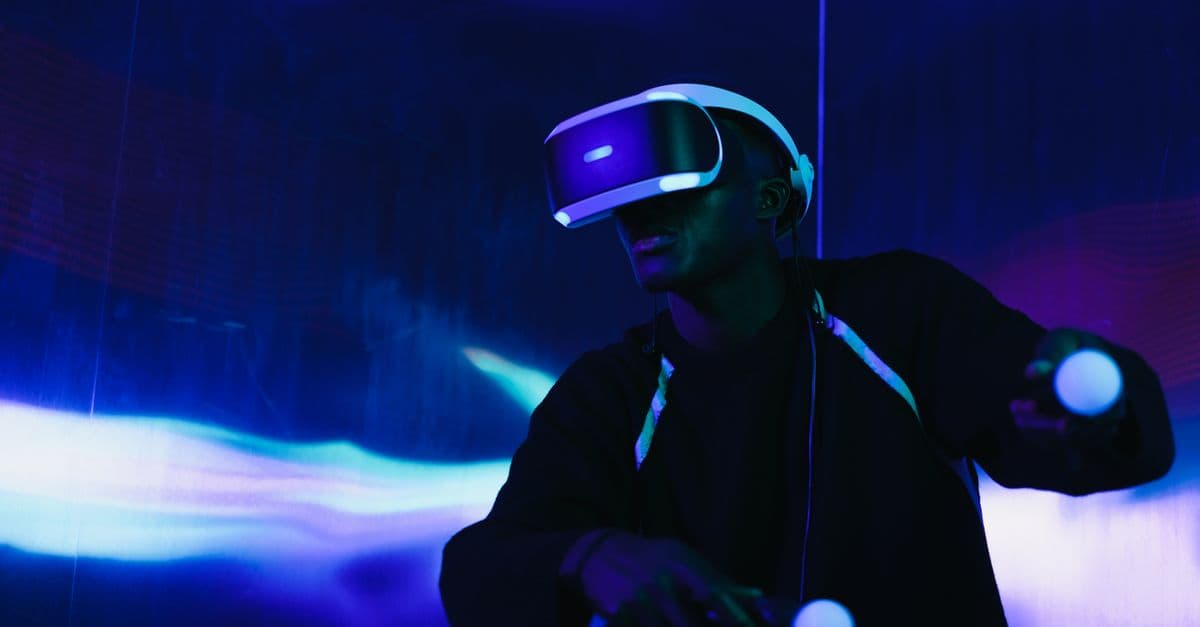
Photo: SHVETS production / Pexels
In October 2021, Mark Zuckerberg stood in a virtual conference room and announced that Facebook would rename itself Meta, betting the company on a vision of persistent, immersive virtual worlds. The word "metaverse" — already decades old in science fiction — entered mainstream vocabulary overnight. Analysts projected markets worth trillions. Headlines described it as the next internet. Four years later, Meta's Reality Labs unit has burned through more than $83 billion in cumulative operating losses, Horizon Worlds peaked at fewer users than expected, and the consumer metaverse has not materialized on the timeline anyone promised. This article explains what the metaverse actually is, what the technology can and cannot do in 2026, where it has quietly succeeded, and what a realistic future looks like.
What "Metaverse" Actually Means — and What It Doesn't
The word "metaverse" was coined by science fiction author Neal Stephenson in his 1992 novel Snow Crash, where it described a shared virtual world accessed through VR goggles, populated by user avatars interacting in real time. Stephenson's metaverse was a dystopian backdrop, not a product pitch.
Metaverse — a persistent, shared, three-dimensional digital environment (or interconnected set of environments) accessible via VR headsets, AR glasses, or conventional screens, where users can interact with each other, with digital objects, and with services in real time. The term does not refer to a single platform but to a class of technology and experience.
The concept has three core properties that distinguish it from ordinary online games or video calls. First, persistence: the world continues to exist and change when you log off, unlike a video game lobby that ends when the session does. Second, interoperability: ideally, your avatar, assets, and identity carry across different environments — though this remains largely aspirational in 2026. Third, presence: the experience creates a meaningful sense of "being there," not merely viewing content on a flat screen.
No single metaverse exists today in the full Stephenson sense. What exists is a fragmented landscape: Meta's Horizon Worlds, Roblox (which has 380 million monthly users but is primarily a 2D game platform accessed via screens), Decentraland, VRChat, Fortnite's persistent social spaces, and various enterprise platforms. These share some metaverse properties but are not interconnected.
The distinction matters because most media coverage conflated "the metaverse" with "a specific product Meta was building." These are different things. The category is real; the particular 2021 product vision has largely failed to materialize on schedule.
Source: Stephenson, N. (1992), Snow Crash, Bantam Books — original literary source of the term "metaverse," describing a shared virtual reality successor to the internet.
The 2021 Hype Cycle: What Went Wrong
The 2021 metaverse moment was a confluence of several forces: pandemic-driven remote work normalizing virtual interaction, a surge in VR headset sales, the NFT boom creating the illusion that digital ownership was solved, and Meta's enormous brand amplification.
Meta's October 2021 rebrand was accompanied by a promise to invest "at least $10 billion" in Reality Labs that year alone. The figure climbed every year afterward. By the end of 2025, Reality Labs had posted $19.19 billion in operating losses for that year alone, on revenue of only $2.2 billion. Cumulative losses since 2020 exceeded $83 billion — a figure that represents one of the largest sustained bets on a single technology by any corporation in history.
The problems were not primarily technological, though the technology was immature. They were structural. Consumer VR has persistent friction that no amount of investment has fully solved: headsets remain heavy, hot, and socially isolating. The "presence" sensation that makes VR compelling for 20 minutes becomes fatiguing over hours. There is no killer application — no single use case that makes the average person feel they cannot live without a VR headset in the way the smartphone felt indispensable once smartphones existed.
Presence fatigue — the paradox where immersive VR, which initially creates strong feelings of "being there," induces discomfort, disorientation, or exhaustion with extended use due to sensory mismatch between vestibular signals (body senses movement) and visual signals (eyes see virtual motion that does not match). This is one reason average VR session lengths remain short even among frequent users.
The NFT component of the 2021 metaverse pitch — the idea that digital land, avatars, and items would be tokenized assets with verifiable ownership and real economic value — collapsed almost entirely. Decentraland "land" that sold for hundreds of thousands of dollars in 2021 was worth a small fraction of that by 2023. The economic thesis assumed speculative appreciation rather than genuine utility.
Source: Meta Platforms Inc. (2025), Q4 2025 Earnings Report — Reality Labs full-year 2025 operating loss of $19.19 billion; cumulative losses since 2020 exceeding $83 billion.
Source: TechCrunch (January 2026), "Well, there goes the metaverse" — analysis of the gap between 2021 projections and 2026 reality for consumer-facing metaverse platforms.
Where VR and AR Actually Succeeded in 2026
The consumer metaverse stalled. Enterprise adoption did not.
The most economically significant VR use case in 2026 is workforce training. Medical schools use VR surgery simulators to let trainees practice procedures without risk to patients. The US Army's Integrated Visual Augmentation System (IVAS), built on Microsoft's HoloLens platform, provides soldiers with augmented battlefield information. Boeing and Airbus use mixed reality to guide technicians through complex aircraft assembly procedures, reducing errors and training time.
The case for VR training is straightforward: it lets people practice high-stakes, low-frequency situations — emergency medical procedures, industrial accidents, military scenarios — safely and repeatably. A study published in the Journal of Medical Education and Technology found VR-trained surgical residents performed 230% better on specific procedural benchmarks than those trained with conventional methods alone. The value proposition is not novelty; it is risk reduction and accelerated skill acquisition.
Architecture, engineering, and construction (AEC) represents the second major success case. BIM (Building Information Modeling) platforms increasingly render in VR, allowing clients and architects to walk through a building before it is built. Firms like Autodesk and Bentley Systems have invested heavily in VR review workflows. The benefit is concrete: catching design errors in a VR walkthrough costs a fraction of fixing them during construction.
Mixed reality — a spectrum of experiences where digital content is overlaid onto the physical world with spatial awareness, allowing digital objects to appear anchored to real surfaces and occluded by real objects. Distinct from pure VR (fully simulated environment) and basic AR (flat digital overlay without spatial understanding).
VRChat reached 149,000 concurrent users in early 2026, driven by social and event use. This is a real community — not a mass-market phenomenon but a genuine subculture using VR for persistent social interaction, live events, and creative expression. The platform's economy supports full-time creators selling avatar assets, event spaces, and experiences.
Source: Treeview Studio (2026), AR/VR/MR/XR/Metaverse/Spatial Computing Industry Statistics Report — sector-by-sector breakdown of enterprise and consumer VR adoption rates and revenue.
Source: DemandSage (2026), "Virtual Reality Statistics 2026: Users and Trends" — 171 million VR users globally in 2025, projected 216 million by end of 2026; Meta Quest line holding approximately 80% of dedicated headset unit sales.
The Hardware Problem: Why Headsets Haven't Gone Mainstream
Consumer VR adoption is growing, but slowly. An estimated 171 million people used VR worldwide in 2025, heading toward 216 million by end of 2026. About 13% of US households own a VR headset. The VR market overall is projected at $26.71 billion in 2026, up 28.2% from $20.83 billion in 2025.
These numbers sound large, but they need context. There are approximately 1.5 billion smartphone users in the US alone. Thirteen percent household penetration, fifteen years after consumer VR headsets first became commercially available, is the adoption curve of a specialized device, not a platform-defining technology.
The hardware constraints are genuine physics and engineering problems, not simply matters of cost reduction. Optical physics requires a minimum lens-to-display distance to achieve a wide field of view; reducing this minimum requires fundamentally new display architectures. The human field of view is approximately 200 degrees horizontal; current headsets deliver around 90–120 degrees, creating a "looking through goggles" sensation rather than full immersion. Closing that gap requires either larger optics (heavier) or new pancake lens designs with higher manufacturing complexity.
Battery life is the other hard constraint. Standalone VR at full performance requires significant compute, and batteries that power 2–3 hours of experience weigh hundreds of grams. The Apple Vision Pro (released February 2024, priced at $3,499) solved the heat problem by offloading compute to an external battery pack — but this introduces a cable, reducing freedom of movement.
The broader extended reality category grew 44.4% in 2025, while dedicated full-VR headsets actually declined 14%. The growth is in mixed-reality devices, smart glasses, and AR overlays — lighter devices that augment rather than replace the physical environment. The hardware trajectory suggests the future may be AR glasses that people wear all day, with occasional full VR sessions, rather than the fully immersive replacement-reality the 2021 pitch implied.
Source: SQ Magazine (2026), "Metaverse Statistics 2026: Market Size, NFTs, Platform Data" — global VR market at $26.71 billion in 2026; dedicated VR headset category declining 14% while broader XR grew 44.4% in 2025.
Source: Technology.org (March 2026), "Meta Spent $73 Billion on VR, Almost Killed It, Then Changed Its Mind Overnight" — analysis of Meta's strategic pivot from consumer-first Horizon Worlds to enterprise and glasses hardware.
Meta's Pivot: From Horizon Worlds to Smart Glasses
By 2025, Meta had significantly shifted its Reality Labs strategy. Horizon Worlds — the social VR platform that was supposed to be the flagship metaverse experience — received substantially less promotional emphasis. Meta's Ray-Ban smart glasses, which include cameras, speakers, and AI assistants but no display, sold several million units and became one of the most commercially successful AR-adjacent products released.
The pivot is instructive. Smart glasses with no display but useful AI features (making calls, taking photos, hearing an AI describe what you're looking at) proved more acceptable to ordinary consumers than full VR headsets. The form factor is familiar. The social cost of wearing them is low. The use case is immediately clear.
Meta's Quest 3, released in late 2023 at $499, represented genuine hardware progress: color passthrough cameras enabling mixed reality, a more comfortable form factor, and pancake lenses delivering better visual quality at reduced thickness. Quest 3 and Quest 2 together accounted for more than 52% of Steam VR headset usage in early 2026. The hardware is improving; the question is whether improving hardware is sufficient to create mass-market demand.
The strategic lesson Meta appears to have internalized: the consumer path to spatial computing may run through lightweight devices people wear for augmentation, not through replacing their physical environment entirely. This is closer to the smartphone arc — a device that enhanced real life — than to the Snow Crash vision of an alternate existence.
For a deeper look at how AI systems drive the personalization and spatial understanding that underpin these platforms, see how large language models work and how AI models are trained.
The Technologies That Are Actually Advancing
Separate from whether any specific metaverse product succeeds, several underlying technologies that metaverse advocates pointed to are advancing on independent tracks.
Real-time 3D rendering has improved substantially. Unreal Engine 5's Nanite and Lumen systems allow photorealistic environments at real-time framerates that would have required hours of offline rendering five years ago. This matters not because it makes Horizon Worlds prettier but because it raises the visual floor for training simulators, architectural visualization, and game environments.
Spatial audio — three-dimensional sound that changes position as you move your head — has become a standard feature of VR headsets and is expanding into spatial computing generally. For presence, spatial audio is nearly as important as visual fidelity. A voice that sounds like it is coming from a specific location in space is a powerful cue to the brain that "something is actually there."
Eye tracking and foveated rendering allow headsets to render only the region of the display where the user is currently looking at full resolution, reducing GPU load significantly. Eye tracking also enables natural-feeling gaze-based interaction and provides data for social presence (your avatar's eyes actually look at what you're looking at). Meta Quest Pro and Apple Vision Pro both include eye tracking.
Neural interfaces remain developmental but advancing. Meta acquired CTRL-labs in 2019 for a reported $500 million to $1 billion. CTRL-labs produces a wristband that reads nerve signals to the hand, allowing control of digital interfaces by thinking about hand movements without moving them. This is not mind-reading — it reads motor nerve signals — but it represents a potential future input modality that eliminates controllers entirely.
Source: Epic Games (2023), Unreal Engine 5 Technical Documentation — Nanite virtualized geometry and Lumen global illumination systems; real-time rendering capabilities and hardware requirements.
What People Get Wrong About the Metaverse Timeline
The most common error is treating "metaverse" as a binary: either it exists as a fully realized alternate reality or it failed. Technologies do not arrive this way. The internet in 1994 was real but also genuinely primitive — slow, text-heavy, limited to early adopters. The smartphone in 2007 was transformative but took a decade to reach global saturation. The metaverse's underlying technologies are following a similar arc, with a roughly 10–15 year gap between the initial public hype and practical mass-market impact being entirely historically normal.
The second common error is confusing a specific company's product failure with the failure of a technology category. Meta's Horizon Worlds underperforming does not mean spatial computing is not a real technology direction, any more than Friendster's failure meant social networking was a dead end.
The third error is treating enterprise adoption as irrelevant. VR training, mixed reality for surgery, architectural visualization, and industrial simulation are generating real economic value right now. They simply are not the glamorous consumer experience the 2021 announcements promised.
Gartner Hype Cycle — a graphical model describing the typical trajectory of an emerging technology through five phases: Technology Trigger, Peak of Inflated Expectations, Trough of Disillusionment, Slope of Enlightenment, and Plateau of Productivity. The metaverse passed through Peak of Inflated Expectations in 2021–2022 and appears to be navigating the Trough of Disillusionment in 2024–2026, consistent with eventual maturation.
A reasonable projection: consumer spatial computing devices — lighter, cheaper, socially acceptable — become meaningful lifestyle accessories in the late 2020s. Fully immersive VR remains a specialized tool for gaming, training, and specific professional use cases. The "replace reality" vision of the 2021 pitch does not arrive on any near-term timeline.
Source: Gartner Inc. (2023), "Hype Cycle for Emerging Technologies" — positioning of metaverse-related technologies at various stages of the cycle, with enterprise applications ahead of consumer applications on the maturity curve.
Frequently Asked Questions
Q: Is the metaverse dead?
A: No, but the specific 2021 consumer product vision has stalled significantly. Enterprise VR adoption in training, design, and simulation is growing. The underlying hardware and software technologies continue to advance. The consumer metaverse is better described as delayed by a decade rather than abandoned.
Q: How much has Meta lost on the metaverse?
A: Meta's Reality Labs unit, which encompasses VR/AR hardware and software including Horizon Worlds, accumulated more than $83 billion in cumulative operating losses between 2020 and the end of 2025. In 2025 alone, Reality Labs lost $19.19 billion on $2.2 billion in revenue.
Q: What is the difference between VR and the metaverse?
A: VR (virtual reality) is a technology — hardware and software that creates immersive three-dimensional experiences. The metaverse is a concept: a persistent, shared digital world or set of worlds. VR is one way to access a metaverse, but metaverse experiences can also be accessed on flat screens, as Roblox demonstrates with 380 million monthly users.
Q: Where is VR actually useful in 2026?
A: The strongest commercial use cases are workforce training (medical, military, industrial), architectural and engineering visualization, surgical simulation, and social/entertainment communities like VRChat. These represent genuine, measured value rather than speculative future potential.
Q: What happened to metaverse NFTs and digital land?
A: The speculative market in virtual land and avatar NFTs largely collapsed between 2022 and 2024. Assets that sold for hundreds of thousands of dollars in 2021 declined to a small fraction of those prices. The economic thesis required a level of user adoption that did not materialize, removing the scarcity value that drove prices.
Q: What is the realistic future of the metaverse?
A: The most likely near-term trajectory is lightweight AR glasses becoming mainstream wearables in the late 2020s, offering AI-assisted overlay of digital information on the physical world. Full VR remains a specialized tool. Persistent, interoperable shared digital environments may arrive, but on a 10–15 year horizon from today rather than the 2–3 years implied by 2021 announcements.
Read next:
Follow new articles
Add SciHub101 to your feed reader to see new science and technology stories.
About the Author
SciHub101 is an independent science and technology publication founded and edited by Buğra Sözeri, a software engineer and app developer based in Türkiye. AI tools assist with drafting and research. Source documentation in the existing archive is uneven, and articles are being reviewed and corrected. The Editorial Team byline identifies editorial responsibility; it does not certify specialist or independent human review. Where we compare products, anything built by our own team is labelled as such — see the editorial guidelines and About page for how corrections and disclosures work.
Related Articles

Why AI Models Give Different Answers to the Same Question
Send ChatGPT the same message twice within five minutes and you will likely receive two distinct responses. The wording differs, the examples change, sometimes the conclusions shift. This is not a bug, and it is not the model lying — it is the intended consequence of probabilistic sampling, a deliberate design choice that trades consistency for coverage. Understanding why requires a look at how language models generate text one token at a time.

What Is Quantum AI and Why Experts Say It Changes Everything: Hype Versus Reality in 2026
Quantum artificial intelligence — the intersection of quantum computing and machine learning — sounds transformative. Quantum computers could theoretically solve certain optimization problems exponentially faster than classical computers. Machine learning on quantum hardware could accelerate training or enable entirely new algorithms. Tech companies and venture capitalists have invested billions in the idea. Yet in 2026, quantum AI remains almost entirely theoretical. No commercially useful quantum-enhanced machine learning system exists. No real-world problem has been solved by quantum AI faster than classical AI. Most quantum computers are laboratory instruments available to a handful of researchers. The hype far exceeds the reality. However, the research is genuine, and if quantum computing matures, the potential impact on AI is real. This article untangles what quantum AI actually is, what promises are realistic, which are science fiction, and what the honest timeline looks like.

How VR Tricks the Brain: The Science of Virtual Reality
Put on a VR headset and step off a virtual ledge — your heart races, your palms sweat, your muscles brace for impact. But nothing real happened. Virtual reality exploits fundamental vulnerabilities in human perception that evolution never anticipated.

What Are VR and AR — and Where Is the Metaverse Actually Going?
Virtual and augmented reality have been "the next big thing" for a decade. Here's how each actually works, where they succeed, and what the realistic future looks like.

AI Model Distillation Explained
Model distillation trains a smaller model to imitate a larger model's outputs, often reducing cost and latency while preserving much of the behavior.
How to Make Content Citable by AI
AI systems cite pages that make claims easy to verify and quote. This guide explains definitions, tables, sources, author signals, and topical clusters.