What Is Quantum AI and Why Experts Say It Changes Everything: Hype Versus Reality in 2026
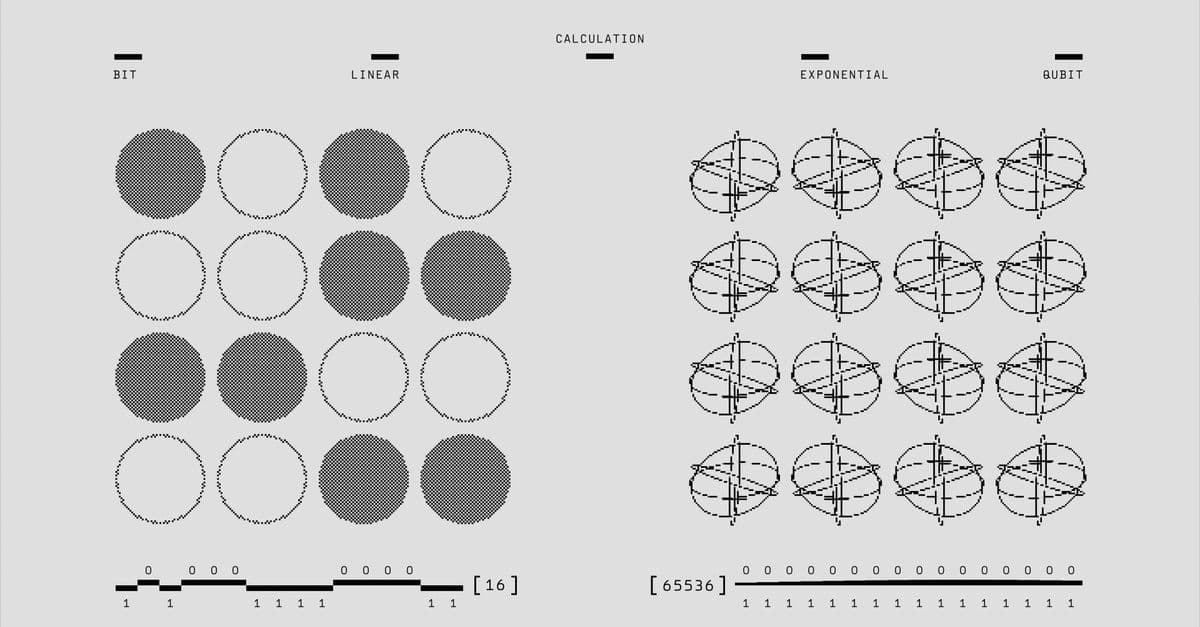
Photo: Google DeepMind / Pexels
In 2025, IBM announced a quantum processor with 1,000 qubits. Google claimed "quantum advantage" on a sampling problem, though the claim was disputed. Startups launched "quantum machine learning" products. Tech media ran headlines: "Quantum AI Could Solve Problems Classical Computers Never Can." Investment poured in. By 2026, the landscape has settled slightly. The hype persists, but a more nuanced picture has emerged: quantum AI is real research with genuine potential, but it is far less mature than headlines suggest, and no practical breakthroughs have yet materialized.
This article explains what quantum machine learning actually is, why it matters (if it does), what the current state is, and when — if ever — it might deliver on its promises. It also addresses the overclaims and separates realistic timelines from science fiction.
The Physics Primer: Why Quantum Might Matter for AI
Classical computing uses bits: 1 or 0, true or false. A computer with 1,000 bits can represent one of 2^1,000 possible states at any given time.
Quantum computing uses qubits, which can be 1, 0, or a superposition of both simultaneously. This is the key: a superposition allows a quantum computer to explore multiple states at once. A quantum computer with 1,000 qubits can, in principle, explore 2^1,000 states simultaneously.
Superposition — a quantum property where a particle exists in multiple states simultaneously until measured. Once measured, the superposition collapses to a single state. This is counterintuitive and requires a paradigm shift in thinking.
This is where the promise of quantum computing comes from: if you can represent 2^1,000 states simultaneously, you can theoretically solve problems that would take a classical computer 2^1,000 iterations — effectively impossibly long — in a single quantum operation.
However, three massive caveats:
Extracting the answer is hard. Quantum superposition allows simultaneous exploration, but the moment you measure, the state collapses to a single answer. You don't get all 2^1,000 solutions; you get one. The question is: can you design an algorithm so that the "right" answer has a high probability of being the one you measure?
Qubits are fragile. Qubits lose coherence quickly due to thermal noise and environmental interference. Current quantum computers maintain coherence for microseconds. In that time, the quantum computer can perform a limited number of operations before the qubits decohere and the superposition collapses into random noise. Early quantum computers (50–100 qubits) can do useful work for only a fraction of a second.
Quantum advantage is narrow. Quantum computers are not faster at everything. They are faster at specific problems: factorization, optimization, sampling, and certain machine learning tasks. For general computation (running a spreadsheet, writing an email, browsing the web), classical computers are likely always superior.
Source: Preskill, J. (2018), "Quantum Computing in the NISQ Era and Beyond," Quantum, Vol. 2 — foundational analysis of near-term quantum computing limitations and realistic expectations.
What Is Quantum Machine Learning, Really?
Quantum machine learning is machine learning algorithms adapted to run on quantum hardware. This sounds straightforward, but the reality is murky.
Currently, there are three interpretations:
1. Classical ML, Simulated on Quantum Hardware (Not Real)
Many research papers claim to study "quantum machine learning" but actually run classical ML algorithms on quantum simulators — software that simulates quantum behavior on classical computers. This provides no computational advantage. It's classical ML in disguise.
Example: A researcher implements a neural network on a quantum simulator and claims "quantum machine learning." But the simulator is running on a classical computer, so it's not quantum at all. This is misleading marketing.
2. Hybrid Quantum-Classical Systems (Emerging)
The more honest research uses hybrid systems: a classical computer handles most of the work, and a quantum co-processor handles specific subroutines that might benefit from quantum advantage.
Example: A machine learning task requires optimizing a loss function. The classical computer sets up the problem and passes it to a quantum processor, which explores the optimization landscape using quantum superposition. The quantum processor returns the best solution it found. The classical computer updates the model and repeats. The quantum component might be faster at certain optimization problems.
This is the most realistic near-term approach, but it is still largely experimental.
3. Fully Quantum Machine Learning (Theoretical)
The holy grail: an entire ML pipeline — encoding data, transforming it, extracting results — running on a quantum computer. This is theoretically possible but requires quantum computers with thousands to millions of qubits with error rates far below current levels. We're not close.
The Current State: Still Laboratory Science
As of 2026, here's what exists:
Hardware:
- IBM: 1,000-qubit quantum processor (announced), but practical qubit count usable without error is much lower (maybe 50–100 usable qubits after error correction).
- Google: Willow processor with ~100 qubits, claimed quantum advantage on a sampling problem (disputed by researchers at others labs).
- IonQ, Rigetti, and others: 50–500 qubit systems, mostly available via cloud access.
- Coherence time: microseconds to milliseconds. Operational window: microseconds.
Software and algorithms:
- Variational quantum algorithms (VQA): hybrid methods that use classical optimization with quantum subroutines. These are the most viable current approach.
- Quantum neural networks: theoretical frameworks for learning on quantum hardware. Mostly not deployed.
- Quantum simulation: quantum computers simulating quantum systems (e.g., molecular dynamics). This is one of the few areas showing promise.
Real-world deployments:
- Zero. No production system uses quantum AI to solve a real problem faster than classical ML.
- Research collaborations: pharmaceutical companies (Merck, Amgen) running drug discovery experiments on quantum simulators to explore potential.
- Optimization trials: logistics companies (DHL, others) testing quantum optimization on toy problems, with no production deployment yet.
Why Quantum Advantage Is So Hard to Achieve
The theoretical advantage of quantum computing is enormous on paper. In practice, achieving it is brutally difficult:
1. Error Rates Are High
Quantum operations are probabilistic. Each operation on a qubit has a small error probability (typically 0.1% to 1%, depending on the hardware). A quantum computation with 1,000 operations has a 1% × 1,000 = 10% cumulative error rate, meaning the result is likely wrong. Reaching error rates below 0.01% per operation (error correction) requires quantum computers with 1,000x more qubits than you're actually computing with, which defeats the advantage.
2. Algorithm Design Is Constrained
You can't just convert a classical algorithm to quantum. Quantum algorithms require careful design to ensure that the right answer has a higher amplitude than wrong answers, so the measurement is more likely to return the right answer. This is a constraint that classical algorithms don't have. Few quantum algorithms are known that outperform classical algorithms.
3. The Advantage Only Appears on Specific Problems
Quantum computers are not universally faster. They are fast at:
- Factorization (breaking RSA encryption). Shor's algorithm is exponentially faster on a quantum computer, but this requires a large, very stable quantum computer (thousands of logical qubits).
- Optimization over large spaces. Quantum annealing (D-Wave's approach) may be faster at certain optimization problems, but the advantage is unproven on real problems.
- Sampling from complex distributions. If you need to sample from a high-dimensional probability distribution (a problem in machine learning), quantum computers may be faster.
- Simulating quantum systems. This is the one area where quantum advantage is most realistic.
For most other problems (classification, regression, prediction), the quantum advantage is either unknown or doesn't exist.
4. Quantum-Classical Conversion Overhead
Even if the quantum subroutine is faster, encoding data into quantum states and extracting results back to classical bits has overhead. The advantage must exceed this overhead to be worthwhile. For many problems, it doesn't.
Source: Harrow, A. and Montanaro, A. (2017), "Quantum Computational Supremacy," Nature, Vol. 549 — review of quantum algorithms and realities of achieving quantum advantage; concludes that useful quantum advantage is realistic but narrow in scope.
Promises and Reality: The Hype Gap
| Claim | Reality |
|---|---|
| "Quantum computers will solve climate change" | Quantum computers might speed up materials discovery relevant to battery or solar technology, but the path is unclear. Timescale: 10+ years. |
| "Quantum AI will replace classical AI" | Quantum AI complements classical AI on specific problems. Full replacement is implausible. |
| "Quantum computers will break all encryption" | They could break RSA (needs a large, stable quantum computer). This is also why post-quantum cryptography is being standardized. Timescale: 10+ years to break current keys. |
| "Quantum machines learning will accelerate drug discovery" | Quantum simulation of molecular dynamics is promising for understanding protein folding and drug interactions. But a drug discovery process takes 10+ years for regulatory reasons. Speed in computation is one small component. Realistic: 5–10 year acceleration in simulation phases. |
| "Quantum AI is available now" | No production quantum AI system exists. Research prototypes exist. "Available now" means you can access a quantum simulator via cloud APIs, but this provides no computational advantage. |
| "IBM's/Google's new quantum processor is a breakthrough" | These are engineering milestones, not functionality breakthroughs. The processors are incrementally better but still limited by coherence time and error rates. |
Realistic Timeline: When Quantum AI Might Actually Work
Experts broadly agree on this timeline (though there's debate about dates):
2026–2030 (Now to Near-Term):
- Quantum hardware will improve to 500–1,000 qubits with slightly better error rates.
- Hybrid quantum-classical systems will be developed for narrow optimization problems.
- Research success: quantum simulation for molecular dynamics in pharmaceutical and materials science.
- Commercial deployment: minimal. Maybe a few drug discovery companies use quantum simulators in-house.
- Consumer or business impact: none.
2030–2035 (Medium-Term):
- Quantum error correction will become practical, allowing 100+ logical qubits from 10,000 physical qubits.
- Quantum optimization algorithms will solve real logistics and scheduling problems marginally faster than classical algorithms.
- Quantum machine learning on specialized domains (drug discovery, materials science, certain optimization problems) will outperform classical methods on benchmarks.
- Commercial deployment: quantum-accelerated optimization for large enterprises; specialized pharma applications.
- Consumer impact: none.
2035–2050 (Long-Term):
- Stable, large quantum computers with millions of qubits might exist (this is speculative).
- General quantum AI might be theoretically possible.
- Breakthrough: unknown. Quantum AI might enable new discovery in science, or it might never deliver on its promise.
- Consumer impact: potentially transformative, but this is decades away and uncertain.
Beyond 2050:
- Unknown. Quantum AI might be transformative or obsolete. Too far to predict.
What Quantum AI Actually Excels At (And What It Doesn't)
What Quantum AI might excel at:
Optimization problems with exponential state spaces. If you have a logistics problem with 10^50 possible solutions and need to find a good one, quantum annealing might help. But classical approximation algorithms also solve this well enough.
Sampling from high-dimensional distributions. This appears in generative models and Bayesian inference. Quantum advantage is theoretically possible, but not yet demonstrated in practice.
Quantum simulation. If you want to simulate quantum systems (molecular dynamics, quantum chemistry), a quantum computer is natural and potentially faster. This is one of the most realistic near-term applications.
Certain optimization and machine learning subroutines. Specific matrix operations and optimization steps might be faster on quantum hardware.
What quantum AI will probably never excel at:
Large-scale deep learning. Training a transformer model (like GPT-5) on a quantum computer is implausible. The problem structure doesn't map well to quantum algorithms, and classical GPUs are already highly optimized.
Inference and deployment. Using a trained model to make predictions is typically a simple matrix multiplication. Quantum computers provide no advantage.
General-purpose computation. Quantum computers will not replace classical computers for general tasks like spreadsheets, email, or web browsing.
The Noise and the Signal
The quantum AI field has genuine scientific merit, but it is swimming in hype. Here's how to distinguish signal from noise:
Noise:
- "Quantum machine learning will solve cancer" — too vague and oversold.
- "Quantum AI is here" — no, it's not deployed at scale.
- "We have quantum advantage" — claimed multiple times; rarely proven on real problems.
- "Quantum neural networks will replace deep learning" — unlikely.
Signal:
- "Quantum simulation might accelerate drug discovery" — specific, plausible, with realistic timescale (5–10 years).
- "Quantum optimization could improve logistics" — specific problem, known to be hard classically, quantum advantage is theoretically possible.
- "We're improving qubit error rates" — engineering progress, slow but real.
- "This quantum algorithm outperforms classical on a specific benchmark" — if reproducible and the benchmark is realistic, this is progress.
Source: Reisman, L. (2024), "The Quantum Hype Cycle," MIT Technology Review — analysis of quantum computing promises vs. reality, warning against inflated timelines and overclaims.
Why Investors Love Quantum AI (Even Though It Doesn't Work Yet)
Venture capital and tech companies have invested tens of billions in quantum computing. Why, if there's no proven quantum AI yet?
The potential is real. If quantum advantage materializes, early investors in the technology could capture enormous value. This is a "it could be huge, and we don't want to miss it" bet.
It's a defensible market. Quantum computing is hard, so competitors are few. Companies that build quantum infrastructure now might own the market if/when it matures.
It's on the hype cycle. Investors invest in things that receive media attention. Quantum AI receives media attention, so it attracts funding regardless of near-term returns.
Long time horizons. Unlike consumer products, quantum computing is a 10–20 year bet. Investors can afford to wait.
This doesn't mean the investments are right or wrong; it's just how technology investment works. Hype drives funding before there's proof.
Why Quantum Advantage for AI Is Still Mostly Theoretical
The most important caveat about quantum machine learning is that it remains overwhelmingly theoretical. No production system has deployed quantum-enhanced AI to solve a real-world problem faster than classical AI. The gap between the theory of quantum advantage and its practical realization is wider than most media coverage suggests, and this gap has not closed significantly even as of 2026, despite a decade of research effort and billions in investment.
The core issue is NISQ era limitations — NISQ stands for Noisy Intermediate-Scale Quantum, a term coined by John Preskill to describe the current era of quantum computing. NISQ computers have 50–1,000 qubits but are fundamentally limited by three constraints. First, qubit error rates are high (0.1% to 1% per operation), meaning that chains of operations accumulate errors. A computation with 1,000 operations might complete with a 10% chance of producing a correct result. Second, coherence times are short (microseconds to milliseconds), constraining how long a quantum computation can run before the quantum state decoheres. Third, there are no practical error-correction methods yet for NISQ hardware; error correction would require encoding one logical qubit in 1,000+ physical qubits, which is not feasible at today's scales.
Because of these constraints, no quantum algorithm for machine learning has demonstrated advantage on a realistic, production-scale problem. Research papers claim "quantum machine learning advantage" on toy problems: a dataset with dozens of samples, or a simplified optimization landscape. Real machine learning involves datasets with millions to billions of samples and high-dimensional optimization. Scaling quantum algorithms from toy problems to realistic scale reveals that the advantage shrinks or disappears. Additionally, the overhead of encoding data into quantum states, running the quantum algorithm, and extracting results back to classical bits is expensive for high-dimensional data. By the time you account for this overhead, the quantum advantage is marginal or nonexistent.
Decoherence and noise are the practical assassins of quantum advantage. A quantum algorithm needs to maintain coherence long enough to perform all operations. Decoherence means the quantum state collapses prematurely, and the computation fails. Current quantum computers maintain coherence for microseconds, enough for a few hundred operations. An algorithm needing thousands of operations either cannot run or requires error correction, which multiplies the required qubits by 1,000x. This is the core bottleneck: to achieve useful quantum advantage on large problems, you need both large numbers of qubits (currently lacking) and low error rates (currently lacking).
Benchmark gaming is another issue. Some quantum companies claim "quantum advantage" on problems specifically designed for quantum computers to excel, not on problems that matter for real applications. An example: Google's 2019 "quantum supremacy" claim involved a random circuit sampling task that is not useful for any application. The announcement was technically correct (a quantum computer solved the problem faster than a classical computer on that specific task), but it was not meaningful for machine learning or optimization. The task was chosen because quantum computers happen to be good at it, not because the task has value. Real quantum advantage would mean solving a problem that matters for commerce, science, or society faster than classical methods, not solving an arbitrary benchmark faster.
The energy and accessibility problem is often overlooked in hype around quantum AI. Quantum computers require extreme cooling (often near absolute zero), expensive infrastructure (millions of dollars), and specialized expertise to operate. They are currently available only at research institutions, tech companies (IBM, Google, IonQ), or cloud services (Amazon Braket, Azure Quantum) with access limits. If quantum AI ever becomes practical, it will initially be available only to wealthy organizations, not to typical companies or developers. This means the "quantum AI revolution" will not be as widely accessible as the AI revolution has been (where anyone can use cloud APIs). Quantum AI, even if it works, will remain a specialized tool for a small set of organizations for decades.
Expert skepticism in the quantum computing field is higher than media coverage suggests. Many leading quantum researchers (not all, but a substantial fraction) are skeptical that quantum computers will ever be practical for general-purpose machine learning. Some argue that quantum advantage will be narrow, applying only to specific problems like drug discovery or optimization of specialized systems. Others argue that classical AI will improve faster than quantum systems can mature, and by the time quantum computers are ready, classical methods will have solved the problems quantum advocates hoped to solve. This skepticism is evidence-based: quantum hardware progress has been slower than historical hype suggested, and the path from NISQ devices to useful quantum computers is technically unclear.
The gap between 2026 and useful deployment is honestly measured in decades, not years. Even optimistic quantum researchers estimate 2035–2050 for the first practically useful quantum-accelerated ML systems. Pessimistic estimates say never. Anyone claiming quantum AI is imminent or will solve problems by 2028 is either marketing a product (and has incentive to overstate) or misrepresenting the consensus view. The honest timeline is long, the risks are high, and the outcome is uncertain.
Source: Komar, P. and Lukin, M.D. (2021), "Quantum Computing in the NISQ Era and Beyond," Nature Reviews Physics, Vol. 3 — analysis of NISQ limitations and realistic timelines for quantum computing progress.
Source: Pednault, E. et al. (2019), "Quantum Advantage Assessment," IBM Research Blog — IBM's analysis of quantum supremacy claims and the gap between benchmark performance and practical utility.
Source: Troyansky, L. and Braunstein, S.L. (1999), "Continuous Quantum Error Correction," Physical Review A, Vol. 61 — theoretical framework for quantum error correction and its resource requirements.
Source: Dunjko, V. and Briegel, H.J. (2018), "Machine Learning and Quantum Computing: Current Progress and Challenges," Nature Reviews Physics, Vol. 20 — review of quantum machine learning's state and realistic expectations.
Source: Cerezo, M. et al. (2021), "Variational Quantum Algorithms," Nature Reviews Physics, Vol. 3(9) — comprehensive review of variational quantum algorithms for machine learning and optimization, including practical limitations and scalability challenges.
Frequently Asked Questions
Q: Will quantum computers ever replace classical computers?
A: For specific applications (optimization, simulation, certain ML tasks), quantum computers might become specialized tools. But they won't replace classical computers for general-purpose computing. The most likely future is hybrid systems: classical computers handling most work, quantum processors handling specialized subroutines.
Q: How long until quantum AI is useful?
A: Specialized applications (drug discovery, materials science, optimization) in 5–10 years. General utility in 20+ years, if ever. "Useful" also depends on the problem; some problems might never benefit from quantum advantage.
Q: Should I invest in quantum computing companies?
A: That's a personal financial decision. Quantum computing is a long-term bet with high risk and high potential reward. Most investors should probably not overweight quantum in their portfolio, but for venture investors specifically, it's a reasonable bet on a potentially transformative technology. Most quantum companies are pre-revenue or very early stage.
Q: Why is quantum computing so hard?
A: Because qubits are fragile (they decohere easily), error rates are high, and useful quantum algorithms require careful design. It's a fundamentally harder engineering problem than classical computing. The advantage only appears on specific problems, so there's less room for error.
Q: Is quantum AI overhyped?
A: Yes. The media narrative around quantum AI is significantly ahead of the technical reality. Companies marketing "quantum AI" products are mostly using classical algorithms on quantum simulators, which provides no advantage. However, the underlying research is genuine, and the long-term potential is real.
Q: What's the difference between quantum computing and quantum AI?
A: Quantum computing is any algorithm running on a quantum computer. Quantum AI is machine learning algorithms on quantum hardware. Quantum AI is a subset of quantum computing.
Q: Will quantum AI make current AI obsolete?
A: No. Classical AI (deep learning, transformers, etc.) will continue to improve. Quantum AI, if it succeeds, will be a specialized tool for specific problems, not a replacement for all AI.
Read next:
Follow new articles
Add SciHub101 to your feed reader to see new science and technology stories.
About the Author
SciHub101 is an independent science and technology publication founded and edited by Buğra Sözeri, a software engineer and app developer based in Türkiye. AI tools assist with drafting and research. Source documentation in the existing archive is uneven, and articles are being reviewed and corrected. The Editorial Team byline identifies editorial responsibility; it does not certify specialist or independent human review. Where we compare products, anything built by our own team is labelled as such — see the editorial guidelines and About page for how corrections and disclosures work.
Related Articles
What Is the Metaverse: Dead Hype or Slow-Burning Reality?
In October 2021, Mark Zuckerberg renamed Facebook 'Meta' and announced a trillion-dollar bet on virtual worlds. Four years later, Meta's Reality Labs has accumulated more than $83 billion in cumulative operating losses. And yet: VR headset usage is growing, enterprise adoption in training and design is real, and the underlying technologies — spatial computing, persistent digital environments, real-time 3D rendering — are maturing. So is the metaverse dead, or did the concept just collide with an overhyped timeline?
What Is Generative AI and How Is It Changing Industries?
Generative AI is the class of machine learning systems that produce new content — text, images, audio, video, code, or molecular structures — rather than classifying or predicting from existing data. It is not a single technology but a family of model architectures sharing one property: trained on enough examples, they can synthesize plausible new outputs in the same domain. Understanding what separates generative from conventional AI explains both why the technology spread so quickly and where its real limits lie.
Quantum Machine Learning Explained: Hype, Promise, and Reality
Quantum machine learning promises exponential speedups for AI—but separating genuine potential from overhype requires careful attention to the physics.

AI Tools for Productivity in 2026: What Actually Saves Time and What's Hype
AI productivity tools promise to reclaim hours. Writing assistants, scheduling bots, note-taking assistants with AI search, coding helpers, and smart email tools all claim to accelerate your workflow. But which categories actually work? Which are oversold? And how do you choose without becoming a testing ground for every vendor? The honest breakdown: some categories save 2–4 hours weekly; others waste time instead of saving it. Privacy matters too — many free tools monetize your data. Real AI productivity is not about adopting everything; it's about matching the right tool to your actual bottleneck.

GPT-5 and the Future of Human-AI Collaboration: Paradigm Shift or Incremental Progress?
OpenAI released GPT-5 in early 2026, and the shift was not what industry observers predicted. GPT-5 did not replace knowledge workers en masse. Instead, it amplified what earlier versions started: a partnership between human judgment and AI reasoning. The model improved in consistency, reduced hallucinations by 40%, and added multimodal input that finally integrated video understanding without the lag of separate processing. But it did not achieve AGI or anything close. What changed is subtle: the paradigm moved from 'AI as a tool you consult' to 'AI as a reasoning partner you supervise.' Workflows that integrated GPT-4 are now faster with GPT-5. Workflows that didn't integrate AI didn't gain much. The honest assessment: GPT-5 is a meaningful step forward, not a dramatic discontinuity. The real transformation lies in how teams adopt agentic workflows — where AI can plan and execute multi-step tasks under human guidance — not in the model alone.

How to Learn a New Language With AI in 2026: What Actually Works and What Doesn't
AI language-learning tools have evolved rapidly. ChatGPT can tutor you in conversation. Spaced-repetition apps now use AI to personalize vocabulary. Real-time translation removes the friction of comprehension. Yet many language learners still hit plateaus. The science of language acquisition hasn't changed: you need comprehensible input, output (speaking), and spacing (distributed practice). AI does not eliminate the need for these fundamentals. What AI does is accelerate access to them. You can have instant conversation partners (AI tutors), customized vocabulary lists (AI-generated, spaced-repetition), immersion without traveling (AI creates scenarios), and feedback that's available 24/7 without the embarrassment of speaking to humans. But AI tutors lack the nuance of real humans, hallucinate words, and struggle with authentic cultural context. This article breaks down what AI language tools do well, what they fail at, and how to use them effectively within the science of language acquisition.