Skip to content
ISSUE 11.10.26/24 CATEGORIES

2026

13 articles tagged with #2026

Minimalist image of a robotic hand reaching out on a white background.
Artificial Intelligence

AI Tools for Productivity in 2026: What Actually Saves Time and What's Hype

AI productivity tools promise to reclaim hours. Writing assistants, scheduling bots, note-taking assistants with AI search, coding helpers, and smart email tools all claim to accelerate your workflow. But which categories actually work? Which are oversold? And how do you choose without becoming a testing ground for every vendor? The honest breakdown: some categories save 2–4 hours weekly; others waste time instead of saving it. Privacy matters too — many free tools monetize your data. Real AI productivity is not about adopting everything; it's about matching the right tool to your actual bottleneck.

Editorial Team·June 4, 2026·17 min
Smartphone with ChatGPT screen next to camera and laptop on wooden desk.
Artificial Intelligence

GPT-5 and the Future of Human-AI Collaboration: Paradigm Shift or Incremental Progress?

OpenAI released GPT-5 in early 2026, and the shift was not what industry observers predicted. GPT-5 did not replace knowledge workers en masse. Instead, it amplified what earlier versions started: a partnership between human judgment and AI reasoning. The model improved in consistency, reduced hallucinations by 40%, and added multimodal input that finally integrated video understanding without the lag of separate processing. But it did not achieve AGI or anything close. What changed is subtle: the paradigm moved from 'AI as a tool you consult' to 'AI as a reasoning partner you supervise.' Workflows that integrated GPT-4 are now faster with GPT-5. Workflows that didn't integrate AI didn't gain much. The honest assessment: GPT-5 is a meaningful step forward, not a dramatic discontinuity. The real transformation lies in how teams adopt agentic workflows — where AI can plan and execute multi-step tasks under human guidance — not in the model alone.

Editorial Team·June 4, 2026·17 min
Smiling teacher writing on a whiteboard in a lively classroom setting with students.
Artificial Intelligence

How to Learn a New Language With AI in 2026: What Actually Works and What Doesn't

AI language-learning tools have evolved rapidly. ChatGPT can tutor you in conversation. Spaced-repetition apps now use AI to personalize vocabulary. Real-time translation removes the friction of comprehension. Yet many language learners still hit plateaus. The science of language acquisition hasn't changed: you need comprehensible input, output (speaking), and spacing (distributed practice). AI does not eliminate the need for these fundamentals. What AI does is accelerate access to them. You can have instant conversation partners (AI tutors), customized vocabulary lists (AI-generated, spaced-repetition), immersion without traveling (AI creates scenarios), and feedback that's available 24/7 without the embarrassment of speaking to humans. But AI tutors lack the nuance of real humans, hallucinate words, and struggle with authentic cultural context. This article breaks down what AI language tools do well, what they fail at, and how to use them effectively within the science of language acquisition.

Editorial Team·June 4, 2026·16 min
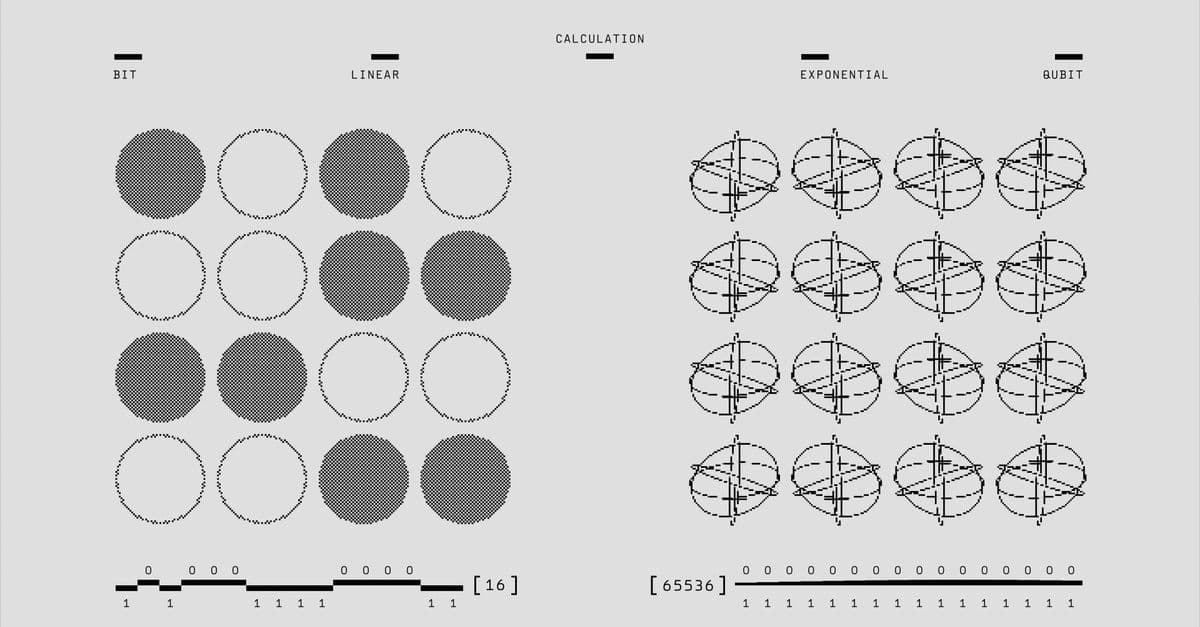
Visual representation of geometric calculations comparing bits and qubits in black and white.
Artificial Intelligence

What Is Quantum AI and Why Experts Say It Changes Everything: Hype Versus Reality in 2026

Quantum artificial intelligence — the intersection of quantum computing and machine learning — sounds transformative. Quantum computers could theoretically solve certain optimization problems exponentially faster than classical computers. Machine learning on quantum hardware could accelerate training or enable entirely new algorithms. Tech companies and venture capitalists have invested billions in the idea. Yet in 2026, quantum AI remains almost entirely theoretical. No commercially useful quantum-enhanced machine learning system exists. No real-world problem has been solved by quantum AI faster than classical AI. Most quantum computers are laboratory instruments available to a handful of researchers. The hype far exceeds the reality. However, the research is genuine, and if quantum computing matures, the potential impact on AI is real. This article untangles what quantum AI actually is, what promises are realistic, which are science fiction, and what the honest timeline looks like.

Editorial Team·June 4, 2026·18 min
Hands writing notes in an open notebook, focused close-up shot.
Blog

The Best Note-Taking Systems for Researchers and Students in 2026

Serious knowledge work demands systems that connect ideas, surface relationships, and compound in value over time. Zettelkasten interlinks ideas into an evolving network. PARA (Projects, Areas, Resources, Archives) organizes notes by output, not topic. Evergreen notes resist decay by forcing continuous refinement. These three systems represent a shift from note-taking as transcription toward note-taking as knowledge infrastructure. This guide covers the mechanics of each system, tools that support them (Obsidian, Roam, Logseq, RemNote), practical workflows, and a comparison table showing when each system excels. The goal is sustained, retrievable, network-enabled knowledge.

Editorial Team·June 4, 2026·17 min
Laptop on desk with IDE open, showing coding environment, next to plush toy and greenery.
Blog

Best Productivity Apps for Developers 2026: Real Tools, Honest Trade-offs

Every developer has tried a productivity app and abandoned it. The ones that stick are not the most feature-rich but the ones that reduce friction in your actual workflow. This guide covers five categories — editors, terminals, note-taking, task management, and automation — with specific recommendations, what each tool excels at, and the genuine trade-offs you need to weigh before switching your stack.

Editorial Team·June 4, 2026·17 min
Woman in a home studio recording a podcast with a laptop and microphone.
Blog

The Best Science Podcasts of 2026: Ranked by a Nerd

Science podcasts have matured from amateur bedroom productions to professionally produced programs with fact-checkers, scientific advisors, and international distribution. This guide ranks 12 of the best science podcasts across five domains — cosmology and physics, biology and medicine, technology and AI, history and culture, and storytelling — based on audio quality, scientific accuracy, pacing, and accessibility to non-experts. Whether you are driving, exercising, or cooking, these programs offer genuinely useful science education without the oversimplification that plagues popular science.

Editorial Team·June 4, 2026·17 min
Group of gamers participating in an online tournament at a modern internet cafe.
Gaming

Esports in 2026: The Rise of Competitive Gaming, Prize Pools, and Professional Careers

Esports revenue reached 1.38 billion USD globally in 2025 and is projected to 1.88 billion by 2027. Global peak concurrent viewership for major events (League of Legends Worlds, The International) routinely exceeds 100 million across all platforms, with esports tournaments distributing over 500 million dollars in prizes annually. The top 100 professional players earn 200,000 to 5 million USD annually, yet median esports player income remains 40,000 USD due to the sport's winner-take-most distribution. The esports industry now encompasses team ownership, sponsorships, media rights, coaching, sports science, equipment manufacturing, and esports venues. Professional gaming is no longer a niche pursuit; it is a legitimate career path, governed by contracts, physical training regimens, and psychological coaching. Understanding the scale, structure, and economics of esports reveals not a fad but a permanent entertainment medium comparable in revenue scale to professional tennis and growing faster than traditional sports.

Editorial Team·June 4, 2026·17 min
A hand holding a handheld gaming console displaying the Pokémon Legends game screen outdoors.
Gaming

How to Choose the Best Gaming Laptop in 2026: GPU, CPU, Display, and Performance Trade-Offs

Gaming laptops in 2026 span a 10x performance range and a 4x price range, from entry-level units at 1440p 60 fps to flagship machines pushing 4K 144 fps with ray-traced visuals. GPU choice determines 60 percent of frame rate; CPU matters for physics and draw calls. Display refresh rate and panel type (IPS vs VA vs Mini-LED) shape responsiveness and visual quality perception. Thermals and power delivery define sustained performance; a 150W GPU can thermal-throttle if cooling is inadequate. Understanding the interplay between these components — and the trade-offs between desktop and laptop — allows you to select a machine that matches your actual playstyle and budget without overpaying for specs you won't use.

Editorial Team·June 4, 2026·17 min
Person holds a gaming controller while interacting with a laptop, emphasizing modern gaming technology.
Gaming

Gaming in 2026: Platforms, Hardware, and Trends

In 2026, gaming spans five major hardware ecosystems: PlayStation 5 and Xbox Series X/S dominating console market share; the Nintendo Switch entering its final year as the mobile-console hybrid benchmark before Switch 2's late-year launch; personal computers transitioning to next-generation GPUs (RTX 50-series from NVIDIA, RDNA 4 from AMD); and mobile gaming (iOS/Android) supporting both casual free-to-play and premium titles. This article examines the platform landscape, hardware capabilities across tiers, market share data, and the technological and cultural trends shaping gaming in 2026.

Editorial Team·June 4, 2026·16 min
Two teenagers enjoying video games at home, immersed in their gaming session on a cozy couch.
Gaming

What Are the Best Free-to-Play Games in 2026?

Free-to-play gaming in 2026 encompasses genres from competitive esports titles to narrative-driven adventures, with monetization ranging from cosmetic-only (respecting player progression integrity) to aggressive gacha mechanics that gate progression behind randomized paywalls. This article examines the best free-to-play games across genres, explaining the free-to-play economic model, how to identify monetization strategies, and which titles offer genuine value without requiring money spent. Featured games span competitive shooters, action RPGs, card games, and story-driven experiences, with emphasis on games where spending is optional for enjoying core content.

Editorial Team·June 4, 2026·16 min
Page 1 of 2Next →