What Are the Best Free-to-Play Games in 2026?

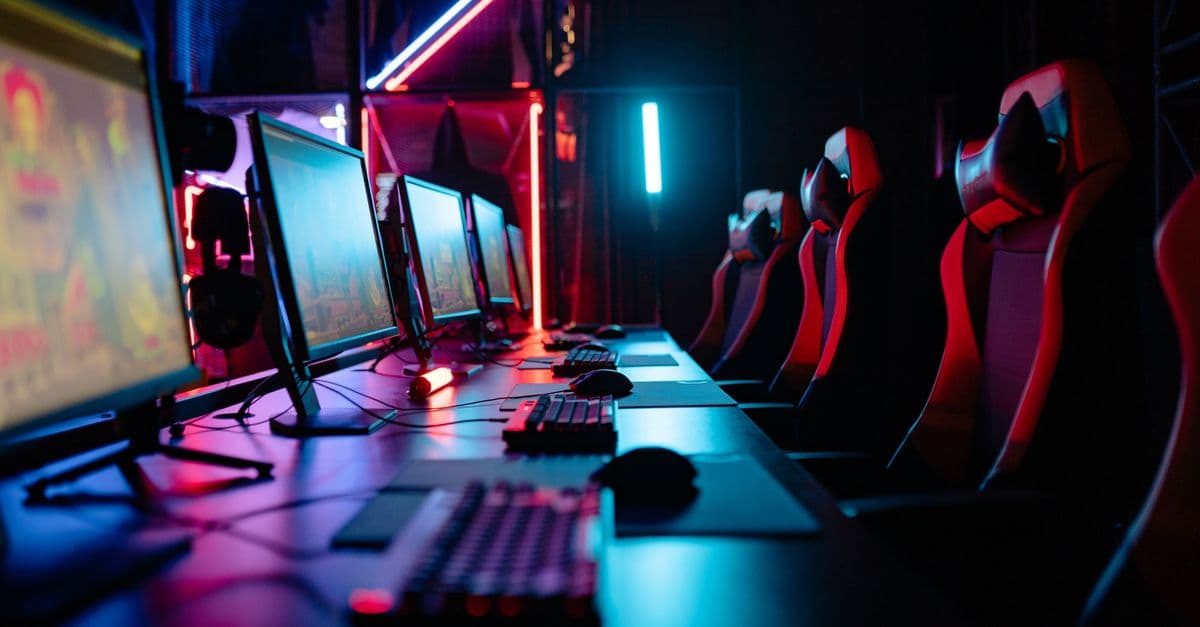
Photo: cottonbro studio / Pexels
The free-to-play gaming model has matured significantly since its emergence in the mid-2000s. Where early F2P games were often dismissed as "pay-to-win" (where spending money provided competitive advantage), the industry has evolved. In 2026, the best free-to-play games employ various monetization philosophies, ranging from cosmetic-only cosmetics (where spending never provides gameplay advantage) to aggressive gacha mechanics (randomized character acquisition behind paywalls). This article surveys the best free-to-play games across genres, explaining monetization models, gameplay accessibility for free players, and which titles offer entertainment value without requiring money.
Understanding Free-to-Play Monetization Models
Before discussing specific games, it is essential to understand how free-to-play titles generate revenue, as this directly impacts gameplay experience for non-paying players.
Cosmetic-only monetization — revenue generated entirely from visual cosmetics (skins, character appearances, weapon designs) that provide no gameplay advantage. Valorant, League of Legends, and Dota 2 employ this model. Players can achieve the highest ranks and complete all gameplay content without spending money. Cosmetics are desired but purely optional. This model aligns player incentives: the developer wants all players engaged in the game (which increases cosmetic appeal), and the free player experiences no disadvantage.
Gacha mechanics — randomized reward systems where players spend currency (earned in-game or purchased) to attempt acquiring specific rewards (characters, weapons, items) with probabilities published by the developer. Genshin Impact, Honkai: Star Rail, and most mobile RPGs employ gacha. A gacha pull might cost $1.50–$3 in premium currency, with 0.3%–3% probability of the desired item. Gacha encourages repeated spending, as players chase specific characters. This model is profitable but controversial: gacha mechanics are regulated in some countries and have been criticized as predatory, particularly toward younger players.
Battle Pass + cosmetics — a seasonal progression system where players unlock cosmetics by completing time-based challenges, with optional paid upgrades accelerating progression. This model is dominant in live-service games: Apex Legends, Fortnite, Valorant. The free battle pass offers cosmetics; the paid pass ($9.99–$19.99 per season) offers more cosmetics and accelerated progression. Gameplay is unaffected; cosmetics are optional.
Energy/stamina gates — games that limit play sessions by an energy meter that recharges over time or can be refilled with premium currency. Candy Crush, Puzzle & Dragons, and other mobile games employ this. A player can play for 15 minutes per day before energy exhaustion; they must wait 8 hours for recharge or pay $0.99 to refill. This limits free play but does not prevent progression (it just slows it considerably).
Premium currency conversion — all gameplay content is available free, but earning progression items requires significant time investment, or premium currency can accelerate progression. Lost Ark and many Asian MMOs employ this. A player can reach maximum level for free over 200+ hours; spending $50 accelerates this to 50 hours. Gameplay is not gated, but time is monetized.
Source: Newzoo (2026) — F2P monetization model taxonomy and revenue distribution across strategies.
Best Free-to-Play Games by Genre
| Title | Platform(s) | Genre | Monetization | Time Investment (to max level) | Verdict |
|---|---|---|---|---|---|
| Valorant | PC, PlayStation 5 | Competitive FPS | Cosmetics only | 200+ hours | Excellent for competitive players |
| Genshin Impact | PC, PS5, Mobile | Action RPG | Gacha characters | 100+ hours (story-limited) | Great story, gacha requires spending |
| Dota 2 | PC | Strategy (MOBA) | Cosmetics only | 300+ hours (skill-limited) | Best for dedicated strategy players |
| Lost Ark | PC, PlayStation 5 | Action RPG | Premium currency (cosmetics) | 150–200 hours (story) | Korean MMO, excellent dungeons |
| Final Fantasy XIV | PC, PlayStation 5 | MMORPG | Subscription + free tier | Unlimited (free up to level 60) | Best MMO; free trial very generous |
| Honkai: Star Rail | PC, Mobile | Gacha action RPG | Gacha characters | 50–80 hours (story) | Excellent story, turn-based combat |
| Apex Legends | PlayStation 5, Xbox Series X/S, PC | Competitive FPS | Battle Pass + cosmetics | 100+ hours | Excellent BR gameplay, cosmetics premium |
| Path of Exile | PC | Action RPG | Cosmetics + stash tabs | 200+ hours | Complex, excellent for theorycrafters |
F2P Economic Impact: Why Games Become Free-to-Play
The shift to free-to-play in 2026 represents a fundamental change in gaming economics. Where 2010s gaming was dominated by $60 upfront purchase (buy the game, play indefinitely), 2026 gaming increasingly splits into cosmetic-monetized F2P, subscription services, and premium (one-time purchase) titles.
The economic rationale: F2P games have significantly higher audience reach (no $60 barrier to entry) but lower average revenue per user (only 1–5% of players spend money). A F2P game with 50 million players and 5% monetization rate (2.5 million payers) can exceed revenue of a premium game with 5 million sales at $60 each if the average payer spends $150+ annually. This mathematical advantage has driven the industry toward F2P: the ceiling on audience size (all players globally) exceeds the ceiling on premium game sales (limited by $60 price barrier).
However, F2P profitability is fragile. A F2P game must maintain active engagement to drive monetization; players leaving the game immediately means zero revenue. Retention becomes the primary metric: games measure daily active users (DAU), monthly active users (MAU), and churn rate (percentage of players leaving weekly/monthly). A 5% weekly churn means the game must acquire 5% new players weekly just to maintain player base; without new content or social hooks, player bases decline exponentially.
This explains why successful F2P games (Genshin Impact, Final Fantasy XIV) invest heavily in content updates: new story chapters, new characters, limited-time events. Each update is an engagement hook, providing reason for players to return. Conversely, F2P games that abandon content updates (like Diablo Immortal in the first 6 months post-launch) see rapid player exodus and revenue collapse.
The F2P model also explains monetization practices: aggressive monetization (expensive cosmetics, gacha pulls) is economically necessary for games with declining engagement. If a game is losing 10% weekly players, monetization must extract maximum revenue from remaining players to compensate for audience shrinkage. Games with rising engagement (new content, popular streamer adoption) can afford less aggressive monetization.
Competitive Esports Free-to-Play Games
Valorant: Cosmetics-Only Competitive FPS
Valorant (2020–present) is a 5v5 character-based tactical FPS developed by Riot Games. Each player selects a "character" with unique abilities (one ability per character, distinct from other characters), and the round objective alternates between planting a bomb (attackers) or defending a site (defenders). Rounds are 13–25 minutes; matches are best-of-25 (first to 13 rounds wins).
The monetization is purely cosmetic: weapon skins, character cosmetics, and battle pass progression. A player can reach the highest competitive rank (Radiant, top 500 players worldwide) without spending a cent. Weapon skins provide no advantage; they are purely visual. This cosmetic-only philosophy has been explicit Riot Games policy: Valorant design director Joe Lansford stated in 2023 that cosmetics-only monetization is fundamental to competitive integrity.
Valorant has cultivated a significant esports ecosystem: the Valorant Champions tournament (annual world championship) distributes $5 million in prize pools; regional franchised leagues (Americas League, EMEA Champions, Pacific Champions) operate with team salaries and sponsorships. Professional players earn $50,000–$500,000+ annually from salaries and tournament winnings.
For casual free-to-play players, Valorant offers 200+ hours of engaging gameplay before ranking plateaus based on mechanical skill. The learning curve is steep (200+ hours to reach Platinum rank, top 10%), but the game is accessible at any skill level.
Source: Riot Games (2026) — Valorant monetization philosophy, cosmetic-only design, and competitive integrity guidelines.
Dota 2: Strategy MOBA with Cosmetic Economy
Dota 2 (2013–present) is a multiplayer online battle arena (MOBA) developed by Valve. Two teams of five players each control hero characters, farming resources and fighting in a symmetric map. The objective is to destroy the opposing team's main structure (the Ancient). Matches last 30–60 minutes.
The game is entirely free-to-play with cosmetic monetization: item cosmetics, character cosmetics, and battle pass progression (seasonal). A player can achieve the highest rank (Immortal, top 1%) without spending. Dota 2's cosmetic economy is player-driven: rare cosmetics from limited battle passes or limited-time items appreciate in secondary markets, with some cosmetics trading for $100–$1,000+.
Dota 2's esports presence is massive: The International (annual world championship) has awarded $40 million total prize pools across 11 iterations (the largest esports tournament by prize pool), with individual tournaments like The Riyadh Masters ($15 million) drawing top-tier teams. Professional players earn $100,000–$1+ million annually from tournament winnings and salaries.
For casual free players, Dota 2 represents the deepest strategic game available free. The learning curve is extreme: becoming competent requires 200+ hours; reaching mid-tier competitive play (Immortal rank, top 1%) requires 1,000+ hours of deliberate practice.
Source: Valve (2026) — Dota 2 cosmetic economy, player-trading system, and esports prize pool information.
Action RPG Free-to-Play Games
Genshin Impact: Gacha Action RPG with Story Focus
Genshin Impact (2020–present) is a free-to-play action RPG developed by miHoYo. Players explore a fantasy world, solve environmental puzzles, engage in real-time combat, and complete story quests. Gameplay is single-player (though multiplayer domains exist for cooperative dungeons). The core mechanic is character acquisition: players summon characters using "wishes" (gacha pulls), where each pull costs currency (earned through gameplay or purchased for $1.50–$3 per pull).
The monetization is gacha-based: characters are acquired randomly through gacha pulls with probabilities of 0.3%–3% for desired characters. A player can enjoy the story without spending: the main questline is completable with free 4-star characters and starter 5-star characters. However, reaching maximum difficulty content (Spiral Abyss, hardest dungeons) incentivizes spending: whales (high spenders) pull $200–$1,000+ per character banner to secure desired characters.
Genshin Impact generates $2–$3 billion annual revenue, making it the most successful modern F2P game by revenue. This success is driven by character appeal (each new character has narrative integration and visual design), regular content patches (new regions, story chapters every 6 weeks), and cross-platform availability (PC, PlayStation 5, mobile).
For casual free players, Genshin Impact offers 100–150 hours of story content; reaching end-game content or maximum difficulty is possible but requires significant time investment (300+ hours) or spending. The game respects free players: no mandatory spending is required, though spending accelerates progression.
Source: HoYoverse Financial Reports (2026) — Genshin Impact revenue, gacha pull rates, and monetization data.
Honkai: Star Rail: Turn-Based Gacha RPG
Honkai: Star Rail (2023–present) is a turn-based action RPG developed by miHoYo. Unlike Genshin Impact's real-time combat, Star Rail features strategic turn-based battles where players position characters and select abilities. The story follows space-faring characters traversing a universe of diverse worlds.
The monetization is gacha-based: acquiring specific 5-star characters requires pulling on character banners. However, Star Rail is known for favorable gacha rates compared to competitors: 5-star characters are acquired at 0.6%–3% probability, and guaranteed 5-star drops occur every ~90 pulls. A player spending $0 can progress through all story content; reaching maximum difficulty requires strategy and some 5-star characters, incentivizing spending but not requiring it.
Star Rail attracted 50+ million players in its first year, making it one of the fastest-adopted F2P games. The appeal is story-driven narrative, each character having significant lore and narrative integration. For casual free players, Star Rail offers 50–100 hours of story and accessible difficulty; end-game content (Forgotten Hall, hardest dungeons) requires multiple 5-star characters or significant spending.
Source: HoYoverse (2026) — Honkai: Star Rail player base, gacha rates, and monetization philosophy.
MMORPG Free-to-Play
Final Fantasy XIV: Unlimited Free Trial
Final Fantasy XIV (2013–present) is a subscription-based MMORPG developed by Square Enix. However, the free trial is exceptionally generous: players can access the entire base game (A Realm Reborn, 100+ hours of story) and the first expansion (Heavensward, 50+ hours) without paying. The trial is unlimited in duration; players can reach level 60, complete most dungeons, and experience 150+ hours of content before subscription is required.
The monetization is subscription: $12.99–$15.99/month depending on service tier. There is no gacha; all progression is deterministic based on time investment and engagement.
Final Fantasy XIV is widely regarded as the best MMORPG in 2026, with 1.5+ million active subscribers and cultural recognition in gaming media. The story is critically acclaimed; the community is known for low toxicity compared to other MMOs.
For casual free players, the free trial is exceptional value: 150+ hours of story and gameplay content at zero cost. Converting to subscription is required for additional expansions and endgame content, but the trial provides complete context for whether subscription is worth your time.
Source: Square Enix Investor Relations (2026) — FFXIV subscriber count, free trial scope, and subscription revenue.
Mobile Free-to-Play Games
Honkai: Star Rail Mobile
Honkai: Star Rail is available on iOS and Android (mobile version released late 2024). The mobile version features cross-progression with PC: a single account plays across all platforms. The gameplay is identical to the PC version; the mobile interface is optimized for touch controls. The mobile version has attracted 20+ million players, making it one of the most popular gacha RPGs on mobile platforms. Battery consumption is higher than typical mobile games due to constant action and graphical quality, averaging 3–4% battery per hour of play.
For mobile-first players, this is the best gacha RPG available, combining story depth, accessibility, and reasonable monetization. The turn-based combat system is less mechanically demanding than real-time action games, making it more accessible on mobile hardware where latency and input variability can be higher than PC or console.
Genshin Impact Mobile
Available on iOS (via App Store, after regional availability restoration in 2025) and Android. Cross-progression with PC/PlayStation 5. The mobile interface is optimized for touch; gameplay is real-time action, demanding more mechanical skill than turn-based alternatives. Genshin Impact on mobile remains one of the most graphically impressive games available on iOS and Android, with players comparing it favorably to Nintendo Switch performance. Battery consumption is 5–7% per hour due to real-time rendering and exploration demands. The mobile version has approximately 60 million active players, significantly exceeding Star Rail's mobile base, though this reflects Genshin Impact's earlier launch (2020) and broader appeal across age demographics.
Free-to-Play Games to Avoid (Predatory Monetization)
Certain F2P games employ manipulative monetization practices designed to maximize spending while providing minimal gameplay value. These include games with extreme energy/stamina gating (restricting free play to 10–15 minutes per day), aggressive loot boxes with extremely low drop rates (0.1%–0.3% for rare items), or systems where spending directly purchases competitive advantage. The distinction is subtle but meaningful: a game with a battle pass and cosmetics is ethical monetization (optional spending, no gameplay advantage); a game where only whales (high spenders) can complete endgame content is unethical (spending gates progression).
Examples of predatory F2P (as of 2026) include Candy Crush (notorious for aggressive stamina gating and premium currency pricing, with endgame levels designed as artificial gates requiring spending or grinding for hours), Diablo Immortal (Blizzard's mobile action RPG, widely criticized for aggressive gacha and Paragon level walls that directly gate progression and power), and various Asian mobile games that gate progression behind monthly subscription walls or create artificial difficulty spikes designed to incentivize spending.
The red flags for predatory monetization: (1) playtime truncated at 15–30 minutes per day without spending; (2) difficulty spikes designed to force spending or grinding beyond natural difficulty progression; (3) loot box drop rates <1% for critical items; (4) progression tied directly to gear acquired through gacha; (5) competitive ranked play where pay-to-win mechanics exist; (6) aggressive push notifications encouraging spending. Games passing a consumer-friendly monetization test should have: (1) unlimited daily playtime, (2) fair difficulty curve not designed to trap players, (3) cosmetic monetization only or generous F2P character roster, (4) transparent drop rates, (5) fair competitive environment where skill, not spending, determines rank.
Source: Consumer Reports & App Store Reviews (2026) — analysis of F2P monetization practices and consumer complaint patterns.
Frequently Asked Questions
Q: Do I need to spend money to enjoy free-to-play games?
A: Depends on the game. Cosmetic-only F2P games (Valorant, Dota 2) are fully enjoyable without spending. Gacha games (Genshin Impact, Honkai: Star Rail) are enjoyable free but spending accelerates progression and unlocks specific characters. Energy-gated games (Candy Crush) become frustrating without spending after 15–30 minutes daily. Choose based on your tolerance for grind or spending.
Q: What is gacha and why do players spend money on it?
A: Gacha is randomized character/item acquisition where players pull (spend currency) for unknown rewards with low probability of desired items. A player might spend $100 pulling for a specific 5-star character with 0.6% probability per pull, requiring 165 pulls ($250) on average. Players spend because: (1) characters have narrative/visual appeal, (2) specific characters are optimal for difficult content, (3) psychological reward of acquisition (variable reward schedules are addictive), and (4) social pressure (friends have powerful characters).
Q: Is Valorant easier to learn than Dota 2?
A: Yes significantly. Valorant has 24 characters (each with 4 abilities), relatively straightforward objectives, and 13–25 minute match lengths. Reaching intermediate skill takes 100–200 hours. Dota 2 has 130+ characters, complex item systems, 50-minute average match length, and requires 500+ hours to reach intermediate skill. For competitive casual play, Valorant is far more accessible.
Q: Can I reach maximum rank in free-to-play games without spending?
A: In cosmetic-only F2P (Valorant, Dota 2, yes). In gacha F2P (Genshin Impact, Honkai: Star Rail), yes, but maximum difficulty content is challenging without specific 5-star characters, incentivizing spending. Spending accelerates progression but does not gate it behind hard paywalls (except energy-gated mobile games like Candy Crush).
Q: What is the Final Fantasy XIV free trial and how long can I play it?
A: The FFXIV free trial includes the base game (A Realm Reborn, 100+ hours of story, levels 1–50) and the first expansion (Heavensward, 50+ hours, levels 50–60). Players can access this entire content at zero cost, unlimited duration. Subscription is required only for content beyond level 60 and expansions beyond Heavensward.
Q: Why do some F2P games cost $50–$60 in cosmetics while others cost $10?
A: Cosmetic pricing reflects perceived exclusivity and rarity. Limited-time cosmetics (battle pass exclusive, event-exclusive) command premium pricing ($10–$20) because they cannot be acquired later. Permanent cosmetics (always available in shop) are cheaper ($3–$8). Popular characters and games have higher cosmetic costs; niche games have lower pricing to incentivize spending. Pricing is not standardized; each game sets its own rates.
Read next:
- How to Build a Gaming PC on a Budget in 2026
- The Most Anticipated Video Games of 2026
- How to Choose the Best Gaming Laptop in 2026
For competitive play considerations, see Esports in 2026: The Rise of Competitive Gaming.
Follow new articles
Add SciHub101 to your feed reader to see new science and technology stories.
About the Author
SciHub101 is an independent science and technology publication founded and edited by Buğra Sözeri, a software engineer and app developer based in Türkiye. AI tools assist with drafting and research. Source documentation in the existing archive is uneven, and articles are being reviewed and corrected. The Editorial Team byline identifies editorial responsibility; it does not certify specialist or independent human review. Where we compare products, anything built by our own team is labelled as such — see the editorial guidelines and About page for how corrections and disclosures work.
Related Articles
Gaming PC Builds for 2026: Tiers and Component Choices
Building a gaming PC in 2026 requires choosing components across four tiers: entry-level ($400–$700), mid-range ($1,000–$1,500), high-end ($2,000–$3,000), and enthusiast ($4,000+). Each tier targets different performance goals: entry-level delivers 1080p 60 FPS in modern games; mid-range achieves 1440p 60 FPS or 4K 30 FPS; high-end reaches 4K 60 FPS or 1440p 144 FPS; enthusiast enables 4K 120 FPS or experimental frame rates in demanding games. This article details recommended component selections for each tier, explaining GPU bottlenecks, CPU selection criteria, RAM sufficiency, storage considerations, and power supply sizing. Practical guidance focuses on balancing cost, performance, and upgrade potential.

Gaming in 2026: Platforms, Hardware, and Trends
In 2026, gaming spans five major hardware ecosystems: PlayStation 5 and Xbox Series X/S dominating console market share; the Nintendo Switch entering its final year as the mobile-console hybrid benchmark before Switch 2's late-year launch; personal computers transitioning to next-generation GPUs (RTX 50-series from NVIDIA, RDNA 4 from AMD); and mobile gaming (iOS/Android) supporting both casual free-to-play and premium titles. This article examines the platform landscape, hardware capabilities across tiers, market share data, and the technological and cultural trends shaping gaming in 2026.
Complete Gaming Guide 2026 — Technology, Design, Esports, and Psychology
The complete guide to gaming in 2026: how game engines work, gaming hardware, esports, game design psychology, industry trends, and what makes games engaging and addictive.
Esports in 2026: The Rise of Competitive Gaming, Prize Pools, and Professional Careers
Esports revenue reached 1.38 billion USD globally in 2025 and is projected to 1.88 billion by 2027. Global peak concurrent viewership for major events (League of Legends Worlds, The International) routinely exceeds 100 million across all platforms, with esports tournaments distributing over 500 million dollars in prizes annually. The top 100 professional players earn 200,000 to 5 million USD annually, yet median esports player income remains 40,000 USD due to the sport's winner-take-most distribution. The esports industry now encompasses team ownership, sponsorships, media rights, coaching, sports science, equipment manufacturing, and esports venues. Professional gaming is no longer a niche pursuit; it is a legitimate career path, governed by contracts, physical training regimens, and psychological coaching. Understanding the scale, structure, and economics of esports reveals not a fad but a permanent entertainment medium comparable in revenue scale to professional tennis and growing faster than traditional sports.
How to Choose the Best Gaming Laptop in 2026: GPU, CPU, Display, and Performance Trade-Offs
Gaming laptops in 2026 span a 10x performance range and a 4x price range, from entry-level units at 1440p 60 fps to flagship machines pushing 4K 144 fps with ray-traced visuals. GPU choice determines 60 percent of frame rate; CPU matters for physics and draw calls. Display refresh rate and panel type (IPS vs VA vs Mini-LED) shape responsiveness and visual quality perception. Thermals and power delivery define sustained performance; a 150W GPU can thermal-throttle if cooling is inadequate. Understanding the interplay between these components — and the trade-offs between desktop and laptop — allows you to select a machine that matches your actual playstyle and budget without overpaying for specs you won't use.

The Most Anticipated Video Games of 2026: Major Releases and What to Expect
2026 marks a pivotal year for gaming: a final wave of ninth-generation console exclusives before the inevitable tenth-generation hardware transition, a maturation of ray-traced visuals as standard rendering pipeline, and the arrival of several franchises fans have waited half a decade to see continued. This article examines the factual release landscape of 2026 across PlayStation 5, Xbox Series X/S, Nintendo Switch 2, and PC, detailing known development status, gameplay mechanics, and the reasons each title has captured player anticipation.