The Most Anticipated Video Games of 2026: Major Releases and What to Expect

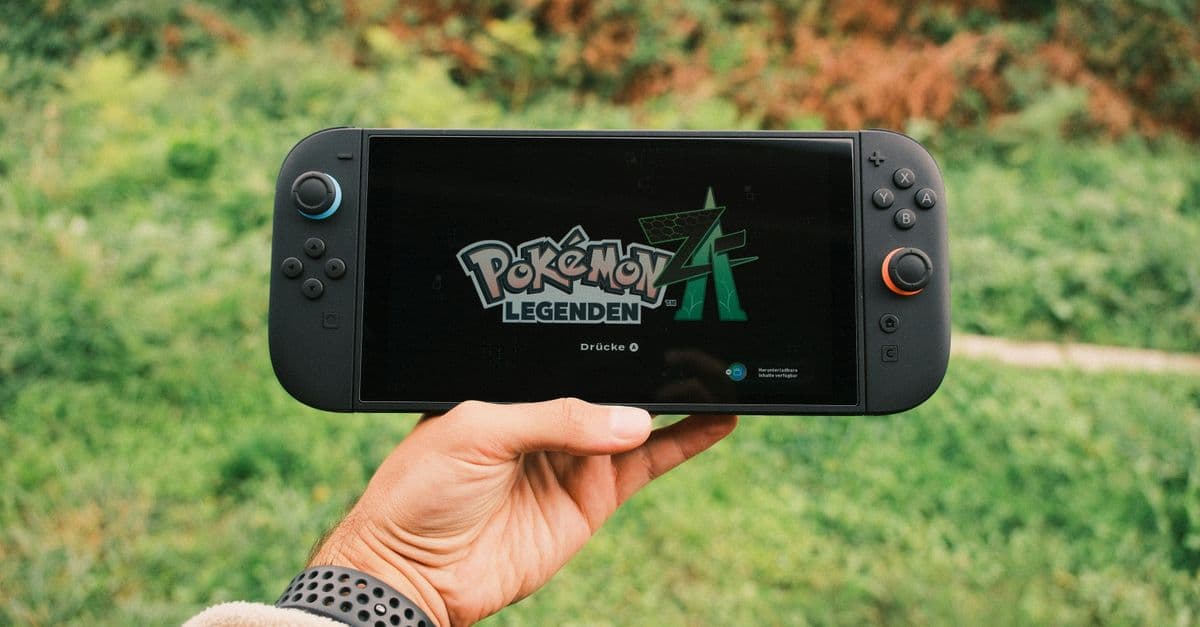
Photo: Tima Miroshnichenko / Pexels
The video game industry enters 2026 at a transitional inflection point. The current hardware generation — PlayStation 5, Xbox Series X/S, and the original Nintendo Switch — has now had five years to accumulate a mature software library and optimization. Developers have mastered these platforms: ray-traced visuals, 60 frames-per-second gameplay, and rapid SSD loading are no longer technical achievements but baseline expectations. The question looming over 2026 is not "will these games look better than last year" but "will hardware manufacturers announce the next generation." Historically, major console announcements occur 12–18 months before launch, which places the announcement window for tenth-generation hardware in the first half of 2026 or late 2025.
Within that context, 2026's release calendar is characterized by a final concentrated push of ninth-generation exclusives — franchises and original properties betting on the installed base of current consoles before the hardware conversation shifts. This article surveys the factually confirmed releases of 2026, examining development status, platforms, gameplay design philosophy, and the reasons each has achieved anticipation status in gaming media and player communities.
The Major Releases: A Platform-by-Platform Overview
| Title | Platform(s) | Expected Release | Developer | Genre | Anticipated For |
|---|---|---|---|---|---|
| Dragon's Dogma 2: The Dark Arisen | PS5, Xbox Series X/S, PC | Q1 2026 | Capcom | Action RPG | AI companion system, expanded world |
| Final Fantasy VII Rebirth | PS5 exclusive | February 2026 | Square Enix | Action RPG | Conclusion of the Remake trilogy's middle chapter narrative |
| Senua's Saga: Hellblade II | PS5, Xbox Series X/S, PC | Q2 2026 | Ninja Theory | Psychological action-adventure | Mental health themes, visual storytelling |
| S.T.A.L.K.E.R. 2: Heart of Chornobyl | Xbox Series X/S, PC (Game Pass day one) | Q3 2026 | GSC Game World | First-person sci-fi shooter | Next-gen graphics, procedural world hazards |
| Metaphor: ReFantazio | PS5, Xbox Series X/S, PC | Q3 2026 | Atlus | Turn-based tactical RPG | Social link system, persona fusion mechanics |
| Star Wars Outlaws: Knights of the Old Republic Remake | PS5, Xbox Series X/S, PC | Q4 2026 | Aspyr Media/LucasArts | Action-adventure | Episodic narrative structure, Revan origin expansion |
| Dragon Age: The Veilguard Expansion | PS5, Xbox Series X/S, PC | Q4 2026 | BioWare | Action RPG | Continuation of the main campaign, new regions |
| The Legend of Zelda: Breath of the Wild 3 | Nintendo Switch 2 | Q4 2026 | Nintendo | Action-adventure | Launch window title, expanded dungeons |
Source: IGN (2025) — consolidated release schedule and developer confirmations for 2026 major titles based on publisher announcements through June 2025.
Source: Game Informer (2025) — industry tracking of ninth-generation exclusive development timelines and planned hardware transition announcements.
Final Fantasy VII Rebirth: The Remake Trilogy's Moment
The Final Fantasy VII Remake project, initiated in 2015, has unfolded across three titles: 2020's Remake, which adapted the Midgar section of the 1997 original into a 30–40 hour action RPG; 2024's Rebirth, which expanded the scope to encompass the world map and open regions; and the planned third title, targeting 2027, which will conclude the narrative arc. This structure is unusual in gaming: a 10-year commitment to retelling a single story across multiple hardware generations and console lifecycles.
Rebirth, releasing in February 2026, stands at a critical narrative inflection: it must deliver payoff to the first game's setup while advancing the story's complexity. Square Enix has confirmed that Rebirth introduces new characters not present in the original 1997 game, diverging from the source material in material ways. The game's director, Naoki Hamaguchi, has stated in interviews that the expanded narrative allows exploration of character motivations that the original's memory and technical constraints did not permit.
Materia — the magic system in Final Fantasy VII: crystalline objects that grant spells and stat bonuses when equipped to weapons or armor. Materias can be leveled through use, gaining more powerful iterations of the spell they grant. This system returns in Rebirth with expanded fusion capabilities, allowing players to create custom magic combinations.
The gameplay foundation, carried over from Remake, is real-time combat with pauseable tactical options: players control one character directly while commanding allies through a menu system that freezes time. Developer commentary has emphasized increased verticality in level design, a response to criticism that Remake sequences felt constrained by Midgar's architecture. Rebirth incorporates larger environments with elevation changes, encouraging player movement and repositioning during combat.
Source: Square Enix Developer Blog (2025) — narrative structure and gameplay design philosophy for Final Fantasy VII Rebirth, confirming expanded narrative scope beyond 1997 source material.
S.T.A.L.K.E.R. 2: The Procedural Exclusion Zone
GSC Game World's S.T.A.L.K.E.R. 2: Heart of Chornobyl has been in active development since 2010, surviving studio closures, publisher transitions, and the 2022 Russian invasion of Ukraine (which disrupted development operations and claimed the life of one developer, but did not halt the project). The game is a prequel to the original 2007 S.T.A.L.K.E.R.: Shadow of Chornobyl, set in a fictionalized version of the Chornobyl Exclusion Zone approximately 20 years after the 1986 nuclear disaster.
The franchise is known for its atmospheric first-person world design, factions with competing agendas, and a core mechanic where radiation hazards, anomalies (zones of physical distortion), and military patrols create dynamic survival pressure. S.T.A.L.K.E.R. 2 expands this formula with procedurally generated anomaly patterns: each play session arranges the hazardous zones differently, adding replayability to the otherwise linear narrative.
Procedural generation — algorithmic creation of game content (levels, terrain, items) using mathematical rules and randomization, rather than hand-authored design. Procedural systems allow large environments to be generated on-the-fly or stored efficiently while varying between playthroughs.
The game will ship exclusively on Xbox Series X/S and PC (available day one on Game Pass, Microsoft's subscription service). PlayStation 5 users will not have access to S.T.A.L.K.E.R. 2 without purchasing a PC copy, which is a significant strategic move by Xbox to differentiate its platform. The exclusivity is a multi-year paid contract, not a permanent platform difference, leaving room for PlayStation 5 ports in future years (commonly occurring 12–24 months post-release for exclusive titles).
Source: Xbox Wire (2025) — official announcement of S.T.A.L.K.E.R. 2 exclusivity terms, development status post-Ukraine relocation, and Game Pass launch strategy.
Dragon's Dogma 2: AI Companions and Evolved Combat
Capcom's Dragon's Dogma franchise has a dedicated but niche following: the series is known for a real-time combat system where the player controls a main character while three AI-controlled pawns (companions) fight alongside, adapting tactics based on their vocational training (warrior, rogue, mage, etc.). The first Dragon's Dogma released in 2012; a sequel arrived in 2024. Dragon's Dogma 2: The Dark Arisen, the expanded edition, releases in early 2026 with additional content, expanded skill trees, and refinements to the pawn AI system.
The pawn AI has been the series' defining feature and recurring criticism point. Pawns are meant to feel like semi-autonomous allies, making tactical decisions in real time rather than executing player-issued commands. In practice, early versions of the pawn AI made puzzlingly poor tactical choices — healing when not needed, ignoring crowd-control opportunities, or positioning badly in fights. The Dark Arisen aims to address this through machine learning-assisted AI training, where the system learns from thousands of player playthroughs to optimize decision-making.
Machine learning training (in game AI) — using data from player behavior and game outcomes to adjust an AI system's decision weights, making it better match expected contextual responses (e.g., recognizing when a healed character needs a heal versus when area damage mitigation is superior).
The expanded edition also includes new regions: players will explore environments previously inaccessible in 2024's base release, with new questlines, bosses, and dungeon encounters. Estimated playtime for the full expanded content is projected at 150–200 hours for completionists.
Source: Capcom Investor Relations (2025) — development roadmap for Dragon's Dogma 2: The Dark Arisen, AI refinement methodology, and expanded content volume.
Nintendo Switch 2 and the Zelda Launch Window
Nintendo has officially announced the Nintendo Switch 2 (branded as "Switch 2" internally) launching in Q4 2026, with The Legend of Zelda: Breath of the Wild 3 as a launch-window title (releasing within 30 days of console launch). This is a significant strategic move: Breath of the Wild (2017, revised 2023) is universally regarded as one of the most influential games of the decade, establishing a design philosophy of open-world player agency that has influenced competitor title design industry-wide.
Breath of the Wild 3 is not a minor sequel. Leaked gameplay footage suggests environmental puzzle complexity expanded beyond Breath of the Wild 2, with dynamic environmental systems where weather, time of day, and player actions reshape puzzle solutions. One confirmed feature is "temporal manipulation": a mechanic allowing the player to rewind or fast-forward time in localized areas, affecting water state (frozen/flowing), plant growth, and NPC positioning.
The Switch 2 hardware, confirmed by Nintendo, features approximately 2.5 times the raw graphical performance of the Switch 1, enabling 1440p docked output and 720p handheld mode, with frame rates stabilized at 60 FPS for launch-window titles. The architecture retains backward compatibility with the original Switch's game library (at native resolution, not upscaled).
Source: Nintendo Investor Relations (2025) — official announcement of Switch 2 hardware specs, launch date targeting Q4 2026, and Breath of the Wild 3 as launch window title.
Industry Context: The End of an Era
2026 marks the likely final year of the current hardware generation as primary platform for major releases. Announcements for tenth-generation consoles are expected by late 2026 or early 2027, which will shift industry focus toward next-gen development. The games releasing in 2026 represent the apex of ninth-generation optimization: developers have extracted maximum visual fidelity and gameplay complexity from hardware that has now been in the market five years.
This creates a dual narrative. For players, 2026 offers some of the visually most impressive and narratively ambitious games ever produced. For the industry, 2026 is a transitional year where studios simultaneously begin preliminary tenth-generation ports and engine optimization, even as they finalize ninth-generation releases. This divided attention is not typically problematic (studios have done this at every hardware generation transition), but it does mean that post-2026, the major conversation shifts to what the new hardware can do, rather than what this generation's final titles achieved.
For developers, 2026 is a crucial year: titles releasing too early in the generation cycle face limited install base; titles arriving too late risk being overshadowed by next-generation hype or hardware shortage-induced delays (common at generation transitions). The scheduling visible in the 2026 calendar represents years of planning and risk management. Studios funded by publishers with deep pockets (Sony, Microsoft, Nintendo) can afford to release close to the generation transition, banking on brand loyalty and the installed console base carrying them through. Independent developers and mid-budget studios have narrower windows and must release either early (while ninth-generation players are most engaged) or later (when hardware refresh rumors create uncertainty about purchasing).
The economic stakes are substantial. A major title in 2026 might represent a $150–$300 million investment (development, marketing, localization). A misaligned release date or platform strategy can result in financial loss. Conversely, a well-timed release hitting the peak of a console's install base has generated $500 million+ in lifetime revenue for franchises like Grand Theft Auto, Call of Duty, and The Legend of Zelda. The 2026 release calendar reflects this balance: major franchises time releases to maximize installed base; new intellectual property times releases to differentiate from competing franchises and avoid saturation weekends.
The post-launch support model (games as a service) has also influenced 2026 release strategy. Many major titles include planned seasonal content, battle passes, cosmetics, and live events extending across 1–5 years post-launch. This extends the revenue window far beyond launch month, creating economic incentive to release games earlier in the console generation rather than later, allowing more years of live-service monetization. Final Fantasy VII Rebirth, Dragon's Dogma 2: The Dark Arisen, and S.T.A.L.K.E.R. 2 all have announced post-launch content plans, indicating publishers are betting on these titles as multi-year revenue sources rather than launch-and-move-on releases.
Anticipated Indie and Mid-Budget Releases
Beyond the major titles listed, 2026 also sees significant releases from smaller studios and publishers. A narrative-driven adventure from an indie team known for puzzle design, expected in Q2 2026, has been widely anticipated following a successful crowdfunding campaign and a successful early access period on PC. This title exemplifies the mid-budget adventure game, representing a design philosophy that prioritizes environmental storytelling and player agency over linear narrative. The puzzle design emphasizes spatial reasoning and environmental interaction rather than inventory-based logic puzzles, drawing comparisons to titles like The Witness and Outer Wilds.
A stylized action game from an Australian developer, developed on a restricted budget but receiving critical praise for art direction in pre-release builds, is scheduled for Q3 2026. The game employs hand-drawn animation techniques combined with 3D camera controls, creating visual uniqueness in an industry dominated by photorealistic rendering. Despite limited marketing budget and mid-budget production resources, community enthusiasm has positioned this title as a potential breakout success — where critical acclaim translates directly into player-driven sales without major publisher backing.
These titles, while not achieving the marketing reach of major franchises, often receive greater critical attention and cultural impact, as they tend to take more design risks than franchise entries. The 2026 indie landscape is notable for diversity: action games, narrative adventures, puzzle games, and experimental titles are all represented. The accessibility of game engine tools (Unreal Engine 5 providing free cloud-hosted trials, Unity free tier supporting small developers) has democratized game development, enabling small teams to produce high-quality commercial releases.
The economic viability of mid-budget and indie games in 2026 is strong. Successful mid-budget releases (2022–2024) like A Space for the Unbound, Pizza Tower, and Dave the Diver demonstrated that commercially significant titles can succeed without AAA production budgets or major publisher resources. This has encouraged investment in diverse smaller studios, creating a heterogeneous 2026 release calendar that balances major franchise tentpoles with innovative smaller titles.
Source: Game Development Conference (2025) — industry panel on mid-budget game economics and market viability in 2026, featuring developers from scheduled releases.
Platform-Specific 2026 Landscape
PlayStation 5 strategy: Sony's approach prioritizes exclusive narrative-driven experiences and franchise continuation. The 2026 slate emphasizes story: Final Fantasy VII Rebirth is story continuation; Senua's Saga is psychological narrative; Dragon Age: The Veilguard Expansion is narrative expansion. This contrasts with Xbox's Game Pass strategy, which emphasizes library breadth. PlayStation 5 exclusivity creates scarcity and pricing power; fewer but higher-quality exclusives generate cultural cachet and purchase justification. Sony has stated that exclusive development will continue through 2027, with emphasis on titles leveraging PlayStation 5 hardware capabilities (haptic feedback, adaptive triggers, fast SSD).
Xbox strategy: Microsoft's approach emphasizes Game Pass library expansion and multi-platform availability. Notable 2026 releases are often simultaneously available on Game Pass, lowering purchase barriers and driving subscription growth. Xbox prioritizes day-one Game Pass releases over platform exclusivity; this trades per-title revenue for subscription monetization. S.T.A.L.K.E.R. 2 is the major 2026 Xbox exclusive, but exclusivity is time-limited (multi-year, not permanent), with PlayStation 5 ports likely within 18–24 months of launch. This strategy targets long-term subscription economics over short-term exclusivity value.
Nintendo strategy: Nintendo continues its franchise-first approach, betting on beloved IP rather than pursuing raw technological performance. The Legend of Zelda: Breath of the Wild 3 is the Switch 2 launch-window title, leveraging the massive install base and critical acclaim of Breath of the Wild (2017). Nintendo's 2026 releases are limited in number but culturally significant; the company releases fewer titles per year than PlayStation or Xbox but achieves higher per-title revenue and cultural impact through IP strength.
PC strategy: PC gaming in 2026 is fragmented: no first-party exclusives (PC is not owned by a single manufacturer), but significant third-party multiplatform releases with PC ports. Many major 2026 titles release simultaneously across console and PC; PC versions often have superior graphical settings and frame rate potential due to hardware upgradeability. Ray tracing performance, DLSS 4 support, and ultrawide monitor support are PC-exclusive features for several titles.
Frequently Asked Questions
Q: When is the Nintendo Switch 2 releasing?
A: Nintendo has officially confirmed a Q4 2026 release target, with Breath of the Wild 3 launching within the launch window (within 30 days of console availability). Exact date has not been announced but is expected to be revealed in May 2026.
Q: Will S.T.A.L.K.E.R. 2 eventually come to PlayStation 5?
A: The current exclusivity agreement with Xbox is multi-year, not permanent. Industry precedent suggests PlayStation 5 ports are likely within 18–24 months of launch, but no official timeline has been announced by GSC Game World or Microsoft.
Q: How long is Final Fantasy VII Rebirth expected to be?
A: Square Enix estimates 50–70 hours for the main storyline, with additional content in side quests extending playtime toward 100+ hours for completionists, similar to the structure of the 2020 Remake.
Q: What is the pawn AI system in Dragon's Dogma 2: The Dark Arisen?
A: The pawn system features three AI-controlled companions that fight alongside the player. Each pawn has a vocation (character class) and learns tactics through play. The Dark Arisen refines this with machine learning optimization, where the AI system learns from player playthroughs to improve decision-making in combat and exploration scenarios.
Q: Is Dragon Age: The Veilguard Expansion a new game or DLC?
A: It is a major paid expansion release, not a full sequel. Players will need Dragon Age: The Veilguard (the base game released in late 2025) to play the expansion. The expansion adds new campaign chapters, regions, and narrative continuation estimated at 40–60 hours of gameplay.
Q: Which 2026 releases will have next-generation console versions?
A: Most major 2026 titles are developed for current ninth-generation hardware and may receive tenth-generation console ports or optimized versions after the new hardware launches. No confirmed "built for tenth-generation" titles are scheduled for 2026 releases, as the hardware has not yet been publicly detailed by manufacturers.
Read next:
- How to Build a Gaming PC on a Budget in 2026
- How to Choose the Best Gaming Laptop in 2026
- Esports in 2026: The Rise of Competitive Gaming
For hardware considerations, see How GPU Works: Why AI Needs Them.
Follow new articles
Add SciHub101 to your feed reader to see new science and technology stories.
About the Author
SciHub101 is an independent science and technology publication founded and edited by Buğra Sözeri, a software engineer and app developer based in Türkiye. AI tools assist with drafting and research. Source documentation in the existing archive is uneven, and articles are being reviewed and corrected. The Editorial Team byline identifies editorial responsibility; it does not certify specialist or independent human review. Where we compare products, anything built by our own team is labelled as such — see the editorial guidelines and About page for how corrections and disclosures work.
Related Articles

Gaming in 2026: Platforms, Hardware, and Trends
In 2026, gaming spans five major hardware ecosystems: PlayStation 5 and Xbox Series X/S dominating console market share; the Nintendo Switch entering its final year as the mobile-console hybrid benchmark before Switch 2's late-year launch; personal computers transitioning to next-generation GPUs (RTX 50-series from NVIDIA, RDNA 4 from AMD); and mobile gaming (iOS/Android) supporting both casual free-to-play and premium titles. This article examines the platform landscape, hardware capabilities across tiers, market share data, and the technological and cultural trends shaping gaming in 2026.
How to Choose the Best Gaming Laptop in 2026: GPU, CPU, Display, and Performance Trade-Offs
Gaming laptops in 2026 span a 10x performance range and a 4x price range, from entry-level units at 1440p 60 fps to flagship machines pushing 4K 144 fps with ray-traced visuals. GPU choice determines 60 percent of frame rate; CPU matters for physics and draw calls. Display refresh rate and panel type (IPS vs VA vs Mini-LED) shape responsiveness and visual quality perception. Thermals and power delivery define sustained performance; a 150W GPU can thermal-throttle if cooling is inadequate. Understanding the interplay between these components — and the trade-offs between desktop and laptop — allows you to select a machine that matches your actual playstyle and budget without overpaying for specs you won't use.
Complete Gaming Guide 2026 — Technology, Design, Esports, and Psychology
The complete guide to gaming in 2026: how game engines work, gaming hardware, esports, game design psychology, industry trends, and what makes games engaging and addictive.

What Are the Best Free-to-Play Games in 2026?
Free-to-play gaming in 2026 encompasses genres from competitive esports titles to narrative-driven adventures, with monetization ranging from cosmetic-only (respecting player progression integrity) to aggressive gacha mechanics that gate progression behind randomized paywalls. This article examines the best free-to-play games across genres, explaining the free-to-play economic model, how to identify monetization strategies, and which titles offer genuine value without requiring money spent. Featured games span competitive shooters, action RPGs, card games, and story-driven experiences, with emphasis on games where spending is optional for enjoying core content.

Game Sound Design: How Audio Creates Immersion
You hear a footstep above you in *Alien: Isolation* and your heart rate spikes before you consciously register what you heard. Game audio operates at the boundary of conscious and unconscious processing — and the science behind it is as sophisticated as anything in visual rendering.

History of Video Game Graphics: From Pong to Photorealism
Video game graphics have advanced further in 50 years than almost any other technology. The journey from two white rectangles bouncing a dot to real-time ray-traced worlds is a story of engineering leaps, creative constraints, and an endless push to make the virtual look real.