Artificial Intelligence
How to Make Content Citable by AI
AI systems cite pages that make claims easy to verify and quote. This guide explains definitions, tables, sources, author signals, and topical clusters.
Latest AI news: ChatGPT, Claude, Gemini, machine learning breakthroughs, and artificial intelligence research — explained simply.
AI systems cite pages that make claims easy to verify and quote. This guide explains definitions, tables, sources, author signals, and topical clusters.

Open source AI vs proprietary AI compared: what licenses allow, how far the capability gap has narrowed, and when self-hosting actually beats a paid API.

Synthetic data can fill gaps, protect privacy, and teach rare cases, but it can also amplify errors. This guide explains where it works and where it fails.
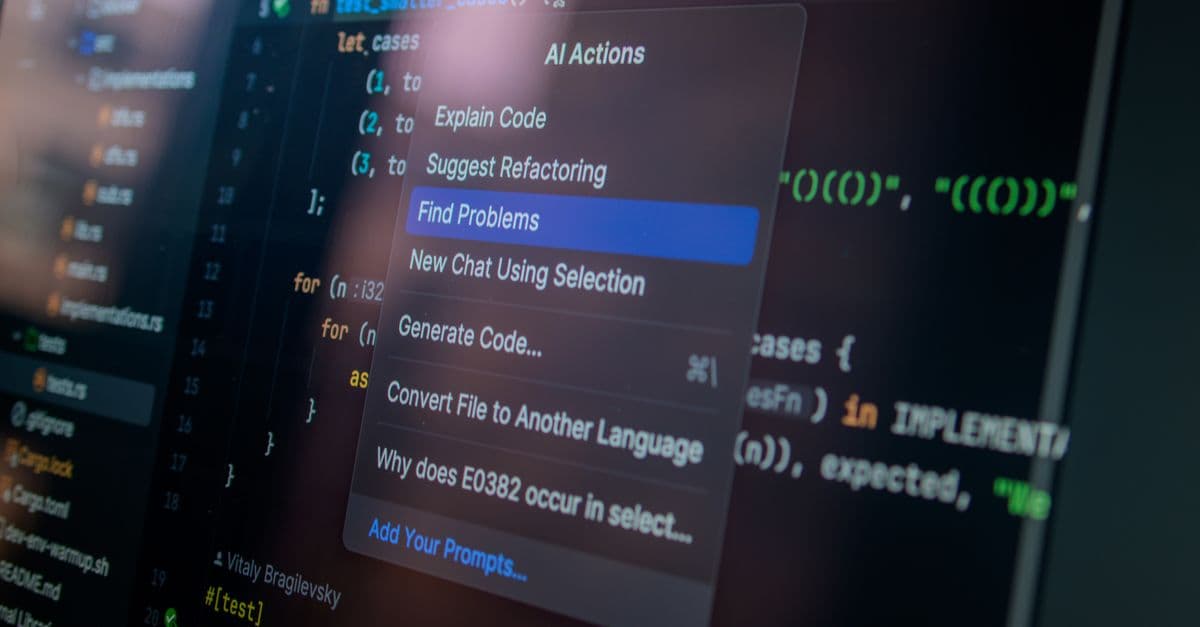
Agentic AI is the next buzzword, but the useful concept is simple: models that plan, call tools, check results, and repeat toward a goal.

How to use AI for studying in 2026: active recall, spaced practice, explaining concepts, and exam prep with ChatGPT, NotebookLM, and Claude — without cheating yourself.

How to use Google NotebookLM in 2026: upload sources, ask grounded questions, generate study guides, quizzes, mind maps, and Audio Overviews step by step.
How to get cited in Google AI Overviews, ChatGPT, and Perplexity in 2026: crawler access, listicle structure, schema, Wikipedia strategy, and IndexNow.
AI systems are now embedded in hiring decisions, medical diagnosis, loan approvals, criminal sentencing recommendations, and autonomous weapons targeting. Each deployment raises questions that engineering alone cannot answer: Who is harmed when a model is wrong? Who decides what values the system optimizes for? Who is accountable when things go badly? This is a factual overview of the central AI ethics debates — what they actually involve, where reasonable people disagree, and why the answers matter for everyone.

AI productivity tools promise to reclaim hours. Writing assistants, scheduling bots, note-taking assistants with AI search, coding helpers, and smart email tools all claim to accelerate your workflow. But which categories actually work? Which are oversold? And how do you choose without becoming a testing ground for every vendor? The honest breakdown: some categories save 2–4 hours weekly; others waste time instead of saving it. Privacy matters too — many free tools monetize your data. Real AI productivity is not about adopting everything; it's about matching the right tool to your actual bottleneck.

A typical text prompt to a current AI chatbot uses a fraction of a watt-hour, but billions of prompts, plus training runs and data center cooling, add up to a real slice of global electricity. This article sorts measured figures from folklore: energy per query, training costs, water, emissions, and how AI compares with other everyday loads.

OpenAI released GPT-5 in early 2026, and the shift was not what industry observers predicted. GPT-5 did not replace knowledge workers en masse. Instead, it amplified what earlier versions started: a partnership between human judgment and AI reasoning. The model improved in consistency, reduced hallucinations by 40%, and added multimodal input that finally integrated video understanding without the lag of separate processing. But it did not achieve AGI or anything close. What changed is subtle: the paradigm moved from 'AI as a tool you consult' to 'AI as a reasoning partner you supervise.' Workflows that integrated GPT-4 are now faster with GPT-5. Workflows that didn't integrate AI didn't gain much. The honest assessment: GPT-5 is a meaningful step forward, not a dramatic discontinuity. The real transformation lies in how teams adopt agentic workflows — where AI can plan and execute multi-step tasks under human guidance — not in the model alone.

Running an open-source LLM locally — on your laptop or home server — appeals to privacy-conscious users and developers. No data sent to OpenAI or Anthropic. Full control. The marketing is seductive. But the realistic cost is high, and most people who start down this path abandon it. A capable local LLM model (Llama 3, Mistral 8B, Deepseek) requires 16–48 GB of RAM or VRAM, quantization to run at reasonable speeds (which degrades quality), hours of generation per response compared to seconds on cloud APIs, significant electricity consumption, heat management, and battery drain on laptops. When you sum the hardware cost, electricity, and opportunity cost of slower responses, running a local model often costs more than a cloud API — even when you factor in privacy. The honest assessment: local LLMs make sense for specific use cases (offline work, sensitive research, air-gapped systems). For most knowledge workers, cloud APIs remain cheaper and faster.