Why Déjà Vu Happens — The Brain Science

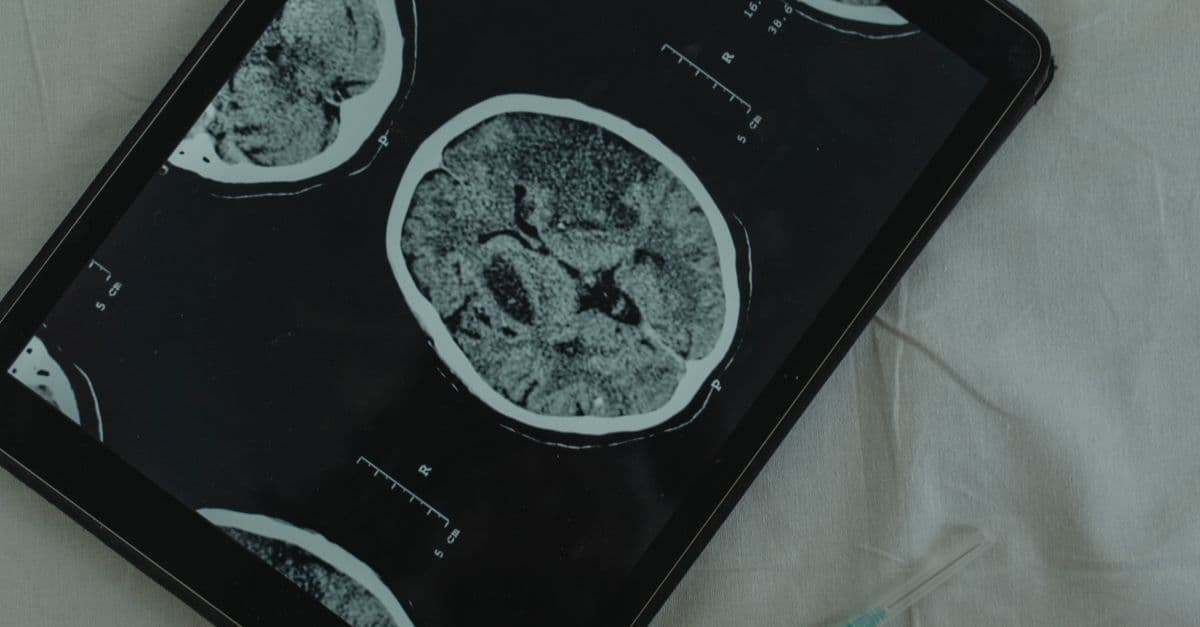
Photo: cottonbro studio / Pexels
Déjà vu — French for "already seen" — is the jolt of certainty that a brand-new moment has happened before, even though you know it hasn't. It is not a paranormal glitch and not a memory of a past life. A pooled analysis of 41 studies puts lifetime prevalence at roughly 67%, meaning about two in three people experience it at least once, and it peaks between ages 15 and 25 before declining steadily with age. Neuroscientists now have a reasonably solid, testable explanation for what's happening inside the brain when it strikes.
Educational content, not medical advice. Talk to your doctor before changing any medication, treatment, or routine. Information here reflects current research but every person's situation differs.
What déjà vu actually is
Déjà vu isn't a memory surfacing from somewhere in your past. It's a mismatch signal — your brain's familiarity detector fires without your episodic memory system being able to locate a source for that familiarity. You feel "I've experienced this," but you can't say when or where, because in the way you're imagining it, the source doesn't exist.
That gap between feeling familiar and actually remembering is the whole story, and it maps onto something cognitive neuroscientists have studied for decades outside the context of déjà vu: the dual-process model of memory. Familiarity is fast, automatic, and vague — a "this rings a bell" signal generated largely by the perirhinal cortex, a strip of tissue wrapped around the front of the temporal lobe. Recollection is slower and effortful — it's the hippocampus actually reconstructing when and where something happened. Déjà vu happens when the fast system fires and the slow system comes up empty.
Think of it like a smoke detector that goes off because of steam from a hot shower. The alarm (familiarity) is real and loud. But there's no fire (no actual memory) for the recollection system to find, so you're left standing in the hallway with a signal you can't explain. The detector isn't broken — it's just responding to something that resembles smoke closely enough to trip the sensor.
The leading scientific theories
There is no single, universally agreed-upon mechanism for déjà vu — partly because it is rare, brief (Anne Cleary's Colorado State lab describes episodes lasting only seconds), and impossible to trigger reliably on demand in a healthy person. But four converging lines of evidence point to the same anatomical neighborhood: the medial temporal lobe, where the hippocampus, perirhinal cortex, and entorhinal cortex sit next to each other and constantly trade signals about memory and novelty.
1. The gestalt familiarity / configural-match theory
Anne Cleary, a cognitive psychologist at Colorado State University, has produced the most rigorous experimental work on déjà vu to date. Starting in the mid-2000s, her lab built virtual environments using video-game engines like The Sims, generating scenes — a junkyard, a hedge garden, a hospital room — that shared the exact spatial layout of scenes participants had viewed earlier, but with entirely different content and theming. Participants who viewed a new scene that spatially matched an earlier one reported significantly more déjà vu than when the scenes didn't match, even when they couldn't consciously recall having seen the earlier layout at all (Cleary et al., published via Colorado State University research summaries).
The implication: your brain doesn't need to remember the content of an earlier experience to register familiarity. It only needs to recognize the underlying spatial or configural pattern — the geometric skeleton of a room, the arrangement of furniture, the shape of a hallway. When that pattern-match fires strongly but the specific memory it's matching against stays buried or was never encoded distinctly enough to retrieve, you get an orphaned familiarity signal your brain interprets as "I've been here."
In a related 2018 study published in Psychological Science, Cleary and co-author Alexander Claxton tested whether déjà vu comes with genuine precognitive power — the folk belief that a déjà vu moment lets you predict what happens next. Using a navigable virtual maze, they found that although déjà vu episodes were accompanied by a strong subjective feeling of knowing which way to turn next, participants' actual prediction accuracy was no better than chance (Cleary & Claxton, 2018, Psychological Science). The premonition that déjà vu produces is a feeling, not a forecast.
2. Temporal lobe electrical activity — the oldest and most direct evidence
This is the theory with the deepest roots. In 1955, neurosurgeon Wilder Penfield reported findings from patients undergoing awake brain surgery for epilepsy, and in 1959, Penfield and neurologist Phanor Mullan formally described how direct electrical stimulation of the temporal lobe reliably produced sensations of familiarity, unfamiliarity, or vivid re-experiencing of past scenes — the so-called "interpretive" and "experiential" responses. Mullan and Penfield concluded déjà vu was tied predominantly to activity in the temporal lobe, especially the hemisphere non-dominant for language.
Modern work has sharpened the location considerably. Intracranial stimulation studies find that déjà vu is elicited far more reliably by stimulating the rhinal cortices — the perirhinal and entorhinal cortex, which sit adjacent to the hippocampus — than by stimulating the amygdala or hippocampus directly. A review of the rhinal cortex's role in temporal lobe epilepsy notes that déjà vu is specifically and repeatedly produced by stimulating the entorhinal cortex, the gateway through which most sensory information enters the hippocampal memory system (Bartolomei et al., rhinal cortex and TLE review, PMC).
This matters because people with temporal lobe epilepsy report déjà vu as an aura — the brief warning sensation before a seizure — far more often than the general population. In these patients, abnormal electrical discharges in the rhinal cortex appear to generate a false familiarity signal directly, without any matching input from the outside world at all. A 2024 systematic review and meta-analysis found déjà vu was reported in roughly 74% of studies looking at non-ictal (between-seizure) experiences in patients with epilepsy, underscoring how tightly the phenomenon is wired into this specific brain region (systematic review and meta-analysis, Frontiers in Neurology, 2024). Functional imaging work on déjà vu episodes during seizures has also found abnormal blood flow patterns concentrated in the temporal lobe and entorhinal cortex during the déjà vu moment itself, rather than diffuse activity across the whole brain.
The working model in healthy people: brief, harmless micro-fluctuations in the same rhinal circuitry that, when amplified by epilepsy, produce dramatic and repeated déjà vu, may also occasionally misfire on their own — producing the fleeting, non-pathological déjà vu that most people experience a few times a year.
3. Dual processing / neural transmission delay
A separate, more mechanical theory holds that déjà vu results from a brief desynchronization between two parallel channels the brain uses to process incoming perceptual information. In this account, sensory information travels along a fast pathway and a slightly slower "shadow" pathway simultaneously. If the slower pathway lags behind the faster one by even a few dozen milliseconds, the brain may register the second, delayed arrival of a signal as a repeat rather than a continuation of the same ongoing experience — producing a false sense that you've already lived through the moment you're currently in. Some versions of this idea implicate subtle timing differences between left and right hemisphere processing. This theory has less direct experimental support than Cleary's configural-match work or the temporal lobe stimulation evidence, largely because desynchronization at the scale of tens of milliseconds is difficult to measure non-invasively in an intact, healthy brain during a spontaneous déjà vu episode.
4. Divided attention (Brown's hypothesis)
Cognitive psychologist Alan Brown, who authored an influential 2003 review of déjà vu research in Psychological Bulletin, proposed that déjà vu can arise from a two-step perceptual process. First, you register a scene subliminally — while distracted, looking at your phone, mid-conversation — without full conscious attention. A moment later, you turn your full attention to the same scene. That second, fuller perception unconsciously inherits a flicker of familiarity from the first, weaker glimpse, and your brain interprets that flicker as evidence you've experienced the whole scene before, rather than recognizing it as leftover residue from seconds earlier (Brown, A.S., 2003, Psychological Bulletin).
Brown's hypothesis is appealing because it doesn't require anything unusual about brain anatomy or wiring — it works on ordinary attention lapses that everyone has dozens of times a day. The catch is that it's hard to test directly, since inducing a convincing subliminal-then-conscious viewing sequence in the lab, and then confirming that it produces the subjective feeling of déjà vu rather than mere mild familiarity, has proven difficult to pull off reliably.
What déjà vu is not
- Past lives or reincarnation. No study has produced a replicable, falsifiable prediction from this idea, and it explains nothing that the memory-mismatch models don't already account for.
- Parallel universes or "glitches in the Matrix." A popular framing online, but untestable by definition — there is no observation that could confirm or rule it out, which is precisely why it isn't a scientific hypothesis.
- Genuine premonition of the future. Cleary and Claxton's 2018 maze study directly tested this and found no above-chance prediction accuracy tied to déjà vu episodes.
- A memory from earlier in your own life that you've simply forgotten. This is a common lay explanation, but it doesn't fit the phenomenology: people experiencing déjà vu typically report certainty that they have never actually been in the situation before, alongside the contradictory feeling that they have. If it were an ordinary buried memory resurfacing, recollection would usually follow with effort; in déjà vu, it characteristically does not.
When déjà vu is more common
Certain conditions reliably raise the odds of an episode. None of these guarantee déjà vu will happen, but they lower the threshold for the familiarity system to misfire.
| Trigger | Why it matters | Supporting evidence |
|---|---|---|
| Fatigue / sleep deprivation | Impairs the hippocampus's ability to cleanly tag new experiences, increasing partial-overlap misfires | Widely replicated in survey-based déjà vu studies |
| Psychological stress | Elevated cortisol and divided attention increase the chance of the Brown-style subliminal-then-conscious pattern | Correlational survey data across multiple studies |
| Young age (15–25) | Peak novelty exposure plus a still-maturing familiarity system | Confirmed across roughly 30 independent studies |
| Frequent travel or novel environments | More exposure to scenes that partially match stored spatial layouts (Cleary's configural-match mechanism) | Cleary et al., Colorado State University |
| Cannabis and certain stimulants | THC alters neuronal excitability in temporal and limbic circuits, which can lower the threshold for spontaneous rhinal-cortex misfires | Case-report and mechanistic literature on cannabis and temporal lobe excitability |
| Higher education / socioeconomic status | Correlated with more frequent déjà vu in survey data, though the causal mechanism is unclear | Cross-sectional prevalence studies |
| Temporal lobe epilepsy | Abnormal electrical discharges in the rhinal cortex directly and repeatedly generate the sensation | Penfield & Mullan (1959); modern intracranial stimulation studies |
Table: Documented factors associated with more frequent déjà vu, from healthy-population survey data and clinical case studies.
When déjà vu becomes a medical concern
For the overwhelming majority of people, déjà vu is brief, occasional, and entirely benign — it lasts a few seconds and leaves no other trace. It becomes worth a medical conversation when it shows a different pattern:
- Frequency and duration. Occurring many times per day, or lasting noticeably longer than a few seconds, is atypical for ordinary déjà vu and warrants evaluation.
- Company it keeps. If déjà vu arrives alongside confusion, a rising sensation in the stomach, an unusual smell or taste, lip-smacking or other automatic movements, or brief loss of awareness, it may be a temporal lobe epilepsy aura — the warning sensation some people experience seconds before a focal seizure. This is the single most important condition to rule out, because déjà vu-as-aura is one of the best-documented and most specific epilepsy signs in clinical neurology.
- New onset in adulthood. Since déjà vu is expected to decline with age, a sudden new pattern of frequent déjà vu appearing later in life is a different clinical picture than the occasional déjà vu common in adolescence and warrants a workup rather than being dismissed as normal.
- Associated mood or thought disorder symptoms. Chronic or exaggerated déjà vu-like experiences have also been reported in some cases of anxiety disorders, depression, and schizophrenia, though in these contexts it typically presents differently — more persistent and less discrete than the classic few-second episode — and is one symptom among several rather than a standalone diagnosis.
If déjà vu in your own experience matches any of the above, seeing a neurologist for an EEG-based evaluation is the appropriate next step. Most people who experience ordinary, occasional déjà vu do not need one.
Déjà vu's opposite: jamais vu
Jamais vu ("never seen") is the mirror-image experience — something you know intimately suddenly feels alien, unfamiliar, or wrong. Chris Moulin, a cognitive neuropsychologist, ran a now well-known 2006 laboratory study in which 92 participants were asked to write a common word, such as "door," repeatedly for one minute — roughly 30 repetitions. About 68% of participants reported the word starting to feel meaningless, foreign, or somehow incorrect, a reproducible and specific form of jamais vu triggered purely by repetition (Moulin et al., published as "The the the the induction of jamais vu in the laboratory," Memory, 2020).
The leading explanation is semantic satiation: repeated exposure to the same word temporarily fatigues the neural circuits responsible for recognizing it as meaningful, in much the same way that staring at any single visual pattern for too long can make it look strange or start to break apart. Moulin has also drawn a connection between exaggerated, persistent jamais vu and some presentations of schizophrenia, framing extreme jamais vu as a chronic version of the same familiarity-detection fatigue that a healthy brain experiences only briefly and rarely.
Comparison: the four "vu" experiences
| Term | Meaning | What happens | Familiarity signal | Recollection |
|---|---|---|---|---|
| Déjà vu | "Already seen" | A new scene feels like it's happened before | Present (false) | Absent |
| Jamais vu | "Never seen" | A familiar thing suddenly feels alien or wrong | Absent | Intact |
| Presque vu | "Almost seen" | An answer or memory feels on the tip of your tongue | Not applicable | Imminent but blocked |
| Déjà entendu | "Already heard" | A new conversation feels like it's been heard before | Present (false), auditory | Absent |
Table: The four related "vu" experiences, distinguished by whether familiarity and recollection are present, absent, or mismatched.
What people get wrong about déjà vu
The most persistent misconception is that déjà vu means you're remembering something real — a past life, a dream that came true, or a genuinely forgotten earlier moment. The clinical and experimental evidence points the other way: déjà vu is defined by the absence of a real source for the familiarity you're feeling. If you could actually recall the earlier event, it wouldn't be déjà vu, it would just be ordinary recognition.
A second common error is treating déjà vu as inherently a warning sign of a brain problem. For the vast majority of the roughly two-thirds of people who experience it, déjà vu carries no diagnostic weight at all — it's a normal byproduct of how a probabilistic familiarity-detection system occasionally fires without a matching source. The distinction that matters clinically isn't whether déjà vu happens, but its frequency, duration, and what other symptoms travel with it.
A third misconception, fueled largely by internet culture, treats déjà vu as evidence for simulation theory or parallel-timeline "glitches." This framing is popular precisely because it's unfalsifiable — there's no observation that could disprove it, which is also exactly why it explains nothing a neuroscientist would recognize as an explanation. The mismatch-signal model, by contrast, makes testable predictions (like Cleary's configural-overlap experiments) that have actually been confirmed in the lab.
Finally, people often assume déjà vu should come with a strong feeling of prediction — that if you're experiencing it, you should somehow "know" what happens next. Cleary and Claxton's 2018 study is the clearest evidence against this: the feeling of premonition during déjà vu is measurably real and strong, but it does not translate into any actual above-chance predictive accuracy. The feeling and the fact are decoupled.
The takeaway
Déjà vu is what happens when your brain's fast familiarity detector — running largely through the perirhinal and entorhinal cortex — fires without your slower, hippocampus-driven recollection system finding a matching source. The strongest evidence for this comes from two very different directions that land on the same anatomy: Anne Cleary's lab reproducing déjà vu on demand using spatially matched virtual environments, and nearly seven decades of temporal lobe stimulation and epilepsy research showing the rhinal cortex can generate the sensation directly. For almost everyone, it's a brief, harmless quirk of an otherwise well-functioning memory system, not a message from another life or timeline. The exception worth taking seriously is déjà vu that's frequent, prolonged, or accompanied by other neurological symptoms — in that specific pattern, it's one of medicine's most reliable seizure auras, not a mystery.
Read next:
- How Memory Works — The Neuroscience of Remembering
- Why Time Slows in Emergencies — Brain Science
- Biology & Health News
Sources
- Cleary, A. M., & Claxton, A. B. (2018). "Déjà Vu: An Illusion of Prediction." Psychological Science. https://journals.sagepub.com/doi/abs/10.1177/0956797617743018
- Colorado State University. "What is déjà vu? Psychologists are exploring this creepy feeling." https://source.colostate.edu/what-is-deja-vu-psychologists-are-exploring-this-creepy-feeling-of-having-already-lived-through-an-experience-before/
- Brown, A. S. (2003). "A review of the déjà vu experience." Psychological Bulletin. https://psycnet.apa.org/record/2003-04333-005
- Moulin, C. J. A., et al. (2020). "The the the the induction of jamais vu in the laboratory: word alienation and semantic satiation." Memory. https://pubmed.ncbi.nlm.nih.gov/32079491/
- Penfield, W., & Mullan, S. (1959). "Illusions of comparative interpretation and emotion." Historical review summarized in: Bartolomei, F., et al. "Cortical stimulation study of the role of rhinal cortex in déjà vu and reminiscence of memories." https://pmc.ncbi.nlm.nih.gov/articles/PMC3756799/
- "Non-ictal, interictal and ictal déjà vu: a systematic review and meta-analysis." (2024). Frontiers in Neurology. https://www.frontiersin.org/journals/neurology/articles/10.3389/fneur.2024.1406889/full
- Lifetime prevalence meta-analysis (41 studies, ~67% lifetime prevalence) and age-decline replication (~30 studies), summarized in déjà vu epidemiology literature reviewed via PMC and Wikipedia's Déjà vu article aggregation of primary sources: https://en.wikipedia.org/wiki/D%C3%A9j%C3%A0_vu
FAQs
Q: Is déjà vu a sign something is wrong with my brain? A: For most people, no. Occasional déjà vu affecting roughly two-thirds of the population at some point in life is normal and harmless. It becomes a concern only if it's frequent, prolonged beyond a few seconds, or accompanied by other neurological symptoms like confusion or brief loss of awareness — in which case temporal lobe epilepsy should be ruled out by a neurologist.
Q: Why does déjà vu happen less as you age? A: The decline has been replicated across roughly 30 independent studies. The leading explanation is that the brain's familiarity-detection circuitry becomes less prone to misfiring as it matures, combined with the fact that older adults simply encounter fewer genuinely novel spatial layouts than teenagers and young adults exploring new environments for the first time.
Q: Can two people have déjà vu at the same time about the same moment? A: No documented case has held up to scrutiny. Reports of "shared" déjà vu are almost always reconstructed afterward from shared context and conversation, rather than genuinely experienced simultaneously and independently.
Q: Does déjà vu predict the future? A: No. Anne Cleary and Alexander Claxton's 2018 study specifically tested this using a virtual maze and found that although déjà vu comes with a strong subjective feeling of knowing what happens next, actual prediction accuracy was no better than chance.
Q: Why do some drugs cause déjà vu? A: Substances that affect dopamine, glutamate, or temporal lobe excitability — including cannabis and certain stimulants — can alter the balance between excitatory and inhibitory signaling in limbic circuits. Case-report literature on cannabis and epilepsy links THC specifically to increased neuronal excitability in temporal lobe structures, which can lower the threshold for the kind of false familiarity signal that produces déjà vu.
Q: Is there an opposite of déjà vu? A: Yes — jamais vu, where something deeply familiar suddenly feels novel or strange. Chris Moulin's word-repetition experiments, where participants wrote a common word 30 times, reliably induced it in about 68% of volunteers within about a minute.
Q: Where in the brain does déjà vu come from? A: The strongest evidence points to the perirhinal and entorhinal cortex — regions adjacent to the hippocampus in the medial temporal lobe. Intracranial electrical stimulation studies, dating back to Wilder Penfield's work in the 1950s and refined by modern epilepsy research, find déjà vu is elicited far more reliably from these rhinal regions than from the hippocampus or amygdala directly.
Q: What's the difference between déjà vu and a false memory? A: A false memory involves believing you remember specific details of an event that didn't happen, sometimes with real confidence about the content. Déjà vu is narrower and stranger: you feel certain you've experienced the current moment before, but you cannot produce any actual memory content — no details, no timeline, no source — to go along with that certainty.
Q: Can stress or lack of sleep cause déjà vu? A: Both are consistently associated with higher self-reported déjà vu frequency in survey-based studies. Fatigue appears to impair the hippocampus's ability to cleanly encode and tag new experiences, while stress-driven divided attention fits the pattern described in Alan Brown's subliminal-then-conscious perception theory of déjà vu.
Q: Is déjà vu the same in every culture? A: The subjective phenomenon appears to be reported across cultures and languages, though the French term "déjà vu" became the standard scientific label in the late 19th century. Cross-cultural survey studies, including work in nonclinical Japanese populations, find broadly similar demographic patterns — higher frequency in younger people, correlation with travel and dream recall — suggesting the underlying mechanism is not culturally specific.
Follow new articles
Add SciHub101 to your feed reader to see new science and technology stories.
About the Author
SciHub101 is an independent science and technology publication founded and edited by Buğra Sözeri, a software engineer and app developer based in Türkiye. AI tools assist with drafting and research. Source documentation in the existing archive is uneven, and articles are being reviewed and corrected. The Editorial Team byline identifies editorial responsibility; it does not certify specialist or independent human review. Where we compare products, anything built by our own team is labelled as such — see the editorial guidelines and About page for how corrections and disclosures work.
Related Articles

Why Do We Get Itchy? The Biology of Itch
Why do we feel itchy? The neuroscience of pruritus — dedicated itch neurons, histamine, the itch-scratch cycle, and why itching is contagious.

Why Are Some People Left-Handed? Brain Science
Why are 10% of people left-handed? The genetics, brain lateralization, and evolutionary theories — including the combat advantage hypothesis.
The Science of Déjà Vu: What Actually Causes It
Roughly two-thirds of the general population reports experiencing déjà vu at some point in their lives — that disorienting conviction that a present moment has been experienced before, accompanied by the simultaneous knowledge that it cannot have been. The experience lasts a few seconds, then dissolves. For most people it is occasional and benign. For patients with temporal lobe epilepsy, it can be a reliable seizure precursor. The fact that déjà vu can be reproduced reliably in clinical settings — both by electrical stimulation of specific brain regions and by certain drug compounds — tells neuroscientists where to look for the mechanism.
How Memory Works — The Neuroscience of Remembering
How the brain encodes, stores, and retrieves memories: the hippocampus, long-term potentiation, sleep consolidation, forgetting, and why false memories feel real.
The Science of Sleep: What Happens in the Brain During REM Sleep
Sleep is not a passive shutdown but an active state of brain and body reorganization. During an 8-hour sleep cycle, humans alternate between non-REM (NREM) sleep—characterized by slow theta waves, reduced muscle tone, and energy conservation—and REM (rapid eye movement) sleep, when the brain shows activity patterns similar to wakefulness, the eyes move rapidly beneath closed eyelids, and skeletal muscles are paralyzed except for the diaphragm. REM sleep makes up approximately 20–25 percent of sleep in adults and is the stage where most vivid dreaming occurs. The neuroscience of REM reveals that memory consolidation (particularly emotional and procedural memories), creativity processing, and amygdala-driven emotion regulation all occur during this stage. The glymphatic system—a network of fluid pathways that clear metabolic waste from the brain during sleep—becomes most active during deep NREM sleep, not REM. This article explains the neuroscience of REM sleep, the discovery of the glymphatic system, and why sleep is essential to brain health.

Why We Forget Our Dreams — The Brain Science
Most adults forget 95% of dreams within minutes. The neuroscience: low norepinephrine, MCH neurons, weak hippocampal coupling, and how to remember more.