The Science of Déjà Vu: What Actually Causes It
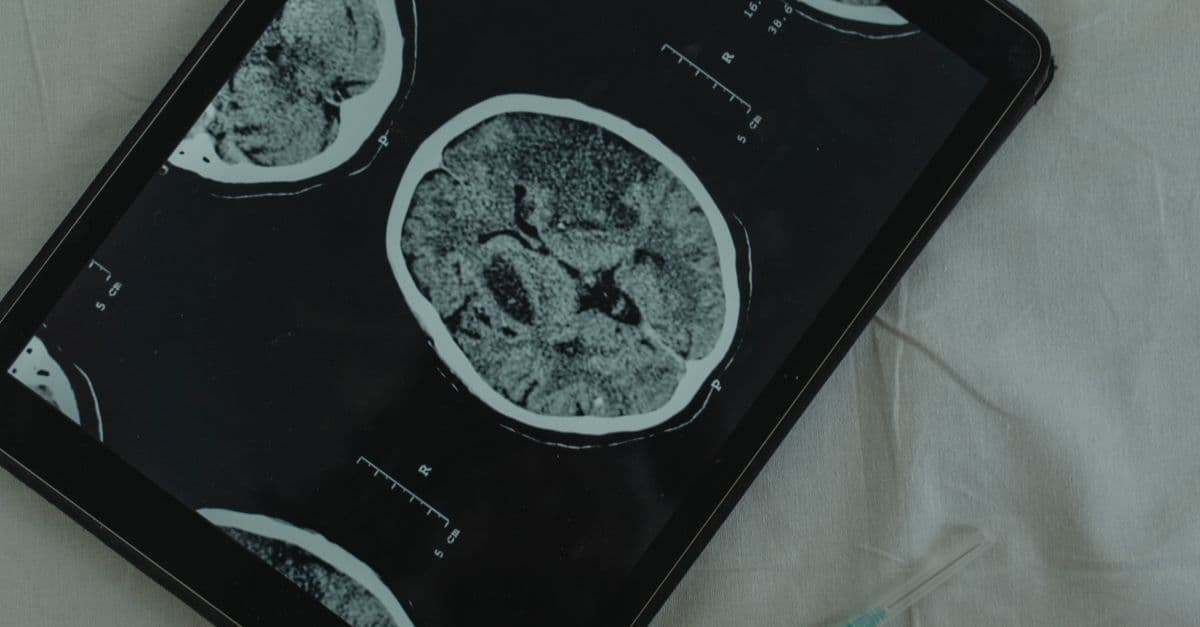
Photo: Tima Miroshnichenko / Pexels
Roughly two-thirds of the general population reports experiencing déjà vu at some point in their lives. The experience is brief — typically two to five seconds — and structurally unusual: you are simultaneously certain that the current moment has happened before and aware that it cannot have. Both feelings are present at once, which is part of what makes déjà vu phenomenologically distinct from simply misidentifying a place or mishearing a name. When researchers began studying it seriously in the late 20th century, they found that the key to understanding déjà vu lay not in memory recording but in the neural systems that generate the sense of familiarity — a system that, it turns out, can operate independently of the system that retrieves specific memories. When these two systems fall briefly out of sync, déjà vu is the result.
What Déjà Vu Is — and What It Is Not
Déjà vu — from the French for "already seen"; a subjective sensation in which a novel experience feels as though it has been encountered before, accompanied by a concurrent awareness that this sensation is incorrect or inexplicable.
Déjà vu belongs to a family of related experiences that researchers sometimes group under the term paramnesia — disturbances in the sense of familiarity that are disconnected from actual memory content. Related experiences include:
Jamais vu — the opposite of déjà vu; a familiar situation or object feels suddenly strange or unrecognized, as though encountered for the first time. People sometimes experience jamais vu when reading or writing a common word repeatedly until it seems alien.
Déjà entendu — "already heard"; a similar familiarity illusion applied to sound or music rather than visual experience.
Presque vu — "almost seen"; the tip-of-the-tongue sensation that something is on the verge of recall but cannot be retrieved.
These are not the same phenomenon, though they share the feature of a mismatch between subjective experience and what the memory system actually contains. Déjà vu specifically involves inappropriate familiarity with an ongoing present-tense experience, not a retrieval failure for a word or name.
What déjà vu is not: it is not evidence of past lives, precognition, or alternate timelines — these interpretations were common before the neuroscience was available and have been definitively displaced by experimental evidence. It is also not a sign of pathology in most people. However, frequent, intense déjà vu experiences — occurring multiple times daily, accompanied by other sensory distortions — can be a symptom of temporal lobe epilepsy and warrant medical evaluation.
Source: Moulin, C.J.A. (2018), The Zombie in My Brain: Déjà Vu and Other Disorders of Memory and Time, Oxford University Press — a scholarly examination of déjà vu and related memory-familiarity disorders by a leading researcher in the field.
How Memory Encodes Familiarity: Two Separate Systems
The neuroscientific foundation for understanding déjà vu requires understanding how the brain handles recognition memory — the ability to identify something previously encountered. Research over the past three decades has established that recognition memory is not a single process. It operates through at least two dissociable systems that can function independently.
Recollection involves retrieving a specific episodic memory — a contextually rich trace that includes when, where, and how an event occurred. Recognizing a face and retrieving the name, the circumstances of meeting, and the specific conversation you had draws on recollection. Recollection is slow, effortful, and hippocampus-dependent.
Familiarity involves a faster, more automatic sense that something has been encountered before, without retrieving specific episodic context. You walk into a party and see someone whose face triggers an immediate sense of familiarity, but you cannot remember who they are, where you met, or in what context. The familiar feeling is real but unaccompanied by recollective content. Familiarity is thought to depend primarily on the perirhinal cortex — a region adjacent to the hippocampus in the medial temporal lobe — rather than the hippocampus itself.
Perirhinal cortex — a region of the medial temporal lobe closely adjacent to the hippocampus; it plays a central role in the familiarity component of recognition memory, generating signals of "I have encountered this before" independent of specific episodic recall.
This dissociation between familiarity and recollection is the key to déjà vu. If familiarity can operate without recollection in normal recognition — which it demonstrably can — then it is plausible that familiarity could also be triggered without any actual prior encounter, generating a false "already seen" signal without any episodic memory to back it up.
Source: Yonelinas, A.P. (2002), "The nature of recollection and familiarity: A review of 30 years of research," Journal of Memory and Language, Vol. 46, No. 3 — the comprehensive peer-reviewed review of dual-process recognition memory theory, covering the neuroscientific dissociation of familiarity and recollection.
The Memory Mismatch Theory: Why Familiarity Misfires
The leading neuropsychological explanation for déjà vu is a memory mismatch model: déjà vu occurs when the familiarity signal is generated without a corresponding recollection signal, and the brain's monitoring system correctly identifies the discrepancy — which is experienced as the simultaneous conviction of "this has happened before" and "but it cannot have."
The mismatch can occur through several pathways. One proposed mechanism involves the parallel processing of sensory input: different aspects of an incoming experience (visual, auditory, spatial, contextual) are processed in different neural pathways simultaneously. If one pathway delivers its processed output slightly ahead of the others — by a delay of milliseconds — the brain may partially process the experience, then process it again when the remaining pathways contribute their output. The second processing encounters partially processed material from the first pass and generates a weak familiarity signal. This is the dual-processing theory of déjà vu.
Dual-processing theory of déjà vu — the hypothesis that timing differences between parallel sensory processing pathways cause a current experience to be partially registered twice, with the second registration generating a false familiarity signal from the first.
A related mechanism focuses on the role of the parahippocampal gyrus. This region processes the global spatial and contextual configuration of environments, and it feeds into the perirhinal cortex's familiarity signal. If a current environment is strongly configurationally similar to a previously visited one — same approximate spatial layout, similar lighting, similar visual density — the parahippocampal gyrus may generate an elevated familiarity signal even when the specific environment is novel. The visual room may be new, but its configuration rhymes with something previously seen, and the familiarity system responds to the configuration, not the specific content.
This explains why déjà vu is particularly likely in novel but visually familiar contexts: a foreign city whose street layout echoes a remembered city, a new home with a floor plan similar to a childhood house, a stranger whose face is configured similarly to a known person without being that person.
Source: Brown, A.S. (2004), "The déjà vu experience," Psychological Bulletin, Vol. 130, No. 3 — a peer-reviewed meta-analysis of déjà vu research, reviewing prevalence, triggers, and theories, and the most comprehensive academic survey of the topic available.
The Temporal Lobe and Epilepsy: Where Déjà Vu Becomes Clinical
The clearest evidence for the neural basis of déjà vu comes from patients with temporal lobe epilepsy (TLE). In TLE, seizures originate from abnormal electrical activity in the temporal lobe — the region containing the hippocampus, amygdala, perirhinal cortex, parahippocampal gyrus, and entorhinal cortex, all of which are central to memory and recognition processing. A substantial proportion of TLE patients — estimates range from 65 to 80 percent — experience déjà vu as an aura: a sensory or experiential symptom that precedes or marks the beginning of a seizure.
Aura — in epilepsy, a subjective sensory or experiential warning that precedes a seizure, caused by abnormal electrical activity in a specific brain region before the activity spreads; because auras are caused by the activity of a specific region, they reliably indicate the seizure's origin.
TLE patients who experience déjà vu as an aura report experiences indistinguishable in quality from those reported by healthy people — the same conviction of familiarity, the same concurrent knowledge that the familiarity is inappropriate, the same brief duration. What differs is the cause: in TLE patients, the déjà vu is produced by abnormal electrical discharge in the medial temporal lobe, particularly in structures involved in the familiarity component of recognition.
The neurosurgeon Wilder Penfield, working at the Montreal Neurological Institute in the 1950s and 1960s, provided the most dramatic direct evidence. While performing awake craniotomies — brain surgeries carried out under local anesthesia with the patient conscious, a technique used then as now to allow intraoperative monitoring and preserve eloquent cortex — Penfield electrically stimulated the surface of the temporal lobe in epilepsy patients. Stimulation of specific sites in the lateral and medial temporal cortex reliably produced déjà vu experiences — patients reported feeling a strong, unmistakable sense of familiarity, sometimes combined with vivid sensory impressions, that they knew was being generated artificially.
This was the first direct demonstration that déjà vu is a product of specific brain activity, not of actual prior experience, and that it can be turned on by artificial activation of the relevant neural circuits.
Source: Penfield, W., & Perot, P. (1963), "The brain's record of auditory and visual experience," Brain, Vol. 86, No. 4 — the landmark paper documenting experiential responses to temporal lobe stimulation, including déjà vu phenomena, from Penfield's awake craniotomy series.
Source: Bartolomei, F. et al. (2004), "Entorhinal cortex involvement in human mesial temporal lobe epilepsy: An electrophysiologic and volumetric study," Epilepsia, Vol. 45, No. 9 — peer-reviewed analysis of temporal lobe epilepsy structures involved in déjà vu auras.
How Researchers Induce Déjà Vu in the Lab
Clinical observations of TLE patients established the temporal lobe's role in déjà vu. But inducing and studying déjà vu in healthy subjects required different approaches, because healthy brains do not spontaneously produce the necessary neural conditions on demand.
One reliable laboratory technique uses hypnosis. Psychologist Akira O'Connor and colleagues at the University of St Andrews developed a paradigm in which hypnotized subjects were told that a list of words shown to them was entirely unfamiliar. When they were later shown words that they had in fact been exposed to, hypnotic suggestion suppressed explicit familiarity recognition — but subjects reported the characteristic déjà vu experience as the conflict between actual encoded memory and the suggested suppression generated a mismatch.
A second technique exploits the structural characteristics of déjà vu-inducing visual environments. Researcher Chris Moulin and colleagues have used virtual reality environments to induce déjà vu by presenting subjects with novel scenes that are spatially configured identically to previously shown scenes, with different surface content — the same room layout but different furniture, colors, and objects. Subjects frequently report déjà vu in these conditions, consistent with the parahippocampal configuration theory.
fMRI studies of subjects in déjà vu states — captured either during spontaneous reports in the scanner or induced experimentally — show activation in the frontal regions associated with conflict monitoring and decision-making, in addition to the expected medial temporal lobe regions. This frontal activation is the neural correlate of the monitoring process: the brain simultaneously generating the familiarity signal and evaluating it as incorrect, producing the distinctive phenomenology where both conviction and doubt coexist.
Source: O'Connor, A.R. et al. (2010), "Déjà vu and distinct familiarity signals: An experimental investigation," Consciousness and Cognition, Vol. 19, No. 4 — peer-reviewed experimental study using a recognition memory paradigm to isolate the déjà vu-specific familiarity signal.
Why Déjà Vu Is More Common in Young Adults — and Fades With Age
Déjà vu is most prevalent in young adults. Studies consistently find peak occurrence in the 15 to 35 age range, with frequency declining in middle and older adulthood. This age distribution is counterintuitive if déjà vu were primarily a product of accumulated memory — older people have more memories, so presumably more opportunities for a new experience to partially match an existing one.
The explanation involves processing speed and the efficiency of memory systems. Young adults process sensory information quickly, and their recognition memory systems are highly active. The familiarity signal in the perirhinal cortex is generated rapidly. The recollection system in the hippocampus operates on a slightly slower timescale. The window of time in which a familiarity signal is generated without a corresponding recollection signal — the window in which déjà vu can occur — is brief, and it closes as recollection catches up.
In older adults, both familiarity and recollection processes slow, but they may slow together, preserving their temporal relationship and reducing the window for mismatch. Alternatively, older adults may have less efficient conflict monitoring in frontal cortex, making them less likely to register and report the mismatch even if it occurs.
Fatigue, stress, and caffeine are all associated with increased déjà vu frequency in younger adults. Fatigue and high cognitive load create conditions where processing systems are more likely to fall slightly out of sync — analogous to the way a computer under heavy load may execute parallel processes with timing irregularities. Travel and novel environments also increase déjà vu frequency, consistent with the parahippocampal configuration model: unfamiliar environments that share configurational features with familiar ones are the most déjà vu-prone.
| Factor | Effect on déjà vu frequency | Proposed mechanism |
|---|---|---|
| Age 15–35 | Peak frequency | Active but occasionally desynchronized familiarity/recollection systems |
| Fatigue | Increased | Processing desynchronization under resource limitation |
| Novel travel environments | Increased | Configurational similarity to known environments |
| Temporal lobe epilepsy | Frequent, intense | Abnormal temporal lobe electrical discharge |
| Older age | Decreased | Slower, more synchronous processing; reduced conflict monitoring |
| Electrical brain stimulation | Reliable induction | Direct activation of medial temporal lobe familiarity circuits |
Source: Brown, A.S., & Marsh, E.J. (2010), "Digging into déjà vu: Recent research on possible mechanisms," in Psychology of Learning and Motivation, Vol. 53, Academic Press — a peer-reviewed chapter reviewing prevalence data, age effects, and the competing mechanistic theories for déjà vu.
The Drug Evidence: What Happens When Familiarity Circuits Are Altered
Several classes of drugs alter déjà vu frequency, providing pharmacological confirmation of the neural circuits involved. Anti-anxiety drugs in the benzodiazepine class (which enhance inhibitory GABA signaling throughout the brain, including in temporal lobe regions) have been reported to suppress déjà vu in TLE patients — consistent with the idea that déjà vu is produced by transiently elevated neural activity in medial temporal regions, activity that GABA enhancement dampens.
More striking is the case report literature on drugs that cause pathological déjà vu in otherwise healthy people. Antiviral medications, including amantadine and famciclovir, have been documented in case reports to cause persistent déjà vu as a side effect. In one 2010 case documented by Christine Wells and colleagues, a patient developed chronic, persistent déjà vu lasting months after taking amantadine, forcing him to stop watching television and reading newspapers because every experience felt immediately and disturbingly familiar. The déjà vu resolved when the drug was discontinued.
Amantadine's mechanism involves dopamine enhancement in addition to its primary antiviral activity — and dopamine plays a role in temporal lobe neural excitability, consistent with the drug's ability to over-activate familiarity circuits.
Pathological déjà vu — persistent, chronic déjà vu occurring continuously or near-continuously, associated with temporal lobe epilepsy, certain drug side effects, or other conditions affecting medial temporal lobe function; distinct from the brief, occasional déjà vu of healthy adults.
Source: Wells, C.E. et al. (2014), "Persistent déjà vu due to pharmacological treatment," Neurocase, Vol. 20, No. 6 — a peer-reviewed case report documenting drug-induced pathological déjà vu, with proposed mechanism.
Frequently Asked Questions
Q: Is déjà vu a sign of something medically wrong?
A: Occasional, brief déjà vu is a normal experience in the general population and is not a sign of pathology. Frequent, intense, or persistent déjà vu — especially if accompanied by other sensory distortions, confusion, or involuntary movements — can indicate temporal lobe epilepsy or other neurological conditions and warrants evaluation by a physician.
Q: Can déjà vu be caused by seeing something similar to a forgotten memory?
A: Yes, and this is one of the most plausible mechanisms for many déjà vu experiences. If a current scene closely matches a previously encountered scene that was weakly encoded — a scene you were not consciously attending to — the parahippocampal cortex may generate a familiarity signal for the configuration without the hippocampus being able to supply the specific episodic context. The result is familiarity without recall, which is déjà vu's defining phenomenology.
Q: Why does déjà vu feel so strange if it is just a memory error?
A: Because it involves the simultaneous activation of two normally exclusive mental states: the conviction that something has been experienced before, and the knowledge that it cannot have been. Most cognitive experiences are internally consistent — the feeling of familiarity usually corresponds to an accessible memory, and the feeling of novelty usually corresponds to no accessible memory. Déjà vu is notable for generating genuine, simultaneous contradiction between the familiarity signal and the metacognitive evaluation of that signal.
Q: Do animals experience déjà vu?
A: We have no direct way to assess this in non-verbal animals. The neural structures associated with déjà vu — the perirhinal cortex, hippocampus, and parahippocampal gyrus — are present and functional in other mammals. If déjà vu is a product of familiarity-recollection mismatch in these structures, it is plausible that other mammals with similar architecture experience something analogous. But without verbal report, the distinctive phenomenology (simultaneously feeling "familiar" and "this cannot be familiar") cannot be directly accessed.
Q: Does déjà vu involve any danger or cognitive impairment?
A: In healthy people, no. A brief déjà vu lasts two to five seconds and is followed by a return to normal perception. It does not indicate any immediate danger and does not impair ongoing cognitive function during or after the episode. In TLE patients, déjà vu as an aura may precede seizure activity that can involve impaired consciousness, involuntary movements, or post-ictal confusion, which carries different risk implications.
Q: Is déjà vu more common when you are tired?
A: Yes, consistently with the dual-processing desynchronization model. Fatigue imposes a general resource constraint on neural processing, increasing the likelihood that parallel sensory pathways fall out of synchronization and produce the conditions for a familiarity-recollection mismatch. Anecdotal reports and survey data both consistently find that déjà vu is more frequent when subjects report high fatigue and stress, with strong travel or novel environment exposure as additional contributors.
Source: Adachi, N. et al. (2008), "Déjà vu experiences in patients with schizophrenia," Comprehensive Psychiatry, Vol. 49, No. 6 — peer-reviewed study of déjà vu prevalence and characteristics across clinical and non-clinical populations.
Source: Illman, N.A. et al. (2012), "Déjà vu in the historical literature," Psychologist, Vol. 25, No. 3 — a review of historical conceptualizations of déjà vu before the modern neuroscientific framework.
Source: Vlaar, A.M.M., & van Dijk, J.G. (2002), "Déjà vu and other temporal phenomena in the context of epilepsy," Epilepsia, Vol. 43 Suppl. 5 — peer-reviewed review of déjà vu phenomenology in temporal lobe epilepsy patients.
The Takeaway
Déjà vu is one of the few subjective experiences that neuroscience can trace to specific neural circuits, reproduce experimentally, trigger pharmacologically, and observe directly via electrical stimulation. It is not mysterious — it is a predictable outcome of a brain architecture in which familiarity and recollection are handled by partially separate systems that can, under specific conditions, operate briefly out of sync. The temporal lobe epilepsy connection is particularly important: it tells us that déjà vu is not a quirk of consciousness or a philosophical puzzle but a product of a specific cortical subsystem that can be activated directly. What remains genuinely open is the precise quantitative mechanism by which the familiarity signal is generated in healthy adults during the experience — the clinical and pharmacological evidence identifies where, and the memory mismatch framework identifies why, but the millisecond dynamics of the mismatch are still being worked out.
Read next:
Follow new articles
Add SciHub101 to your feed reader to see new science and technology stories.
About the Author
SciHub101 is an independent science and technology publication founded and edited by Buğra Sözeri, a software engineer and app developer based in Türkiye. AI tools assist with drafting and research. Source documentation in the existing archive is uneven, and articles are being reviewed and corrected. The Editorial Team byline identifies editorial responsibility; it does not certify specialist or independent human review. Where we compare products, anything built by our own team is labelled as such — see the editorial guidelines and About page for how corrections and disclosures work.
Related Articles

Solar Storms and the Carrington Event: What Would Happen Today?
On September 1, 1859, British astronomer Richard Carrington watched a white-light flare erupt from the sun's surface — the first solar flare ever recorded by a human being. Within 17 hours, a coronal mass ejection carrying several billion tons of magnetized plasma slammed into Earth's magnetosphere at roughly 2,400 km/s (5.4 million mph), triggering the largest geomagnetic storm in recorded history. Telegraph operators received electric shocks from their equipment. Aurora lit the skies over Cuba, Hawaii, and Colombia. If the same event happened today, a 2008 National Academies report estimated the damage at nearly $2 trillion in the United States alone.
The Neuroscience of Learning Elvish: What Conlangs Reveal About the Brain
In 2025, MIT researchers published fMRI data showing that Klingon, High Valyrian, and Esperanto activate the same neural circuits as English or Mandarin — the same brain regions that process natural human languages developed over thousands of years. A constructed language invented a decade ago by a screenwriter activates the identical network as a language shaped by centuries of use. This finding tells us something fundamental about how the brain decides what counts as a 'real' language — and it has practical implications for how anyone, at any age, learns any language, fictional or otherwise.
Why Déjà Vu Happens — The Brain Science
Why does déjà vu happen? Neuroscience explains the memory mismatch, dual-processing, and temporal lobe theories behind the 'already seen' feeling.
Why Time Feels Faster as You Age: The Science Behind It
A summer at age eight felt endless. A year at forty disappears. This is not nostalgia distorting judgment — it is a measurable difference in how the brain processes and encodes time. Multiple mechanisms are involved: a mathematical relationship between age and perceived duration, a decline in the novelty that creates dense memories, slowing neural processing speed, and falling dopamine levels that alter the brain's internal clock. Each mechanism operates independently, but they all converge on the same result: subjective time accelerates across a human lifetime.
The Science of Sleep: What Happens in the Brain During REM Sleep
Sleep is not a passive shutdown but an active state of brain and body reorganization. During an 8-hour sleep cycle, humans alternate between non-REM (NREM) sleep—characterized by slow theta waves, reduced muscle tone, and energy conservation—and REM (rapid eye movement) sleep, when the brain shows activity patterns similar to wakefulness, the eyes move rapidly beneath closed eyelids, and skeletal muscles are paralyzed except for the diaphragm. REM sleep makes up approximately 20–25 percent of sleep in adults and is the stage where most vivid dreaming occurs. The neuroscience of REM reveals that memory consolidation (particularly emotional and procedural memories), creativity processing, and amygdala-driven emotion regulation all occur during this stage. The glymphatic system—a network of fluid pathways that clear metabolic waste from the brain during sleep—becomes most active during deep NREM sleep, not REM. This article explains the neuroscience of REM sleep, the discovery of the glymphatic system, and why sleep is essential to brain health.
The Electroencephalogram (EEG) — How a Psychiatrist Mapped the Brain's Electric Storm — SciHub101
How Hans Berger's secret obsession with telepathy in 1924 produced the EEG—and why those squiggly lines still diagnose epilepsy and decode sleep 100 years later.