Solar Storms and the Carrington Event: What Would Happen Today?
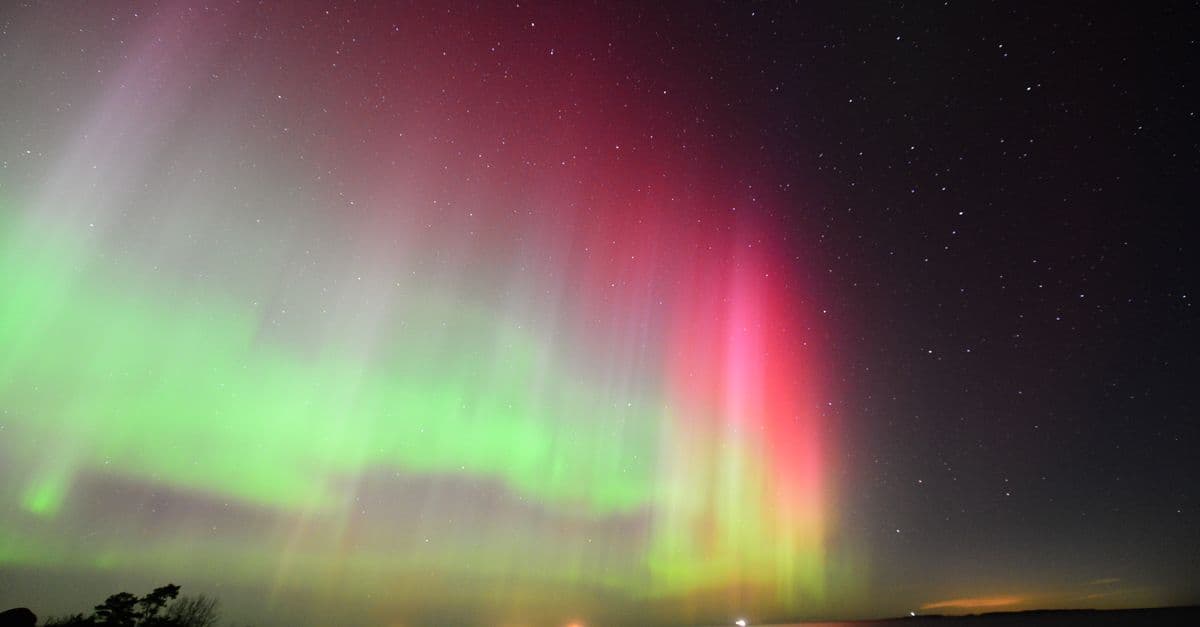
Photo: Dmytro Sharyi / Pexels
On September 1, 1859, British astronomer Richard Carrington watched a white-light flare erupt from the sun's surface — the first solar flare ever recorded by a human being. Within 17 hours, a coronal mass ejection carrying several billion tons of magnetized plasma slammed into Earth's magnetosphere at roughly 2,400 km/s (5.4 million mph), triggering the largest geomagnetic storm in recorded history. Telegraph operators received electric shocks from their equipment. Aurora lit the skies over Cuba, Hawaii, and Colombia. If the same event happened today, a 2008 National Academies report estimated the damage at nearly $2 trillion in the United States alone — and that figure was calculated before most of the grid modernization and satellite infrastructure deployed in the following decade.
What a Coronal Mass Ejection Actually Is
The sun is not a passive ball of burning gas. It is a magnetically complex plasma body, constantly churning through a process that generates powerful, tangled magnetic field lines. When these field lines near the surface become sufficiently stressed and twisted, they can suddenly reconnect in a different configuration — a process called magnetic reconnection — releasing enormous amounts of stored magnetic energy almost instantaneously.
Coronal mass ejection (CME) — a large expulsion of magnetized plasma from the sun's outer atmosphere (the corona), containing billions of tons of charged particles traveling at speeds between 250 and 3,000 km/s. CMEs are distinct from solar flares, though the two often occur together.
Solar flare — a sudden, intense burst of electromagnetic radiation from the sun's surface, traveling at the speed of light and reaching Earth in approximately 8 minutes. Flares are classified by their X-ray intensity: A, B, C, M, and X class, with each class representing a tenfold increase in energy. The Carrington Event was associated with an X-class flare, the strongest category.
The difference between a solar flare and a CME matters for predicting Earth impact. Flare radiation (light and X-rays) arrives in 8 minutes — there is essentially no warning. The energetic particles from a flare arrive in tens of minutes to hours. A CME takes 1 to 3 days to reach Earth, depending on its speed, giving observers time to prepare. But when a CME arrives, the duration of its effect can last hours to days, compared to a flare's rapid fade.
Not every CME hits Earth. The sun produces CMEs in all directions, and most miss our planet entirely. A CME must be directed at a point in Earth's orbit that we happen to occupy when the cloud arrives — a combination of solar ejection angle and Earth's orbital position. The fraction of CMEs that are Earth-directed ranges from roughly 10 to 20 percent depending on the phase of the solar cycle.
Source: NASA Goddard Space Flight Center (2024), "Coronal Mass Ejections" — official NASA reference on CME mechanics, speed ranges, and detection methodology. nasa.gov
The Solar Cycle and Why the Timing Matters
The sun operates on an approximately 11-year cycle of magnetic activity, visible in the count of sunspots — dark, cooler regions on the solar surface where intense magnetic field lines suppress convection. Sunspot numbers rise toward solar maximum (peak activity) and fall toward solar minimum (quiet conditions). CMEs are far more frequent during solar maximum: during active periods, the sun may release three or more CMEs per day; during solar minimum, this drops to roughly one every few days.
| Solar cycle phase | CME frequency | Major storm risk |
|---|---|---|
| Solar minimum | ~0.5/day | Low |
| Rising activity | ~1–2/day | Moderate |
| Solar maximum | ~3–5/day | Elevated |
| Post-maximum decline | ~1–2/day | Moderate |
The current solar cycle — Solar Cycle 25, which began in December 2019 — reached a more active maximum than originally predicted, peaking in 2024–2025 with activity comparable to the strongest cycles of the 20th century. NOAA's Space Weather Prediction Center issued multiple G3 (strong) and G4 (severe) geomagnetic storm watches during this period.
The Carrington Event occurred during Solar Cycle 10. Historical data suggests that extreme events like the Carrington storm are not strictly tied to maximum activity — they can occur at any phase, though they are statistically more likely during the ascending and descending active portions of the cycle.
Source: NOAA Space Weather Prediction Center (2024), Solar Cycle 25 progress reports — official solar cycle tracking and CME frequency data. swpc.noaa.gov
The 1859 Carrington Event: What Actually Happened
Richard Carrington was sketching sunspots from his private observatory in Redhill, Surrey, when at 11:18 a.m. local time on September 1, 1859, he saw two intensely bright patches appear within a sunspot group. He watched them move across the solar surface over roughly five minutes before they faded. Almost simultaneously, a magnetometer at Kew Gardens, London, registered a sudden disturbance — a magnetic kick that Carrington later correctly connected to his observed flare.
Seventeen hours and forty minutes later — astonishingly fast for a CME; the average transit time is 1 to 3 days — the plasma cloud struck Earth's magnetosphere. The geomagnetic storm that followed lasted roughly four days in total, with the most intense phase on the night of September 1–2, 1859.
The effects on the only widespread electrical infrastructure of the era — the telegraph network — were dramatic and well-documented. Telegraph systems across North America and Europe experienced induced currents strong enough to operate equipment without battery power. Some operators reported sparks jumping from their instruments. Others reported receiving coherent messages while their batteries were fully disconnected, the current supplied entirely by geomagnetically induced electricity in the wires.
Aurora was seen at latitudes far too low for normal occurrence: Havana, Cuba (23°N); Honolulu, Hawaii (21°N); Santiago, Chile (33°S); and across the Rocky Mountains, where gold rush miners reportedly woke to what they believed was dawn but was actually the aurora. The red and crimson aurora seen at low latitudes in 1859 was caused by excited atomic oxygen at higher altitudes (above 200 km/110 mi), which produces red light rather than the green associated with lower-altitude oxygen excitation common in the aurora borealis.
The storm's intensity is measured retrospectively using the Dst index — a measure of the global disturbance in Earth's horizontal magnetic field, in nanoteslas (nT). A Dst of –50 nT is classified as a moderate geomagnetic storm. The most severe modern storms reach around –300 to –400 nT. The Carrington Event is estimated to have produced a Dst of approximately –850 to –1,760 nT, based on magnetometer records from the era — two to four times more intense than any storm recorded since the advent of modern instrumentation.
Source: Tsurutani, B.T. et al. (2003), "The extreme magnetic storm of 1–2 September 1859," Journal of Geophysical Research: Space Physics, Vol. 108, No. A7 — the primary peer-reviewed reconstruction of Carrington Event intensity using historical magnetometer data.
The 1989 Quebec Blackout: A Smaller Preview
On March 13, 1989, a geomagnetic storm far smaller than the Carrington Event — but still classified as G5 (extreme), the highest category on NOAA's scale — caused the collapse of the Hydro-Québec power grid in Canada. The entire province of Quebec lost power at 2:44 a.m. local time. Power was restored to most areas within nine hours, but some regions remained without electricity for up to three days.
The mechanism was not the storm directly melting wires. It was geomagnetically induced currents (GICs) — the modern equivalent of what telegraph operators experienced in 1859. Earth's magnetic field, when disturbed by a CME's arrival, fluctuates rapidly. This changing magnetic field induces electric currents in any long conductor aligned with the field lines, including high-voltage power transmission lines, natural gas pipelines, and undersea cables.
Geomagnetically induced current (GIC) — an electric current induced in ground-based conductors (power lines, pipelines, cables) by rapid changes in Earth's magnetic field during geomagnetic storms; GICs are effectively very-low-frequency alternating currents superimposed on the direct current or 60 Hz alternating current systems normally carrying power.
The problem for power grids is that transformers are designed to handle a specific alternating current frequency — 60 Hz in North America. GICs operate at near-DC (essentially zero frequency) frequencies. When DC-like currents enter an AC transformer, they drive the transformer's iron core into magnetic saturation — a state where the core can no longer efficiently carry additional magnetic flux. A saturated transformer draws enormously elevated reactive power (the component of power that does not do useful work but oscillates in the circuit), which can destabilize grid voltage and frequency.
The 1989 event tripped transformers and protective relays across the Hydro-Québec network in a cascade of failures. Thirty-two of the system's high-voltage transformers tripped offline in 92 seconds. In that same storm, transformers were damaged in New Jersey, the UK, and Sweden. A transformer at the Salem Nuclear Power Plant in New Jersey suffered permanent damage and was retired from service.
Source: Bolduc, L. (2002), "GIC observations and studies in the Hydro-Québec power system," Journal of Atmospheric and Solar-Terrestrial Physics, Vol. 64, No. 16 — detailed technical account of the 1989 Quebec blackout from Hydro-Québec's own engineers.
The 2012 Near-Miss: What Almost Happened
On July 23, 2012, the sun released one of the most powerful CMEs in the modern era — a plasma cloud that, by the analysis of University of California San Diego physicist Daniel Baker and colleagues, was comparable in intensity to the 1859 Carrington Event. The CME traveled at approximately 2,200 km/s and carried an unusually strong southward-oriented magnetic field, the configuration most likely to drive a severe geomagnetic storm when striking Earth.
It missed Earth by nine days. Nine days earlier, Earth had been at the precise orbital position that the CME traveled through. The plasma cloud passed through empty space where Earth had recently been.
Baker's analysis, published in 2013 in the journal Space Weather, estimated a probability of 0.1 to 0.2 percent per year of a Carrington-class event. Other researchers have proposed higher estimates. Avi Loeb and colleagues at Harvard put the probability at roughly 1.5 percent per year based on longer-term reconstructions of solar activity. If the lower estimate is correct, a Carrington-class event is expected once every 50 to 150 years. If the higher estimate is correct, it may be expected every 60 to 70 years on average.
The key point from 2012 is that the threat is not theoretical. A storm of Carrington intensity was produced by the sun in the modern satellite era — it simply did not happen to intersect Earth's position.
Source: Baker, D.N. et al. (2013), "A major solar eruptive event in July 2012: Defining extreme space weather scenarios," Space Weather, Vol. 11, No. 10 — the primary peer-reviewed analysis of the 2012 near-miss CME.
What Would a Carrington-Class Event Do to Modern Infrastructure?
The 2008 report from the National Academies of Sciences, Severe Space Weather Events: Understanding Societal and Economic Impacts, remains the most-cited analysis of a modern Carrington scenario. Its core findings, updated in subsequent NOAA and FEMA assessments, paint a specific picture.
Power grids: High-voltage transformers are the most vulnerable component. North America operates roughly 2,000 high-voltage transformers (above 345 kV). These are manufactured to order, with typical lead times of 12 to 18 months and no large global stockpile. A Carrington-class storm could damage or destroy hundreds of them. The National Academies report estimated that 20 to 40 million people could lose power for durations ranging from 16 days to over a year, depending on which transformers were damaged and how quickly replacements could be produced and installed.
Satellites: Earth orbit contains roughly 9,000 operational satellites as of 2025. A Carrington-class CME would expose satellites to extreme energetic particle fluxes and intense auroral heating of the upper atmosphere — which expands when heated, increasing drag on low Earth orbit satellites and de-orbiting them more quickly. Solar panels on satellites can be permanently degraded. Navigation systems on the satellites can lose lock. Some satellites could be lost entirely. GPS — a constellation of 31 operational satellites as of 2024 — would experience degraded accuracy across the entire planet for the storm's duration.
Radio communications: Shortwave radio, which militaries and aviation rely on as a backup when satellite communications fail, is disrupted during geomagnetic storms because the ionosphere (the charged layer of atmosphere that reflects shortwave signals) becomes irregular and absorptive during strong geomagnetic activity. For a Carrington-class event, shortwave blackouts could affect entire hemispheres for hours to days.
Aviation: High-altitude polar routes — the shortest paths between North America and Europe or Asia — pass through regions where auroral radiation is most intense. During G5 storms, airlines are advised to re-route aircraft away from polar paths. A Carrington-class event would require diverting all polar-route traffic for potentially multiple days, adding hours to transoceanic flights and increasing fuel consumption.
| Infrastructure | 1859 impact | Modern equivalent risk |
|---|---|---|
| Telegraph | Lines induced to carry current; shocks to operators | Power grid GICs; transformer saturation and failure |
| Navigation | None (pre-radio era) | GPS degradation or loss; aviation rerouting |
| Communications | None beyond telegraph | Satellite communications disruption; shortwave blackouts |
| Population at risk | Minimal (no powered infrastructure) | 20–40 million without power (US alone) |
| Economic cost | Negligible | ~$2 trillion (2008 estimate, US alone) |
Source: National Academies of Sciences (2008), Severe Space Weather Events: Understanding Societal and Economic Impacts — the benchmark analysis of economic and infrastructure risk from extreme geomagnetic storms, authored by a committee of physicists, engineers, and policy experts.
How Space Weather Is Monitored Today
NOAA's Space Weather Prediction Center (SWPC) in Boulder, Colorado, is the primary operational center for space weather monitoring and forecasting in the United States. It operates around the clock and issues alerts, watches, and warnings for geomagnetic storms, solar radiation storms, and radio blackouts on a scale from G1 (minor) to G5 (extreme).
The critical sensing asset is the Deep Space Climate Observatory (DSCOVR) — a satellite positioned at the L1 Lagrange point, approximately 1.5 million km (932,000 miles) sunward from Earth. At L1, a satellite orbits the sun at the same rate as Earth, maintaining a stable position between the two bodies. DSCOVR measures the solar wind speed, density, and magnetic field orientation continuously, providing approximately 15 to 60 minutes of warning before a CME arrives at Earth.
Fifteen to sixty minutes is not much time. It is enough to warn power grid operators to reduce current flow in vulnerable lines and prepare to take certain transformers offline — a precautionary measure that protects the transformer but plunges the area it serves into a planned blackout. It is not enough to evacuate hospitals, fully power down industrial processes, or protect satellite electronics.
The European Space Agency's Vigil mission, planned for the mid-2020s, would station a spacecraft at the L5 Lagrange point — 60 degrees behind Earth in its orbit — giving a side-on view of CMEs as they leave the sun and improving warning times. As of 2025, Vigil had not yet launched.
Source: NOAA Space Weather Prediction Center (2024), DSCOVR mission description and alert criteria — official operational documentation. swpc.noaa.gov
What Preparedness Actually Looks Like
The gap between the Carrington Event scenario and current preparedness is not one of awareness — it is one of investment and coordination. The US Federal Energy Regulatory Commission (FERC) issued mandatory reliability standards for geomagnetic storm protection in 2016 (NERC TPL-007-1), requiring transmission system operators to assess GMD vulnerability and develop mitigation plans. Implementation has been gradual and uneven.
The most practical protective measure for power grids is a GMD blocker — a device inserted between a transformer and the ground that blocks DC-like GIC currents from entering the transformer. These devices exist, are commercially available, and can be installed on critical transformers at costs in the range of $50,000 to $200,000 per unit — small relative to the cost of a large transformer ($3–10 million) or the cost of a prolonged outage. As of 2024, adoption has been partial across the US grid.
For satellite operators, hardening electronics against radiation and operating in reduced-sensitivity modes during storm conditions are the primary protective strategies. For aviation, the polar rerouting protocols that became standard after the 1989 and 2003 storms are now embedded in airline operational guidance.
The 2012 near-miss produced a notable increase in government and industry attention to space weather preparedness. The Obama administration's 2016 Space Weather Action Plan and the subsequent 2019 US National Space Weather Strategy and Action Plan established interagency coordination frameworks, though their implementation depended on sustained funding and political continuity.
Source: FEMA (2019), Space Weather Tabletop Exercise and National Space Weather Strategy and Action Plan — US government planning documents for extreme space weather scenarios.
Frequently Asked Questions
Q: How often does a Carrington-level solar storm happen?
A: Estimates range from once every 50 years to once every 150 years based on different reconstructions of solar activity. A 2012 paper by physicist Pete Riley published in Space Weather estimated the probability of a Carrington-class event in any given decade at roughly 12 percent. The 2012 CME confirmed that the sun is capable of producing such events in the modern era.
Q: Would a Carrington Event destroy satellites permanently?
A: Not necessarily all of them, but many would be damaged or degraded. Solar panel efficiency would be reduced by energetic particle bombardment. Satellites in low Earth orbit would experience increased drag from atmospheric expansion and could de-orbit faster than expected. Navigation and orientation systems could be disrupted. Some satellites would likely be lost; the majority would probably survive in degraded states.
Q: Why can't we just turn off the power grid before the storm hits?
A: You can, and that is part of the plan. Grid operators can reduce current flow and take vulnerable transformers offline when a CME warning is issued — effectively causing a controlled blackout to protect equipment. The challenge is that DSCOVR provides only 15 to 60 minutes of warning, which is not enough time for a coordinated shutdown of complex interdependent grid sections. A longer-warning-time sensor at L5 (such as ESA's planned Vigil satellite) would dramatically improve response options.
Q: What was the 2012 near-miss, and how close was it really?
A: On July 23, 2012, a CME comparable in intensity to the 1859 Carrington Event erupted from the sun and traveled through space at approximately 2,200 km/s. Earth had been at the precise position the CME traveled through just nine days earlier. The CME was detected by the STEREO-A spacecraft, which was positioned to observe it directly. Analysis by Daniel Baker and colleagues at the University of Colorado concluded it would likely have caused widespread power outages lasting weeks to months.
Q: Are there other historical solar storms besides Carrington?
A: Yes. The March 1989 storm (G5, caused the Quebec blackout) and the Halloween storms of October–November 2003 (X17 and X28 class flares, multiple CMEs) are the best-documented modern events. Ice core and tree ring records of cosmogenic isotopes (beryllium-10 and carbon-14) suggest that events even larger than the Carrington Event may have occurred in 774–775 CE and 993–994 CE, based on spike patterns in the isotope records.
Q: Would a Carrington-level storm kill people directly?
A: Not through the electromagnetic effects themselves — the radiation and particles that cause GICs and satellite damage are not directly harmful to people on Earth's surface, where the atmosphere and magnetosphere provide shielding. The danger is cascade failure of critical infrastructure: if power is lost for weeks to months, water treatment plants, hospitals, heating and cooling systems, food supply chains, and communications all fail. These secondary effects could be catastrophic in densely populated regions that depend entirely on powered infrastructure.
Source: Hapgood, M. (2012), "Prepare for the coming space weather storm," Nature, Vol. 484, No. 7394 — a prominent peer-reviewed commentary on space weather risk and preparedness published in Nature.
Source: Riley, P. (2012), "On the probability of occurrence of extreme space weather events," Space Weather, Vol. 10, No. S02012 — the analysis calculating a 12% per-decade probability for a Carrington-class event.
Source: USGS (2024), "What a Solar Superstorm Could Mean for the US" — USGS summary of geomagnetically induced current risk for US power infrastructure. usgs.gov
The Takeaway
The Carrington Event was not a freakish anomaly — it was an extreme instance of a process the sun performs routinely. Coronal mass ejections happen several times per week at solar maximum, and the difference between a nuisance storm and a civilization-disrupting one is a matter of size, speed, and magnetic field orientation. The 2012 near-miss confirmed that the sun is still capable of producing Carrington-scale events. The gap in preparedness is not ignorance of the threat — the physics and the risk estimates are well-established — but the unglamorous, expensive, unglamorous work of hardening transformers, funding early-warning satellites, and coordinating grid operators across national boundaries before the next one arrives.
Read next:
Follow new articles
Add SciHub101 to your feed reader to see new science and technology stories.
About the Author
SciHub101 is an independent science and technology publication founded and edited by Buğra Sözeri, a software engineer and app developer based in Türkiye. AI tools assist with drafting and research. Source documentation in the existing archive is uneven, and articles are being reviewed and corrected. The Editorial Team byline identifies editorial responsibility; it does not certify specialist or independent human review. Where we compare products, anything built by our own team is labelled as such — see the editorial guidelines and About page for how corrections and disclosures work.
Related Articles

The Most Important Scientific Discoveries of 2025: Breakthroughs and Their Impact
2025 marked significant scientific progress across multiple disciplines: a structural biology breakthrough in protein folding, advances in quantum computing error correction, discovery of a novel class of high-temperature superconductors, clinical trials demonstrating efficacy of novel Alzheimer's disease therapies, successful gene therapy applications for hereditary blindness, and confirmation of predicted gravitational wave signatures. This article examines the most consequential discoveries of 2025 — those that represent genuine advances in human knowledge, demonstrate technological capability, or have immediate clinical applications — explaining the science, why each discovery matters, and the implications for future research.
The Science of Déjà Vu: What Actually Causes It
Roughly two-thirds of the general population reports experiencing déjà vu at some point in their lives — that disorienting conviction that a present moment has been experienced before, accompanied by the simultaneous knowledge that it cannot have been. The experience lasts a few seconds, then dissolves. For most people it is occasional and benign. For patients with temporal lobe epilepsy, it can be a reliable seizure precursor. The fact that déjà vu can be reproduced reliably in clinical settings — both by electrical stimulation of specific brain regions and by certain drug compounds — tells neuroscientists where to look for the mechanism.
Solar Maximum 2025: How Solar Cycle 25 Outran Every Prediction
In May 2024, auroras appeared over Florida, the Yucatán Peninsula, and Puerto Rico. Northern lights were photographed from latitudes that had not seen them in decades — triggered by the strongest geomagnetic storm since March 1989. The storm was rated G5, the maximum on NOAA's five-point geomagnetic disturbance scale. Solar Cycle 25, which government forecasters had predicted would be 'average,' had quietly become one of the most active solar cycles in a century — and the official models did not see it coming until it was already happening.
Parker Solar Probe — Touching the Sun
NASA's Parker Solar Probe is the first spacecraft to fly inside the Sun's corona — here's what it has found and why it matters.
Neural Networks and Solar Storm Prediction: AI Watches the Sun to Protect Earth
A powerful solar storm could knock out global power grids and satellites. Neural networks are our early warning system against the Sun's most destructive outbursts.

What Is Space Weather? How Solar Storms Threaten Modern Civilisation
Space weather refers to changing conditions in near-Earth space driven by the Sun — solar flares, coronal mass ejections, and solar energetic particles. The 1989 Quebec blackout left 6 million without power for 9 hours. A repeat of the 1859 Carrington Event today could cause $2 trillion in damage and knock out power grids for months. Modern civilisation is more vulnerable to space weather than ever.