Skip to content
ISSUE 10.15.26/24 CATEGORIES

geomagnetic-storm

2 articles tagged with #geomagnetic-storm

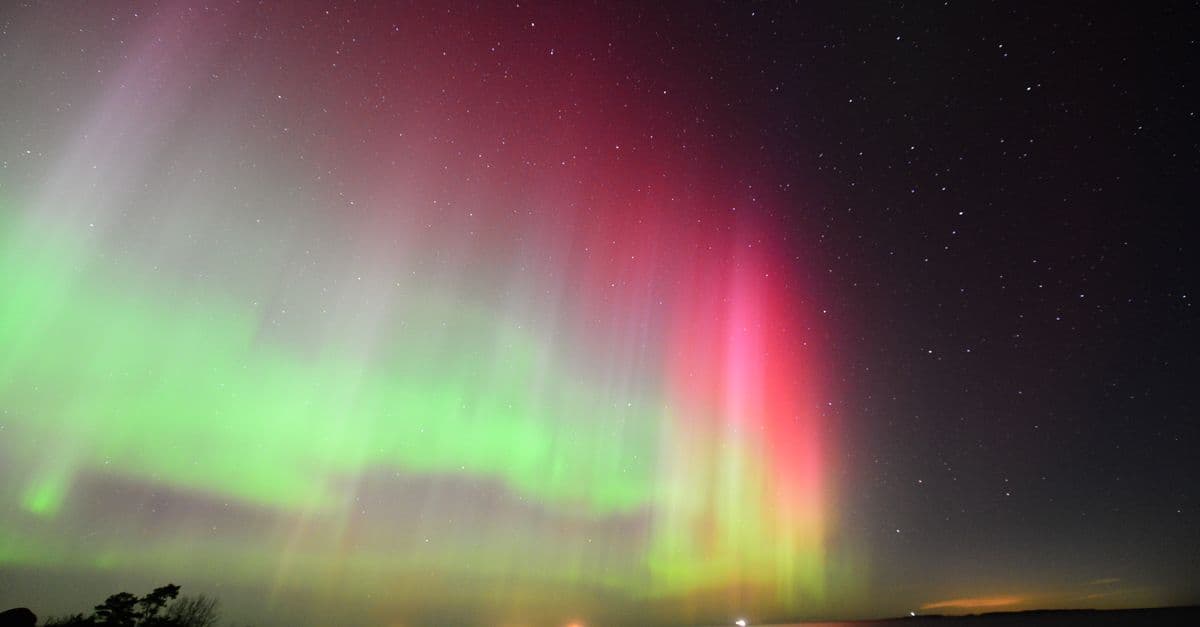
Mesmerizing aurora borealis lights up the night sky in vibrant hues over a calm lake shore.
Science

Solar Storms and the Carrington Event: What Would Happen Today?

On September 1, 1859, British astronomer Richard Carrington watched a white-light flare erupt from the sun's surface — the first solar flare ever recorded by a human being. Within 17 hours, a coronal mass ejection carrying several billion tons of magnetized plasma slammed into Earth's magnetosphere at roughly 2,400 km/s (5.4 million mph), triggering the largest geomagnetic storm in recorded history. Telegraph operators received electric shocks from their equipment. Aurora lit the skies over Cuba, Hawaii, and Colombia. If the same event happened today, a 2008 National Academies report estimated the damage at nearly $2 trillion in the United States alone.
Editorial Team·June 4, 2026·18 min
Explore the stunning cosmic nebula surrounded by a rich star field, captured in breathtaking detail.
Space

Solar Maximum 2025: How Solar Cycle 25 Outran Every Prediction

In May 2024, auroras appeared over Florida, the Yucatán Peninsula, and Puerto Rico. Northern lights were photographed from latitudes that had not seen them in decades — triggered by the strongest geomagnetic storm since March 1989. The storm was rated G5, the maximum on NOAA's five-point geomagnetic disturbance scale. Solar Cycle 25, which government forecasters had predicted would be 'average,' had quietly become one of the most active solar cycles in a century — and the official models did not see it coming until it was already happening.

Editorial Team·June 1, 2026·18 min