Neural Networks and Solar Storm Prediction: AI Watches the Sun to Protect Earth
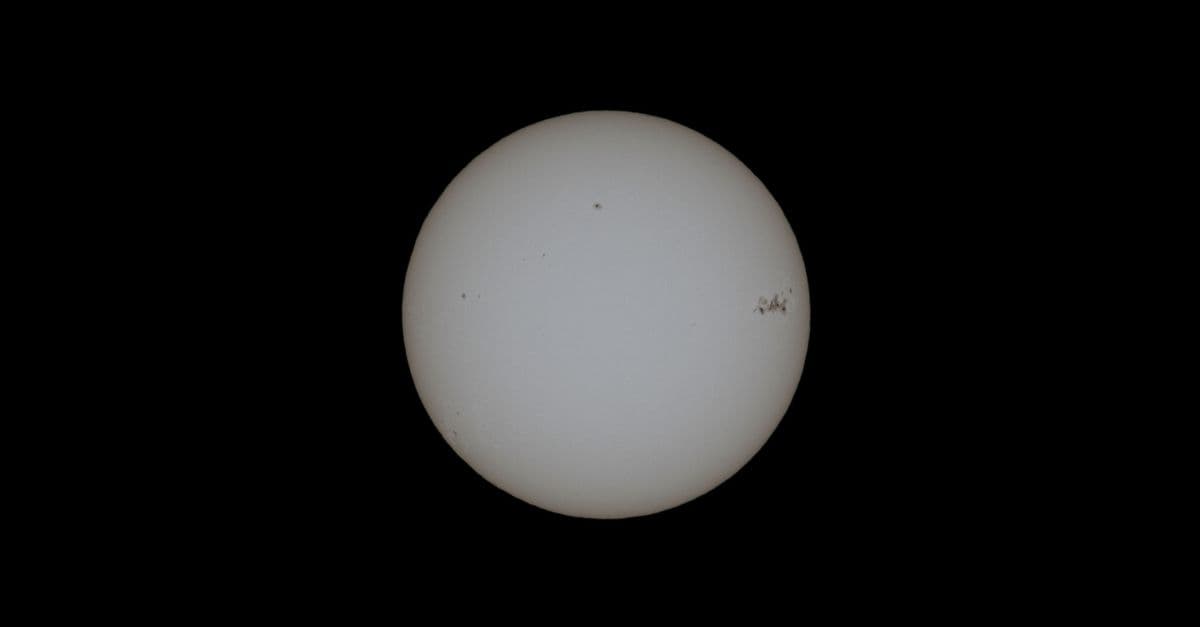
Photo: Google DeepMind / Pexels
On September 1, 1859, British astronomer Richard Carrington watched a massive solar flare erupt from the Sun's surface. Seventeen hours later, the resulting geomagnetic storm — now called the Carrington Event — set telegraph wires on fire, produced auroras visible at the equator, and disrupted global communications for days. If an event of equivalent magnitude struck today, the electromagnetic pulse would fry satellites, collapse power grids across entire continents, and cause economic damage estimated in the trillions of dollars. The good news: neural networks are learning to see it coming.
Key takeaways
- A Carrington-class solar storm today would cause estimated damage of $2-20 trillion globally; early warning systems measured in hours rather than minutes could prevent the worst outcomes.
- Traditional solar storm forecasting uses physics-based models that take days to run; machine learning models deliver predictions in seconds with comparable or better accuracy.
- NASA's Solar Dynamics Observatory captures full-disk solar images every 12 seconds; AI analyzes this continuous stream to detect pre-eruption signatures in solar magnetic field topology.
- Predicting the orientation of a coronal mass ejection's magnetic field — the key factor determining how damaging it will be — is one of the hardest problems in space weather forecasting, and AI is making the first real progress on it.
The Sun as a Dynamic, Dangerous Machine
The Sun is not a passive, stable light source. It is a roiling ball of plasma threaded through with magnetic fields that store enormous amounts of energy — energy that is periodically released in violent events called solar flares and coronal mass ejections (CMEs). A solar flare is an intense burst of electromagnetic radiation, primarily X-rays and extreme ultraviolet light, that reaches Earth at the speed of light, affecting radio communications and GPS within minutes. A CME is a more dangerous, slower phenomenon: a cloud of magnetized plasma billions of tons in mass, hurled into space at speeds of 250 to 3,000 kilometers per second.
When a CME reaches Earth, it can compress our planet's protective magnetosphere, driving electrical currents through the ground and into power infrastructure. The severity of the storm depends on two factors: the CME's speed and density, and critically, the orientation of its magnetic field. If the CME's field is aligned opposite to Earth's (southward-pointing, in the relevant coordinate), it connects efficiently with our magnetosphere and drives powerful geomagnetic activity. If it's aligned the same way, the event may be relatively benign.
Currently, the only place where we can measure a CME's magnetic field orientation is at the L1 Lagrange point — a location about 1.5 million kilometers from Earth where the ACE and DSCOVR spacecraft continuously monitor the solar wind. Measurements there provide roughly 15-60 minutes of warning before the storm hits. For major infrastructure protection — turning off power transformers, safing satellites, warning airline crews to avoid polar routes — more warning time would mean far less damage. This is the problem AI is working to solve.
Physics-Based Models and Their Limitations
Traditional space weather forecasting relies on physics-based simulation codes: models of solar eruption dynamics (like ENLIL, a heliospheric magnetohydrodynamic model), radiation transport models, and magnetospheric response models. These tools can, in principle, simulate a CME's journey from the Sun to Earth, predicting its arrival time and intensity.
In practice, they face severe limitations. Running ENLIL to make a useful CME arrival time prediction takes hours of supercomputer time — hours during which the CME is already traveling toward Earth. The models also struggle with the initial conditions problem: they require accurate, complete measurements of the magnetic field at the solar surface as input, but observations of the solar corona (the region where CMEs form) are systematically incomplete. And the CME magnetic field orientation — the most damage-critical parameter — cannot currently be predicted reliably from any physics-based model.
Solar flare prediction faces similar challenges. The strongest flares tend to originate from complex, highly sheared active regions where opposite magnetic polarities are forced together. But identifying which active regions are about to flare, from among dozens of candidates visible at any time, remains difficult. The standard operational forecast products from NOAA's Space Weather Prediction Center specify probabilities for M-class and X-class flares with skill scores that, while useful, leave substantial room for improvement.
Neural Networks for Flare Prediction
Convolutional neural networks have demonstrated compelling improvements in solar flare prediction. By analyzing magnetic field maps of active regions — magnetograms produced by NASA's Solar Dynamics Observatory and the Helioseismic and Magnetic Imager instrument — CNNs can learn to identify topological features of the magnetic field configuration that precede major flares.
The Deep Flare Net (DeFN) model, developed by researchers at Nagoya University in Japan, uses a time-series of sequential magnetograms to extract evolving features of active region magnetic topology, achieving flare prediction skill scores significantly better than operational benchmarks. Similar CNN approaches by teams at Georgia Tech, Stanford, and ESA's Space Weather Center have confirmed that deep learning consistently outperforms both human expert forecasters and traditional machine learning methods on the flare prediction task.
Crucially, neural networks are also revealing which physical features of the magnetic field are most predictive — providing new scientific insight into the flare triggering process, not just better operational forecasts. The topological complexity of the polarity inversion line (the boundary between opposite magnetic polarities in an active region) and the extent of highly non-potential magnetic field are features that consistently emerge as predictive in trained networks, validating and quantifying physical intuitions that solar physicists have developed over decades.
Predicting CME Impact and Magnetic Field Orientation
Beyond flare prediction, machine learning is tackling the harder problem of CME forecasting. Given that a CME has been observed leaving the Sun (by coronagraphs on the SOHO and STEREO spacecraft), can AI predict when it will arrive at Earth, how intense the storm will be, and — most critically — the orientation of its magnetic field?
Arrival time prediction using neural networks trained on historical CME catalogs has achieved improvements over physics-based models, with mean absolute errors around 8-10 hours — sufficient to issue useful warnings for events several days away. But the magnetic field orientation prediction has been particularly resistant to solution.
Recent work by researchers at the University of Michigan and NASA's Goddard Space Flight Center suggests that machine learning models trained on EUV (extreme ultraviolet) observations of the solar eruption — particularly the orientation of the erupting filament and the topology of the overlying coronal magnetic field — can provide probabilistic forecasts of Bz (the southward magnetic field component) before the CME reaches L1. This represents genuine scientific progress; if validated operationally, it could extend meaningful space weather warning times from minutes to potentially 12-24 hours.
Real-Time Monitoring and Operational Deployment
NASA's Solar Dynamics Observatory captures the full solar disk in 10 wavelength channels every 12 seconds, generating approximately 1.5 terabytes of science data per day. Processing this continuous stream in real-time, identifying active regions, measuring their magnetic field complexity, and issuing automated flare probability updates requires AI running continuously against the raw data feed.
NOAA's Space Weather Prediction Center, the operational hub for US space weather forecasting, is actively incorporating machine learning into its production forecast systems. The SolarMonitor automated active region characterization tools, the SMART (Solar Monitor Active Region Tracker) system, and deep learning classifiers for flare and CME prediction are being tested and, in some cases, deployed alongside traditional physics-based models.
ESA operates the Space Weather Service Network from its Space Weather Coordination Centre, similarly incorporating AI tools. With the Parker Solar Probe (which has dipped inside the Sun's corona at unprecedented proximity) and the Solar Orbiter mission providing new measurements of solar magnetic fields from novel vantage points, the training data available to AI models continues to improve, and with it, the quality of forecasts that protect the infrastructure of modern civilization from our own parent star.
FAQ
What is a coronal mass ejection (CME)? A CME is a cloud of magnetized plasma, billions of tons in mass, expelled from the Sun at speeds of 250 to 3,000 km/s. When a CME reaches Earth, it can compress the magnetosphere and drive geomagnetic storms that disrupt satellites, GPS, radio communications, and power grids.
How much warning do we currently get before a solar storm hits? Currently, about 15-60 minutes of warning from spacecraft at the L1 Lagrange point, which can directly measure the CME's magnetic field. Physics-based models can provide 1-3 day warnings for CME arrival time, but without reliable magnetic field orientation predictions. AI is working to extend useful warning times.
How do neural networks predict solar flares? CNNs analyze sequences of magnetograms — maps of the Sun's surface magnetic field — from NASA's Solar Dynamics Observatory. They learn to identify complex, sheared magnetic field topologies in active regions that precede major flares, outperforming traditional forecasting methods.
What is the Carrington Event? The Carrington Event was the most powerful solar storm ever recorded, occurring in September 1859. It caused massive disruption to telegraph systems worldwide. Estimates suggest a similar event today would cause $2-20 trillion in damage to satellites, power grids, and communications infrastructure.
What is the L1 Lagrange point? The L1 Lagrange point is a gravitational balance point between Earth and the Sun, approximately 1.5 million kilometers from Earth. Spacecraft like ACE and DSCOVR are stationed there to monitor solar wind conditions, providing the only direct measurement of a CME's magnetic field orientation before it strikes Earth.
Read next:
Follow new articles
Add SciHub101 to your feed reader to see new science and technology stories.
About the Author
SciHub101 is an independent science and technology publication founded and edited by Buğra Sözeri, a software engineer and app developer based in Türkiye. AI tools assist with drafting and research. Source documentation in the existing archive is uneven, and articles are being reviewed and corrected. The Editorial Team byline identifies editorial responsibility; it does not certify specialist or independent human review. Where we compare products, anything built by our own team is labelled as such — see the editorial guidelines and About page for how corrections and disclosures work.
Related Articles

How Astronauts Live in Space: The Complete Guide to Daily Life in Orbit
Sleeping in a sleeping bag on a wall, recycling urine into drinking water, and exercising to save your bones. This is life in space.
How Galaxies Form and Evolve: From the First Stars to Today
Galaxies are not eternal — they are born, grow through mergers, and eventually die. Here's how the universe built these island universes.
Solar Storms and Space Weather Explained — The Threat From the Sun
Solar flares, coronal mass ejections, and geomagnetic storms are not science fiction. They have knocked out power grids before, and the next big one could be far worse.
Solar Maximum 2025: How Solar Cycle 25 Outran Every Prediction
In May 2024, auroras appeared over Florida, the Yucatán Peninsula, and Puerto Rico. Northern lights were photographed from latitudes that had not seen them in decades — triggered by the strongest geomagnetic storm since March 1989. The storm was rated G5, the maximum on NOAA's five-point geomagnetic disturbance scale. Solar Cycle 25, which government forecasters had predicted would be 'average,' had quietly become one of the most active solar cycles in a century — and the official models did not see it coming until it was already happening.
Parker Solar Probe — Touching the Sun
NASA's Parker Solar Probe is the first spacecraft to fly inside the Sun's corona — here's what it has found and why it matters.
AI and Autonomous Spacecraft Navigation: How Mars Rovers Think for Themselves
Mars rovers like Perseverance use onboard AI to navigate treacherous terrain, select science targets, and survive a 20-minute communication delay from Earth.