Artificial Intelligence
Mechanistic Interpretability: Reading an AI's Circuits
Mechanistic interpretability reverse-engineers neural networks into features and circuits. What it has found in GPT-2 and Claude, and what it cannot yet do.
33 articles tagged with #neural-networks
Mechanistic interpretability reverse-engineers neural networks into features and circuits. What it has found in GPT-2 and Claude, and what it cannot yet do.
Generative AI art is produced by machine learning models trained to learn patterns from existing images and generate new images based on text descriptions or other prompts. The two dominant approaches are diffusion models (which start with noise and progressively refine toward an image) and GANs (Generative Adversarial Networks, which pit a generator against a discriminator in competition). For artists, understanding how these systems work is essential—both for using them effectively and for understanding their limitations and biases. This article explains diffusion, GANs, latent space, fine-tuning, and what these technologies can and cannot do.
Transformer neural networks explained for beginners: attention mechanism, self-attention, encoder-decoder, why they power every modern LLM like ChatGPT and.
Machine learning explained simply — no jargon. How computers learn from data, real-world examples (spam filter, Netflix, fraud detection), why it matters.
From Turing's 1950 paper to GPT-4, trace the breakthroughs, winters, and renaissance that shaped modern AI.
Neural networks are layered functions whose connection strengths are tuned by gradient descent. From the 1943 artificial neuron to AlexNet's 2012 ImageNet win and today's transformers, this is how the idea went from dormant to dominant.
Training and inference are two fundamentally different computational processes. Understanding the distinction explains most of how AI systems work and cost.
In 2010 the best image classifier missed the right label in its top five guesses about 28% of the time. By 2015 that was 3.57%. Here is what changed, and how a CNN actually sees.
Meta trained Llama 3 on more than 15 trillion tokens using 7.7 million H100 GPU-hours. Here is how next-token prediction at that scale turns into a conversation partner.
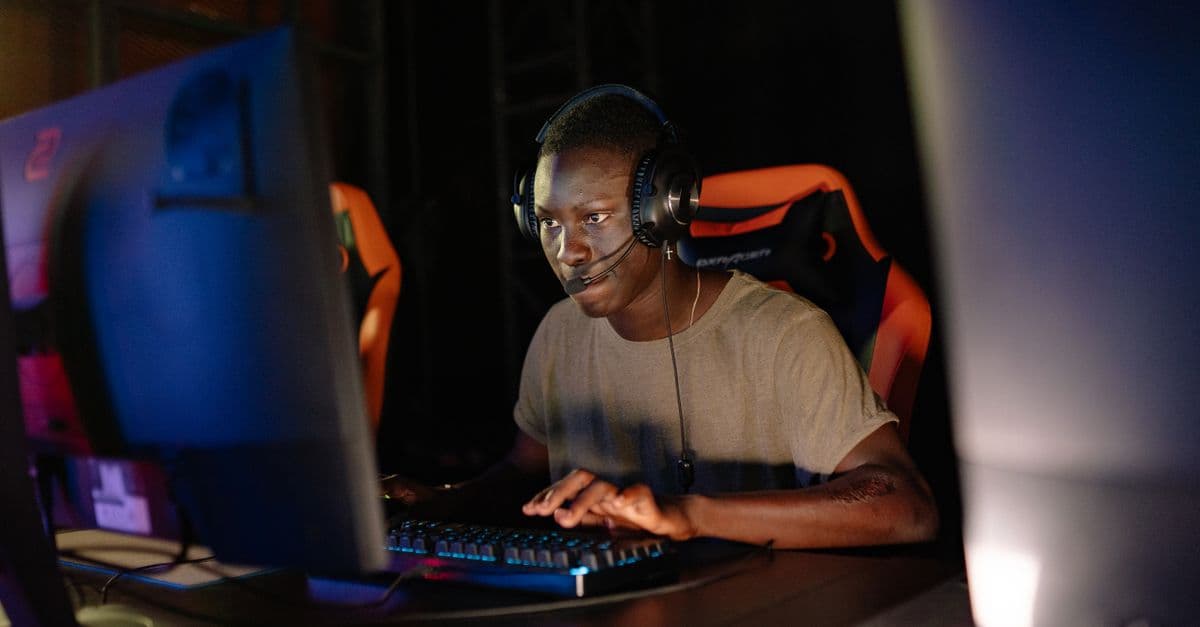
Neural networks are replacing traditional physics equations in game engines, enabling more realistic simulation of fluids, cloth, destruction, and character motion at real-time speed.