What is Machine Learning? Simple Guide for Beginners

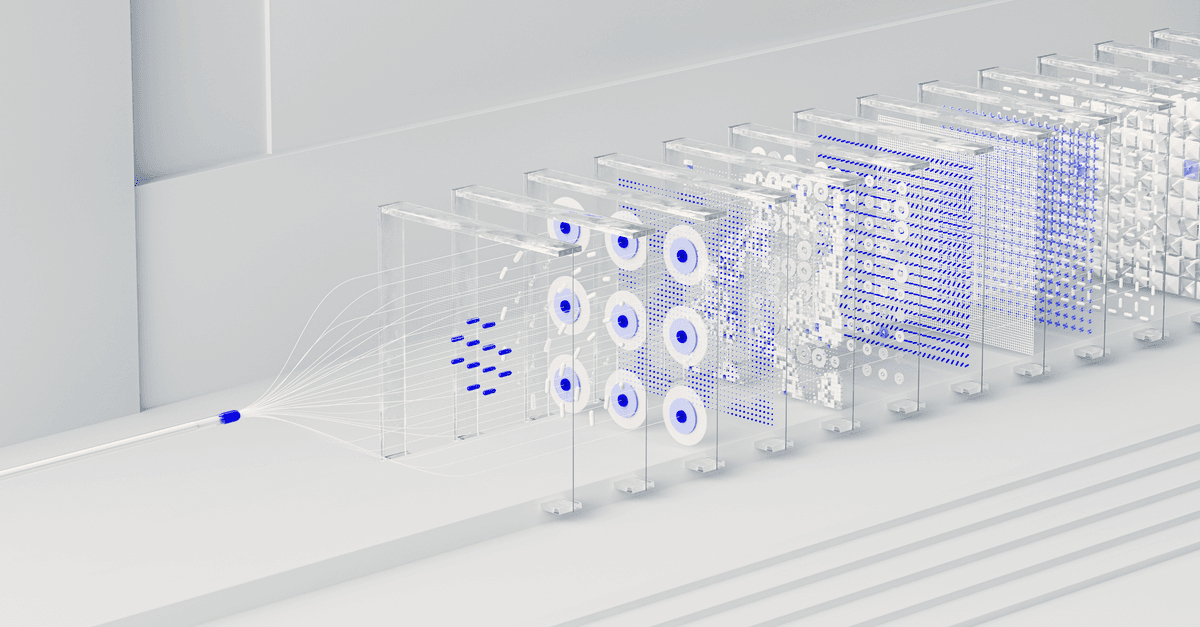
Photo: Google DeepMind / Pexels
Machine learning is the technology that decides which emails land in your spam folder, which show Netflix queues up next, and whether your bank flags a 3 a.m. card swipe as fraud. At its core, it is a way of programming computers to find patterns in data instead of following rules a human wrote by hand. This guide breaks down how that actually works, where the idea came from, and why it matters more in 2026 than it did even two years ago.
What machine learning actually means
Arthur Samuel, an IBM researcher, coined the term "machine learning" in a 1959 paper describing a program he built to play checkers. He defined it as programming a computer to behave in a way that would be called "learning" if a human did it. Samuel's checkers program improved by playing games against itself and adjusting its own strategy — an early, simple version of the reinforcement learning techniques used in today's game-playing and robotics systems (IBM Journal of Research and Development, 1959).
That definition still holds. Machine learning (ML) is a subfield of artificial intelligence in which software improves its performance on a task by processing examples, rather than by executing instructions a programmer typed out one condition at a time. The output of that process is called a model, a piece of software that has learned statistical patterns from data and can apply them to new, unseen situations.
The clearest way to see the difference is to compare it with traditional programming.
Traditional programming starts with rules and produces answers:
Rule: if temperature > 30°C, turn on the AC
Rule: if temperature < 20°C, turn on the heat
Input: today's temperature
Output: AC on or off
A person writes every rule. The computer just executes them.
Machine learning flips that order. It starts with examples and answers, and produces the rules:
Input: 100,000 past examples of temperature + whether AC was on
Output: a model that has inferred the relationship on its own
The computer searches through the data for a pattern that predicts the outcome, then encodes that pattern as adjustable numbers called parameters (think of them as dials the model tunes until its predictions stop being wrong as often). This is why ML is often described as "programming with examples" instead of "programming with instructions."
How a model actually learns from data
Every supervised machine learning system, which is the most common type, goes through three stages: training, evaluation, and prediction. Understanding these stages demystifies almost everything you read about AI.
Stage 1: Training
During training, the algorithm is shown a large number of labeled examples. For a spam filter, that means millions of emails, each tagged "spam" or "not spam" by a human or an earlier filter. The algorithm doesn't read these emails the way a person does. It converts each one into a list of numerical features, such as word frequency, sender reputation, punctuation density, and the presence of links, then looks for a mathematical relationship between those features and the label.
Think of training like tuning a radio. You don't build a new receiver for every station. You turn a dial, listen to the static, and adjust until the signal clears. A model does the same thing with a technique called gradient descent: it makes a prediction, checks how wrong it was against the true label (this measurement is called the "loss"), and nudges its internal parameters slightly in the direction that reduces that error. It repeats this nudging millions of times.
Stage 2: Evaluation
A model is never tested on the exact data it trained on, for the same reason a teacher doesn't hand out the answer key before an exam. Engineers hold back a portion of the labeled data, called a test set, that the model never sees during training. After training finishes, the model makes predictions on this unseen data, and its accuracy on that set is the honest measure of how well it generalizes to the real world.
This step catches a common failure mode called overfitting, where a model memorizes its training examples instead of learning the underlying pattern. An overfit spam filter might perfectly identify the million emails it trained on but fail on the millionth-and-first email it has never encountered, because it learned quirks of that specific dataset rather than what spam generally looks like.
Stage 3: Prediction (inference)
Once a model passes evaluation, it goes into production, where the process is called inference. A new, never-before-seen email arrives, the model converts it into the same kind of numerical features it used during training, and it outputs a probability, for example 97 percent likely to be spam. Google reports that Gmail's machine learning filters now block more than 99.9 percent of spam, phishing, and malware messages, and the company's RETVec text-processing system improved spam detection by 38 percent while cutting false positives by 19.4 percent in later updates (AI Business).
Q: What's the difference between training a model and running it?
Training is the one-time (or periodically repeated) process of showing a model labeled examples so it can adjust its internal parameters. Running it, called inference, is using that already-trained model to make a prediction on new data in real time. Training can take hours or weeks; inference on a single input typically takes milliseconds.
The three main types of machine learning
Not every ML system learns the same way. The type of learning depends on what kind of feedback the algorithm gets during training.
Supervised learning: learning from labeled examples
In supervised learning, every training example comes with a correct answer attached. Show the model a photo labeled "cat" a thousand times and a photo labeled "dog" a thousand times, and it learns which visual patterns correspond to each label. This is the most widely used category of ML in production systems today, covering spam filtering, credit scoring, medical image classification, and price prediction.
Supervised learning splits into two task types:
- Classification predicts a category, such as spam versus not spam, or whether a tumor is benign or malignant.
- Regression predicts a number, such as a house price or a delivery time.
Unsupervised learning: finding structure without labels
Unsupervised learning gets no answer key at all. The algorithm receives raw data, for example a million customer purchase histories, and its job is to find structure on its own, typically by grouping similar items together (clustering) or by compressing the data down to its most important underlying factors (dimensionality reduction). A retailer might discover, without ever labeling a single customer, that its buyers naturally split into a "bargain hunters" cluster and a "brand loyalists" cluster, simply because the algorithm found that those groups behave differently across dozens of variables.
Reinforcement learning: learning by trial and reward
Reinforcement learning trains an agent to make a sequence of decisions by rewarding good outcomes and penalizing bad ones, the way you'd train a dog with treats rather than a rulebook. There's no labeled dataset. Instead, the system tries an action, observes the result, and adjusts its strategy to get more reward over time. This is the approach behind Arthur Samuel's original checkers program, and it's also the technique DeepMind used to train AlphaGo, the program that beat world champion Lee Sedol at Go in 2016, and it underlies most robotics and warehouse-navigation systems today.
Table 1. The three core types of machine learning, compared
| Learning type | What it needs | What it produces | Common real-world use |
|---|---|---|---|
| Supervised learning | Labeled input-output pairs | Predictions on new inputs | Spam filters, credit scoring, medical imaging |
| Unsupervised learning | Unlabeled raw data | Groupings or hidden structure | Customer segmentation, anomaly detection |
| Reinforcement learning | An environment plus a reward signal | A trained decision-making policy | Game-playing AI, robotics, warehouse routing |
Caption: Each type answers a different question — supervised learning predicts, unsupervised learning discovers, and reinforcement learning optimizes a strategy over time.
Machine learning versus deep learning versus artificial intelligence
These three terms get used interchangeably in headlines, which causes most of the public confusion around ML. They are not synonyms; they nest inside one another.
Artificial intelligence (AI) is the broadest category: any technique that makes a machine perform a task we'd normally say requires intelligence, whether that's a hand-coded chess engine from the 1990s or a modern chatbot. Machine learning is a subset of AI, specifically the techniques where the system improves by learning from data rather than following pre-written rules. Deep learning is a subset of machine learning that uses layered mathematical structures called neural networks, loosely modeled on how neurons connect in a biological brain, to learn increasingly abstract features from raw data.
A useful analogy: AI is "transportation," machine learning is "cars," and deep learning is "electric cars." Every electric car is a car, and every car is a form of transportation, but not every form of transportation is a car, and not every car is electric.
Deep learning's breakthrough moment came in 2012, when a neural network called AlexNet, built by Alex Krizhevsky, Ilya Sutskever, and Geoffrey Hinton at the University of Toronto, entered the ImageNet image-recognition competition and achieved a top-5 error rate of 15.3 percent. The next-best competitor, using traditional (non-deep-learning) computer vision techniques, scored 26.2 percent, more than 10 percentage points worse (Pinecone, "AlexNet and ImageNet"). Within two years, nearly every top team in the competition had switched to deep neural networks, and that single result is widely credited with triggering the modern deep learning boom that eventually produced today's large language models.
For a full breakdown of where these three terms overlap and diverge, see our companion piece on the difference between AI, ML, and deep learning.
Where you already encounter machine learning
Machine learning isn't a future technology waiting to arrive. It already runs quietly behind most digital services people use daily.
Netflix and recommendation engines
Netflix's recommendation system, which suggests what to watch next based on your viewing history and the behavior of similar users, drives an estimated 80 percent of the content streamed on the platform. Netflix's own data science team has stated that the combination of personalization and recommendation technology saves the company on the order of $1 billion per year, primarily by reducing subscriber cancellations (The Motley Fool, "How Netflix's AI Saves It $1 Billion Every Year"). The mechanism is unsupervised and supervised learning working together: clustering algorithms group viewers with similar tastes, and supervised ranking models predict how likely you specifically are to finish a given title.
Fraud detection at scale
PayPal processes transactions across more than 400 million consumer accounts and uses machine learning models that evaluate over 500 data points per transaction in real time, a task that would be impossible for a fixed rulebook to keep up with as fraud tactics evolve week to week. According to PayPal, this multilayered machine learning approach blocks roughly $500 million in fraud per quarter while keeping the false-positive rate, meaning legitimate transactions incorrectly flagged as fraud, below 5 percent (Chief AI Officer, "How PayPal's AI Blocks $500 Million in Fraud Per Quarter"). The key advantage over rule-based fraud detection is adaptability: a rule like "flag any purchase over $5,000" is trivial for a fraudster to work around by staying under the threshold, but a model trained on hundreds of behavioral signals is far harder to reverse-engineer.
Search ranking
When you search Google, the results aren't ordered by a fixed formula someone wrote in 2004. Google's ranking systems incorporate machine learning models trained on patterns in what people click, how long they stay on a page, and which results get reformulated searches, and these signals are combined with hundreds of other ranking factors to estimate relevance for a specific query.
Face and voice recognition
The Face ID system that unlocks an iPhone is trained on a large dataset of human faces to learn distinguishing landmarks, such as the distance between your eyes and the geometry of your nose bridge, then compares those measurements against an on-device mathematical representation of your face created during setup. This is supervised learning applied to computer vision, running on specialized on-device chips rather than in the cloud, for privacy and speed.
Medical diagnosis support
Machine learning models trained on medical images, such as retinal scans or radiology images, have been studied for their ability to flag signs of diabetic retinopathy and certain cancers. It's worth being precise here: peer-reviewed studies have found some of these models can match specialist-level accuracy on narrow, well-defined detection tasks under research conditions, but they are decision-support tools reviewed by clinicians, not replacements for diagnosis, and their real-world performance depends heavily on how closely the deployment population matches the training data.
Why machine learning depends on data quality, not magic
A model is only as good as the patterns present in its training data, and this single fact explains most of ML's real-world failures. Three conditions need to hold for machine learning to work well on a given problem.
First, the past has to be a reasonable guide to the future. ML can predict house prices because location, size, and condition have driven price for decades, and that relationship changes slowly. It cannot predict lottery numbers, because each draw is independently random by design; no amount of historical data reveals a pattern that isn't there.
Second, there has to be enough data to estimate the pattern reliably. A model trained on 200 examples of a rare disease will struggle to generalize, the same way you'd hesitate to draw conclusions about a country's cuisine after eating at two restaurants.
Third, and most overlooked, the training data has to represent the population the model will actually be used on. This is where bias creeps in. If a hiring model is trained on ten years of a company's past hiring decisions, and those decisions systematically favored one demographic, the model will learn to replicate that pattern, not correct it. Amazon famously scrapped an internal recruiting tool in 2018 after discovering it had taught itself to penalize resumes containing the word "women's," because it had trained on a decade of resumes submitted mostly by men in a male-dominated industry. The model wasn't malfunctioning; it was accurately learning the biased pattern in its data. This is the origin of the phrase "garbage in, garbage out," applied to machine learning specifically.
Q: Can machine learning models be biased?
Yes. A model trained on biased historical data will learn and often amplify that bias, because it has no independent sense of fairness, only statistical correlation. Reducing bias requires auditing training data, testing model outputs across demographic groups, and in many cases redesigning what the model is optimized to predict in the first place.
Q: How much data does machine learning actually need?
It depends on the task's complexity. Simple models predicting a single number from a handful of features can work with a few thousand examples. Deep learning systems for tasks like image recognition or language modeling typically need millions to billions of examples, which is why large tech companies with enormous user bases have historically had an advantage in building the most capable models.
Common misconceptions about machine learning
"Machine learning means the computer understands what it's doing." It doesn't, at least not in the way a human understands language or images. A large language model doesn't know what a cat is the way you do; it has learned that certain sequences of text tokens statistically co-occur with the concept "cat" across a huge training corpus. This distinction matters because it explains why models can be extremely capable on tasks similar to their training data and fail in strange, sometimes obviously wrong ways on tasks that are subtly different.
"More data always makes a model better." More data helps, but only if it's relevant and reasonably clean. Adding a million mislabeled or irrelevant examples can make a model worse, not better, because it dilutes the genuine signal with noise. Data quality and diversity typically matter more than raw volume past a certain point.
"Machine learning is the same as artificial intelligence." As covered above, ML is one approach to building AI, historically the most successful one over the past 15 years, but not the only one. Rule-based expert systems, search algorithms, and symbolic reasoning are also forms of AI that predate the modern ML wave and are still used in specific domains like chess engines and certain planning software.
"A machine learning model will keep improving forever on its own." Not unless someone keeps feeding it new data and retraining it. Deployed models can go stale, a phenomenon engineers call model drift, when the real world changes and the patterns the model learned no longer hold. A fraud model trained before a new scam tactic emerges won't catch it until it's retrained on examples of that tactic, which is why production ML systems require ongoing maintenance, not a one-time build.
Why understanding machine learning matters right now
Machine learning has moved from a specialist skill to a baseline expectation across finance, healthcare, manufacturing, retail, and logistics. Fraud teams at banks, radiology departments evaluating imaging tools, and manufacturers running predictive maintenance on factory equipment are all making decisions about, or working alongside, machine learning systems, whether or not "data scientist" is in their job title.
Understanding roughly how these systems work, what they need to succeed, and where they reliably break down is becoming as practically useful as understanding roughly how a spreadsheet formula works: you don't need to build one from scratch, but you do need to know enough to spot when a result looks wrong. If you want to go deeper into the mechanics behind the most common algorithms driving these systems, our guide on ML algorithms explained walks through linear regression, decision trees, and k-nearest neighbors with concrete examples. And if you're considering building these skills yourself, the complete ML learning path for 2026 lays out a realistic, sequenced roadmap.
Frequently asked questions
Q: Is machine learning the same as AI? A: No. Artificial intelligence is the broad goal of building machines that perform tasks associated with intelligence. Machine learning is a specific set of techniques, learning from data rather than following hand-written rules, that has become the dominant way of achieving that goal since roughly 2012.
Q: Will machine learning replace my job? A: Machine learning automates specific tasks within jobs more often than it eliminates entire roles outright, particularly repetitive, pattern-based tasks like flagging anomalies or sorting documents. Economic research on the topic generally finds task-level displacement alongside new task creation, rather than a clean one-for-one replacement, though the impact varies significantly by industry and role.
Q: Do I need to know advanced math to use machine learning? A: To build and tune models from first principles, yes, linear algebra, calculus, and statistics are foundational. To use pre-built ML tools and APIs, no, many practitioners apply existing libraries effectively with a working conceptual understanding rather than deep mathematical fluency.
Q: What's the difference between a model and an algorithm? A: An algorithm is the general learning procedure, such as gradient descent or a decision tree splitting rule. A model is the specific, trained output of running that algorithm on a particular dataset, the set of learned parameters that makes predictions.
Q: Why do machine learning models sometimes make confidently wrong predictions? A: Models produce probability estimates based on statistical patterns in their training data, not verified reasoning. When a new input differs meaningfully from anything the model saw during training, it can still output a high-confidence prediction, because nothing in its process forces it to recognize unfamiliar territory the way a cautious human expert would.
Q: What is overfitting in simple terms? A: Overfitting happens when a model learns the noise and specific quirks of its training data instead of the general pattern, similar to a student who memorizes exam answers verbatim without understanding the underlying concept and then fails a differently worded test on the same material.
Q: Is deep learning always better than traditional machine learning? A: No. Deep learning tends to outperform traditional methods on large, unstructured datasets like images, audio, and text, where AlexNet's 2012 result was a turning point. For smaller, structured, tabular datasets, simpler models like decision trees or gradient-boosted trees frequently match or beat deep learning while training faster and being easier to interpret.
Q: Can machine learning work with very little data? A: Generally, no, not well. Techniques like transfer learning, where a model pretrained on a large general dataset is fine-tuned on a small, specific one, can reduce the data requirement substantially, but some minimum volume of relevant, representative examples is still necessary for reliable performance.
The takeaway
Machine learning is not artificial general intelligence, and it doesn't "understand" anything the way a person does. It's a statistical process: show a system enough examples, let it adjust its internal parameters until its predictions stop being wrong as often, and then use that trained model to make fast predictions on new data. That simple loop, refined since Arthur Samuel's 1959 checkers program, now filters your email, ranks your search results, and decides whether your credit card transaction looks suspicious. Understanding that loop, and its dependence on good, representative data, tells you almost everything you need to know to evaluate any ML claim you'll encounter this year.
Read next:
Follow new articles
Add SciHub101 to your feed reader to see new science and technology stories.
About the Author
SciHub101 is an independent science and technology publication founded and edited by Buğra Sözeri, a software engineer and app developer based in Türkiye. AI tools assist with drafting and research. Source documentation in the existing archive is uneven, and articles are being reviewed and corrected. The Editorial Team byline identifies editorial responsibility; it does not certify specialist or independent human review. Where we compare products, anything built by our own team is labelled as such — see the editorial guidelines and About page for how corrections and disclosures work.
Related Articles
Complete Machine Learning Learning Path 2026 Roadmap
Complete ML learning roadmap 2026: Python → Math → Algorithms → Projects → Job. Free courses, realistic timeline, salary expectations, career path.
Difference Between AI, ML, and Deep Learning Explained
AI, machine learning, and deep learning are nested, not synonyms. See how each works, where they differ, and when classic ML beats neural networks.

Transformers Explained — The Architecture Behind GPT
Transformer neural networks explained for beginners: attention mechanism, self-attention, encoder-decoder, why they power every modern LLM like ChatGPT and.

What Is Generative AI Art? How Diffusion Models and GANs Learn to Create
Generative AI art is produced by machine learning models trained to learn patterns from existing images and generate new images based on text descriptions or other prompts. The two dominant approaches are diffusion models (which start with noise and progressively refine toward an image) and GANs (Generative Adversarial Networks, which pit a generator against a discriminator in competition). For artists, understanding how these systems work is essential—both for using them effectively and for understanding their limitations and biases. This article explains diffusion, GANs, latent space, fine-tuning, and what these technologies can and cannot do.

The History of Artificial Intelligence: A Complete Timeline
From Turing's 1950 paper to GPT-4, trace the breakthroughs, winters, and renaissance that shaped modern AI.

Neural Networks and Deep Learning: Mimicking the Brain
Neural networks are layered functions whose connection strengths are tuned by gradient descent. From the 1943 artificial neuron to AlexNet's 2012 ImageNet win and today's transformers, this is how the idea went from dormant to dominant.