How Astronauts Live in Space: The Complete Guide to Daily Life in Orbit

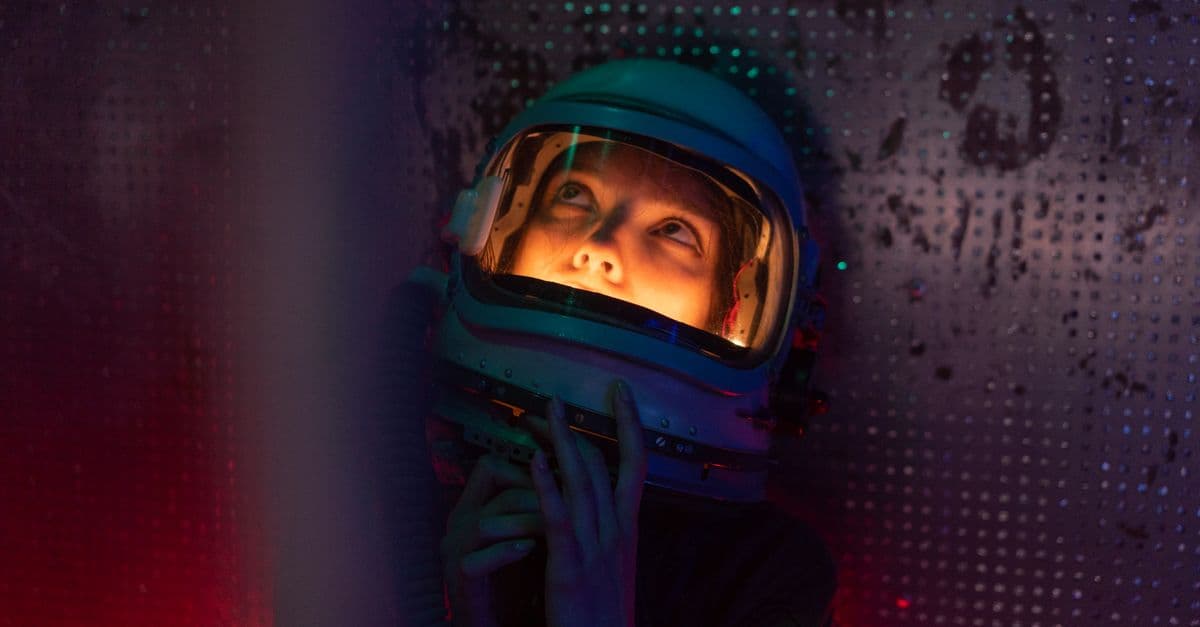
Photo: T Leish / Pexels
Imagine waking up inside a sleeping bag tethered to a wall. The window beside you shows Earth wrapped in blue and white, sliding past at five miles per second. In the hallway — if you can call a cylindrical module corridor a hallway — a floating water droplet the size of a marble drifts from the kitchen. Your coffee won't pour. Your tears won't fall. And somewhere, the hum of machinery maintains the illusion of a breathable, livable environment in a place where the vacuum of space is less than a centimeter of metal away.
This is daily life on the International Space Station. For the six people who call it home at any given time, it is simultaneously extraordinary and mundane — a place where you watch sunrises every 90 minutes and argue about whose turn it is to clean the toilet.
Key takeaways
- Astronauts sleep in tethered sleeping bags inside closet-sized cabins, often in any orientation
- Two hours of mandatory daily exercise are required to prevent bone density loss and muscle atrophy
- Water is recycled from humidity, sweat, and urine through an advanced purification system
- Food comes in specialized packages; fresh produce delivered by cargo ships is a luxury
- Astronauts on 6-month missions typically lose 1–2% of bone density per month without exercise countermeasures
- Psychological challenges — isolation, confinement, communication delays — are managed through structured schedules and regular contact with family
Sleep: When up and down don't exist
On Earth, sleep is governed by darkness, gravity, and the circadian rhythms that evolved over millions of years. In orbit, the ISS experiences 16 sunrises every 24 hours. The Sun rises every 90 minutes, making natural darkness impossible. The station runs on Greenwich Mean Time, regardless of the national origin of its crew, and lighting in the crew quarters is dimmed artificially to simulate a day-night cycle.
Each crew member has a personal cabin — roughly the size of a phone booth — with a sleeping bag attached to a wall. There is no "up." Some astronauts sleep with their head pointing toward the "floor," some horizontal, some "upright." The brain adapts quickly, usually within the first few days, to the absence of a gravitational frame of reference. What takes longer to adapt to is the constant noise: the station is never quiet. Fans, pumps, air handlers, and electrical systems create a continuous background hum around 55–65 decibels — about the level of a moderately busy office. Ear plugs are standard equipment.
Despite the oddities, astronauts report sleeping reasonably well. The crew schedule allots 8.5 hours for sleep, though actual sleep time is typically shorter. Light therapy, melatonin, and careful scheduling help maintain circadian rhythms. Some crew members, especially those on longer missions, report that the view from the cupola module — a seven-windowed dome that offers a panoramic view of Earth — becomes their evening ritual before sleep: watching cities and storms and coastlines scroll past below.
Exercise: Fighting the silent enemy
Of all the challenges of living in space, the most insidious is one you cannot see or feel while it's happening: your skeleton is dissolving. Without the constant mechanical loading that gravity provides on Earth — without the skeleton having to bear body weight all day — bone starts to resorb. Astronauts on long-duration missions lose 1–2% of bone density per month in weight-bearing bones. After six months, that's 6–12% — equivalent to years of aging-related bone loss. Without countermeasures, astronauts would return to Earth with dangerously fragile bones.
The countermeasure is exercise — specifically, exercise that mimics load-bearing. The Advanced Resistive Exercise Device (ARED) uses vacuum cylinders to simulate weight training up to 600 pounds of load. Astronauts deadlift, squat, and bench press. On a treadmill called COLBERT (Combined Operational Load-Bearing External Resistance Treadmill), crew members run while wearing a harness that bungee-cords them to the surface to simulate body weight. A bicycle ergometer provides cardiovascular training.
Two hours of exercise every day, six days a week, are non-negotiable. Mission rules. Ground controllers build it into the daily schedule. Astronauts who arrive fit and maintain their exercise regimen return to Earth with manageable — though real — losses. Those who skip sessions return with serious consequences that require months of rehabilitation.
The exercise regimen also addresses muscle atrophy and cardiovascular deconditioning — the heart shrinks slightly in microgravity because it doesn't have to pump against gravity — and helps maintain the psychological well-being that comes from physical exertion.
Food: Eating in weightlessness
Space food has come a long way from the early days of paste squeezed from tubes. Today's ISS menu includes over 200 items: thermostabilized (heat-treated), freeze-dried, irradiated, and natural-form foods that can be prepared aboard the station. Macaroni and cheese. Chicken with rice. Shrimp cocktail — which has been on the menu since Apollo days, astronauts love it. Even tortillas, which replaced bread because crumbs in zero-g would float into equipment and lungs.
The constraint on all space food is that it must not produce crumbs or free-floating liquids. Everything must be self-contained. Liquids are drunk from sealed bags with straws. Beverages are powdered and rehydrated — coffee, tea, orange juice. Meals are rehydrated by adding hot water, then eaten with forks and spoons from packages that hold the food in place with surface tension until it's consumed.
Fresh food is the one indulgence. Cargo ships deliver "bonus containers" of fresh fruit, vegetables, and treats alongside their scientific payloads. The arrival of fresh food is anticipated like a holiday. Astronauts describe the smell of fresh vegetables as overwhelming after weeks of packaged food. Some experimental plant growth chambers on the ISS have produced small amounts of lettuce and radishes that astronauts have eaten — the first crops grown and consumed in space.
Eating together is important. Meals, especially on weekends, are communal events where crew from different national agencies eat together in the Unity node or the Russian segment, trading food from their respective menus. It is, astronauts universally report, one of the most humanizing parts of the mission.
Hygiene: Clean enough for space
Without running water, conventional bathing is impossible. Astronauts wash with no-rinse shampoo and washcloths, and sponge-bathe using water from a pouch. Teeth are brushed normally — the toothpaste is edible so it can be swallowed rather than spit. Hair is washed with no-rinse shampoo in the same way.
The toilet on the ISS is a small, unremarkable-looking device that operates on suction. Without gravity, liquid and solid waste would simply float. Urine is drawn into a collector and routed to the water recovery system. Solid waste is drawn into bags by air flow, sealed, and stored for eventual disposal — it burns up when packed into cargo vehicles that reenter the atmosphere. The system works well but requires practice to use correctly, and new crew members invariably report that learning to use the space toilet is one of their most memorable orientations.
Psychology: The invisible challenge
The physical challenges of spaceflight are well documented. The psychological ones are harder to see but no less real. Six people, isolated together in a pressurized volume roughly equivalent to a large house, for six months. Unable to leave. Unable to truly be alone. Separated from family by a communication delay of milliseconds but an emotional gulf measured in other ways.
NASA and its partner agencies take psychological support seriously. Crew members have private weekly communication sessions with a psychologist. Family video calls are prioritized. A "care package" system ensures that significant dates — birthdays, anniversaries — are acknowledged aboard the station. Movies, music, books, and games are available. On important cultural holidays, crew from the relevant nation cook special food from their country's menu.
Interpersonal conflict is managed through training. Astronauts spend months learning to work with people from different cultures, different professional backgrounds, different communication styles. The training explicitly addresses conflict resolution. The ISS has been operating continuously for 25 years; serious interpersonal incidents have been remarkably rare.
FAQ
Do astronauts get homesick? Universally, yes. Most report that the hardest part of long missions isn't the physical discomfort but the distance from family and friends. Children missing a parent's milestone events — birthdays, school plays, graduations — weigh heavily. Crew members are encouraged to video call family regularly, and significant personal events are marked with some ceremony aboard the station.
How do astronauts deal with medical emergencies in space? Every crew includes at least one member trained as a Crew Medical Officer. The station carries a substantial medical kit including medications, surgical tools, and equipment for dealing with most common emergencies. Telemedicine connects crew to doctors on the ground. For serious emergencies, evacuation to Earth in a Soyuz or Dragon capsule is always an option — the current record for fastest return from ISS to landing is about 3.5 hours.
Do astronauts feel lonely despite being with other people? Yes, paradoxically. Being in constant close proximity with the same small group, without the privacy and solitude that humans need, can produce a sense of isolation even in company. Private cabins help. Personal time is scheduled into the day. Most astronauts describe going through emotional cycles during long missions — periods of euphoria and wonder alternating with periods of longing for home.
What does Earth look like from the ISS? Astronauts uniformly describe their first view of Earth from orbit as transformative — the "overview effect," a shift in perspective that makes geopolitical boundaries seem absurd and the fragility of the atmosphere viscerally apparent. The atmosphere, seen edge-on, is a paper-thin blue line. City lights form constellations at night. Thunderstorms glow from above like silent fireworks. Aurora dances green and red above the polar regions.
How do astronauts communicate with mission control? The ISS communicates with ground teams primarily through a network of Tracking and Data Relay Satellites (TDRS) that relay signals to ground stations. Voice communication, video, and data transfer are all possible. Mission control teams in Houston, Moscow, and partner agencies rotate in shifts to provide 24-hour coverage. An astronaut can call home using a VoIP phone system with a standard US area code, and receive email like any other internet user.
Read next:
Follow new articles
Add SciHub101 to your feed reader to see new science and technology stories.
About the Author
SciHub101 is an independent science and technology publication founded and edited by Buğra Sözeri, a software engineer and app developer based in Türkiye. AI tools assist with drafting and research. Source documentation in the existing archive is uneven, and articles are being reviewed and corrected. The Editorial Team byline identifies editorial responsibility; it does not certify specialist or independent human review. Where we compare products, anything built by our own team is labelled as such — see the editorial guidelines and About page for how corrections and disclosures work.
Related Articles
Machine Learning and Radio Telescopes: The AI Hunt for Alien Signals
From the MeerKAT array to Breakthrough Listen, machine learning is transforming how radio telescopes search for extraterrestrial intelligence — and strange cosmic phenomena.
Neural Networks and Solar Storm Prediction: AI Watches the Sun to Protect Earth
A powerful solar storm could knock out global power grids and satellites. Neural networks are our early warning system against the Sun's most destructive outbursts.
The ISS Explained — Living in Space
How the International Space Station works: orbit, modules, daily life, science, and the transition to commercial stations and China's Tiangong by 2030.
How Space Suits Work: A Personal Spacecraft You Wear
A space suit is a one-person spacecraft. Here is how NASA's suit holds pressure, supplies oxygen, sheds heat, and fends off debris, and what replaces it.

Cardiovascular Changes in Astronauts: ISS Long-Term Health Studies
ISS research reveals how weightlessness causes fluid shifts, cardiac deconditioning, and blood flow changes—insights applicable to heart disease treatment on Earth.
How Astronauts Survive in Space: Life Support Systems Explained
An astronaut in a spacesuit orbiting Earth faces four immediate threats: the vacuum of space (zero pressure, instant death in seconds without suit), extreme temperature swings (−150°C in shadow, 150°C in sunlight), intense radiation (solar wind, cosmic rays), and hypoxia (lack of oxygen). The Environmental Control and Life Support System (ECLSS) on spacecraft manages all four through oxygen generation, carbon dioxide removal, water recycling, temperature regulation, and pressure maintenance. The International Space Station recycles 90 percent of water and generates oxygen through electrolysis. Deep-space missions to Mars will require even more sophisticated recycling: current ECLSS efficiency is insufficient for 2-year Mars transit. This article examines how astronauts survive in space, the engineering of life support, and the challenges of keeping humans alive in the harshest environment.