The ISS Explained — Living in Space
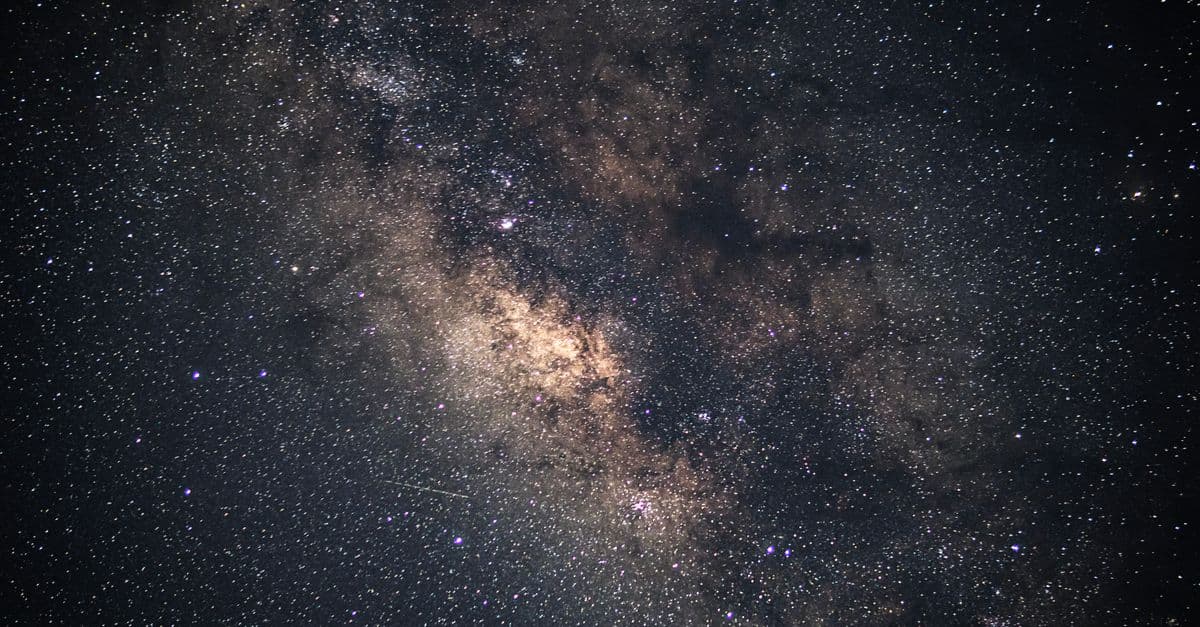
Photo: Nothing Ahead / Pexels
The International Space Station orbits Earth at roughly 410 km altitude, moving at about 27,600 km/h — fast enough to circle the planet once every 92 minutes, which means the crew on board sees a sunrise or sunset roughly every 45 minutes (NASA). It has been continuously occupied by humans since November 2, 2000, longer than any other structure ever built off Earth. NASA plans to deorbit it around 2030. Here is how it actually works, what it costs, and what replaces it.
What the ISS actually is
The ISS is a modular structure built from pressurized sections launched separately and assembled in orbit, starting with the Russian Zarya module in November 1998. Sixteen pressurized modules now provide about 916 cubic meters of habitable volume, roughly the interior space of a Boeing 747, attached to a 109-meter integrated truss that carries the solar arrays (NASA). The whole assembly has a mass of about 420,000 kg, or roughly the weight of 320 mid-size cars.
It flies in low Earth orbit (LEO), the region from about 160 to 2,000 km up where most satellites, crewed spacecraft, and space debris live. That's close enough to Earth that trace atmosphere still creates drag, which is why the ISS slowly loses altitude and needs periodic reboost burns from docked spacecraft to stay aloft. Left alone, its orbit would decay and it would eventually reenter within a few years — which is precisely the mechanism NASA now plans to use deliberately for retirement.
The station is bright enough to be the third-brightest object in the night sky after the Moon and Venus. You can track exactly when it will pass over your location using NASA's free Spot the Station tool, and once you know where to look, spotting it is as easy as watching a fast-moving, steady point of light cross the sky in a few minutes.
The partners, the price tag, and why the politics haven't broken it
Five space agencies representing 15 countries operate the ISS jointly: NASA (United States), Roscosmos (Russia), ESA (10 European member states through the European Space Agency), JAXA (Japan), and CSA (Canada). NASA funds roughly half the program; the rest is split among the other partners according to negotiated contribution agreements dating back to the 1998 Space Station Intergovernmental Agreement.
Total lifecycle cost across all partners exceeds $150 billion, a figure that includes design, launch, assembly, and more than two decades of operations — making the ISS the most expensive single object humans have ever built, edging out even large particle accelerators and dam projects on Earth. A 2023 NASA Office of Inspector General report flagged rising operations and maintenance costs as one factor pushing the agency toward retirement rather than indefinite extension.
Think of the ISS partnership like five families who jointly own a vacation cabin: each contributed a wing, each pays a share of upkeep, and disagreements happen, but nobody wants to be the one who lets the roof cave in. That arrangement has proven remarkably durable. Even after Russia's full-scale invasion of Ukraine in 2022 triggered sanctions and diplomatic ruptures across nearly every other US-Russia channel, joint ISS operations continued largely uninterrupted — astronauts and cosmonauts kept flying on each other's vehicles, and Roscosmos kept its Soyuz and Progress launches on schedule. It is one of the few remaining bridges between the two countries' space programs, and it is scheduled to end when the station does.
Which agency built what?
NASA operates the US Orbital Segment's core systems and funds roughly half the program. Roscosmos built and runs the Russian Orbital Segment, including Zvezda (life support and propulsion). JAXA contributed Kibo, the station's largest single module. ESA built the Columbus laboratory. CSA supplied the Canadarm2 robotic arm used for assembly, cargo capture, and spacewalk support.
How the modules fit together, and what each one does
Assembly happened piece by piece across more than 40 flights between 1998 and the early 2020s, roughly like building a house by launching pre-furnished rooms one at a time and bolting them together in midair. Zarya ("Sunrise"), launched by Russia in 1998, provided the first power and propulsion. Unity followed weeks later as the first US-built connecting node.
Zvezda, added in 2000, carries the Russian segment's core life-support systems: oxygen generation, carbon dioxide scrubbing, and propulsion for orbital reboosts. Destiny, the US laboratory, arrived in 2001 and became the primary American research module. Columbus (ESA, 2008) and Kibo (JAXA, 2008–2009) followed, each adding dedicated lab space and external experiment platforms.
Tranquility, added in 2010, houses the Cupola — a seven-windowed observation dome that gives astronauts a near-360-degree view of Earth and remains the single most-photographed spot on the station. The solar array trusses spanning the length of the structure generate roughly 120 kW of power at peak, funneled through batteries and converters to run life support, experiments, and communications around the clock, including during the roughly one-third of each orbit spent in Earth's shadow.
How does the ISS stay in orbit if there's still atmospheric drag at 400 km?
Trace atmosphere at ISS altitude creates enough drag to lower the orbit by roughly 2 km per month if uncorrected. Docked cargo vehicles like Russia's Progress or Northrop Grumman's Cygnus periodically fire their engines to "reboost" the station back to its target altitude band, a routine maintenance burn rather than a crisis response.
A day in the life: exercise, food, sleep, and the toilet everyone asks about
Crew size typically runs 3 to 7 people, most on roughly six-month rotations, though durations vary by mission and vehicle. Longer stays happen for research purposes: Scott Kelly spent 340 consecutive days aboard in 2015–2016 as part of NASA's Twins Study, which compared his physiology against his identical twin brother Mark, who stayed on Earth as a genetic control.
That study found real, measurable effects. Kelly lost weight-bearing bone density at roughly 1.5% per month in the hip and lower spine, and his calf muscle cross-sectional area shrank by about 15% over the year — changes that were largely reversible, with about 85% of bone density restored within six months of landing (NASA Twins Study, summarized by the National Institute on Aging). Some gene-expression changes related to immune function, DNA repair, and bone formation persisted longer, and researchers found evidence his mitochondria weren't operating at full capacity in microgravity — a finding that may connect to broader cardiovascular and kidney changes seen in long-duration crew.
That is why exercise on the ISS isn't optional. It's the daily countermeasure against a body that, without gravity pulling on it, starts dismantling bone and muscle it no longer thinks it needs — not unlike a muscle in a cast, except the "cast" is the absence of weight itself.
| Daily activity | What it involves | Why it matters |
|---|---|---|
| Exercise | ~2.5 hours/day on a harnessed treadmill, stationary bike, and the ARED resistance device | Combats bone density loss and muscle atrophy documented in the Twins Study |
| Food | Freeze-dried, thermostabilized, or irradiated meals rehydrated with water | Fresh produce arrives only with resupply craft; most food is shelf-stable by design |
| Sleep | Sleeping bags strapped to a wall inside a small crew cabin | No "up" in microgravity, so any wall orientation works |
| Hygiene | Suction-based toilet; water reclamation recovers ~93% of station water, including humidity from breath | Cuts resupply mass — recycled water is safer and cheaper than launching new supplies |
Table: Daily crew routines aboard the ISS and the physiological or logistical reason behind each one.
How much water does the ISS recycle?
The Water Recovery System aboard the ISS reclaims roughly 93% of all water used on the station, including urine, sweat, and cabin humidity, processing it back into drinking water through filtration and distillation. This closed-loop approach dramatically cuts how much water needs to be launched from Earth, where every kilogram costs thousands of dollars to lift into orbit.
The science: what the ISS is actually for
The ISS functions as a working orbital laboratory, and its research output is the main argument NASA and its partners make for the $150 billion it cost. Five broad categories account for most of the work done there.
Microgravity materials science uses the absence of gravity-driven convection to grow more uniform protein crystals and study semiconductor formation in ways impossible on Earth, where gravity introduces sedimentation and uneven mixing.
Human physiology research, including the Twins Study described above, documents exactly how the body degrades and adapts in space — data NASA considers essential before committing astronauts to multi-year Mars transits, where medical evacuation isn't an option.
Medical research aboard the station has examined how cancer cells behave and divide in microgravity, and tested drug formulation techniques that behave differently without gravity-driven settling.
Earth observation instruments mounted externally track climate patterns, natural disasters, and agricultural changes, feeding data to researchers who would otherwise rely solely on dedicated satellites.
Fundamental physics work includes the Cold Atom Lab described in the callout above, which uses microgravity to hold ultracold atom clouds in a state impossible to sustain under Earth's gravity, since gravity would otherwise pull the atoms out of the trap within milliseconds. Researchers use it to test quantum mechanics and search for subtle deviations from Einstein's equivalence principle.
If you're curious how spacecraft find their way without a human at the wheel, our piece on AI and autonomous spacecraft navigation covers how Mars rovers make real-time decisions across a communication delay too long for joystick control.
The Zvezda leak: the ISS's longest-running mechanical problem
Not every part of station life is exercise routines and clean data. Since September 2019, the Russian-built Zvezda module has been slowly leaking cabin air through hairline cracks in a narrow transfer tunnel called the PrK, at times losing as much as 1.7 kg of atmosphere per day. NASA's internal safety auditors have rated it the single highest structural risk currently open on the station (SpaceNews).
Cosmonauts have repeatedly sealed individual cracks with a two-component sealant called Germetall, most recently in June 2026, when inspectors found and patched two new leak points in the same transfer chamber (globalsecurity.org; reporting on the 2026 repair). What nobody has definitively fixed is the root cause. Roscosmos attributes the cracking to high-cycle fatigue from micro-vibrations building up over 25 years of thermal cycling; NASA's assessment points to a more tangled mix of pressure stress, residual manufacturing stress, and material aging. The disagreement matters less for day-to-day safety, since each individual leak point can be sealed, than for long-term structural confidence — it's one of the concrete engineering reasons NASA settled on 2030 as a retirement date rather than pushing for a longer extension.
Retirement: how do you take down a 420-tonne space station?
NASA has committed to deorbiting the ISS around 2030, and in June 2024 awarded SpaceX a contract worth up to $843 million to build the vehicle that will do it: the US Deorbit Vehicle (USDV) (TechCrunch; NASA). The USDV is built around a modified Dragon capsule service module carrying roughly six times the propellant and up to four times the thrust of a standard Dragon, purpose-built for one job: pushing the station's mass through a controlled, one-way reentry.
The plan works in stages. NASA will let the ISS's orbit naturally decay over its final years as atmospheric drag pulls it lower, with the USDV docking about 18 months before the end to make periodic course corrections and keep the descent on the intended track. In the final phase, the USDV fires its engines to drop the station's perigee low enough that it can no longer maintain orbit, sending the bulk of the structure through a targeted, controlled reentry over a remote stretch of the South Pacific Ocean — the same general "spacecraft graveyard" region used for Mir's 2001 deorbit and hundreds of other decommissioned satellites, chosen specifically because it's thousands of kilometers from any shipping lane or landmass.
Most of the ISS will burn up during reentry, but a station this large won't disintegrate completely — some fragments are expected to survive atmospheric heating and reach the ocean surface, which is exactly why NASA insisted on a controlled, targeted burn rather than an uncontrolled natural decay.
What replaces it: the commercial LEO transition
NASA's strategy isn't to walk away from low Earth orbit research entirely — it's to stop owning and operating the hardware itself, and instead become a customer buying time on privately owned stations, similar to how it now buys crew transport seats from SpaceX rather than operating its own shuttle fleet. That effort runs under NASA's Commercial LEO Destinations program, and as of 2026 several companies are racing to have hardware ready before the ISS comes down.
| Project | Company/consortium | Approach | Target timeline |
|---|---|---|---|
| Haven-1 | Vast | Single-module station for short-duration crews of up to 4 | Targeting a 2027 launch, delayed from earlier 2025–2026 plans |
| Axiom Station | Axiom Space | Modules dock to the ISS first, then detach to fly free | First free-flying configuration targeted around 2028 |
| Starlab | Voyager Space and Airbus (Starlab Space) | Single large habitat and lab module plus a service module | Targeting 2029 |
| Orbital Reef | Blue Origin and Sierra Space | Large multi-module commercial station | No confirmed hardware milestones as of 2026; timeline uncertain |
Table: Status of NASA-backed commercial successor stations as of 2026, based on public program updates (NASASpaceFlight.com; orbitalradar.com).
Axiom Space's approach is the most direct continuation of the ISS model: it has already flown four private astronaut missions to the station and was awarded a fifth in January 2026, and its first hardware module is designed to physically dock with the ISS before later detaching to become independent — essentially inheriting some of the ISS's own operational rhythm rather than starting cold.
Vast's Haven-1, by contrast, is explicitly a smaller, faster, cheaper first step: a single module supporting short missions for up to four crew, meant to prove out commercial station operations before the company's larger, twelve-person Haven-2 design follows later in the decade.
ISS vs Tiangong: two very different bets on what a space station should cost
While NASA and its partners built the most expensive structure in orbital history, China took the opposite approach with Tiangong ("Heavenly Palace"), continuously crewed since June 2022 and operated entirely independently through the China Manned Space Agency.
| Feature | ISS | Tiangong |
|---|---|---|
| First module launched | 1998 (Zarya) | 2021 (Tianhe) |
| Continuous occupation since | November 2000 | June 2022 |
| Mass | ~420,000 kg | ~100,000 kg |
| Pressurized volume | ~916 m³ | ~110 m³ |
| Typical crew size | 6–7 | 3 |
| Orbit altitude | ~410 km | ~390 km |
| Operator | International consortium (5 agencies, 15 countries) | China (CMSA), sole operator |
| Estimated total cost | $150 billion+ | Estimated in the low billions of dollars |
| Planned retirement | ~2030 | 2030s, with extensions under consideration |
Table: Side-by-side comparison of the ISS and China's Tiangong space station.
Tiangong is roughly a quarter of the ISS's mass and about an eighth of its pressurized volume, and it was built with a deliberately smaller crew capacity and a leaner design philosophy from the start rather than growing organically across two decades and five contributing agencies. China has flown crewed missions to Tiangong on its own Shenzhou spacecraft on a regular rotation, and unlike the ISS, it answers to a single national space agency rather than a five-way international agreement, which simplifies decision-making but also removes the built-in redundancy that comes from multiple partners each capable of servicing part of the station.
Some space policy analysts argue Tiangong represents a more financially sustainable template for the next generation of stations, precisely because it was scoped from day one instead of expanding piecemeal the way the ISS did. Whether that view holds up depends heavily on how well Tiangong ages over the coming decade — the ISS's own maintenance headaches, like the Zvezda leak, didn't show up until well past its first decade in orbit.
What people get wrong about the ISS
"The astronauts are weightless because there's no gravity up there." Gravity at ISS altitude is still about 90% as strong as at Earth's surface. What astronauts experience is free fall: the station and everything in it are continuously falling toward Earth, but moving forward fast enough that the curve of that fall matches the curve of the planet, so they perpetually miss the ground. That's orbital mechanics, not an absence of gravity — the same principle that keeps the Moon circling Earth for billions of years without fuel.
"The ISS just sits still in one spot above Earth." It doesn't. Unlike geostationary satellites parked 35,786 km up that appear fixed over one point, the ISS completes a full orbit roughly every 92 minutes, sweeping across most of the inhabited planet within a single day, which is why sightings are only visible from a given location during specific short windows rather than continuously.
"Retiring the ISS means the end of human spaceflight in low Earth orbit." The opposite is the plan. NASA's transition strategy is built specifically to hand LEO research over to commercial operators like Axiom and Vast so the agency can redirect its own budget and astronaut corps toward Artemis Moon missions and eventual Mars exploration, while still buying research time on privately owned successor stations.
"Space stations are permanent structures." Every station built so far, from Salyut to Skylab to Mir to the ISS, has had a finite operational life measured in one to three decades before structural fatigue, funding, or both forced retirement. The ISS, at roughly three decades of service by 2030, will have outlasted every predecessor by a wide margin, but it was never going to last forever.
FAQ
Q: How fast does the ISS travel? A: About 27,600 km/h (17,150 mph), completing one full orbit roughly every 92 minutes. That speed is what keeps it in orbit: any slower and it would fall toward Earth, any faster and it would drift outward.
Q: Can you see the ISS from Earth with the naked eye? A: Yes. It's the third-brightest object in the night sky after the Moon and Venus. NASA's free Spot the Station service sends alerts for visible passes over any given location.
Q: How do astronauts get to the ISS in 2026? A: Primarily aboard SpaceX's Crew Dragon, in service since 2020, and Russia's Soyuz. Boeing's Starliner has faced repeated delays and has not become a routine crew rotation vehicle. China's Shenzhou capsules serve Tiangong exclusively, not the ISS.
Q: What happens to trash and waste on the ISS? A: Solid waste is loaded into uncrewed cargo vehicles, such as Northrop Grumman's Cygnus or Russia's Progress, which undock and burn up during a destructive reentry. Wastewater, including urine, is instead recycled through the station's Water Recovery System, which reclaims about 93% of it.
Q: Why is NASA retiring the ISS instead of continuing to maintain it? A: After roughly three decades in orbit, structural fatigue is showing up in specific components, most visibly the long-running Zvezda module air leak, while maintenance and operations costs keep climbing. NASA also wants to redirect funding toward Artemis and Mars exploration rather than indefinitely operating aging LEO hardware, handing that role to commercial providers instead.
Q: Who holds the record for longest time spent in space? A: Two separate records exist. Russian cosmonaut Valery Polyakov holds the single continuous mission record at 437 days aboard Mir, set in 1994–1995. Across multiple missions, fellow cosmonaut Oleg Kononenko holds the cumulative record, having logged roughly 1,111 total days in orbit as of his most recent return (Live Science).
Q: What replaces the ISS after 2030? A: A mix of commercial stations funded partly through NASA's Commercial LEO Destinations program, including Vast's Haven-1, Axiom Space's Axiom Station, and Voyager/Airbus's Starlab, alongside China's independently operated Tiangong, which is not part of the ISS transition plan and will likely remain in orbit into the 2030s.
Q: How does the Cold Atom Lab reach temperatures colder than deep space? A: It uses laser cooling and magnetic trapping to slow atoms to near-zero velocity, and microgravity is essential because on Earth, gravity would pull the ultracold atom cloud out of its trap in milliseconds. In orbit, researchers have held atoms at temperatures as low as roughly 38 picokelvin, a small fraction of a degree above absolute zero.
Q: What is the biggest known safety risk on the ISS right now? A: NASA's internal audits currently rate the Zvezda module's recurring air leak, first detected in 2019 in a transfer tunnel called the PrK, as the highest open structural risk aboard the station, even though individual leak points have repeatedly been sealed.
The takeaway
The ISS proves that international cooperation in orbit can outlast diplomatic breakdowns on the ground, but it also proves that even the most expensive structure ever built has a finite lifespan. What comes next isn't a single successor but a fragmented market: several competing commercial stations chasing NASA's research dollars, plus China running its own leaner station on an entirely separate track. Whether that fragmented model produces better science per dollar than one unified international project, or just more redundant hardware, is the open question the 2030s will answer.
Read next:
Follow new articles
Add SciHub101 to your feed reader to see new science and technology stories.
About the Author
SciHub101 is an independent science and technology publication founded and edited by Buğra Sözeri, a software engineer and app developer based in Türkiye. AI tools assist with drafting and research. Source documentation in the existing archive is uneven, and articles are being reviewed and corrected. The Editorial Team byline identifies editorial responsibility; it does not certify specialist or independent human review. Where we compare products, anything built by our own team is labelled as such — see the editorial guidelines and About page for how corrections and disclosures work.
Related Articles
Types of Stars — Stellar Classification Explained
From hot blue O-type giants to cool red dwarfs: the OBAFGKM system, the H-R diagram, and the life cycles of stars. Learn the science, key examples, and...
Hawking Radiation Explained — Black Holes Die
Black holes aren't black. Hawking radiation makes them slowly evaporate — and the resulting information paradox is rewriting modern physics.
How Astronauts Live in Space: The Complete Guide to Daily Life in Orbit
Sleeping in a sleeping bag on a wall, recycling urine into drinking water, and exercising to save your bones. This is life in space.
How Space Suits Work: A Personal Spacecraft You Wear
A space suit is a one-person spacecraft. Here is how NASA's suit holds pressure, supplies oxygen, sheds heat, and fends off debris, and what replaces it.

Cardiovascular Changes in Astronauts: ISS Long-Term Health Studies
ISS research reveals how weightlessness causes fluid shifts, cardiac deconditioning, and blood flow changes—insights applicable to heart disease treatment on Earth.
How Astronauts Survive in Space: Life Support Systems Explained
An astronaut in a spacesuit orbiting Earth faces four immediate threats: the vacuum of space (zero pressure, instant death in seconds without suit), extreme temperature swings (−150°C in shadow, 150°C in sunlight), intense radiation (solar wind, cosmic rays), and hypoxia (lack of oxygen). The Environmental Control and Life Support System (ECLSS) on spacecraft manages all four through oxygen generation, carbon dioxide removal, water recycling, temperature regulation, and pressure maintenance. The International Space Station recycles 90 percent of water and generates oxygen through electrolysis. Deep-space missions to Mars will require even more sophisticated recycling: current ECLSS efficiency is insufficient for 2-year Mars transit. This article examines how astronauts survive in space, the engineering of life support, and the challenges of keeping humans alive in the harshest environment.