How Space Suits Work: A Personal Spacecraft You Wear
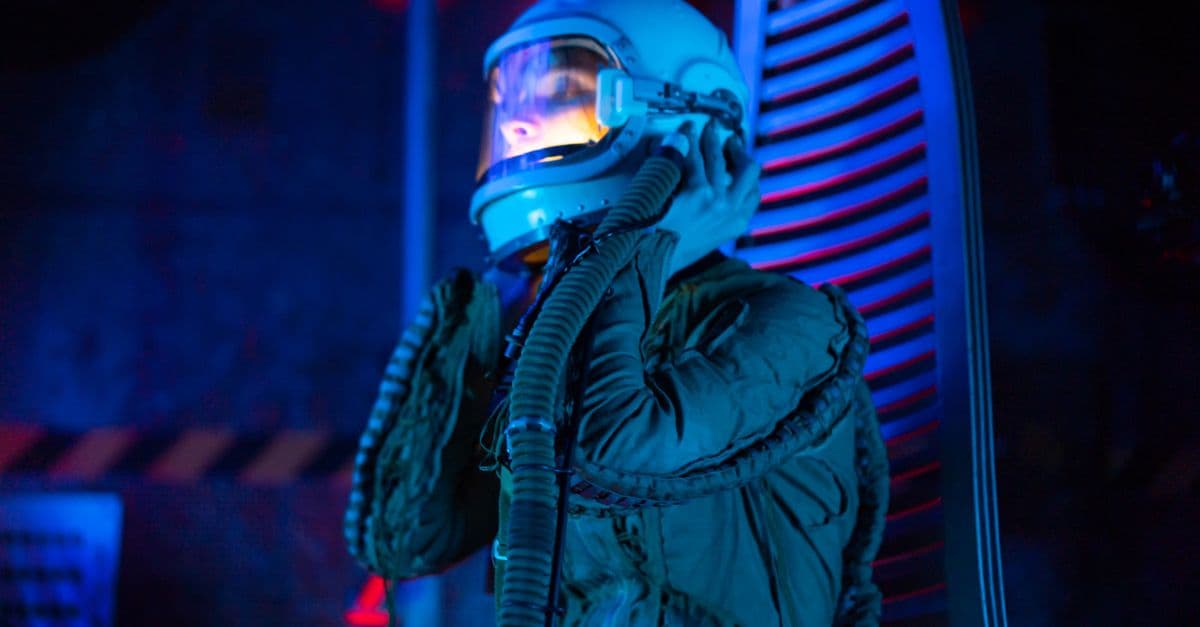
Photo: Mikhail Nilov / Pexels
In July 2013, astronaut Luca Parmitano was working outside the International Space Station when water began collecting inside his helmet, an estimated 1.5 liters of it. The episode shows what a space suit really is: not clothing, but a one-person spacecraft with its own air, plumbing, cooling loop, and armor. Here is how space suits work, layer by layer and system by system, why NASA's workhorse suit dates to the 1970s, and what the newest suits change.
Key takeaways
- The EMU (Extravehicular Mobility Unit) is the suit NASA astronauts wear on spacewalks from the ISS. Its design began in 1974 and it first flew in 1981, according to NASA's Office of Inspector General (OIG).
- Pressure: the EMU is pressurized to 4.3 psi (29.6 kilopascals) with pure oxygen, less than a third of sea-level pressure, and weighs about 145 kilograms (319 pounds) on Earth with its backpack and rescue unit.
- Temperature: NASA suit engineers cite a range of roughly minus 150 to plus 250 degrees Fahrenheit for objects in low Earth orbit, which is why the suit combines insulation, a white outer layer, and a water-cooled undergarment.
- Debris: even a tiny particle moving at about 17,000 miles per hour carries enough kinetic energy to hurt, so the outer garment is built to slow and break up impacts.
- Aging fleet: in 2017, only 11 of the 18 original EMU life-support backpacks were still available for use.
- Next generation: NASA's xEMU, Axiom's AxEMU, and SpaceX's Polaris Dawn EVA suit are three different answers to the same problem.
- The price tag: the popular "$12 million per suit" figure could not be traced to a NASA document that prices a single EMU.
What a space suit has to do: six jobs at once
NASA's Office of Inspector General describes spacesuits as "essentially personal spacecraft," and the phrase is nearly literal. An astronaut on a spacewalk is a crew of one inside a vehicle that must supply breathable gas, hold pressure, remove heat, carry a radio, and resist impacts, all while letting the occupant bend, grip, and reach. Nothing else people wear has to solve that many problems at the same time.
A NASA suit-design briefing lists four hazards outside the station: vacuum, extreme temperatures, radiation, and micrometeoroids. Two more come from the human inside. A working body produces heat, carbon dioxide, and moisture that have nowhere to go, and microgravity removes the floor, so every tool and every foot needs something to hold onto.
| Challenge | What it does to an unprotected person | How the suit answers it |
|---|---|---|
| Vacuum | No air to breathe; NASA engineers note that water boils at about 98°F (37°C) in a vacuum | A sealed pressure garment filled with oxygen |
| Temperature | NASA cites roughly -150°F to +250°F in low Earth orbit; ESA quotes about 120 degrees in direct sunlight to minus 160 in shadow, without stating the unit | Multi-layer insulation, a white outer fabric, a water-cooled undergarment |
| Radiation | Earth's atmosphere normally blocks most of it | Reflective layers, the helmet visor, and dosimeters that track lifetime dose |
| Micrometeoroids | Particles at about 17,000 mph deliver high kinetic energy even when tiny | The Thermal Micrometeoroid Garment |
| Metabolism | Carbon dioxide, heat, and humidity build up inside the suit | The life-support backpack and cooling garment |
| Microgravity | Tools and body drift | Foot restraints, tethers, and a torso-mounted tool station |
Sources: NASA technical presentation "Why Does it Look Like That?" (2017); ESA; NASA OIG report IG-17-018.
Two scenes from popular culture, the instant explosion and the instant deep freeze, are not what NASA and ESA describe. NASA's own briefing says humans lose consciousness within seconds and die of oxygen starvation in minutes, and ESA puts survival without a suit at under a minute. Cooling is slower than the movies suggest because, without air, heat can leave the body only by radiation and conduction.
Pull quote: In a vacuum, heat has no wind to ride. Outside the suit, only conduction and radiation move it, which is why the insulation looks nothing like a winter coat.
Why the suit is inflated to 4.3 psi, and why not higher
Sea-level air pressure is about 14.7 psi (101.3 kilopascals). The EMU is pressurized to 4.3 psi (29.6 kilopascals), a figure NASA's Johnson Space Center lists for both the shuttle-era and the ISS version of the suit. That is about 29 percent of what you feel at the beach, and it is the central compromise in suit design.
The oxygen math explains why this works. NASA's inspector general notes that a healthy body needs roughly 3 psi of oxygen pressure in the lungs, the amount available at sea level. Ordinary air is about 21 percent oxygen, so at sea level the oxygen share of 14.7 psi is a little over 3 psi. A suit filled with pure oxygen at 4.3 psi supplies more oxygen pressure than the beach does, even though the total pressure is far lower. Fill the same suit with ordinary air at 4.3 psi and the oxygen share would drop to under 1 psi, which is why suits use pure oxygen.
Why not just pressurize the suit to full sea-level pressure?
Because a pressurized suit behaves like an inflated balloon. Every joint has to bend against the gas inside, and the force needed climbs with the pressure. Think of a bicycle inner tube: pump it hard and it resists any attempt to fold it, while a lightly filled one folds with a fingertip. Lower pressure makes an astronaut's elbows, knees, and fingers easier to move.
The price is physiological. At low suit pressure, the nitrogen dissolved in an astronaut's tissues can come out of solution as bubbles, the same mechanism that causes decompression sickness in divers. Crews offset it by breathing oxygen beforehand to flush nitrogen out. When SpaceX's Polaris Dawn crew prepared for a spacewalk in September 2024, they breathed oxygen for about 45 hours beforehand to reduce the risk, according to Spaceflight Now's report. NASA's Artemis team has made the same point from the other direction: testing suits at higher pressures reduces the time astronauts need to acclimate, leaving more time for work on the surface.
| Suit or reference | Pressure | Notes |
|---|---|---|
| Sea level on Earth | 101.3 kPa (14.7 psi) | Baseline |
| NASA EMU (shuttle and ISS) | 29.6 kPa (4.3 psi) | Pure oxygen; NASA Johnson fact sheet |
| SpaceX Polaris Dawn EVA suit | 34.5 kPa (5 psi) | Reported at 5 psi in September 2024 |
| NASA Z-1 prototype | 57.2 kPa (8.3 psi) | Nominal operating pressure of the 2010s prototype |
Related background on why pressure and gas volume trade against each other appears in our explainer on the gas laws of Boyle, Charles, and Avogadro, and on the other side of the equation, how the lungs exchange gas.
Inside the EMU, system by system
The OIG's 2017 audit divides the EMU's outer portion into two major subsystems. The Pressure Garment System (PGS) maintains pressure around the astronaut's body while allowing enough mobility to work. The Primary Life Support System (PLSS) is the backpack that supplies oxygen, removes carbon dioxide and humidity, and manages temperature. Under the PGS, the astronaut wears a liquid cooling and ventilation garment.
The PGS itself splits into "soft goods" (arms, legs, gloves, waist, and boots) and "hard goods" (the Hard Upper Torso, the helmet, and the joint bearings). The Hard Upper Torso is a fiberglass shell with metal bearings at the neck, arms, and lower torso, and it is the structural link between the pressure garment and the backpack. A chest-mounted display and control module carries the switches, gauges, and valves needed to run the life support. Layer counts for the soft goods differ between popular accounts, so this article describes the layers by what they do rather than by a number.
The outer shell: slowing debris and fending off the Sun
The outermost layer is the Thermal Micrometeoroid Garment (TMG). It does two jobs. As a thermal blanket it combines reflective materials with gaps between fabric layers that limit conduction, and its white color reflects sunlight. As a debris shield it exists to reduce the speed and size of particles before they reach the pressure bladder underneath.
The physics behind that second job is brutal and simple. Kinetic energy equals half the mass times the speed squared, so doubling a particle's speed quadruples its energy. NASA's own briefing makes the point with a photograph of a tiny pellet next to a coin, and the caption that even a tiny mass moving at 17,000 miles per hour "is going to hurt." The TMG works like a stack of thin curtains: each layer strips a little energy and breaks the particle into smaller pieces, so the damage spreads out instead of punching through in one place.
The bladder: where the atmosphere actually lives
Beneath the TMG sits the layer that holds the air. NASA's briefing describes a balloon-like bladder containing oxygen supplied by the portable life-support system. A load-bearing restraint layer outside the bladder keeps it from ballooning into a rigid, immobile shape, so the astronaut can move the arms and legs inside a body-shaped envelope rather than inside a sphere.
The suit is modular. NASA's fact sheet says the upper torso, lower torso, arms, and gloves come in three sizes for the major hard components and can be assembled in combinations to fit crew members from a 5th-percentile woman (5 feet tall, 110 pounds, or 152 centimeters and 50 kilograms) to a 95th-percentile man (6 feet 2 inches, 223 pounds, or 188 centimeters and 101 kilograms). Because the suits are reusable and not custom fitted, as earlier suits were, NASA calls the approach cost effective.
What the astronaut wears underneath
Before getting into the suit, a crew member puts on several items inside the airlock. NASA's fact sheet lists them:
| Item | Purpose |
|---|---|
| Maximum absorbency garment | A modified incontinence diaper; urine collection devices are no longer used |
| Liquid cooling and ventilation garment | A one-piece spandex mesh suit with water-cooling tubes running through it |
| In-suit drink bag | 21 ounces (about 620 milliliters) of potable water |
| "Snoopy cap" | Communications carrier with earphones and microphones |
| Biomedical instrumentation | Gives flight surgeons on the ground a view of the crew member's health |
Together, the EMU with backpack and the Simplified Aid for Extravehicular Rescue (SAFER), a small propulsion unit for emergency self-rescue, weighs about 319 pounds (145 kilograms) on Earth. The weight is irrelevant in orbit, but it matters on the ground, where it shapes training in the station's airlock and the neutral buoyancy pool.
How the suit gets rid of your heat
An astronaut doing physical work in a pressurized suit produces a lot of heat, and the usual escape route, evaporating sweat, would be a disaster inside a sealed helmet because moisture would fog the faceplate where it cannot be wiped away. ESA points out exactly that, noting that a backpack life-support system removes heat and moisture while cool water circulates through an undergarment worn against the skin.
That undergarment is the Liquid Cooling and Ventilation Garment (LCVG). A NASA presentation says it cools by conduction, conforms to the body, and contains over 300 feet (about 91 meters) of tubing carrying water supplied by the life-support system. Warm water leaves the garment and passes through a gas separator that keeps bubbles out of the pump. The loop then splits in two: one branch goes to a sublimator, where water is cooled, and the other returns directly to the control valve, where the branches recombine to hold the water at a temperature the astronaut can adjust with a valve.
The sublimator is the part that surprises most people. NASA's inspector general explains that sublimation is the process by which a solid turns directly to vapor, skipping the liquid phase. In the sublimator, ice forms on an evaporator sieve and is allowed to vaporize into space, which carries heat away with it. In effect the suit is a swamp cooler that has traded air for vacuum: a small amount of water is sacrificed to the void to take heat with it. The same hardware cools the oxygen flowing through the suit to 57°F (14°C).
The biology behind the problem is familiar from everyday life, and our explainers on how sweat cools the body and how the body regulates temperature cover the thermoregulation that the suit has to replace.
Breathing: oxygen in, carbon dioxide out
The backpack supplies oxygen for up to seven hours, according to the OIG. Oxygen enters at the helmet and flows from behind the astronaut's head down through the suit, then returns to the backpack through ports near the arms and legs. The returning gas is filtered through a cartridge containing an activated charcoal bed and either lithium hydroxide or a metal oxide, which removes carbon dioxide, odors, and dust. A fan then pushes the gas through the sublimator, and a water separator collects condensation, returning the water to the cooling loop's feedwater tanks.
A backup exists for the worst case. If the primary system fails, a secondary oxygen pack mounted beneath the backpack provides 30 minutes of oxygen, enough to get back to the airlock. The NASA OIG notes that the EMU also carries a helmet absorption pad and a snorkel, both added in 2013, which brings us to the incident that opened this article.
For readers who want the station side of the same problem, our explainers on how astronauts survive in space with life support systems and on the International Space Station describe the air, water, and power systems that the suit's backpack miniaturizes.
Moving inside a balloon: joints, gloves, and tethers
NASA's briefing on suit design describes the mobility strategy in microgravity as a "highly mobile upper body" and a "stable lower body." The shoulders use angled bearings, the upper arms have their own bearings, and the elbows and wrists use patterned convolute joints that bend without collapsing. The lower torso serves as the anchor from which work is done: a waist bearing and convolute knees, with boots that lock into portable foot restraints. D-rings on the waist hold safety tethers, a rigidizable body restraint tether holds the astronaut in place, and a personal tool belt mounts to the torso, with tools designed to attach by bayonet fittings or tether hooks.
The hands are the weak point. A study based on injury records and anthropometric data for 192 male crew members at NASA's Johnson Space Center found that hand and shoulder injuries from spacewalk training and operations were significant, with severe cases including fingernail delamination (the nail separating from its bed) and rotator cuff tears. Hand circumference and the width of the knuckle joints were associated with injury, and experiments suggested that compression reduces blood flow to the fingertips. In preliminary gripping tests with a glove inside a low-pressure chamber, skin blood flow dropped by 45 and 40 percent at moderate and high grip pressures.
The study's authors concluded that the pressure on finger pads needed to flex a stiff glove probably affects blood flow more than pressure from a poorly fitting glove does, and they suggested that more flexible gloves could improve performance and cut injuries. That is the same balloon problem again: the glove is a small pressurized balloon, and gripping a handrail means squeezing it.
When suits fail: a flooded helmet and a canceled spacewalk
During his July 2013 spacewalk, Parmitano reported water in his helmet. The Register's account of NASA's later investigation says an estimated 1.5 liters filled the helmet, and the mishap panel found that inorganic contaminants had clogged several small holes in the Fan Pump Separator, a part of the cooling system. Water backed up into the air system and from there into his helmet. Officials said they could not determine where the contaminants came from.
NASA's inspector general records the hardware response: a helmet absorption pad, a spongy material that can absorb up to 800 milliliters of liquid, and a snorkel that lets an astronaut breathe from air circulating in the lower part of the suit. Both were added in 2013. The longer-term fix is architectural. The OIG describes the advanced backpack prototype, PLSS 2.5, as separating the water and ventilation loops, which the current EMU crosses, specifically to prevent water from reaching astronaut helmets.
Hardware this old needs constant upkeep. The OIG describes ground maintenance after every six years on orbit or 25 spacewalks, whichever comes first. Technicians strip and recoat the aluminum water tank structure, clean the valve module in a solvent, and refurbish the sublimator. The reassembled suit then undergoes a vacuum certification that includes 24 hours of unmanned operation in a vacuum chamber. Pressure garment components are typically replaced every 8 to 10 years, while backpack components are usually refurbished instead.
Problems have continued. On June 24, 2024, NASA called off a planned 6.5-hour spacewalk after a water leak appeared in the cooling unit of astronaut Tracy Dyson's suit just after the suits switched to battery power. NASA said the crew was never in danger. An earlier attempt on June 13 had been scrapped over what the agency called "a spacesuit discomfort issue" with a different crew member's suit. Our explainer on vacuum chambers covers the kind of test facility where every refurbished suit is checked before it flies.
Where the "$12 million" figure comes from, and why it does not hold up
The slug of this article, and a good part of the internet, repeats a claim that each NASA suit costs $12 million. We searched NASA's audits and could not find a document that gives that as the price of an EMU. The number that does appear is in the OIG's April 2017 audit (IG-17-018), in a table of spacesuit development efforts: the Orion Crew Survival System, the orange launch-and-entry suit for the Orion capsule, is listed at $12 million in development spending.
The audit's other numbers make the point that suit costs are mostly about development, not manufacturing a single unit.
| Item (OIG IG-17-018 and IG-21-025) | Cost reported |
|---|---|
| Constellation Space Suit System, 2009 to January 2016 | $135.6 million |
| Advanced Space Suit Project, 2007 through fiscal year 2016 | $51.6 million |
| Orion Crew Survival System (launch-and-entry suit) | $12 million |
| Z-1 pressure garment prototype | $1.8 million |
| Z-2 pressure garment prototype, procured from ILC Dover | $5.5 million |
| Advanced PLSS 1.0 backpack prototype | $11 million |
| Advanced PLSS 2.0 backpack prototype | $11.3 million |
| xEMU development through December 2020 | $232.8 million |
| Total NASA spacesuit development spending, reported in 2021 | $420 million |
By the 2021 audit, the inspector general projected that NASA would spend over $1 billion on its next-generation suits before the first two flight-ready xEMUs were available. A bill that large says something about a program, but it cannot be divided by the number of suits to get a unit price, because the money bought designs, test hardware, and training units. The takeaway for anyone quoting a per-suit price is to ask what the figure includes.
The next suits: xEMU, AxEMU, and SpaceX's EVA suit
The EMU is old by any standard. The OIG notes that its design was initiated in 1974 by Hamilton Standard and ILC Dover for the Space Shuttle Program, that the baseline suit entered flight service in 1981, and that an enhanced version developed in 1990 is the one used for ISS spacewalks. In 2021, the inspector general described the suits as designed 45 years earlier and refurbished and partially redesigned since. The 2017 audit counted 82 shuttle and 122 station spacewalks to that point, long past the 15-year design life the suits were originally given.
| Suit | Developer | Environment | Status and notable facts |
|---|---|---|---|
| EMU | Hamilton Standard and ILC Dover design, NASA operated | Orbit | In use for ISS spacewalks; 4.3 psi; about 145 kg (319 lb) with backpack and SAFER |
| xEMU | NASA in-house | Orbit and Moon | Cost $232.8 million through December 2020; delayed, with the OIG saying 2021 schedules left no margin |
| AxEMU | Axiom Space | Moon (Artemis) | NASA reported in February 2026 that the Artemis III suit had passed a contractor-led technical review |
| Polaris Dawn EVA suit | SpaceX | Crew Dragon spacewalk | Flew on September 12, 2024; 5 psi; 12-foot (3.7 m) umbilicals instead of a backpack |
The xEMU and the move to buying suits as a service
The xEMU was designed to fix what the EMU cannot. NASA's inspector general describes a new design that accommodates a broader range of sizes with improved fit, comfort, and mobility, including a highly mobile lower torso for walking and kneeling that would eliminate the "bunny hopping" gait seen on Apollo. The advanced backpack work that fed into it, described in the 2017 audit, includes a smaller, lighter carbon dioxide removal system that can regenerate itself, which cuts the weight an astronaut must carry for longer spacewalks, along with the separated water and ventilation loops mentioned above.
Schedule was the trouble. In August 2021, the OIG found that NASA's plan to produce two flight-ready xEMUs by November 2024 left no schedule margin, and that the suits would not be ready for flight until April 2025 at the earliest, in part because of funding shortfalls, COVID-19 impacts, and technical challenges. NASA was also changing strategy. In April 2021 it issued a request for information on buying extravehicular services from industry rather than owning the suits outright. NASA's Artemis page for the lunar suit now describes a commercial design from Axiom Space.
Axiom's AxEMU for the Moon
NASA's February 12, 2026 update on the AxEMU says the Artemis III suit passed a contractor-led technical review, and that Axiom had begun receiving parts for the first flight unit. The suit offers more sizing options, improved mobility including the ability to bend down to collect geology samples, advanced life support, and better protection from the lunar environment. NASA and Axiom have logged more than 850 hours of pressurized testing with a person inside, including underwater trials in the Neutral Buoyancy Laboratory, a pool 40 feet deep, with the suit weighted to match lunar gravity at one-sixth of Earth's. Teams are also testing performance at different suit pressures, because higher pressures reduce the time astronauts need to acclimate. Our overview of the Artemis program covers where these suits fit in the mission plan.
SpaceX's EVA suit
Older descriptions of SpaceX's suit call it a pressure suit for use inside the capsule only, and that is no longer the full picture. On September 12, 2024, the Polaris Dawn crew made the first commercial spacewalk in SpaceX-built EVA suits. Spaceflight Now reported that the suits ran at 5 psi and had no oxygen supply of their own: 12-foot umbilicals delivered air, power, and communications from the capsule. Because Crew Dragon has no airlock, the entire capsule was depressurized and all four crew members were exposed to vacuum. Jared Isaacman and Sarah Gillis took turns outside the hatch for a spacewalk lasting 1 hour 46 minutes, staying near the hatch with a mobility aid called Skywalker.
The suits carried a heads-up display showing pressure, temperature, humidity, and oxygen use, and a visor coated with copper and indium tin oxide for thermal and solar protection. The design philosophy is a different trade from NASA's: a tethered suit is lighter and simpler because the spacecraft does the life-support work, but it cannot roam. It is the difference between a diver with an air hose to a boat and a diver with a tank.
Moon dust, and why the next suit must outlast orbit
Low Earth orbit is hard on a suit, and the Moon adds a problem that the EMU has never faced: dust. NASA's Glenn Research Center catalogued what Apollo crews reported, grouping the effects of lunar dust into categories that include vision obscuration, loss of traction, coating and contamination, seal failures, clogging of mechanisms, abrasion, thermal control problems, and inhalation risks.
The suit-specific findings are sobering. After the first moonwalk, Apollo 12 commander Pete Conrad's suit lost pressure at 0.15 psi per minute, and after the second walk at 0.25 psi per minute, against a safety limit of 0.30 psi per minute, because dust could not be completely cleared from the fittings. On the same mission, the suits worn by Conrad and Alan Bean were worn through above the boot, breaching the micrometeoroid protection layer and several layers of Kapton insulation. Harrison Schmitt's visor sun shade was so scratched on Apollo 17 that he could not see in certain directions, and he also reported hay fever-like symptoms from the dust that lasted for much of the return trip. NASA's summary adds that no astronaut has had recurring problems attributed to dust exposure.
Several crew members remarked that they could not have sustained more surface activity given how fast dust degraded their equipment. Our articles on the Apollo 17 mission and Mars settlement engineering pick up the same problem from the exploration side.
The Moon also swings harder than orbit. The same NASA material gives a lunar equatorial range of 100 to 400 kelvin (about minus 280 to 260 degrees Fahrenheit) and meteoroid speeds of 11 to 72 kilometers per second, well above the roughly 17,000 miles per hour (about 7.6 kilometers per second) that NASA's suit-design briefing uses as its example impact speed. A suit that works in orbit has to be rebuilt for those conditions.
What people get wrong about space suits
"Suits are airtight skins." They leak, slowly, by design tolerance. Apollo engineers tracked suit pressure decay in psi per minute and set a limit of 0.30. A suit does not have to be perfectly sealed; it has to be sealed well enough that the oxygen supply outpaces the leak.
"One suit does everything." The Orion launch-and-entry suit and the EMU solve different problems. A suit worn for ascent and reentry has to protect during a cabin depressurization and an emergency, while a spacewalk suit has to let a person work for hours. They are different garments, and NASA's audits treat them as separate development efforts.
"White is just a style choice." White is a thermal decision. NASA's briefing says the white color reflects heat, and the multi-layer insulation below it limits conduction with gaps between the fabrics.
"The suit is for protection from cold." In low Earth orbit, the suit's bigger challenge is often getting rid of heat. A person working hard inside an insulated garment cannot shed heat by sweating, so the cooling garment and sublimator matter as much as the insulation.
FAQ
Q: How much does a space suit cost? A: NASA has not published a per-suit price for the EMU in the audits we reviewed. The figure of $12 million that circulates online matches the OIG's 2017 line item for the Orion Crew Survival System. What NASA has reported is development spending: $420 million on spacesuit development as of 2021, with an estimate of over $1 billion before the first two flight-ready xEMUs.
Q: What pressure is a space suit kept at? A: NASA's EMU is pressurized to 4.3 psi (29.6 kilopascals) with pure oxygen. SpaceX's Polaris Dawn EVA suits ran at 5 psi in September 2024. Sea-level pressure is 14.7 psi. Lower suit pressure makes joints easier to bend, at the cost of requiring crews to purge nitrogen from their blood before a spacewalk.
Q: How long can an astronaut stay outside in an EMU? A: The EMU backpack supplies oxygen for up to seven hours, per NASA's inspector general, and a secondary oxygen pack provides 30 minutes of backup. The 2017 audit described the current suit's per-spacewalk limit as seven hours, and it noted that the next-generation backpack was being designed to support spacewalks of eight hours.
Q: Why are space suits white? A: White reflects sunlight. NASA's suit-design briefing lists white color and multi-layer insulation, which creates gaps between fabrics to limit conduction, as the main protections against temperature extremes outside the station.
Q: How do astronauts use the bathroom during a spacewalk? A: Crew members wear a maximum absorbency garment, a modified incontinence diaper, under the cooling garment, according to NASA's Johnson Space Center fact sheet. Urine collection devices used on earlier flights are no longer used. The suit also includes a 21-ounce drink bag for water.
Q: Could an astronaut survive in space without a suit? A: Not for long. NASA's suit-design briefing says humans lose consciousness within seconds and die from oxygen starvation in minutes. ESA states that without a space suit an astronaut would die in under a minute.
The takeaway
A space suit is expensive and fragile for a reason that has little to do with fabric: it is a spacecraft shrunk to the size of a person, and every system a spacecraft needs has to be built to bend at the elbow. The EMU's design choices, from the low pressure to the sublimator to the gloves that injure hands, are all compromises between protecting a body and letting it work. Those compromises are now being renegotiated by three different programs at once, and the cost of the old suits is better read as a bill for half a century of development than as a price tag on a garment.
Sources
- NASA Office of Inspector General, "NASA's Management and Development of Spacesuits," IG-17-018 (April 26, 2017)
- NASA Office of Inspector General, "NASA's Development of Next-Generation Spacesuits," IG-21-025 (August 10, 2021)
- NASA Johnson Space Center, Extravehicular Mobility Unit fact sheet (FS-2019-07-JSC-EA010)
- NASA Technical Reports Server, "Why Does it Look Like That? The Story of Space Suit Design" (2017)
- NASA Glenn Research Center, "What We Do Not Know and Probably Need to Know" (lunar dust)
- NASA, "NASA Moon Mission Spacesuit Nears Milestone" (February 12, 2026)
- Spaceflight Now, "First non-government spacewalk goes off without a hitch for Polaris Dawn crew" (September 12, 2024)
- ESA, "EVA: Not exactly a walk in space"
- The Register, report on NASA's investigation of the 2013 helmet water incident
- MIT DSpace, thesis on anthropometric and blood flow characteristics of astronaut hand injuries
- CNN via KTVZ, "NASA waves off spacewalk after astronaut suit springs a leak" (June 24, 2024)
Related Reading
Follow new articles
Add SciHub101 to your feed reader to see new science and technology stories.
About the Author
SciHub101 is an independent science and technology publication founded and edited by Buğra Sözeri, a software engineer and app developer based in Türkiye. AI tools assist with drafting and research. Source documentation in the existing archive is uneven, and articles are being reviewed and corrected. The Editorial Team byline identifies editorial responsibility; it does not certify specialist or independent human review. Where we compare products, anything built by our own team is labelled as such — see the editorial guidelines and About page for how corrections and disclosures work.
Related Articles
Why Rocket Launches Cost So Much — And How SpaceX Is Changing That
Getting to orbit once meant spending hundreds of millions of dollars to throw away a rocket. Reusable boosters changed the arithmetic, and the next generation of vehicles is trying to change it again.

Lagrange Points Explained — Why NASA Parks Telescopes in Empty Space
There are five special spots in every two-body gravitational system where a smaller object can park itself and stay put. Here is the math, the missions, and the cosmic hitchhikers that have been using these parking spots for billions of years.

How Astronauts Live in Space: The Complete Guide to Daily Life in Orbit
Sleeping in a sleeping bag on a wall, recycling urine into drinking water, and exercising to save your bones. This is life in space.

How Astronauts Survive in Space: Life Support Systems Explained
An astronaut in a spacesuit orbiting Earth faces four immediate threats: the vacuum of space (zero pressure, instant death in seconds without suit), extreme temperature swings (−150°C in shadow, 150°C in sunlight), intense radiation (solar wind, cosmic rays), and hypoxia (lack of oxygen). The Environmental Control and Life Support System (ECLSS) on spacecraft manages all four through oxygen generation, carbon dioxide removal, water recycling, temperature regulation, and pressure maintenance. The International Space Station recycles 90 percent of water and generates oxygen through electrolysis. Deep-space missions to Mars will require even more sophisticated recycling: current ECLSS efficiency is insufficient for 2-year Mars transit. This article examines how astronauts survive in space, the engineering of life support, and the challenges of keeping humans alive in the harshest environment.
The ISS Explained — Living in Space
How the International Space Station works: orbit, modules, daily life, science, and the transition to commercial stations and China's Tiangong by 2030.

Cardiovascular Changes in Astronauts: ISS Long-Term Health Studies
ISS research reveals how weightlessness causes fluid shifts, cardiac deconditioning, and blood flow changes—insights applicable to heart disease treatment on Earth.