Apollo 17: The Last Moon Landing and Scientific Achievement
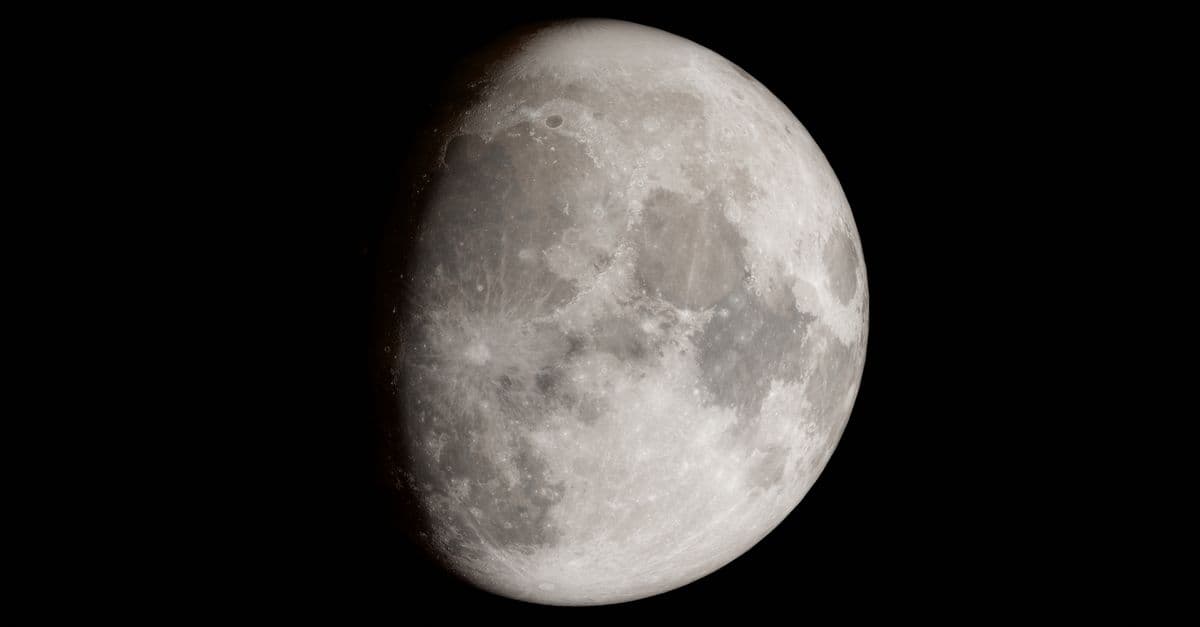
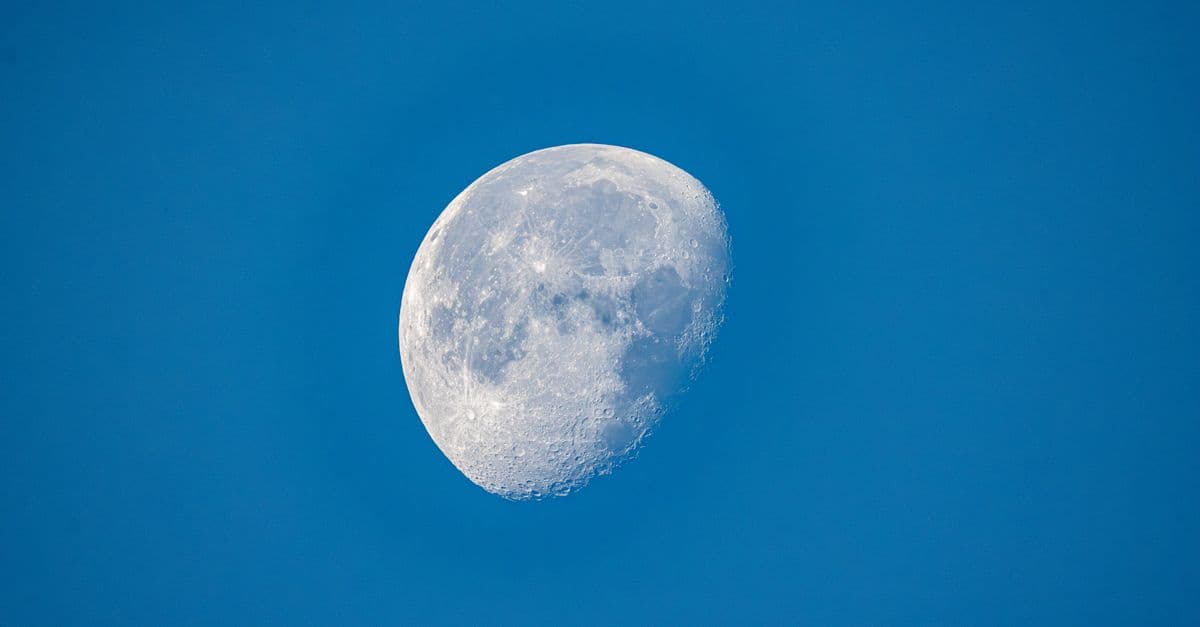
Photo: Zelch Csaba / Pexels
At 12:33 a.m. EST on December 7, 1972, a Saturn V rocket lit up the Florida night sky for the first and only time in the Apollo program, carrying Eugene Cernan, Ronald Evans, and Harrison "Jack" Schmitt toward the Moon on what NASA had already decided would be the final crewed lunar landing of the twentieth century (NASA History Office). Six days later, Cernan and Schmitt touched down in the Taurus-Littrow valley and spent more than 22 hours outside their lunar module across three moonwalks, collecting 110.5 kilograms of rock and soil — more than any other Apollo crew (Lunar and Planetary Institute). This is the story of how the most scientifically rigorous Apollo mission became humanity's last visit to another world for more than 50 years.
The problem NASA was trying to solve
By 1972, Apollo had already answered the question that started the program: can humans travel to the Moon, land, and return safely? Apollo 11 proved it was possible in July 1969, but Neil Armstrong and Buzz Aldrin spent only about two and a half hours outside their lander, working close to the Eagle and collecting whatever they could reach quickly (NASA Apollo 11 mission summary). Apollo 12 through 16 pushed surface time and driving range further with each flight, adding a battery-powered rover starting with Apollo 15. But none of those crews included a trained geologist, and NASA's science advisors had spent years arguing that lunar geology needed someone who could read a rock outcrop the way a pilot reads an instrument panel.
Money made the decision urgent. By 1970, Apollo 18, 19, and 20 had already been cancelled as the Nixon administration redirected NASA's budget toward the Space Shuttle program, and Apollo 17 was locked in as the last flight on the manifest (NASA History Office, "Apollo 17 at 50"). That reality reshaped the mission's goals. Instead of another exploratory flight, Apollo 17 would be built to extract the maximum possible scientific return from what everyone involved knew would be the program's last shot at the lunar surface for a generation.
Landing site selection reflected that pressure directly. Geologists narrowed the choices to places that could answer specific open questions about the Moon's history, and Taurus-Littrow won because orbital photography suggested dark material on the valley floor that might be relatively young volcanic deposits — a chance to test whether the Moon had stayed geologically active far longer than the earlier, older mare samples implied (Lunar and Planetary Institute, Apollo 17 overview).
Turning point: Apollo 17 carried the only professional geologist ever to walk on another world. Harrison Schmitt's training let him identify, on sight, geological features his non-specialist crewmates would have driven past.
Why a geologist changed everything
Every Apollo commander and lunar module pilot before Schmitt was a test pilot first. They received months of geology field training from the U.S. Geological Survey, learning to describe rocks, recognize strata, and photograph outcrops in ways useful to scientists back on Earth. That training was good. It was not the same as having a PhD geologist, trained at Harvard and Caltech and with Grand Canyon and Alaska fieldwork behind him, standing in the valley making real-time interpretive calls (Lunar and Planetary Institute, Apollo 17 overview).
Think of the difference the way you'd think about a mechanic versus an engine designer at a racetrack. A skilled mechanic can spot obvious problems and follow a checklist expertly. An engine designer, watching the same car, notices the subtle vibration that signals a bearing about to fail three laps early — because they understand why the car behaves the way it does, not just what it's supposed to look like. Schmitt's presence on the Moon was the difference between following a sampling checklist and making judgment calls about which rock, out of a thousand identical-looking gray fragments, actually mattered.
That difference produced Apollo 17's most famous discovery within hours of the second moonwalk beginning.
How the mission actually worked, step by step
Apollo 17 combined every improvement from the previous five landings into one mission profile, then stretched every phase as far as mission planners dared.
The launch and journey out
The mission launched at night — the only nighttime Saturn V liftoff in the program — after a two-hour, 40-minute hold caused by an automatic cutoff in the launch sequencer at the T-minus-30-second mark. Engineers traced the fault to the countdown computer failing to recognize that the third stage's liquid oxygen tank had already been pressurized correctly, and manually reset the clock to work around it. It was the only Apollo launch delay ever caused by a hardware problem, and it delayed liftoff into the early hours of December 7, exactly three years to the day after President Kennedy's assassination anniversary of the decade that started the program (NASA History Office; NASA/JSC mission details).
On the way to the Moon, Schmitt photographed Earth from about 29,400 kilometers (18,300 miles) out using a Hasselblad 500EL camera with an 80mm Zeiss lens. That single frame, AS17-148-22727, became known as "The Blue Marble" and remains one of the most reproduced photographs ever taken — the first full-Earth image to show the Antarctic ice cap, because Apollo 17's trajectory was the first to put the Sun directly behind the spacecraft on departure (NASA, "The Blue Marble: The View From Apollo 17").
Landing and setting up camp
Cernan and Schmitt separated from Evans, who stayed in lunar orbit aboard the command module America, and landed the lunar module Challenger in the Taurus-Littrow valley — a site ringed by mountains rising more than 2,000 meters above the valley floor, chosen specifically because it combined old highland material with what geologists hoped were young volcanic deposits in one accessible location (Lunar and Planetary Institute).
Three moonwalks, engineered for maximum coverage
| EVA | Duration | Primary objectives | Key event |
|---|---|---|---|
| EVA 1 | 7 hours, 12 minutes | Deploy ALSEP instrument station, initial sampling near the landing site | Rover fender torn off, improvised repair required |
| EVA 2 | 7 hours, 37 minutes | Drive south to the Nansen crater area, sample the massif slopes | Discovery of orange soil near Shorty crater |
| EVA 3 | 7 hours, 15 minutes | Drive to North Massif, collect boulder and core samples, close out ALSEP | Deepest core sample of the Apollo program |
Table: Apollo 17's three surface excursions, based on NASA mission timeline data (NASA/JSC mission details; Lunar and Planetary Institute).
Across all three EVAs, Cernan and Schmitt logged more than 22 hours outside the lander and drove roughly 30.5 kilometers (19 miles) in the Lunar Roving Vehicle, an electrically powered, four-wheeled buggy first flown on Apollo 15 (Encyclopaedia Britannica, "Apollo 17").
The fender problem and the map-and-tape fix
During the first moonwalk, a hammer stowed in a pocket on Cernan's spacesuit caught the edge of the rover's rear-right fender extension and snapped it off. Without the fender, the wheels kicked a continuous rooster-tail of abrasive lunar dust over the astronauts, their equipment, and the rover's instruments — a serious problem with two seven-hour drives still ahead. Mission planners initially tried gaffer's tape, but it wouldn't hold in the fine, gritty regolith. So Cernan and Schmitt built a replacement inside the lunar module out of four stiff, laminated lunar maps, taped together and clamped on using spare clips borrowed from the lander's optical telescope mount (Smithsonian National Air and Space Museum, "Duct tape: auto repair on the Moon"). The improvised fender worked for the rest of the mission and is now on permanent display at the National Air and Space Museum in Washington, D.C.
Why this matters beyond trivia: it is a clean example of the kind of problem no amount of ground simulation fully anticipates. Real fieldwork, whether on Earth or the Moon, throws up failures that only get solved by people improvising with whatever is on hand — which is exactly the argument NASA and the Artemis program use today for keeping humans, not just robots, in the exploration loop.
Sample collection, guided by a trained eye
Schmitt's geological training shaped what the crew brought home. The 110.5 kilograms collected spanned basalts, breccias, anorthosite, and — most famously — volcanic glass. The crew also drove a hollow coring tube deeper into the regolith than any previous mission, pulling up a stratified record of billions of years of micrometeorite bombardment and solar wind exposure in undisturbed layers (Lunar and Planetary Institute, Apollo 17 samples).
The orange soil discovery
During the second EVA, near a small crater nicknamed Shorty, Schmitt looked down and immediately radioed Mission Control: he'd spotted orange-tinted soil unlike anything seen on previous missions. The material turned out to be tiny beads of volcanic glass, formed roughly 3.64 billion years ago in a fire-fountain eruption that brought molten rock up from as deep as 400 kilometers inside the Moon (Science, "Lunar Volcanism: Age of the Glass in the Apollo 17 Orange Soil"; EarthSky, "Apollo 17 returns with orange soil").
The twist came later, once geologists studied the deposit in detail: Shorty itself is not a volcanic vent at all. It is an ordinary impact crater, formed much more recently, that happened to punch through the surface and expose glass beads that had been buried for billions of years. The orange soil is ancient volcanic material; the crater that revealed it is comparatively young. Untangling that timeline required years of laboratory analysis after the crew came home — a reminder that a single afternoon of fieldwork on the Moon can generate research questions that take decades to fully resolve.
Instruments left behind
Before leaving, the crew deployed the Apollo Lunar Surface Experiments Package (ALSEP), a suite of instruments designed to keep transmitting long after the astronauts departed. Apollo 17's package included a seismometer, a lunar surface gravimeter, a heat-flow experiment measuring how much warmth still escapes from the Moon's interior, and the Lunar Seismic Profiling Experiment — a Y-shaped array of four geophones paired with eight small explosive charges, ranging from 57 grams to 2.7 kilograms, planted at distances up to 3.5 kilometers from the landing site. Ground controllers detonated the charges by remote command after the astronauts left the surface, and the resulting shockwaves let scientists map the structure of the crust beneath the valley floor to a depth of several kilometers (NASA Technical Reports Server, Lunar Seismic Profiling Experiment; Wikipedia summary of NTRS data, Lunar Seismic Profiling Experiment).
Departure
Before climbing the ladder for the last time on December 14, 1972, Cernan knelt and scratched his young daughter Tracy's initials into the lunar dust, then delivered the mission's closing words: "As we leave the Moon at Taurus-Littrow, we leave as we came and, God willing, as we shall return, with peace and hope for all mankind." No human has spoken from the lunar surface since (AmericaSpace, "We Shall Return: Remembering Apollo 17's Departure"). Challenger's ascent stage lifted off, docked with America in orbit, and the crew splashed down in the Pacific Ocean on December 19, 1972, closing out the Apollo lunar landing program.
What the science actually showed
Apollo 17's return cargo did more than pad the sample count. It filled specific, previously unanswered gaps in lunar science.
A younger Moon than expected. The orange glass beads dated to about 3.64 billion years old, among the youngest volcanic materials returned by any Apollo mission, and their depth of origin — hundreds of kilometers down — told geochemists that heat-driven melting persisted inside the Moon much later, and much deeper, than the earliest, simpler models of a rapidly cooling, geologically dead Moon had predicted (Science, 1973).
A crust with real structure. Data from the Lunar Seismic Profiling Experiment's buried geophones let researchers build a layered map of crustal density and thickness under Taurus-Littrow, work that scientists have continued to refine using modern satellite imagery — a 2021 reanalysis used Lunar Reconnaissance Orbiter Camera images to pin down the precise coordinates of two of the original explosive packages, decades after they were detonated (ScienceDirect, "Re-evaluation of Apollo 17 Lunar Seismic Profiling Experiment data").
A far bigger, far more diverse sample set. At 110.5 kilograms, Apollo 17's haul was more than double Apollo 11's 47.5 kilograms and remains the largest single collection returned from another world. Across all six crewed landings, Apollo astronauts brought home roughly 382 kilograms of lunar material in total — a figure researchers are still mining for new discoveries more than 50 years later, including recent work using techniques that didn't exist when the rocks were collected (SciHub101, "How Space Slows Aging").
A close call nobody saw coming: In August 1972, between the Apollo 16 and Apollo 17 missions, the Sun produced one of the most powerful solar particle events of the entire Space Age. Had an Apollo crew been in transit to or from the Moon at that moment, unshielded by Earth's magnetic field, the radiation dose could have been life-threatening. No astronauts were in space when it happened — a matter of scheduling, not planning.
Real-world impact: what Apollo 17 changed
It set the ceiling for lunar sample science for half a century. Because no human returned to the Moon after 1972, Apollo 17's haul — alongside the five earlier landings and three robotic Soviet Luna sample-return missions — was the entirety of the world's directly collected lunar material until China's Chang'e 5 and Chang'e 6 missions began adding fresh samples in the 2020s. For nearly 50 years, every lunar geochemistry paper built on the same finite rock library, with Apollo 17's diversity carrying an outsized share of the analytical weight.
It validated scientist-astronauts as a category, not just an experiment. Schmitt's field performance became the reference case NASA and international partners point to when arguing that trained specialists, not only pilots, belong on exploration crews. That argument now underpins Artemis crew assignments, which explicitly plan to rotate mission specialists with strong geology and life-science backgrounds onto lunar surface crews.
It reshaped models of the Moon's thermal history. Before the orange soil analysis, many planetary scientists assumed the Moon's volcanic activity tapered off relatively early and uniformly. Apollo 17's dated glass beads forced a revision: volcanism persisted, in pockets, for over a billion years longer than a simple "small body cools fast" model predicted, which fed directly into later thermal-evolution modeling for other airless, rocky bodies.
It demonstrated field-repair engineering under real constraints. The taped-together fender is a small story, but it's cited today in engineering courses and NASA's own retrospectives as a case study in how mission success can hinge on improvisation with limited materials, a design lesson that carries directly into how Artemis and future Mars missions plan spare-parts and repair kits.
It left working infrastructure on the Moon for decades. The ALSEP seismometer network, including Apollo 17's station, transmitted data back to Earth until NASA deliberately powered the array down in 1977 for budget reasons — but the retroreflector arrays left by Apollo 11, 14, and 15 (Apollo 17 did not carry one) are still used today by observatories on Earth bouncing laser pulses off the Moon to measure its distance to millimeter precision.
What people get wrong about Apollo 17
"Apollo 17 was the last planned mission." It wasn't originally. Apollo 18, 19, and 20 were on NASA's manifest until 1970, when Nixon-era budget cuts eliminated them roughly two years before Apollo 17 ever flew. Apollo 17 became "the last mission" by cancellation, not by original design (NASA History Office).
"The orange soil proved active volcanoes on the Moon in 1972." It didn't. The glass beads are 3.64 billion years old; nothing about Apollo 17's discovery suggested the Moon was volcanically active at the time of the mission. The finding was about the Moon's deep past, not its present.
"Shorty crater was a volcano." A natural assumption given the orange soil found there, but the crater itself formed from an impact, not an eruption. It happened to expose ancient volcanic glass that had been buried for billions of years — geologically, the crater and the glass it revealed are unrelated events separated by enormous stretches of time.
"Nobody has been back because it's too hard now." The technical capability gap is real but overstated as the reason. The dominant driver was policy and funding: once the Space Race's political goal was achieved, sustained budget for further lunar landings did not survive successive administrations, a pattern now shifting with the Artemis program's renewed funding and international partnerships.
"All the Apollo rovers are still driveable." The Lunar Roving Vehicles, including Apollo 17's, remain on the Moon exactly where they were parked, but decades of extreme thermal cycling, radiation, and micrometeorite exposure have degraded their batteries, wiring, and rubber-mesh wheels well past functional condition. They're historical artifacts now, not machines anyone could restart.
Why the mission still matters for Artemis
NASA's Artemis program treats Apollo 17 less like a closing chapter and more like a benchmark to beat. Where Apollo missions landed near the lunar equator for fuel-efficiency and lighting reasons, Artemis is targeting the lunar south pole specifically because permanently shadowed craters there are believed to hold water ice — a resource with no equivalent at any Apollo landing site and one that could support both life-support systems and rocket propellant production for future missions (NASA Artemis program overview).
Duration is another explicit target. Apollo 17's three EVAs, totaling just over 22 hours, were the longest of the program. Artemis surface missions are being planned around multi-week stays, an order of magnitude longer, which changes the entire design problem from "carry enough consumables for a few days" to "build systems that can be resupplied and maintained." Harrison Schmitt himself has argued publicly that Apollo 17 proved the core case for keeping trained human scientists in the loop rather than relying solely on robotic missions, framing it as unfinished business rather than a solved problem.
International structure marks the clearest break from the Apollo era. Apollo was a single-nation program built explicitly to win a Cold War contest against the Soviet Union. Artemis is structured around the multinational Artemis Accords, with partner space agencies and private companies sharing hardware, launches, and science responsibilities in a way that has no real Apollo-era analog.
The takeaway
Apollo 17 succeeded because NASA finally put a working scientist on the Moon and gave the mission enough time, mobility, and instrumentation to let his training pay off — the orange soil discovery, the deepest core sample of the program, and the largest returned mass all trace back to that one structural decision. What ended the missions was never a technical wall; it was a political and budgetary one, the same kind of constraint that Artemis is now navigating differently through international partnership rather than a single nation's Cold War urgency. Fifty-plus years on, Apollo 17's rocks, seismic data, and even its taped-together rover fender are still shaping how engineers and geologists plan the next landing.
FAQ
Q: Why did Apollo 17 end human lunar missions for over 50 years? A: Budget and policy, not technical failure. NASA had already cancelled Apollo 18, 19, and 20 by 1970 as the Nixon administration shifted funding toward the Space Shuttle program, making Apollo 17 the last flight on the manifest well before it launched (NASA History Office).
Q: How much lunar material did Apollo 17 bring back compared to other missions? A: 110.5 kilograms, more than double Apollo 11's 47.5 kilograms and the largest single haul of the six crewed landings, out of roughly 382 kilograms collected across the whole Apollo program (Lunar and Planetary Institute).
Q: What was the orange soil Schmitt found, and how old is it? A: Tiny beads of volcanic glass formed in a fire-fountain eruption roughly 3.64 billion years ago, sourced from as deep as 400 kilometers inside the Moon, discovered near Shorty crater during the second moonwalk (Science, 1973).
Q: Was Shorty crater actually a volcano? A: No. It's an ordinary impact crater that happened to expose much older, buried volcanic glass. The crater and the material it revealed formed at very different times, separated by billions of years.
Q: How did the crew fix their broken lunar rover fender? A: They built a replacement inside the lunar module out of four laminated lunar maps taped together, mounted using spare clips borrowed from the lander's optical telescope, after a hammer in Cernan's suit pocket had snapped off the original fender extension (Smithsonian National Air and Space Museum).
Q: Why did Apollo 17 include a professional geologist? A: Harrison Schmitt was the only trained geologist to fly an Apollo mission. Mission scientists had argued for years that a specialist could make field judgments — spotting the significance of features like the orange soil in real time — that pilot-astronauts, however well trained in geology basics, could not (Lunar and Planetary Institute).
Q: What instruments did Apollo 17 leave behind on the Moon? A: A seismometer, a lunar surface gravimeter, a heat-flow experiment, and the Lunar Seismic Profiling Experiment — a geophone array paired with eight remotely detonated explosive charges used to map crustal structure (NASA Technical Reports Server).
Q: What were Cernan's last words on the Moon? A: "As we leave the Moon at Taurus-Littrow, we leave as we came and, God willing, as we shall return, with peace and hope for all mankind," delivered after he carved his daughter Tracy's initials into the lunar soil (AmericaSpace).
Q: Did a dangerous solar storm almost hit an Apollo crew? A: Yes. A major solar particle event struck in August 1972, between Apollo 16 and Apollo 17, that could have posed serious radiation risk to astronauts in transit. No Apollo crew was in space at the time.
Q: How does Apollo 17 compare to NASA's Artemis program today? A: Apollo 17 landed near the equator for a few days of exploration; Artemis targets the water-ice-rich lunar south pole for multi-week stays, and is structured as a multinational partnership under the Artemis Accords rather than a single-nation program (NASA Artemis overview).
Related Articles
- Apollo 11: First Steps on the Moon and the Dawn of Lunar Science
- Moon Rocks: Scientific Treasure from Lunar Exploration
- The Fastest Man-Made Objects Ever Built: From Apollo to Parker
- The Mysteries of Time: Why Aging Slows Down in Space
Sources:
- NASA History Office, "50 Years Ago: Apollo 17 Lands at Taurus-Littrow"
- NASA, "Apollo 17 at 50: A Historian's Look Back"
- NASA/JSC, "Apollo 17: Mission Details"
- Lunar and Planetary Institute, "Apollo 17 Mission Overview"
- Lunar and Planetary Institute, "Apollo 17 Lunar Samples"
- Encyclopaedia Britannica, "Apollo 17"
- Science, "Lunar Volcanism: Age of the Glass in the Apollo 17 Orange Soil" (1973)
- EarthSky, "Apollo 17 Returns with Orange Soil"
- NASA Technical Reports Server, "Lunar Seismic Profiling Experiment"
- ScienceDirect, "Re-evaluation of Apollo 17 Lunar Seismic Profiling Experiment Data"
- Smithsonian National Air and Space Museum, "Duct Tape: Auto Repair on the Moon"
- AmericaSpace, "We Shall Return: Remembering Apollo 17, 50 Years On"
- NASA, "The Blue Marble: The View From Apollo 17"
- NASA, Artemis Program Overview
Follow new articles
Add SciHub101 to your feed reader to see new science and technology stories.
About the Author
SciHub101 is an independent science and technology publication founded and edited by Buğra Sözeri, a software engineer and app developer based in Türkiye. AI tools assist with drafting and research. Source documentation in the existing archive is uneven, and articles are being reviewed and corrected. The Editorial Team byline identifies editorial responsibility; it does not certify specialist or independent human review. Where we compare products, anything built by our own team is labelled as such — see the editorial guidelines and About page for how corrections and disclosures work.
Related Articles
Apollo Laser Ranging Retroreflectors: Measuring the Moon's Distance
Apollo astronauts left reflectors on the Moon allowing scientists to measure Earth-Moon distance with millimeter precision—revealing the Moon's orbital evolution.
Apollo 11: First Steps on the Moon and the Dawn of Lunar Science
July 20, 1969: Neil Armstrong and Buzz Aldrin landed on the Moon, returning 21.5 kg of lunar samples that revealed the Moon's geological history and transformed planetary science.
Lunar Magnetometer Discoveries: Evidence of the Moon's Magnetic Past
Apollo magnetometers revealed anomalous magnetic fields on the Moon surface, proving the Moon once possessed a magnetic field—a surprising discovery about our satellite's geological history.
Lunar Soil Analysis: What We Learned from Moon Dust
Apollo lunar soil samples revealed the Moon's weathering processes, mineral composition, and the effects of cosmic rays—knowledge essential for future lunar settlement.
Moon Rocks: Scientific Treasure from Lunar Exploration
Apollo moon rocks are among Earth's most valuable scientific specimens, revealing planetary formation, solar system history, and the nature of celestial bodies.

How Space Exploration Works — and What's Next
Orbit demands about 7.8 km/s of sideways speed, the Moon is 384,000 km away, and Mars is at least 55 million km. Here is the physics of getting to space, the history of exploration, and where Artemis, Starship, and Mars stand as of October 2026.