Lunar Soil Analysis: What We Learned from Moon Dust
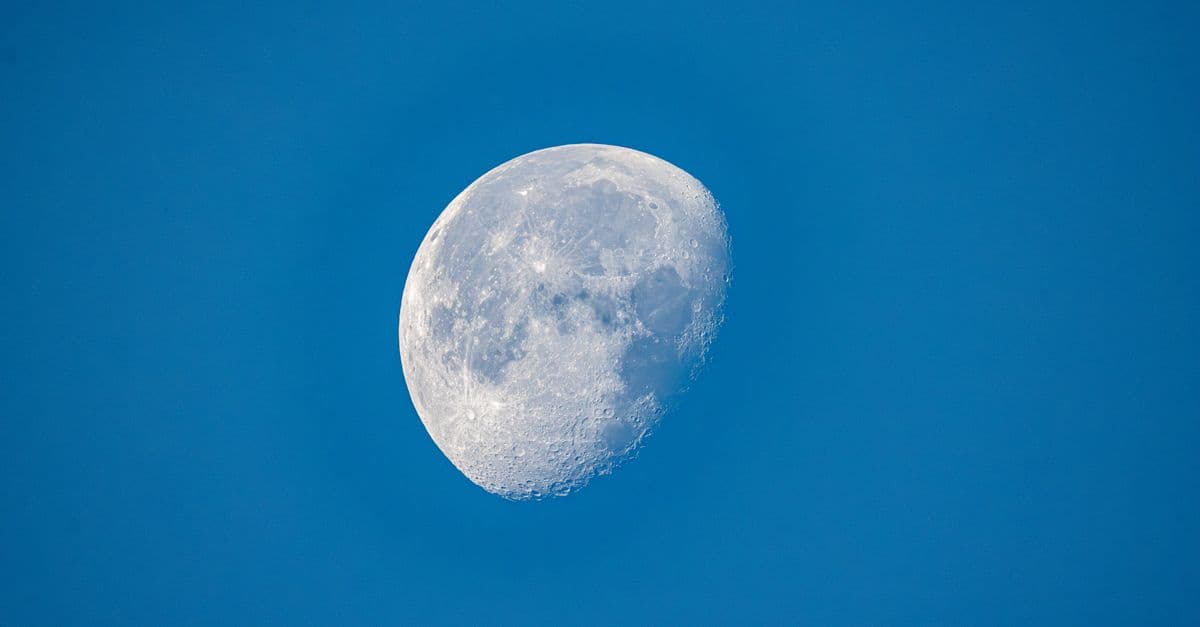
Photo: Regan Dsouza / Pexels
Between 1969 and 1972, six Apollo missions brought 382 kilograms (842 pounds) of lunar rock and soil back to Earth. That gray powder covering the Moon's surface—geologists call it regolith, not "soil," because nothing has ever grown in it—turned out to hold a startlingly detailed record: billions of years of asteroid bombardment, the exact composition of the solar wind, and, decades later, evidence of water nobody expected to find. This article breaks down how scientists actually analyzed that material, what it told them, and why NASA is still studying the same sample jars more than 50 years later.
Why lunar "soil" isn't really soil at all
On Earth, soil forms when water, wind, and living organisms break down bedrock over time. Roots crack stone, rain dissolves minerals, bacteria and fungi churn organic matter into the mix. None of that happens on the Moon. There is no atmosphere, no liquid water, and no biology.
Instead, lunar regolith forms almost entirely from impacts. Micrometeorites—grains of rock and dust often smaller than a pinhead—slam into the surface at speeds of tens of kilometers per second, vaporizing and melting the ground they hit. Larger impacts do the same thing on a bigger scale, throwing debris across hundreds of kilometers and burying older material under new layers. Over roughly 4.5 billion years, this constant hammering has pulverized the top few meters of the Moon into a fine, powdery layer.
Understanding how that process works was not just academic curiosity. NASA needed to know what future lunar bases would be built on, mining, and breathing near, decades before the Artemis program made that a near-term engineering problem rather than a distant one.
How scientists actually analyzed the samples
Apollo soil analysis followed a pipeline that started on the Moon and, in some cases, is still running today.
Collection and containment
Astronauts scooped, raked, and cored soil from multiple spots at each landing site, aiming for both surface material and material from a few tens of centimeters down. Samples went into vacuum-sealed containers before leaving the lunar surface, which mattered enormously: exposing the regolith to Earth's atmosphere and moisture would have altered or destroyed some of the very features scientists wanted to measure, particularly the delicate solar wind signatures trapped in the outer few nanometers of each grain.
Laboratory characterization
Once samples reached the Lunar Receiving Laboratory in Houston, researchers ran them through a battery of techniques that, in updated forms, are still standard for extraterrestrial materials today.
| Technique | What it measures | What it revealed |
|---|---|---|
| Scanning electron microscopy | Grain shape, surface texture, glass coatings | Sharp, angular particles fused by impact-melted glass (agglutinates) |
| X-ray fluorescence / electron microprobe | Elemental and mineral composition | Highland vs. mare compositional differences |
| Noble gas mass spectrometry | Cosmogenic isotopes (helium, neon, argon) | Cosmic ray exposure ages, some grains dated to several billion years of surface residence |
| Magnetometry | Remnant magnetism in grains | Evidence the Moon once had a weak global magnetic field |
| Infrared/near-infrared spectroscopy | Hydroxyl and water absorption features | First direct evidence of water bound in mineral grains (2010 reanalysis) |
Table: Core laboratory techniques used to analyze Apollo lunar soil samples.
Comparison across landing sites
Because the six Apollo missions landed on very different lunar terrain, from ancient highlands to young volcanic plains, comparing their soils let scientists reconstruct a rough geological map of the Moon without ever flying a rover to most of it. Apollo 16, which landed in the lunar highlands, returned soil dominated by anorthosite, a light-colored, calcium-rich rock. Apollo 11 and 12, which landed on mare (volcanic plain) sites, returned soil dominated by dark, iron- and titanium-rich basalt.
Ongoing re-analysis with modern instruments
NASA deliberately kept a portion of the Apollo samples sealed and untouched, betting that future analytical tools would be able to extract information 1969-era instruments could not. That bet paid off. In 2019, NASA's Apollo Next-Generation Sample Analysis (ANGSA) program opened several of these pristine, never-exposed samples specifically to apply 21st-century mass spectrometry, X-ray computed tomography, and isotope techniques that did not exist during the original missions. The Moon has also been studied by listening, as described in lunar seismic experiments.
What the analysis actually found
The regolith carries a scar record of every major impact
Lunar soil is full of small glass beads and agglutinates, particles where impact heat melted grains together into a glassy matrix. Each of these glass particles is essentially a tiny fossil of an impact event: its composition and structure record the energy and, in some cases, the chemistry of whatever struck the surface. Cataloging these across sites gave scientists a rough timeline of the Moon's bombardment history, going back well before life existed on Earth.
Cosmic ray exposure dating reveals how long each grain has sat on the surface
Cosmic rays from beyond the solar system strike surface material and produce specific radioactive isotopes at a roughly known rate. By measuring the ratio of these isotopes, researchers can calculate how long a given grain has been sitting exposed at the surface rather than buried. Exposure ages found in Apollo samples span an enormous range: some near-surface grains show only a few hundred thousand years of exposure, while others—thrown up and reburied repeatedly by later impacts—carry cosmic ray signatures stretching back well over a billion years (Cosmic-ray exposure history at the Apollo 16 site, ScienceDirect).
Solar wind particles are physically embedded in the grains
Because the Moon has no atmosphere or magnetic field strong enough to deflect it, the solar wind—a constant stream of charged particles, mostly hydrogen and helium, ejected from the Sun—slams directly into the lunar surface and implants itself in the outer few nanometers of every exposed grain. Lunar soil is, in effect, a sample-return mission the Sun performed on itself over billions of years, and scientists use it to study solar wind composition and historical variability that no Earth-based instrument could otherwise capture.
Regolith "maturity" measures how long soil has been weathered
Scientists quantify how much space weathering a given patch of soil has undergone using a metric based on the ratio of nanophase iron to total iron content in the finest grain fraction. Soils below that ratio are classified as immature (freshly exposed, from a recent impact or landslide); soils above it are mature, having spent a very long time being pulverized and welded by repeated small impacts (Regolith, ScienceDirect Topics). Maturity varies dramatically even within a single Apollo landing site, which is itself useful information: it tells geologists which parts of a site are geologically "young" (recently disturbed) and which are ancient and undisturbed.
Water and hydroxyl showed up decades after Apollo, and changed the story
Apollo-era instruments in 1969 found essentially no water in the returned samples, and for 40 years the Moon was treated as bone dry. That changed starting in 2009, when India's Chandrayaan-1 mission carried NASA's Moon Mineralogy Mapper (M3) instrument, which detected a widespread absorption feature near 2.8 to 3.0 micrometers across the lunar surface, a spectral signature strongly associated with hydroxyl and water-bearing minerals (Character and spatial distribution of OH/H2O, Science). Around the same time, re-analysis of Apollo samples with more sensitive instruments than were available in 1969 confirmed hydroxyl trapped directly inside lunar volcanic glass beads (Direct measurement of hydroxyl in the lunar regolith, Nature Geoscience). For how scientists look for water on the Moon more broadly, see lunar ice detection methods.
The picture got even clearer in October 2020, when NASA's SOFIA airborne telescope confirmed actual H2O molecules, not just hydroxyl, in sunlit Clavius Crater, at concentrations of roughly 100 to 412 parts per million, equivalent to about a 12-ounce bottle of water trapped in a cubic meter of soil (NASA's SOFIA discovers water on sunlit surface of Moon). That mattered because it showed water isn't confined to permanently shadowed polar craters, the places scientists previously assumed were the only cold traps capable of holding onto it.
Mineral composition tells you which part of the Moon you're standing on
- Highland soil: dominated by anorthosite (a calcium-rich feldspar), reflecting the Moon's original, ancient crust.
- Mare soil: dominated by basalt, a dark iron- and titanium-rich volcanic rock formed by lava flows roughly 3 to 4 billion years ago.
- Transitional and mixed soils: found near boundaries between highland and mare terrain, combining both signatures through impact mixing.
- Chang'e 5 basalt (returned by China's 2020 sample-return mission, from a different mare region than any Apollo site): dated to 2.03 billion years old, roughly a billion years younger than any Apollo basalt, showing lunar volcanism ran far longer than Apollo data alone suggested (Two-billion-year-old volcanism on the Moon, Nature).
Regolith is a strikingly poor conductor of heat
Because lunar regolith is so porous and loosely packed, it conducts heat very poorly between its surface and the material a few tens of centimeters below. That property means the top layer of the Moon swings between extreme daytime and nighttime temperatures while material just beneath it stays comparatively stable, a detail that matters enormously for anyone designing equipment, habitats, or buried cabling meant to survive a two-week lunar day and two-week lunar night.
Why any of this matters beyond geology
It tells engineers what future habitats will be built from and on
Apollo-derived data on regolith bearing capacity, grain size distribution, and cohesion gave engineers the first real numbers to design lunar foundations, landing pads, and radiation-shielding berms around, rather than guessing from photographs.
It changed the plan for where to land
Because water ice concentrations vary enormously by latitude and shadow exposure, the Artemis program's proposed landing sites cluster near the lunar south pole specifically because permanently shadowed craters there are expected to hold the highest concentrations of water ice, a direct consequence of the mapping work built on Apollo-era and orbital regolith data.
It made in-situ resource extraction a real engineering target, not science fiction
Lunar regolith, particularly the mineral ilmenite (an iron-titanium oxide common in mare basalt soils), can be chemically processed to release oxygen. NASA's in-situ resource utilization (ISRU) research has tested several extraction routes, including molten regolith electrolysis, which melts regolith and splits out oxygen and metal byproducts, and hydrogen reduction, which strips oxygen from ilmenite at high temperature (Hydrogen Reduction of Regolith, NASA ISRU). Neither process would be worth developing without Apollo-era data establishing how much ilmenite is actually present and where.
It flagged a genuine health hazard nobody anticipated before Apollo
Lunar dust particles are extremely fine and jagged, having never been rounded by wind or water erosion the way terrestrial dust is. Laboratory studies using simulated lunar dust have found that exposure can kill a large fraction of human lung cells in culture and cause inflammation in animal models, findings that now directly shape spacesuit airlock design and dust mitigation requirements for Artemis surface missions (Overview of lunar dust toxicity risk, npj Microgravity).
What people get wrong about lunar soil
"Lunar soil is basically Earth soil, just gray." It is not soil in any biological sense. There is no organic matter, no water cycle, and no microbial activity involved in forming it. Using the word "soil" is a linguistic holdover, not a geological claim; regolith is the technically correct term, and it forms exclusively through impact processes.
"Apollo proved the Moon is completely dry." This was the consensus for roughly 40 years after Apollo 11, based on 1969-era instrument sensitivity. It turned out to be a limitation of the equipment, not a fact about the Moon. Reanalysis of the same samples with modern spectrometers, plus independent orbital detections by Chandrayaan-1 and SOFIA, overturned that conclusion decisively.
"All lunar soil is basically the same, so one sample tells you about the whole Moon." The compositional gap between highland anorthosite soil and mare basalt soil is large enough that a geologist can usually identify which type of terrain a sample came from just by its color and mineral content. Chang'e 5's much younger basalt age compared to any Apollo sample reinforced how much regional variation exists even within volcanic soil types.
"Lunar dust is just an annoyance, like sand at the beach." Its sharp, unweathered grain shape and its documented toxicity in lung cell studies make it a genuine engineering and health hazard, not a cosmetic nuisance, which is why current lunar suit and airlock designs treat dust exclusion as a primary requirement rather than an afterthought.
Frequently asked questions
Q: Is lunar soil toxic to humans? A: It is not acutely poisonous, but its sharp, unweathered grain shape makes it a documented respiratory and eye irritant. Apollo astronauts reported symptoms after even brief cabin exposure, and lab studies with lunar dust simulants have shown significant lung cell toxicity, which is why Artemis mission planning treats dust exclusion as a priority.
Q: Can plants grow in lunar soil? A: A 2022 University of Florida study germinated thale cress seeds directly in small amounts of real Apollo lunar regolith. The seeds sprouted but showed clear stress responses, stunted roots, and reddish stress pigmentation compared to controls, indicating the soil is usable but far from ideal without amendment (Scientists Grow Plants in Lunar Soil, NASA).
Q: How deep is the layer of loose regolith on the Moon? A: It varies by terrain age. Older highland regions have regolith roughly 10 to 15 meters (33 to 49 feet) deep, while younger mare regions are typically only 4 to 5 meters (13 to 16 feet) deep, reflecting how much longer the highlands have been exposed to impact weathering.
Q: Is lunar soil the same everywhere on the Moon? A: No. Highland soil is dominated by calcium-rich anorthosite, while mare soil is dominated by iron- and titanium-rich basalt. Chang'e 5's basalt sample, returned from a mare region no Apollo mission visited, dated to about 2.03 billion years old, roughly a billion years younger than any Apollo basalt, showing composition and age both vary significantly by location.
Q: Does all lunar soil contain water? A: No, concentration varies by latitude, depth, and local geology. SOFIA detected water at 100 to 412 parts per million in sunlit Clavius Crater, while permanently shadowed polar craters are believed, based on separate orbital and radar data, to hold higher concentrations as ice.
Q: Can oxygen actually be extracted from lunar soil for astronauts to breathe? A: In principle, yes. Ilmenite, an iron-titanium mineral common in mare basalt soils, can be processed through hydrogen reduction or molten regolith electrolysis to release oxygen. NASA's ISRU program has tested both approaches in ground-based simulators, though no mission has yet demonstrated oxygen extraction at scale on the lunar surface itself.
Q: Why did NASA keep some Apollo samples sealed and unopened for 50 years? A: Because scientists in 1969 recognized that future instruments would be more sensitive than anything available at the time. NASA's ANGSA program began formally opening several of these pristine, never-exposed samples starting in 2019, applying modern isotope and imaging techniques the original Apollo scientists could not have used.
Q: How do scientists know how long a piece of lunar soil has been on the surface? A: By measuring cosmogenic isotopes, specific isotopes produced only when cosmic rays strike exposed rock over time. The isotope concentration acts like a clock: more isotopes mean longer exposure. Apollo samples have shown exposure ages ranging from under a million years to well over a billion years, depending on how recently each grain was buried or exhumed by later impacts.
Q: Is lunar regolith useful as radiation shielding for a Moon base? A: Yes, in principle. Because regolith is dense and can be piled or 3D-printed into thick berms around a habitat, it is widely proposed as shielding against both solar radiation and galactic cosmic rays. The thickness required depends on the exact composition and density values Apollo samples helped establish, though the specific engineering standards for Artemis-era habitats are still being finalized.
The takeaway
Apollo lunar soil samples turned out to be far more informative than "just dust," largely because the Moon's lack of weathering means every grain preserves information Earth's water and wind cycle would have erased within a geological eyeblink. The biggest lesson from five decades of re-examining the same jars of regolith is how much a fixed sample set can still teach you when the instruments studying it keep improving; the "dry Moon" conclusion from 1969 held for 40 years simply because nobody had built a sensitive enough spectrometer yet. That pattern, old samples yielding new answers as technology catches up, is exactly why NASA sealed some Apollo material untouched, and it is the same logic driving current sample-return missions like Chang'e 5 and the planned Artemis crewed landings.
Read next:
- Moon Rocks: Scientific Treasure from Lunar Exploration
- Complete Space Guide 2026
- Complete Science Guide 2026
Sources:
- NASA Lunar Regolith Simulant User's Guide, NASA/TM-20240011783 (2024)
- Regolith, ScienceDirect Topics
- Cosmic-ray exposure history at the Apollo 16 and other lunar sites, ScienceDirect
- Character and Spatial Distribution of OH/H2O on the Surface of the Moon Seen by M3 on Chandrayaan-1, Science (2009)
- Direct measurement of hydroxyl in the lunar regolith and the origin of lunar surface water, Nature Geoscience
- NASA's SOFIA Discovers Water on Sunlit Surface of Moon, NASA (2020)
- Two-billion-year-old volcanism on the Moon from Chang'e-5 basalts, Nature (2021)
- Overview of lunar dust toxicity risk, npj Microgravity
- Hydrogen Reduction of Regolith, NASA ISRU
- Scientists Grow Plants in Lunar Soil, NASA (2022)
Follow new articles
Add SciHub101 to your feed reader to see new science and technology stories.
About the Author
SciHub101 is an independent science and technology publication founded and edited by Buğra Sözeri, a software engineer and app developer based in Türkiye. AI tools assist with drafting and research. Source documentation in the existing archive is uneven, and articles are being reviewed and corrected. The Editorial Team byline identifies editorial responsibility; it does not certify specialist or independent human review. Where we compare products, anything built by our own team is labelled as such — see the editorial guidelines and About page for how corrections and disclosures work.
Related Articles
Atmospheric Composition Studies on Mars: Understanding Thin Air
Mars' atmosphere is about 95% carbon dioxide at roughly 0.6% of Earth's surface pressure. Rover and orbiter measurements show what is in it, how it cycles with the seasons, and what its trace gases and isotopes say about the air Mars lost.
Lunar Seismic Experiments: Listening to Moonquakes
Apollo seismometers left on the Moon revealed extensive seismic activity, proving the Moon is geologically dynamic with thousands of moonquakes annually—surprising findings about our satellite.
Moon Rocks: Scientific Treasure from Lunar Exploration
Apollo moon rocks are among Earth's most valuable scientific specimens, revealing planetary formation, solar system history, and the nature of celestial bodies.
Apollo 11: First Steps on the Moon and the Dawn of Lunar Science
July 20, 1969: Neil Armstrong and Buzz Aldrin landed on the Moon, returning 21.5 kg of lunar samples that revealed the Moon's geological history and transformed planetary science.
Lunar Magnetometer Discoveries: Evidence of the Moon's Magnetic Past
Apollo magnetometers revealed anomalous magnetic fields on the Moon surface, proving the Moon once possessed a magnetic field—a surprising discovery about our satellite's geological history.
Apollo 17: The Last Moon Landing and Scientific Achievement
December 1972: Apollo 17 landed at Taurus-Littrow, returning 110.5 kg of samples and conducting 22 hours of moonwalking—the most scientifically productive lunar mission.