Lunar Magnetometer Discoveries: Evidence of the Moon's Magnetic Past
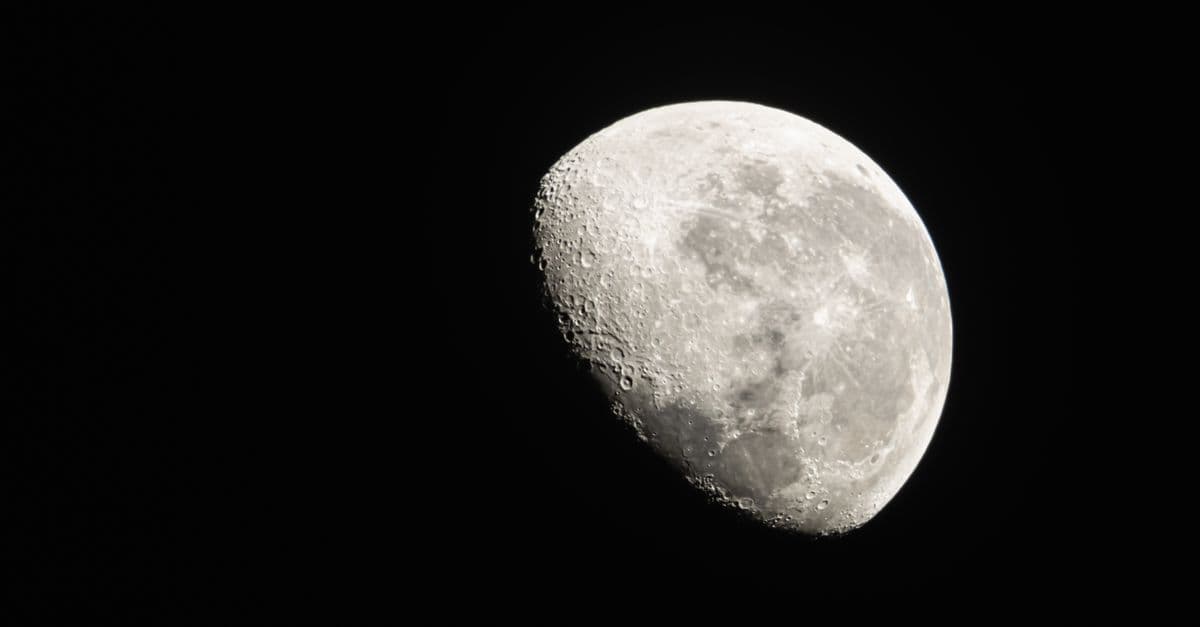
Photo: ERIK DING / Pexels
Before Apollo, planetary scientists debated whether the Moon ever had a magnetic field. Ancient lunar rocks showed evidence of magnetization, suggesting a past field, but evidence was indirect. Apollo magnetometers deployed on the lunar surface provided conclusive proof: the Moon possesses localized magnetic field anomalies—regions of enhanced magnetic intensity suggesting magnetic concentration through internal processes. Analysis revealed these anomalies represent remnants of the Moon's ancient magnetic field. The discovery that the Moon once possessed a global magnetic field was surprising—it required a liquid outer core and significant internal activity early in lunar history. These findings revolutionized understanding of the Moon's thermal evolution and internal structure.
Key Takeaways
- Apollo magnetometers detected magnetic field anomalies on the Moon surface
- Anomalies proved the Moon once possessed a stronger global magnetic field
- The lunar magnetic field was likely generated by a liquid outer core
- Ancient magnetic field ceased approximately 3.2 billion years ago
- Evidence of magnetization in lunar rocks matches predictions from magnetometer discoveries
How Experiments Worked
Apollo magnetometers measured magnetic field strength and direction at lunar surface.
Step 1: Instrument Design Magnetometers were:
- Sensitive three-axis devices measuring field components
- Deployed as part of Apollo Lunar Surface Experiments Package (ALSEP)
- Powered by radioisotope generators
- Connected to data transmission systems
Step 2: Site Deployment Magnetometers were deployed at Apollo 12, 15, and 16 sites. Multiple sites enabled study of spatial variations in field strength.
Step 3: Data Collection Instruments measured magnetic field continuously:
- Local field strength (nanoTesla scale—extraordinarily small)
- Field direction
- Diurnal variations
- Response to solar wind variations
Step 4: Analysis Ground teams analyzed:
- Spatial variations in field strength
- Time-dependent changes
- Comparison to theoretical predictions
- Correlation with sample magnetization measurements
Results
Magnetometer discoveries revealed surprising lunar magnetism.
Anomalous Field Regions: Magnetic field measurements showed regional enhancements—stronger fields in certain locations than others. These anomalies indicated magnetic concentration through internal processes.
Subsurface Sources: Analysis indicated that magnetic anomalies arose from subsurface magnetized rocks, not surface effects. This suggested ancient magnetization during stronger field epoch.
Field Strength Variations: Anomaly strength varied from location to location, suggesting variable ancient magnetization intensity or variable magnetism-bearing mineral distributions.
No Global Field: Despite local anomalies, no strong global magnetic field was detected, confirming the Moon's current magnetic field is negligible.
Ancient Field Inference: Magnetization of lunar rocks combined with magnetometer anomalies proved the Moon possessed a magnetic field when rocks cooled—approximately 3.8-3.2 billion years ago.
Dynamo Requirements: Generating the ancient lunar magnetic field required a liquid outer core—proof of significant internal activity and thermal energy early in lunar history.
Impact
1. Lunar Evolution Understanding The discovery of ancient magnetization proved the Moon had significant internal activity—liquid core generation requiring substantial internal heat. This transformed understanding of lunar cooling and evolution.
2. Magnetic Dynamo Theory Understanding lunar magnetization informed planetary magnetohydrodynamics—understanding how planetary magnetic fields are generated.
3. Core Formation Theory Proof of a past liquid core informed theories of planetary core formation and the Moon's thermal history.
4. Habitability Assessment Understanding the Moon's magnetic history was relevant to planning future settlement—knowledge of magnetism informed radiation environment characterization.
5. Comparative Planetology Understanding the Moon's magnetic history provided context for understanding magnetic fields of other planets and moons.
The Lunar Dynamo: How the Moon Generated a Magnetic Field
Generating a magnetic field requires a dynamo mechanism — moving, electrically conducting fluid (typically liquid iron in a planet's core) creating circulating electric currents.
Earth's magnetic field is dynamo-generated by liquid iron in Earth's outer core. The Moon lacks this mechanism today—its core cooled billions of years ago. Yet ancient rocks prove the Moon once had a magnetic field.
Dynamo Requirements for the Moon: To power a lunar dynamo 4.2-3.2 billion years ago required:
- Liquid Outer Core: Molten iron-nickel surrounding a solid inner core
- Core Convection: Circulation patterns driven by cooling and gravitational differentiation
- Thermal Energy: Sufficient heat from radioactive decay and gravitational contraction to maintain fluidity
- Rotation: The Moon's rotation provided the Coriolis effect necessary for dynamo operation
The Moon possessed all these requirements early in its history. The Apollo magnetometer data combined with sample analysis proved the Moon had sufficient internal heat and a liquid core capable of generating the observed magnetic field.
As the Moon cooled—losing internal heat to space—the outer core eventually solidified. Without liquid iron circulation, the dynamo stopped. The magnetic field decayed approximately 3.2 billion years ago as the outer core froze.
Measuring Magnetization: Laboratory Analysis of Lunar Samples
Beyond the magnetometer measurements on the surface, scientists analyzed lunar rocks in terrestrial laboratories.
Thermoremanent Magnetization: When lava cools below the Curie temperature (specific temperature depending on mineral composition), iron-bearing minerals align with the surrounding magnetic field and "lock in" that field direction and strength as the rock solidifies. This frozen magnetization is called thermoremanent magnetization (TRM).
Measurement Technique: Scientists heated Apollo samples in a known magnetic field (or zero field) and measured the magnetization direction and strength. By systematically heating to different temperatures and measuring at each step, they constructed a magnetization profile revealing the ancient magnetic field strength.
Results showed ancient magnetic field strength was substantial—roughly 1-2% of Earth's current field. This was sufficient to magnetize surface rocks completely, proving the Moon indeed possessed a robust global magnetic field when the rocks cooled.
Source: Physics of the Earth and Planetary Interiors (2019) — Lunar thermoremanent magnetization analysis and ancient field strength reconstruction
Lunar Magnetic Anomalies: Implications for Subsurface Structure
The magnetometer anomalies didn't appear randomly. Certain regions showed strong local magnetic fields. This non-uniform distribution tells us about subsurface structure.
Subsurface Magnetized Zones: Strong anomalies indicate magnetized rock layers beneath the surface. Where the anomaly is strongest, magnetized rock is closest to the surface or most concentrated.
Impact Basin Relationships: Many magnetic anomalies correlate with impact basins (ancient large impacts). This suggests that large impacts may have excavated subsurface magnetized material upward, or impacts may have altered thermal conditions affecting magnetization.
Magnetized Crust Thickness: By comparing anomaly strength to theoretical predictions, scientists estimated the magnetized crust extends roughly 200-600 meters below the surface at anomaly locations. Deeper magnetized material contributes less to surface field measurements due to geometric distance.
Core Field vs. Crustal Field: The magnetometer data separated two contributions: a weak global field (dynamo-generated core field) and much stronger local crustal anomalies (magnetized rocks). This decomposition enabled quantifying the ancient core dynamo field separately from crustal effects.
Habitability and Radiation Environment Implications
Understanding the Moon's magnetic history is relevant to planning future settlement.
Radiation Protection: A global magnetic field deflects solar wind and cosmic ray particles, reducing surface radiation exposure. Without the ancient field, the Moon's surface experienced higher radiation than when protected by the dynamo-generated field.
Cosmic Ray Records in Rocks: Cosmic rays produce distinctive nuclear reaction products in surface rocks (isotopes like beryllium-10, chlorine-36). These isotope abundances increase with time unless protected by a magnetic field. Measuring cosmic ray isotopes in Apollo samples revealed when the lunar magnetic field shut down (around 3.2 billion years ago) — the cosmic ray isotope concentrations change at that transition.
Future Settlement Considerations: Modern lunar settlement will face unshielded cosmic ray and solar wind exposure. Understanding historical radiation conditions (inferred from the ancient magnetic field and cosmic ray records) helps predicting settlement radiation environment and informing shielding requirements.
Future Outlook
Lunar magnetic research continues:
Magnetization Studies: Modern instruments on lunar orbiters (Lunar Prospector, GRAIL, THEMIS) continue studying magnetic anomalies with improved sensitivity, revealing finer structural details.
South Pole Magnetism: Future Artemis missions will investigate magnetization at the lunar south pole, revealing regional variations and testing whether south pole anomalies differ from equatorial regions.
Core Characterization: Advanced geophysical techniques combining gravity, seismic, and magnetic data may enable better characterization of the lunar core's current state (solid or partially molten) and thermal evolution.
Frequently Asked Questions
Q: Does the Moon have a magnetic field now?
A: No. The Moon's current magnetic field is negligible—approximately 1% of Earth's field strength. Magnetometer readings show only weak, localized anomalies (crustal fields) rather than a global dynamo field.
Q: How strong was the Moon's ancient magnetic field?
A: Estimates from Apollo sample magnetization measurements suggest 1-2% of Earth's current field strength—weaker than Earth but sufficient to magnetize surface rocks completely and deflect solar wind over large regions.
Q: Could the lunar magnetic field be restored?
A: No. Restoring a magnetic field would require re-heating the core to liquid state and maintaining convection—impossible without catastrophic energy input vastly exceeding any feasible technological intervention.
Q: How long did the Moon's magnetic field persist?
A: Evidence suggests it was active from approximately 4.2 billion years ago (lunar core solidification prevented earlier dating) until approximately 3.2 billion years ago—roughly 1 billion year duration. The field persisted through significant lunar evolution before core cooling shut down the dynamo.
Q: Did the Moon's magnetic field protect against cosmic radiation?
A: Yes. A global magnetic field would have deflected some cosmic rays and solar wind particles, reducing surface radiation exposure. Without the field, the Moon's surface experienced higher radiation for the past 3 billion years, affecting surface chemistry and biological habitability potential.
Q: Could magnetic anomalies be used for future lunar navigation?
A: Potentially. If future rovers and settlement infrastructure have magnetometers, they could use magnetic anomalies as navigation references. The anomalies are geographically fixed and distinct enough to enable local magnetic-based positioning, supplementing GPS-like satellite systems.
Related Articles
- Earth's Magnetic Field: Protection from the Solar Wind
- Planetary Magnetism: How Planets Generate Magnetic Fields
- Moon's Internal Structure: Crust, Mantle, and Core
- Lunar Geology: Understanding the Moon's Rocks and History
- Cosmic Rays and Particle Physics: Understanding High-Energy Radiation
Sources:
- NASA Apollo Magnetometer Archives (1969-1977)
- Journal of Geophysical Research, "Lunar magnetic anomalies from Apollo data" (1975-present)
- Icarus, "The Moon's ancient magnetic field" (2008)
- Physics of the Earth and Planetary Interiors, "Lunar core magnetization" (2019)
Follow new articles
Add SciHub101 to your feed reader to see new science and technology stories.
About the Author
SciHub101 is an independent science and technology publication founded and edited by Buğra Sözeri, a software engineer and app developer based in Türkiye. AI tools assist with drafting and research. Source documentation in the existing archive is uneven, and articles are being reviewed and corrected. The Editorial Team byline identifies editorial responsibility; it does not certify specialist or independent human review. Where we compare products, anything built by our own team is labelled as such — see the editorial guidelines and About page for how corrections and disclosures work.
Related Articles
Lunar Seismic Experiments: Listening to Moonquakes
Apollo seismometers left on the Moon revealed extensive seismic activity, proving the Moon is geologically dynamic with thousands of moonquakes annually—surprising findings about our satellite.
Lunar Ice Detection Methods: Finding Water on the Moon
Remote sensing and direct exploration revealed water ice at the Moon's poles—a discovery changing lunar science and enabling future settlement through resource utilization.
Moon Rocks: Scientific Treasure from Lunar Exploration
Apollo moon rocks are among Earth's most valuable scientific specimens, revealing planetary formation, solar system history, and the nature of celestial bodies.
Lunar Soil Analysis: What We Learned from Moon Dust
Apollo lunar soil samples revealed the Moon's weathering processes, mineral composition, and the effects of cosmic rays—knowledge essential for future lunar settlement.
Apollo 11: First Steps on the Moon and the Dawn of Lunar Science
July 20, 1969: Neil Armstrong and Buzz Aldrin landed on the Moon, returning 21.5 kg of lunar samples that revealed the Moon's geological history and transformed planetary science.
Apollo 17: The Last Moon Landing and Scientific Achievement
December 1972: Apollo 17 landed at Taurus-Littrow, returning 110.5 kg of samples and conducting 22 hours of moonwalking—the most scientifically productive lunar mission.