Apollo 11: First Steps on the Moon and the Dawn of Lunar Science
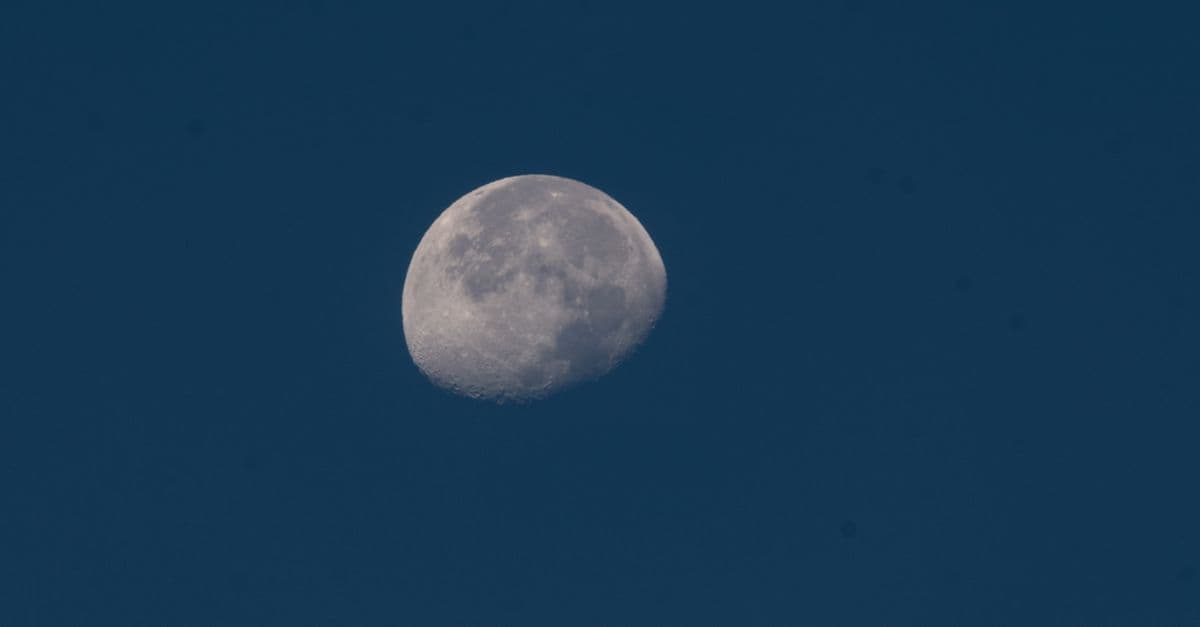
Photo: Doğan Alpaslan Demir / Pexels
On July 20, 1969, Neil Armstrong and Buzz Aldrin landed the Lunar Module Eagle on the Moon's Sea of Tranquility, becoming the first humans to stand on another world. In the 2.5 hours they spent outside the spacecraft, they collected 21.5 kg (47 lb) of rock and soil, planted a seismometer and a laser reflector that is still in use today, and set in motion five decades of lunar science that is nowhere near finished. This piece explains what the mission actually did on the surface, what the returned samples proved about the Moon, and why researchers are still opening sealed Apollo sample tubes in 2026.
Key Takeaways
- Apollo 11 returned 21.5 kg (47 lb) of lunar samples, not the larger totals sometimes quoted for the whole Apollo program
- Radiometric dating of those samples pinned the Moon's age at roughly 4.5 billion years, close to Earth's own age
- The mission's Laser Ranging Retroreflector still bounces laser pulses back to Earth-based observatories more than 55 years later
- Apollo 11 basalts proved the Moon had active volcanism, overturning the idea of a geologically dead world
- Water was hiding in Apollo glass beads the whole time — it just took secondary ion mass spectrometry, invented decades later, to find it
Why the Moon was still a mystery in 1969
Telescopes had mapped the Moon's craters, mountains, and dark "seas" (maria) for centuries, but nobody could say what the Moon was actually made of, how old it was, or whether it had ever been geologically active. Ground-based spectroscopy could estimate surface composition in broad strokes, but it could not date rock or resolve mineral structure the way a laboratory could.
That gap mattered beyond planetary trivia. If scientists could pin down when the Moon formed and how it evolved, they would have a working model for how the early solar system's rocky bodies cooled, differentiated into crust and core, and either kept or lost their internal heat. The Moon, unlike Earth, has no plate tectonics or active erosion to erase its early history, so its rocks act as a preserved record of a period Earth's own geology has mostly scrubbed away.
Three competing origin theories were on the table in the 1960s: capture (the Moon formed elsewhere and was pulled into Earth orbit), fission (the Moon split off from a fast-spinning early Earth), and co-accretion (Earth and Moon formed together from the same disk of material). None of them could be tested without a physical sample. Robotic Soviet missions like Luna 15, which crash-landed on the Moon just days before Apollo 11 in an unsuccessful attempt at its own robotic sample return, showed how hard even an uncrewed sample-return effort was.
How the mission actually put boots and instruments on the surface
Apollo 11 was less a single dramatic leap than a chain of engineering steps, each one narrower and higher-stakes than the last. Think of it like threading a needle while the needle, the thread, and the person holding it are all moving at different speeds relative to each other.
Launch to lunar orbit
A Saturn V rocket, still the most powerful vehicle ever flown successfully, launched from Kennedy Space Center on July 16, 1969, carrying the Command Module Columbia, its Service Module, and the Lunar Module Eagle. Fully fueled, the Saturn V weighed about 2,950,000 kg (6.5 million lb) and stood 111 meters (363 ft) tall — taller than most 30-story buildings. (NASA Saturn V fact sheet) The spacecraft coasted roughly 380,000 km to the Moon over three days before entering lunar orbit, where Michael Collins stayed aboard Columbia while Armstrong and Aldrin moved into Eagle.
Descent: a landing that nearly aborted twice
Eagle's guidance computer triggered program alarms during descent, warning it was being overloaded with data it couldn't process fast enough — a problem mission control cleared to continue past, trusting the hardware over the software's complaint. Then Armstrong saw the automated landing was steering toward a boulder-strewn crater and took manual control, flying Eagle horizontally across the surface to find clearer ground. He touched down in the Sea of Tranquility with roughly 25 seconds of descent fuel left before an automatic abort would have triggered.
On the surface: 2.5 hours, not a full workday
Armstrong stepped onto the surface at 02:56 UTC on July 21, 1969, followed by Aldrin about 20 minutes later. In the roughly 2.5 hours of extravehicular activity that followed, the two astronauts:
| Task | What happened |
|---|---|
| Sample collection | Gathered 21.5 kg (47 lb) of rock, soil, and two core-tube samples (USRA Lunar and Planetary Institute) |
| Passive Seismic Experiment | Deployed the first seismometer on another world, operating for 21 days before failing (NASA Science) |
| Laser Ranging Retroreflector | Placed the mirror array still used for Earth-Moon distance measurements today |
| Solar Wind Composition Experiment | Unrolled an aluminum foil sheet to trap solar wind particles for later lab analysis |
| Photography and documentation | Captured the surface, equipment, and each other for the historical and scientific record |
Table 1. Core surface activities of the Apollo 11 moonwalk, July 20–21, 1969.
Ascent and return
Eagle's ascent stage lifted off from the Moon roughly 21.5 hours after landing, rendezvoused with Columbia in lunar orbit, and the crew returned to Earth, splashing down in the Pacific Ocean on July 24, 1969. The astronauts then spent 21 days in quarantine, a precaution against the then-unknown possibility of lunar pathogens — a risk that later analysis showed was never realistic, since the Moon has no atmosphere or liquid water to support life as we understand it.
What the samples proved once they reached a lab
The dramatic moonwalk made the headlines, but the science payoff came later, in laboratories, when researchers put Apollo 11 rock under mass spectrometers and electron microscopes.
How old is the Moon?
Radiometric dating — measuring the ratio of a radioactive isotope to its stable decay product in a mineral crystal, which behaves like a clock that starts ticking the moment the mineral solidifies — put Apollo 11's basalt samples at 3.6 to 3.9 billion years old, with some tiny fragments trapped inside dating back closer to 4.5 billion years. Combined with later Apollo and meteorite data, this places the Moon's formation at roughly the same time as Earth's, about 4.5 billion years ago.
Did Apollo prove the Giant Impact Hypothesis?
Apollo 11 alone did not prove it, but its samples supplied a critical clue: lunar rock's oxygen isotope ratios are nearly identical to Earth's, unlike those of meteorites from elsewhere in the solar system. That similarity is exactly what you'd expect if the Moon formed from debris blasted off a young Earth after a Mars-sized body, often called Theia, struck it roughly 4.5 billion years ago. The full case for the Giant Impact Hypothesis only solidified once scientists had isotope data from all six Apollo landing sites, but Apollo 11 was the first data point.
Was the Moon ever volcanically active?
Yes, and this was one of Apollo 11's most surprising findings. Many of the returned samples were basalts, dense volcanic rock formed from cooled lava, proving the Moon experienced significant volcanic activity for at least a billion years after it formed. That directly contradicted the pre-Apollo assumption, held by a meaningful share of the geology community, that the Moon had been a cold, inert body since its birth.
Does the Moon have water?
Not in Apollo 11's original 1969 analysis, which found the samples bone dry and helped cement decades of "the Moon is anhydrous" thinking. That changed in 2008, when planetary scientist Erik Hauri and colleagues used secondary ion mass spectrometry, an instrument sensitive enough to detect as little as 5 parts per million, to find up to 46 parts per million of water trapped inside tiny volcanic glass beads from Apollo missions. (Saal et al. 2008, cited via NASA/JPL and Space.com) The water had been there the entire time; the instruments capable of detecting it simply did not exist in 1969. Later missions, including India's Chandrayaan-1 and NASA's LCROSS impactor, confirmed substantial water ice at the lunar poles, in regions Apollo never visited.
What does the Moon's interior look like?
The Passive Seismic Experiment, running for three weeks before failing, gave scientists their first direct evidence of the Moon's internal layering: a crust roughly 60 to 70 km thick rich in the mineral plagioclase, a mantle of olivine and pyroxene, and hints of a small metallic core making up less than a quarter of the Moon's radius, a far smaller fraction than Earth's core occupies. (Geological Digressions; Temblor.net) Follow-on seismometers from Apollo 12, 14, 15, and 16, networked together, later revealed that moonquakes are typically small (around magnitude 2) and deep, occurring 800 to 1,000 km below the surface in monthly cycles tied to tidal stress from Earth's gravity.
Why this changed planetary science, not just Moon trivia
Apollo 11's samples did more than answer questions about one satellite. They gave planetary scientists their first ground-truthed dataset for testing models of how any rocky body forms, cools, and evolves — and that dataset is still being mined.
A calibrated clock for the whole inner solar system. Before Apollo, scientists estimated the ages of planetary surfaces by counting craters and assuming a rough cratering rate. Once Apollo samples gave absolute ages for specific, crater-counted regions of the Moon, researchers could calibrate that crater-counting method and apply it to Mars, Mercury, and asteroids, none of which have offered sample return until very recently. This is why a picture of a crater-pocked region on Mars can be assigned an approximate age today: the underlying math traces back to Apollo lunar samples.
A training ground for an entire discipline. Planetary geology barely existed as a distinct field before Apollo. Geologist-astronaut Harrison Schmitt, who flew on Apollo 17, is one of the field's founding figures, and Apollo-era researchers trained the generation of scientists who went on to interpret data from Mars rovers, asteroid sample-return missions like OSIRIS-REx, and the ongoing analysis of Apollo material itself.
A justification for keeping samples in reserve. NASA deliberately kept, and still keeps, a portion of every Apollo sample sealed and untouched in a nitrogen-filled vault at Johnson Space Center's Building 31 Lunar Sample Laboratory Facility, precisely because instruments improve. The 2008 water discovery is the textbook example of why that policy paid off: researchers analyzed 40-year-old samples with technology that did not exist when the samples were collected. (NASA JSC Curation)
A geopolitical proof of concept. Beyond the science, Apollo 11 demonstrated that a nation could commit to and execute an enormously complex, multi-year engineering program under public scrutiny. That template — set an ambitious, verifiable technical goal and fund it consistently — is one that space agencies and private companies still reference when planning subsequent large exploration efforts.
What people get wrong about Apollo 11's science
"Apollo 11 brought back most of the Apollo samples." It did not. Apollo 11 returned 21.5 kg, a modest haul compared to the roughly 110.5 kg Apollo 17 brought back during its 22 hours of surface time in 1972, or the approximately 382 kg total collected across all six crewed landings between 1969 and 1972. Apollo 11's sample was the first, not the largest.
"The Moon has always been known to be geologically dead." The opposite is true. Pre-Apollo scientific opinion was genuinely split, and a meaningful faction argued the Moon had never experienced volcanism at all. Apollo 11's basalt samples were part of the evidence that settled the debate in favor of an early, geologically active Moon.
"Once the samples were tested in 1969-70, the science was finished." In practice, Apollo material is still generating peer-reviewed papers more than 55 years later, because analytical instruments — mass spectrometers, electron microprobes, laser-ablation techniques — have improved by orders of magnitude since Nixon-era labs first opened the sample boxes. NASA's decision to seal away a fraction of the collection for future scientists, rather than distributing every gram immediately, is a big part of why that continues to work.
"Quarantining the astronauts was just theater." It reflected genuine, if ultimately unfounded, caution. NASA planetary protection policy at the time required treating any body without established biological safety as a potential contamination risk, so returning astronauts and samples spent up to 21 days in isolation. Subsequent analysis showed the Moon's lack of atmosphere and liquid water made lunar pathogens essentially impossible, and quarantine protocols were relaxed for later missions.
How Apollo 11 compares to later Apollo landings
Apollo 11 was intentionally a low-risk, high-caution mission, since it was NASA's first attempt and nobody knew for certain the lunar surface could bear a spacecraft's weight or that astronauts could work safely in one-sixth gravity. Later missions, flown with more confidence and better hardware, pushed further.
| Mission | Landing site | Surface time | Sample mass returned | Notable first |
|---|---|---|---|---|
| Apollo 11 (1969) | Sea of Tranquility | 2.5 hours EVA | 21.5 kg (47 lb) | First crewed lunar landing |
| Apollo 12 (1969) | Ocean of Storms | 7.6 hours EVA | 34.4 kg | Precision landing near Surveyor 3 probe |
| Apollo 14 (1971) | Fra Mauro | 9.4 hours EVA | 42.8 kg | First use of a hand-pulled equipment cart |
| Apollo 15 (1971) | Hadley-Apennine | 18.5 hours EVA | 77 kg | First Lunar Roving Vehicle |
| Apollo 17 (1972) | Taurus-Littrow | 22 hours EVA | 110.5 kg | Only mission with a professional geologist (Harrison Schmitt) |
Table 2. Apollo crewed landings compared by surface duration and sample return; figures drawn from NASA Apollo mission summaries and USRA Lunar and Planetary Institute records.
The trend across the table is not subtle: each mission stayed longer, carried better tools (the Lunar Roving Vehicle alone roughly quadrupled how far astronauts could range from the lander), and came home with dramatically more material. Apollo 11's job was to prove crewed landing and return was possible at all; the science payload was almost a bonus layered onto that primary goal.
What comes after Apollo: Artemis and the next sample return
NASA's Artemis program is the direct successor effort, aiming to return humans to the Moon and, this time, establish a longer-term presence rather than a series of brief visits. As of mid-2026, NASA is targeting a 2027 Artemis III mission as an uncrewed-lander-and-crew rendezvous demonstration in lunar orbit, with an actual crewed surface landing pushed to around 2028 as engineers work through additional risk-reduction testing of the human landing system. (Space.com, Artemis III timeline)
Unlike Apollo, which landed near the lunar equator for trajectory and lighting reasons, Artemis is targeting the lunar south pole, where permanently shadowed crater floors are believed to hold substantial water ice. That single difference in landing geography means Artemis samples will answer questions Apollo's equatorial rocks simply cannot, particularly around how much water ice the Moon holds and how it got there. Robotic missions are also filling in gaps ahead of crewed Artemis landings: China's Chang'e 5 and Chang'e 6 missions have already returned lunar samples from regions Apollo never reached, adding new data points to the same isotope and age-dating techniques pioneered on Apollo 11 material in the early 1970s. Detection of that ice is covered in lunar ice detection methods, and the Apollo foil experiment connects to solar wind experiments on the Moon.
The takeaway
Apollo 11's real scientific legacy is not the 21.5 kg of rock itself, but the fact that scientists never stopped analyzing it. A sample collected in 2.5 rushed, high-stakes hours in 1969 helped date the Moon, support the Giant Impact Hypothesis, prove the Moon once had active volcanoes, and, decades later, reveal water that 1969-era instruments simply could not detect. That last discovery is the clearest argument for why NASA still keeps part of the Apollo collection sealed: the rocks haven't changed since 1969, but our ability to interrogate them keeps improving, and there is no reason to think that trend stops before Artemis brings home the next batch.
FAQ
Q: How much lunar sample did Apollo 11 actually collect? A: 21.5 kg (47 lb) of rock, soil, and two core-tube samples — the smallest haul of any crewed Apollo landing, since it was a short, cautious first mission focused on proving landing and return were possible.
Q: Are Apollo 11 samples still being studied today? A: Yes. NASA reserves a portion of Apollo material specifically for future analysis with better instruments, and continues to allocate samples to approved research teams worldwide through its Johnson Space Center curation program.
Q: Did Apollo 11 prove the Giant Impact Hypothesis of Moon formation? A: It contributed a key clue — nearly identical oxygen isotope ratios between lunar and Earth rock — but the hypothesis was only strongly supported once data from all six Apollo landing sites and later analytical work accumulated.
Q: Why did Apollo 11's samples show no water when the Moon actually has water? A: The 1969 instruments couldn't detect water trapped at parts-per-million levels inside volcanic glass beads. It took secondary ion mass spectrometry, applied to the same Apollo samples in 2008, to find it.
Q: How old did Apollo 11 samples show the Moon to be? A: Radiometric dating placed Apollo 11 basalts at 3.6 to 3.9 billion years old, with the Moon's formation itself estimated at roughly 4.5 billion years, close to Earth's age.
Q: Is the Laser Ranging Retroreflector from Apollo 11 still functioning? A: Yes. Observatories on Earth still fire lasers at it to measure the Earth-Moon distance to within a few centimeters, more than 55 years after Armstrong and Aldrin placed it on the surface.
Q: How does Apollo 11's sample size compare to later missions? A: It's the smallest of the six crewed landings. Apollo 17, the last mission, returned about 110.5 kg during 22 hours of surface time, more than five times Apollo 11's total.
Q: What replaced Apollo as NASA's Moon program? A: Artemis, which targets the lunar south pole rather than Apollo's equatorial sites specifically because of suspected water ice deposits. A crewed landing is currently targeted for around 2028.
Q: Why were the Apollo 11 astronauts quarantined after returning? A: Out of caution over unknown lunar biological risk. Later analysis showed the Moon's lack of atmosphere and liquid water makes native lunar pathogens essentially impossible, and the quarantine protocol was eventually relaxed.
Q: Did any other countries land samples from the Moon after Apollo? A: Yes. China's Chang'e 5 (2020) and Chang'e 6 (2024) missions returned samples from lunar regions Apollo never visited, adding new data points using isotope and dating techniques first applied to Apollo 11 material.
Related Articles
- Apollo 17: The Last Moon Landing and Scientific Achievement
- Why Moon Dust Is Dangerous
- Why the Moon Has So Many Craters
- The Fastest Man-Made Objects Ever Built: From Apollo to Parker
Sources:
- USRA Lunar and Planetary Institute, "Apollo 11 Samples"
- NASA Science, "Apollo 11 Seismic Experiment"
- IEEE Spectrum, "One Apollo 11 Experiment Is Still Going 50 Years Later"
- Wikipedia, "Laser Ranging Retroreflector"
- Space.com, "Water Discovered in Moon Samples"
- NASA Johnson Space Center, "Lunar Sample Laboratory Facility"
- Space.com, "NASA Ramps Up Prep for Artemis III Astronaut Launch in 2027"
- Geological-Digressions.com, "Seismic Experiments and Moonquakes"
- Temblor.net, "How Apollo 11's Moonquakes Changed Our Understanding of Earthquakes"
- Spaceline.org, "Saturn V Apollo Fact Sheet"
Follow new articles
Add SciHub101 to your feed reader to see new science and technology stories.
About the Author
SciHub101 is an independent science and technology publication founded and edited by Buğra Sözeri, a software engineer and app developer based in Türkiye. AI tools assist with drafting and research. Source documentation in the existing archive is uneven, and articles are being reviewed and corrected. The Editorial Team byline identifies editorial responsibility; it does not certify specialist or independent human review. Where we compare products, anything built by our own team is labelled as such — see the editorial guidelines and About page for how corrections and disclosures work.
Related Articles
Apollo 17: The Last Moon Landing and Scientific Achievement
December 1972: Apollo 17 landed at Taurus-Littrow, returning 110.5 kg of samples and conducting 22 hours of moonwalking—the most scientifically productive lunar mission.

Alzheimer's Research in Space: Studying Neurodegeneration in Microgravity
ISS experiments with brain organoids and amyloid-beta protein reveal how microgravity reshapes neural aging and protein folding, opening a new research platform for Alzheimer's disease.
Lunar Soil Analysis: What We Learned from Moon Dust
Apollo lunar soil samples revealed the Moon's weathering processes, mineral composition, and the effects of cosmic rays—knowledge essential for future lunar settlement.
Moon Rocks: Scientific Treasure from Lunar Exploration
Apollo moon rocks are among Earth's most valuable scientific specimens, revealing planetary formation, solar system history, and the nature of celestial bodies.
Lunar Ice Detection Methods: Finding Water on the Moon
Remote sensing and direct exploration revealed water ice at the Moon's poles—a discovery changing lunar science and enabling future settlement through resource utilization.
Lunar Magnetometer Discoveries: Evidence of the Moon's Magnetic Past
Apollo magnetometers revealed anomalous magnetic fields on the Moon surface, proving the Moon once possessed a magnetic field—a surprising discovery about our satellite's geological history.