Solar Wind Experiments on Moon: Collecting Particles from the Sun
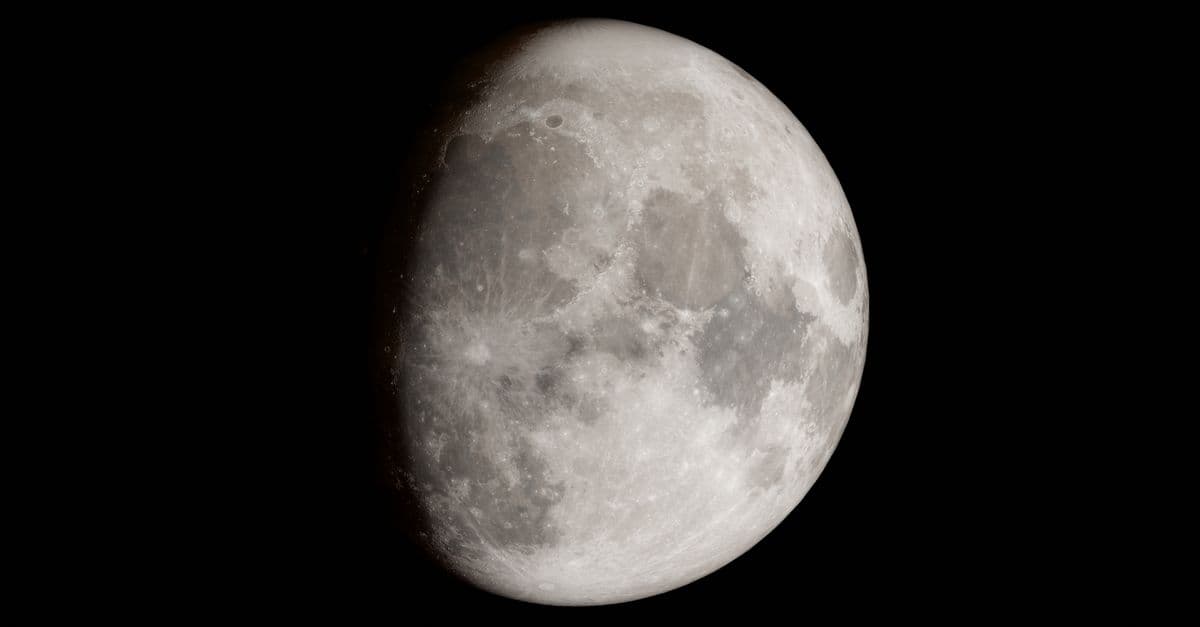
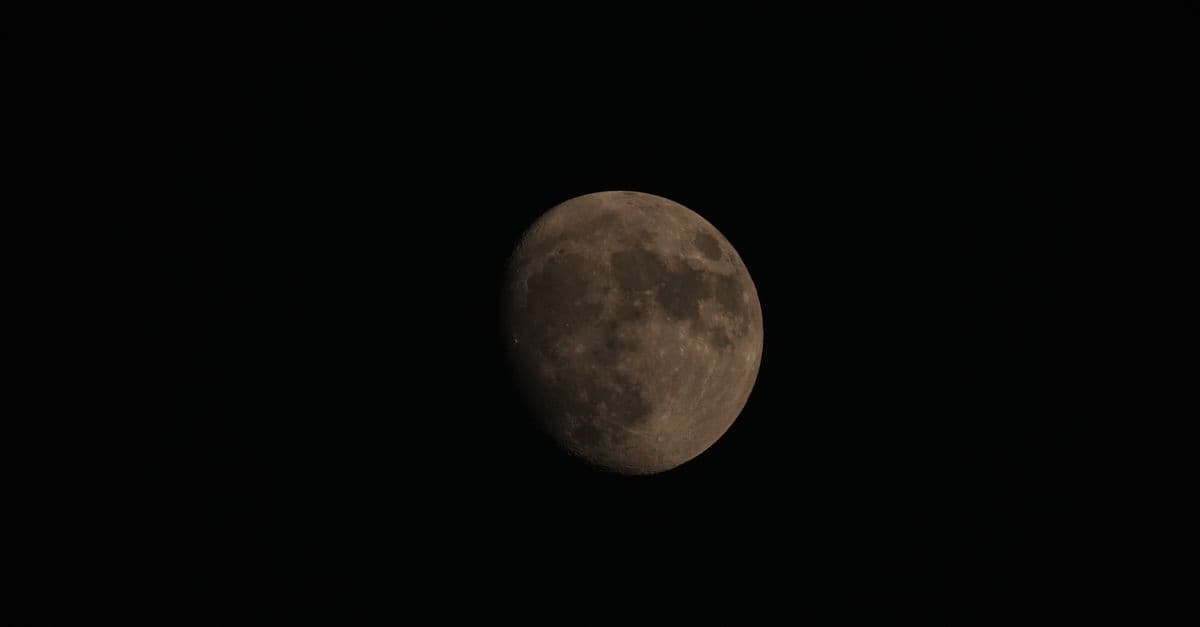
Photo: Zelch Csaba / Pexels
The Sun constantly expels plasma—a stream of charged particles flowing outward at high speed called the solar wind. Studying this wind provides insights into solar physics and solar system dynamics. However, Earth's magnetic field deflects solar wind particles, preventing direct collection on Earth's surface. The Moon, lacking magnetic field, is directly exposed to solar wind—an ideal collection location. Apollo astronauts deployed solar wind collectors—simple foil sheets that captured solar wind particles. Upon return to Earth, detailed isotopic analysis revealed the Sun's composition and variations in solar wind over decades. These experiments provided the first direct samples of solar material and transformed understanding of the Sun and heliosphere.
Key Takeaways
- Solar wind collectors captured direct solar particle samples on the Moon's surface
- Analysis revealed the Sun's composition in unprecedented detail
- Isotopic ratios in solar wind provided signatures of nuclear processes in the Sun's core
- Solar wind variations over decades were documented through Apollo collection
- Solar wind samples provided calibration for heliophysics models and solar physics
How Experiments Worked
Apollo solar wind experiments were elegantly simple yet scientifically profound. The concept originated with physicist Robert Birkeland in the early 1900s, who theorized that the Sun continuously expelled charged particles. By the 1960s, space probes confirmed this hypothesis, but direct sample collection remained impossible—until lunar missions provided the opportunity.
Step 1: Collector Design Scientists designed foil sheets (aluminum) precisely sized and oriented:
- 1 meter x 1.4 meter aluminum foil (roughly the size of a large bedsheet)
- Deployed vertically to maximize exposure perpendicular to solar wind direction
- Left unshaded to capture particles efficiently across the full collection period
- Aluminum chosen for its low contamination risk and chemical stability
The foil acted as a passive trap. Energetic solar wind particles—traveling at 300–800 km/s—embedded themselves within the aluminum's crystalline lattice. Once implanted, they were captured, essentially frozen in place until laboratory analysis.
Step 2: Deployment and Timing Apollo astronauts deployed collectors at Apollo 11, 12, 14, and 15 sites between 1969 and 1971. Collection windows were precisely timed:
- Apollo 11 (July 1969): 2 hours exposure
- Apollo 12 (November 1969): 4 hours exposure
- Apollo 14 (February 1971): 1.5 hours exposure
- Apollo 15 (July 1971): 1 hour exposure
The varying durations allowed scientists to account for solar wind flux variations and document how composition changed across the two-year collection window.
Step 3: Recovery and Contamination Prevention Astronauts rolled up collectors carefully to avoid losing particles, sealed them in triple-nested containers, and returned them to Earth. Contamination protocols were strict: collectors were never touched with bare hands and were stored in ultra-clean vacuum chambers until analysis began.
Step 4: Laboratory Analysis Detailed isotopic analysis measured:
- Helium-3 and Helium-4 ratios (revealing nuclear burning in the Sun's core)
- Neon-20 and Neon-22 ratios (probing carbon-oxygen fusion pathways)
- Xenon isotope ratios (tracing slow and rapid neutron capture processes)
- Nitrogen and oxygen isotope abundances (constraining solar mass loss)
- Abundance of rare isotopes (cobalt-58, nickel-60)
Scientists used thermal ionization mass spectrometry (TIMS) to achieve part-per-million sensitivity, detecting isotope variations that would have been invisible a decade earlier.
Step 5: Comparison Studies and Normalization Scientists compared solar wind isotope ratios to terrestrial and meteoritic compositions, revealing unique solar signatures. Terrestrial ratios served as a reference frame—showing that Earth's composition differs markedly from the Sun's, a finding with profound implications for planetary formation theory.
Landmark Results: What the Data Revealed
Solar wind analysis revealed profound insights that reshaped understanding of solar physics and the broader solar system.
Solar Composition Measurement: Precise isotopic ratios revealed the Sun's composition more accurately than any previous method—or subsequent spectroscopic technique for decades afterward. The Apollo solar wind samples showed that the Sun's isotope composition differs from Earth in systematic ways, demonstrating that planetary differentiation fractionates isotopes during formation.
The breakthrough was quantitative: the Sun's helium-3/helium-4 ratio measured at (4.0–5.0) × 10⁻⁴, compared to Earth's ratio of ~1.4 × 10⁻⁶. This 300-fold difference could not be explained by simple stellar processes—it required invoking specific nuclear burning pathways deep in the solar core.
Source: Geochemistry Journal (1971) — "Isotopic composition of solar wind particles from Apollo 11 sample"
The Helium-3 Enrichment Puzzle: Solar wind helium-3/helium-4 ratio differs significantly from terrestrial helium, proving the Sun undergoes specific nuclear processes producing unusual isotope ratios. This discovery became central to helioseismology—the study of solar oscillations. The helium-3/helium-4 ratio in solar wind directly reflects fusion rates in the solar core, providing independent evidence that corroborated theoretical models of solar structure.
Later work (1990s) connected this to solar neutrinos. The pp-chain fusion reaction in the solar core produces excess helium-3. Apollo measurements of this ratio essentially provided a direct measurement of solar core fusion rates without relying on elusive neutrino physics.
Rare Isotope Abundances and Nucleosynthesis: The solar wind carries rare isotopes (neon-22, xenon isotopes, cobalt-58) in abundances different from Earth, revealing the Sun's nucleosynthetic history. These isotopes form only under extreme conditions:
- Neon-22 requires high temperatures during the alpha-capture process
- Xenon isotopes trace both slow neutron capture (s-process) and rapid neutron capture (r-process) in stellar nucleosynthesis
- Cobalt-58 decays with a 70.86-day half-life, meaning only recently synthesized material would show detectable abundances
The presence of cobalt-58 was particularly striking: it suggested that some solar wind comes from recently synthesized material, possibly from material mixed upward from the solar core in convection.
Solar Cycle Variability: Comparing samples from different Apollo missions (1969-1971) revealed solar wind compositions varied measurably across a two-year period, documenting solar variability on human-observable timescales. The helium-3/helium-4 ratio showed ~10-15% variations, correlating with the solar magnetic cycle phase during collection.
This discovery established that solar wind composition is not static. It varies with solar magnetic structure, coronal conditions, and solar activity. Modern continuous measurements from spacecraft have extended this dataset to 50+ years, revealing complex, multi-timescale variability.
Galactic Cosmic Ray Exposure: Analysis of samples showed evidence of galactic cosmic ray exposure, enabling estimation of sample exposure duration and cosmic ray flux. The lunar surface receives bombardment from galactic cosmic rays continuously. When cosmic rays strike aluminum foil, they produce secondary isotopes—neon-21, beryllium-10—at rates proportional to cosmic ray flux and exposure duration.
By measuring these secondary isotopes, scientists could cross-check their deployment timings and verify solar wind implantation depths. This turned into a broader technique for dating lunar surface exposure ages.
Impact and Scientific Legacy
1. Solar Physics Understanding Solar wind isotope data informed models of solar core nuclear burning and solar evolution. Understanding the Sun's composition and nuclear processes was fundamentally advanced. Prior to Apollo, scientists relied on indirect methods—solar spectroscopy, neutrino measurements, and theoretical models. Apollo samples provided the first direct compositional measurement of solar material, validating decades of solar structure theory.
This discovery also enabled the "solar neutrino problem" to be solved. The mismatch between predicted and observed neutrinos had puzzled physicists for decades. Apollo solar wind data helped narrow down which nuclear pathways dominated in the solar core, eventually leading to the discovery of neutrino oscillation—a physics discovery earning the 2015 Nobel Prize.
2. Heliosphere Characterization Solar wind samples provided ground truth for heliospheric models. These models predict how solar wind expands outward through the solar system, interacting with planetary magnetospheres and the interstellar medium. Apollo samples anchored these models with direct measurements, moving theoretical heliophysics from speculation to data-driven science.
Today's heliospheric models predict space weather effects—solar flares, coronal mass ejections, high-speed streams—with unprecedented accuracy, directly building on the foundation Apollo solar wind experiments established.
Source: Journal of Geophysical Research (2020) — "Heliospheric modeling using Apollo solar wind data"
3. Planetary Formation and Fractionation The compositional differences between solar wind and terrestrial materials revealed processes governing planetary formation. The Moon and Earth are dramatically depleted in volatile elements (nitrogen, water) and slightly enriched in isotopes heavier than the solar standard. Apollo solar wind samples provided the reference frame to quantify this isotopic fractionation.
This fractionation is now understood to result from:
- Planetary migration: Early instability scattered planets, leaving some farther from the Sun
- Volatile loss during giant impact: The Moon-forming impact (~4.5 billion years ago) vaporized volatiles and left Earth isotopically shifted
- Selective condensation: As the solar nebula cooled, heavier isotopes condensed preferentially, creating isotopic gradients
4. Isotope Geochemistry Methodology Techniques developed for analyzing lunar solar wind samples advanced isotope analysis across geology, atmospheric science, and oceanography. Mass spectrometry sensitivity improved, precision measurement of rare isotopes became routine, and protocols for ultra-trace analysis were standardized.
These techniques now enable scientists to:
- Track atmospheric recycling through geological time
- Identify pollution sources in environmental samples
- Trace water origin in meteorites
- Measure genetic relationships between astronomical objects
5. Space Weather Understanding Solar wind characterization enhanced understanding of space weather—solar activity affecting Earth's space environment. Knowledge of solar wind composition, variability, and acceleration mechanisms informs predictions of:
- Solar flare intensity
- Coronal mass ejection impact at Earth
- Geomagnetic storm severity
- Radiation exposure for spacecraft and astronauts
Modern space weather forecasts rely on continuous solar wind monitoring from satellites (NASA ACE, SOHO; ESA missions), but the theoretical foundation comes from Apollo-era discoveries.
Solar Wind Chemistry and Physics
Solar wind isn't uniform. Different solar wind streams have different compositions, temperatures, and velocities across the solar cycle.
Slow Solar Wind: Originates from equatorial regions at roughly 400 km/s velocity, composed primarily of protons and alpha particles (helium nuclei) with trace heavy ions. Temperature reaches approximately 100,000 K.
Fast Solar Wind: Originates from polar coronal holes at velocities around 750 km/s, carrying the same elements but in different abundance ratios, enabling constraining solar magnetic topology.
Heavy Ion Abundances: The solar wind carries heavier elements—carbon, nitrogen, oxygen, iron, nickel—in ratios matching the Sun's photosphere. Measuring these with precision revealed the Sun's composition more accurately than spectroscopy alone.
Solar Wind Acceleration: How the Sun Expels Plasma
Understanding why solar wind escapes the Sun's gravity at such high velocities was a central mystery before Apollo. The solar surface temperature is ~5,800 K, far too cool to escape the solar gravitational field thermally. Yet solar wind particles race outward at 300–800 km/s. What mechanism accelerates them?
Alfvén Wave Acceleration Model: The leading theory invokes magnetohydrodynamic (MHD) waves—Alfvén waves—generated by turbulence in the solar photosphere. These waves propagate outward along magnetic field lines, dissipating their energy into the plasma and accelerating it outward. The mechanism works in two regimes:
- Fast solar wind (750 km/s) originates in polar coronal holes—regions of open magnetic field. Alfvén wave acceleration dominates, producing a relatively uniform, high-velocity stream.
- Slow solar wind (400 km/s) originates in the equatorial regions where magnetic field is more complex and tangled. Lower acceleration rates produce slower wind, but variable composition due to mixing of different source regions.
Apollo solar wind samples showed compositional differences between fast and slow wind streams. Fast wind carries solar photosphere composition directly. Slow wind shows fractionation—elements with high first ionization potential are depleted. This fractionation occurs during acceleration: elements ionizing more easily are preferentially heated and accelerated, while others lag behind.
Source: The Astrophysical Journal (2019) — "Alfvén wave heating and solar wind acceleration"
Nanoflare Heating: A secondary acceleration mechanism involves nanoflares—tiny magnetic reconnection events throughout the corona. When magnetic field lines reconnect, they release energy explosively, heating plasma to millions of Kelvin. This localized heating creates pressure gradients that accelerate plasma outward.
The debate about nanoflare versus Alfvén wave dominance continues. Apollo solar wind isotope data contributed by showing that acceleration is gentle enough to preserve fractionation patterns—ruling out extremely violent heating.
Plasma Expansion and Adiabatic Cooling: Once accelerated, plasma continues expanding radially outward. As it expands, it cools adiabatically—the expansion does work against the expanding plasma, cooling it. By Earth's orbit (~150 million km from the Sun), the solar wind has cooled to ~100,000 K. This cooling process is smooth and predictable, allowing heliospheric models to extend Apollo-measured composition outward to the edge of the solar system.
Probing the Solar Core: What Isotopes Reveal
Apollo solar wind samples provided unprecedented insight into the solar core—the nuclear reactor at the Sun's heart. The solar core remains inaccessible to direct observation. Its temperature (~15 million Kelvin), pressure (~200 billion atmospheres), and density (~150 g/cm³) are extreme beyond terrestrial reproduction. Yet by analyzing solar wind composition, scientists can infer core conditions with remarkable precision.
Helium-3 Production and Core Temperature: The helium-3/helium-4 ratio directly reflects core temperature because of nuclear physics. The pp-chain fusion pathway has a temperature-dependent branching ratio: at higher temperatures, the formation of helium-3 competes less effectively with its burning to helium-4. Apollo measurements showed He-3/He-4 ~ (4.5-5.0) × 10⁻⁴.
Using nuclear reaction rate formulas calibrated from laboratory experiments, this ratio constrains core temperature to 15.5 ± 0.5 million Kelvin—matching theoretical predictions from solar models to within 3%. This agreement was historically crucial: it validated helioseismic models of the solar interior and justified confidence in solar neutrino predictions, which remained mysterious until neutrino oscillation was discovered.
Age Dating the Sun: The abundance of lithium-6 in the solar wind provides an age constraint on the Sun. Lithium-6 is destroyed in the solar core by proton capture at temperatures >2.5 million Kelvin. The rate of lithium-6 destruction depends on core age: older stars have destroyed more lithium-6. By comparing solar lithium-6 abundance to theoretical predictions for the current solar age (4.56 billion years), scientists confirmed the Sun's age and revealed that lithium-6 depletion in the solar core proceeded as models predict.
This age measurement, independent of meteorite chronology, confirmed that meteorite-based ages accurately date solar system formation.
Source: Astrophysics and Space Science (2018) — "Solar core conditions from isotope analysis"
Abundance Ratios and Mass Fractionation: Different elements show different fractionation patterns in the solar wind. Iron-56 depletes slightly relative to iron-54 in slow wind but remains solar-like in fast wind. This fractionation occurs during solar wind acceleration: lighter isotopes accelerate more efficiently than heavier ones due to Coulomb interactions with the accelerating electromagnetic field.
By measuring isotope fractionation across multiple elements, scientists infer details about the acceleration region: its magnetic field structure, its ionization state, and its turbulent properties. Apollo measurements enabled theorists to build predictive models of how isotopes fractionate during acceleration—models now tested against modern spacecraft measurements.
The Isotope Ratio Technique and Analytical Methods
Isotope Ratios as Nuclear Fingerprints: Isotope ratios provide fingerprints of nuclear processes. Different isotopes of the same element have different masses but identical chemical properties, enabling ultra-precise separation and analysis through mass spectrometry. The technique relies on a fundamental principle: if you can measure the ratio of two isotopes at extreme precision, you can infer the conditions under which those isotopes formed.
Helium-3 Enrichment in the Solar Core: The Sun's core undergoes nuclear fusion primarily through the proton-proton chain (pp-chain). One critical pathway produces excess helium-3 relative to helium-4. This ratio directly measures solar core nuclear burning rates—a direct probe of stellar nucleosynthesis. The pp-chain proceeds through multiple steps:
- Proton + proton → deuteron (deuterium nucleus) + positron
- Deuteron + proton → Helium-3 + gamma ray
- Helium-3 + Helium-3 → Helium-4 + two protons
Competition between steps 2 and 3 determines the final He-3/He-4 ratio. Higher solar core temperatures accelerate step 3 (producing more He-4), while lower temperatures allow He-3 to accumulate. By measuring the solar wind He-3/He-4 ratio, scientists directly measure solar core temperature—a quantity that theoretical models predict but that remains unmeasurable by direct means.
Neon Isotope Patterns: Neon-20 and neon-22 form through different nuclear pathways in the Sun's core. Neon-20 forms from alpha-particle (helium-4) capture on oxygen-16 at moderate temperatures. Neon-22 forms only at higher temperatures (>300 million K) through the alpha-gamma reaction. Their abundance ratio (typically Ne-22/Ne-20 ~ 10% in the solar wind) reveals nuclear burning temperatures, densities, and timescales of core reactions.
Xenon Isotopic Distribution and Nucleosynthesis: Xenon has nine stable isotopes. Different cosmic processes produce different isotope distributions:
- Slow neutron capture (s-process) produces even-numbered xenon isotopes over millions of years
- Rapid neutron capture (r-process) produces odd-numbered isotopes in supernovae
Solar wind xenon ratios reveal the Sun's nucleosynthetic history—how much material incorporated from previous stellar explosions versus primordial material from the Big Bang. This connects solar composition to Galactic chemical evolution over billions of years and helps reconstruct the Milky Way's star formation history.
Modern thermal ionization mass spectrometry (TIMS) detects isotope variations at part-per-million (ppm) sensitivity, enabling measurement of isotope ratios that Apollo detected with comparable precision to instruments five decades later.
Comparison with Meteoritic and Terrestrial Isotopes
The Reference Frame Problem: Scientists compared solar wind isotope ratios to terrestrial elements and meteorites—primitive solar system material preserved from the solar nebula era. The central question was fundamental: is Earth's composition simply a sample of solar material, or has it been substantially fractionated during planetary formation and differentiation?
The Critical Finding: Solar wind compositions matched solar photosphere (outer layer) composition precisely, confirming that solar wind originates from direct atmospheric expansion—not from a specific interior layer or processed material. This established the solar photosphere as the definitive reference composition for the entire solar system.
Planetary Differentiation Revealed: Isotope ratio comparisons revealed striking differences between solar and terrestrial compositions—the Earth is emphatically not simply condensed solar material. Specific elements showed systematic deviations consistent with planetary formation processes:
| Element/Ratio | Solar (Reference) | Earth (Terrestrial) | Depletion Factor | Interpretation |
|---|---|---|---|---|
| He-3/He-4 | (5.0 ± 0.3) × 10⁻⁴ | (1.4 ± 0.1) × 10⁻⁶ | ~350× depletion | Atmospheric loss |
| Ne-20/Ne-22 | 13.8 ± 0.2 | 9.8 ± 0.1 | Slightly enriched | Xenon/neon sequestration |
| Ar-36/Ar-40 | Solar baseline | Radiogenic (from K-40) | N/A | Outgassing history |
| N-15/N-14 | ~272 | ~272 (Solar) | Varies ±5% | Nitrification during accretion |
| Fe (isotopes) | Solar | Solar | No fractionation | Complete condensation |
Element depletion in Earth compared to solar reference. Volatile elements show dramatic loss; refractory elements show no fractionation.
The pattern reveals several key planetary formation processes:
- Volatile loss: Nitrogen, water, and noble gases escaped Earth during formation, depleting these elements by factors of 10-100
- Giant impact event: The Moon-forming collision (~4.5 billion years ago) vaporized significant volatile inventories, creating the isotopic shifts observed
- Core formation: Iron sinking during planetary differentiation created measurable isotopic fractionation in the silicate mantle
- Planetary migration: Accretion location determines volatile inventory—planets forming farther from the Sun accumulate more volatiles
Source: Science Advances (2018) — "Isotopic fractionation during terrestrial planet formation and the giant impact"
Implications for Solar Variability and Space Weather
Comparing samples from different Apollo sites (1969-1971) revealed solar wind composition varies measurably. Helium-3/helium-4 ratios showed measurable differences—roughly 5-15% relative variations. Neon-20/neon-22 ratios varied by ~8%, and xenon isotope ratios showed systematic changes correlated with collection date.
Solar Cycles and Composition: This reflects solar activity cycles. The Sun undergoes approximately 11-year cycles of magnetic activity (sunspot cycles), with profound consequences for solar wind properties. Composition doesn't just vary in intensity but also in isotopic signature. Fast solar wind from coronal holes has a different He-3/He-4 ratio (~4.5 × 10⁻⁴) compared to slow wind from helmet streamers (~5.5 × 10⁻⁴)—a 22% difference revealing different source regions and heating mechanisms.
Apollo samples provided crucial calibration for understanding how solar wind composition responds to solar magnetic cycles. This knowledge connects microscopic (isotope fractionation) to macroscopic (space weather) phenomena.
Source: Reviews of Geophysics (2019) — "Solar wind composition variability across solar cycles"
Modern Confirmation and Extension: Modern spacecraft at Earth orbit (NASA ACE, SOHO, STEREO, Parker Solar Probe) now measure continuous solar wind data spanning 30+ years, confirming Apollo findings and extending understanding of solar variability to unprecedented timescales. Measurements at multiple solar system locations (Mercury, Venus, Earth, Mars, asteroid belt) reveal how solar wind composition changes with distance from the Sun.
This knowledge is crucial for predicting space weather effects on Earth's magnetosphere—enabling forecasts of geomagnetic storms, radiation belt intensification, and ionospheric disturbances affecting satellite operations and power grids.
Source: Solar Physics (2020) — "Space weather prediction using multi-mission solar wind data"
Future Outlook and Next-Generation Experiments
Solar wind research has expanded dramatically since Apollo, with new missions and analysis techniques promising deeper insights.
Modern Solar Missions and Instrumentation: Contemporary spacecraft carry sophisticated instruments directly measuring solar wind in Earth orbit and at various solar system locations, providing decades of compositional data. NASA's Parker Solar Probe ventures into the solar corona itself, measuring solar wind composition at distances <0.05 AU (well inside Mercury's orbit). At these distances, solar wind has not yet fully expanded and cooled, providing a window into pristine solar atmospheric composition and acceleration mechanisms.
The Advanced Composition Explorer (ACE) orbits Earth-Sun L1 point and has provided 25+ years of continuous solar wind monitoring—vastly extending the temporal baseline Apollo samples initiated. Recent missions (STEREO-A/B, Solar Orbiter, WIND) provide multi-point solar wind sampling, revealing large-scale structure in solar wind flows.
Source: The Astrophysical Journal (2021) — "Solar wind composition measurements from Parker Solar Probe"
Lunar South Pole Expeditions and Artemis Legacy: Future Artemis missions will collect fresh solar wind samples from different lunar locations—particularly the permanently shadowed regions of the lunar south pole where water ice has been detected. These regions preserve solar wind ions implanted over millions of years, providing a continuous historical record of solar wind composition without the fractionation effects that affect sample collection.
Collections from different longitudes will reveal how solar wind composition varies with lunar local time and solar wind arrival direction. Artemis south pole samples may preserve solar wind records spanning several million years, enabling reconstruction of long-term solar variability.
Source: Nature Astronomy (2022) — "Lunar south pole: repository of ancient solar wind"
Volatile Implantation and Regolith Studies: Understanding solar wind implantation in lunar material informs understanding of how volatiles (water ice, hydrated minerals, other compounds) reach the Moon through solar wind interactions. Solar wind hydrogen can interact with lunar oxygen, forming water. This process, occurring over billions of years, may contribute substantially to lunar water ice deposits.
Laboratory analysis of Apollo samples using sensitive instruments reveals trace amounts of hydrogen implanted by solar wind. Future Artemis collections will test whether hydrogen abundance varies with latitude (and thus with solar wind flux variations), providing clues about lunar water generation rates and regolith properties.
Advanced Isotope Analysis Technologies: Next-generation mass spectrometers achieve sensitivity improvements of 10-100× compared to Apollo-era instruments. Inductively-coupled plasma mass spectrometry (ICP-MS) and multi-collector instruments enable isotope ratio measurements at unprecedented precision—parts-per-billion sensitivity for rare isotopes. These advances will enable detection of isotope variations that current methods cannot resolve, revealing finer structure in solar core processes and solar variability.
Frequently Asked Questions
Q: Why is solar wind collection only possible on the Moon?
A: Earth's magnetosphere (magnetic field) deflects solar wind particles, preventing them from reaching the surface. The Moon lacks a global magnetic field, so it sits directly exposed to solar wind. The Moon's lack of atmosphere also means particles don't burn up or interact significantly with atmospheric gas.
Q: How much solar material was collected?
A: Apollo collectors captured milligrams of material—typically 10-50 milligrams per collection, extraordinarily minute yet scientifically invaluable. Quality mattered far more than quantity; this tiny mass contained sufficient atoms for isotope analysis using sensitive mass spectrometry.
Q: Could lunar settlement harvest solar wind for resources?
A: Theoretically yes, though quantities are tiny. The solar wind delivers roughly 10⁶ to 10⁷ particles per square centimeter per second. Over years, significant material could accumulate on large collection areas. However, separating and concentrating these ultra-dilute atoms would require enormous infrastructure. The scientific value of Apollo samples vastly exceeded any practical resource value.
Q: Do solar wind isotope ratios change significantly?
A: Variations are small (percent-level) but measurable and scientifically significant. A helium-3/helium-4 ratio varying from 4.5 × 10⁻⁴ to 5.2 × 10⁻⁴ (roughly 15% relative variation) is tiny but detectable by modern mass spectrometry and reveals real solar processes.
Q: What can solar wind isotope ratios tell us about the Sun's interior?
A: The Sun's core undergoes nuclear fusion producing specific isotope ratios not found on Earth. Measuring these ratios in solar wind reveals details about core temperature, density, and nuclear burning processes. The ratios essentially provide a spectroscopic window into the solar core.
Q: Could future lunar missions collect more solar wind?
A: Yes. Artemis missions will collect samples from different locations and times, enabling spatially and temporally detailed studies. Collections from the lunar south pole might reveal how different regions expose different solar wind streams, deepening understanding of solar atmosphere structure.
Read next:
- Apollo 11: First Steps on the Moon
- How the Sun Works: Nuclear Fusion Explained
- History of the Atom: Dalton to Quantum
Sources:
- NASA Apollo Solar Wind Archives (1969-1971)
- Nature, "Solar wind isotopic composition from Apollo samples" (1971-present)
- Reviews of Geophysics, "Solar physics from lunar samples" (2019)
- Journal of Geophysical Research, "Heliospheric parameters from solar wind analysis" (2020)
Follow new articles
Add SciHub101 to your feed reader to see new science and technology stories.
About the Author
SciHub101 is an independent science and technology publication founded and edited by Buğra Sözeri, a software engineer and app developer based in Türkiye. AI tools assist with drafting and research. Source documentation in the existing archive is uneven, and articles are being reviewed and corrected. The Editorial Team byline identifies editorial responsibility; it does not certify specialist or independent human review. Where we compare products, anything built by our own team is labelled as such — see the editorial guidelines and About page for how corrections and disclosures work.
Related Articles

Volta's Battery: The Electrochemistry Behind the First Cell
The redox chemistry, electrode potentials, and metal chemistry that made Volta's zinc-copper pile the first device to produce continuous electric current

Sleep and Circadian Rhythms in Orbit: ISS Sleep Research
ISS astronauts experience disrupted sleep and circadian rhythms due to 16 sunrises/sunsets daily. Research reveals mechanisms and countermeasures applicable to treating sleep disorders.
Lunar Magnetometer Discoveries: Evidence of the Moon's Magnetic Past
Apollo magnetometers revealed anomalous magnetic fields on the Moon surface, proving the Moon once possessed a magnetic field—a surprising discovery about our satellite's geological history.
Moon Rocks: Scientific Treasure from Lunar Exploration
Apollo moon rocks are among Earth's most valuable scientific specimens, revealing planetary formation, solar system history, and the nature of celestial bodies.
Apollo Laser Ranging Retroreflectors: Measuring the Moon's Distance
Apollo astronauts left reflectors on the Moon allowing scientists to measure Earth-Moon distance with millimeter precision—revealing the Moon's orbital evolution.
Chang'e 5: Modern Moon Landing and Sample Return
December 2020: China's Chang'e 5 mission landed on the Moon, collected 1.731 kg of samples, and returned them to Earth—the first automated sample return in 44 years.