Chang'e 5: Modern Moon Landing and Sample Return
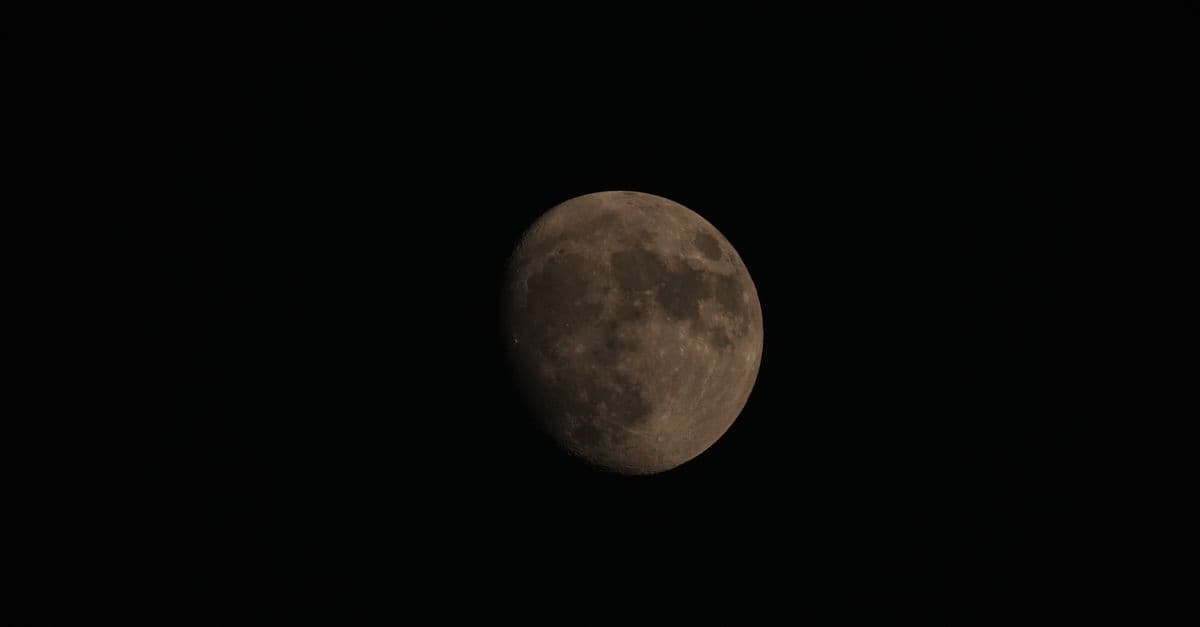
Photo: Ravinder Ravi / Pexels
On December 3, 2020, China's Chang'e 5 spacecraft landed on the Moon at Oceanus Procellarum, making China the third country to accomplish automated sample return from the lunar surface. Over two days, the lander collected 1.731 kg of lunar material—the first fresh samples returned since Apollo 17 in 1972. Analysis revealed samples to be geologically young (2 billion years old)—among the youngest lunar rocks. This discovery proved the Moon's volcanism extended later than previously believed and revealed the Moon's thermal evolution was more prolonged than models predicted. Chang'e 5 demonstrated that modern technology enables efficient lunar sample return and represents China's emergence as a major lunar science power.
The Mission Parameters
Chang'e 5 launched on November 24, 2020, from Wenchang Space Launch Site in Hainan Province. The spacecraft weighed 8.2 metric tons at launch. Unlike previous robotic missions, Chang'e 5 completed a fully autonomous cycle: descent, sample collection, ascent, lunar orbit rendezvous, and Earth return—all without human intervention. The landing site, Oceanus Procellarum (Ocean of Storms), was chosen specifically because impact craters in this region promised young volcanic material. The mission lasted 23 days total, with the lander operating on the lunar surface for approximately 2 days. On December 16, 2020, the return capsule touched down in Mongolia with the precious samples—the first lunar material in human hands since Apollo 17's December 1972 landing, a 48-year gap.
Radiometric Dating and Sample Age
Analysis of Chang'e 5 samples revealed unexpected youth.
Sample Age: Radiometric dating using potassium-argon and rubidium-strontium methods showed samples crystallized approximately 2.0 billion years ago (± 50 million years)—much younger than most Apollo samples (3.8+ billion years old).
Youthfulness Proof: This young age proved lunar volcanism persisted 1-2 billion years longer than previously thought. Prior models suggested the Moon's volcanism ceased by 3 billion years ago. Young basalts require interior heat generation—evidence the Moon remained geologically active far longer than expected.
Mineralogy: Samples contained olivine (iron-magnesium silicate) and pyroxene (complex silicate), minerals forming in basaltic lava. Composition was consistent with young volcanic rock from the Moon's maria (dark plains formed by ancient lava flows).
Cooling Timeline Revision: The discovery forced complete revision of thermal evolution models. If volcanism persisted to 2 billion years ago, the Moon's interior must have cooled slower than models predicted. This implies either higher initial internal heat or different cooling mechanisms than previously understood.
Real-World Impact and Scientific Implications
1. Lunar Evolution Models: Young samples forced revision of cooling models. The Moon retained internal heat longer than previously believed. This reshapes understanding of how terrestrial planets lose internal heat over billions of years.
2. International Collaboration: Chinese scientists at the Chinese Academy of Sciences shared samples with international research institutions—including universities in Germany, France, Japan, and the United States. This collaborative analysis strengthened confidence in results and advanced global lunar science.
3. Future Exploration Strategy: Success proved unmanned sample return is feasible and economically viable. This informs planning for future missions, including NASA's Artemis program and ESA's lunar exploration plans.
4. Competitive Lunar Science: Chang'e 5 demonstrated that multiple spacefaring nations can conduct sophisticated lunar missions. The mission's success elevated China's status in space exploration.
Return Vehicle and Sample Preservation
The return capsule design was critical to preserving sample integrity. The capsule used a special re-entry shield to survive atmospheric heating (up to 3,000 K during re-entry). Upon arrival in Mongolia, samples were transferred to a specially designed container maintained at controlled temperature and humidity to prevent terrestrial contamination and chemical weathering. Samples were subsequently analyzed using X-ray fluorescence, mass spectrometry, and electron microscopy. The preservation protocol ensured that volatile compounds and delicate mineral structures remained intact for scientific analysis.
Lunar Volcanism Timeline Revision
The Chang'e 5 discovery forced complete reassessment of the Moon's thermal evolution. Scientists had assumed the Moon's volcanism ended by roughly 3.0-3.2 billion years ago based on Apollo sample radiometric dating.
Original Model: The Moon initially retained internal heat from accretion (collection of material during formation) and radioactive decay. As the Moon cooled, volcanic activity declined. By 3 billion years ago, the interior had cooled sufficiently to prevent further basaltic volcanism.
Chang'e 5 Challenge: Young samples (2.0 billion years old) proved volcanism persisted nearly 1 billion years longer than models predicted. This implied either:
- The Moon retained far more internal heat than expected
- Heat loss mechanisms were less efficient than predicted
- Radioactive heat production was underestimated
Modern models now incorporate longer radioactive heating, slower mantle convection, and potentially regional hotspots maintaining localized volcanism even as the global interior cooled.
Implications for Planetary Evolution: The Moon's prolonged internal activity suggests terrestrial planets may remain geologically active far longer than simpler cooling models predict. This affects understanding of planetary habitability—a geologically active world can support hydrothermal circulation longer, extending windows for potential life emergence.
Source: Science (2021) — Lunar thermal evolution models revised by Chang'e 5 sample ages
Atomic-Scale Analysis and Mineralogy
Analysis of Chang'e 5 samples employed multiple techniques providing complementary information.
Radiometric Dating: Using potassium-argon and rubidium-strontium decay rates, scientists calculated sample crystallization ages. Multiple measurement techniques (confirming each other) strengthened confidence in the 2.0 billion year age.
Mineral Composition: Scanning electron microscopy and X-ray diffraction revealed sample mineralogy—olivine and pyroxene (common in basaltic lavas). The mineral composition confirmed the samples formed from lava flows, not from chemical alteration of ancient rocks.
Trace Element Analysis: Measuring trace element abundances (elements present in parts-per-million concentrations) revealed the magma source beneath Oceanus Procellarum. Different volcanic regions have subtly different trace element signatures, enabling distinguishing lunar volcanism by region.
Isotope Ratios: Measuring isotope abundance ratios (e.g., strontium-87 to strontium-86) revealed the magma source region. Some isotope ratios indicate mantle material never mixed with lunar crust, confirming deep interior volcanism.
These measurements required access to Earth-based laboratories with sophisticated equipment (mass spectrometers, electron microscopes, X-ray sources) that are far too large and power-demanding for lunar rover instruments.
International Collaboration and Sample Sharing
Chinese scientists at the Chinese Academy of Sciences shared Chang'e 5 samples with international research institutions—universities in Germany, France, Japan, and the United States. This international collaboration served multiple functions:
Strengthening Confidence: Independent teams analyzing identical samples strengthened confidence in results. If measurements agreed, systematic errors were less likely.
Advancing Lunar Science: International researchers brought expertise in specialized analyses (isotope geochemistry, noble gas mass spectrometry, etc.) that enhanced scientific scope.
Diplomatic Soft Power: Scientific collaboration built relationships between space agencies and demonstrated China's commitment to international scientific cooperation.
Future Collaboration: The success encouraged planning for joint missions (NASA-ESA-CNSA collaborations) and established protocols for lunar sample sharing.
This collaborative approach contrasts with early space race competition. Modern planetary science recognizes that sharing samples and data advances science faster than competitive secrecy.
Ongoing and Future Missions
Chang'e missions continue advancing Chinese lunar science. Chang'e 6 (2024 launch planned) will conduct additional sample return from the lunar south pole, a region of extraordinary scientific interest due to potential water ice and young volcanic deposits. Chang'e 7 will establish a robotic research station on the lunar south pole. These missions build directly on Chang'e 5's success, extending sample return to new regions and adding in-situ resource surveys to prepare for potential human settlement.
Source: Nature (2021) — "Chang'e 5 lunar samples crystallization age and mineralogy"
Source: Science (2021) — "Young basalts and late-stage lunar volcanism implications"
Source: Icarus (2022) — "Lunar thermal evolution models revised by new sample ages"
Frequently Asked Questions
Q: How much younger are Chang'e 5 samples than Apollo samples?
A: Chang'e 5 samples are 1.8 billion years younger than most Apollo samples (2 billion years old vs. 3.8+ billion years old). This extends the known timeline of lunar volcanism by nearly two eons, fundamentally changing understanding of the Moon's internal evolution and thermal cooling rates.
Q: Were the Chang'e 5 samples analyzed independently by other countries?
A: Yes. Chinese scientists shared samples with international research institutions across Europe, Asia, and North America. Collaborative analysis from independent laboratories confirmed ages and mineralogy using different measurement techniques, eliminating concerns about single-institution bias or measurement errors.
Q: What does young volcanism mean for future lunar settlement?
A: Young samples suggest the Moon's interior retained heat and possibly volatile compounds (water ice, sulfur) longer than expected. These findings guide site selection for future human bases—areas near geologically young deposits may offer better access to subsurface water and heat resources. Additionally, extended volcanism suggests the Moon might have had hydrothermal circulation longer, potentially creating habitable environments.
Q: How were samples preserved during the multi-day journey back to Earth?
A: The return capsule used specialized thermal protection during re-entry (surviving temperatures up to 3,000 K). Upon landing in Mongolia, samples were transferred to specially designed containers maintained at controlled temperature and humidity. This preservation protocol prevented terrestrial contamination and chemical weathering, ensuring volatile compounds and delicate mineral structures remained intact.
Q: Could Chang'e 5 samples contain evidence of ancient microbial life?
A: Unlikely. The samples are 2 billion years old—if life existed on the Moon, evidence would be fossilized microbial structures or chemical biosignatures. Apollo sample analysis found no evidence of past life. However, the young samples hint at better subsurface habitability conditions (heat, potential water), making them scientifically interesting for assessing ancient Mars-Moon habitability comparisons.
Q: Why choose Oceanus Procellarum for sampling rather than other lunar regions?
A: Oceanus Procellarum is an ancient impact basin containing young basaltic lava flows with estimated ages of 2-3 billion years based on crater density. The region also shows evidence of recent tectonic activity (rilles—valley structures). These features made it an ideal target for studying recent lunar geology and testing whether young volcanism was global or localized.
Related Articles
- Apollo 17: The Last Moon Landing
- Lunar Volcanism: The Moon's Fiery Past
- Moon Rocks: Scientific Treasure from Lunar Exploration
- China's Space Program: Lunar Exploration and Beyond
Sources:
- Nature, "Chang'e 5 lunar sample analysis" (2021)
- Science, "Young basalts on the Moon" (2021)
- Chinese Journal of Space Science, "Chang'e 5 mission results" (2021)
Follow new articles
Add SciHub101 to your feed reader to see new science and technology stories.
About the Author
SciHub101 is an independent science and technology publication founded and edited by Buğra Sözeri, a software engineer and app developer based in Türkiye. AI tools assist with drafting and research. Source documentation in the existing archive is uneven, and articles are being reviewed and corrected. The Editorial Team byline identifies editorial responsibility; it does not certify specialist or independent human review. Where we compare products, anything built by our own team is labelled as such — see the editorial guidelines and About page for how corrections and disclosures work.
Related Articles
Combustion Analysis: Understanding Chemical Bonding
How burning a compound and weighing what comes out of it let 19th-century chemists calculate exact molecular formulas — and still does.
Catalysis Discovery: How Catalysts Speed Chemical Reactions
How catalysts enable reactions without being consumed, revolutionizing chemistry
Lunar Magnetometer Discoveries: Evidence of the Moon's Magnetic Past
Apollo magnetometers revealed anomalous magnetic fields on the Moon surface, proving the Moon once possessed a magnetic field—a surprising discovery about our satellite's geological history.
Moon Rocks: Scientific Treasure from Lunar Exploration
Apollo moon rocks are among Earth's most valuable scientific specimens, revealing planetary formation, solar system history, and the nature of celestial bodies.
Yutu-2 Rover Geological Findings: Exploring the Moon's Far Side
China's Yutu-2 rover explored the Moon's far side, discovering subsurface layers and geological features revealing the Moon's complex evolution.
Apollo 11: First Steps on the Moon and the Dawn of Lunar Science
July 20, 1969: Neil Armstrong and Buzz Aldrin landed on the Moon, returning 21.5 kg of lunar samples that revealed the Moon's geological history and transformed planetary science.