Combustion Analysis: Understanding Chemical Bonding
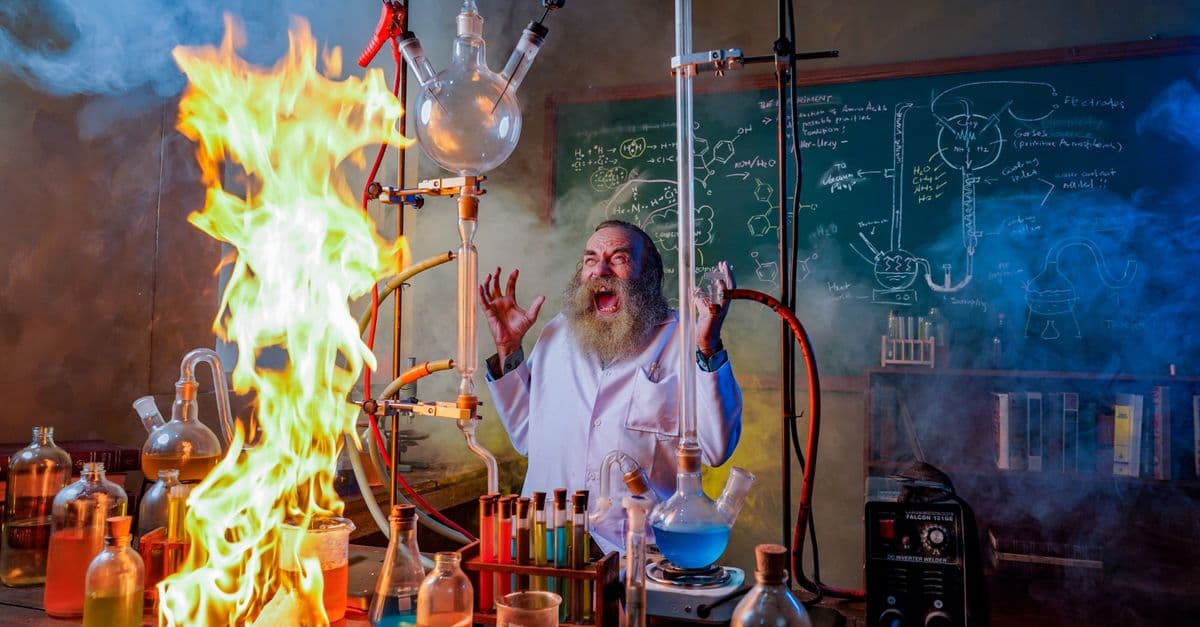
Photo: Aan SW / Pexels
Burn an unknown organic compound completely, catch every gram of carbon dioxide and water it produces, and you can calculate its exact atomic formula without ever seeing its structure. That is combustion analysis, and it is the reason 19th-century chemists could finally answer a question that had stumped them for decades: what, precisely, is this substance made of? Before 1830, organic chemistry was a library of unexplainable reactions. After Justus von Liebig industrialized combustion analysis, it became a science built on numbers you could check.
Why chemists needed a way to weigh molecules apart
By the early 1800s, chemists had identified dozens of organic compounds — sugars, acids, alcohols, waxes — but had no reliable way to say what atoms, or how many of each, made one differ from another. Compounds that behaved completely differently sometimes shared indistinguishable physical properties, and nobody could explain why. The bottleneck was not curiosity. It was measurement.
Antoine Lavoisier had shown in the 1770s and 1780s that combustion is oxidation, not the release of a mysterious substance called phlogiston, and that mass is conserved through a chemical reaction. That single reframing made it possible, in principle, to track atoms through a burn instead of treating fire as something that destroyed matter. Lavoisier weighed reactants and products with a precision that was unusual for his era, and his insistence on the balance sheet — nothing appears, nothing disappears, only transforms — is the conceptual seed combustion analysis grew from. Read more in our profile of Antoine Lavoisier, the chemist whose accounting method made this entire field possible.
But Lavoisier's own combustion apparatus was slow, expensive, and required a trained operator days per sample. It was not a technique a working chemist could run routinely. That changed with a German chemist working in a converted guardhouse in Giessen.
How the burn-and-weigh method actually works
The idea behind combustion analysis is almost embarrassingly simple once you see it stated plainly: every carbon atom in an organic molecule ends up in a molecule of carbon dioxide, and every pair of hydrogen atoms ends up in a molecule of water, as long as you supply enough oxygen and enough heat to force the reaction to completion. If you weigh the CO₂ and the H₂O separately, you can work backward to the number of carbon and hydrogen atoms in the original sample.
Think of it like a chemical version of a recycling audit. You don't watch the sample burn to identify what's inside it — you weigh the sorted output afterward. Just as a recycling plant can tell you how many aluminum cans and glass bottles went through the line by weighing each stream of separated material, a combustion analyzer tells you how many carbon and hydrogen atoms were in the sample by weighing the separated CO₂ and H₂O streams.
What happens inside the combustion tube
A chemist places a precisely weighed sample, typically a few milligrams to about a gram depending on the era and equipment, into a tube alongside an oxidizing agent such as copper(II) oxide. The tube is heated in a stream of oxygen to a temperature high enough, generally 800–1000 °C in modern instruments, to force complete oxidation of every carbon and hydrogen atom present. Incomplete combustion — soot, carbon monoxide, unburned fragments — would throw off every number that follows, so excess oxidant and excess heat are used deliberately to push the reaction past the point of doubt.
How the products get separated and weighed
The hot combustion gases pass through a train of absorbers in sequence. A drying tube packed with a desiccant such as anhydrous calcium chloride or magnesium perchlorate captures the water vapor; a second tube packed with a strong base such as sodium hydroxide or soda lime captures the carbon dioxide. Each absorber is weighed before the run and again after. The mass gained by the water trap is the mass of H₂O produced; the mass gained by the CO₂ trap is the mass of CO₂ produced. Liebig's Kaliapparat did the CO₂ capture in a single elegant piece of blown glass rather than a separate tube, which is part of why it was faster than earlier setups.
Turning two numbers into a formula
From here it's stoichiometry. Carbon dioxide has a molar mass of 44 g/mol, and one mole of CO₂ contains exactly one mole of carbon. Water has a molar mass of 18 g/mol, and one mole of H₂O contains two moles of hydrogen. So:
- moles of carbon = mass of CO₂ ÷ 44
- moles of hydrogen = 2 × (mass of H₂O ÷ 18)
If the compound contains only carbon, hydrogen, and oxygen — a common case for simple organics like alcohols and acids — the oxygen mass is found by difference: subtract the measured carbon and hydrogen mass from the total sample mass, and whatever's left over is oxygen. That's necessary because there is no simple, stable compound that reliably absorbs elemental oxygen the way soda lime absorbs CO₂, so oxygen has almost always been the one element in this scheme that's inferred rather than directly weighed.
A worked example, start to finish
Suppose a chemist burns 0.100 g of an unknown compound and recovers 0.220 g of CO₂ and 0.135 g of H₂O.
| Step | Calculation | Result |
|---|---|---|
| Moles of carbon | 0.220 g ÷ 44 g/mol | 0.00500 mol C |
| Moles of hydrogen | 2 × (0.135 g ÷ 18 g/mol) | 0.0150 mol H |
| Mass of carbon | 0.00500 mol × 12 g/mol | 0.060 g |
| Mass of hydrogen | 0.0150 mol × 1 g/mol | 0.015 g |
| Mass of oxygen (by difference) | 0.100 g − 0.060 g − 0.015 g | 0.025 g |
| Moles of oxygen | 0.025 g ÷ 16 g/mol | 0.00156 mol O |
| Simplest whole-number ratio C:H:O | 0.00500 : 0.0150 : 0.00156 | ≈ 3.2 : 9.6 : 1 → 3:9:1 (rounded) |
Table: A representative combustion-analysis calculation, from raw product masses to an empirical formula.
That ratio rounds to an empirical formula of roughly C₃H₉O, close enough to the textbook case of isopropanol (C₃H₈O, molecular weight 60.1 g/mol) that a chemist would flag the small discrepancy as experimental error and check the compound's independently measured molecular weight to confirm. That's the crucial second step: combustion analysis alone gives you a ratio, not an absolute atom count. If the compound's molecular weight, determined separately by freezing-point depression, vapor density, or later by mass spectrometry, matches the empirical formula's mass, you're done. If it's a whole-number multiple of the empirical formula's mass, you multiply every subscript by that same factor. A famous case: the empirical formula CH₂ is consistent with ethene (C₂H₄), propene (C₃H₆), cyclohexane (C₆H₁₂), and dozens of other real compounds. Only the independently measured molecular weight tells you which one you actually burned.
Why this method changed the direction of chemistry
It's hard to overstate how much combustion analysis reoriented organic chemistry, because before it, the field was descriptive rather than quantitative. Chemists could report that a substance was waxy, sour, or crystallized in a particular shape, but they had no systematic way to compare one compound's atomic makeup to another's.
It gave Dalton's atomic theory something to prove itself against. John Dalton had proposed in the early 1800s that elements combine in fixed, whole-number ratios by mass — the law of multiple proportions. Combustion analysis produced exactly that: repeatable, whole-number mole ratios, run after run, compound after compound. That reproducibility is what convinced skeptical 19th-century chemists that atoms weren't a convenient fiction but a real, countable feature of matter.
It made structural theory possible. Once you know a compound is C₄H₁₀O rather than C₃H₈O, you can start asking a genuinely new kind of question: how are those atoms arranged? Combustion analysis alone can't answer that — it can't distinguish diethyl ether from butanol, both of which share the formula C₄H₁₀O — but it narrows the possibility space enough that other evidence, boiling points, reactivity, later infrared and NMR spectra, can finish the job. Structural chemistry needed a starting inventory before it could ask about geometry, and combustion analysis was that inventory.
It turned synthesis into an accountable discipline. A chemist trying to synthesize a target compound needs to know the formula of both the starting materials and the goal. Before reliable elemental analysis, synthetic claims were hard to verify independently. After it, a synthesis could be checked by anyone with a combustion apparatus and a balance, which is a big part of why organic synthesis became a field with shared, checkable standards rather than a set of individual reputations.
It gave the field a common measuring stick across countries and languages. German, French, and British chemists working in different traditions and often unable to read each other's papers fluently could still compare a reported empirical formula directly, because the arithmetic behind it was the same everywhere. That shared quantitative language did as much to unify 19th-century chemistry as any single theoretical breakthrough.
Liebig, and why one apparatus mattered more than one discovery
Justus von Liebig is usually credited as the person who made combustion analysis routine rather than the person who invented it outright — earlier chemists, including Lavoisier and later Joseph Louis Gay-Lussac and Louis Jacques Thénard, had performed versions of elemental combustion analysis before him, but their methods were laborious, error-prone, and out of reach for anyone without a large, well-funded laboratory.
Liebig's contribution, developed at the University of Giessen starting around 1830, was the Kaliapparat: a five-bulb glass tube bent into a triangular shape and filled with potassium hydroxide solution, designed by Liebig's skilled glassblowing assistant to absorb carbon dioxide efficiently and reliably. According to the Science History Institute and the Chemistry World account of the instrument's origin, the Kaliapparat reduced what had been a full day's work down to a couple of hours, and its glassware design was refined enough that it needed minimal specialized skill to operate correctly once built.
That speed mattered because it changed who could do the work. Instead of a rare feat performed by a handful of virtuoso chemists, elemental analysis became something a graduate student in Liebig's teaching laboratory could run before lunch. Liebig trained an enormous number of chemists at Giessen, and many of them carried the Kaliapparat method with them across Europe. Within roughly a decade, Chemistry World notes, the apparatus had become close to a standard fixture of organic chemistry laboratories on the continent.
There's an analogy here worth making explicit: Liebig did for elemental analysis roughly what standardized, mass-producible parts did for manufacturing around the same era. The chemistry itself wasn't new. What was new was that the tool for doing it reliably no longer required a specialist virtuoso, and that shift from rare-expert-skill to routine-lab-procedure is very often what actually accelerates a scientific field, more so than any single new theory.
What people get wrong about combustion analysis
"It tells you the structure of the molecule." It does not. Combustion analysis gives an empirical formula, and with a molecular weight measurement, a molecular formula. Neither tells you how the atoms are arranged. Butanol and diethyl ether have the identical molecular formula C₄H₁₀O but are structurally, chemically, and physically distinct compounds. Determining structure required combining combustion data with other measurements, and eventually with spectroscopic methods that didn't exist in Liebig's time.
"It directly measures oxygen." It doesn't, in the vast majority of setups. Oxygen is calculated by subtracting the measured masses of every other element from the total sample mass. That means any measurement error in the carbon, hydrogen, or nitrogen determination shows up amplified in the calculated oxygen value, which is one reason careful chemists cross-check oxygen figures against independent evidence whenever possible.
"It's an obsolete 19th-century technique replaced by modern instruments." The physical principle hasn't changed since Liebig's day; only the hardware has. Modern CHNS/O elemental analyzers still burn a sample and measure the combustion products, just with thermal conductivity detectors, gas chromatography columns, and automated balances instead of hand-blown glass and a chemist's patience. The American Chemical Society and pharmaceutical regulators still treat elemental analysis as a standard purity-verification step for newly synthesized compounds, precisely because it independently confirms what spectroscopy can only suggest.
"Modern spectroscopy makes combustion analysis unnecessary." Techniques like nuclear magnetic resonance (NMR) spectroscopy, infrared (IR) spectroscopy, and mass spectrometry are far faster at proposing a structure than combustion analysis ever was, but they are inference-based: they tell you what structure is consistent with the data, not what atoms are definitely present in what quantity. Combustion analysis is a direct mass measurement. Chemistry journals routinely still require combustion (or equivalent elemental) analysis data alongside spectroscopic data before accepting a paper reporting a new compound, because the two methods check different kinds of error.
"Nitrogen and sulfur can't be measured this way." They can, with modifications. Nitrogen-containing samples are typically analyzed with the Dumas method or Kjeldahl method rather than classic C/H combustion, converting nitrogen to N₂ gas or ammonia and measuring it volumetrically or by titration. Sulfur converts to sulfur dioxide (SO₂) under combustion and can be captured and weighed in an analogous absorption train. Modern automated CHNS analyzers run these determinations essentially simultaneously in a single combustion pass.
Modern applications: why the 1830s method still runs today
Elemental analysis as a purity check. Pharmaceutical and specialty chemical manufacturers use elemental (combustion) analysis as a required quality-control step, because it independently confirms a batch matches its expected formula within a tight tolerance — typically within 0.3–0.4% of theoretical values for accepted publication in most chemistry journals. A compound that's 98% pure with 2% of an unrelated contaminant will usually show a detectable deviation in its elemental percentages, even if its NMR spectrum looks clean.
Confirming newly synthesized research compounds. When a research group reports synthesizing a new organic molecule, elemental analysis (or increasingly, high-resolution mass spectrometry as a substitute or supplement) is still one of the standard pieces of characterization data expected before a peer-reviewed journal will publish the structure. It's the chemistry equivalent of showing your work.
Environmental and materials testing. Total organic carbon (TOC) analyzers, used to measure organic contamination in water and soil samples, and total carbon/nitrogen/sulfur analyzers used in soil science and coal/fuel testing, are direct descendants of Liebig's combustion-and-absorb principle, just automated and miniaturized.
Forensic and archaeological chemistry. Elemental combustion analysis, alongside isotope-ratio mass spectrometry, is used to characterize unknown organic residues, from questioned-document ink analysis to ancient organic residues recovered from archaeological ceramics, because it can quantify elemental composition from very small sample sizes with modern micro-combustion equipment.
FAQ
Q: How do chemists know all the carbon in a sample was actually converted to CO2? A: The sample is burned in a stream of pure oxygen at high temperature (roughly 800–1000 °C in modern instruments) in the presence of an oxidizing catalyst such as copper(II) oxide, which is deliberately used in excess. Incomplete combustion would leave soot or produce carbon monoxide instead of carbon dioxide, both of which are visually and chemically detectable, so operators check for residue and verify recovered mass against the sample's expected composition as a built-in sanity check.
Q: What's the difference between an empirical formula and a molecular formula? A: An empirical formula gives the simplest whole-number ratio of atoms in a compound, for example CH₂O. A molecular formula gives the actual total count of atoms in one molecule, for example C₆H₁₂O₆ for glucose, which is six times the empirical formula. Combustion analysis alone only ever produces an empirical formula; you need an independently measured molecular weight to scale it up to the true molecular formula.
Q: Why is molecular weight necessary if you already have the empirical formula? A: Because many different real compounds share the same simplest ratio of atoms. CH₂ is the empirical formula for ethene, propene, and cyclohexane alike. Molecular weight tells you how many empirical-formula units are packed into one actual molecule, which is the only way to distinguish those possibilities from combustion data alone.
Q: How accurate is combustion analysis, historically and today? A: Liebig's original Kaliapparat achieved roughly 0.1–0.3% precision on carbon and hydrogen determinations, which was extraordinary for hand-blown glass equipment in the 1830s. Modern automated CHNS/O elemental analyzers, which use thermal conductivity detection and computerized balances, typically achieve accuracy within about 0.3% of the theoretical elemental composition, the tolerance most chemistry journals require for publication.
Q: Can combustion analysis handle compounds containing nitrogen or sulfur? A: Yes, with adapted methods. Nitrogen is usually determined separately via the Dumas method (converting it to N₂ gas and measuring the volume) or the Kjeldahl method (converting it to ammonia and titrating it), rather than the standard carbon/hydrogen combustion train. Sulfur converts to sulfur dioxide during combustion and is captured and weighed in an analogous absorption step. Modern automated CHNS analyzers measure carbon, hydrogen, nitrogen, and sulfur essentially simultaneously from one sample.
Q: Why can't oxygen be measured directly the way carbon and hydrogen are? A: There is no simple, stable absorbent that selectively and quantitatively captures elemental oxygen the way soda lime captures carbon dioxide or calcium chloride captures water vapor. Because of that, oxygen content is almost always calculated by difference: total sample mass minus the measured mass of every other element. This makes the oxygen figure the least directly verified number in a typical combustion analysis report.
Q: Did combustion analysis actually help confirm Dalton's atomic theory? A: Yes. John Dalton's law of multiple proportions predicted that elements should combine in fixed, small whole-number mass ratios. Combustion analysis produced exactly that pattern, repeatably, across many different organic compounds, which gave 19th-century chemists concrete, checkable evidence that atoms were real, countable entities rather than a convenient theoretical fiction.
Q: How is combustion analysis different from what earlier chemists like Lavoisier did? A: The underlying principle, burning a substance and tracking the mass of the products, goes back to Lavoisier's work in the 1770s and 1780s establishing that combustion is oxidation and that mass is conserved. What changed with Liebig in the 1830s was the practicality of the equipment: his Kaliapparat let a single chemist run a full combustion analysis in a couple of hours rather than a full day, which is what turned the technique from an occasional feat into a routine laboratory procedure.
Q: Is combustion analysis still taught to chemistry students today? A: Yes. Introductory and analytical chemistry courses still cover the empirical-formula calculation from CO₂ and H₂O masses as a foundational exercise, both because it's a clean application of stoichiometry and because it's a direct historical link to how organic chemistry became a quantitative science in the first place.
Q: What replaced combustion analysis for determining molecular structure? A: Nothing has fully replaced it for confirming elemental composition, but structure determination itself moved to spectroscopic and diffraction methods, nuclear magnetic resonance (NMR) spectroscopy, infrared (IR) spectroscopy, mass spectrometry, and X-ray crystallography, developed mostly in the 20th century. These methods are faster at proposing a structure, but combustion (or equivalent elemental) analysis is still commonly required alongside them as an independent composition check before a new compound is accepted as verified.
The takeaway
Combustion analysis worked because it turned an invisible property, what a molecule is made of, into something you could put on a balance and read a number off. That's the same move that runs through most of the history of quantitative science: not a flash of theoretical insight, but a device that made a hard measurement cheap enough to repeat thousands of times. Liebig didn't discover a new law of nature with the Kaliapparat. He built a tool that let ordinary chemists check nature's arithmetic for themselves, and that arithmetic — carbon to CO₂, hydrogen to H₂O, mass in equals mass out — is still how a new compound gets its identity confirmed today.
Read next:
Follow new articles
Add SciHub101 to your feed reader to see new science and technology stories.
About the Author
SciHub101 is an independent science and technology publication founded and edited by Buğra Sözeri, a software engineer and app developer based in Türkiye. AI tools assist with drafting and research. Source documentation in the existing archive is uneven, and articles are being reviewed and corrected. The Editorial Team byline identifies editorial responsibility; it does not certify specialist or independent human review. Where we compare products, anything built by our own team is labelled as such — see the editorial guidelines and About page for how corrections and disclosures work.
Related Articles

Combustion Dynamics in Zero-G: Understanding Fire Without Gravity
ISS experiments reveal how flames behave without gravity, fundamentally changing fire safety for spacecraft and advanced combustion engine design.

Chang'e 5: Modern Moon Landing and Sample Return
December 2020: China's Chang'e 5 mission landed on the Moon, collected 1.731 kg of samples, and returned them to Earth—the first automated sample return in 44 years.

Why Is the Ocean Salty? The Science of Sea Salt
Ocean water is salty primarily because rain and rivers slowly weather rocks on land, dissolving ions like sodium and chloride and carrying them to the sea. When seawater evaporates, water leaves but salts remain and accumulate over geological time. Hydrothermal vents and volcanic activity add dissolved minerals. The ocean sits near steady state, with salt being removed about as fast as it arrives.

How Wildfires Spread — The Physics Behind the Flames
Wildfires spread through three heat-transfer mechanisms — radiation, convection, and conduction — turbocharged by wind, dry fuel, and a fire's own self-generated weather. Understanding the physics explains why modern wildfires outrun every suppression strategy thrown at them.