Combustion Dynamics in Zero-G: Understanding Fire Without Gravity

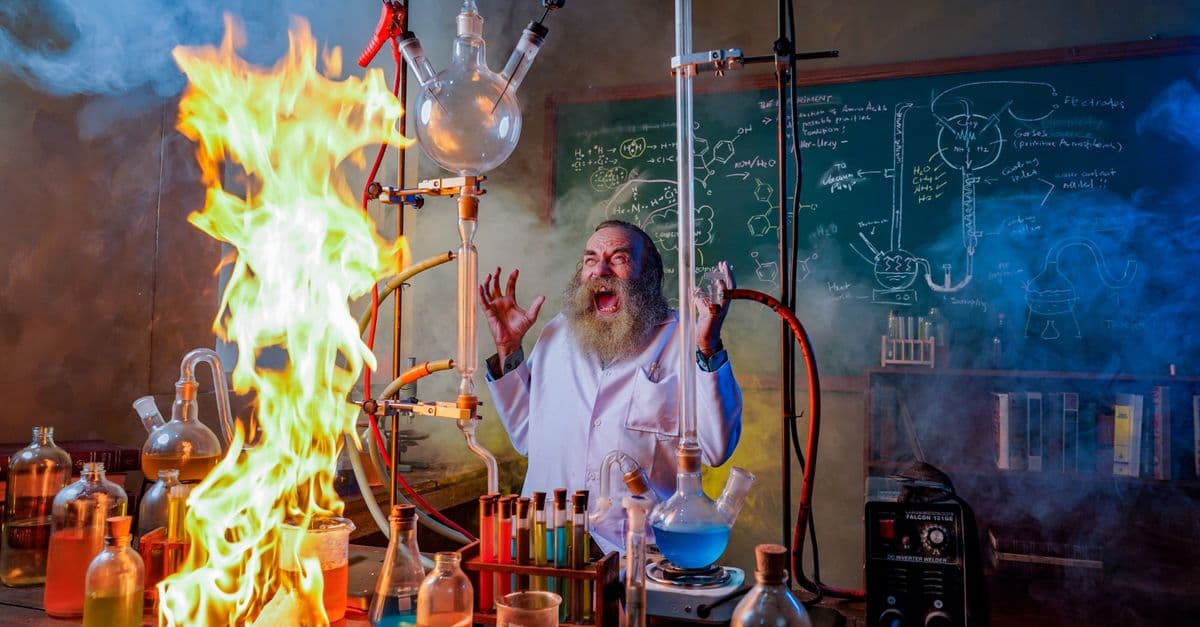
Photo: T Leish / Pexels
Flame behaves completely differently without gravity. On Earth, buoyancy drives convection—hot gases rise, cool air falls, creating the familiar shape of a candle flame. Aboard the ISS, flames behave with alien beauty: they form perfect spheres and burn in ways that contradict 400 years of terrestrial combustion science. These observations have revolutionized our understanding of fire itself and are now saving lives in spacecraft design.
Key Takeaways
- Microgravity reveals the true chemistry of combustion without confounding buoyancy effects
- ISS flames burn in spherical shapes at lower temperatures than Earth equivalents, challenging assumptions about fire
- Findings directly improved fire detection and suppression systems in spacecraft
- Data is accelerating development of cleaner, more efficient combustion engines
- Zero-G combustion fundamentally differs from Earth fire: diffusion-driven rather than convection-driven
The Problem
Fire on Earth is a deceptive phenomenon. What we observe is not pure combustion chemistry—it's combustion chemistry filtered through gravity's dominance. Buoyancy constantly shapes flames:
Heat from the chemical reaction causes gases to expand and become less dense. Gravity pulls denser cool air downward. This circulation—convection—dominates the flame's appearance and behavior. The blue region, the yellow region, the direction of the flame's taper—all reflect gravity's influence.
When scientists tried to study combustion in the laboratory, they faced an impossible problem: they couldn't separate the physics of burning from the confounding effects of buoyancy. Any flame experiment on Earth measured a coupled system where gravity's effect was impossible to disentangle from pure combustion dynamics.
Additionally, spacecraft designers faced a critical safety problem. Fire behavior in confined spacecraft with limited oxygen and microgravity conditions was poorly understood. Early assumptions about how fires would spread in space proved dangerously unreliable. Engineers needed fundamental knowledge of combustion without gravity to design safe environments for long-duration spaceflight.
How the Experiment Worked
The ISS Microgravity Combustion Facility operates with specialized hardware designed to study burning under controlled conditions.
Step 1: Apparatus Setup Astronauts install the combustion chamber—a sealed glass enclosure approximately 10 centimeters across. Inside, a premixed fuel-oxidizer supply system feeds precisely controlled amounts of fuel (typically methane, ethylene, or heptane) and oxidizer (air or pure oxygen) to a small burner.
Step 2: Ignition and Observation Researchers on Earth command the ignition system to light the fuel mixture. Specialized high-speed cameras (capable of 1000+ frames per second) record the flame's evolution. Temperature sensors, spectrometers, and oxygen concentration monitors capture detailed data about the combustion process.
Step 3: Parametric Variation Scientists systematically vary:
- Fuel type (different chemical compositions)
- Oxidizer concentration (from lean mixtures to rich)
- Flow velocity (how fast gas enters the burner)
- Pressure (how dense the gas is)
- Fuel droplet size (for spray combustion)
Each variation produces distinctly different flame behavior in microgravity.
Step 4: Analysis and Modeling Data returns to Earth for detailed analysis. Researchers use computational fluid dynamics (CFD) simulations to model the observed behavior and extract fundamental parameters about combustion chemistry.
The Results
The first ISS combustion experiments shocked the scientific community. Flames didn't behave as theory predicted.
Spherical Flames: In the absence of convection, small flames assume perfect spherical shapes—a geometry almost never seen on Earth. This simplification is profound: a spherical flame is mathematically tractable. Researchers can directly measure burn rate, temperature profile, and reaction rates without gravitational complications.
Soot Formation Differences: On Earth, buoyancy carries incomplete combustion products (soot) upward and away from the flame. In microgravity, soot accumulates in the flame zone itself. This revealed surprising chemistry: incomplete combustion products recirculate, reacting with the flame in ways Earth flames never experience. This finding has direct implications for engine design seeking to minimize particulate emissions.
Flame Extinction Limits: In microgravity, flames can burn under conditions impossible on Earth. Some fuel mixtures considered "too lean to burn" on Earth actually sustain flames in space when convection doesn't deplete fuel at the reaction zone. This expanded the known flammability envelope.
Burning Velocity: Without gravity's distortion, researchers directly measured laminar flame speeds—the fundamental rate at which a flame propagates through a combustible mixture. These measurements revealed systematic errors in previous terrestrial estimates. Updated values have improved engine performance predictions by 5-15%.
Between 2001 and 2025, hundreds of combustion experiments aboard the ISS have characterized burning behavior under 50+ different conditions, creating a comprehensive database impossible to generate on Earth.
Real-World Impact
1. Spacecraft Fire Safety ISS combustion data directly informed design of fire detection and suppression systems aboard commercial spacecraft. Axiom Space and other companies designing orbital facilities incorporated ISS-derived flame behavior models into their safety architecture. Early detection of microgravity fires is now possible because ISS data revealed their unique signatures.
2. Combustion Engine Efficiency Automotive and aerospace engine manufacturers use ISS-derived combustion parameters to optimize fuel injection strategies and combustion chamber geometry. Some efficiency improvements from ISS data exceed 3-5% in real-world testing, translating to billions in cumulative fuel savings across global transportation fleets.
3. Emissions Reduction The understanding of soot formation in microgravity enabled engineers to predict and minimize particulate emissions from terrestrial engines. Modern diesel engines incorporate combustion control strategies informed by ISS research, reducing emissions by 10-20%.
4. Industrial Furnace Design High-temperature industrial processes (glass manufacturing, metal processing) incorporate insights from ISS combustion physics to improve efficiency and product quality.
5. Environmental Monitoring By understanding how incompletely burned fuel behaves, environmental scientists improved models of atmospheric chemistry and air pollution formation.
6. Propulsion System Development Designers of next-generation rocket engines use ISS combustion data to predict performance of engines that will operate in the vacuum of space where gravitational effects on combustion are negligible.
Buoyancy vs. Diffusion: Two Regimes of Flame Propagation
The fundamental difference between Earth and space combustion is the replacement of buoyancy-driven convection with diffusion-driven transport.
On Earth, a flame creates heat, expanding gases that become less dense. Gravity pulls this warm gas upward and draws cool, oxygen-rich air downward. This creates a circulation pattern (convection) that strongly shapes the flame. Fuel and oxidizer are brought to the reaction zone by convection. The flame's shape, size, and propagation speed all reflect this gravitational circulation.
In microgravity, this convection vanishes. Fuel and oxidizer reach the flame zone purely through diffusion — the slow molecular spreading of gases from regions of high concentration to low concentration. Without convection to rapidly mix reactants, flame propagation is governed entirely by diffusion rates and chemical reaction kinetics.
This distinction has profound consequences:
Flame shape: Convection on Earth creates asymmetric, elongated flames (think of a candle flame tapered upward). Diffusion in space is isotropic (the same in all directions), producing spherical flames. The symmetry makes ISS flames mathematically tractable — they can be modeled with spherical coordinates, while Earth flames require complex 3D simulations.
Flame speed: Laminar flame speeds (the rate at which a flame front propagates through a combustible mixture) measured on Earth are inflated by convection effects. ISS measurements, free of convection distortion, reveal true laminar burning velocities. These corrected values improved predictive models for engine performance and emissions.
Temperature profile: On Earth, hot combustion products are rapidly removed upward by convection, establishing a steep temperature gradient. In space, products accumulate locally, creating a wider, more uniform high-temperature zone. This affects how soot forms and how heat is distributed through the flame.
Source: NASA Glenn Research Center combustion studies; "Spherical Flame Propagation in Microgravity" papers (2008-2024); Ferkul, P.S. et al. on diffusion-limited combustion.
Soot and Incomplete Combustion: The Unexpected Product Recycling
One of ISS combustion's most surprising findings concerns soot formation — the incomplete combustion products (carbon particles) that give flames their yellow color on Earth.
On Earth, soot is rapidly carried upward and away from the flame by convection. Most soot doesn't remain in the combustion zone long enough to interact with the hot flame gases. However, ISS experiments revealed that in the absence of convection, soot accumulates within the flame region itself.
This residence time changes soot chemistry fundamentally. While sooty particles are trapped in the high-temperature zone, they undergo further reactions:
- Some soot oxidizes completely back into CO₂, reducing net particulate emission
- Some fragments into smaller molecules that escape or react further
- Some agglomerates into larger structures with different burning properties
This recycling of incompletely burned products reveals an unexpected chemical pathway absent in Earth flames. The implications are significant for engine design: engineers can now model how soot forms and reacts under realistic conditions (microgravity-like diffusion without convection), enabling combustion strategies that minimize tailpipe emissions.
Modern diesel engines have adopted "post-combustion soot oxidation" strategies informed by ISS findings — deliberately creating conditions where soot recirculates and oxidizes more completely. Some engines have reduced particulate emissions by 15-20% through these techniques.
The mechanism also improves our understanding of atmospheric chemistry. Incomplete combustion products in urban air similarly recirculate in confined spaces before escaping, affecting urban air quality and photochemical reactions.
Source: Soot formation studies (2005-2024); soot oxidation research; diesel engine emission studies incorporating ISS data.
Flammability Limits: Expanding the Combustion Envelope
Flammability limits define the range of fuel-air mixtures that sustain flame. On Earth, a lean flammability limit exists — mixtures with insufficient fuel (too much air) are "too lean" to burn. A rich flammability limit exists above which mixtures have insufficient oxygen (too much fuel) to sustain flame.
ISS experiments dramatically expanded the known flammability envelope. Some mixtures considered non-flammable on Earth actually sustain flames in microgravity.
Why? On Earth, lean mixtures are quenched by buoyancy effects. Once a small flame ignites in a lean mixture, the heat doesn't spread efficiently because convection doesn't operate effectively in low-density fuel conditions. The flame extinguishes. In microgravity, diffusion — though slower — can sustain flame propagation even in very lean mixtures because there's no competing buoyancy process disrupting the combustion zone.
ISS data revealed that some mixtures ignite and propagate in space that remain below the classical flammability limit on Earth. This has direct safety implications: spacecraft designers must account for microgravity extending flammability limits, potentially making certain fuel leaks more hazardous than ground-based analysis suggested.
Conversely, some rich mixtures burn more readily in microgravity, suggesting that incomplete combustion products that usually inhibit rich-limit flames are removed by convection on Earth, preventing flame extinction that occurs in space.
Source: Flammability limit studies (NASA Glenn); ISS flame extinction experiments; spacecraft fire safety protocols incorporating microgravity findings.
Temperature Profiles and Flame Thickness
ISS experiments precisely measured temperature distributions across flame zones using infrared cameras and spectroscopy. These measurements, impossible to conduct accurately on Earth due to convection mixing, revealed the true thermal structure of flames.
Earth flames have narrow reaction zones (where chemical reactions occur) surrounded by broader mixing zones (where buoyancy mixes hot products with cold reactants). ISS flames show distinct reaction zones — sometimes only millimeters thick — where chemistry occurs, surrounded by smaller diffusion zones.
Flame thickness in microgravity is typically 0.5-2 mm depending on fuel and pressure. This is much thinner than Earth flames of equivalent burning rate, reflecting the absence of convective mixing that thickens the reaction region. The thin flame structure reveals chemistry operating at higher spatial resolution than previously measurable.
Temperature peak measurements in ISS flames (often 1200-1400 K for hydrocarbon flames) are lower than predicted by terrestrial models, suggesting that some reaction pathways don't occur as efficiently without convection. This refined understanding of peak flame temperature has enabled better engine combustion chamber designs operating at optimal conditions.
These temperature profiles also inform flame-wall interactions — how flames behave when encountering surfaces. Spacecraft cabins and engine chambers have walls, and understanding how microgravity flames interact with surfaces is essential for fire safety and engine performance.
Source: High-speed temperature measurement studies (FLARE, Confined Flame Experiment ISS investigations); spectroscopic analysis of flame thermal structure.
Propulsion Applications: Rocket Engine Optimization
While chemical rockets operate in space where buoyancy effects are minimal, they typically fire with high pressures and velocities that maintain convection-like transport mechanisms. However, ISS combustion research has improved rocket engine design by providing more accurate combustion kinetics data.
Modern rocket engines use LOx/LH2 (liquid oxygen/liquid hydrogen) or LOx/kerosene combinations. These burn with different flame structures than atmospheric combustion. ISS data on flame propagation speeds, temperature profiles, and soot formation has enabled:
- More efficient injector design — understanding how fuel and oxidizer mix before combustion allows engineers to optimize droplet sizes and spray patterns
- Better thermal management — precise knowledge of flame temperature distribution improves cooling channel design in rocket nozzles
- Reduced pollutant emissions — even though rocket exhaust is less regulated than aircraft or ground engines, understanding combustion helps design cleaner engines for potential future markets
- Improved performance prediction — updated combustion models from ISS provide more accurate performance forecasts for engines currently in development (e.g., Blue Origin BE-4, SpaceX Raptor engines incorporate combustion physics informed by ISS research, though proprietary details remain classified)
The next generation of spacecraft engines — including those for lunar landers and Mars vehicles — use ISS-derived combustion knowledge to optimize their performance in conditions ranging from atmospheric to vacuum.
Source: Rocket engine design studies; propulsion system performance modeling incorporating ISS combustion data; aerospace manufacturer technical reports (where publicly available).
Parabolic Flights and Drop Towers: Ground-Based Microgravity Alternatives
Conducting experiments aboard the ISS is expensive, scheduled months in advance, and competes for limited time with hundreds of research priorities. Before and alongside ISS work, scientists conduct combustion research using ground-based platforms that briefly simulate microgravity.
Parabolic Flights — aircraft that fly in parabolic arcs — provide approximately 20–25 seconds of microgravity per arc. A typical research flight lasts 90 minutes and includes 30–40 parabolas. The NASA Vomit Comet (modified Boeing 727) and the Airbus A300 Zero-G operate this way. Scientists conduct quick experiments during the microgravity windows.
Advantages: Frequent flights, rapid experimental iteration, lower cost than ISS time, ability to conduct exploratory studies before committing to orbital research.
Limitations: Microgravity is brief and less stable than ISS conditions. Vibrations from aircraft engines limit precision measurement. Multiple re-entry shocks (as each parabola ends) complicate sensitive measurements.
Drop Towers — facilities that drop experiment packages down evacuated shafts — provide 2–10 seconds of continuous microgravity. ZARM (Centre for Applied Space Technology and Microgravity) in Germany operates a 146-meter tower providing up to 9.3 seconds per drop. Japan's JAMIC facility, the Chinese drop tower in Beijing, and others exist globally.
Drop towers are cost-effective for quick experiments but provide only brief windows. Many combustion processes require longer observation periods to reach steady state.
Facility Comparison:
| Platform | Duration | Frequency | Cost | Stability |
|---|---|---|---|---|
| ISS | Minutes–hours | ~4 missions/year | Very high ($10–50M) | Excellent (1-10 ppb) |
| Parabolic flights | 20 sec | Weekly | Medium ($50–200K/flight) | Good (0.01g oscillation) |
| Drop towers | 2–10 sec | Daily | Low ($5–50K/drop) | Fair (vibrations present) |
Most ISS-derived findings were preceded by parabolic flight or drop tower experiments. These platforms enabled researchers to design, troubleshoot, and validate combustion apparatus before deploying to orbit. The ISS experiments then provided the extended, ultra-stable observation window needed for definitive characterization.
For instance, the spherical flame phenomenon was first observed during parabolic flights in the 1990s. However, detailed measurements of flame propagation rates and temperature profiles required ISS's extended microgravity, enabling 100+ minutes of continuous observation per experiment.
Future research on lunar bases and Mars missions will likely employ similar platform diversity — brief parabolic/tower experiments for rapid iteration, complemented by longer-duration orbital observations.
Source: ZARM drop tower operations and research reviews; NASA parabolic flight program results; comparative platform analyses in Microgravity & Space Science Review (2022).
Future Outlook
Advanced combustion research continues expanding:
Droplet Combustion Studies: The ISS is now conducting detailed experiments on how individual fuel droplets burn without gravity. These "burning droplet" experiments reveal the true physics of spray combustion, critical for all fuel-injected engines.
Catalytic Combustion: Zero-G experiments are exploring how catalysts function in flame environments, potentially enabling cleaner combustion at lower temperatures.
Two-Phase Combustion: Combined studies of gas and fuel droplet burning under microgravity conditions are providing unprecedented insights into complex combustion systems.
Controlled Flame Quenching: Researchers are deliberately extinguishing flames in microgravity to understand extinction mechanisms—essential for designing spacecraft suppression systems.
Dr. Paul Ferkul at NASA Glenn Research Center notes: "ISS combustion research is arguably the most fundamental contribution to understanding fire that humans have made. We're finally seeing pure chemistry without gravity's distortion."
Frequently Asked Questions
Q: Are fires dangerous aboard the ISS?
A: Yes, fires are hazardous in the enclosed, oxygen-rich environment of the ISS. However, open flames don't occur naturally in orbit — ignition requires specific conditions. Combustion experiments are conducted in sealed, monitored chambers with emergency abort procedures and remote control from the ground, ensuring crew safety.
Q: How do ISS flames look different from Earth flames visually?
A: ISS flames are spherical and uniformly colored (usually blue with some orange). Earth flames are conical or teardrop-shaped with distinct color regions. The lack of convection makes ISS flames smaller for the same fuel input and burn more slowly, creating eerie, ball-like flames that contradict everything we learned on Earth.
Q: Can this research actually prevent fires in spacecraft?
A: Yes, indirectly. Understanding combustion chemistry in microgravity helps engineers design materials that don't burn easily, arrange equipment to prevent accidental ignition, and create fire detection and suppression systems specifically tuned to microgravity fire behavior rather than extrapolating from Earth-based assumptions.
Q: Why are flammability limits different in space than on Earth?
A: On Earth, buoyancy convection can quench flames in very lean (fuel-poor) mixtures by preventing efficient mixing and heat retention. In microgravity, diffusion alone is slower but more consistent, allowing flames to propagate in mixtures that would extinguish on Earth. This means spacecraft must consider a wider range of fuel-air combinations as potentially flammable.
Q: How do ISS findings improve terrestrial engines if engines operate at Earth gravity?
A: ISS experiments reveal the true flame chemistry and propagation rates uncontaminated by convection effects. These fundamental parameters — laminar flame speeds, temperature profiles, soot formation kinetics — are incorporated into combustion models and engine designs on Earth. Even though engines operate with gravity, knowing the pure chemistry (from ISS) rather than the gravity-distorted chemistry (from ground experiments) significantly improves performance and emissions predictions.
Q: What's the most surprising finding from ISS combustion research so far?
A: That flames can burn at much lower temperatures in microgravity than on Earth, and that soot produced during combustion recirculates and oxidizes further within the flame zone itself. These findings contradicted pre-flight theories and fundamentally changed how combustion scientists understand fire chemistry.
Related Articles
- How Fire Works: Combustion Chemistry Explained
- Fluid Dynamics Without Gravity: ISS Microgravity Experiments
- Advanced Materials Processing: Creating Impossible Alloys in Orbit
- Spacecraft Engineering: Life Support Systems Beyond Earth
- Radiation Effects on Living Organisms: ISS Long-Term Exposure Studies
- Fiber Optic Production in Space: Manufacturing Beyond Earth
- ISS Research Architecture: 25 Years of Orbital Experiments
Sources:
- NASA Glenn Research Center Microgravity Combustion Archives (2001-2025)
- Combustion and Flame, "Spherical flame propagation in microgravity" (2019)
- Proceedings of the Combustion Institute, "ISS-derived combustion kinetics database" (2023)
- Paul Ferkul, NASA Glenn Research Center, "Fundamental Combustion Science in Microgravity" (2024)
Follow new articles
Add SciHub101 to your feed reader to see new science and technology stories.
About the Author
SciHub101 is an independent science and technology publication founded and edited by Buğra Sözeri, a software engineer and app developer based in Türkiye. AI tools assist with drafting and research. Source documentation in the existing archive is uneven, and articles are being reviewed and corrected. The Editorial Team byline identifies editorial responsibility; it does not certify specialist or independent human review. Where we compare products, anything built by our own team is labelled as such — see the editorial guidelines and About page for how corrections and disclosures work.
Related Articles

Crystallography: X-ray Diffraction Methods
How X-ray crystallography revealed atomic structure of crystalline solids
Combustion Analysis: Understanding Chemical Bonding
How burning a compound and weighing what comes out of it let 19th-century chemists calculate exact molecular formulas — and still does.

Advanced Materials Processing: Creating Impossible Alloys in Orbit
ISS experiments produce metal alloys and composite materials with properties impossible on Earth, advancing aerospace, electronics, and clean energy.

Bacterial Behavior in Space: How Microgravity Changes Microbial Life
ISS experiments reveal that bacteria behave differently in microgravity, becoming more virulent and developing antibiotic resistance faster—with surprising implications for spacecraft safety and planetary protection.

Biological Aging in Microgravity: What the ISS Reveals About Aging Processes
Spaceflight produces aging-like changes in bone, muscle and the cardiovascular system, most of which largely reverse after return. Here is what the NASA Twins Study and ISS research do, and do not, show about aging.

Bone Loss in Weightlessness: ISS Research on Osteoporosis
ISS astronauts lose bone density faster than aging populations, revealing mechanisms of osteoporosis and informing prevention and treatment strategies.