How Catalysts Speed Up Reactions
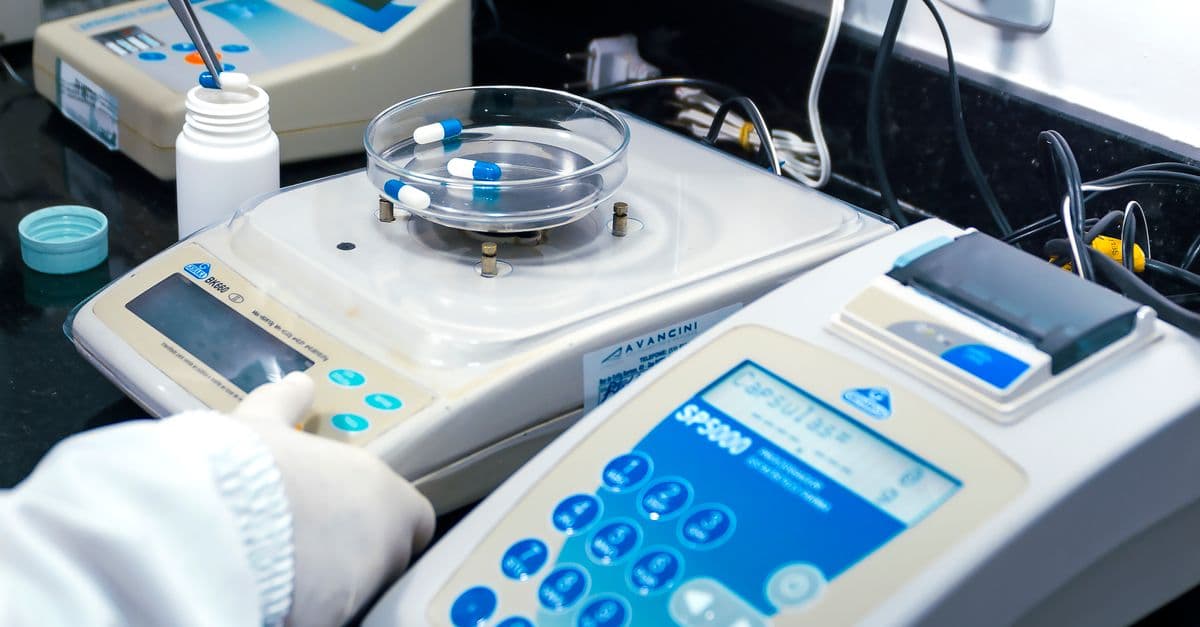
Photo: Pilan Filmes / Pexels
A catalyst is a substance that speeds up a chemical reaction by providing an alternative reaction pathway with a lower activation energy, without being consumed in the process. It does not change what a reaction produces, and it does not change the reaction's overall energy balance. It only changes how fast the reaction reaches that same destination — sometimes by a factor of a million or more.
What a catalyst actually does (and doesn't do)
Every chemical reaction has to climb an energy hill before it can roll down the other side into products. Chemists call the height of that hill the activation energy — the minimum energy that colliding molecules need before their bonds will actually break and reform into something new. Reactants sitting at room temperature mostly don't have enough energy to clear that hill on any given collision, which is why many thermodynamically favorable reactions — reactions that "want" to happen, in the sense that the products are more stable than the reactants — proceed at a vanishingly slow rate without help.
A catalyst intervenes by opening a different route over that terrain, one with a lower peak. It does this typically by temporarily bonding to one or more of the reactants, distorting or weakening the existing bonds, stabilizing the awkward in-between structure — chemists call this the transition state — and then releasing the finished product unchanged itself. Because the catalyst comes out the other side exactly as it went in, a small amount of catalyst can process an enormous number of reactant molecules over time. This is the detail that trips people up: a catalyst is a participant in the mechanism, but not a consumable. It is closer to a matchmaker than an ingredient.
What a catalyst does not do is change the identity or amount of the final products, and it does not change the reaction's thermodynamics — the net energy released or absorbed between reactants and products stays exactly the same, with or without a catalyst present. A catalyst also cannot make an energetically unfavorable reaction happen. If the products are higher in energy than the reactants, no catalyst on Earth will make that reaction proceed spontaneously and completely; the catalyst can only speed up the approach to the same equilibrium that would eventually be reached anyway, just far too slowly to be useful.
A useful analogy: imagine a mountain pass connecting two valleys. Hikers (the reactant molecules) want to get from the higher valley to the lower one, and physics is on their side — the destination valley is downhill overall. But the only route over is a steep, snow-covered pass that few hikers have the stamina to cross in any given attempt. A catalyst is like a tunnel blasted through the mountain at a much lower elevation. The destination hasn't changed. The elevation drop from start to finish hasn't changed. What's changed is that now almost every hiker who tries can actually make it across, so the valley empties out far faster.
The mechanism: lowering the energy barrier, not the finish line
The activation-energy picture comes directly from collision theory and transition-state theory, the two frameworks chemists use to describe reaction rates. Collision theory says that for a reaction to happen, molecules must collide with both the correct orientation and enough kinetic energy to overcome the barrier. At any given temperature, only a fraction of molecules in a sample have that much energy — described by a statistical spread called the Boltzmann distribution. Raise the temperature and you shift that distribution so more molecules clear the bar, which is why heating a reaction speeds it up. Add a catalyst and you lower the bar itself, so a larger fraction of molecules clear it at the same temperature.
Two broad mechanisms explain how most catalysts pull this off.
Homogeneous catalysis happens when the catalyst is in the same phase as the reactants — typically all dissolved in the same liquid solution. The catalyst usually forms a temporary chemical bond with a reactant, creating an intermediate compound that is easier to convert to product than the original reactant was on its own. Once the product forms, the catalyst detaches and is free to repeat the cycle. Many industrial acid- and metal-catalyzed reactions in solution work this way, and so do most enzyme-catalyzed reactions inside living cells.
Heterogeneous catalysis happens when the catalyst is in a different phase from the reactants — most commonly a solid catalyst acting on gas- or liquid-phase reactants. Gas molecules land on the catalyst's surface and adsorb (stick, without forming a full permanent bond), which weakens their internal bonds and holds them in an orientation that favors reaction. Once the new bonds form, the product desorbs and leaves the surface open for the next round. Because only the surface atoms of a solid catalyst actually participate, heterogeneous catalysts are usually manufactured with enormous surface area — fine powders, porous pellets, or thin coatings over a ceramic honeycomb — to expose as many active sites as possible per gram of expensive catalytic metal.
How much difference can a catalyst actually make?
The rate difference is often dramatic rather than incremental. Enzyme catalysis is the most extreme example: many enzymes accelerate their reactions by factors ranging from roughly a million to more than a trillion compared with the uncatalyzed reaction in water, according to standard biochemistry references on enzyme kinetics. A reaction that would take centuries or longer to complete unassisted can finish in milliseconds inside a cell. Industrial catalysts are typically less extreme but still transformative — the difference between a chemical process that is commercially viable at scale and one that isn't.
Why doesn't the catalyst get used up?
Because the catalyst's role is to participate in the transition state and then release, not to become part of the final product. It's chemically regenerated at the end of every reaction cycle, which is why a small mass of catalyst — sometimes measured in grams per ton of product — can process reactants continuously for months or years before it needs replacing, usually because of physical fouling or poisoning rather than consumption.
The Haber-Bosch process: the catalyst that changed how many people the planet can feed
If you want to see what an industrial catalyst can do at civilizational scale, the Haber-Bosch process is the clearest example in modern history. Nitrogen makes up about 78% of Earth's atmosphere, and every living cell needs nitrogen to build proteins and DNA. But atmospheric nitrogen exists as N₂, two nitrogen atoms bound together by one of the strongest bonds in chemistry — a triple bond that plants cannot break and that most organisms cannot use directly. Before the twentieth century, the world's food supply was capped by how much usable, or "fixed," nitrogen was available from natural sources: soil bacteria, manure, and mined deposits of guano and Chilean saltpeter.
German chemist Fritz Haber worked out, between 1905 and 1909, how to combine atmospheric nitrogen with hydrogen gas to synthesize ammonia (N₂ + 3H₂ → 2NH₃) at laboratory scale, using high pressure, high temperature, and an iron-based catalyst to force a reaction that is thermodynamically favorable but far too slow to matter without help. Chemical engineer Carl Bosch, working for the German chemical company BASF, then spent roughly five years solving the immense engineering problem of running that same chemistry at industrial scale and pressure, and the first commercial plant began operating in Oppau, Germany, in 1913 (Science History Institute; Nobel Prize Biographical, 1918). Haber and Bosch each later received a Nobel Prize in Chemistry for the work — Haber in 1918, Bosch in 1931.
The iron catalyst at the center of the process is doing exactly the job described earlier: nitrogen and hydrogen molecules adsorb onto the iron surface, the metal weakens the notoriously strong N≡N triple bond enough for it to break under the reaction's operating conditions (roughly 400–500°C and 150–300 atmospheres of pressure), and ammonia forms and leaves the surface. Without the catalyst, industrially useful ammonia production at those temperatures and pressures simply would not happen fast enough to be commercially viable.
The scale of the downstream effect is what makes this a landmark case study rather than just a chemistry-class example. Historians and agricultural researchers, including analysis published by Our World in Data, estimate that synthetic nitrogen fertilizer derived from the Haber-Bosch process now supports somewhere in the range of 40% to 50% of the global population — food production that the natural nitrogen cycle alone could not sustain at current population levels. That range has shifted over the twentieth century as both population and fertilizer use grew, but converges consistently on roughly half of humanity depending on the estimate year and methodology used.
The story has a darker dimension that's worth naming honestly rather than sanitizing: the same chemist, Fritz Haber, later directed Germany's chemical weapons program in World War I, including the first large-scale poison gas attack at Ypres in 1915. The Haber-Bosch process itself is neutral chemistry — a catalyst lowering an activation energy barrier — but the man who developed it used the same institutional capability for both feeding people and killing them. For the fuller account of that history, see the Fritz Haber profile in SciHub101's scientist biographies.
Real-world catalysis, from your car to your cells
Catalysis isn't a laboratory curiosity confined to chemistry textbooks. It runs quietly through industrial manufacturing, environmental engineering, and every living cell on the planet, usually invisible to the people relying on it.
Catalytic converters, standard equipment on gasoline and diesel vehicles since the 1970s in most regulated markets, use small amounts of platinum, palladium, and rhodium coated onto a ceramic honeycomb to convert three of the most harmful components of engine exhaust — carbon monoxide, unburned hydrocarbons, and nitrogen oxides — into carbon dioxide, water vapor, and nitrogen gas before the exhaust ever leaves the tailpipe. The honeycomb structure exists purely to maximize surface area, since only the metal atoms actually exposed on the surface can catalyze anything; a converter's active catalytic material by mass is often only a few grams, spread as a thin coating across a structure engineered to expose as much of it as possible to passing exhaust gas.
Inside biology, the equivalent role is played by enzymes — protein (or occasionally RNA) catalysts that speed up essentially every reaction a living cell needs to survive, from digesting food to copying DNA to converting glucose into usable energy. Enzymes work through the same fundamental principle as an industrial metal catalyst — they bind a reactant (called a substrate, in enzyme terminology), stabilize a lower-energy transition state, and release the finished product unchanged — but they achieve extraordinary precision because their three-dimensional shape has evolved to fit one specific substrate, the way a lock fits one key. That precision is part of why enzyme-catalyzed reaction rate increases can run so much higher than typical industrial catalysts: natural selection has had billions of years to refine the fit.
| Catalyst | Reaction it accelerates | What it's made of | Where it matters |
|---|---|---|---|
| Iron catalyst (Haber-Bosch) | N₂ + 3H₂ → 2NH₃ (ammonia synthesis) | Iron oxide, activated with potassium and aluminum promoters | Synthetic fertilizer feeding an estimated 40–50% of the world's population |
| Platinum, palladium, rhodium | Oxidation of CO and hydrocarbons; reduction of NOₓ | Precious metals coated on a ceramic honeycomb | Catalytic converters in gasoline and diesel vehicle exhaust systems |
| Enzymes (e.g., amylase, DNA polymerase) | Countless metabolic and genetic reactions | Folded proteins (occasionally catalytic RNA) | Digestion, energy metabolism, and DNA replication in every living cell |
| Vanadium pentoxide | SO₂ + 1/2 O₂ → SO₃ (contact process) | Vanadium oxide | Industrial-scale sulfuric acid production |
Four catalysts, four very different industries, one shared mechanism: an alternative, lower-energy pathway that the catalyst itself survives unchanged.
Beyond these headline examples, catalysis is embedded in petroleum refining (cracking crude oil into usable fuels), plastics manufacturing (polymerizing small molecules into long chains), and pharmaceutical synthesis, where a catalyst can determine not just how fast a drug compound forms but which of two mirror-image molecular structures — only one of which may be biologically active — predominates in the final product.
Why the "helper, not participant" distinction matters
A common misunderstanding treats a catalyst as though it's simply an ingredient added in smaller quantity than the main reactants — a kind of trace additive. That framing misses the actual mechanism and leads to two specific errors worth flagging directly.
The first error is assuming a catalyst gets consumed, at least partially, the way a reactant does. In reality, a well-designed catalytic process can run for very long operating periods on a fixed charge of catalyst, because each catalyst molecule or surface site can be reused essentially indefinitely — the practical lifespan of an industrial catalyst is usually limited by physical degradation (sintering, where fine catalyst particles fuse into larger, less active clumps at high operating temperatures) or poisoning — where an unwanted trace substance permanently binds to the catalyst's active site and blocks it — rather than by the catalyst literally running out. Leaded gasoline, for example, was phased out of most markets partly because lead compounds permanently poison the platinum in catalytic converters, destroying their function.
The second error is assuming that if a little catalyst helps, a reaction with no catalyst at all simply "doesn't happen." Many uncatalyzed reactions do proceed — they're just slow enough that, on any timescale a factory, a car engine, or a living cell can tolerate, the reaction is functionally useless. The distinction between "impossible" and "too slow to matter" is one of the more important nuances in reaction kinetics, and it's the reason catalysis research focuses on rate rather than possibility.
A second useful analogy for that rate distinction: think of a catalyst less like a locked door being unlocked and more like a crowded doorway being widened. The people on the other side of the door were always going to get through eventually — nothing about the doorway's existence was in question — but widening it changes an hours-long bottleneck into a five-minute crossing. The destination room fills up at a completely different pace, even though every person who was always going to arrive still arrives.
What limits a catalyst, and what "good" catalyst design actually optimizes for
Catalysis research spends most of its effort on three practical constraints, and understanding them explains why some catalysts are common industrial workhorses while others stay confined to a research lab.
Selectivity matters as much as raw speed. A catalyst that accelerates the reaction you want, but also accelerates an unwanted side reaction, can leave you with a faster process that produces more waste byproduct rather than more of the target product. Enzymes are prized precisely because evolutionary pressure has driven extreme selectivity — most enzymes catalyze exactly one reaction and essentially nothing else.
Cost and availability shape industrial catalyst choice heavily. Platinum, palladium, and rhodium are effective heterogeneous catalysts partly because their electronic structure is well suited to weakening the specific bonds in vehicle exhaust gases, but their price and limited global supply are a constant engineering pressure toward using less metal per converter, or finding cheaper substitute catalysts where feasible.
Operating conditions determine whether a catalyst is practical outside a laboratory. The iron catalyst in Haber-Bosch only works efficiently within a specific temperature and pressure window; push the temperature too high and the equilibrium shifts unfavorably even though the reaction runs faster, so real industrial plants operate at a carefully engineered compromise rather than the fastest theoretically possible rate. Reaction engineers spend enormous effort finding conditions where a catalyst's speed advantage and a reaction's underlying thermodynamics both cooperate.
The takeaway
A catalyst's whole contribution is kinetic, not thermodynamic: it opens a lower-energy pathway between the same reactants and the same products, without changing what the reaction produces, how much energy it releases, or where its equilibrium eventually settles. That single mechanism — an unconsumed helper stabilizing a lower-energy transition state — scales from a car's exhaust system to a cell's metabolism to an industrial process that now underwrites food production for close to half of humanity. Understanding a catalyst as a facilitator of speed, rather than a participant in the final chemistry, is the detail that makes the rest of reaction kinetics make sense.
Read next:
- Fritz Haber: The Chemist Who Fed Billions and Killed Thousands
- Enrico Fermi: Father of the Nuclear Age
- Ernest Rutherford: The New Zealander Who Split the Atom
FAQ
Q: Do catalysts get used up in a reaction? A: No. A catalyst participates in the reaction mechanism — often by temporarily bonding with a reactant — but is chemically regenerated by the end of each reaction cycle. A small amount can process reactants continuously for extended periods, until it degrades physically or gets poisoned by an unwanted substance.
Q: Does a catalyst change the products of a reaction? A: No. A catalyst only changes the rate at which a reaction reaches its products, not the identity or quantity of those products, and not the reaction's overall energy balance or equilibrium position.
Q: What is activation energy? A: Activation energy is the minimum energy that reactant molecules need before a collision between them will actually break existing bonds and form new ones. Reactions with a high activation energy proceed slowly at a given temperature because few molecules have enough energy to clear that barrier on any single collision.
Q: What's the difference between homogeneous and heterogeneous catalysis? A: In homogeneous catalysis, the catalyst is dissolved in the same phase as the reactants, usually a liquid solution, and forms a temporary intermediate compound. In heterogeneous catalysis, the catalyst is a different phase, typically a solid acting on gas or liquid reactants that adsorb onto its surface before reacting.
Q: Why is the iron catalyst in the Haber-Bosch process considered so important? A: Without a catalyst, the reaction that combines atmospheric nitrogen and hydrogen into ammonia is far too slow at any commercially usable temperature to matter. The iron catalyst developed by Fritz Haber made industrial ammonia synthesis viable, and that ammonia became the basis for synthetic fertilizer that historians estimate now supports roughly 40% to 50% of the world's population.
Q: Are enzymes catalysts? A: Yes. Enzymes are biological catalysts, almost always proteins, that accelerate the chemical reactions living cells depend on, from digestion to DNA replication. They work through the same core mechanism as industrial catalysts — stabilizing a lower-energy transition state — but achieve much higher selectivity because their molecular shape has evolved to fit one specific reactant.
Follow new articles
Add SciHub101 to your feed reader to see new science and technology stories.
About the Author
SciHub101 is an independent science and technology publication founded and edited by Buğra Sözeri, a software engineer and app developer based in Türkiye. AI tools assist with drafting and research. Source documentation in the existing archive is uneven, and articles are being reviewed and corrected. The Editorial Team byline identifies editorial responsibility; it does not certify specialist or independent human review. Where we compare products, anything built by our own team is labelled as such — see the editorial guidelines and About page for how corrections and disclosures work.
Related Articles
Catalysis Discovery: How Catalysts Speed Chemical Reactions
How catalysts enable reactions without being consumed, revolutionizing chemistry
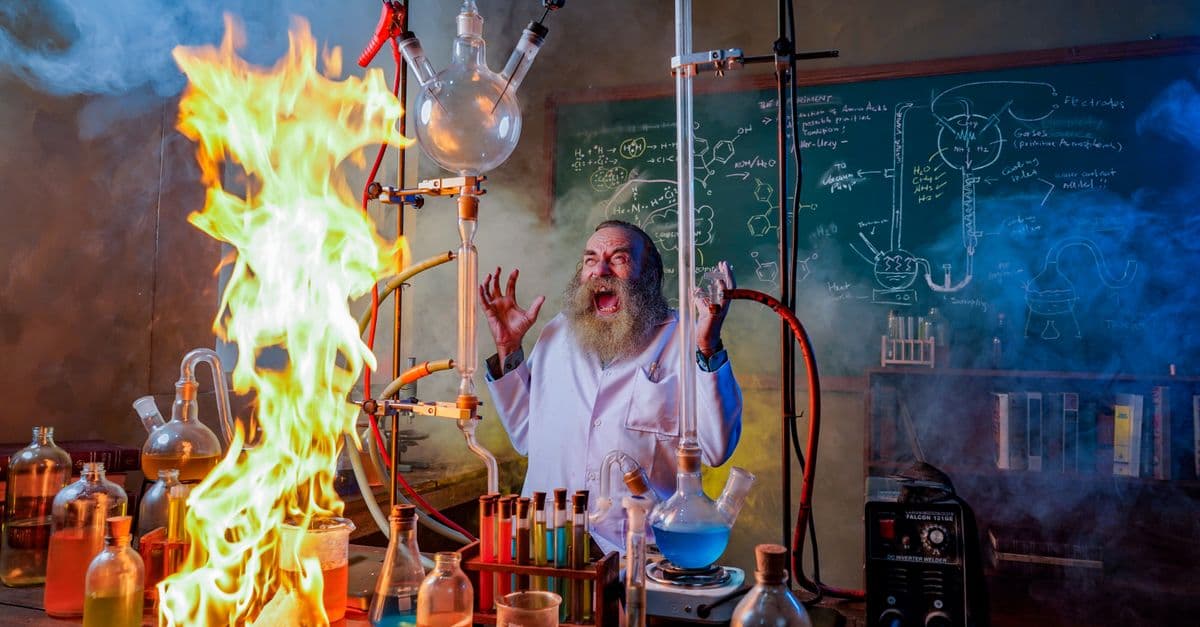
The Chemistry of Explosives: How They Work
Explosions are chemistry happening at extreme speed — here's the science of rapid oxidation, activation energy, and why some molecules store enormous energy.
Why Do Onions Make Us Cry? The Science of Tear Gas
An intact onion does nothing to your eyes. But cutting one releases enzymes that act on sulfur compounds, triggering a chemical cascade that produces syn-propanethial-S-oxide — a volatile gas that irritates your cornea and forces your eyes to water. The science behind this everyday kitchen reaction reveals how plants weaponize chemistry as a defense mechanism.
Fritz Haber: The Chemist Who Fed Billions and Killed Thousands
Fritz Haber invented the Haber-Bosch process that feeds half the world — and directed Germany's chemical weapons program in WWI. His story has no clean ending.