Ernest Rutherford: The New Zealander Who Split the Atom

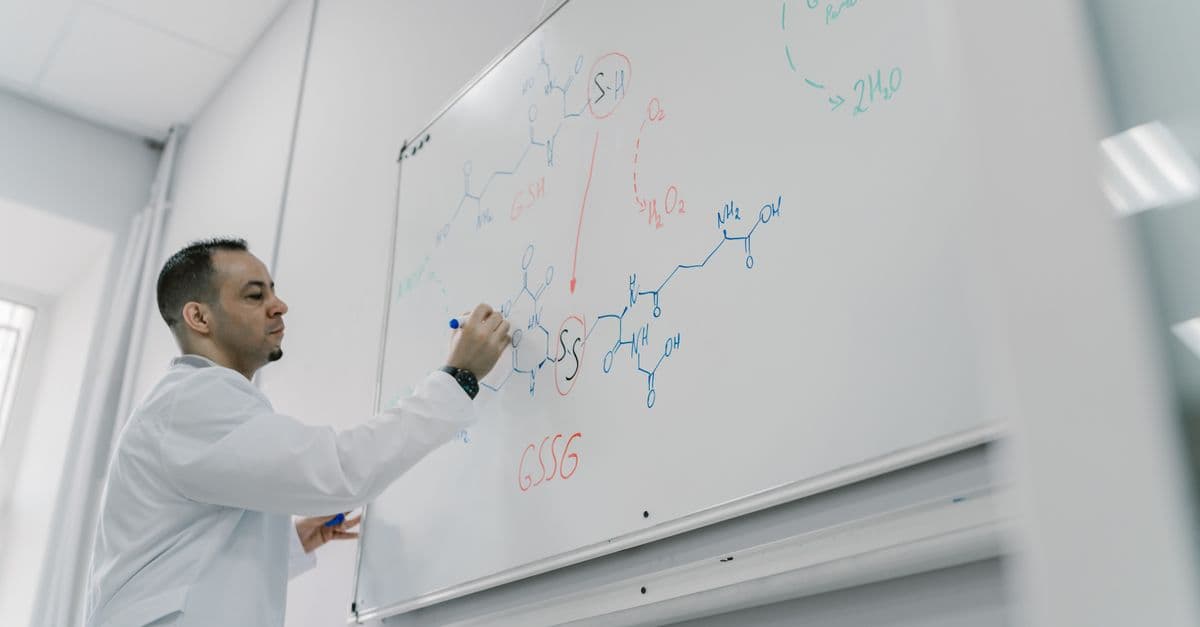
Photo: cottonbro studio / Pexels
Ernest Rutherford (1871–1937) was a New Zealand-born physicist who discovered the atomic nucleus, named alpha and beta radiation, established the concept of radioactive half-life, and performed the first deliberate transmutation of one element into another. His 1911 gold foil experiment — in which alpha particles fired at thin gold foil bounced back at unexpectedly large angles — revealed that the atom is mostly empty space surrounding a tiny, dense, positively charged core. He won the 1908 Nobel Prize in Chemistry, a categorization that irritated him for the rest of his life. He was, by all accounts, a physicist.
Early Life: From a New Zealand Farm to Cambridge
Ernest Rutherford was born on August 30, 1871, in Spring Grove (now Brightwater), near Nelson, in New Zealand's South Island, the fourth of twelve children. His father, James Rutherford, a Scottish immigrant, ran a flax mill and supplemented the family income with farming. His mother, Martha Thompson, was an English immigrant who had been a schoolteacher before marriage. Both parents valued education and managed, on a tight rural budget, to send their children to school.
Ernest attended Nelson Collegiate School, where he excelled in mathematics and science. He won a scholarship to Canterbury College in Christchurch, completing a bachelor's degree and then a master's degree in 1893, conducting experiments on the magnetization of iron by high-frequency electrical discharges — work that produced one of the first radio wave detectors independently of Hertz's work. When he heard he had won a 1851 Exhibition Science Scholarship to study at Cambridge, he was digging potatoes on the family farm. The story, later told with pride by his family, is that he threw down his spade and said he was going to do no more digging.
He arrived at Cambridge in 1895, joining J. J. Thomson's Cavendish Laboratory. Thomson had just discovered the electron — or was about to — and the Cavendish was the most productive physics laboratory in the world. Rutherford, large-framed, loud, with a New Zealand accent that never softened, was immediately conspicuous. Thomson recognized his talent and gave him increasing freedom to pursue his own experiments.
Source: Nobel Prize Committee (1908). Ernest Rutherford biographical notes. NobelPrize.org.
Major Discoveries: From Radiation to the Nucleus
Alpha, Beta, and Gamma: Naming the Radiation Types
In 1898, Rutherford was appointed professor of physics at McGill University in Montreal, Canada — at 27, one of the youngest full professors at a major research institution. He brought his experimental drive to McGill and immediately began investigating the newly discovered phenomenon of radioactivity, which Henri Becquerel had observed in uranium in 1896.
Rutherford found that uranium emitted at least two distinct types of radiation with different penetrating powers. One type was stopped by a thin sheet of aluminum foil; another penetrated several millimeters of aluminum. He named them alpha radiation and beta radiation after the first two letters of the Greek alphabet. A third type, more penetrating still — what we now call gamma radiation — was identified shortly after by Paul Villard. Rutherford named it gamma.
Alpha radiation — a type of nuclear radiation consisting of alpha particles, each composed of two protons and two neutrons. Stopped by a sheet of paper or a few centimeters of air.
Beta radiation — nuclear radiation consisting of high-energy electrons (or positrons) emitted during radioactive decay. Penetrates paper but stopped by thin aluminum.
Gamma radiation — high-energy electromagnetic radiation emitted by atomic nuclei. The most penetrating of the three types, requiring thick lead or concrete shielding.
These names — still in universal use — were proposed by Rutherford in 1899.
Source: Rutherford, E. (1899). "Uranium Radiation and the Electrical Conduction Produced by It." Philosophical Magazine, 47(284), 109–163.
Radioactive Half-Life and Transmutation
Working at McGill with chemist Frederick Soddy, Rutherford made two discoveries that permanently changed the understanding of matter. First, they found that radioactive elements spontaneously transform into other elements — a process they called transmutation. Uranium decays into thorium; thorium into other elements in a long chain. This was startling because it implied that atoms — long considered the immutable building blocks of matter — could change their identity.
Radioactive transmutation — the spontaneous conversion of one chemical element into another through radioactive decay, as a nucleus emits particles and changes its proton count.
Second, they characterized the rate at which radioactive materials decay using the concept of half-life: the time required for half of a given quantity of a radioactive substance to decay. Every radioactive isotope has a characteristic half-life, ranging from fractions of a second to billions of years. The half-life concept made quantitative predictions possible and became the basis of radiometric dating — the technique used to determine the age of geological and archaeological samples.
Soddy would win the 1921 Nobel Prize in Chemistry partly for this work. Rutherford would win his own Nobel, in 1908, for the investigation of radioactive decay in general.
Source: Rutherford, E., and Soddy, F. (1902). "The Cause and Nature of Radioactivity." Philosophical Magazine, 4(21), 370–396.
The Gold Foil Experiment and the Atomic Nucleus (1909–1911)
Rutherford's most famous experiment was not his idea, exactly — it was an assignment he gave to two researchers, Hans Geiger and Ernest Marsden, to test whether alpha particles would be deflected when fired at a thin sheet of gold foil. The prevailing model of the atom at the time, proposed by J. J. Thomson, imagined the atom as a diffuse sphere of positive charge with electrons embedded in it like raisins in a pudding — the "plum pudding model."
Rutherford expected most alpha particles to pass straight through with minor deflections, as the Thomson model predicted. Most did. But a small fraction — roughly 1 in 8,000 — bounced back at angles greater than 90 degrees. They came back the way they had come.
Rutherford's description of his reaction became famous: "It was almost as incredible as if you fired 15-inch shells at tissue paper and they came back and hit you."
He spent two years working through the mathematics. In 1911, he published his conclusion: the atom is mostly empty space, and nearly all of its positive charge and most of its mass is concentrated in a tiny, dense core — the atomic nucleus — with a diameter roughly 100,000 times smaller than the atom itself. The electrons orbit this nucleus at distances that, relative to nuclear size, are enormous.
Atomic nucleus — the small, dense, positively charged core of an atom, containing protons and neutrons. Discovered by Rutherford in 1911 through the gold foil experiment. The nucleus contains more than 99.9% of an atom's mass despite occupying less than one trillionth of its volume.
This model — the Rutherford model of the atom — was immediately recognized as a breakthrough. It was subsequently refined by Niels Bohr, who added the quantized orbital structure that explained atomic spectra. For Bohr's contribution, see Niels Bohr.
Source: Rutherford, E. (1911). "The Scattering of α and β Particles by Matter and the Structure of the Atom." Philosophical Magazine, 21(125), 669–688.
First Artificial Nuclear Transmutation (1917–1919)
In 1917, working at the University of Manchester, Rutherford performed the first deliberate artificial transmutation of one element into another. He fired alpha particles at nitrogen gas and detected the emission of hydrogen nuclei — protons — from the nitrogen atoms. What he had done was change nitrogen into oxygen (and a proton) through a nuclear reaction:
nitrogen-14 + alpha particle → oxygen-17 + proton
This was the first nuclear reaction induced artificially by a human being. It was also the experiment in which Rutherford first identified the proton as a fundamental constituent of the nucleus — coining the term "proton" for the hydrogen nucleus in 1920.
Source: American Physical Society (2006). "Rutherford and the Discovery of the Atomic Nucleus." APS Physics News Archive.
Lesser-Known Scientific Work
Discovering Radon
During his time at McGill, Rutherford identified a new radioactive gas emitted from thorium decay, initially calling it "thorium emanation." This was the element we now call radon (specifically the isotope radon-220, also called thoron). He studied its properties carefully and used it to understand radioactive decay chains. The discovery established important principles about the chain of successive decays from one element to the next.
The Magnetic Detector
Before he arrived at Cambridge, the 22-year-old Rutherford had built a sensitive detector for electromagnetic waves using the magnetization of iron by radio frequency currents — a principle independent of and roughly contemporaneous with Marconi's work. He used it to detect radio signals at distances of up to 600 meters. Had he pursued this direction rather than atomic physics, the early history of wireless telegraphy might have been different.
The Cavendish Laboratory
When Rutherford became director of the Cavendish Laboratory in Cambridge in 1919 (succeeding J. J. Thomson), he turned what was already the world's best physics laboratory into something unprecedented: a factory for fundamental discoveries. Under his directorship, the laboratory produced the discovery of the neutron (James Chadwick, 1932), the first artificial splitting of a nucleus (John Cockcroft and Ernest Walton, 1932), and fundamental work on nuclear structure and cosmic rays.
His leadership style was direct and loud — he was famous for booming at students across laboratories, and for the way he sang "Onward, Christian Soldiers" off-key while walking through the lab, a habit colleagues interpreted as a sign he was in a good mood and actively working through a problem.
Source: Science History Institute. "Ernest Rutherford." sciencehistory.org/education/scientific-biographies/ernest-rutherford/.
Personal Life and Relationships
Rutherford met Mary Georgina Newton — known as May — while at Canterbury College. She waited in New Zealand while he went to Cambridge, then to Montreal, then to Manchester — seven years of a long-distance relationship maintained by letters. They married in 1900, when Rutherford was 28 and finally established enough to afford a home. They had one daughter, Eileen, born in 1901. Eileen later married the physicist Ralph Fowler; she died in 1930 following childbirth complications, a blow that aged Rutherford visibly.
He was elevated to the peerage in 1931 — becoming Baron Rutherford of Nelson, a title chosen to honor both his scientific work and his New Zealand origins. He chose the coat of arms himself, selecting the Maori word "kia kaha" ("be strong") as part of the heraldry, and incorporated both the curve of an alpha-particle trajectory and a kiwi bird into the design.
He died on October 19, 1937, at age 66, from complications following surgery for a strangulated hernia. His ashes were buried in the nave of Westminster Abbey, near Isaac Newton and Lord Kelvin.
The Nobel Prize Category Problem
The Nobel Committee awarded Rutherford the 1908 Nobel Prize in Chemistry for his work on radioactive decay and the chemistry of radioactive substances. Rutherford, who considered himself unambiguously a physicist, found this categorization insulting and said so, repeatedly. He pointed out that the prize was for understanding nuclear physics, not chemistry, and considered the categorization an artifact of the Nobel Committee's unfamiliarity with the new field.
He was not wrong. The work that won him the prize — characterizing radioactive decay chains, establishing half-lives, demonstrating transmutation — was physics conducted with chemical methods. The distinction was genuinely blurry. But Rutherford, who had made the now-famous remark that "all science is either physics or stamp collecting," was not inclined to let the categorization pass without comment.
Source: NobelPrize.org. "Ernest Rutherford – Biographical." nobelprize.org/prizes/chemistry/1908/rutherford/biographical/.
Mentorship: The Nobel Kindergarten
| Student/Associate | Nobel Prize | Year | Discovery |
|---|---|---|---|
| Niels Bohr | Physics | 1922 | Atomic model, quantum structure |
| James Chadwick | Physics | 1935 | Neutron discovery |
| John Cockcroft | Physics | 1951 | Artificial nuclear disintegration |
| Ernest Walton | Physics | 1951 | Artificial nuclear disintegration |
| Patrick Blackett | Physics | 1948 | Cloud chamber and nuclear transmutation |
| Francis Aston | Chemistry | 1922 | Mass spectrograph, isotopes |
| Otto Hahn | Chemistry | 1944 | Nuclear fission |
| Edward Appleton | Physics | 1947 | Ionospheric physics |
| Cecil Powell | Physics | 1950 | Photographic method, pions |
Rutherford's students and associates won at least nine Nobel Prizes. He has been called "the headmaster of the Nobel kindergarten" — an epithet that captures both his centrality in early nuclear physics and his intensely pedagogical style.
Niels Bohr arrived at Rutherford's Manchester laboratory in 1912, invited after the two had met briefly in Cambridge. The collaboration produced the Bohr model of the atom — the quantized orbital structure that explained why atoms emit light at specific frequencies. For a full account of Bohr's work, see Niels Bohr.
Source: Nuclear Museum (Atomic Heritage Foundation). "Ernest Rutherford." ahf.nuclearmuseum.org/ahf/profile/ernest-rutherford/.
Little-Known Habits and Quirks
The Off-Key Hymn Singer
Rutherford's habit of singing — loudly, tunelessly, and with complete unselfconsciousness — was one of the most reliably reported features of his laboratory presence. "Onward, Christian Soldiers" was his signature song. Colleagues at the Cavendish learned to treat its sudden eruption in the hallway as an indicator of Rutherford's intellectual state: he sang when he was working well. When the lab fell quiet, something was wrong.
The Booming Voice
His voice was famously large. Students reported being able to hear him correcting an experimental setup from two rooms away. He was once told that his voice was so loud that it distorted the sensitive instruments he was discussing, a story he appeared to find amusing rather than alarming.
Against Mathematics in Physics
Rutherford had a complex relationship with mathematics. He was not innumerate — he had won prizes in mathematics as a student — but he was deeply suspicious of what he called "papering over ignorance with equations." He believed that physical intuition should lead, and mathematics should follow to confirm what experiment and intuition had already suggested. He repeatedly expressed skepticism about theoretical physics that outpaced experiment. This placed him, temperamentally, opposite to the direction physics would take after quantum mechanics.
New Zealand Identity
Despite spending nearly all his professional life in England and Canada, Rutherford never shed his New Zealand identity and was proud of it. He returned to New Zealand only once as an adult, for a 1925 tour, but he maintained the connections. When he chose his peerage title, he specifically selected "Nelson" — the region of New Zealand where he had grown up — to make the connection explicit. His face appears on the New Zealand $100 note.
Source: Britannica. "Ernest Rutherford." britannica.com/biography/Ernest-Rutherford.
Legacy
Rutherford's discovery of the atomic nucleus is one of the most consequential experiments in the history of science. The nuclear model he proposed in 1911 is the model still taught in every physics course worldwide. The concept of radioactive half-life he developed with Soddy became the quantitative tool that makes radiocarbon dating, medical isotope production, and nuclear waste management possible.
His transmutation experiments opened the door to the age of nuclear physics. The first deliberate nuclear reactions in the Manhattan Project followed directly from the techniques and concepts Rutherford established. He died in 1937, before the atomic bomb was built, but the physics that made it possible was largely his creation.
His mentorship record is perhaps as significant as any single discovery: the nine Nobel laureates who trained under him represent an extraordinary concentration of scientific talent produced by a single laboratory at a single period. Under Rutherford's direction, the Cavendish Laboratory from 1919 to 1937 discovered the neutron and demonstrated artificial nuclear fission — two of the pivotal events in twentieth-century physics.
For related scientists in the nuclear physics lineage, see Niels Bohr, Werner Heisenberg, and Lise Meitner.
FAQs
Q: What did the gold foil experiment actually prove?
A: It proved that the atom is mostly empty space, with nearly all its positive charge and mass concentrated in a tiny central nucleus. Alpha particles fired at gold foil mostly passed through — consistent with empty space — but a small fraction bounced back sharply, indicating they had struck something very dense and very small. Rutherford calculated that this nucleus is roughly 10,000–100,000 times smaller in diameter than the atom as a whole.
Q: Why was Rutherford annoyed about winning the Nobel Prize in Chemistry?
A: Rutherford considered himself a physicist and the work on radioactive decay to be physics, not chemistry. He was famously dismissive of chemistry compared to physics — the quote attributed to him, "all science is either physics or stamp collecting," captures this attitude. Being categorized as a chemist by the Nobel Committee struck him as a misclassification of what was fundamentally a contribution to physics.
Q: What is radioactive half-life?
A: The half-life of a radioactive isotope is the time required for half of a given quantity of that isotope to decay into other elements. It is a fixed, characteristic property of each isotope. Uranium-238, for example, has a half-life of 4.47 billion years; carbon-14 has a half-life of about 5,730 years. Rutherford developed the concept of half-life while working at McGill University with Frederick Soddy around 1900–1902.
Q: Who were Rutherford's most famous students?
A: Niels Bohr, James Chadwick, John Cockcroft, Ernest Walton, and Otto Hahn are among his most notable mentees. At least nine researchers who worked directly with Rutherford went on to win Nobel Prizes, earning his laboratory the nickname "the Nobel kindergarten."
Q: Did Rutherford predict nuclear weapons?
A: Not in any specific sense. He was skeptical, in the 1930s, that nuclear energy could be harnessed on a practical scale and was reported to have dismissed the idea in a 1933 speech. He died in 1937, before the discovery of nuclear fission (1938) demonstrated that a chain reaction was possible. His experimental work was, however, the foundation on which all subsequent nuclear physics was built.
Q: Where is Rutherford buried?
A: In Westminster Abbey, London, in the nave near the graves of Isaac Newton and Lord Kelvin. His ashes were interred there in 1937, a recognition of his standing as one of the preeminent scientists of his era.
Follow new articles
Add SciHub101 to your feed reader to see new science and technology stories.
About the Author
SciHub101 is an independent science and technology publication founded and edited by Buğra Sözeri, a software engineer and app developer based in Türkiye. AI tools assist with drafting and research. Source documentation in the existing archive is uneven, and articles are being reviewed and corrected. The Editorial Team byline identifies editorial responsibility; it does not certify specialist or independent human review. Where we compare products, anything built by our own team is labelled as such — see the editorial guidelines and About page for how corrections and disclosures work.
Related Articles
Hans Bethe: The Physicist Who Explained Why Stars Shine
Hans Bethe discovered the CNO cycle that powers stars, led Manhattan Project theory, won the 1967 Nobel Prize, and spent 70 years at Cornell advocating against nuclear weapons. He lived to 98.

Claude Shannon: The Bell Labs Tinkerer Who Invented Information
Claude Shannon founded information theory in 1948, proved Boolean algebra runs circuits in 1937, built a maze-solving mouse, and juggled on a unicycle through Bell Labs hallways.
Marie Curie: Radioactive Notebooks and a Life Beyond Convention
Marie Curie's biography, discoveries, and verified quirks: radioactive notebooks, radium in her pockets, two Nobel Prizes, and the scandal that nearly ended her.

Murray Gell-Mann: The Man Who Named the Quark
Murray Gell-Mann discovered quarks, built the Eightfold Way, won the 1969 Nobel Prize, and co-founded the Santa Fe Institute. His biography, science, and verified quirks.

Donna Strickland: Third Woman to Win Physics Nobel, Still an Associate Professor When She Won
Donna Strickland's chirped pulse amplification technique is the laser physics behind LASIK eye surgery. Wikipedia rejected her as 'not notable' five months before her 2018 Nobel Prize.