Hans Bethe: The Physicist Who Explained Why Stars Shine
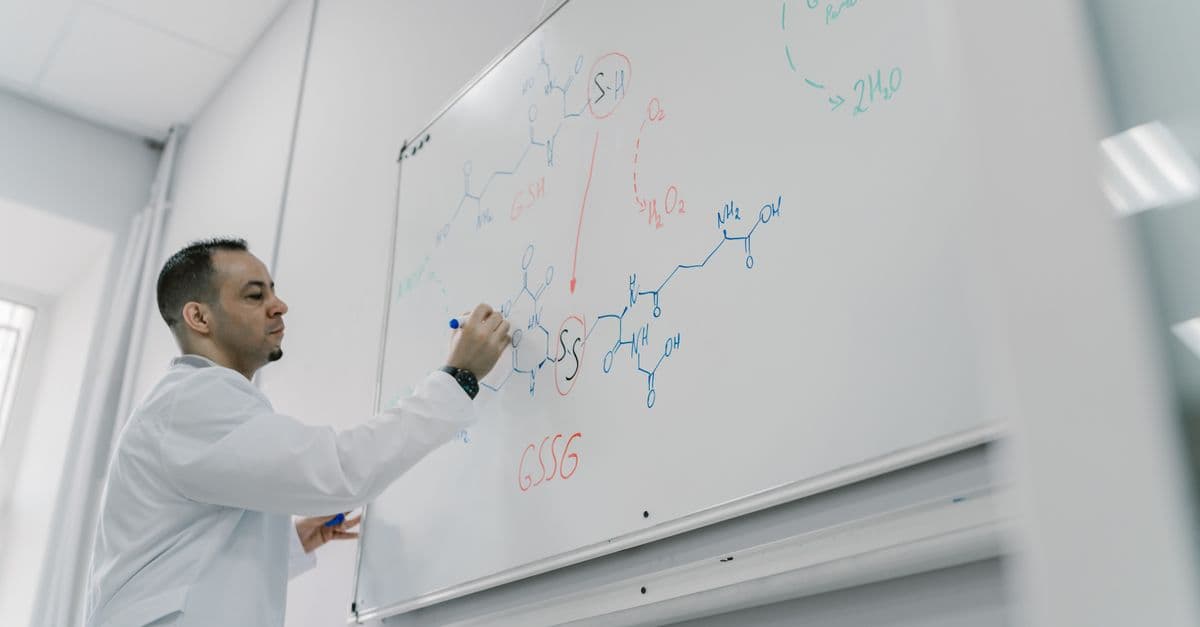
Photo: Mikhail Nilov / Pexels
Hans Bethe (1906–2005) was a German-American physicist whose 1939 paper revealed the nuclear reactions that power the Sun and stars, work that earned him the 1967 Nobel Prize in Physics. He headed the Theoretical Division of the Manhattan Project at Los Alamos. He spent the next six decades trying to walk back the consequences. He taught at Cornell University for 70 years, published research into his nineties, and died at 98 having left behind contributions in nuclear physics, astrophysics, solid-state physics, and quantum electrodynamics that few careers in the history of science can match.
Early Life: Strasbourg to Cornell via Escape
Hans Albrecht Bethe was born on July 2, 1906, in Strasbourg, then a city of the German Empire (now in France). His father, Albrecht Bethe, was a Protestant professor of physiology; his mother, Anna Kuhn, was Jewish. This parentage would, three decades later, determine the course of his life in Europe.
Bethe showed mathematical ability early and enrolled at the University of Frankfurt to study physics, transferring to the University of Munich to work under Arnold Sommerfeld — one of the great physics teachers of the twentieth century, whose students included Werner Heisenberg, Wolfgang Pauli, and Peter Debye. Bethe earned his doctorate in 1928 at age 22, writing a thesis on electron diffraction in crystals. Sommerfeld later remarked that Bethe was the most gifted of all his students — a judgment worth noting given the competition.
Through the early 1930s, Bethe worked at several European institutions and built a reputation for a particular style of work: exhaustive, lucid, and broadly competent. He wrote a series of review articles on nuclear physics for the journal Reviews of Modern Physics in 1936 and 1937 — three articles, together called the "Bethe Bible," that became the standard reference for a generation of nuclear physicists. They are, by many accounts, the most comprehensive and useful review articles ever written in physics.
Source: Cornell Chronicle — "Hans Bethe, a titan of physics and conscience of science, dies at age 98." https://news.cornell.edu/stories/2005/03/hans-bethe-titan-physics-and-conscience-science-dies-age-98
When Hitler came to power in 1933, Bethe was dismissed from his post at the University of Tübingen under the Nazi racial laws. He spent a year in England — first at the Cavendish Laboratory in Cambridge, then at the University of Manchester — before accepting a position at Cornell University in Ithaca, New York, in 1935. He would remain there for the next 70 years. He regarded Ithaca, he later said, as the first place he had truly felt at home.
Major Discoveries: How Stars Generate Energy
The CNO Cycle
In 1938, the Carnegie Institution in Washington convened a conference on stellar energy production. The fundamental problem was this: the Sun has been burning for roughly 4.5 billion years. No chemical reaction could sustain that output for more than a few thousand years. Gravitational contraction — the mechanism proposed by Kelvin and Helmholtz in the nineteenth century — could power it for perhaps 20 million years. The answer had to be nuclear.
Bethe left the conference, took a train back to Ithaca, and on the journey worked out the carbon-nitrogen-oxygen (CNO) cycle — the sequence of nuclear reactions by which stars more massive than the Sun convert hydrogen to helium, using carbon, nitrogen, and oxygen as catalysts that are consumed and then regenerated through the cycle.
Definition — CNO cycle: A chain of nuclear reactions in which carbon-12 absorbs successive protons and undergoes beta decays, eventually releasing a helium-4 nucleus and regenerating the original carbon-12. It is the dominant energy source in stars more than about 1.3 solar masses.
The cycle runs as follows: carbon-12 absorbs a proton and becomes nitrogen-13, which decays to carbon-13, which absorbs another proton to become nitrogen-14, which absorbs another to become oxygen-15, which decays to nitrogen-15, which absorbs a final proton and splits into carbon-12 and helium-4. The carbon is returned; the helium, and the energy released as gamma rays and neutrinos, is the product.
For stars of roughly solar mass, Bethe also worked out the proton-proton chain — the simpler reaction in which two protons directly fuse, eventually producing helium-4. In the Sun, the proton-proton chain dominates. In hotter, heavier stars, the CNO cycle takes over. Bethe published these results in a 1939 paper in Physical Review.
Source: Bethe, H. A. (1939). "Energy Production in Stars." Physical Review, 55(5), 434–456. https://doi.org/10.1103/PhysRev.55.434
He won the 1967 Nobel Prize in Physics for this work, with the citation specifically acknowledging his "contributions to the theory of nuclear reactions, especially his discoveries concerning the energy production in stars."
Nuclear Physics Foundations
Bethe's "Bethe Bible" articles — Nuclear Physics, Part A (1936), Part B (1936), and Part C (1937) — organized the field of nuclear physics comprehensively for the first time. They covered nuclear forces, nuclear structure, and nuclear reactions at a depth and clarity that established the conceptual framework for the following two decades of research.
He also contributed significantly to quantum electrodynamics. In 1947, shortly after the Shelter Island Conference, Bethe was the first to calculate the Lamb shift — a small but measurable discrepancy in the energy levels of hydrogen that quantum mechanics at the time could not explain. He estimated the shift using non-relativistic quantum electrodynamics on a train journey from Shelter Island to Schenectady, completing the calculation before the train arrived. This result helped motivate the development of modern QED by Richard Feynman, Julian Schwinger, and Sin-Itiro Tomonaga.
The Manhattan Project
In 1942, Bethe joined the Manhattan Project. J. Robert Oppenheimer selected him to head the Theoretical Division at Los Alamos — the group responsible for the underlying physics calculations of implosion design, criticality, and weapons yield.
Bethe's division included, at various times, Richard Feynman, Rudolf Peierls, Victor Weisskopf, and dozens of other physicists. Feynman, then a 24-year-old graduate student, became famous within Los Alamos for his iconoclasm. Bethe apparently found him invaluable. Colleagues nicknamed them "the Battleship" (Bethe) and "the Mosquito" (Feynman) — one steady and methodical, the other darting and disruptive. They worked well together.
Source: Atomic Heritage Foundation — Hans Bethe. https://ahf.nuclearmuseum.org/ahf/profile/hans-bethe/
Bethe completed the theoretical work on the implosion method used in the Trinity test and in the "Fat Man" bomb dropped on Nagasaki. After the war, he was direct about his feelings: the bombing of Hiroshima and Nagasaki had been a moral catastrophe, and the scientists who built the weapon bore some responsibility for what had been done with it.
He refused to work on the hydrogen bomb. When Oppenheimer's security clearance was revoked in 1954, Bethe testified on his behalf. He spent the next fifty years as the most persistent scientific voice in the United States arguing for arms control.
Lesser-Known Scientific Work
Bethe made contributions to solid-state physics — specifically the Bethe ansatz (1931), an exact solution method for one-dimensional quantum systems such as the Heisenberg spin chain. This technique, initially a specialized tool in condensed matter physics, has in recent decades become central to quantum field theory and string theory in ways Bethe could not have anticipated. The "Bethe ansatz" appears in thousands of papers published each year.
He also contributed to the theory of shock waves, to the physics of cosmic ray interactions, and to the radiative stopping power of charged particles in matter — the Bethe formula, which describes how fast-moving charged particles lose energy as they pass through material. This formula is used today in radiation therapy calculations for cancer treatment.
In his final decade, Bethe continued to publish on supernova mechanisms and neutron star formation, including a 1985 paper with Gerald Brown arguing that the bounce mechanism of supernova collapse had been misunderstood — a paper that influenced how physicists model stellar death.
Source: MacTutor History of Mathematics — Hans Bethe. https://mathshistory.st-andrews.ac.uk/Biographies/Bethe/
Personal Life
Bethe married Rose Ewald in 1939. Her father, Paul Ewald, was a physicist who had also emigrated from Germany. The two had two children, Henry and Monica. By all accounts, the marriage was happy and stable; Rose outlived Hans by several years.
Bethe's relationship with his adopted country was deep and uncomplicated in a way that many refugees' relationships with new countries are not. He became a US citizen in 1941, and the United States gave him what Germany had taken away: a place to work, a community, and freedom. He expressed this gratitude in practical form — by spending decades advising the government on how to avoid the catastrophes that science had made possible.
He remained at Cornell continuously from 1935 until his death on March 6, 2005 — nearly 70 years at a single institution. He taught graduate students into his late eighties, and his colleagues report that he remained sharp and engaged until close to the end.
Habits and Quirks
Bethe's colleagues consistently described two things: his extraordinary ability to compute, and his generosity in deploying it.
He was famous for doing long, complicated calculations in his head with apparent ease. Freeman Dyson, who worked with him at Cornell, described Bethe as a computing machine in human form — not in the mechanical sense, but in the sense that he could hold large arrays of numbers and intermediate steps in working memory simultaneously and carry calculations through to the end without paper.
His intellectual style was deliberate rather than flashy. He described his method as always using "the minimum mathematical complexity compatible with the problem." He disliked elegant abstraction for its own sake and preferred methods that could actually produce numbers. This made him, in Feynman's account, uniquely useful at Los Alamos: when the theorists needed to know whether a number was right, they showed it to Bethe.
He was an enthusiastic hiker throughout his life, exploring the Alps during his European years and the American Rockies and Adirondacks after his move to Cornell. He combined hiking with his other passion — stamp collecting — as ways of maintaining a life outside the laboratory.
At 88, he wrote an open letter to the scientific community calling on all scientists to "cease and desist from work creating, developing, improving and manufacturing nuclear weapons." The letter was not received by everyone warmly, but Bethe was not looking for approval.
Source: Hans Bethe House, Cornell University. https://hansbethehouse.cornell.edu/about/professor-hans-a-bethe
His longevity — he lived to 98 — was noted by colleagues with a mix of admiration and bemusement. He published scientific papers at 90. He gave lectures at 95. He appears to have found the work itself sustaining in a way that made retirement genuinely undesirable.
Legacy
| Area | Contribution | Status |
|---|---|---|
| Stellar physics | CNO cycle and proton-proton chain (1939) | Nobel Prize 1967; still definitive |
| Nuclear physics | "Bethe Bible" review articles (1936–37) | Standard reference for a generation |
| QED | First Lamb shift calculation (1947) | Catalyzed development of modern QED |
| Condensed matter | Bethe ansatz (1931) | Now central to quantum field theory |
| Radiation physics | Bethe formula for stopping power | Used in cancer radiotherapy today |
| Policy | Anti-nuclear arms activism, 1945–2005 | Advised White House on test ban treaties |
Bethe occupies an unusual position in the physics pantheon: he is equally significant as a scientist and as a public citizen of science. His technical legacy and his ethical legacy are both formidable, and both were the product of the same underlying character — thoroughness, honesty, and a refusal to avoid difficult conclusions.
For the companion story of the bomb he helped build and its aftermath, see Enrico Fermi, who oversaw the first controlled nuclear chain reaction in 1942 in Chicago. For the broader story of stellar physics, see Subrahmanyan Chandrasekhar, whose work on stellar collapse Bethe engaged with directly in the 1980s.
Source: Nobel Prize Outreach — Hans Bethe Biographical. https://www.nobelprize.org/prizes/physics/1967/bethe/biographical/
The CNO Cycle and Stellar Nucleosynthesis: How Bethe Figured Out the Sun
Arthur Eddington suspected the answer in 1920. He noted that the Sun converts hydrogen into helium, and that helium is slightly less massive than the four hydrogen nuclei that go into making it. By Einstein's E = mc², that missing mass must become energy. The arithmetic was right: the Sun radiates about 3.8 × 10²⁶ watts (3.8 × 10²⁶ joules per second), and if it runs on hydrogen fusion, its fuel supply would last billions of years — consistent with the geological record of life on Earth. What Eddington could not do in 1920 was say how the fusion happened. The specific reaction pathways, the temperatures required, the relative roles of different elements — all of that was missing.
Bethe filled the gap at a train station, and then on the train.
When he left the 1938 Carnegie conference on stellar energy, he had the key pieces: George Gamow's tunneling theory (which explained how protons could overcome their mutual electrostatic repulsion at stellar core temperatures of around 15 million K, or 27 million °F), and Charles Critchfield's preliminary sketch of the proton-proton chain. On the train back to Ithaca, Bethe worked out the CNO cycle from scratch. He showed that in stars heavier than about 1.3 solar masses — with hotter cores — the dominant reaction pathway runs through carbon, nitrogen, and oxygen acting as catalysts: consumed and regenerated with each cycle, net effect converting four protons into one helium-4 nucleus plus two positrons, two neutrinos, and gamma rays.
Source: Bethe, H. A. (1939). "Energy Production in Stars." Physical Review, 55(5), 434–456. https://doi.org/10.1103/PhysRev.55.434
The CNO cycle runs like a relay race with four runners and a baton that is never dropped. Carbon-12 catches a proton and becomes nitrogen-13, which decays to carbon-13. Carbon-13 catches another proton to become nitrogen-14. Nitrogen-14 catches a third proton to become oxygen-15, which decays to nitrogen-15. Nitrogen-15 catches a fourth proton and splits: out comes a helium-4 nucleus (the energy product), and carbon-12 is restored — ready to run the cycle again. The carbon is the catalyst, not the fuel. The fuel is hydrogen throughout. The yield of energy per cycle is 26.7 million electron volts (MeV).
For the Sun itself, the proton-proton (pp) chain is the dominant mechanism. In the pp chain, two protons fuse directly to form deuterium, which picks up another proton to form helium-3, and two helium-3 nuclei then merge to produce helium-4 plus two free protons. The pp chain requires lower temperatures than the CNO cycle and works efficiently in a star with the Sun's core temperature of roughly 15 million K. Bethe calculated both pathways in the same 1939 paper, establishing when each dominates and predicting the neutrino flux each would produce — a prediction confirmed by the first solar neutrino detectors in the 1960s.
What Bethe added to Eddington's energy puzzle was not a new principle but a working mechanism. Eddington had the energy budget; Bethe supplied the plumbing. Think of it as the difference between knowing that a car runs on combustion and knowing the four-stroke Otto cycle that makes it work: the first tells you what is happening, the second tells you how — and only the second lets you build an engine, or, in this case, model a star's interior, predict its lifetime, and understand why stars of different masses shine differently.
Source: Schweber, S. S. (2000). In the Shadow of the Bomb: Bethe, Oppenheimer, and the Moral Responsibility of the Scientist. Princeton University Press. (Chapter 2.)
The Nobel committee's 1967 citation for Bethe acknowledged not just the discovery but its completeness: he had provided "a theory of thermonuclear reactions in the interior of stars, explaining the energy production of the sun and similar stars." The work had taken him roughly a year. He had been racing against Carl Friedrich von Weizsäcker, who independently derived the CNO cycle at almost exactly the same time, though Bethe's version was the more complete and physically detailed treatment.
Bethe vs. Teller: The Hydrogen Bomb Conscience
The relationship between Hans Bethe and Edward Teller is one of the defining moral arguments of twentieth-century physics. They were friends. They were colleagues. They disagreed about the most consequential decision either man faced, and the disagreement permanently altered how the scientific community understood its own obligations.
Teller had been pursuing thermonuclear weapon concepts since 1942. His idea — nicknamed the "Super" — was a hydrogen bomb: a weapon using a fission device to compress and ignite deuterium and tritium, releasing energy from hydrogen fusion rather than uranium or plutonium fission. At Los Alamos during the Manhattan Project, Teller spent so much time on the Super that Bethe had to route weapons calculations around him. Teller was brilliant but obsessively focused on the thermonuclear concept, to the point of being operationally disruptive. Bethe found this frustrating, and the relationship strained.
After Hiroshima and Nagasaki, Bethe was among the most vocal scientists arguing that the atomic bombs should not have been used on cities, and that further weapons development was a moral wrong. He returned to Cornell, resumed his academic career, and declined when Teller pressed him to work on the Super. His position was not that the research was impossible — it was that it should not be done.
Source: Schweber, S. S. (2000). In the Shadow of the Bomb: Bethe, Oppenheimer, and the Moral Responsibility of the Scientist. Princeton University Press. (Chapters 3–5.)
The Soviet atomic bomb test in August 1949 changed the political context. President Truman announced in January 1950 that the United States would pursue the hydrogen bomb. Teller was jubilant. Bethe was anguished. He convened discussions with his colleagues — including Fermi and others — about whether the weapon was feasible and whether physicists should cooperate. After weeks of deliberation, Bethe agreed to join the program. His stated reason: if the bomb was possible, it would be built; better that people who understood its dangers were involved than that they stood aside.
He later described this as the worst decision of his life. Within a year, he had concluded the Super design Teller was promoting would not work, and he returned to Cornell. He was correct: the original Super design was fundamentally flawed. The bomb that eventually worked — the Teller-Ulam design, disclosed in 1951 — used a different configuration, and Bethe's role in evaluating that design is still partly classified.
The public split between Bethe and Teller crystallized in 1954, during the Oppenheimer security hearing. Teller testified against Oppenheimer — the only prominent physicist to do so — effectively contributing to the revocation of Oppenheimer's clearance. Bethe testified for Oppenheimer, as did most of the Los Alamos community. The hearing destroyed Teller's relationships with the majority of American physicists for the rest of his life. Bethe was direct about his feelings: Teller's testimony was a betrayal, and Bethe did not forgive it easily.
Through the late 1950s, Bethe became one of the most effective scientific advocates for arms control. He advised the Eisenhower administration during the 1958 negotiations leading to the first moratorium on nuclear testing, helping to establish the technical case that a test ban was verifiable. He argued publicly, with the prestige of his Nobel Prize behind him, that the health consequences of atmospheric testing — particularly the fallout from thermonuclear tests — were serious and preventable. His estimates of strontium-90 contamination from test fallout, published in Scientific American in 1958, contributed to public pressure that helped establish the 1963 Partial Test Ban Treaty.
Source: Atomic Heritage Foundation — Hans Bethe. https://ahf.nuclearmuseum.org/ahf/profile/hans-bethe/
In his final decades, Bethe shifted to advocacy for civilian nuclear power as the most practical path to reducing carbon emissions from electricity generation — a position that put him at odds with much of the environmental movement and aligned him, awkwardly, with the industry whose weapons applications he had spent sixty years opposing. He was not naive about the risks of nuclear power. He simply calculated that the risks of climate change were larger. His late-life advocacy articles and letters to the editor on nuclear power, written in his eighties and nineties with characteristic precision, are worth reading as an example of how a physicist applies quantitative reasoning to a policy debate without pretending the answer is simple.
The Bethe-Teller axis defined the poles of a debate that has never been resolved: whether scientists bear responsibility for the uses of their knowledge, and whether the right response to a dangerous technology is engagement or refusal. Bethe believed in engagement, fought for arms control from inside the system, and spent 60 years trying to limit what he helped make possible. Whether that is enough is a question each generation of scientists has to answer for itself.
Frequently Asked Questions
Q: What did Hans Bethe discover? A: Bethe's most celebrated discovery is the CNO (carbon-nitrogen-oxygen) cycle — the sequence of nuclear reactions that powers stars more massive than the Sun. He also worked out the proton-proton chain that powers stars like our Sun. This work earned him the 1967 Nobel Prize in Physics.
Q: Why did Bethe leave Germany? A: Bethe was dismissed from his university post in 1933 under Nazi racial laws because his mother was Jewish. He spent a year in England before joining Cornell University in 1935, where he remained for 70 years.
Q: What was Bethe's role in the Manhattan Project? A: Bethe was head of the Theoretical Division at Los Alamos — the group responsible for the physics calculations underpinning bomb design, including implosion dynamics and yield estimates. After the war he opposed nuclear weapons development and spent decades advocating for arms control.
Q: What is the Bethe ansatz? A: A mathematical method Bethe developed in 1931 for solving certain one-dimensional quantum systems exactly. Initially a specialist tool in condensed matter physics, it has become broadly useful in quantum field theory and is referenced in thousands of papers published annually.
Q: How long did Bethe live? A: Bethe died on March 6, 2005, aged 98. He published scientific papers into his late eighties and remained intellectually active until close to his death — one of the longest productive careers in physics history.
Q: Did Bethe work with Feynman? A: Yes. Richard Feynman worked under Bethe at Los Alamos. Colleagues nicknamed them "the Battleship" and "the Mosquito" — Bethe methodical and steady, Feynman volatile and disruptive. Bethe's early Lamb shift calculation also directly inspired the QED work for which Feynman later won the Nobel Prize.
Follow new articles
Add SciHub101 to your feed reader to see new science and technology stories.
About the Author
SciHub101 is an independent science and technology publication founded and edited by Buğra Sözeri, a software engineer and app developer based in Türkiye. AI tools assist with drafting and research. Source documentation in the existing archive is uneven, and articles are being reviewed and corrected. The Editorial Team byline identifies editorial responsibility; it does not certify specialist or independent human review. Where we compare products, anything built by our own team is labelled as such — see the editorial guidelines and About page for how corrections and disclosures work.
Related Articles

Hermann von Helmholtz: The Physicist Who Measured a Thought
Hermann von Helmholtz formulated energy conservation, invented the ophthalmoscope, measured nerve impulse speed, and trained Heinrich Hertz. His full biography and science.

Ernest Rutherford: The New Zealander Who Split the Atom
Ernest Rutherford discovered the atomic nucleus, named alpha and beta radiation, and mentored 11 future Nobel laureates. His biography, gold foil experiment, and legacy.

Enrico Fermi: Father of the Nuclear Age
Enrico Fermi built the first nuclear reactor, won the Nobel Prize, and pioneered estimation science. Discover the life of Italy's greatest modern physicist.
Stanislaw Ulam: Monte Carlo, the H-Bomb, and a Mind That Survived Everything
Stanislaw Ulam conceived the Monte Carlo method, co-created the Teller-Ulam H-bomb design, and survived brain surgery in 1946. His life, work, and legacy, sourced.

Chien-Shiung Wu: The Physicist Who Proved the Universe Is Not Left-Right Symmetric
Chien-Shiung Wu proved parity violation in 1956, overturning a 30-year assumption in physics. Lee and Yang got the Nobel. She didn't. She worked on the Manhattan Project and always wore a qipao.
Subrahmanyan Chandrasekhar: The Limit That Eddington Tried to Kill
Subrahmanyan Chandrasekhar's life, the Chandrasekhar limit, and verified quirks: humiliated by Eddington, derived the limit at 19 on a ship, taught 2 students who both won Nobels.