astrophysics
33 articles tagged with #astrophysics
Experiments
The First Gravitational Wave Detection
LIGO's first gravitational-wave detection confirmed a century-old prediction of general relativity and opened a new way to observe the universe.
Space
What Are Fast Radio Bursts? The Universe's Brightest Millisecond Flashes
Fast radio bursts emit as much energy in a few milliseconds as the Sun does in days, yet last only briefly and come from across the universe. Their origin remained hidden for 17 years until a breakthrough discovery revealed that repeating FRBs originate from magnetars.
Space
Sagittarius A*: The Black Hole at the Heart of the Milky Way
Four million solar masses packed into a region smaller than our solar system, sitting 27,000 light-years from Earth. For three decades, astronomers tracked stars swinging around it at nearly 3% of the speed of light. Then, in 2022, they photographed it.
Space
Stellar vs. Supermassive Black Holes: The Mass Gap Mystery
Black holes come in sizes that span 10 orders of magnitude, from a few solar masses to tens of billions — but the range between roughly 65 and a few hundred solar masses appears nearly empty. A 2020 gravitational wave event punched straight through that forbidden zone, and nobody fully agrees on how.
Space
The Hubble Constant Tension: A Crisis in Cosmology
Two carefully checked ways of measuring how fast the universe expands disagree by roughly 8 to 10 percent, a gap near 5 sigma. Either a hidden error remains, or standard cosmology is incomplete.
Experiments
The Cosmic Microwave Background Discovery: Hearing the Big Bang
In 1964, Penzias and Wilson found persistent noise in a Bell Labs antenna they could not explain. It turned out to be the afterglow of the Big Bang. Here is how they found it.
Experiments
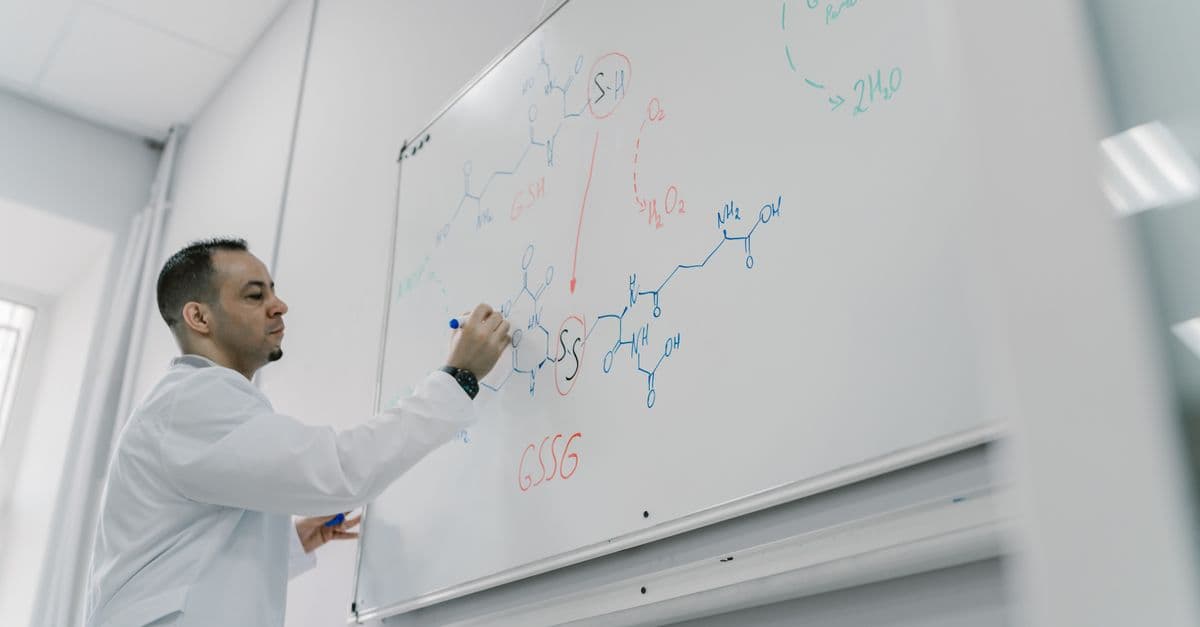
The LIGO Gravitational Wave Detection: GW150914 Explained
On September 14, 2015, LIGO detected a ripple in spacetime from two merging black holes a billion light-years away. Here is how the instrument works and what it measured.
Scientists
Hans Bethe: The Physicist Who Explained Why Stars Shine — SciHub101
Hans Bethe discovered the CNO cycle that powers stars, led Manhattan Project theory, won the 1967 Nobel Prize, and spent 70 years at Cornell advocating against nuclear weapons. He lived to 98.
Scientists
Jocelyn Bell Burnell: The Astronomer Who Found Pulsars
Jocelyn Bell Burnell discovered pulsars in 1967 as a PhD student. Her Nobel Prize snub became science's most debated injustice. Here is the full story.
Space
Black Holes Explained: From Formation to Hawking Radiation
Black holes explained: how they form from stellar collapse, what happens at the event horizon, why Hawking radiation matters, and what the information paradox means for physics.
Page 1 of 3Next →