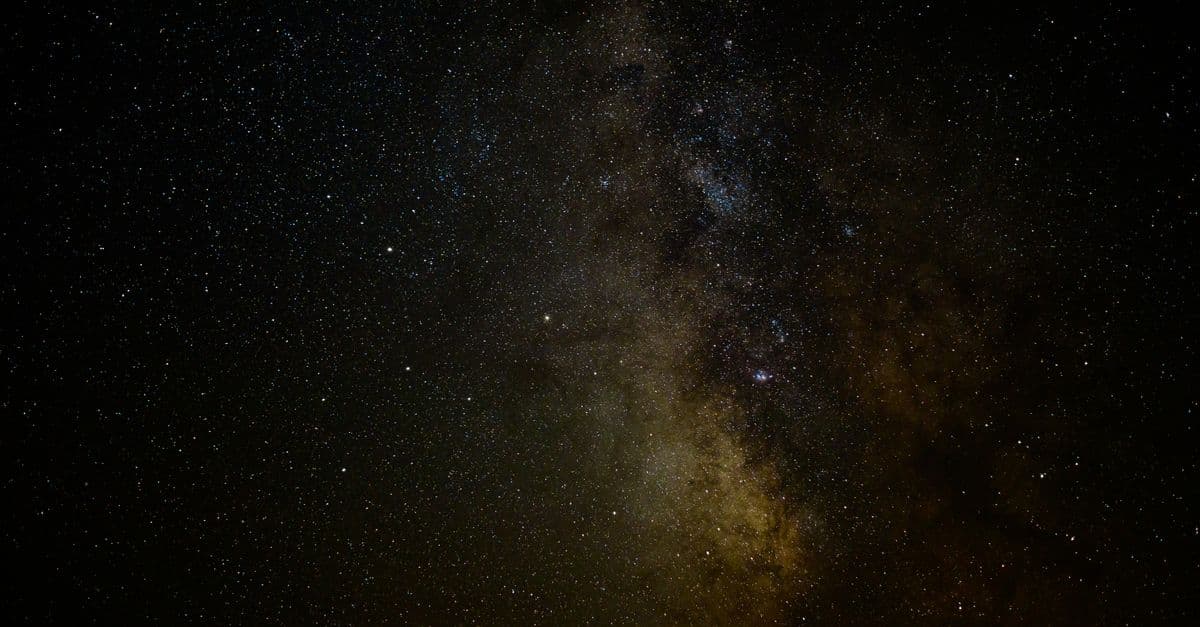
Sagittarius A*: The Black Hole at the Heart of the Milky Way
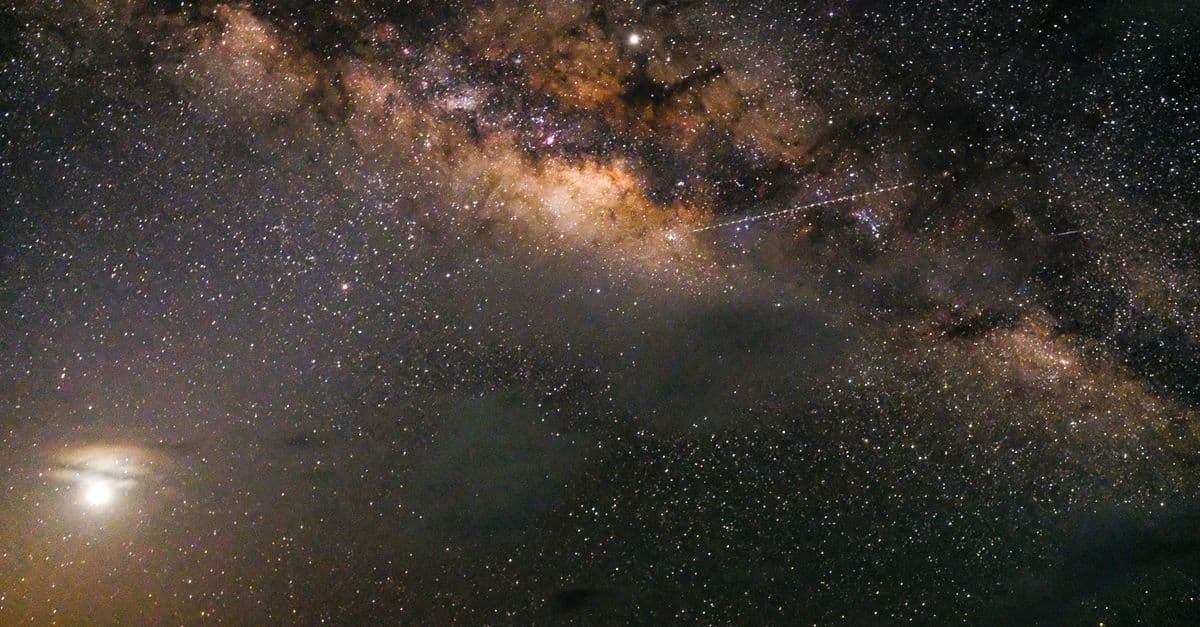
Photo: Jobert Enamno / Pexels
Every star in the Milky Way, including our Sun, orbits a single point at the galaxy's center. At that point sits an object 4 million times the mass of the Sun, compressed into a region smaller than the distance between Earth and Uranus. It has been photographed once. Stars have been observed completing full orbits around it. One of those stars passed within 120 astronomical units of it at 3% of the speed of light, and general relativity bent its spectrum measurably as it did so.
The Source Called Sagittarius A*
Sagittarius A* (pronounced "Sagittarius A star," abbreviated Sgr A*) was first detected in 1974 by radio astronomers Bruce Balick and Robert Brown using the Green Bank Interferometer in West Virginia. They found an unusually compact, bright radio source in the direction of the galactic center that did not match any known stellar object. The asterisk in its name follows the spectroscopic convention for a special or excited state — here it marks the source as anomalously bright.
For the following decade, the main debate was about what Sgr A* actually was. A dense star cluster, a supernova. About 20 km wide but containing more mass than the Sun.">neutron star, or a black hole were all proposed. The problem was observational: the galactic center lies behind roughly 25 magnitudes of visible-light extinction — dense clouds of gas and dust that block optical telescopes entirely. Infrared and radio observations could penetrate the dust, but technology at the time lacked the resolution to see individual stars moving near the source.
Source: Balick & Brown, Astrophysical Journal Letters (1974) — First detection of Sgr A* as a compact nonthermal radio source at the galactic center.
By the late 1980s, infrared detectors had improved enough that two groups began tracking individual stars in the central parsec of the Milky Way: Andrea Ghez's team at UCLA using the Keck Observatory in Hawaii, and Reinhard Genzel's team at the Max Planck Institute for Extraterrestrial Physics using the VLT in Chile. Both groups started what would become a 30-year continuous surveillance of the stars orbiting Sgr A*.
Thirty Years of Stellar Orbit Tracking
The logic of the stellar orbit measurements is beautifully simple in principle, even if technically ferocious to execute. If you can track the positions of stars orbiting an unseen massive object over years or decades, you can recover the object's mass and location with the same mathematics Kepler used for planets orbiting the Sun.
The central parsec around Sgr A* — roughly 3.26 light-years — contains what astronomers call the S-cluster: a dense collection of young, hot, massive stars orbiting in tightly wound ellipses at implausibly high velocities. These are S-stars, designated S1, S2, S12, and so on.
S2 (also called S0-2 in Ghez's notation) became the key probe. It orbits Sgr A* with a period of approximately 16 years and a closest approach distance of about 120 AU — roughly three times the distance from the Sun to Pluto. At closest approach, S2 reaches an orbital velocity of about 7,650 km/s, or roughly 2.55% of the speed of light.
The tracking itself required adaptive optics — a technology that corrects in real time for atmospheric turbulence by measuring wavefront distortions thousands of times per second and applying compensating deformations to a deformable mirror. Without adaptive optics, ground-based infrared images of the galactic center smear stellar positions into uselessness. With it, positions can be measured to milliarcsseconds — a resolution at which individual stars near Sgr A* become distinguishable from each other.
Source: Schödel et al., Nature (2002) — First detection of a complete orbital arc of S2 around Sgr A*, constraining the central mass to approximately 3.7 × 10⁶ solar masses in a volume smaller than our solar system.
By tracking S2 and a dozen other S-stars through multiple orbital periods, both teams independently converged on the same number: the mass enclosed within the S2 orbit is 4.1 million solar masses. And since S2's orbit demonstrated that this mass was confined to a region smaller than 125 AU, no known collection of non-black-hole objects — not stars, not neutron stars, not anything — could be packed that densely without collapsing into a black hole. The case became watertight.
The 2020 Nobel Prize in Physics was awarded half to Reinhard Genzel and Andrea Ghez "for the discovery of a supermassive compact object at the centre of our galaxy" and half to Roger Penrose for his theoretical work on black hole formation.
S2's 2018 Closest Approach and Einstein's Test
The 2018 periapsis passage of S2 — its closest approach to Sgr A* — was the most anticipated single observational event in galactic center astronomy for over a decade. It offered something the teams had never had before: a chance to measure relativistic effects directly in the orbital motion and spectra of a star orbiting the black hole at measurable relativistic speed.
Two effects were predicted and both were detected. The first is the classical gravitational redshift: photons climbing out of a deep gravitational well lose energy, shifting to longer wavelengths. As S2 passed its closest point, its spectral lines shifted by precisely the amount predicted by general relativity given the local gravitational field.
The second effect is called the Schwarzschild precession — the slow rotation of an elliptical orbit's major axis, the same effect seen in Mercury's orbit around the Sun but far more pronounced near Sgr A*. S2's orbit precesses by about 12 arcminutes per orbit, entirely consistent with general relativity and irreconcilable with Newtonian gravity alone.
Source: Gravity Collaboration, Astronomy & Astrophysics (2018) — Detection of gravitational redshift and post-Newtonian orbital precession in S2's 2018 periapsis passage around Sgr A*, confirming GR in a strong-field regime.
This was not merely a confirmation of something everyone already knew. The S2 results test general relativity in a gravitational field roughly 1,000 times stronger than any other precision test previously conducted. If any deviation from GR existed — predicted by some alternative theories of gravity — it would have been detectable here. None was found.
The 2022 Event Horizon Telescope Image
By May 2022, the Event Horizon Telescope collaboration had already released its iconic image of M87* — the 6.5-billion-solar-mass black hole in the galaxy Messier 87, 55 million light-years away. Sgr A* was actually the harder target.
The challenge was not distance or size. The angular diameter of Sgr A*'s event horizon as seen from Earth is about 50 microarcseconds — essentially the same as M87*'s shadow (42 microarcseconds), because Sgr A* is closer despite being far less massive. The challenge was Sgr A*'s turbulence.
Interstellar scattering — the blurring of radio waves by ionized plasma between Earth and the galactic center — degrades resolution at the wavelengths EHT uses. And unlike M87*, where a single VLBI observation is essentially a snapshot of a static target, Sgr A* varies on timescales of minutes. The gas swirling around Sgr A* completes an orbit in the time it takes to photograph it. This variability meant that every 7-hour observing epoch captured a slightly different physical state, forcing the EHT team to develop new imaging algorithms that could recover a mean image from a rapidly evolving source.
The resulting image, released on May 12, 2022, shows a fuzzy ring of glowing gas roughly 50 microarcseconds in diameter, with a dark central region — the black hole's shadow. The ring is clumpy rather than perfectly smooth, because EHT's reconstruction averages over many bright-spot configurations that rotate and flicker as gas orbits the black hole.
Source: Event Horizon Telescope Collaboration, Astrophysical Journal Letters (2022) — First image of Sgr A* obtained from April 2017 VLBI observations, revealing a ring structure consistent with a Kerr black hole of ~4 × 10⁶ solar masses.
The Schwarzschild radius of Sgr A* — the radius of its event horizon — is about 12.4 million km, roughly 0.08 AU, or about 18 times the radius of the Sun. The entire region whose gravity is inescapable fits comfortably inside a moderate solar system.
Sgr A* Flares: When the Quiet Giant Wakes
Most of the time, Sgr A* is remarkably dim for its mass. A typical stellar-mass black hole accreting at full capacity would radiate at its Eddington luminosity — the theoretical maximum where radiation pressure balances gravity. Sgr A* accretes gas at far below that rate, making it what astronomers call a "low-luminosity AGN" (active galactic nucleus) — or, colloquially, a gentle giant.
But Sgr A* is not completely quiescent. It produces X-ray and infrared flares roughly once per day, in which its luminosity spikes by factors of 10–100 over background levels for periods of tens of minutes. The flares are detected primarily with Chandra X-ray Observatory and the GRAVITY interferometer at the VLT.
Several mechanisms have been proposed for the flares. The leading candidate is magnetic reconnection — the same process that drives solar flares on the Sun — in which oppositely directed magnetic field lines snap and reconnect, releasing stored magnetic energy as particle kinetic energy and radiation. Another candidate is episodic accretion: clumps of gas falling onto the black hole and releasing gravitational potential energy as heat and light.
In 2018, the GRAVITY instrument detected bright "hotspots" near Sgr A* moving at 30% of the speed of light in circular arcs consistent with the innermost stable circular orbit of the black hole, providing the most direct evidence yet for the dynamics of the accretion zone.
Source: Gravity Collaboration, Astronomy & Astrophysics (2018b) — Detection of near-infrared flares from gas orbiting Sgr A* at the innermost stable circular orbit, reaching velocities of ~0.3c.
Comparing Sgr A* to M87* and Other Supermassive Black Holes
Sgr A* tends to generate more public recognition than M87*, largely because it is our own galaxy's black hole. But in the spectrum of supermassive black holes, it sits at the quiet, modest end.
| Property | Sgr A* (Milky Way) | M87* (Messier 87) | TON 618 (quasar) |
|---|---|---|---|
| Mass (solar masses) | ~4.1 × 10⁶ | ~6.5 × 10⁹ | ~6.6 × 10¹⁰ |
| Schwarzschild radius | ~12.4 million km | ~19.9 billion km | ~195 billion km |
| Distance from Earth | ~26,000 ly | ~55 million ly | ~10.4 billion ly |
| Accretion luminosity | Very low | Moderate (jet) | Extremely high (quasar) |
| First imaged | 2022 | 2019 | Not directly imaged |
M87*'s enormous accretion disk powers a relativistic jet extending 5,000 light-years from the galaxy's nucleus — a structure Sgr A* completely lacks. Andromeda's central black hole, sometimes called M31*, is intermediate at roughly 100 million solar masses and also relatively inactive.
Quasars are essentially the extreme high end of this sequence: supermassive black holes accreting at near-maximum efficiency, outshining their entire host galaxies. TON 618, one of the most massive known black holes at 66 billion solar masses, radiates as a quasar roughly 140 trillion times as luminous as the Sun. Sgr A* at its flare peak is roughly 2 × 10³⁶ watts — about 500,000 solar luminosities. The comparison illustrates how suppressed Sgr A*'s activity currently is.
The Fermi Bubbles: Evidence of a More Active Past
There is strong evidence that Sgr A* was far more active in the geologically recent past. In 2010, NASA's Fermi Gamma-ray Space Telescope discovered two enormous lobes of gamma-ray emission extending above and below the galactic plane, each roughly 25,000 light-years tall. These are called the Fermi Bubbles.
The energy required to inflate the Fermi Bubbles is estimated at roughly 10⁵⁴ to 10⁵⁵ joules — equivalent to millions of supernova explosions, or a sustained luminous output from Sgr A* at near-Eddington rates for several million years, ending roughly 6–9 million years ago.
More recent analysis of X-ray observations by XMM-Newton identified a related structure: the eROSITA Bubbles, even larger structures extending 45,000 light-years above and below the galactic plane, possibly related to an earlier, even more powerful outburst.
X-ray reflection echoes from molecular clouds near the galactic center provide further evidence. When a bright X-ray source illuminates a gas cloud, the cloud reflects and fluoresces. Variability in this fluorescence arriving at Earth from different distances encodes the light travel time — and thus when the illuminating event occurred. The inferred eruption happened roughly 300 years ago, producing a brief burst of X-ray luminosity about one million times higher than Sgr A*'s current level.
Source: Su, Slatyer, & Finkbeiner, Astrophysical Journal (2010) — Discovery of the Fermi Bubbles as gigantic gamma-ray lobes above and below the galactic plane, implying a prior energetic episode from the galactic center.
What Sgr A* Means for Life on Earth
The question occasionally arises: does a supermassive black hole at the galaxy's center pose any risk to Earth? The answer is no, for simple reasons of scale and energy. At 26,000 light-years, Sgr A* exerts a gravitational influence on the Sun of about 0.2% of that from the galactic disk as a whole. Its tidal force at Earth's distance is utterly negligible.
Even during a hypothetical major accretion event comparable to a quasar, the radiation at Earth's distance would be far below lethal thresholds. For comparison, gamma-ray bursts from neutron star mergers closer to the galactic center are the more plausible — though still low-probability — radiation hazard.
Sgr A*'s primary scientific value is as a laboratory. It is the only supermassive black hole close enough to resolve individual stellar orbits, test general relativity in strong-field regimes, and observe the plasma dynamics of the accretion region with sub-orbital-period time resolution. No other black hole comes close to offering that combination of mass, proximity, and observational accessibility.
As gravitational wave observatories improve — particularly space-based detectors like LISA, scheduled for launch in the 2030s — Sgr A* is expected to be a major source of low-frequency gravitational waves as small compact objects slowly inspiral into it.
Key takeaways
- Sgr A* was first detected by radio in 1974 and identified as a black hole through three decades of stellar orbit measurements by Ghez and Genzel, which earned the 2020 Nobel Prize.
- S2's 2018 periapsis confirmed both gravitational redshift and Schwarzschild precession, testing general relativity in a field 1,000 times stronger than any prior test.
- The Event Horizon Telescope produced the first image of Sgr A* in 2022, showing a 50-microarcsecond ring of glowing gas.
- Sgr A* is extremely quiescent today but the Fermi Bubbles suggest it was dramatically more active several million years ago.
- At 26,000 light-years, Sgr A* poses no physical threat to Earth and serves primarily as an unmatched natural laboratory for extreme physics.
Frequently Asked Questions
Q: How do we know Sgr A is a black hole and not just a very dense cluster of stars?*
A: S2's orbital data confine 4.1 million solar masses to a region smaller than 125 AU across. Any stable configuration of non-degenerate objects — stars, neutron stars, white dwarfs — at that density would collapse gravitationally within years. Only a black hole is consistent with the observed combination of mass, compactness, and long-term stability.
Q: What does the asterisk in Sgr A mean?*
A: The asterisk is a spectroscopic notation for an excited or unusual state, similar to how chemists denote excited atomic states with an asterisk. Bruce Balick and Robert Brown applied it to mark the source as anomalously bright and compact relative to other radio sources in the region. It is not a footnote.
Q: Why was the EHT image of Sgr A harder to make than the M87 image?**
A: Two reasons. First, interstellar scattering blurs Sgr A* more at EHT wavelengths because it lies behind denser intervening plasma. Second, Sgr A*'s orbital timescale near the event horizon is minutes, not days, so the source changes shape during a single observing session. New imaging algorithms were required to average over this variability.
Q: Could Sgr A become a quasar in the future?*
A: Possibly, if a large gas cloud or the merger with Andromeda galaxy in roughly 4.5 billion years delivers substantial new material to the galactic center. Current models predict that the Milky Way-Andromeda merger could trigger renewed activity in Sgr A*. Whether it reaches quasar luminosity depends on the mass infall rate, which is uncertain.
Q: What are the S-stars, and why are they young?
A: The S-stars are a cluster of hot, blue O- and B-type stars orbiting within a few tenths of a parsec of Sgr A*. They appear young — most estimated at a few million years old — which is puzzling because the tidal forces near Sgr A* should tear apart the gas clouds from which stars form. This is called the "paradox of youth." Leading explanations involve stars forming farther out and migrating inward, or forming in a particularly dense infalling gas disk.
Q: How heavy would Sgr A have to get to affect Earth's orbit?*
A: Sgr A* would need to increase its mass by a factor of roughly 500 — to about 2 trillion solar masses — to become gravitationally dominant over the local galactic disk for objects at Earth's galactocentric distance. There is no mechanism by which this could occur.
Read next:
Weekly digest
Stay ahead of the curve
Get the best science, AI, and tech stories delivered to your inbox every week. No spam — unsubscribe any time.
About the Author
SciHub101 is an independent science and technology publication founded and edited by Buğra Sözeri, a software engineer and app developer based in Türkiye. Articles are drafted against peer-reviewed literature and primary sources, fact-checked, and edited by a human before publication. Where we compare products, anything built by our own team is labelled as such — see the editorial guidelines and About page for how corrections and disclosures work.
Related Articles
Solar Maximum 2025: How Solar Cycle 25 Outran Every Prediction
In May 2024, auroras appeared over Florida, the Yucatán Peninsula, and Puerto Rico. Northern lights were photographed from latitudes that had not seen them in decades — triggered by the strongest geomagnetic storm since March 1989. The storm was rated G5, the maximum on NOAA's five-point geomagnetic disturbance scale. Solar Cycle 25, which government forecasters had predicted would be 'average,' had quietly become one of the most active solar cycles in a century — and the official models did not see it coming until it was already happening.
Pluto's Extreme Seasons: How a Dwarf Planet's Atmosphere Grows and Disappears
Pluto has an atmosphere. In 2015, New Horizons measured its surface pressure at about 1 Pascal — roughly 1/100,000th of Earth's at sea level. That atmosphere is not stable. Over Pluto's 248-year orbit, it inflates and then freezes entirely out onto the surface, cycling between a thin gaseous envelope and nothing at all. We arrived just in time to see it while it still existed.
Stellar vs. Supermassive Black Holes: The Mass Gap Mystery
Black holes come in sizes that span 10 orders of magnitude, from a few solar masses to tens of billions — but the range between roughly 65 and a few hundred solar masses appears nearly empty. A 2020 gravitational wave event punched straight through that forbidden zone, and nobody fully agrees on how.
What Are Quasars — The Brightest Objects in the Universe?
Quasars outshine entire galaxies from a region smaller than the solar system. They powered the early universe, shaped galaxy formation, and are now our most powerful probes of cosmic history. Here's what they actually are.
How Black Holes Form — and What Happens Inside Them
A black hole is a region of space where gravity is so strong that nothing — not even light — can escape. They range from the mass of a mountain to billions of suns. Here's the physics of how they form, what the event horizon actually is, and what falling in would look like.