Neutron Stars: The Most Extreme Objects in the Universe
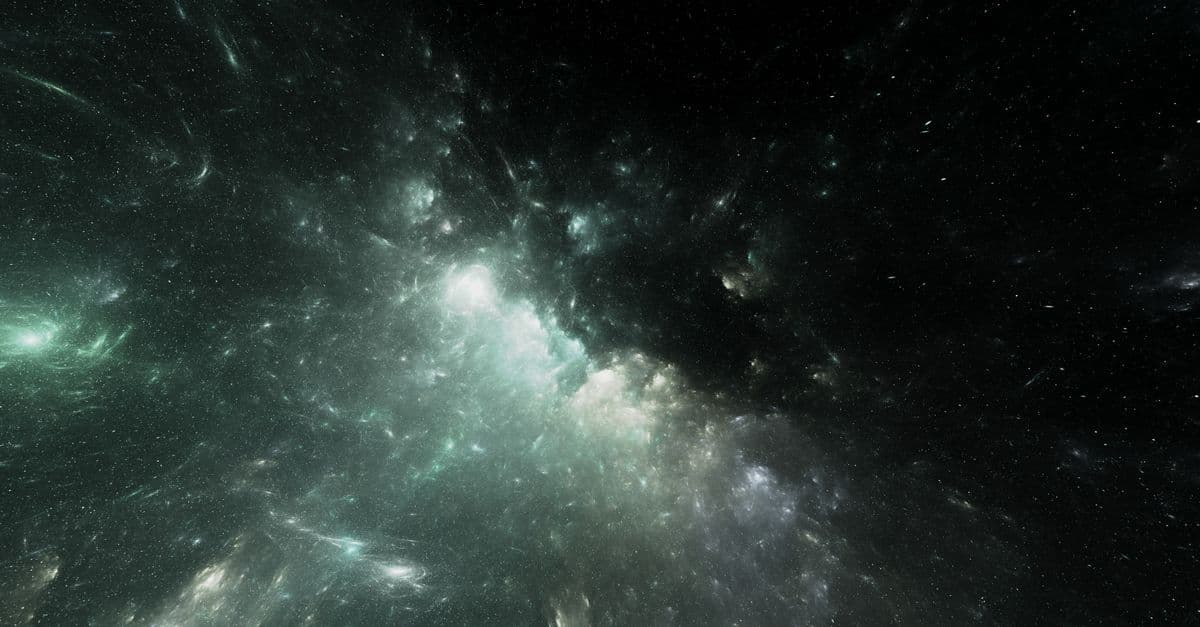
Photo: Marek Pavlík / Pexels
In the core of the globular cluster Terzan 5 there is a dead star that turns on its axis 716 times every second. It holds more mass than the Sun, yet it is only about as wide as a large city. Its matter is packed as tightly as the inside of an atomic nucleus, and its magnetic field is far stronger than anything humans can build. This is a supernova. About 20 km wide but containing more mass than the Sun.">neutron star, and by almost any measure it is the most extreme stable object we can observe directly.
Black holes are denser in a formal sense, but they hide their interiors behind an event horizon. Neutron stars do not. They have surfaces, crusts, atmospheres, magnetic fields and measurable radii, so astronomers can actually study what matter does when it is crushed to the limit. That is why a single class of object ties together supernova physics, nuclear physics, general relativity and the origin of the gold in your jewellery.
Key takeaways
- Neutron stars are the collapsed cores of stars that began life with roughly eight or more times the Sun's mass and ended in a core-collapse supernova.
- A typical neutron star holds about 1.2 to 2 solar masses in a sphere with a radius of roughly 12 to 13 kilometres, according to X-ray measurements from NASA's NICER telescope.
- A teaspoon of neutron star matter would weigh on the order of a billion tons on Earth.
- Pulsars are rotating neutron stars whose beams sweep past Earth; the fastest known spins 716 times per second.
- Magnetars carry the strongest magnetic fields known, up to about a quadrillion times Earth's, and produce giant flares and at least some fast radio bursts.
- The 2017 merger GW170817 showed that colliding neutron stars make heavy elements through the r-process.
- The maximum mass of a neutron star and the state of matter in its core are still unsolved problems.
How a neutron star is born
Every neutron star starts as an ordinary massive star, roughly eight or more times the mass of the Sun. For millions of years, fusion in the core turns hydrogen into helium, helium into carbon and oxygen, and so on up the periodic table, with each stage burning faster than the last. The heat from fusion produces the outward pressure that holds the star up against its own gravity. You can follow the full life cycle in our guide to what happens when a star dies.
The crisis arrives at iron. Fusing iron consumes energy instead of releasing it, so once the core is mostly iron, nothing new is produced to support it. The inert iron core grows until it can no longer be held up by electron degeneracy pressure, the quantum effect that supports white dwarfs. The limit for that support is the Chandrasekhar mass, about 1.4 solar masses.
When the core crosses that line, it collapses in a fraction of a second. An object roughly the size of Earth falls inward to a ball only tens of kilometres across. As the density climbs, electrons are forced into protons, turning them into neutrons and releasing neutrinos. Atomic nuclei dissolve into a dense fluid made mostly of neutrons.
Collapse stops abruptly when the core reaches nuclear density. At that point the strong nuclear force becomes repulsive at very short range, and neutrons, being fermions, resist being squeezed into the same quantum states. Together these effects, called neutron degeneracy pressure plus nuclear repulsion, make the core stiff. The infalling material hits this hard centre and rebounds, sending a shock wave outward.
Why neutrinos matter
The rebound shock on its own is not strong enough to blow the star apart. It stalls as it loses energy breaking up the nuclei falling through it. What revives it, in the leading explanation, is the enormous flood of neutrinos pouring out of the hot, newborn neutron star. Neutrinos barely interact with matter, but there are so many of them that even a small fraction absorbed behind the shock heats the gas enough to restart the explosion. This "delayed neutrino mechanism" was proposed by James Wilson and developed with Hans Bethe in the mid-1980s, and modern three-dimensional simulations broadly support it.
Most of the energy released in the collapse leaves as neutrinos, not light. Astronomers confirmed this in 1987, when detectors in Japan and the United States caught a short burst of neutrinos from Supernova 1987A in the Large Magellanic Cloud, hours before the explosion became visible. The visible supernova, which in brighter cases can rival the light of an entire galaxy, is the smaller part of the energy budget. Our explainer on supernova types covers how core collapse differs from the thermonuclear explosions of white dwarfs.
What decides between a neutron star and a black hole
What is left behind depends mainly on how much mass ends up in the collapsed core. If the remnant stays below the maximum mass that neutron matter can support, the result is a neutron star. If more material falls back onto the core and pushes it over that limit, it collapses further into a black hole. The boundary is not sharp in terms of the original star's mass, because rotation, metallicity, mass loss and the details of the explosion all change how much material the core keeps. For the other branch, see how stellar black holes compare with supermassive ones.
How big and how heavy is a neutron star?
Radius: about 12 to 13 kilometres
For decades, neutron star radii were estimated from theory rather than measured. That changed with NASA's Neutron star Interior Composition Explorer (NICER), an X-ray telescope mounted on the International Space Station. NICER watches hot spots on the surfaces of rotating neutron stars. Because a neutron star's gravity bends light so strongly, the shape of the X-ray pulse depends on how compact the star is, and modelling that shape gives both mass and radius.
The results so far:
- PSR J0030+0451: an equatorial radius of about 13.0 km (+1.2/−1.1 km) and a mass of about 1.44 solar masses, according to Miller and colleagues in The Astrophysical Journal Letters (2019). An independent analysis by Riley and colleagues, using different hot-spot models, reached consistent values.
- PSR J0740+6620: a radius of 13.7 km (+2.6/−1.5 km) in the 2021 analysis by Miller and colleagues using NICER and ESA's XMM-Newton data. A 2024 reanalysis with about 3.6 years of NICER data gave roughly 12.5 km (+1.3/−0.9 km). The two values overlap within their uncertainties.
So a typical neutron star is roughly 24 to 26 kilometres across, about the size of a city. The uncertainties of a kilometre or more matter, as the section on the equation of state explains.
Mass: from about 1.2 to just over 2 solar masses
Masses are easier to pin down than radii, because many neutron stars orbit companions. When a pulsar's signal passes close to its companion, general relativity delays it slightly, an effect called the Shapiro delay. Measuring that delay gives the masses of both bodies with high precision.
The heaviest well-measured examples are:
| Neutron star | Measured mass (solar masses) | Method and source |
|---|---|---|
| PSR J1614−2230 | 1.908 ± 0.016 | Shapiro delay; first reported as 1.97 by Demorest et al. (2010), revised in 2018 with more timing data |
| PSR J0348+0432 | 2.01 ± 0.04 | Spectroscopy of its white dwarf companion; Antoniadis et al. (2013) |
| PSR J0740+6620 | 2.08 ± 0.07 | Shapiro delay from NANOGrav and CHIME timing; Fonseca et al. (2021) |
| GW190814 secondary | about 2.6 | Gravitational waves; LIGO/Virgo (2020). Could be a heavy neutron star or a light black hole |
PSR J0740+6620 remains the heaviest neutron star with a reliably determined mass. The 2.6-solar-mass object in GW190814 is the interesting edge case. The LIGO and Virgo collaborations described it as either the lightest black hole or the heaviest neutron star yet seen in a compact binary, and the data cannot tell which.
The maximum mass: the TOV limit
The heaviest a neutron star can be before collapsing into a black hole is called the Tolman–Oppenheimer–Volkoff (TOV) limit, after the physicists who first calculated it in 1939. It plays the same role for neutron stars that the Chandrasekhar limit plays for white dwarfs.
The difference is that the Chandrasekhar limit follows from fairly well-understood physics of electrons, while the TOV limit depends on how nuclear matter behaves at densities nobody can recreate. That makes it genuinely uncertain. The observed 2.08-solar-mass pulsar sets a floor, because the limit cannot be lower than a star we have actually measured. Most current estimates put the limit somewhere between about 2 and 3 solar masses, and many studies cluster in the lower part of that range. A fast-spinning neutron star can temporarily support somewhat more mass than a non-rotating one.
Just how extreme is neutron star density?
Numbers alone struggle to convey it, so consider a few comparisons. Earth's average density is about 5.5 grams per cubic centimetre. A white dwarf, already remarkably compact, packs a Sun's worth of mass into something about the size of Earth. A neutron star squeezes the same mass into a ball a few dozen kilometres wide.
The result is that the average density of a neutron star is comparable to the density inside an atomic nucleus, on the order of 10^17 kilograms per cubic metre. At that point atoms as we know them no longer exist. The star behaves less like a collection of atoms and more like a single nucleus the size of a city, held together by gravity instead of the strong force.
A popular way to express this is the teaspoon test. Astronomy magazine and Science News both put the weight of a teaspoon of neutron star matter at roughly a billion tons on Earth. Other published estimates run a few times higher, depending on which layer of the star you scoop from and how big you assume a teaspoon is, but the order of magnitude is the point: a spoonful outweighs a mountain range.
Gravity at the surface is correspondingly brutal. NASA and Chandra X-ray Center materials give estimates ranging from about a hundred billion to far more times Earth's surface gravity, depending on the mass and radius assumed. Whichever figure you use, the escape velocity is a large fraction of the speed of light, and light leaving the surface is bent so strongly that an observer can see part of the far side of the star. The same light-bending effect works on cosmic scales; see how gravitational lensing magnifies galaxies.
Inside a neutron star: layers of exotic matter
A neutron star is not a uniform ball of neutrons. Theory predicts distinct layers whose density rises sharply with depth. The outer layers are reasonably well understood; the core is not.
The atmosphere and outer crust
The outermost skin is a thin atmosphere, possibly only centimetres thick, of hot plasma. Below it lies the outer crust, a solid lattice of atomic nuclei, mostly iron and similar elements near the surface, soaked in a sea of free electrons. It is a few hundred metres thick. Going deeper, the nuclei become increasingly rich in neutrons, because the crushing pressure makes it energetically favourable for protons to convert. Eventually the nuclei hold so many neutrons that some begin to leak out. Physicists call this boundary the neutron drip point.
The inner crust and nuclear pasta
Below the drip point, the inner crust is a mix of neutron-rich nuclei, free neutrons and electrons. The free neutrons are expected to form a superfluid, a quantum state that flows without friction.
Near the base of the inner crust, the competition between the strong force pulling nucleons together and the electric repulsion between protons is predicted to reshape the nuclei. Instead of round blobs, they stretch into rods, then flat sheets, then sheets riddled with tubes and bubbles. Physicists nicknamed these shapes "nuclear pasta": gnocchi, spaghetti, lasagna.
In 2018, Matthew Caplan, André Schneider and Charles Horowitz ran large computer simulations of nuclear pasta containing more than three million protons and neutrons, published in Physical Review Letters. They concluded that it may be the strongest known material, able to resist enormous shear before breaking. Press coverage of the work described it as roughly ten billion times stronger than steel. That strength matters because it sets how tall "mountains" on a neutron star's crust can grow, and such mountains on a spinning star would emit continuous gravitational waves.
The outer core
Beneath the crust, the nuclei dissolve completely. The outer core is a fluid of mostly neutrons, with a few percent of protons and electrons that keep the matter electrically neutral. The neutrons are expected to be superfluid and the protons superconducting, which makes the interior of a neutron star one of the largest quantum systems in nature.
The inner core: the great unknown
The innermost region, a few kilometres across in heavier stars, reaches several times nuclear density. No experiment has probed matter there, and theorists disagree about what it is. The main candidates are:
- Ordinary nucleons all the way down. Neutrons and protons, squeezed ever harder.
- Hyperons. Particles that contain strange quarks, which could appear when the neutrons have enough energy. Hyperons would make the matter softer and easier to compress, which tends to lower the maximum mass. The existence of 2-solar-mass neutron stars makes this awkward, a tension known as the "hyperon puzzle."
- Deconfined quark matter. At high enough density, quarks might no longer be locked inside neutrons and protons, forming a soup of quarks, possibly in a "colour superconducting" state.
- Strange quark matter. A proposal by Arnold Bodmer and Edward Witten holds that matter made of up, down and strange quarks might be the true lowest-energy state of matter. If so, some "neutron stars" could actually be strange quark stars. This remains a hypothesis without confirmed evidence.
The equation of state: the central open question
All of these possibilities are summed up in one relationship: the equation of state, which says how much pressure neutron star matter pushes back with at a given density. A "stiff" equation of state pushes back hard, producing larger stars and a higher maximum mass. A "soft" one compresses more easily, giving smaller stars and a lower maximum mass.
Each candidate equation of state predicts a specific curve linking mass to radius. Measuring both the mass and radius of the same star puts a point on that chart, and every point rules out curves that miss it. That is why NICER's measurements are so valuable. Taken together with the mass measurements above, they favour moderately stiff equations of state and rule out the most extreme models in both directions. A 2021 NICER analysis reported that, combining the available data, the radius of a 1.4-solar-mass neutron star is now known to within about 4 percent.
Gravitational waves offer a third handle. As two neutron stars spiral together, each one is stretched by the other's gravity. How much they stretch, called tidal deformability, depends on how compressible they are, and it leaves a mark on the gravitational wave signal. The 2017 merger GW170817 provided the first such constraint, which ruled out the stiffest equations of state and agreed with the later NICER radii.
Pulsars: neutron stars as cosmic lighthouses
When the collapsing core shrinks, two things it inherited from the parent star are concentrated dramatically. Conservation of angular momentum spins it up, just as a figure skater spins faster when pulling in her arms. Conservation of magnetic flux squeezes the existing magnetic field into a far smaller area, making it vastly stronger. A newborn neutron star therefore tends to spin quickly and carry an intense magnetic field.
If the magnetic axis is tilted relative to the rotation axis, which is common, charged particles accelerated along the magnetic poles produce beams of radiation. As the star turns, those beams sweep around the sky. If one crosses Earth on each rotation, we see a regular pulse of radio waves, X-rays or gamma rays. This is a pulsar.
The discovery
The first pulsar was found in 1967 by Jocelyn Bell, then a graduate student at Cambridge, working with Antony Hewish. The signal repeated every 1.3 seconds or so with such regularity that the team half-jokingly labelled it "LGM-1," for Little Green Men. Further pulsars soon ruled out an artificial origin, and the link to rotating neutron stars was established within about a year. Hewish shared the 1974 Nobel Prize in Physics for the work; Bell's omission is still widely discussed. Thousands of pulsars have been catalogued since. For a dedicated walkthrough, see what pulsars are and how they work.
Spin-down, glitches and death
A pulsar's beams carry away rotational energy, so ordinary pulsars slowly lose speed. Astronomers measure both the period and how fast it lengthens, and plot pulsars on a chart of period against slow-down rate. That chart separates young pulsars, old pulsars and millisecond pulsars, and it shows a "death line" beyond which a pulsar spins too slowly to keep producing radio beams.
Every so often a pulsar does the opposite: it suddenly speeds up a tiny amount, an event called a glitch. The leading explanation involves the superfluid in the inner crust. That superfluid does not slow down with the solid crust, so it gradually ends up rotating faster. When the stress builds high enough, the superfluid suddenly couples to the crust and hands over some of its angular momentum, spinning the crust up. Glitches are therefore indirect evidence that a superfluid really exists inside neutron stars.
Millisecond pulsars
Some old neutron stars in binary systems are "recycled." Matter flowing from a companion star onto the neutron star spins it up to hundreds of rotations per second. The record holder is PSR J1748−2446ad in the globular cluster Terzan 5, discovered by Jason Hessels and colleagues using the Green Bank Telescope and reported in Science in 2006. It spins at 716 hertz, beating the previous record of 642 hertz held by PSR B1937+21. At a radius of about 12 km, the equator of a star spinning that fast would move at roughly a fifth of the speed of light. The rapid spin also constrains its size: Hessels's team noted that if its mass is below 2 solar masses, its radius must be under 16 km or it would fly apart.
Millisecond pulsars are among the most stable clocks in nature, which makes them precise tools. Our article on how pulsars keep such accurate time goes into the details.
Pulsar timing arrays
That stability lets astronomers use the galaxy as a detector. A passing gravitational wave stretches and squeezes space between Earth and each pulsar, shifting pulse arrival times by tens to hundreds of nanoseconds in a characteristic pattern across the sky. In June 2023, the NANOGrav collaboration reported evidence for a background of low-frequency gravitational waves using 15 years of timing data from 68 millisecond pulsars, with similar results from teams in Europe, Australia and China. The likely source is the combined signal of supermassive black hole pairs across the universe.
Magnetars: the most magnetic objects known
Ordinary pulsars already have extraordinarily strong magnetic fields. A small subgroup, the magnetars, goes further. According to the Chandra X-ray Center, neutron stars produce the strongest magnetic fields known, reaching up to about a quadrillion (10^15) times the strength of Earth's field. In magnetars, the magnetic field is not a side effect: it is the main power source, driving their X-ray emission and violent outbursts.
Fields that strong do strange things. They distort atoms into thin cylinders aligned with the field, and quantum effects make the vacuum itself behave like an optical material that can split and bend light. The most likely origin is a dynamo operating in the hot, churning, rapidly spinning proto-neutron star in the first seconds after the supernova.
Magnetars are rare. The McGill Magnetar Catalog, maintained by Victoria Kaspi's group, listed 26 objects in its 2014 version and around 31 in later updates, about six of them unconfirmed candidates. Because their fields decay over thousands of years, magnetars may simply be a short-lived phase that many young neutron stars pass through.
Historically, magnetars were found in two guises: soft gamma repeaters, which emit repeated bursts of gamma rays and X-rays, and anomalous X-ray pulsars, which shine in X-rays more brightly than their spin-down alone can explain. Both are now understood as magnetars. Our companion piece on dense matter and cosmic mergers covers neutron star subtypes from another angle.
Starquakes and giant flares
As a magnetar's field shifts, it puts the solid crust under stress. When the crust gives way, a starquake rearranges the field and releases a burst of high-energy radiation. Most bursts are short, a fraction of a second. Very rarely, a magnetar produces a giant flare.
The most powerful one on record came from SGR 1806−20 on 27 December 2004. According to analyses of data from the Konus-Wind spacecraft and ESA's INTEGRAL observatory, the flare released about 2 × 10^46 ergs, roughly 100 times more than the two giant flares seen before it, even though the source lies on the far side of the Milky Way. For about 0.2 seconds it was brighter, in gamma rays, than the full Moon, and NASA reported it as the highest flux of gamma rays ever measured from a celestial object.
Magnetars and fast radio bursts
Fast radio bursts are millisecond flashes of radio waves, most of them from distant galaxies, whose origin was a puzzle for years. On 28 April 2020, the Galactic magnetar SGR 1935+2154 produced a radio burst detected by both Canada's CHIME telescope and the STARE2 array in the United States, at the same time as an X-ray burst from the magnetar. The STARE2 result, published by Christopher Bochenek and colleagues in Nature (2020), showed that magnetars can produce fast radio bursts. The Galactic event was much weaker than the brightest bursts from other galaxies, so it remains open whether all fast radio bursts come from magnetars.
Neutron star mergers and the origin of gold
When two neutron stars orbit each other closely, they slowly lose energy by emitting gravitational waves and spiral inward. The first evidence for this came from the binary pulsar PSR B1913+16, discovered by Russell Hulse and Joseph Taylor at Arecibo in 1974. Over decades of timing, its orbit shrank at the rate general relativity predicts, agreeing to within about 0.2 percent according to Weisberg and Taylor's long-term analysis. Hulse and Taylor received the 1993 Nobel Prize in Physics, more than two decades before gravitational waves were detected directly. Our guide to gravitational waves explains how the detectors work.
GW170817
On 17 August 2017, the LIGO and Virgo detectors recorded gravitational waves from two neutron stars spiralling together, an event named GW170817. About two seconds after the merger, NASA's Fermi telescope and ESA's INTEGRAL picked up a short gamma-ray burst from the same part of the sky. Within hours, telescopes found a new source in the galaxy NGC 4993, and over the following days they watched it glow and fade.
That glow was a kilonova, powered by the radioactive decay of freshly made heavy nuclei. Its colour and how fast it faded matched predictions for material produced by the rapid neutron-capture process, or r-process, which requires a huge flood of free neutrons and builds elements far heavier than iron, including gold, platinum and uranium. Analyses of the kilonova suggest that the merger ejected roughly a few hundredths of a solar mass of heavy-element material. That is enough to contain many Earth masses of precious metals, although estimates of the gold yield specifically vary widely between studies.
GW170817 confirmed that neutron star mergers are a major source of r-process elements. Whether they are the dominant source, or share the work with rare kinds of supernovae, is still being debated, partly because mergers may be too infrequent in the early universe to explain the heavy elements in the oldest stars.
What a merger leaves behind
The outcome depends on the combined mass and on the equation of state. If the remnant is light enough, a stable neutron star survives. Slightly heavier, it can be held up for a while by its rapid spin before collapsing. Heavier still, it can survive only briefly, supported by differential rotation, before becoming a black hole. For GW170817, most analyses suggest a short-lived massive neutron star that collapsed into a black hole, which in turn helps set an upper bound on the TOV limit.
Cooling: watching a neutron star age
A neutron star is born extremely hot and cools for the rest of its life. For roughly the first hundred thousand years, cooling is dominated by neutrinos produced throughout the interior, which escape directly. Later, the star cools mainly by radiating X-rays and ultraviolet light from its surface. How quickly it cools depends on its composition and on whether its interior is superfluid, so measuring the temperature of neutron stars of different ages is another way to probe their insides.
The best-studied case is the young neutron star in the Cassiopeia A supernova remnant, one of the youngest known in the Milky Way. NASA's Chandra X-ray Observatory measured its surface temperature falling over about a decade. In 2011, two teams, one led by Dany Page in Physical Review Letters and another led by Peter Shternin, independently argued that the unusually rapid cooling is best explained by neutrons in the core recently becoming superfluid, which briefly increases neutrino emission. A later Chandra analysis using all of its detectors found the cooling somewhat slower than first reported but still unusually fast. The superfluid interpretation remains the leading one, though not the only one.
Neutron stars compared with white dwarfs and black holes
The three end states of stars differ in what holds them up and what they reveal:
| Property | White dwarf | Neutron star | Stellar black hole |
|---|---|---|---|
| Progenitor star | Below about 8 solar masses | Roughly 8 solar masses and up | The most massive stars, or remnants pushed over the TOV limit |
| What supports it | Electron degeneracy pressure | Neutron degeneracy pressure plus nuclear repulsion | Nothing; collapse is complete |
| Upper mass limit | About 1.4 solar masses (Chandrasekhar) | About 2 to 3 solar masses (TOV, uncertain) | No upper limit |
| Typical size | About the size of Earth | About 24 to 26 km across | Event horizon about 6 km across per solar mass |
| Has a surface? | Yes | Yes | No |
| Main observable signals | Visible and UV light | Radio and X-ray pulses, flares, gravitational waves | Accretion X-rays, gravitational waves |
The black hole entry follows from the Schwarzschild radius, about 3 km per solar mass. For more on that branch, read how black holes form, from formation to Hawking radiation.
Why neutron stars matter for fundamental physics
Neutron stars are not just curiosities. They are the only places where several regimes of physics can be observed at all.
Dense matter. The interior reaches several times nuclear density in a cold, stable state. Particle colliders can briefly create hot, dense matter, but not cold matter in equilibrium at these densities. Neutron stars are the only laboratory for it.
Magnetic fields. Magnetar fields exceed anything achievable on Earth by many orders of magnitude, so they test quantum electrodynamics in strong fields.
Gravity. Binary pulsars have tested general relativity through orbital decay, the Shapiro delay and the precession of their orbits, and every test so far agrees with Einstein's theory.
Nucleosynthesis. Mergers show directly where a large share of the universe's heavy elements come from.
Upcoming instruments should tighten all of these. Proposed next-generation gravitational wave observatories such as Europe's Einstein Telescope and the U.S. Cosmic Explorer would detect many more mergers in much finer detail, and new radio arrays will find and time many more pulsars. The hope is that, within the next couple of decades, the equation of state will be pinned down well enough to say whether quark matter exists at the centres of neutron stars.
Frequently asked questions
Q: How big is a neutron star? A: About 24 to 26 kilometres across. NASA's NICER telescope measured radii of roughly 12 to 13 km for stars of 1.4 to 2 solar masses, with uncertainties of about a kilometre.
Q: How much would a teaspoon of neutron star weigh? A: On the order of a billion tons on Earth, according to Astronomy magazine and Science News. Published estimates vary by a factor of a few, depending on which layer of the star you sample.
Q: What is the heaviest known neutron star? A: PSR J0740+6620, at 2.08 ± 0.07 solar masses, is the heaviest with a reliably measured mass. The 2.6-solar-mass object in the merger GW190814 may have been heavier, but it could also have been a black hole.
Q: What is the difference between a pulsar and a magnetar? A: Both are neutron stars. A pulsar is one whose beams of radiation sweep past Earth as it rotates; most are powered by their spin. A magnetar has an even stronger magnetic field that powers its X-ray emission, starquakes and giant flares.
Q: Can a neutron star become a black hole? A: Yes. If a neutron star gains enough mass, from a companion or by merging with another neutron star, and exceeds the maximum mass that neutron matter can support, it collapses into a black hole. That limit is thought to be between about 2 and 3 solar masses.
Q: Do neutron stars really make gold? A: Mergers of neutron stars do. The 2017 merger GW170817 produced a kilonova whose light matched the radioactive decay of freshly made heavy elements, confirming that such mergers are a major source of gold, platinum and other r-process elements.
Q: What is inside a neutron star? A: A solid crust of neutron-rich nuclei, possibly including "nuclear pasta," over a core of superfluid neutrons with some protons and electrons. The innermost core is unknown and may contain hyperons or free quarks.
The bottom line
A neutron star is what remains when the core of a massive star collapses until nuclear forces finally stop it. The result is about the size of a city, heavier than the Sun, and dense enough that its interior behaves like one enormous atomic nucleus. Depending on its spin, magnetism and companions, the same kind of object shows up as a radio pulsar, a millisecond clock, a flaring magnetar or a gravitational wave source.
Much is now measured: radii from NICER, masses from pulsar timing, mergers from LIGO and Virgo. Much is still open: the maximum mass, the composition of the core, and the exact share of the universe's gold that mergers make. Each new measurement narrows the equation of state, and with it our understanding of how matter behaves at its limits.
Related Reading
Follow new articles
Add SciHub101 to your feed reader to see new science and technology stories.
About the Author
SciHub101 is an independent science and technology publication founded and edited by Buğra Sözeri, a software engineer and app developer based in Türkiye. AI tools assist with drafting and research. Source documentation in the existing archive is uneven, and articles are being reviewed and corrected. The Editorial Team byline identifies editorial responsibility; it does not certify specialist or independent human review. Where we compare products, anything built by our own team is labelled as such — see the editorial guidelines and About page for how corrections and disclosures work.
Related Articles

What Is Antimatter? The Mysterious Mirror of the Universe
For every particle of matter, physics predicts a mirror twin made of antimatter. We make it, store it, and use it in medicine — but we still don't know why the universe has so little of it.
How Rocket Engines Actually Work — From Kerosene to Ion Thrusters
From Newton's third law to the Tsiolkovsky rocket equation, this is what actually happens inside a rocket engine, how engine cycles differ, and why efficiency and thrust pull in opposite directions.
Neutron Stars Explained: Dense Matter and Cosmic Mergers
Neutron-star interiors remain uncertain. X-ray observations and mergers let researchers test dense-matter models and investigate heavy-element production.
Stellar vs. Supermassive Black Holes: The Mass Gap Mystery
Black holes come in sizes that span 10 orders of magnitude, from a few solar masses to tens of billions — but the range between roughly 65 and a few hundred solar masses appears nearly empty. A 2020 gravitational wave event punched straight through that forbidden zone, and nobody fully agrees on how.
Cassiopeia A: The Youngest Supernova Remnant in the Milky Way
Cassiopeia A is the expanding debris field of a star that exploded around 1680 CE — yet almost no one on Earth recorded it. Today, X-ray and infrared telescopes reveal a forensic masterpiece: shock waves, newly minted heavy elements still glowing from the blast, and a neutron star cooling at the center. Cas A is not just a beautiful object. It is the best laboratory we have for understanding what supernovae actually do to the universe.