How Rocket Engines Actually Work — From Kerosene to Ion Thrusters

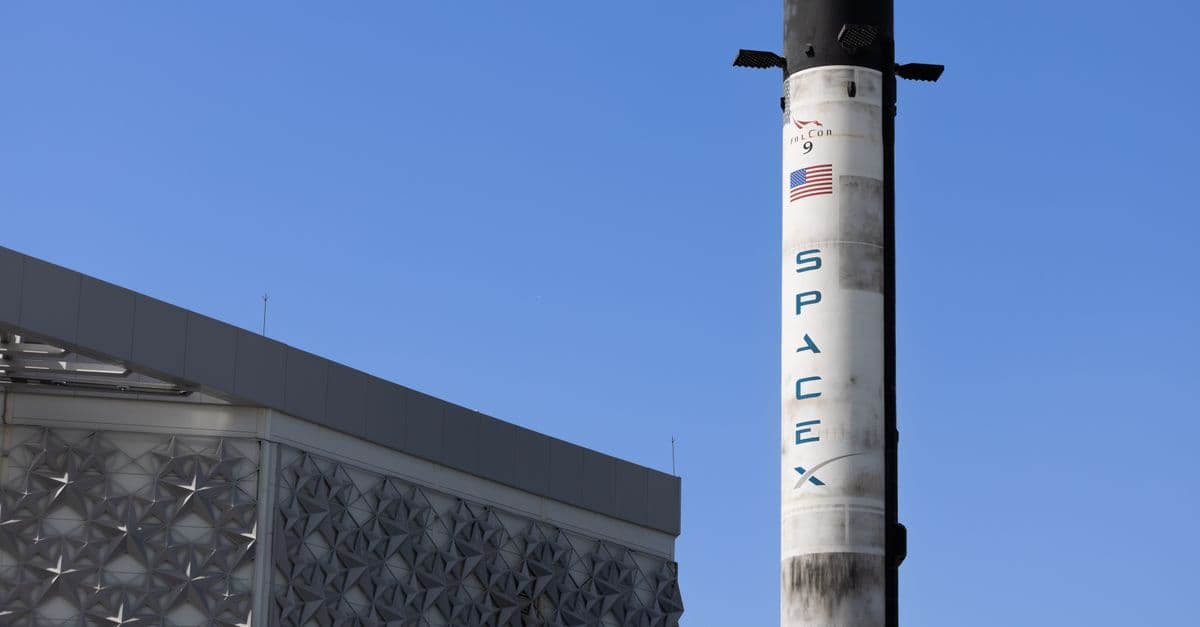
Photo: fish socks / Pexels
A rocket engine does one job: it throws mass out of one end as fast as it can, and the vehicle moves the other way. The principle fits on an index card. Making it work took a century of explosions, redesigned pumps, and arguments over fuel. This article follows the chain from the thrust equation to the nozzle, from engine cycles to the rocket equation, and ends with the ion engines that trade almost all their thrust for efficiency.
Key takeaways
- Thrust comes from momentum. Mass flow rate times exhaust velocity, plus a smaller pressure term, gives the push on the vehicle.
- Specific impulse (Isp) is the fuel-economy number of rocketry, measured in seconds. Chemical engines span roughly 240 to 465 seconds, and electric thrusters reach thousands.
- Engine cycles decide how the pumps are powered. Gas-generator engines are simpler, staged-combustion engines waste less propellant, and SpaceX's Raptor is the first full-flow design to fly.
- The Tsiolkovsky rocket equation is exponential: each extra bit of velocity change costs a growing share of the vehicle's mass in propellant, which is why rockets are mostly tanks.
- Ion and Hall thrusters are ten times more efficient than chemical engines but push with the force of a few sheets of paper, so they only work in space.
Newton's third law and the thrust equation
A rocket engine does not push against the ground, the air, or the launch tower. It works by ejecting mass backward, and the reaction pushes the vehicle forward. This is why rockets function in the vacuum of space, where there is nothing to push on, and it is why the "rockets push against the air" idea is wrong.
A skater standing on ice and throwing a heavy ball moves backward. A rocket is that skater throwing a continuous stream of tiny balls very fast. The faster each ball leaves and the more balls per second, the harder the skater is pushed back.
NASA's Glenn Research Center writes the idea as one equation. In its beginner's guide to rocket thrust, thrust is F = ṁ·Ve + Ae(pe − p0), where ṁ is the mass flow rate, Ve is the exhaust exit velocity, Ae is the area of the nozzle exit, pe is the pressure of the exhaust at the exit, and p0 is the surrounding pressure. The first term is pure momentum. The second term is a pressure correction that matters when the exhaust leaves the nozzle at a pressure different from the surrounding air.
The first term rewards two things: more propellant per second, or faster propellant. Engineers can get either, but at different costs. Throwing more propellant per second burns through tanks quickly, while raising exhaust speed requires a hotter, higher-pressure chamber or a lighter exhaust gas.
What happens inside the engine
Almost every chemical rocket, whatever its propellants, has the same basic anatomy. Fuel and oxidizer enter a combustion chamber, burn at high pressure, and the hot gas escapes through a nozzle.
The nozzle is the underrated part. It is a converging-diverging design called a de Laval nozzle: the passage narrows to a throat, then flares out into the bell. Gas enters the chamber slowly, reaches the speed of sound exactly at the throat, and then accelerates to supersonic speeds in the widening section. The throat is the bottleneck that fixes how much propellant can flow, and the flare converts heat into directed motion.
A garden hose with a thumb over the end gives a rough feel for the effect. The squeeze speeds the water, but a hose cannot go supersonic. The bell shape is what lets a gas keep accelerating after it has passed the throat.
Why nozzle shape depends on altitude
The pressure term in the thrust equation hints at a design problem. A nozzle with a given exit area is perfectly matched at only one altitude. According to the standard references summarized in the rocket engine nozzle article, if the exit pressure falls below roughly 40 percent of the ambient pressure, the flow can detach from the nozzle wall, which causes instability and can damage the engine.
That is why a sea-level engine has a short bell and a vacuum engine has a very long one. In vacuum, a bigger exit area always helps, until the extra length and weight cost more than they give. SpaceX uses the same engine family with two different nozzles: the sea-level Raptor and the Raptor Vacuum, whose Isp is listed at about 380 seconds. Other solutions include dual-bell nozzles, nozzle extensions that deploy after launch, and the aerospike design, in which the exhaust expands against an outer ambient boundary.
Exhaust speeds by propellant class
The exhaust speed depends on temperature and molecular weight. The nozzle article lists these typical ranges:
| Propellant class | Typical exhaust velocity |
|---|---|
| Liquid monopropellants | 1.7 to 2.9 km/s |
| Solid propellants | 2.1 to 3.2 km/s |
| Liquid bipropellants | 2.9 to 4.5 km/s |
A high exhaust speed favors a light exhaust gas. Hot hydrogen-rich exhaust moves faster than hot kerosene exhaust at the same temperature, because lighter molecules move faster at a given heat. That one fact explains why hydrogen engines top the efficiency tables.
For more on fuels and the engines that burn them, see The Rocket: From Gunpowder Tubes to Reusable Spacecraft.
Specific impulse: miles per gallon for rockets
Specific impulse is the number that engineers quote to compare engines. NASA defines it as the thrust produced per unit weight of propellant flowing per second, and says it equals the effective exhaust velocity divided by standard gravity (g₀, about 9.81 m/s²). The result comes out in seconds, because velocity divided by acceleration is time. A higher figure means more push from the same propellant. NASA's explanation of specific impulse uses the same definition.
Think of it as fuel economy. An engine with an Isp of 450 seconds can, in principle, hold up its own propellant weight for 450 seconds, while one at 250 seconds runs out in 250. The unit is odd but handy, because it is the same in metric and US customary systems.
A check on the numbers: the F-1 engine
The definition can be tested on a real engine. The F-1 powered the first stage of the Saturn V, with five on each rocket. Per the F-1 engine summary, it burned about 1,789 kg of liquid oxygen and 788 kg of RP-1 kerosene every second, a combined flow of about 2,577 kg/s, and had a sea-level Isp of 263 seconds.
Multiply the Isp by g₀ to get the effective exhaust velocity: 263 × 9.81 ≈ 2,580 m/s. Multiply by the mass flow: 2,577 kg/s × 2,580 m/s ≈ 6.65 million newtons. The published thrust is 6,770 kN, so the simple calculation lands within about 2 percent. Five engines together give about 33.9 MN at liftoff, which is the push that lifted Apollo.
The engines in the table
The engines discussed in this article differ in cycle, propellants, and the environment they were built for. The figures below come from the cited summaries of manufacturer and agency data, and the Raptor row illustrates how published numbers vary between sources.
| Engine | Propellants | Cycle | Thrust | Isp (sea level / vacuum) | Chamber pressure |
|---|---|---|---|---|---|
| F-1 (Saturn V) | LOX / RP-1 | Gas generator | 6,770 kN sea level | 263 s / n.a. | 70 bar |
| Merlin 1D (Falcon 9) | LOX / RP-1 | Gas generator | 845 kN SL, 981 kN vac | 282 s / 311 s | 97 bar |
| RS-25 (Shuttle, SLS) | LOX / LH2 | Fuel-rich staged combustion | 1,860 kN SL, 2,279 kN vac | 366 s / 452.3 s | about 206 bar |
| Raptor 2 (Starship) | LOX / methane | Full-flow staged combustion | 2,256 kN SL | about 347 s (sources vary) | about 300 bar |
| RL10B-2 (upper stage) | LOX / LH2 | Expander | 110 kN vac | n.a. / 465.5 s | n.a. |
| Shuttle SRB | Solid (APCP) | None | about 12 MN SL | 242 s / 268 s | n.a. |
Sources: Merlin, RS-25, Raptor, RL10, and Space Shuttle SRB summaries, each citing manufacturer data. The RS-25 figures are for 109 percent of rated power. The Merlin Vacuum variant, with a long nozzle extension, lists a vacuum Isp of 348 seconds. Raptor's sea-level Isp is reported as about 327 s in a 2018 SpaceX figure and 347 to 350 s for later versions.
The RS-25 table row gives a window into the extreme conditions. Its combustion chamber runs at about 3,300 °C, higher than the melting points of the metals it is built from, and its chamber pressure is roughly 200 times atmospheric pressure. The walls survive because cold propellant flows through channels in them first.
How the pumps get their power
A rocket cannot feed its chamber from pressurized tanks alone at these pressures, so almost every large engine uses turbopumps. A turbine spins a pump that drives propellant into the chamber at enormous speed. The F-1's pump needed about 41 megawatts, roughly the output of a small power station. The design question is where that power comes from, and the four standard answers define the engine cycles.
Imagine a mill that has to grind its own grain to feed the fire that turns its wheel. That is the bootstrapping problem each cycle solves in a different way.
Gas generator: simple, a little wasteful
In a gas-generator engine, such as the F-1 and Merlin, a small side burner (the gas generator) burns a fraction of the propellant, and the hot gas drives the turbine. The exhaust from that turbine is then dumped overboard, so part of the propellant never contributes its full push. The design is simpler and cheaper, which is why Falcon 9 uses it.
Expander: elegant but limited
In an expander cycle, such as the RL10, the fuel runs through channels in the chamber and nozzle walls, picks up heat, expands into gas, and drives the turbine before entering the chamber. All propellant goes through the main chamber. It is a clean design, but the heat available limits how big the engine can be, which is why expander engines like the RL10, with about 110 kN of vacuum thrust, are upper-stage engines.
Staged combustion: no propellant left behind
In staged combustion, a preburner partly burns the propellants, and the resulting gas drives the turbine and then flows into the main chamber to finish burning. Because all the propellant reaches the main chamber, the cycle is called closed, and it yields higher chamber pressure and higher Isp. In a fuel-rich design, such as the RS-25, nearly all the fuel goes through a preburner with a small amount of oxidizer. In an oxidizer-rich design, such as Russia's RD-180, the roles are reversed, and the hot oxygen-rich gas creates "extremely harsh conditions for turbines and plumbing," in the words of the staged combustion summary.
Full-flow: both propellants, both preburners
Full-flow staged combustion uses two preburners, one fuel-rich and one oxidizer-rich, so that the entire flow of both propellants passes through turbines before reaching the chamber. The turbines run cooler, the seals between propellants are not needed, and chamber pressure can go higher. The costs are complexity and materials demands. Raptor was the first full-flow engine to fly, on the Starhopper test vehicle in July 2019, according to the same source. Earlier attempts reached only a Soviet ground-test engine (RD-270) and an American powerhead demonstrator.
The rocket equation: why rockets are mostly tanks
In 1903, Konstantin Tsiolkovsky published the relation that governs every rocket. It is shorter than it looks:
Δv = Isp × g₀ × ln(m₀ / m_f)
Here Δv is the change in velocity the rocket can achieve, m₀ is the initial mass including propellant, and m_f is the final mass after the propellant is burned. The "ln" is the natural logarithm. The equation covers only the rocket's reaction force and leaves out gravity and drag, which the mission has to add to the velocity requirement. Tsiolkovsky's life and work are covered in Konstantin Tsiolkovsky: The Deaf Schoolteacher Who Invented Space Travel.
Worked example: getting to orbit
A spacecraft in a circular orbit 400 km up travels at about 7.7 km/s, from the basic formula v = √(GM/r). But reaching orbit costs more than that, because the rocket spends fuel fighting gravity while it climbs and pushing through air. The rocket equation article puts the total at about 9.7 km/s for Earth to low orbit including losses.
Rearranged, the equation tells you the mass ratio you need: m₀/m_f = e^(Δv / (Isp × g₀)). The following table works through a single-stage rocket for Δv = 9.7 km/s.
| Isp | Effective exhaust velocity | Mass ratio (wet to dry) | Share of liftoff mass that is propellant |
|---|---|---|---|
| 300 s | 2,942 m/s | about 27 | about 96% |
| 350 s | 3,432 m/s | about 17 | about 94% |
| 450 s | 4,413 m/s | about 9 | about 89% |
The Wikipedia example for an exhaust velocity of 4,500 m/s gives about 88 percent propellant, and it adds that a two-stage design leaves about 16.7 percent of the launch mass for engines, tanks, and payload combined. In every row, the tanks and propellant make up nearly the whole rocket, and the payload is whatever is left.
Why the logarithm is brutal
The exponential means that doubling the velocity requirement squares the mass ratio. At 350 seconds, getting half the orbital velocity change (4.85 km/s) takes a mass ratio of about 4. Doubling to 9.7 km/s takes about 17, which is roughly 4 squared. Each extra kilometer per second costs more propellant than the last one, because the propellant you add must itself be accelerated.
It is like driving across a desert while carrying your own fuel. The more fuel you bring, the heavier the vehicle, and the more fuel you burn hauling it. Engineers often call this the "tyranny of the rocket equation," and it is the reason for staging: throw away empty tanks and engines when you no longer need them, so the remaining propellant has less dead weight to push. This is also the reason that a small improvement in Isp or structural mass pays off so much. For a look at how that logic reshaped launch pricing, see Why Rocket Launches Cost So Much.
Solid, liquid, and hybrid engines
Rocket propellant comes in three broad forms, and the choice between them shapes the whole vehicle.
Liquid engines store fuel and oxidizer in separate tanks and feed them through pumps. Common pairings are liquid hydrogen with liquid oxygen (the Shuttle main engines and the SLS core stage), kerosene with liquid oxygen (the Merlin and F-1), and methane with liquid oxygen (the Raptor). They can be throttled, shut down, and often restarted, which is what propulsive landings need. They cost more because of the pumps, plumbing, and cryogenic handling.
Solid rocket motors cast fuel and oxidizer into a single block inside the casing. The Space Shuttle's boosters used a mix that was about 69.8 percent ammonium perchlorate (the oxidizer), 16 percent aluminum powder (fuel), and 12 percent PBAN binder, which also burns, with small amounts of a catalyst and curing agent. Each booster produced about 12 MN of thrust at liftoff, burned for about 123 seconds, and together the pair supplied more than 80 percent of the Shuttle's liftoff thrust (our estimate from the thrust figures of the boosters and the three main engines).
A solid motor is mechanically simple and stores for years, but once lit it cannot be throttled or turned off. Its Isp is lower, at 242 seconds at sea level for the Shuttle boosters. The brute thrust is the trade-off that makes solids attractive for the first two minutes of a heavy launch.
Hybrid engines burn a solid fuel with a liquid or gas oxidizer, and sit between the two in cost and complexity. SpaceShipTwo was the best-known example.
Hydrogen deserves a note of its own. Liquid hydrogen gives the highest chemical Isp, but it is bulky, so tanks are large, and it must be kept near 20 K. Where it comes from is its own story, covered in How Green Hydrogen Is Made.
Merlin and Raptor: two generations side by side
The Merlin 1D is a gas-generator engine that burns RP-1 and liquid oxygen. It produces 845 kN at sea level and 981 kN in vacuum, with a chamber pressure of about 97 bar. It is cheap to build and fly. One Merlin flew its 22nd mission in February 2024, the most of any rocket engine at the time, according to the summary cited above.
Raptor is a different machine. It uses full-flow staged combustion, burns subcooled liquid methane with liquid oxygen, and runs at about 300 bar in the Raptor 2 version, three times Merlin's pressure. Raptor 2 makes about 2,256 kN at sea level, and Raptor 3 is listed at about 2,452 kN. Methane is a middle path: denser and easier to handle than hydrogen, cleaner burning than kerosene, and in principle makeable from carbon dioxide and water on Mars, which is a stated design goal.
The Super Heavy booster carries 33 Raptor engines. Multiplying 33 by 2,256 kN gives about 74 MN, a bit over twice the 33.9 MN of the Saturn V's five F-1 engines. More background on the vehicle is in SpaceX Starship Explained.
The Artemis program's SLS core stage still uses four RS-25 engines, originally Shuttle main engines, a continuity that shows how long a good design lasts. For the program that depends on them, see The Artemis Program Explained.
Ion and Hall thrusters: efficiency over muscle
Chemical rockets are limited by how hot the chamber can run and by the light molecules in the exhaust. Electric propulsion sidesteps the limit by using electricity, typically from solar panels, to accelerate ionized gas.
In a gridded ion thruster, xenon atoms lose an electron and the ions are accelerated by electric grids to speeds of tens of kilometers per second. A Hall thruster works similarly but has no grids: a magnetic field traps electrons, which ionize the gas, and the resulting plasma is accelerated by an electric field. According to the Hall-effect thruster summary, exhaust speeds range from 10 to 80 km/s, most models fall between 15 and 30 km/s, and a typical unit drawing 1.35 kilowatts produces about 83 millinewtons.
The Dawn mission as a case study
NASA's Dawn spacecraft used three xenon ion thrusters derived from the NSTAR design, firing one at a time. Each produced up to about 90 millinewtons of thrust, and the Isp was about 3,100 seconds, according to the Dawn mission summary. The vehicle carried 425 kilograms of xenon and, over the mission, changed its velocity by about 11 kilometers per second. Dawn entered orbit around Vesta on July 16, 2011, left for Ceres, and entered orbit there on March 6, 2015. Dawn was the first spacecraft to orbit two extraterrestrial bodies, and doing it with chemical propulsion would have required far more propellant.
Ninety millinewtons is the weight of about nine grams, close to two sheets of printer paper resting on your hand. Dawn's thrusters accelerated it by a tiny amount every second, for years.
| Feature | Chemical (Raptor 2) | Electric (Dawn ion thruster) |
|---|---|---|
| Thrust | about 2,256,000 N | about 0.09 N |
| Isp | about 330 to 350 s (sea level) | about 3,100 s |
| Burn time | minutes | years of cumulative thrusting |
| Where it works | Launch and landing | Deep space only |
| Power source | Chemical energy in the propellant | Solar electricity |
The comparison shows why the two types never compete. A launch needs thrust greater than the vehicle's weight, so electric thrusters cannot lift off. Once in space, though, a high Isp lets a spacecraft save a huge amount of propellant. Hall thrusters now fly widely: SMART-1 used one to reach the Moon, Psyche was the first mission to use Hall thrusters beyond Earth's sphere of influence, and Starlink satellites switched from krypton to the cheaper argon in later versions.
Other ways to move in space, from sails to nuclear heat, change the arithmetic again. See Solar Sail Technology Explained for the case that needs no propellant at all.
A short history from Tsiolkovsky to Goddard to Saturn
The mathematics came first. Tsiolkovsky derived and published the rocket equation in 1903, though others had touched on it before. The Wikipedia history notes that William Moore outlined a version in 1810, and Robert Goddard reached it independently in 1912.
The hardware came later. On March 16, 1926, in a field at Auburn, Massachusetts, Goddard launched the first liquid-fueled rocket, burning gasoline and liquid oxygen. His diary entry read, "It rose 41 feet & went 184 feet, in 2.5 secs., after the lower half of the nozzle burned off." That is 12.5 meters up and 56 meters downrange, a small hop with large consequences. More on his work is in Robert Goddard: The Engineer Who Built the First Liquid-Fueled Rocket.
From that cabbage field to the Saturn V's five F-1 engines took 43 years, to the Moon landing of July 1969. A century of rocket design has been a story of squeezing more Isp and more reliability out of the same physics.
Common misconceptions
"Rockets need air to push against." They do not. The reaction is between the vehicle and its own exhaust, which is why rockets work better in vacuum, where there is no back pressure on the nozzle.
"The flame is the thrust." The visible plume is exhaust, and the thrust is generated inside the engine, where pressure acts on the chamber and nozzle walls.
"More thrust always means a better engine." Thrust and efficiency are different axes. An ion thruster has about one twenty-five-millionth of a Raptor's push and roughly nine times its Isp, and each is the right tool for its job.
"Rockets are inefficient because they are mostly fuel." The high propellant fraction follows from the physics in the rocket equation, not from poor design. The exponential demands it.
"Hydrogen is the best fuel." It has the best Isp, but it is bulky, cold, and leaks, so many engines trade some efficiency for density and handling. Methane and kerosene are choices, not compromises made by mistake.
The takeaway
A rocket engine is a machine for turning chemical or electrical energy into a fast stream of mass, and nearly every design decision follows from one tension. Higher exhaust speed saves propellant, but the ways to get it, hotter chambers, higher pressures, lighter exhaust, or electrical acceleration, each cost thrust, simplicity, or weight. The rocket equation sits on top of everything, turning small differences in efficiency into large differences in payload.
That is why Raptor's pressure, the RS-25's temperature, and Dawn's 3,100 seconds are not just records. Each is a trade made to buy a few percent of Isp, and the exponential in Tsiolkovsky's equation pays that few percent back many times over.
FAQ
Q: How do rockets work in space with nothing to push against? A: A rocket pushes against its own exhaust, not the surroundings. Ejecting mass at high speed in one direction gives the vehicle an equal momentum in the opposite direction, per Newton's third law. The thrust equation F = ṁ·Ve + Ae(pe − p0) shows that the main term depends only on the engine's own mass flow and exhaust speed.
Q: What is specific impulse, and why is it measured in seconds? A: Specific impulse is thrust divided by the weight of propellant used per second. Because it equals effective exhaust velocity divided by g₀ (about 9.81 m/s²), the unit reduces to seconds. A higher value means more thrust from the same propellant. Chemical engines in this article range from 242 to 465 seconds, and Dawn's ion thrusters about 3,100.
Q: Why do rockets use liquid hydrogen if it is so bulky? A: Hydrogen exhaust consists of very light molecules, which move faster at a given temperature, so hydrogen-oxygen engines reach the highest chemical Isp, such as 465.5 seconds for the RL10B-2 in vacuum. The price is large, cold, leak-prone tanks, which is why first stages often use denser kerosene or methane.
Q: How much of a rocket is fuel? A: For a single stage to orbit using Isp of 350 seconds and a velocity change of 9.7 km/s including losses, the rocket equation gives about 94 percent propellant. A hydrogen engine at 450 seconds reduces this to about 89 percent. Multistage designs spread the burden, but propellant still dominates the launch mass.
Q: What is the difference between a gas-generator and a staged-combustion engine? A: In a gas-generator engine such as the Merlin, a side burner drives the turbopumps, and its exhaust is dumped overboard. In staged combustion, such as the RS-25 or Raptor, the turbine exhaust flows into the main chamber, so no propellant is wasted. The closed cycle gives higher efficiency at the cost of more complex, hotter hardware.
Q: Why can't ion engines be used to launch rockets? A: Their thrust is far too low. Dawn's ion thrusters produced about 90 millinewtons, roughly the weight of nine grams, and a launch vehicle needs thrust greater than its own weight. Ion engines are ideal in space, where small, continuous acceleration over months or years can add kilometers per second of velocity change.
Sources
- NASA Glenn Research Center, Rocket Thrust and Specific Impulse
- NASA Science, Dawn mission overview and the Dawn spacecraft summary
- Tsiolkovsky rocket equation, Rocket engine nozzle, and Staged combustion cycle, each citing Sutton, Rocket Propulsion Elements, and NASA SP-125
- Robert H. Goddard, quoting Goddard's diary as cited by Lehman
- Engine summaries for the F-1, Merlin, RS-25, Raptor, and RL10
Related Reading
- Why Rocket Launches Cost So Much — And How SpaceX Is Changing That
- SpaceX Starship Explained — The Rocket Built for Mars
- How Space Exploration Works — and What's Next
- How Space Suits Work — The $12 Million Garment Keeping Astronauts Alive
- How Long Would It Take to Travel to the Nearest Star?
- How Satellites Orbit Earth: The Physics and Engineering Behind Eyes in the Sky
Follow new articles
Add SciHub101 to your feed reader to see new science and technology stories.
About the Author
SciHub101 is an independent science and technology publication founded and edited by Buğra Sözeri, a software engineer and app developer based in Türkiye. AI tools assist with drafting and research. Source documentation in the existing archive is uneven, and articles are being reviewed and corrected. The Editorial Team byline identifies editorial responsibility; it does not certify specialist or independent human review. Where we compare products, anything built by our own team is labelled as such — see the editorial guidelines and About page for how corrections and disclosures work.
Related Articles

Neutron Stars: The Most Extreme Objects in the Universe
Neutron stars pack more mass than the Sun into a sphere about the size of a city. This guide covers how they form, what lies inside them, how heavy they can get, and why pulsars, magnetars and neutron star mergers matter to physics.
Why Rocket Launches Cost So Much — And How SpaceX Is Changing That
Getting to orbit once meant spending hundreds of millions of dollars to throw away a rocket. Reusable boosters changed the arithmetic, and the next generation of vehicles is trying to change it again.

How Space Exploration Works — and What's Next
Orbit demands about 7.8 km/s of sideways speed, the Moon is 384,000 km away, and Mars is at least 55 million km. Here is the physics of getting to space, the history of exploration, and where Artemis, Starship, and Mars stand as of October 2026.

How Long Would It Take to Travel to Other Stars?
Proxima Centauri is 4.24 light-years away. With our fastest spacecraft today, the journey would take 70,000 years. Here's what it would actually take to get there faster.

SpaceX Reusable Rockets: How They Work and Why They Changed Everything
SpaceX figured out how to land rockets upright and fly them again. It's not magic — it's physics, software, and sheer persistence.

SpaceX Starship Explained — Rocket Built for Mars
SpaceX Starship is the largest rocket ever built — 121m tall, fully reusable, designed for Mars. How Raptor engines, orbital refueling, and Flight 13 work.