Why Rocket Launches Cost So Much — And How SpaceX Is Changing That
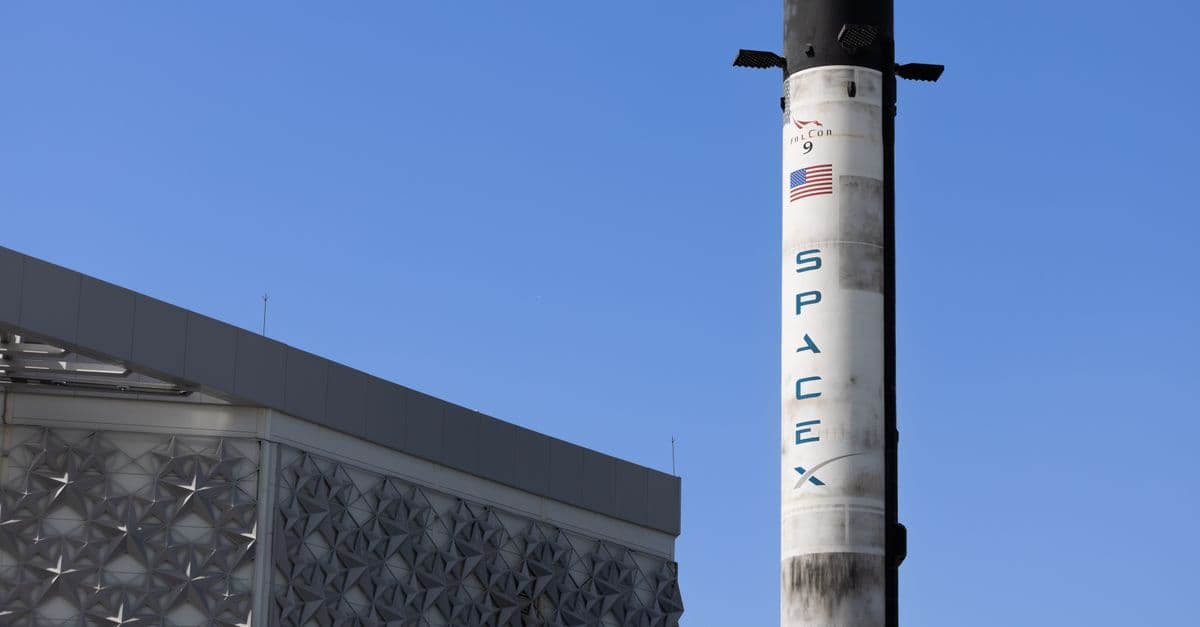
Photo: iCliff Agendia / Pexels
On July 8, 2011, Space Shuttle Atlantis lifted off on the last of 135 missions. Spread across the whole program, each flight had cost about $1.5 billion, once buildings, salaries, and development were counted. Rockets are expensive for two reasons that reinforce each other. Physics demands that nearly all of a launch vehicle's mass be fuel, and for most of history the machine that carried it was used once and discarded. This article walks through both causes, compares what different vehicles actually cost per kilogram, and explains how reusable boosters have shifted the numbers.
Key takeaways
- Reaching low Earth orbit takes about 9.7 km/s of total velocity change, including losses to gravity and drag, which forces most of a rocket's launch mass to be propellant.
- The Space Shuttle averaged about $1.5 billion per flight when all program costs are divided by 135 missions, and NASA's marginal cost was about $409 million per flight in 2010 (the 2011 average cost per mission was about $450 million).
- Price per kilogram is a better yardstick than price per launch: the Delta IV Heavy worked out to about $12,300 per kilogram, and Falcon 9's list price works out to roughly $3,200 to $4,200.
- Reuse spreads hardware cost over many flights, but it costs payload: Falcon 9 carries 22,800 kg when expendable and about 17,500 kg when its booster is recovered.
- Starship aims to reuse both stages. Any figure below $1,000 per kilogram is arithmetic on assumed inputs, not a demonstrated price.
Two numbers people mix up: price per launch and price per kilogram
A launch price tells you what one flight costs. It says nothing about how much you can carry. The standard comparison is price per kilogram to low Earth orbit, which is the launch price divided by the vehicle's payload capacity. The table shows the same calculation across five vehicles.
| Vehicle | Cost or price per launch | Payload to LEO | Approximate cost per kg |
|---|---|---|---|
| Saturn V (1969 to 1971) | $185 million (about $995 million in 2024 dollars) | About 140,000 kg | About $1,300 then, about $7,100 in 2024 dollars |
| Space Shuttle, marginal | About $409 million (2010) | 27,500 kg | About $14,000 |
| Space Shuttle, full program average | About $1.5 billion | 27,500 kg | About $54,500 |
| Delta IV Heavy | About $350 million | 28,370 kg | About $12,300 |
| Falcon 9, 2016 list price | $62 million | 22,800 kg (expendable) | About $2,700 |
| Falcon 9, 2026 list price | $74 million | 22,800 kg expendable; 17,500 kg with booster landing | About $3,250 expendable; about $4,230 with landing |
Treat the table with care. The dollar years differ, the Saturn V capacity figure includes hardware that was not payload in the usual sense, and prices are not the same as costs. A price is what a customer pays. A cost is what the operator spends, and SpaceX has not published its internal cost per launch. The per-kilogram figures other than the Saturn V and Shuttle marginal numbers are my own arithmetic from the cited prices and payload capacities.
Even so, the table has two lessons. First, the biggest rocket ever flown was not hopeless per kilogram, because it carried an enormous load. Its problem was that it flew only 13 times in six years. Second, the Shuttle's low per-kilogram marginal cost and its enormous average cost differ by a factor of nearly four, and the gap between them is the story of how a reusable vehicle became expensive.
Why getting to orbit takes so much rocket
Orbit is not about height. It is about speed. A spacecraft in low Earth orbit is not floating above gravity but falling around the planet fast enough to miss it. The Tsiolkovsky rocket equation, named for the Russian schoolteacher and theorist profiled in Konstantin Tsiolkovsky's biography, links the velocity change a rocket can achieve to its exhaust velocity and to the ratio of its full mass to its empty mass. The key feature is that the required fuel grows exponentially with the velocity change.
A standard illustration helps. Reaching low Earth orbit takes a velocity change of about 9,700 meters per second once you add the cost of beating gravity and air drag. Take a hypothetical engine with an effective exhaust velocity of 4,500 meters per second, the example value used on the equation's reference page. A single stage doing the whole job would need about 88% of its launch mass to be propellant, leaving about 12% for engines, tanks, and payload. A two-stage version of the same problem leaves about 17%, because the first stage drops away once it is empty.
The practical consequence is the "fuel for the fuel" problem. Imagine packing for a trip where every suitcase you add requires a second suitcase of snacks for the person carrying it, and the second suitcase needs a third. Each extra kilogram of payload requires many kilograms of propellant, plus the tank and structure to hold it, plus stronger engines to lift all of that.
That compounding is also why rockets are built so thin. Structural mass counts against payload kilogram for kilogram, so engineers shave every margin. The result is a machine that is light, precise, and fragile, which is expensive to build, expensive to test, and hard to make cheaply in large numbers. For how the engines themselves work, see how rocket engines actually work, and for the long history of the idea, the invention of the rocket.
Why the hardware used to be thrown away
For most of the Space Age the economics of expendable vehicles was simple. Each flight carried a complete new vehicle, built nearly by hand, and most of it ended in the ocean. The Saturn V that sent Apollo crews to the Moon cost $185 million per launch in 1969 to 1971, about $995 million in 2024 dollars, and flew 13 times between 1967 and 1973. The Delta IV Heavy, which had a payload of 28,370 kilograms, cost about $350 million per launch and was retired after its 16th and final flight on April 9, 2024.
The pattern has a clear logic. If the vehicle is used once, its entire cost must be recovered from one customer. Low flight rates make that worse. A rocket built by a small team in small batches carries a high price for every unit, and a high price keeps demand low, which keeps the flight rate low.
It also helps to see why the propellant itself is not the main cost. Liquid oxygen and kerosene are cheap compared with the machinery that burns them. The expensive part is the engines, tanks, avionics, and the people who build and inspect them. Discarding that hardware after a single flight is like scrapping an airliner after one trip: the fuel was never the point.
Customers adapted by launching rarely and carrying a lot per launch. That is why many satellites were large, expensive, and designed to last for decades. A cheaper launch reverses the logic, because small and replaceable becomes economical, a shift that shows up in how satellites orbit Earth.
The Shuttle: reuse that did not save money
The Space Shuttle was supposed to solve this problem. Its orbiters were designed for about 100 launches each, and the program flew 135 missions between April 12, 1981 and July 21, 2011, with the final launch on July 8. According to Wikipedia's program summary, 133 of the missions were counted as successes, with two lost orbiters (Challenger and Columbia).
The cost story is a cautionary one. The table shows how the number depends on what you count.
| Cost measure | Amount | What it includes |
|---|---|---|
| Early projection | About $9.3 million per flight (about $54 million in 2011 dollars) | A pre-program estimate, not an actual cost |
| NASA marginal cost | About $409 million (2010) per flight | The incremental cost of one more flight; the 2011 average per mission was about $450 million |
| Full average | About $1.5 billion per flight | Total program cost divided by 135 missions |
| Program total | $196 billion (2011 dollars) | The 30-year service life through 2011 |
The gap between $54 million and $409 million is the gap between expectation and result. NASA had hoped for a vehicle that flew frequently with light refurbishment between flights. In practice, the vehicle flew at most nine times in a year, in 1985, and needed extensive inspection and rework after every mission. When a program with large fixed costs flies few times, each flight carries a large share.
Think of a restaurant that pays the same rent and staff whether it serves 200 diners a night or two. The cost per meal depends mostly on how many meals you sell. The Shuttle's fixed costs, including facilities, workforce, and infrastructure, were large and did not shrink when flights were few. The lesson was not that reuse is a bad idea. It was that reuse pays only if the reused vehicle can be turned around quickly and cheaply, and if it flies often.
What reusable boosters changed
SpaceX was founded on March 14, 2002, in El Segundo, California. Falcon 9 made its first launch on June 4, 2010. The company then pursued recovery of the first stage, which does most of the work of leaving the atmosphere, in stages.
- December 2015: Falcon 9 made the first vertical landing of an orbital-class booster, on a ground pad.
- April 2016: The first landing on a drone ship at sea, during the CRS-8 mission.
- March 2017: The first reflight of a recovered booster, B1021, on the SES-10 mission.
- February 6, 2018: The first flight of Falcon Heavy.
- By 2026: SpaceX had reflown fairing halves, the nose cone that protects the payload, more than 300 times across its fleet, according to Wikipedia's fairing recovery summary.
- October 20, 2026: The booster flight record stood at 37 flights by the same booster, and Falcon 9 had made 697 launches, with the company's Falcon family at 711 launches including Falcon Heavy.
The trade-off is payload. Falcon 9 can carry 22,800 kilograms to low Earth orbit when the booster is expended, but 17,500 kilograms when the booster lands on a drone ship. Recovery uses propellant that would otherwise push the payload higher. The second stage, which delivers payloads to their final orbit, is still discarded each time. SpaceX gave up on reusing it by late 2014 because the heat shield and landing equipment cost too much payload.
Why does reuse win even with that penalty? Because the hardware cost is spread over many flights. As a purely hypothetical illustration, suppose a booster costs 60 units to build and 10 units to refurbish between flights. The cost per flight falls quickly as flights accumulate.
| Flights per booster | Hardware cost per flight | Plus refurbishment | Total per flight |
|---|---|---|---|
| 1 | 60.0 | 0 (not reused) | 60.0 |
| 2 | 30.0 | 10 | 40.0 |
| 5 | 12.0 | 10 | 22.0 |
| 10 | 6.0 | 10 | 16.0 |
| 37 | 1.6 | 10 | 11.6 |
These units are invented to show the shape of the curve, not SpaceX's accounting. The curve flattens: the first few reuses deliver most of the saving, and after that refurbishment becomes the cost to beat. That is why booster turnaround and inspection effort matter more than the flight record itself.
Cadence is a cost lever too
Reuse is only half of what changed. The other half is how often a vehicle flies. SpaceX launched 61 times in 2022, all but one on a Falcon 9, and by May 2026 Falcon 9 was averaging about three missions per week. The Shuttle, with five orbiters and an enormous support workforce, flew at most nine times in its busiest year.
High cadence helps in several ways. Fixed costs, such as launch pads, tracking, and the engineering team, are divided over more flights. Production lines make boosters in volume, which lowers unit cost. Crews and procedures improve with repetition, which shortens turnaround. And a company that launches often learns from small failures before they become large ones.
Rideshare pricing shows what a customer without a full rocket pays. At $350,000 for 50 kilograms to sun-synchronous orbit as of February 2026, a small satellite pays about $7,000 per kilogram, roughly twice the per-kilogram list price of a whole Falcon 9. The premium buys frequency and convenience, and it shows that the lowest prices go to payloads that fill the vehicle.
Scale versus reuse: two separate levers
It is tempting to treat bigger and cheaper as the same idea, so it helps to separate them. Making a vehicle larger lowers cost per kilogram if the payload grows faster than the vehicle's price. That is what happened between the first Falcon 9 and Full Thrust, when the capacity rose from 10,400 to 22,800 kilograms. It is also why the Saturn V looks good per kilogram on paper.
Reuse works on a different term: how many times the hardware is paid for. A small reusable vehicle can in principle beat a large expendable one on cost per flight. The two levers multiply when combined, which is the bet behind Starship, a very large vehicle intended to be used many times.
Neither lever is free. Size demands big pads, large propellant volumes, and fewer launch sites. Reuse costs payload and requires inspection, and it works only when there are enough customers to keep the vehicle busy. The Rocket Lab decision to move from recovering Electron to building the larger Neutron suggests that for some markets, scale may be the more practical route than reuse at small sizes.
Prices fell per kilogram, and then did not
Looking at published list prices gives a more sober picture than the headlines. The table pairs each Falcon 9 era's advertised price with its payload capacity.
| Era | Advertised price | Payload to LEO | Price per kg |
|---|---|---|---|
| v1.0 (2010) | $49.9 to $56 million | 10,400 kg | About $4,800 to $5,400 |
| v1.1 (2013) | $56.5 million | 13,100 kg | About $4,300 |
| Full Thrust (2016) | $62 million | 22,800 kg | About $2,700 |
| Block 5 (2026) | $74 million | 22,800 kg | About $3,250 |
The biggest early gain came from raising the payload rather than from recovering the booster: the same basic vehicle became far more capable. Since 2016, the list price has risen in nominal terms, from $62 million to $74 million, even as SpaceX flew boosters repeatedly. The probable explanation is that SpaceX prices to the market rather than to its costs. The savings from reuse show up as margin, as an expanding launch rate, and as the ability to launch its own satellites cheaply.
The company's own cost per launch is not public, so claims that Falcon 9 costs far less than its list price are inferences. The available evidence supports a softer statement: reuse has made SpaceX the dominant launch provider while keeping prices low enough that competitors have struggled to match them. Rideshare pricing, which sells small slots on shared flights, begins at $350,000 for 50 kilograms to sun-synchronous orbit as of February 2026, or about $7,000 per kilogram, according to a New Space Economy analysis.
The comparison with the Delta IV Heavy is still striking. At roughly $12,300 per kilogram, the retired vehicle cost several times as much per kilogram as Falcon 9's list price, although it could lift about 28 tonnes, somewhat more than Falcon 9's 22.8 tonnes in expendable mode. The Delta IV Heavy flew 16 times in its career. Falcon launches now average about three per week, according to the figure for May 2026.
Starship and the next step
Falcon 9 is partly reusable. Starship is designed to be fully reusable, with both its Super Heavy booster and its upper stage returning for another flight. According to the Wikipedia summary current to September 28, 2026, the vehicle stands 121.3 meters tall in its first version, 123.1 meters in Block 2, and 124.4 meters in Block 3. The Block 3 payload is listed at 100 tonnes to low Earth orbit.
The flight record shows steady progress with setbacks. As of that date Starship had made 14 launches, nine successes and five failures. It first flew on April 20, 2023. On October 13, 2024, the Flight 5 booster was caught by the launch tower's arms. On May 27, 2025, Flight 9 flew a booster that had flown before, the first reused Super Heavy. Block 3, also called V3, first flew on Flight 12 on May 22, 2026. The project has cost more than $15 billion.
Two milestones still separate design from practice. One is catching and reflying the upper stage. The second is orbital refueling, transferring propellant between two ships in orbit so that a Starship can leave low Earth orbit with full tanks. Flight 3 in 2024 moved propellant between tanks within one ship, which NASA and SpaceX called successful, but the Wikipedia summary used for this article reports no ship-to-ship transfer. Musk has estimated that fully refueling one ship would take eight launches, which matters for any mission beyond orbit, such as the lunar landings described in the Artemis program.
What does cost per kilogram look like for a fully reusable vehicle? The answer is arithmetic on an assumption, not a measurement. If a launch carries 100 tonnes, then every $10 million of launch cost equals $100 per kilogram.
| Assumed cost per launch | Payload | Resulting cost per kg |
|---|---|---|
| $100 million (the figure listed for an expendable launch) | 100,000 kg | $1,000 |
| $10 million | 100,000 kg | $100 |
| $2 million | 100,000 kg | $20 |
The lower rows describe a world that has not been demonstrated. They require cheap refurbishment, high flight rates, and cheap propellant, and they assume that the launch cost is the whole cost. For a closer look at the rocket itself, read SpaceX Starship explained.
Competitors are copying the idea
The industry has responded to SpaceX in different ways, and the results are mixed.
Blue Origin. On November 13, 2025, its New Glenn rocket launched NASA's ESCAPADE Mars mission on only its second flight, and the first stage landed on a barge in the Atlantic Ocean, making Blue Origin the second company to land an orbital-class booster. On April 19, 2026, the same first stage flew again with new engines on New Glenn's third flight, though the primary mission failed because of a second-stage problem.
Rocket Lab. The company recovered nine Electron first stages between November 2020 and January 2024 after a soft splashdown in the Pacific on November 20, 2020. It then stopped reusing Electron boosters and shifted its attention to the larger Neutron rocket.
ULA. Vulcan Centaur first flew on January 8, 2024. Recovery is planned but not in service, and the Delta IV Heavy it was meant to supersede retired in April 2024.
China. LandSpace's Zhuque-3 reached orbit on December 3, 2025, but its first stage was destroyed in the landing attempt, and the Long March 12A repeated that result on December 23, 2025. On July 10, 2026, the Long March 10B launched on its maiden flight and its booster was recovered by a wire-based recovery ship, which is described as China's first booster recovery.
Several lessons come out of these histories. Landing a booster once is hard, doing it repeatedly is harder, and doing it on a commercial schedule is a business challenge as much as an engineering one. Rocket Lab's experience shows that reuse is not automatic for every size of vehicle, since for a small rocket, the cost and complexity of recovery may outweigh the savings.
What cheaper launch makes possible
Cheaper access to orbit is not an end in itself. It matters because it changes what is worth doing in space. Launch cost is a line item in every satellite, every crewed mission, and every experiment.
The clearest example is Starlink, SpaceX's own satellite internet network. The Wikipedia summary for June 2026 reports roughly 10,413 satellites in low Earth orbit, about 75% of all active maneuverable satellites, and about 12 million subscribers. A constellation of that size is a launch-cost business as much as an internet business, because SpaceX is its own best customer. The network's connection to latency is explored in how satellite internet reduces latency, and national satellite counts are ranked in countries with the most satellites.
Cheaper launch also reshapes the economics of more speculative ideas. The business case for mining asteroids depends on launch cost, as discussed in asteroid mining economics. The same is true of a crewed outpost on another world, which Mars settlement engineering treats as a logistics problem measured in tonnes delivered. The International Space Station, covered in the ISS explained, depends on a continuous supply of cargo. For a broader sense of where the field is heading, see the most important space missions of the 2020s.
What cheaper launch does not fix
Several limits keep the story from being as simple as a falling line on a chart.
Launch is only part of a mission's cost. The satellite, the insurance, the ground systems, and the operations team all cost money. If the spacecraft costs ten times the launch, cutting the launch price in half saves little.
Orbit is not the destination. A kilogram in low Earth orbit is far from a kilogram on the Moon or Mars. Reaching them requires more velocity change and, for heavy payloads, orbital refueling. Costs quoted per kilogram to low Earth orbit do not carry over.
Price is not cost. Because SpaceX's internal cost is not public, any claim about margin is inference. The same caution applies to Starship targets. A figure like $100 per kilogram is a goal that depends on assumptions about flight rate and refurbishment, not something yet observed.
Reuse needs a market. The saving from a reusable booster appears only if there are enough payloads to fly. A vehicle that flies twice a year cannot spread its fixed costs, which was the Shuttle's problem. The reason Falcon 9 works is partly that SpaceX supplies much of its own demand.
Safety and reliability matter. Landing failures and launch failures still happen. The record above shows both successes and losses for new vehicles, and the Falcon 9 history lists a handful of lost boosters, including losses after landing in 2023, 2024, and 2025.
Frequently asked questions
Q: Why are rocket launches so expensive? A: Two reasons. Physics requires about 9.7 km/s of total velocity change to reach low Earth orbit, which makes most of a rocket's launch mass propellant and leaves little for structure and payload. And historically most launch vehicles were used once, so the whole cost of building the vehicle was charged to a single flight.
Q: How much did a Space Shuttle launch cost? A: It depends on the measure. Dividing the $196 billion program cost (2011 dollars) by 135 missions gives about $1.5 billion per flight. NASA's marginal cost, the extra cost of flying once more, was about $409 million in 2010, and the 2011 average cost per mission was about $450 million. A pre-program projection had been about $9.3 million per flight.
Q: How much does a Falcon 9 launch cost? A: SpaceX's advertised price has been $62 million in 2016 and $74 million in 2026. Divided by payload capacity, that is about $2,700 per kilogram in 2016 and about $3,250 in 2026 for an expendable launch, or about $4,230 when the booster lands. SpaceX's internal cost has not been published.
Q: How many times can a Falcon 9 booster fly? A: The record stood at 37 flights by the same booster as of October 20, 2026. The first reflight of a booster was in March 2017. The second stage is not reused, and SpaceX abandoned second-stage reuse by late 2014 because the heat shield and landing equipment cost too much payload.
Q: Is Starship cheaper than Falcon 9? A: Not yet demonstrated. Starship's design payload for Block 3 is 100 tonnes, and the project has cost more than $15 billion. If a fully reusable launch eventually cost $10 million, that would be $100 per kilogram, but that is arithmetic on an assumed cost. Upper-stage reuse and orbital refueling remained to be shown at the time of the sources used here.
Q: Do other companies reuse rockets? A: Yes, with mixed results. Blue Origin landed a New Glenn booster on November 13, 2025 and reflew it on April 19, 2026. Rocket Lab recovered nine Electron stages and then moved on to Neutron. China recovered a Long March 10B booster with a wire-based ship on July 10, 2026.
The takeaway
Launch is expensive because velocity is expensive. The rocket equation makes every extra bit of speed cost exponentially more propellant, and for most of the Space Age the machine that carried it was discarded after a single use. The Shuttle showed that reuse alone is not enough, since a vehicle that needs a huge workforce between flights and flies a few times a year ends up costing more, not less. What has changed is a combination: boosters that land, turn around quickly, and fly often because the same company needs the launches. Whether the next step, a fully reusable giant, delivers the price drops its designers describe will depend on engineering that has not yet been demonstrated at scale. The direction is clear. The size of the saving is still an open question.
Sources
- Wikipedia, Space Shuttle program and Space Shuttle: mission count, program cost, marginal and average cost per launch, payload capacity. Figures were reviewed on October 20, 2026.
- Wikipedia, Falcon 9: payload figures, list prices by year, landing and reflight dates, booster flight record, launch totals as of October 20, 2026.
- Wikipedia, SpaceX Starship: dimensions, payload, flight history, and cost figures as of September 28, 2026.
- Wikipedia, Saturn V and Delta IV Heavy: cost per launch and payload.
- Wikipedia, Tsiolkovsky rocket equation: delta-v to low Earth orbit and propellant fraction examples.
- Wikipedia, Reusable launch vehicle, Starlink, and SpaceX: competitor milestones, constellation size and subscribers, company history.
Related Reading
Follow new articles
Add SciHub101 to your feed reader to see new science and technology stories.
About the Author
SciHub101 is an independent science and technology publication founded and edited by Buğra Sözeri, a software engineer and app developer based in Türkiye. AI tools assist with drafting and research. Source documentation in the existing archive is uneven, and articles are being reviewed and corrected. The Editorial Team byline identifies editorial responsibility; it does not certify specialist or independent human review. Where we compare products, anything built by our own team is labelled as such — see the editorial guidelines and About page for how corrections and disclosures work.
Related Articles

How Rocket Engines Actually Work — From Kerosene to Ion Thrusters
From Newton's third law to the Tsiolkovsky rocket equation, this is what actually happens inside a rocket engine, how engine cycles differ, and why efficiency and thrust pull in opposite directions.

How Space Suits Work: A Personal Spacecraft You Wear
A space suit is a one-person spacecraft. Here is how NASA's suit holds pressure, supplies oxygen, sheds heat, and fends off debris, and what replaces it.

SpaceX Reusable Rockets: How They Work and Why They Changed Everything
SpaceX figured out how to land rockets upright and fly them again. It's not magic — it's physics, software, and sheer persistence.

How Space Exploration Works — and What's Next
Orbit demands about 7.8 km/s of sideways speed, the Moon is 384,000 km away, and Mars is at least 55 million km. Here is the physics of getting to space, the history of exploration, and where Artemis, Starship, and Mars stand as of October 2026.

SpaceX Starship Explained — Rocket Built for Mars
SpaceX Starship is the largest rocket ever built — 121m tall, fully reusable, designed for Mars. How Raptor engines, orbital refueling, and Flight 13 work.

SpaceX and the New Space Race: 2026 Status
SpaceX in 2026: Starship's V3 flights, Falcon 9 reuse, Starlink growth, a reshaped Artemis plan, and how China and rival rockets compete in the new space race.