Asteroid Mining Economics Explained

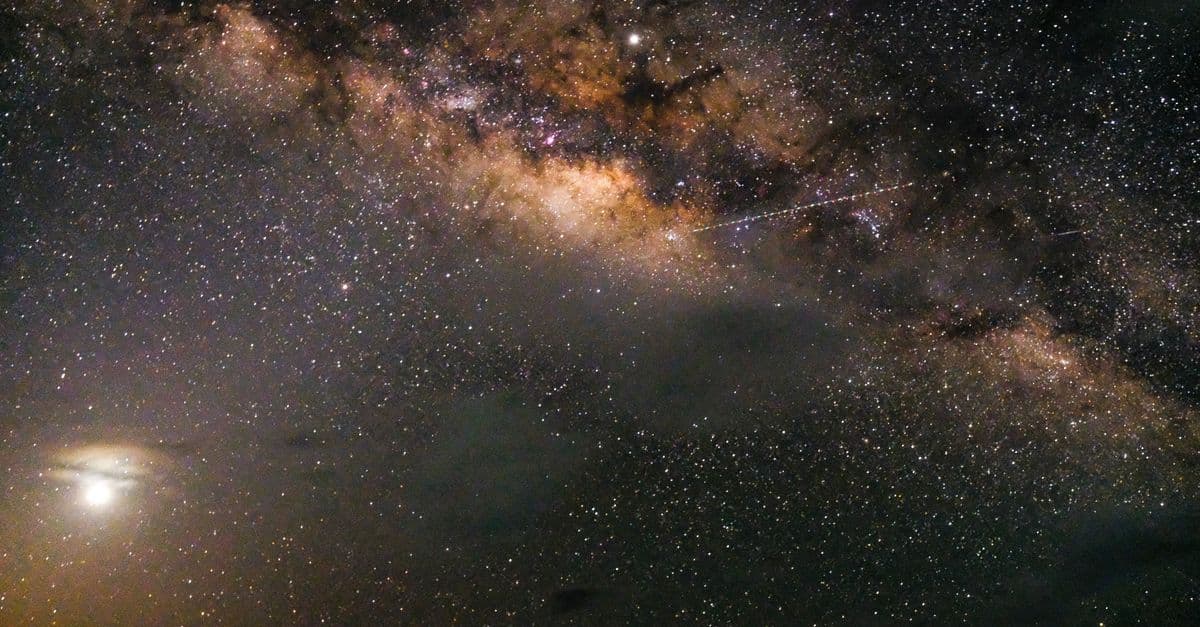
Photo: Fahrettin Turgut / Pexels
Asteroid Bennu, a rubble pile roughly 500 meters (1,640 feet) across, is estimated to hold gold, platinum, and other precious materials worth more than $670 billion at Earth market prices. NASA spent over $1 billion sending a spacecraft there and back just to retrieve 122 grams (about a quarter pound) of rock (Built In, "What Is Asteroid Mining?"). That gap between headline valuation and mission cost is the entire asteroid mining story: the resources are real, but the economics of getting them, or even getting to them, are brutal. This guide breaks down what asteroids actually contain, what missions have shown so far, and why water may reach commercial viability before platinum does.
What asteroids are actually worth
Asteroids fall into a few broad compositional classes, and the class determines what a mining operation would even be chasing. Carbonaceous, or C-type, asteroids are the most common in the outer asteroid belt and are rich in water ice and organic compounds, similar to the material Bennu is made of. Metallic, or M-type, asteroids are much rarer but contain iron, nickel, cobalt, and platinum-group metals at concentrations far higher than typical Earth ore (Built In, "What Is Asteroid Mining?").
Platinum-group metals are the headline attraction because they are scarce and expensive on Earth. Rhodium, for example, trades at roughly $200,000 per kilogram, and platinum-group metals in general are used in catalytic converters, electronics, and industrial catalysts where few substitutes exist (Built In, "What Is Asteroid Mining?"). A single metal-rich asteroid could, in theory, contain more platinum-group metal than has ever been mined on Earth.
NASA's clearest test case for this idea is 16 Psyche, a metallic asteroid orbiting between Mars and Jupiter that appears to be made almost entirely of nickel-iron metal, likely the exposed core of an early planetary building block that never finished forming. NASA's Psyche spacecraft launched on October 13, 2023, and is scheduled to begin orbiting the asteroid in August 2029 after a journey of about 3.6 billion kilometers (2.2 billion miles) (NASA JPL, Psyche Mission). Psyche is a science mission, not a mining mission, but it will be the first close-up look at whether a metal asteroid's composition matches what telescope data suggests.
Why the math doesn't work for metals, yet
The core problem with asteroid mining is not finding valuable material. It is the cost of everything required to reach it, process it, and bring it home, compared against what that material is worth once it arrives.
Launching mass to space costs real money per kilogram, and mining equipment, processing hardware, and return vehicles all add mass. A mission has to survive years of transit, operate with no on-site repair option, extract and refine material autonomously or under significant communication delay, and then either return the material to Earth or use it somewhere useful in space. Every one of those steps multiplies cost and risk before a single kilogram of platinum reaches a buyer.
There is also a market problem that has nothing to do with rockets. Platinum-group metals are valuable partly because they are scarce. If a mining operation successfully returned even a modest fraction of a metallic asteroid's estimated content, it would flood the market and collapse the price that made the mission look profitable in the first place. The $670 billion valuation attached to Bennu assumes today's scarcity-driven prices hold after that material arrives, which is not how commodity markets behave when supply increases sharply.
This is a version of a familiar problem in commodity economics: value is not a fixed number sitting on an asteroid waiting to be collected. It is a price set by supply and demand, and a mining operation big enough to be worth the launch cost is also big enough to move the price against itself.
Is asteroid mining currently profitable?
No confirmed asteroid mining operation has extracted and sold material at a profit. Every mission flown so far, including NASA's OSIRIS-REx sample return, has been a government-funded science mission, not a commercial extraction operation, and its cost has vastly exceeded the market value of the material it physically returned (Built In, "What Is Asteroid Mining?").
Water: the more plausible first business case
Water looks unglamorous compared to platinum, but it may be the more realistic near-term resource, for one reason: it does not need to come back to Earth to be valuable.
Water can be split into hydrogen and oxygen, which combine to make rocket propellant. A spacecraft that can refuel from ice mined on an asteroid, rather than carrying every kilogram of fuel from Earth's surface, changes the economics of deep-space missions entirely. Launching propellant from Earth means fighting Earth's gravity well twice, once to launch the fuel, and again implicitly, in the extra fuel needed to carry that fuel. A depot of asteroid-derived propellant sitting in orbit removes that penalty for every mission that uses it.
This is the same logic as building a gas station near a highway instead of shipping fuel from the refinery to every driver individually. The value is not in transporting water to Earth, where it is cheap and abundant. The value is in never having to launch that water from Earth at all.
Carbonaceous asteroids, the same class that includes Bennu, are the likely early targets for this kind of operation because water ice and hydrated minerals are common in their composition (Built In, "What Is Asteroid Mining?"). This approach is often described using the term in-situ resource utilization (ISRU), meaning using resources found at the destination rather than hauling everything from home. NASA and other space agencies are already testing ISRU concepts for lunar water ice, which faces a similar but smaller-scale version of the same economics.
Why doesn't anyone mine asteroids for water and sell it on Earth?
Water is cheap and abundant on Earth, so there is no market case for launching it back down the gravity well. The entire economic argument for asteroid water depends on using it in space, for propellant or life support, where launching replacement water from Earth is expensive.
What the failed mining companies actually revealed
Two companies, Planetary Resources and Deep Space Industries, launched in the early 2010s with plans to prospect and eventually mine near-Earth asteroids. Both raised meaningful venture funding, built small technology demonstrators, and generated significant press coverage. Both shut down or were acquired by 2019 without reaching an asteroid (LinkedIn, "Asteroid Mining is Dead... Long Live Asteroid Mining!").
Planetary Resources' founding CEO later said the company simply ran out of money. Industry observers described the broader pullback as "the asteroid mining bubble" bursting, driven less by any single technical failure than by investors realizing how long the timeline to any revenue actually was, and how much capital would be required to survive it (LinkedIn, "Asteroid Mining is Dead... Long Live Asteroid Mining!").
A newer generation of companies has taken a different approach: smaller, cheaper missions rather than one large bet. AstroForge, for example, has stated a goal of running individual missions for under $10 million, a fraction of what a NASA-scale sample-return mission costs (LinkedIn, "Asteroid Mining is Dead... Long Live Asteroid Mining!"). That strategy trades the scale of a single ambitious mission for the ability to fail cheaply, learn, and try again, which matters in a field where almost every early assumption about cost and difficulty has proven optimistic.
Comparing the two economic paths
| Factor | Platinum-group metals return-to-Earth | Water and propellant used in orbit |
|---|---|---|
| Target asteroid type | M-type (metal-rich) | C-type (carbonaceous, water-rich) |
| Where value is realized | Earth commodity markets | In space, as rocket fuel or life support |
| Biggest cost driver | Return trip mass and complexity | Extraction and processing hardware only |
| Biggest economic risk | Price collapse from oversupply | Limited buyers until deep-space traffic grows |
| Closest real-world test | NASA Psyche (science mission, 2023 launch) | Lunar and asteroid ISRU concept demonstrations |
| Current status | No commercial extraction has occurred | Still pre-commercial, but lower cost barrier |
Who legally owns what you dig out of an asteroid
Long before economics becomes the limiting factor, asteroid mining runs into a legal question that has no clean precedent: nobody can own an asteroid, but can a company own what it extracts from one? The starting point is the 1967 Outer Space Treaty, which prohibits any nation from claiming sovereignty over a celestial body, similar in spirit to international law governing the open ocean or Antarctica. That treaty says nothing directly about resources removed from a body, which left an opening two countries moved to fill decades later.
The United States acted first. Congress passed the Space Resource Exploration and Utilization Act on November 25, 2015, as part of the broader Commercial Space Launch Competitiveness Act. The law defines a "space resource" as any abiotic material, including water and minerals, found in situ in outer space, and it grants US companies and citizens the right to possess, transport, use, and sell resources they extract, while explicitly stopping short of claiming ownership over the asteroid or body itself (CMS Law-Now, "Space mining: breach of international law in space?"; Canadian Bar Association, "Equity in the Space Frontier"). In plain terms, the law tries to separate "owning the asteroid," which the Outer Space Treaty forbids, from "owning the rock you cut off the asteroid and brought home," which the US law affirms.
Luxembourg followed in 2017, becoming the second nation to pass space-mining legislation, and went a step further in its wording. The Luxembourg Space Resources Law states outright that "space resources are capable of being appropriated," giving companies incorporated there a comparatively unambiguous legal path to claim ownership of extracted material (Inverse, "Luxembourg's Asteroid Mining is Legal, Says Space Law Expert"; DipLawMatic Dialogues, "The Luxembourg Space Resources Act and International Law"). Luxembourg, a small country with no launch capability of its own, positioned the law as a way to attract space-resource companies to incorporate there, similar to how the country has long attracted finance and shipping firms with favorable regulatory frameworks. In 2024, the United States and Luxembourg formalized a joint legal framework specifically to support cooperative space-resources projects between the two countries (CMS Law-Now).
Neither law has been tested by an actual dispute over extracted material, because no company has extracted and sold space resources yet. Legal scholars remain split on whether domestic laws like these are fully consistent with the Outer Space Treaty's ban on national appropriation, since granting a private citizen's ownership claim arguably brushes up against that prohibition even if the government itself never claims the asteroid (CMS Law-Now). For now, the legal framework has moved faster than the technology, which is unusual, but it means whichever company mines a commercially significant quantity of resources first will not need to fight a legal battle before selling it.
AstroForge: the current real-world test of lean asteroid mining
If Planetary Resources and Deep Space Industries showed that a single expensive bet could sink a company before it reached an asteroid, AstroForge is the industry's live test of the opposite strategy: smaller, cheaper, and faster missions, with failure treated as a data point rather than a company-ending event.
Founded in 2022 and based in Huntington Beach, California, AstroForge raised $40 million in Series A funding with the explicit long-term goal of mining platinum-group metals from metallic asteroids and returning them to Earth (MINING.COM, "Asteroid miner AstroForge readies third mission for 2025"). Its first deep-space mission, Odin, launched on February 26, 2025, with a specific and modest goal: fly past the M-type (metallic) near-Earth asteroid 2022 OB5, a body only a few dozen meters across, and capture close-up images to confirm its composition matches what ground-based telescope data suggested (Space.com, "Space mining company AstroForge identifies asteroid target for Odin launch next month").
Odin failed. The spacecraft lost communication roughly a week after launch and was declared lost, a reminder that even a comparatively low-cost, single-purpose flyby mission still depends on flawless deep-space navigation and communication with essentially no margin for error (UT Dallas MERL, "AstroForge's Latest Step Toward Mining Asteroids"). Rather than treating the failure as a business-ending event the way it might have for a company that had bet everything on one mission, AstroForge stated it would apply what it learned from Odin's failure directly to its next attempt.
That next attempt, Vestri, is a considerably more ambitious mission for a private company: a roughly 200-kilogram (440-pound) spacecraft designed not just to photograph a metallic near-Earth asteroid but to dock with it, which would be the first time any private company has attempted a landing or docking maneuver on a celestial body beyond the Earth-moon system (Space.com, "Space mining startup AstroForge aims to launch historic asteroid-landing mission in 2025"). AstroForge has publicly framed its strategy around running individual missions for under $10 million each, a fraction of the billion-dollar cost of a government sample-return mission like OSIRIS-REx, betting that iterating quickly on cheap hardware will reach a working extraction technique faster than one enormous, risk-averse mission ever could.
Whether that strategy succeeds is still an open question. Neither Odin nor Vestri involves actual mining or extraction, both are reconnaissance and rendezvous missions meant to prove the far more basic capability of reliably reaching and operating near a small, weak-gravity target. That basic capability, reaching the target reliably, is precisely the step that has defeated every private asteroid mining company so far, which makes AstroForge's low-cost, iterate-fast approach the industry's most direct real-world test of whether the platinum-group-metal business case can survive contact with actual mission execution.
Common misconceptions about asteroid mining
The most persistent misconception is treating an asteroid's total estimated mineral value as if it were cash sitting in a bank account. Headlines describing Bennu as a "$670 billion asteroid" describe a theoretical value calculated at current Earth market prices for the entire estimated mineral content, not a number that accounts for extraction cost, return cost, or the market-flooding effect of actually delivering that much material (Built In, "What Is Asteroid Mining?").
A second misconception is assuming near-Earth asteroids are close in a meaningful travel sense because they pass relatively near Earth's orbit. Many near-Earth asteroids still require multi-year round trips, and NASA's Psyche mission illustrates the timeline problem well: a six-year journey to reach a target that was already known and precisely tracked before launch (NASA JPL, Psyche Mission).
A third misconception is that the technology gap is mainly about mining hardware, drills, and extraction tools. In practice, navigation, autonomous operation at multi-minute communication delays, and structural handling of a target with extremely weak gravity have proven at least as difficult as the extraction step itself, which is part of why Planetary Resources and Deep Space Industries folded before reaching an asteroid at all.
The takeaway
Asteroid mining is not a solved business model waiting for launch costs to drop a little further. It is two separate economic questions wearing one name: whether platinum-group metals can ever be returned to Earth profitably, which depends on a market that would undermine itself if the mission succeeded at scale, and whether water and propellant can be used in space, which sidesteps that problem entirely by never coming home. The second question is closer to a real answer. NASA's Psyche mission will supply the first direct data on a metal asteroid's true composition by 2029, but the more immediate commercial path runs through ice, not gold.
Read next:
- Black Holes Explained: How They Work
- How Do We Actually Find Exoplanets?
- The First Gravitational Wave Detection
Frequently Asked Questions
Q: What is asteroid mining? A: Asteroid mining is the concept of extracting materials, such as water, metals, or platinum-group metals, from asteroids for use either in space or back on Earth. No commercial asteroid mining operation has yet extracted and sold material.
Q: Which is more valuable, mining asteroids for metal or for water? A: Metal-rich asteroids carry a higher theoretical dollar value, but water is more economically plausible near-term because it can be converted into rocket propellant and used directly in space, avoiding the cost and market risk of a return trip to Earth (Built In).
Q: Why did Planetary Resources and Deep Space Industries fail? A: Both companies ran out of funding before reaching an asteroid. Industry accounts describe investors underestimating the time and capital required, not a single technical failure, as the main cause (LinkedIn, "Asteroid Mining is Dead... Long Live Asteroid Mining!").
Q: What is NASA's Psyche mission studying? A: Psyche is studying 16 Psyche, a metallic asteroid believed to be made largely of nickel-iron metal, possibly the exposed core of an early planetary building block. It launched in October 2023 and is expected to begin orbiting the asteroid in August 2029 (NASA JPL).
Q: Would mining an asteroid for platinum actually make it more profitable than expected? A: Not necessarily. Returning a large quantity of platinum-group metal to Earth would likely lower its market price, since scarcity is part of what makes it valuable today. That dynamic is a core reason large-scale metal-return mining has not moved past the concept stage.
Q: Is it actually legal for a private company to own and sell material mined from an asteroid? A: Under both US and Luxembourg law, yes, in the sense that companies can claim ownership of extracted resources without the country claiming the asteroid itself, which the 1967 Outer Space Treaty forbids. The US Space Resource Exploration and Utilization Act (2015) and Luxembourg's Space Resources Law (2017) both created this pathway, though legal scholars still debate how fully it aligns with the Outer Space Treaty, since no dispute over extracted material has yet tested it in practice (CMS Law-Now).
Q: What happened to AstroForge's Odin mission? A: Odin launched on February 26, 2025, to photograph the metallic asteroid 2022 OB5 and confirm its composition, but the spacecraft lost communication about a week later and was declared lost. AstroForge stated it would apply lessons from the failure to its next mission, Vestri (UT Dallas MERL).
Q: What is AstroForge's Vestri mission trying to prove? A: Vestri is designed to dock with a metallic near-Earth asteroid, which would be the first time a private company has landed on or docked with any celestial body beyond the Earth-moon system. It does not attempt actual mining, only rendezvous and docking, the basic capability every asteroid mining company has struggled to demonstrate so far (Space.com).
Sources
- Built In, "What Is Asteroid Mining?"
- NASA Jet Propulsion Laboratory, Psyche Mission
- "Asteroid Mining is Dead... Long Live Asteroid Mining!", J.L. Galache
- CMS Law-Now, "Space mining: breach of international law in space?"
- Canadian Bar Association, "Equity in the Space Frontier"
- Inverse, "Luxembourg's Asteroid Mining is Legal, Says Space Law Expert"
- DipLawMatic Dialogues, "The Luxembourg Space Resources Act and International Law"
- MINING.COM, "Asteroid miner AstroForge readies third mission for 2025"
- Space.com, "Space mining startup AstroForge aims to launch historic asteroid-landing mission in 2025"
- Space.com, "Space mining company AstroForge identifies asteroid target for Odin launch next month"
- UT Dallas MERL, "AstroForge's Latest Step Toward Mining Asteroids"
Follow new articles
Add SciHub101 to your feed reader to see new science and technology stories.
About the Author
SciHub101 is an independent science and technology publication founded and edited by Buğra Sözeri, a software engineer and app developer based in Türkiye. AI tools assist with drafting and research. Source documentation in the existing archive is uneven, and articles are being reviewed and corrected. The Editorial Team byline identifies editorial responsibility; it does not certify specialist or independent human review. Where we compare products, anything built by our own team is labelled as such — see the editorial guidelines and About page for how corrections and disclosures work.
Related Articles
Biggest Black Holes Ever Found
The most massive black holes challenge galaxy formation models. This article explains ultramassive black holes, how mass is measured, and why records change.

Why Is Mars Red? The Science of the Red Planet
Mars looks red because iron in its dust and surface rocks has oxidized into rust-colored minerals. A 2025 study argues the main pigment is ferrihydrite, a water-bearing iron mineral, and that planet-wide winds spread the fine powder that gives Mars its color.
Asteroid Mining — Trillion Dollar Space Industry
Asteroid mining could unlock trillions in metals and water. Explore the targets, companies, technologies, and economics of mining the sky.
What If We Mined the Asteroid Belt?
The asteroid belt contains enough metal to give every human being 100 billion dollars' worth. It also contains the raw materials to build hundreds of thousands of O'Neill habitats. Here's what asteroid mining would actually look like — and what it would do to the world economy.

SpaceX and the New Space Race: 2026 Status
SpaceX in 2026: Starship's V3 flights, Falcon 9 reuse, Starlink growth, a reshaped Artemis plan, and how China and rival rockets compete in the new space race.
Why Rocket Launches Cost So Much — And How SpaceX Is Changing That
Getting to orbit once meant spending hundreds of millions of dollars to throw away a rocket. Reusable boosters changed the arithmetic, and the next generation of vehicles is trying to change it again.