What If We Mined the Asteroid Belt?
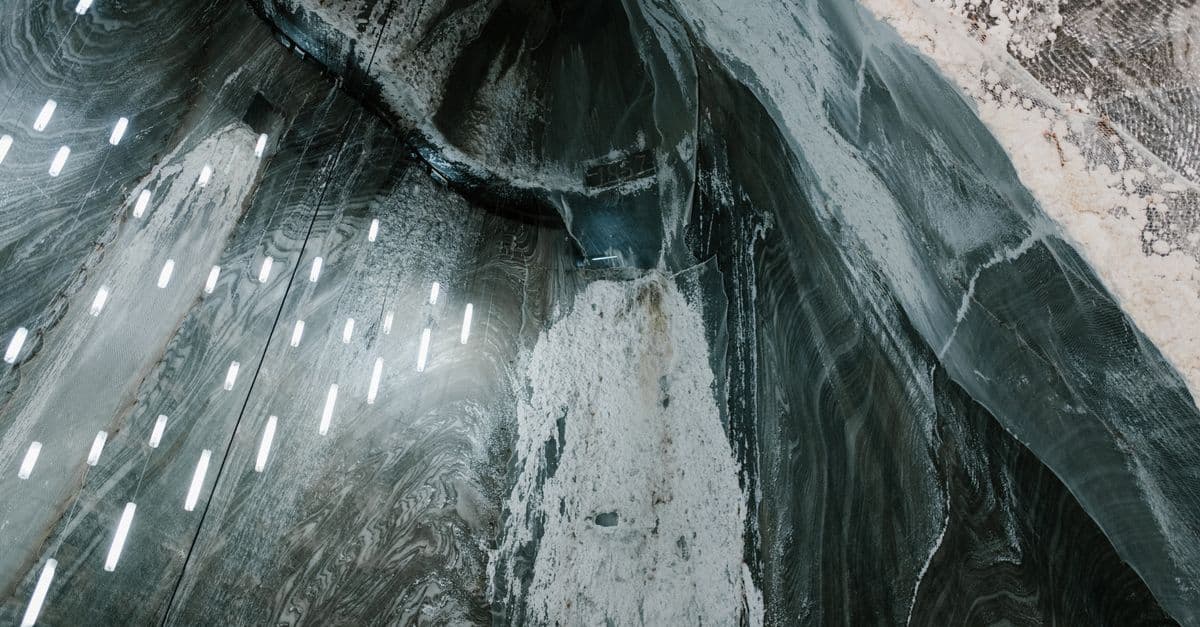
Photo: Julia Volk / Pexels
The asteroid belt contains, by some estimates, $700 quintillion worth of metals — enough to give every human being on Earth roughly $100 billion. It contains iron, nickel, cobalt, platinum-group metals, water ice, and silicates in quantities dwarfing all Earth's known reserves. A single metallic asteroid — 16 Psyche — may contain more iron and nickel than humanity has mined in all of history.
Thought experiment. This article explores a hypothetical scenario for educational and speculative purposes. The events described are not predictions and should not be interpreted as warnings, advocacy, or instructions.
But mining the asteroid belt isn't simply a technical problem waiting to be solved. It's also an economic and civilisational problem — bringing those resources to Earth would transform commodity markets in ways that are hard to predict, and the most valuable use of asteroid resources might not be sending them to Earth at all.
Key takeaways
- The asteroid belt's total mass is roughly 4% of the Moon's mass — not a lot, but concentrated in metals, minerals, and volatiles rather than rocky bulk.
- 16 Psyche, a metallic asteroid, may contain 10^19 kg of iron-nickel — more than humanity's total historical steel production.
- Bringing large quantities of metals to Earth would collapse commodity prices — the platinum market would be destroyed by a single large platinum-rich asteroid.
- The most economically rational use of asteroid resources is likely in space — building infrastructure, habitats, and propellant depots.
- Near-Earth asteroids (NEAs) are far easier to mine than the asteroid belt — the belt is actually a misleading name for our nearest targets.
What's actually out there
The asteroid belt contains millions of rocky, metallic, and icy bodies, mostly concentrated between Mars and Jupiter. The total mass is surprisingly small — about 4% of the Moon, or 22 times less massive than Pluto.
The three main types:
C-type (carbonaceous): About 75% of all asteroids. Dark, carbon-rich. Most importantly, they contain large amounts of water ice and other volatiles — hydroxyl groups bound in clay minerals, sometimes more water by mass percentage than Earth's mantle. Water in space can be split into hydrogen and oxygen — rocket propellant.
S-type (silicaceous/stony): About 17% of asteroids. Rocky, containing iron-nickel metal mixed with silicates. Easier to process than C-types for metals.
M-type (metallic): About 8% of asteroids. Almost pure metal — iron, nickel, cobalt, and traces of platinum-group metals (platinum, palladium, iridium). The jackpot for metals mining.
Notable individual targets:
- 16 Psyche: A metallic asteroid ~226 km diameter, likely composed of iron-nickel. Estimated metal content: 10^19 kg — roughly 10,000 times global steel production.
- 433 Eros: An S-type near-Earth asteroid already visited by the NEAR spacecraft. Contains more aluminium, gold, silver, zinc, and platinum than all Earth reserves combined.
- Bennu: A C-type near-Earth asteroid (visited by OSIRIS-REx). Water-rich and accessible from Earth's orbit.
The economics: why bringing metals to Earth would backfire
Here's the critical economic insight that most discussions of asteroid mining miss: delivering asteroid metals to Earth would crash commodity markets.
Platinum currently sells for ~$30,000 per kilogram. It's valuable precisely because it's rare. A single M-type asteroid 1 km in diameter might contain more platinum than all Earth's known reserves. Delivering that platinum to Earth would flood the market, driving the price toward zero.
The platinum-group metal market would collapse entirely. The cobalt market (critical for electric vehicles) would collapse. Iron and nickel markets would collapse. Earth's mining industries — supporting hundreds of millions of jobs and hundreds of billions in GDP — would be devastated.
This isn't purely theoretical — historical examples show what happens when commodity supply suddenly expands: the price of aluminium dropped by 80% in decades after the Hall-Héroult electrolytic smelting process made it cheap to produce. Entire industries were disrupted.
The economic value of asteroid resources can only be realised in space — used to build structures, habitats, and infrastructure in orbit. The resources stay in space, the benefit comes from what they enable.
Water: the more valuable resource
For near-term space development, water may be more valuable than precious metals.
Getting mass from Earth's surface to Earth orbit costs roughly $1,000–$10,000 per kilogram even with Starship-class reusable rockets. Water is heavy. Shipping water from Earth to fuel rockets in orbit or to supply lunar or Martian bases is enormously expensive.
An asteroid with abundant water, parked in cislunar space (between Earth and the Moon), becomes a propellant depot: split the water into hydrogen and oxygen, fuel spacecraft that never touch Earth's atmosphere, and you've dramatically reduced the cost of deep space missions.
A single water-rich C-type asteroid 100 metres in diameter contains roughly 10 million tonnes of water. That's enough propellant to fuel thousands of deep space missions. Asteroid water could cut the cost of Mars missions by 70–80%.
How you'd actually mine an asteroid
Mining in space presents unique engineering challenges:
Getting there. Near-Earth asteroids (NEAs) are the practical first targets — some actually require less delta-v (velocity change) to reach from Earth orbit than the Moon does. The asteroid belt itself is much harder — years of transit time and significant propellant cost.
Anchoring. Asteroids have essentially no gravity. A miner stepping onto the surface would float off immediately unless tethered. Mining equipment must be attached mechanically. Any drilling creates reaction forces that would send equipment spinning.
Processing. Two main approaches:
- Bag and return: Capture small asteroid fragments, enclose in a bag, return to Earth orbit for processing. Simplest approach but limited scale.
- In-situ processing: Set up equipment on the asteroid to extract and refine material there. Much more efficient but complex. For water, this means heating C-type asteroid material to drive off water vapour and condense it.
Returning material. For water and volatile fuel production, the product stays in space. For metals intended for orbital construction, they're processed in orbit. Nothing needs to come to Earth's surface.
What asteroid mining would actually enable
The transformative use of asteroid resources is building in space:
- Orbital habitats: O'Neill cylinders require ~10^11 kg each — a small asteroid provides all the material for one habitat. A thousand asteroid-sourced habitats would provide living space for billions of people.
- Propellant depots: Water-rich asteroids become fuel stations enabling affordable access to Mars, the outer solar system, and beyond.
- Solar power satellites: Metal-rich asteroids provide the material for enormous solar collectors in orbit beaming power to Earth — without any launch cost for the structural material.
- Self-replicating factories: The long-term vision is asteroid-mining robots that process asteroid material to build more robots, exponentially growing space industrial capacity with minimal Earth input.
The timeline
Current status (2026):
- OSIRIS-REx returned samples from Bennu in 2023 — the first asteroid sample return at scale.
- Hayabusa2 returned samples from Ryugu in 2020.
- Multiple private companies (Planetary Resources, Deep Space Industries — both defunct; now AstroForge, Karman+) are developing asteroid mining technology.
The near-term milestone is a proof-of-concept mission extracting water from a near-Earth asteroid and demonstrating in-space propellant production — likely achievable within the next 10–20 years.
Large-scale asteroid belt mining is a mid-century project at earliest, contingent on dramatically cheaper launch costs and in-space manufacturing development.
Frequently asked questions
Would asteroid mining cause environmental problems?
Not on Earth, if the materials stay in space. In space, the environmental footprint is minimal — asteroids aren't inhabited ecosystems. There are planetary protection considerations for C-type asteroids that might contain organic chemistry, but these are scientific rather than ecological concerns.
Who owns the resources?
The 1967 Outer Space Treaty says no nation can claim sovereignty over celestial bodies, but the US, Luxembourg, and others have passed laws allowing companies to own resources extracted from space. International consensus on property rights in space remains unresolved — a significant legal gap as commercial activity approaches.
Could an asteroid be brought into Earth orbit for easier mining?
In principle, yes — small asteroids could be nudged into Earth-Moon space. NASA's Asteroid Redirect Mission studied this. The challenge is that even "small" asteroids are massive enough that a miscalculation would be catastrophic if they entered Earth's atmosphere. Regulatory and political barriers would be enormous.
What about asteroid deflection? Would mining interfere?
Planetary defence and asteroid mining use similar technologies — spacecraft rendezvous, surface anchoring, propulsion systems. Mining industries in the asteroid belt might actually support planetary defence by developing the infrastructure needed to monitor and redirect hazardous asteroids.
Is the asteroid belt as crowded as movies show?
No. The asteroid belt has enormous volume — the average distance between asteroids is about 600,000 km. A spacecraft travelling through the belt wouldn't need to dodge asteroids. The film version is not remotely accurate.
The bottom line
Asteroid mining is not primarily about bringing metals to Earth — that would collapse the markets those metals are valuable in. The real prize is in-space resources: water for propellant, metals for orbital construction, volatiles for habitats. A single water-rich asteroid could fuel a generation of Mars missions; a single metallic asteroid could provide the material for a million skyscrapers' worth of steel — in space. The economic model that makes asteroid mining viable keeps the resources in space, enabling a second industrial revolution beyond Earth's surface. The technology is mostly feasible with near-future capabilities; the challenge is the business model and the infrastructure investment required to prove it out.
Related Reading
- What If We Made First Contact With Alien Life? The Real Plan and What Would Change
- What If Earth Had Two Moons? The Science of a Twin-Moon World
- What If Dinosaurs Never Went Extinct? The Evolution That Almost Happened
- What If an Asteroid Hit Earth Tomorrow?
- What If We Terraformed Mars — Could Humans Really Live There?
Follow new articles
Add SciHub101 to your feed reader to see new science and technology stories.
About the Author
SciHub101 is an independent science and technology publication founded and edited by Buğra Sözeri, a software engineer and app developer based in Türkiye. AI tools assist with drafting and research. Source documentation in the existing archive is uneven, and articles are being reviewed and corrected. The Editorial Team byline identifies editorial responsibility; it does not certify specialist or independent human review. Where we compare products, anything built by our own team is labelled as such — see the editorial guidelines and About page for how corrections and disclosures work.
Related Articles
What If Humanity Became an Interstellar Civilisation?
The nearest star is 4.24 light-years away — roughly 40 trillion kilometres. Reaching it with current technology would take 80,000 years. What would it actually take to become a civilisation that spans multiple star systems?
What If Our Solar System Had Two Suns?
Most stars in the galaxy are in binary systems. If our solar system had two suns, Earth's orbit might be stable — or chaotic. The climate would be stranger, the sky alien, and the evolution of life might have gone very differently.

What If AI Controlled All Financial Markets?
Algorithms already execute most market trades. What happens when AI moves from executing human decisions to making all of them — and nobody is sure who's actually in charge?
What If AI Discovered Alien Life?
AI is already scanning billions of radio signals, analyzing atmospheric data, and searching exoplanet spectra. What happens the day it finds something that shouldn't be there?
What If Robots Did All Human Work?
Every delivery, every surgery, every harvest, every line of code — done by machines. What do 8 billion humans do on a Tuesday morning?

What If the Internet Went Down for a Week?
A scientific scenario analysis of a 7-day global internet outage — payments, hospitals, supply chains, and the $10B+/day economic cost.