What If Earth Had Two Moons? The Science of a Twin-Moon World
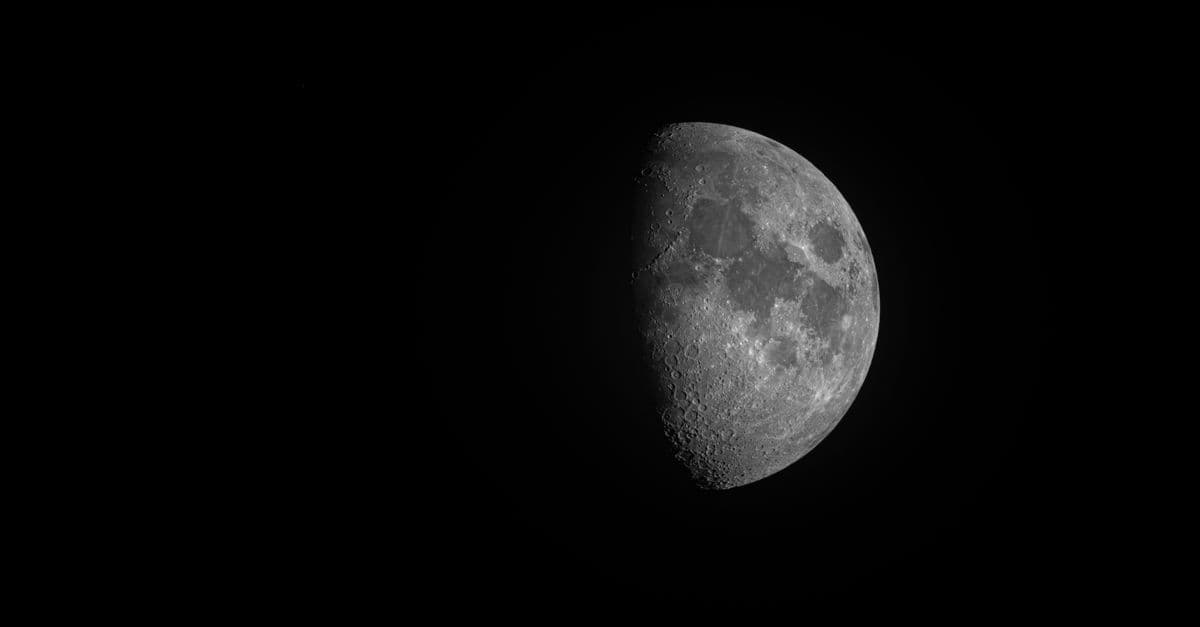
Photo: Arian Fernandez / Pexels
Earth has had exactly one moon for roughly 4.5 billion years, and it sits about 384,400 km (238,855 mi) away on average, according to laser-ranging data NASA has collected since the Apollo missions (NASA Goddard). That single companion stabilizes our tilt, drives the tides, and slows our spin by a fraction of a millisecond every century. What would actually change, physically and biologically, if Earth had a second one? Here's what orbital mechanics, tidal theory, and comparative planetology say would happen.
Thought experiment. This article explores a hypothetical scenario for educational and speculative purposes. The events described are not predictions and should not be interpreted as warnings, advocacy, or instructions.
Key takeaways
- A second moon would roughly double peak tidal amplitude when the two bodies align, and make tide timing far less predictable.
- Two-moon systems are dynamically unstable over geological timescales — most either collide, eject one body, or lock into a rare resonance.
- Mars really does have two moons (Phobos and Deimos), but they're small, irregular bodies, not a second full-scale companion like ours.
- A 2011 Nature study proposed Earth briefly did have a second moon early in its history, and that it slammed into the near side of the Moon in a slow "big splat" — a leading explanation for why the Moon's near and far sides look so different (Jutzi & Asphaug, Nature, 2011).
- Exomoons — moons orbiting planets around other stars — remain unconfirmed. The best candidate, Kepler-1625b-i, is still disputed by independent researchers (Kreidberg et al., re-analysis discussed in AAS Nova, 2019).
Earth's one Moon, and why it matters so much
Our Moon is unusually large relative to Earth, about one-quarter of Earth's diameter, which is large for a planetary satellite. The leading formation model, the giant-impact hypothesis, holds that a Mars-sized protoplanet nicknamed Theia struck the young Earth and the debris coalesced into the Moon. The Moon has been slowly retreating ever since: laser reflectors left by Apollo astronauts show it moving outward at about 3.8 cm (1.5 in) per year, a recession driven by tidal friction between Earth's oceans and the seafloor that also lengthens Earth's day by roughly 1.7 milliseconds per century (tidal recession data reported via NASA laser-ranging measurements).
That single Moon does more structural work than most people realize.
- Tides. Its gravity raises two tidal bulges in Earth's oceans, producing the twice-daily rhythm coastal ecosystems depend on.
- Axial tilt stabilization. The Moon's gravitational pull keeps Earth's 23.5° axial tilt from wandering. Without a large moon, models suggest the tilt could vary chaotically over millions of years, which would scramble seasonal climate patterns — a scenario explored in depth in What If the Moon Disappeared?
- Day-length slowing. Tidal friction has stretched Earth's day from an estimated six hours shortly after formation to 24 hours today.
- Eclipses. The Sun and Moon appear nearly the same angular size from Earth's surface, a coincidence of geometry that produces total solar eclipses rather than partial ones.
- Biological and cultural cycles. Lunar phases anchor calendars, agricultural planning, and the reproductive timing of species from corals to insects.
A second moon wouldn't just add a light in the sky. It would touch every one of those systems at once.
Surprising fact. The most recently confirmed Earth mini-moon, asteroid 2024 PT5, was a temporary quasi-satellite from September 29 to November 25, 2024 — and NASA now believes it's actually a chunk of the Moon itself, blasted off by an ancient impact. It's only the second known lunar fragment ever identified orbiting near Earth (NASA Science, 2024–2025).
How could Earth actually end up with a second moon?
There are a handful of physically plausible routes, and they range from "already happens on a tiny scale" to "requires technology we don't have."
Route 1: Asteroid capture
Earth periodically captures small bodies into temporary orbits. These are called mini-moons, and they're real, documented, and small. Object 2020 CD3 orbited Earth briefly before escaping again, and 2024 PT5 followed the same pattern in late 2024, drifting at roughly nine times the Moon's distance during its capture window before departing (Space.com, 2024). These objects are meters wide, not kilometers, and their orbits are unstable almost by definition — they arrive on shallow trajectories and leave again within months. A body large enough to act like a real second moon, kilometers across with a stable long-term orbit, would require an extraordinarily precise approach velocity and geometry. Nothing in the observational record suggests it's ever happened for Earth specifically at that scale.
Route 2: Co-formation during the Moon-forming impact
This is the scenario with the strongest scientific backing. In 2011, planetary scientists Martin Jutzi and Erik Asphaug published simulations in Nature proposing that the same giant impact that created the Moon could have produced a second, smaller companion moon, roughly 1,200 km (750 mi) across, about one-thirtieth the mass of the main Moon (Jutzi & Asphaug, Nature, 2011). Their model showed this companion sharing a stable Trojan-like orbit with the Moon for tens of millions of years before slowly drifting and colliding with the Moon at low velocity, a "big splat" rather than a crater-forming impact. Because the impact was slow, the material piled up as a thick layer of crust on one hemisphere instead of excavating a crater. That pileup, the model argues, is a strong candidate explanation for the lunar dichotomy: why the Moon's far side is covered in thick, mountainous highlands while the near side is dominated by smoother volcanic plains (Nature Geoscience coverage, Smithsonian, 2011). In other words, Earth may genuinely have had two moons for a geologically brief window, and we may be looking at the merged result today.
Route 3: Engineering
Building or relocating a large artificial or captured body into permanent lunar orbit is a pure thought experiment with current or near-future technology. The energy required to move a kilometer-scale object into a stable orbit dwarfs anything humanity has attempted; it's useful mainly as a way to reason about the physics, not as an engineering roadmap.
A fourth, overlooked possibility: dust, not rock
Earth may already have quasi-permanent "moons" made of dust rather than solid rock. The Kordylewski clouds are diffuse concentrations of dust hypothesized to sit at Earth's L4 and L5 Lagrange points, gravitationally stable zones 60° ahead of and behind the Moon in its orbit. They're not moons in any meaningful sense, being too tenuous and unconsolidated, but they illustrate that Earth's gravitational neighborhood does have stable parking spots for extra material, just not for anything large enough to matter tidally.
The physics of tides with two moons
Tidal force depends on a body's mass and, much more strongly, its distance: tidal force scales with the inverse cube of distance, not the inverse square like ordinary gravity. That means a second moon's tidal contribution depends enormously on how close it orbits, not just how big it is.
Why tides would get bigger — and messier
Think of ocean tides as two people pushing the same swing from different angles. When their pushes align, the swing goes higher than either push alone could manage; when they're out of phase, the pushes partly cancel and the swing barely moves. With one moon, Earth's tides already have this kind of variability from the interplay between the Moon and the Sun (spring tides at new and full Moon, neaper tides at quarters). Add a second moon and you add a third rhythm to that interplay. At the moments when both moons and the Sun line up, peak tidal range could roughly double compared to today's spring tides, based on simple superposition of tidal forces from two similarly massed bodies. At other times, when the two moons pull from different directions, tides would partially cancel and coastal ranges could shrink well below current lows.
Resonant tides
If the two moons' orbital periods happened to fall in a simple ratio, such as 2:1 or 3:2, similar to the resonances seen among Jupiter's Galilean moons, they would produce large, predictable amplification events at regular intervals rather than chaotic ones. Coastal ecosystems could plausibly adapt to a predictable mega-tide cycle the way they've adapted to today's spring-neap cycle. An unpredictable, chaotic tidal pattern, by contrast, is much harder for intertidal life to evolve around, since reproduction and feeding strategies depend on anticipating the tide, not just surviving it.
Why this matters for coastlines specifically
Higher, more variable tides would push the intertidal zone, the band of shoreline alternately submerged and exposed, into a wider and more turbulent range. Engineering for coastal infrastructure (harbors, tidal barriers, wetland management) would need to plan around a much larger worst-case tidal excursion, similar to how the Bay of Fundy's unusually large 16-meter tidal range today forces very different infrastructure decisions than a typical 1-2 meter coastline.
Why two-moon systems are hard to keep stable
This is the part science fiction usually skips over: physics makes a permanent two-moon Earth genuinely difficult to sustain.
It's a three-body problem
Once you have Earth, Moon A, and Moon B all pulling on each other simultaneously, you've created what physicists call a three-body problem, a system with no general closed-form solution. Small perturbations compound over time in ways that are extremely sensitive to starting conditions. Long-term numerical simulations of hypothetical multi-moon Earth systems consistently show one of three outcomes over millions to tens of millions of years.
| Outcome | What happens | Real-world example |
|---|---|---|
| Collision | The moons' orbits gradually converge until they impact, releasing enormous energy and debris | The proposed Jutzi-Asphaug "big splat" that may have formed the lunar far side highlands |
| Ejection | The lighter moon gets gravitationally slingshotted out of Earth orbit entirely, becoming a free-floating body or falling into solar orbit | Common outcome in n-body simulations of unstable multi-moon configurations |
| Resonance lock | The two moons settle into a stable orbital ratio where their gravitational tugs reinforce rather than disrupt each other | Saturn's moons Mimas and Tethys, and the Galilean moons' 1:2:4 Laplace resonance at Jupiter |
Table: The three long-term fates of a hypothetical two-moon Earth system, based on orbital dynamics simulations and observed analogs in the solar system.
Why resonance is the exception, not the rule
Stable multi-body resonances, like the one locking Jupiter's moons Io, Europa, and Ganymede into a 1:2:4 orbital ratio, require very specific initial conditions and, often, ongoing tidal interactions with a massive host planet to maintain them. Jupiter's enormous mass makes this kind of long-term stability far more achievable than it would be around a comparatively small body like Earth. That's a meaningful asymmetry: the same physics that makes a two-moon Jupiter routine makes a two-moon Earth fragile.
What Mars actually teaches us
Mars is often cited as a "two-moon planet," and it is, but its moons Phobos and Deimos are not a useful preview of a twin-Moon Earth. Phobos is about 22.2 km (13.8 mi) across and Deimos just 13 km (8 mi), both irregular and potato-shaped rather than round, evidence against them being large enough to have pulled themselves into spheres under their own gravity (The Planetary Society). Their origin is still actively debated: for decades the leading idea was that they were captured asteroids, but more recent orbital-dynamics work argues their near-equatorial, near-circular orbits are hard to explain through capture and instead point to formation from a circumplanetary debris disk around Mars itself (Astrobiology, NASA, 2025). Either way, Phobos is spiraling inward and is expected to break apart or crash into Mars in roughly 50 million years (The Planetary Society) — itself a demonstration of tidal instability at work. A future Mars sample-return mission, MMX (Martian Moons eXploration), is targeted to bring Phobos material back to Earth by 2031 to help settle the origin question.
Eclipses in a two-moon sky
Eclipse geometry gets substantially more complicated with a second body in the mix.
More frequent solar eclipses
Either moon could pass in front of the Sun from Earth's vantage point, so the raw frequency of solar eclipses somewhere on Earth would increase, though whether any individual eclipse looked total, annular, or partial would depend entirely on that moon's apparent size, which is itself a function of its orbital distance at the time.
Could two moons eclipse the Sun at once?
That would require both moons to be in near-perfect alignment with the Sun and Earth simultaneously, an extremely narrow geometric coincidence given that the two moons would almost certainly orbit at different inclinations and periods. It's possible in principle but would be rare even on the timescale of centuries.
Lunar eclipses and mutual eclipses
Both moons would periodically pass through Earth's shadow, producing lunar eclipses on two independent schedules instead of one. In addition, because the moons would orbit at different distances, one could periodically cast its own shadow on the other, a genuinely new category of event with no analog in Earth's current sky, though it has partial parallels in how Jupiter's Galilean moons cast shadows on each other and on Jupiter's cloud tops.
What would this look like from the ground?
A two-moon sky would deliver noticeably more frequent, and more visually varied, celestial events than we experience today. That alone would have had major consequences for how early astronomy developed, since more frequent, dramatic sky events tend to draw more sustained observation and record-keeping.
Rotation, day length, and angular momentum
Adding tidal mass in orbit changes how quickly Earth loses rotational energy to friction.
Faster rotational slowing
More tidal drag from two bodies, rather than one, means Earth's rotation would likely have slowed to a longer day than the 24 hours we have now, following the same physical mechanism, tidal friction transferring angular momentum from Earth's spin to the orbiting bodies, that has already stretched our day by about 1.7 milliseconds per century with just the one Moon.
How would total angular momentum redistribute?
The Earth-Moon(s) system conserves total angular momentum, so a second moon changes how that fixed budget gets divided between Earth's spin and the orbits of the two moons, not the total amount. Depending on the second moon's mass and orbital distance, that could mean Earth spinning notably slower than today, or a different long-term equilibrium distance for one or both moons compared to where our real Moon sits now.
Life evolved around a one-moon rhythm
Lunar cycles are woven into biology at a level most people underestimate.
- Coral spawning. Many reef-building coral species synchronize mass spawning events to specific lunar phases, a timing mechanism researchers have studied extensively on Australia's Great Barrier Reef, where corals across many species release eggs and sperm within the same few nights each year.
- Sea turtle navigation and nesting. Hatchling sea turtles use light-based cues, historically including moonlight reflected off the ocean, to orient themselves toward the water after emerging from nests on darkened beaches.
- Nocturnal predator-prey dynamics. Moonlight intensity measurably changes hunting success and foraging risk for many nocturnal species; some prey animals reduce activity on brighter nights specifically to avoid predators that hunt more effectively under moonlight.
- Human circadian folklore. The human menstrual cycle averages close to the lunar month's length, a coincidence long noted in folk science, though rigorous studies have not established a reliable causal link between lunar phase and human reproductive timing.
What would a second moon do to these rhythms?
A twin-moon Earth would layer a second cycle length on top of the existing one, and species that had evolved to synchronize behavior to a single predictable phase pattern would face a messier, dual-periodicity signal instead. Whether life would have adapted by evolving sensitivity to just one dominant moon, to both independently, or to their combined light and tidal pattern is not something current science can answer with confidence, since it depends on details, like the second moon's brightness and orbital period, that a genuine what-if scenario leaves undefined.
Calendars, culture, and the pace of early astronomy
Most ancient calendar systems, including the Babylonian, Islamic, and early Chinese calendars, are lunar or lunisolar, built around the roughly 29.5-day cycle of a single moon's phases. A second moon with a different orbital period would have broken that clean cycle into at least two overlapping rhythms, likely pushing early civilizations toward more complex timekeeping earlier, since reconciling two independent celestial cycles is a harder, but ultimately more information-rich, problem than tracking one. It's a reasonable inference from how much lunar-cycle tracking already shaped early mathematics and astronomy on the real, one-moon Earth, though it remains speculative extrapolation rather than a testable claim.
Multi-moon worlds we can actually observe
The solar system already offers real-world comparisons, and none of them look like a twin Earth-Moon system.
| Planet | Known moons (2026) | Notable feature |
|---|---|---|
| Mars | 2 (Phobos, Deimos) | Both small, irregular, likely formed from a circumplanetary debris disk; Phobos may break apart within 50 million years |
| Jupiter | 101–115, depending on confirmation status | Four large Galilean moons locked in a stable 1:2:4 orbital resonance |
| Saturn | 285 confirmed | Most newly found moons are tiny, kilometers-wide bodies discovered via improved detection, not new formation |
| Uranus | 28 | Moon orbits are tilted with the planet's extreme 98° axial tilt |
| Neptune | 16 | Largest moon, Triton, orbits backward relative to Neptune's rotation, evidence it was captured rather than co-formed |
Table: Confirmed moon counts across the solar system's major planets, based on IAU Minor Planet Center data as of 2026 (IAU announcement, 2026; reporting on the count, SpaceDaily, 2026).
The pattern across every one of these systems is the same: multi-moon stability at scale requires either a very large host planet or very small, low-mass satellites. Earth having two Moon-sized bodies in permanent, stable orbits, rather than one large moon and a swarm of asteroid-sized objects, isn't represented anywhere in the solar system we can directly observe.
What people get wrong about "two moons"
Confusing mini-moons with a real second moon
Headlines about Earth "capturing a second moon" refer to objects like 2020 CD3 and 2024 PT5, both a few meters to tens of meters across and gone again within months. These are genuinely interesting, and 2024 PT5's apparent lunar origin is a real scientific finding, but they are nothing like a kilometer-scale, permanently orbiting companion. Conflating the two overstates how routine or stable a real second moon would be.
Assuming a second moon automatically means catastrophe
It's tempting to assume any orbital addition destabilizes Earth. In reality, the outcome depends entirely on the second moon's mass, distance, and orbital inclination. A very small, distant companion in a stable resonance could coexist with minimal disruption; a large, close one is the scenario that risks chaotic tilt variation or collision. "Two moons" isn't one scenario, it's a family of very different scenarios with very different consequences.
Treating the "second moon hypothesis" as settled science
The Jutzi-Asphaug companion-moon collision model is a well-regarded, published hypothesis that explains real observed lunar asymmetry, but it remains one candidate explanation among several proposed for the lunar dichotomy, not a confirmed history. It's good science, not proven fact, and coverage that presents it as settled is overstating the state of the evidence.
Assuming exomoons prove multi-moon systems are common
Some coverage implies astronomers have confirmed moons around other stars' planets. As of the most recent published re-analyses, the leading exomoon candidate, Kepler-1625b-i, remains disputed: independent researchers reanalyzing the same Hubble and Kepler data found the transit signal was equally well explained without invoking a moon at all (AAS Nova, 2019). Exomoons plausibly exist given how common moons are in our own solar system, but none has been definitively confirmed yet.
Frequently asked questions
Q: Why does Earth only have one moon? A: The leading formation model holds that the giant impact between early Earth and the Mars-sized body Theia produced one dominant moon rather than several. Simulations from Jutzi and Asphaug (2011) suggest a smaller companion may have briefly existed before merging with the main Moon in a low-velocity collision within a few tens of millions of years.
Q: Could Earth capture a second moon today? A: Only very small, temporary mini-moons like 2020 CD3 and 2024 PT5 have been observed, both meters wide and gone within months. A permanent, kilometer-scale second moon would require an approach trajectory and velocity so precise that nothing in the observational record suggests it has happened at that scale.
Q: Did Earth actually have two moons in the past? A: A peer-reviewed 2011 Nature study by Jutzi and Asphaug proposes exactly this: a smaller companion moon that formed alongside the main Moon and later collided with it in a slow "big splat," potentially explaining why the Moon's near and far sides look so different. It's a well-supported hypothesis, not a proven historical fact.
Q: Would a second moon make tides twice as strong? A: At moments when both moons align with Earth, peak tidal range could roughly double compared to today's strongest spring tides, since tidal forces from aligned bodies add together. At other times, when the moons pull from different directions, tides could partially cancel and shrink below current lows.
Q: Could a second moon make Earth uninhabitable? A: It depends on the second moon's mass, distance, and orbital stability. A large, close companion in a chaotic orbit could destabilize Earth's 23.5° axial tilt over millions of years, risking extreme, unpredictable seasonal swings. A small, distant, resonant companion would likely cause far less disruption.
Q: Do any planets in our solar system have two moons like a twin Earth-Moon system? A: Mars has two moons, Phobos and Deimos, but both are small, irregular bodies just kilometers across, not full-scale companions like our Moon. No planet in the solar system has two Moon-sized satellites in stable orbits.
Q: What is an exomoon, and have any been confirmed? A: An exomoon is a moon orbiting a planet outside our solar system. None has been definitively confirmed. The leading candidate, Kepler-1625b-i, remains scientifically disputed after independent researchers found the original transit data could be explained without a moon at all.
Q: How many moons does Jupiter or Saturn actually have? A: As of 2026, Saturn has 285 confirmed moons and Jupiter has over 100, according to IAU Minor Planet Center announcements. Most of the recently added moons are tiny, kilometers-wide bodies found through improved detection technology, not evidence of ongoing moon formation.
Q: Would two moons change how long Earth's day is? A: Likely yes, in the direction of a longer day. Tidal friction from an additional orbiting body would drain rotational energy from Earth faster than a single Moon does, following the same mechanism that has already stretched Earth's day by about 1.7 milliseconds per century.
Q: Is the Moon getting farther away, and does that matter for this scenario? A: Yes. NASA's laser-ranging measurements show the Moon receding from Earth at about 3.8 cm (1.5 in) per year due to tidal energy transfer. In a two-moon scenario, this same mechanism would apply to both bodies, potentially at different rates depending on each moon's mass and orbital distance.
The takeaway
A second moon wouldn't just double the light in our night sky; it would rewrite the tidal rhythm, rotation rate, eclipse geometry, and biological cues that Earth's ecosystems have spent billions of years calibrating to a single companion. The physics is unforgiving about permanence, too: three-body orbital dynamics push most multi-moon configurations toward collision, ejection, or a narrow window of resonant stability, which is exactly the fate that may have already played out once in Earth's deep past, if the Jutzi-Asphaug companion-moon hypothesis holds up. The single, unusually large Moon we actually have, sitting in a slowly widening but currently stable orbit, is less an accident to take for granted than a specific, fragile outcome among many that could have gone differently.
Read next:
Follow new articles
Add SciHub101 to your feed reader to see new science and technology stories.
About the Author
SciHub101 is an independent science and technology publication founded and edited by Buğra Sözeri, a software engineer and app developer based in Türkiye. AI tools assist with drafting and research. Source documentation in the existing archive is uneven, and articles are being reviewed and corrected. The Editorial Team byline identifies editorial responsibility; it does not certify specialist or independent human review. Where we compare products, anything built by our own team is labelled as such — see the editorial guidelines and About page for how corrections and disclosures work.
Related Articles

How We Know Vaccines Are Safe — The Evidence
Vaccine safety is one of the most studied topics in medicine. Here's a clear, science-based examination of what the evidence really shows.
What If Parallel Universes Are Real? The Physics Behind the Multiverse
The multiverse isn't just sci-fi — it's a serious prediction of multiple physics theories, including quantum mechanics, inflation, and string theory. Here's what the science actually says.
What If Earth Had No Moon?
The Moon is more than a nightlight. It holds Earth's tilt steady, drives our tides, and may have made complex life possible.
What If the Moon Disappeared Tomorrow?
If the Moon vanished overnight, Earth's tides, axial tilt, and life itself would change forever. Here's the science of what happens next.
What If a Rogue Planet Entered Our Solar System?
There may be more rogue planets — wandering worlds without stars — than there are stars in the galaxy. If one drifted into our solar system, even a brief passage could destabilize planetary orbits and reshape Earth's climate for millennia.
Why Does the Moon Have Phases? The Science Explained
Half the Moon is always sunlit; phases are how much of that lit half we see as the Moon orbits Earth. The synodic month lasts 29.5 days, moving through new, crescent, quarter, gibbous, and full phases. Phases are NOT Earth's shadow—that's an eclipse. The Moon always shows us the same near side due to tidal locking, a gravitational dance between Earth and Moon.