What If We Discovered an Earth-Twin Planet?
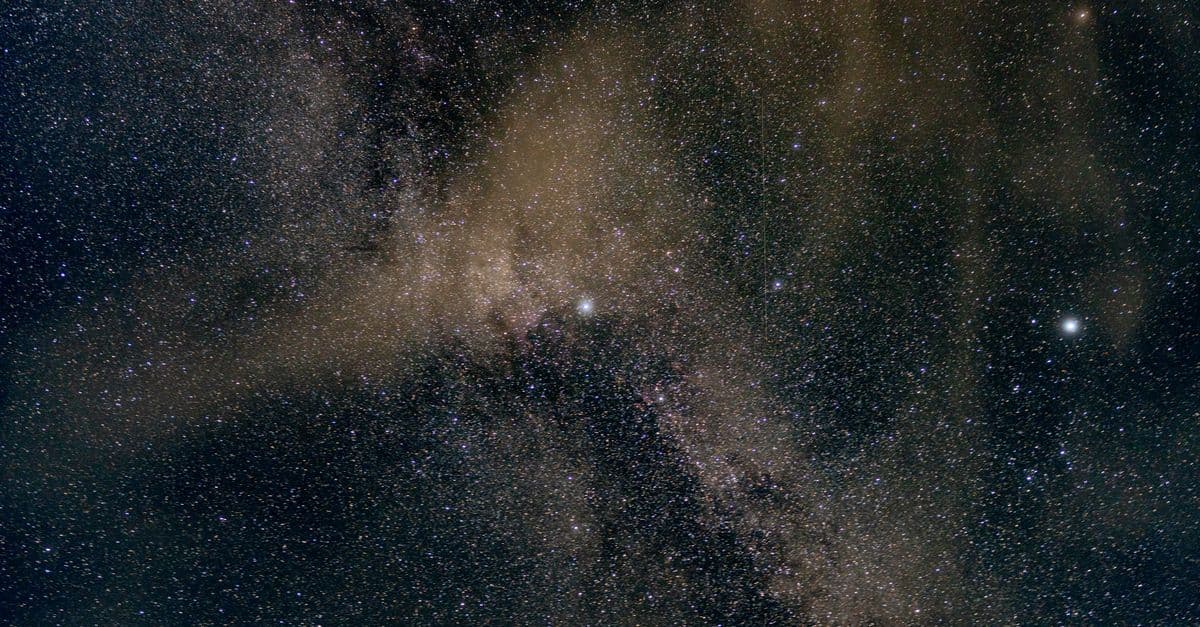
Photo: _mamadvali / Pexels
We've now found over 5,000 confirmed exoplanets, and rocky planets in habitable zones are no longer rare discoveries — they're expected. But finding a genuine Earth twin, a planet that matches Earth in size, composition, temperature, atmospheric chemistry, and possibly biology, would be a different category of event entirely.
Thought experiment. This article explores a hypothetical scenario for educational and speculative purposes. The events described are not predictions and should not be interpreted as warnings, advocacy, or instructions.
It's one of the most anticipated discoveries in the history of science, and unlike most "what if" scenarios, this one has an actual engineering roadmap behind it. How would we find an Earth twin? What would confirmation genuinely look like, given that astronomers have already been burned once by a premature biosignature claim? And if it happened, what would change?
Key takeaways
- Finding an Earth-sized planet in the habitable zone is now routine — thousands of candidates exist. A true twin with a confirmed Earth-like atmosphere is the actual target, and none has been confirmed as of 2026.
- The key biosignature is an oxygen-rich atmosphere: free oxygen is chemically unstable and must be continuously replenished (by photosynthesis or an equivalent process) to persist over geological time.
- Confirmation would require next-generation telescopes capable of direct imaging and spectroscopy of the planet's atmosphere — a capability NASA's Habitable Worlds Observatory is being built to deliver, with a targeted mission concept review by the end of this decade and launch in the early 2040s.
- The 2025 controversy over dimethyl sulfide on K2-18b, an initial "possible biosignature" claim that a full reanalysis of JWST data failed to statistically confirm, shows exactly how hard verification is and how easily hope outruns data.
- A confirmed Earth twin with biosignatures would sharpen the Fermi Paradox (if life is common, where is everyone?) rather than resolve it, and it would raise the Great Filter question with new urgency.
- Even at the nearest candidate distances (4 to 40 light-years), the communication delay would be 8 to 80 years round trip — no real-time conversation possible with any technology we currently have or can foresee.
What "Earth twin" actually means
The phrase "Earth-like planet" gets used loosely in headlines, so it's worth being precise about what it actually requires. Astronomers think about planetary similarity in tiers, each one dramatically harder to confirm than the last.
Level 1 — Same size, habitable-zone orbit. Hundreds of confirmed examples exist. A planet at this level simply has a radius within roughly 25% of Earth's and an orbit that puts it at a temperature where liquid water could theoretically exist on the surface. This tells you almost nothing about what's actually there.
Level 2 — Rocky composition, likely surface water. Detectable through the planet's mass-to-radius ratio, which distinguishes a dense bare-rock world from a puffy water world or mini-Neptune, combined with what's known about the host star's chemistry. A few dozen strong candidates exist at this tier.
Level 3 — Earth-like atmosphere. This requires spectroscopic analysis of the planet's atmosphere, either during a transit (when the planet crosses in front of its star) or via direct imaging (photographing the planet's own reflected or emitted light). No confirmed example exists as of 2026, though several campaigns are actively probing candidates.
Level 4 — Biosignatures. Oxygen and methane simultaneously (the two react with each other and shouldn't coexist without continuous biological production replenishing them), ozone, nitrous oxide, or a vegetation-like reflectance signature. Zero confirmed examples, and the closest recent claim, dimethyl sulfide on K2-18b, did not survive independent reanalysis.
Level 5 — Technological signatures. Radio emissions, laser pulses, industrial pollutants like halocarbons in the atmosphere, or other unambiguous markers of a technological civilization. None detected, anywhere, ever.
A true Earth twin sits at Level 3 at minimum. A biologically inhabited twin is Level 4. Nothing found so far clears even Level 3.
The current best candidates, and why none of them qualify yet
As of 2026, a handful of nearby systems dominate the Earth-twin search, and each illustrates a different obstacle standing between "interesting target" and "confirmed twin."
Proxima Centauri b orbits the nearest star to our Sun, 4.2 light-years away, inside its habitable zone. Its estimated minimum mass is about 1.06 Earth masses, and its true mass, accounting for orbital inclination, is estimated around 1.4 Earth masses. But Proxima Centauri is a red dwarf with extreme flare activity: ALMA observations from 2024 caught the star throwing off intense millimeter-wavelength flares, and researchers studying that flaring have concluded it could seriously challenge the planet's ability to retain a stable atmosphere at all. Whether Proxima b has any atmosphere left, let alone an Earth-like one, is unknown.
TRAPPIST-1 system hosts seven Earth-sized planets around an ultra-cool red dwarf 40 light-years away, three of them in the habitable zone. TRAPPIST-1e has become the most closely studied of the three: JWST transmission spectroscopy through 2025 found evidence consistent with a nitrogen-rich atmosphere containing traces of methane and carbon dioxide, but the same data could not statistically distinguish that scenario from having no atmosphere at all, because stellar contamination (light from starspots and faculae bleeding into the measurement) muddied the signal in every observation. An ongoing JWST program is now comparing TRAPPIST-1e to the neighboring bare-rock planet TRAPPIST-1b, using the airless planet's spectrum to subtract out stellar noise and hopefully isolate TRAPPIST-1e's real signal.
K2-18b, 124 light-years away, became the most talked-about biosignature candidate of the mid-2020s. In 2023, JWST found methane and carbon dioxide in its atmosphere, consistent with a "hycean" world hypothesis, a deep-ocean planet under a hydrogen-rich atmosphere. In April 2025, a team reported a possible detection of dimethyl sulfide (DMS) and dimethyl disulfide, compounds that on Earth are produced almost exclusively by marine life such as phytoplankton, at roughly 3-sigma confidence. That is a promising but far from conclusive statistical threshold. Within months, independent reanalyses of the same JWST NIRISS, NIRSpec, and MIRI data, published by separate research groups, found no statistically significant evidence for either DMS or even the previously reported carbon dioxide. The claim did not hold up under scrutiny.
Kepler-442b, a super-Earth roughly 2.3 times Earth's radius orbiting a K-type star in the habitable zone, sits 1,200 light-years away, far too distant for current atmospheric characterization technology to reach.
TOI-700d, an Earth-sized planet orbiting in the habitable zone of a red dwarf about 100 light-years away, has a rocky composition consistent with modeling but no confirmed atmosphere.
None of these candidates has a confirmed Earth-like atmosphere. What they demonstrate instead is the current state of the art: astronomers can now detect atmospheric gases on some favorable targets, but distinguishing a real biosignature from noise, stellar contamination, or an abiotic false positive is still right at the edge of what JWST can resolve.
How we'd actually confirm it
Confirming a true Earth twin means measuring the planet's atmospheric composition directly, not just inferring its size and temperature. There are three main observational strategies, and each has a specific weakness that determines which planets it can actually work on.
Transit spectroscopy: reading starlight through a keyhole
As a planet passes in front of its star from our vantage point, a sliver of starlight filters through the planet's atmosphere on its way to our telescopes. Different gases absorb different wavelengths of light, so the resulting absorption pattern acts like a chemical fingerprint of what's in the atmosphere. It's a bit like reading the ingredients on a food label by shining a flashlight through the packaging and analyzing which colors get absorbed.
JWST can do this well for favorable targets: large planets orbiting small, dim stars, where the atmospheric signal is proportionally bigger relative to the star's light. That's exactly why TRAPPIST-1 and K2-18b, both orbiting small red dwarfs, are the leading candidates today. For an Earth-sized planet around a Sun-like star, the atmospheric signal shrinks to a fraction of what current instruments can reliably separate from noise.
Direct imaging: blocking out the star to see the planet
Direct imaging means physically blocking the star's overwhelming glare and photographing the planet itself. The reflected starlight bouncing off the planet's atmosphere and surface carries its own spectral fingerprint. Doing this requires a coronagraph or a separate flying starshade that can suppress the star's brightness by roughly a factor of ten billion, since a Sun-like star outshines an Earth-sized planet by that much at visible wavelengths.
This is the specific capability NASA's proposed Habitable Worlds Observatory (HWO) is being designed around. NASA established a Technology Maturation Project Office for HWO in August 2024, and in early 2026 it selected industry proposals to advance the coronagraph and starshade technologies the mission will need. The stated goal is to directly image and spectroscopically characterize roughly 25 potentially habitable, Earth-sized worlds around nearby Sun-like stars, with a Mission Concept Review targeted for the end of this decade and a launch currently projected for the early 2040s.
Emission spectroscopy: catching the planet's own glow
A third method measures a planet's thermal emission rather than reflected starlight. As the planet passes behind its star, in what's called a secondary eclipse, the total light from the system briefly drops by exactly the amount the planet itself was contributing. That tiny dip, measured across different wavelengths, encodes information about the planet's temperature structure and atmospheric composition without needing to separate the planet's light from the star's directly.
What would the discovery moment actually look like?
There would be no single dramatic press conference. Confirmation would likely arrive as a strengthening statistical signal across multiple independent observing runs, multiple instruments, and multiple research teams, each publishing incremental papers that either support or challenge the previous ones, exactly as happened with K2-18b's DMS claim in 2025.
What finding biosignatures would actually mean, and what it wouldn't
The discovery of oxygen in an Earth twin's atmosphere would not, by itself, confirm life. Some abiotic geochemical processes, such as the photolysis of water vapor by ultraviolet light combined with hydrogen escape, can produce oxygen without any biology involved, particularly around active young stars. Context matters enormously.
| Signal | What it suggests | Why it's not conclusive alone |
|---|---|---|
| Oxygen (O₂) | Photosynthesis-like process replenishing it | Abiotic photolysis can also generate O₂, especially near active stars |
| Oxygen + methane together | Both persisting despite reacting with each other suggests continuous biological replenishment of at least one | Requires ruling out unusual non-biological chemical cycles that could sustain both |
| Ozone (O₃) | A byproduct of atmospheric oxygen photolysis | Only meaningful if oxygen's source is already established as biological |
| Nitrous oxide (N₂O) | On Earth, overwhelmingly of biological origin | Detectable only in high-resolution spectra; false positives from stellar contamination are a known risk |
| Vegetation red edge | A sharp reflectance jump characteristic of photosynthetic pigments | Requires resolved surface reflectance data, which is far beyond current instrument capability |
Table: Candidate biosignature gases and their limitations.
The scientific community has established protocols for extraordinary claims precisely because of episodes like K2-18b's DMS controversy. Confirmation of a genuine biosignature would require independent verification across multiple telescopes and research teams, a systematic review of every plausible abiotic explanation, and reproducibility of the signal across repeat observations. Given how the K2-18b claim played out, with an initial hopeful detection followed within months by a reanalysis finding no significant evidence at all, any future Earth-twin biosignature announcement will be met with the same level of scrutiny, not less.
The philosophical and cultural impact
Finding a biologically inhabited Earth twin, if it ever happened, would ripple far outside astronomy departments.
For religion and philosophy, the long-standing framing of Earth as a singular cradle of life, central to many theological traditions, would face renewed public debate. Different religious traditions have already developed varying frameworks for reconciling the possibility of extraterrestrial life with their teachings, and a confirmed discovery would move that conversation from abstract theology into an urgent, concrete question.
For the Fermi Paradox and the Great Filter, the implications cut both ways. Finding microbial or simple life would suggest the biggest barrier to life's emergence, the "Great Filter," might sit early in evolutionary history, behind us rather than ahead of us, which is broadly encouraging for humanity's own long-term prospects. But if the twin shows evidence of past complex or intelligent life with no current technological civilization, despite the planet being billions of years old, that raises an uncomfortable question about what stops intelligence from persisting once it emerges.
For biology and medicine, a confirmed independent origin of life would let scientists compare an alien biochemistry against Earth's own, testing which features of life as we know it (DNA, the specific twenty amino acids used in proteins, left-handed molecular chirality) are universal necessities versus historical accidents of Earth's particular evolutionary path.
For space exploration funding, a confirmed inhabited Earth twin within reach of current or near-future telescopes would almost certainly accelerate investment in follow-up characterization missions and, eventually, interstellar probe concepts. A specific, verified destination changes the political calculus in a way abstract statistical estimates never could.
What we could actually do about it
At 4 to 40 light-years distance, the nearest Earth-twin candidates are technically reachable, in a very long-term sense, given technology either already in early testing or under serious engineering study.
Communication. Radio or laser signals would take 4 to 40 years traveling one-way at the speed of light. If we happened to detect an artificial radio signal, which is a long shot in its own right, since Earth has only been leaking detectable radio emissions into space for roughly a century, a negligible sliver of the galaxy's history, any exchange of messages would play out over decades to centuries, generation to generation, not conversation to conversation.
Robotic probes. The Breakthrough Starshot initiative, first announced in 2016, is pursuing laser-propelled lightsail technology intended to accelerate gram-scale probes to a meaningful fraction of the speed of light, potentially reaching the Alpha Centauri system, home to Proxima Centauri b, in roughly 20 years of flight time. No payload capable of carrying scientifically useful instruments at that scale has been engineered yet, and the ground-based laser array required would be an unprecedented infrastructure project.
Crewed missions. With any propulsion technology currently on the drawing board, a crewed mission to even the nearest 4-light-year target is a multi-generational undertaking or one requiring some form of suspended animation, demanding a level of sustained civilizational commitment well beyond any current political or economic framework. This is a genuinely open engineering problem, not a near-term one.
What if the planet has ruins instead of a civilization?
The most unsettling scenario in this whole thought experiment isn't finding nothing. It's finding a planet with an Earth-like atmosphere, chemical signs of past biological activity, and also signs of a former technological civilization that is no longer there: structural ruins, isotopic anomalies consistent with past nuclear activity, or industrial atmospheric pollutants that have since faded.
That combination would simultaneously confirm that intelligent life can arise elsewhere and confirm that something, whatever it is, tends to end it. It's the darkest version of "we found an Earth twin," and it's exactly the scenario the Great Filter hypothesis was built to worry about.
What people get wrong about this search
Myth: An Earth-sized planet in the habitable zone is basically an Earth twin. It isn't. Size and orbital distance only get a planet to Level 1 of the tiers described above. A planet can be exactly Earth-sized, sit at exactly the right distance from its star, and still be a scorched, airless rock or a crushing high-pressure gas world. Atmosphere and composition are what actually determine habitability, and those are the hardest properties to measure.
Myth: JWST will find the Earth twin. JWST is a transit-spectroscopy powerhouse for planets around small, dim stars, but it was never designed to directly image and characterize Earth-sized planets around Sun-like stars, which is where most of the best long-term candidates statistically exist. That job is explicitly what the Habitable Worlds Observatory is being engineered for, decades from now.
Myth: A single detection of a promising molecule equals proof of life. The K2-18b episode is the clearest recent counterexample. A credible research team reported a statistically interesting DMS signal in April 2025. Multiple independent reanalyses within the same year found the evidence for that signal, and even for previously reported molecules like carbon dioxide, did not hold up. That's not a failure of the process, it's the process working exactly as it should: extraordinary claims get tested hard, repeatedly, before anyone treats them as established.
Myth: If we find one, we'll go there, or at least talk to it, soon. Even the nearest plausible candidate is 4.2 light-years away. Radio conversation involves decade-plus delays each way. Physical travel, with any propulsion concept currently under serious engineering study, is a multi-decade to multi-generational undertaking. Discovery and contact are two entirely different timelines.
Frequently asked questions
Q: How common are Earth-sized habitable-zone planets? Estimates suggest roughly 20 to 50% of Sun-like stars host an Earth-sized planet somewhere in their habitable zone, implying billions of such planets across the Milky Way. Whether any of them have Earth-like atmospheres, let alone life, remains completely unknown; size and orbit alone don't answer that question.
Q: Could a discovered Earth twin have humans or human-like life? No. Evolution is contingent on billions of years of specific, unrepeatable historical events, from which asteroid impacts occurred to which random mutations happened to survive. Convergent evolution can produce broadly similar solutions to similar physical problems, such as eyes or streamlined bodies for moving through fluid, but the exact genetic and developmental history that produced humans is astronomically unlikely to repeat elsewhere. Any life there would almost certainly be alien in its fundamental biochemistry.
Q: What would we actually name such a planet? Exoplanets are currently named by their host star's catalog designation plus a lowercase letter, such as Proxima Centauri b or TRAPPIST-1e. A confirmed inhabited twin would likely receive a proper name assigned through the International Astronomical Union's established naming processes, probably following some form of international public or scientific consensus process, similar to past IAU exoplanet-naming contests.
Q: Would we try to actively contact any civilization we found? This is genuinely contested within the scientific community. Passive listening, the SETI approach, has broad support because it carries no risk of revealing our location. Active messaging, known as METI (Messaging to Extraterrestrial Intelligence), is far more controversial; some researchers argue deliberately broadcasting our location and technological capability to an unknown recipient is unwise until we understand more about who might be listening.
Q: What's the realistic timeline for finding an Earth twin with biosignatures? JWST is already probing TRAPPIST-1e's atmosphere and testing candidates like K2-18b, though the results so far have been ambiguous or, in K2-18b's case, contested after reanalysis. The Habitable Worlds Observatory, if it clears its Mission Concept Review and secures funding, is targeted to survey roughly 25 nearby Earth-like planets after its early-2040s launch. A confirmed biosignature detection within the next two decades is plausible if Earth-like atmospheres and biology turn out to be reasonably common, but nothing currently guarantees that timeline.
Q: Why did the K2-18b biosignature claim fall apart? In April 2025, a research team reported a roughly 3-sigma statistical signal consistent with dimethyl sulfide and dimethyl disulfide in K2-18b's atmosphere, both compounds strongly associated with marine biology on Earth. A 3-sigma result is suggestive but well below the 5-sigma threshold generally required to call something a confirmed detection in physics and astronomy. Within months, at least two independent teams reanalyzed the same JWST data and found no statistically significant evidence for those molecules, or even for carbon dioxide that earlier observations had reported. It's a textbook case of why single-team, sub-5-sigma claims get treated cautiously.
Q: Is Proxima Centauri b still considered a strong Earth-twin candidate? It remains the nearest habitable-zone planet, at 4.2 light-years, which makes it scientifically important regardless of outcome. But 2024 and 2025 observations of Proxima Centauri's flare behavior, including ALMA millimeter-wavelength flare detections, have strengthened concern that its intense stellar activity could strip away or destabilize any atmosphere the planet might otherwise hold, which makes its long-term habitability genuinely uncertain.
Q: Could an Earth twin be discovered by accident, rather than through a dedicated search? It's possible but unlikely given how deliberately targeted current instruments are. Transit spectroscopy and direct imaging both require pointing an expensive telescope at a specific, pre-selected star for extended observing time, so most candidate systems are chosen in advance from catalogs of nearby, well-characterized stars rather than stumbled upon.
Q: What's the difference between "habitable" and "inhabited"? Habitable describes a planet's potential to support life based on temperature, chemistry, and the presence of stable liquid water, none of which requires life to actually be present. Inhabited means life has actually been confirmed there. Every candidate discussed in this article, including TRAPPIST-1e and Proxima Centauri b, is at best a habitability candidate; none has been confirmed inhabited, and confirming habitability itself remains unresolved for all of them.
The takeaway
An Earth twin is no longer a fantasy; it's an engineering problem with a rough budget, a rough timeline, and a named mission working toward it. What the K2-18b episode in 2025 actually demonstrated wasn't that the search is broken, but that the verification process is working as intended: extraordinary claims get challenged hard, and premature excitement gets walked back by data rather than by opinion. If an inhabited Earth twin exists within about 40 light-years, the Habitable Worlds Observatory, launching in the early 2040s if it stays on track, gives humanity a real shot at finding it within the lifetimes of people alive today. Whatever it finds, or doesn't, will answer the oldest question in astrobiology while immediately raising a harder one about what happens to life once it starts.
Read next:
Follow new articles
Add SciHub101 to your feed reader to see new science and technology stories.
About the Author
SciHub101 is an independent science and technology publication founded and edited by Buğra Sözeri, a software engineer and app developer based in Türkiye. AI tools assist with drafting and research. Source documentation in the existing archive is uneven, and articles are being reviewed and corrected. The Editorial Team byline identifies editorial responsibility; it does not certify specialist or independent human review. Where we compare products, anything built by our own team is labelled as such — see the editorial guidelines and About page for how corrections and disclosures work.
Related Articles

What If You Removed All the Empty Space from Matter?
Atoms are almost entirely empty space. If you compressed all of humanity to nuclear density, the result would be about the size of a sugar cube. Here's the quantum physics behind why that doesn't work in ordinary matter, and where stars do it anyway.
What If Humanity Became an Interstellar Civilisation?
The nearest star is 4.24 light-years away — roughly 40 trillion kilometres. Reaching it with current technology would take 80,000 years. What would it actually take to become a civilisation that spans multiple star systems?
Nearest Exoplanets That Could Host Life
A guide to the nearest potentially habitable exoplanets, from Proxima b to TRAPPIST-1e, what JWST has found, and why 'habitable' rarely means confirmed.
The Search for Extraterrestrial Life: Where Do We Stand?
The search for life beyond Earth focuses on two main questions: (1) Has intelligent life evolved elsewhere in the cosmos? (2) Has life in any form (microbial) emerged on exoplanets or moons? The Drake Equation (1961) estimated the number of communicative civilizations in the Milky Way at N = R × f_p × n_e × f_l × f_i × f_c × L, yielding estimates from 1 to 1 million civilizations depending on parameter assumptions. Yet 70 years of SETI (Search for Extraterrestrial Intelligence) has found no confirmed signals. Meanwhile, exoplanet discoveries (5,500+ as of 2026) reveal that habitable-zone Earth-like planets are common. Mars, Europa, and Enceladus show signs of liquid water and reduced carbon compounds. JWST observations have detected biosignature candidates in exoplanet atmospheres. The paradox is stark: habitable worlds appear common, yet no confirmed biosignatures have been found. This article reviews the evidence for habitable zones, biosignature detection, and the Fermi Paradox.
What If AI Discovered Alien Life?
AI is already scanning billions of radio signals, analyzing atmospheric data, and searching exoplanet spectra. What happens the day it finds something that shouldn't be there?
What If We Found Microbial Life on Mars?
Discovering even one living microbe on Mars — or convincing fossil evidence of past Martian life — would be the most consequential scientific finding in history. It would tell us life arises easily where conditions allow, and reshape our entire view of the universe.